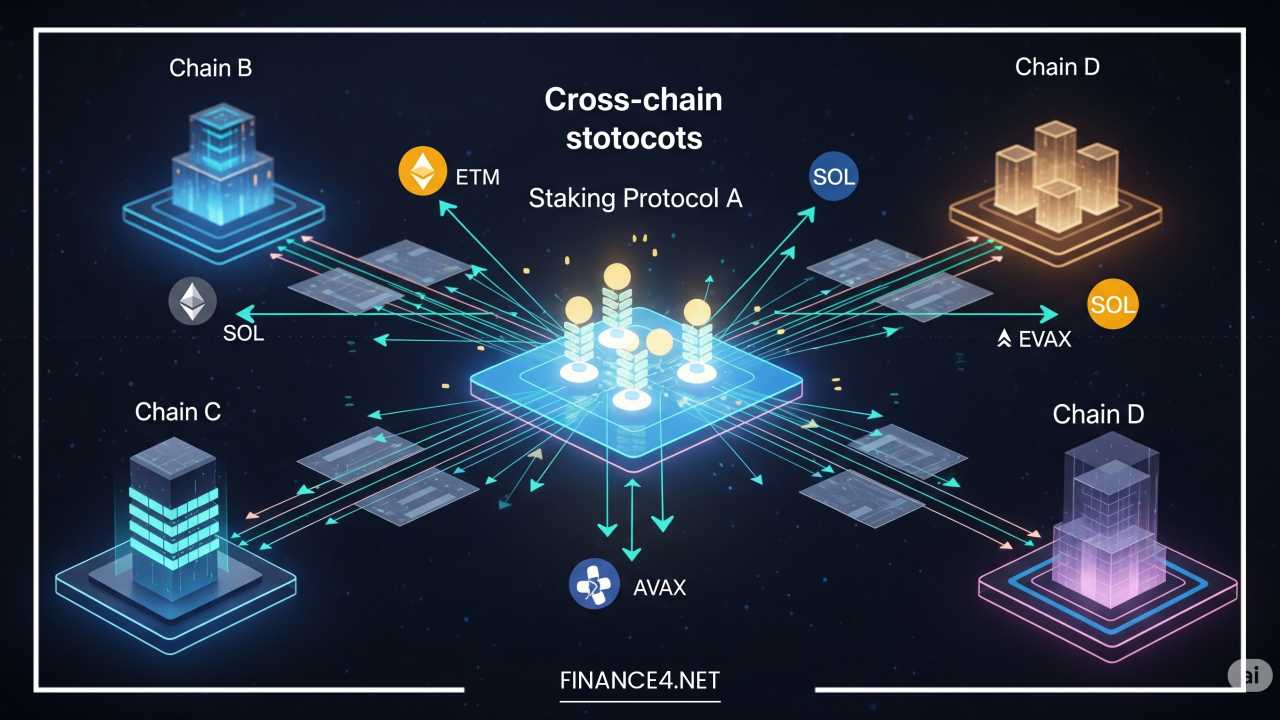
How to Stake Crypto Across Multiple Ledgers
 by
by 
How to Stake Crypto Across Multiple Ledgers | Cross-Chain Staking Guide
The world of cryptocurrency is dynamic, offering innovative ways to participate and earn. Among these, staking has emerged as a popular method for crypto holders to generate passive income by supporting the operations of proof-of-stake (PoS) blockchains. While staking on a single ledger is straightforward, an increasingly sophisticated approach involves staking crypto across multiple ledgers. This strategy, while offering enhanced diversification and yield optimization, also introduces complexities that demand a deeper understanding.
Understanding the Foundation: What is Crypto Staking?
Before delving into multi-ledger strategies, it’s crucial to grasp the basics of staking. In a Proof-of-Stake (PoS) consensus mechanism, instead of “mining” (as in Bitcoin’s Proof-of-Work), participants “stake” their cryptocurrency holdings to act as validators. These validators are responsible for verifying transactions and adding new blocks to the blockchain. In return for their1 contribution to network security and efficiency, they receive staking rewards, typically in the form of newly minted tokens or transaction fees.
Key aspects of staking:
- Lock-up Period: Staked assets are often locked for a certain duration, making them illiquid during that time. This “unbonding period” can vary significantly between blockchains.
- Rewards: Rewards are typically proportional to the amount staked and the network’s inflation rate or transaction fees. They can be distributed daily, weekly, or at other intervals.
- Slashing: Validators who act maliciously or fail to perform their duties (e.g., go offline) can face “slashing” – a penalty where a portion of their staked assets is forfeited.
- Delegation: For those who don’t have the technical expertise or the minimum token requirements to run a validator node, many PoS networks allow “delegated staking.” Here, users delegate their tokens to a chosen validator, who then shares a portion of the rewards with them.
The Case for Multi-Ledger Staking: Why Diversify?
Just as a traditional investment portfolio benefits from diversification across different asset classes, a crypto staking portfolio can gain significant advantages by spreading assets across multiple blockchains.
-
Risk Mitigation:
- Protocol-Specific Risk: Each blockchain protocol carries unique risks, including smart contract bugs, network vulnerabilities, or governance issues. Staking on a single chain exposes your entire staked capital to these specific risks. Diversifying across multiple ledgers reduces the impact of a potential exploit or failure on any single chain.
- Slashing Risk: While rare for honest validators, slashing can occur. Spreading your stake across different validators on different chains means a slashing event on one network won’t wipe out all your staking rewards.
- Regulatory Uncertainty: The regulatory landscape for crypto is evolving. Different jurisdictions may impose varying rules on staking income or the classification of staked assets. A multi-ledger approach might offer some flexibility in adapting to future regulatory changes by not having all your eggs in one regulatory basket.
- Market Volatility: While staking earns passive income, the underlying asset’s price can fluctuate wildly. Diversifying across assets with different market dynamics can help cushion the impact of a sharp downturn in any single asset.
-
Yield Optimization and Opportunity Maximization:
- Varying APRs (Annual Percentage Rates): Different blockchains offer different staking rewards based on their network dynamics, inflation models, and demand for staking. By participating in multiple networks, you can capitalize on higher-yielding opportunities as they arise.
- Unlocking New Protocols: The crypto ecosystem is constantly innovating. New PoS blockchains and DeFi protocols emerge regularly, offering attractive staking opportunities. A multi-ledger approach allows you to explore and participate in these emerging opportunities without over-committing to a single ecosystem.
- Exposure to Different Ecosystems: Staking on different ledgers provides exposure to various blockchain ecosystems (e.g., Ethereum, Solana, Polkadot, Cardano, Cosmos). Each ecosystem has its unique set of dApps, development, and community, offering broader investment exposure beyond just the staking rewards.
- Liquidity Management: While staking involves lock-up periods, some networks offer shorter unbonding periods or liquid staking derivatives (LSDs). Diversifying across chains with different liquidity profiles can help manage your overall portfolio’s liquidity needs.
-
Enhanced Decentralization and Network Support:
- By staking on multiple networks, you actively contribute to the decentralization and security of various blockchain ecosystems. This supports the broader crypto space and its underlying principles.
Strategies for Staking Across Multiple Ledgers
Implementing a multi-ledger staking strategy requires careful planning and execution. Here are several approaches:
-
Direct Staking via Hardware Wallets:
- How it works: This is the most secure method. You use a hardware wallet (like Ledger or Trezor) to directly stake your tokens on supported blockchains through their native applications (e.g., Ledger Live) or integrated third-party wallets. You retain full control of your private keys.
- Pros: Maximum security, full control over assets, direct participation in network consensus (if running a validator).
- Cons: Requires technical knowledge for some chains (especially for running a validator), higher minimum token requirements for solo staking, potential for higher gas fees for claiming rewards on certain networks.
- Example: Staking ETH via Ledger Live, DOT via Polkadot.js with Ledger, ADA via Yoroi or Eternl with Ledger.
-
Delegated Staking through Wallets/Platforms:
- How it works: You delegate your tokens to a reputable validator on a PoS network using your non-custodial wallet (e.g., MetaMask, Keplr, Phantom). The validator operates the node, and you earn a share of the rewards.
- Pros: Lower entry barrier (no minimum token requirements beyond a small amount), no technical expertise needed to run a node, retains self-custody of funds.
- Cons: Reliance on validator performance and honesty, validator fees, potential for slashing if the chosen validator misbehaves (though less direct risk to your funds than running your own validator).
- Example: Delegating SOL to a validator on Solana using Phantom wallet, ATOM to a validator on Cosmos using Keplr wallet.
-
Centralized Exchange (CEX) Staking:
- How it works: Many centralized exchanges (e.g., Binance, Coinbase, Kraken) offer staking services. You deposit your crypto on the exchange, and they handle the staking process.
- Pros: Extreme convenience, low technical barrier, often flexible staking options (no fixed lock-up periods).
- Cons: Custodial risk (you don’t control your private keys, making your funds vulnerable to exchange hacks or insolvency), lower rewards due to exchange fees, less contribution to network decentralization.
- Consideration: While convenient for multi-ledger diversification, the custodial risk is a significant drawback for security-conscious users.
-
Liquid Staking Protocols (LSDs):
- How it works: Liquid staking protocols (e.g., Lido, Rocket Pool for Ethereum) allow you to stake your tokens and receive a liquid staking derivative (LSD) token in return (e.g., stETH for staked ETH). This LSD token can then be used in other DeFi protocols (e.g., lending, borrowing, yield farming) to earn additional yield, effectively creating a “layered staking” approach.
- Pros: Maintains liquidity while staking, potential for compounded yields through DeFi integrations, often no minimum staking amount.
- Cons: Introduces additional smart contract risk from the liquid staking protocol, potential for de-pegging of the LSD token from the underlying asset, increased complexity.
- Example: Staking ETH with Lido and receiving stETH, then using stETH in a DeFi lending protocol.
-
Yield Aggregators:
- How it works: These DeFi platforms automatically optimize yields by moving your assets across various protocols and staking opportunities to maximize returns.
- Pros: Automated yield optimization, potentially higher APYs, simplifies complex DeFi strategies.
- Cons: Higher smart contract risk (as they interact with multiple protocols), higher fees, less control over specific staking decisions.
Best Practices for Multi-Ledger Staking
To successfully navigate the complexities of staking across multiple ledgers, adhere to these best practices:
-
Thorough Research (DYOR – Do Your Own Research):
- Understand Each Blockchain: Before staking, understand the specific consensus mechanism, tokenomics, lock-up periods, unbonding periods, and slashing conditions of each blockchain.
- Evaluate Validators: If delegating, research validator uptime, commission rates, track record, and community reputation. A reliable validator is crucial.
- Protocol Audits: For liquid staking or yield aggregators, ensure the underlying smart contracts have been thoroughly audited by reputable firms.
-
Security First:
- Hardware Wallets are Paramount: For direct or delegated staking, a hardware wallet is the gold standard for security. It keeps your private keys offline, protecting them from online threats.
- Secure Your Seed Phrase: Your recovery phrase (seed phrase) is the master key to your funds. Store it offline in multiple, secure, and fireproof locations. Never share it digitally or with anyone.
- Beware of Phishing: Always verify URLs and exercise extreme caution with links, emails, and messages. Scammers frequently impersonate legitimate platforms.
- Enable 2FA: Use two-factor authentication on all exchange and platform accounts.
-
Start Small and Scale Up:
- Begin with a small amount of capital on a new chain or with a new strategy to familiarize yourself with the process and potential risks before committing significant funds.
-
Monitor Performance and Rewards:
- Regularly check your staking rewards and the performance of your chosen validators. Tools like blockchain explorers, dedicated staking dashboards (e.g., in Ledger Live’s Earn section), or portfolio trackers can help.
- Be aware of changes in APRs, network conditions, or validator performance that might warrant re-evaluation.
-
Understand Lock-up and Unbonding Periods:
- Factor these periods into your liquidity planning. If you need quick access to your funds, choose assets with shorter unbonding periods or consider liquid staking options (with their associated risks).
-
Diversify Beyond Just Ledgers:
- Consider diversifying your staked assets by:
- Industry/Sector: Stake assets from different blockchain categories (e.g., DeFi, L1s, gaming, NFTs).
- Market Cap: Include a mix of large-cap, mid-cap, and potentially small-cap (higher risk/reward) assets.
- Consensus Mechanism: While focusing on PoS, understand variations like Delegated PoS (DPoS), Nominated PoS (NPoS), etc.
- Consider diversifying your staked assets by:
-
Tax Implications:
- Staking rewards are generally considered taxable income in most jurisdictions the moment you gain “dominion and control” over them (i.e., when they are received, even if still locked or accruing).
- Selling staked assets or their rewards will likely incur capital gains tax.
- Keep meticulous records of all staking activities, including dates, amounts staked, rewards received, and their fair market value at the time of receipt.
- Consult with a crypto-savvy tax professional to ensure compliance in your specific jurisdiction. Tools like CoinTracker or Koinly can help automate record-keeping for tax purposes.
Tools and Resources for Multi-Ledger Staking
Managing a diversified staking portfolio requires efficient tools:
- Hardware Wallets: Ledger Nano X/S Plus, Trezor Model T. These are indispensable for secure cold staking.
- Multi-chain Wallets:
- Ledger Live: Integrates with Ledger hardware wallets, allowing direct staking for several major PoS assets (ETH, SOL, ATOM, DOT, ADA, etc.) and providing a unified dashboard for tracking.
- Keplr Wallet: Essential for the Cosmos ecosystem, supporting staking for ATOM, OSMO, JUNO, etc.
- Phantom Wallet: The primary wallet for the Solana ecosystem, enabling SOL staking.
- MetaMask: While primarily for Ethereum and EVM-compatible chains, it can connect to various staking dApps.
- Blockchain Explorers: Use these to verify transactions, check validator performance, and monitor network health on individual chains.
- Staking Calculators/Dashboards: Websites like Staking Rewards, CoinMarketCap, or project-specific dashboards offer APY estimates, validator lists, and reward tracking.
- Portfolio Trackers with Staking Integration: Tools like CoinTracker, Koinly, or Delta can help you track your staked assets and rewards across multiple ledgers for portfolio management and tax reporting.
Advanced Considerations and Future Trends
As the staking landscape evolves, so too will opportunities and complexities:
- Interoperability and Cross-Chain Staking: Projects focusing on cross-chain communication (e.g., Cosmos’s IBC, Polkadot’s XCMP) could enable more seamless staking across different sovereign blockchains. This could lead to innovative “inter-chain staking” mechanisms.
- Institutional Staking: The entry of institutional players into the staking market is likely to bring more sophisticated products and services, potentially impacting retail staking dynamics and yields.
- Decentralized Autonomous Organizations (DAOs) and Governance: Staking often confers governance rights. Active participation in DAOs across multiple ecosystems allows you to shape the future of various protocols and potentially influence future staking rewards or network developments.
- Regulatory Clarity: Increased regulatory clarity, though potentially restrictive in some areas, could also lead to more standardized and transparent staking offerings, reducing uncertainty for investors.
Final Thoughts
Staking crypto across multiple ledgers is a powerful strategy for sophisticated crypto investors seeking to optimize yields, diversify risk, and actively participate in the decentralized economy. While it demands a higher level of research, security awareness, and ongoing management compared to single-asset staking, the potential benefits are substantial.
By combining the security of hardware wallets, the flexibility of delegation, and a keen eye on emerging liquid staking opportunities, individuals can build a robust and diversified passive income stream from their digital assets, contributing to the strength and decentralization of the blockchain networks they support. However, always remember the fundamental principle of “not your keys, not your crypto” and prioritize security above all else in this evolving and often unpredictable landscape.