Comparing Bridging Token Fees
 by
by 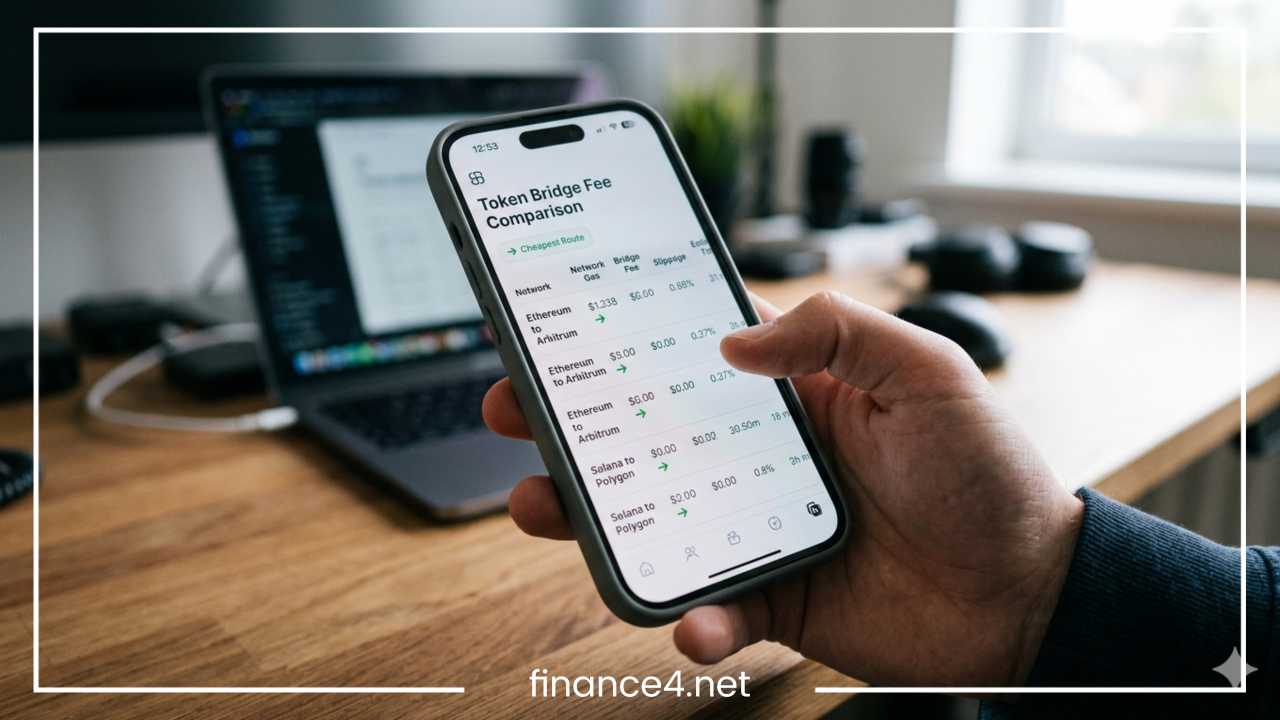
Comparing Bridging Token Fees: Save on Cross-Chain Costs
The evolution of the blockchain landscape has moved decisively toward a multi-chain reality. While Ethereum remains a primary hub for decentralized finance and security, a vast ecosystem of Layer 2 scaling solutions and alternative Layer 1 blockchains has emerged to offer faster transactions and lower costs. However, this fragmentation creates a significant hurdle: the need to move value between isolated networks. This is where cross-chain bridging becomes essential.
Cross-chain bridging is the process of transferring tokens or data from one blockchain to another. In a simple sense, it allows a user to take liquidity from one ecosystem—such as Ethereum—and deploy it in another, like Solana or Arbitrum, to access specific decentralized applications (dApps), yield farming opportunities, or NFT marketplaces.
Despite the convenience, bridging is rarely free. For many users, especially those moving smaller amounts of capital, the costs associated with bridging can be prohibitive. These expenses are often multi-layered and variable, fluctuating based on network demand and bridge architecture. Understanding these fees is not just a matter of curiosity; it is a mechanical necessity for any participant in the modern web3 economy. As the multi-chain ecosystem grows, the ability to compare and optimize bridging costs has become a vital skill for preserving capital and maximizing the efficiency of on-chain movements.
What Are Bridging Token Fees?
When a user initiates a bridge transaction, they are not paying a single flat fee. Instead, they are covering a stack of costs that ensure the transaction is processed, secured, and finalized across two different accounting systems. To save on cross-chain costs, one must first deconstruct these expenses.
Network Gas Fees
Gas fees are the most visible cost. Every bridge transaction involves at least two on-chain actions: a “send” or “lock” transaction on the source chain and a “claim” or “mint” transaction on the destination chain.
If you are moving assets from Ethereum to a Layer 2, the source chain gas fee (paid in ETH) can be substantial depending on congestion. While the destination chain fee is usually lower on networks like Polygon or Optimism, the bridge protocol must still pay to execute the transaction there, a cost that is passed down to the user.
Bridge Protocol Fees
Bridge protocols are service providers. To maintain their infrastructure, facilitate liquidity, and incentivize developers, most platforms charge a service fee. This is often a percentage of the total amount being bridged (e.g., 0.05% to 0.1%) or a flat fee per transaction. Some bridges integrate these fees into the exchange rate offered to the user, making them appear “invisible” at first glance.
Liquidity Provider Fees
Many modern bridges rely on liquidity pools rather than minting synthetic assets. These pools consist of assets provided by third parties who seek to earn yield. To reward these liquidity providers (LPs) for taking on the risk of price fluctuations or protocol imbalances, a portion of the bridging fee is diverted directly to them. If a bridge is “imbalanced”—meaning everyone is trying to move assets in one direction—the LP fees may rise to encourage users to bridge in the opposite direction.
Slippage and Price Impact
Slippage occurs when the price of an asset changes between the time a transaction is submitted and the time it is executed. In the context of bridging, this often happens if the bridge performs a swap as part of the process (e.g., bridging ETH from Ethereum and receiving USDC on Avalanche). If the liquidity in the bridge’s pool is shallow, a large transaction can significantly move the price, resulting in the user receiving fewer tokens than anticipated.
Hidden Costs
Beyond the primary fees, users often encounter secondary costs. These include token approval fees—where a user must first pay gas to “allow” the bridge contract to spend their tokens—and the “time cost.” A bridge that takes four hours to finalize may cost a user more in lost market opportunities than a bridge that charges a slightly higher fee but settles in minutes.
Types of Cross-Chain Bridges
The architecture of a bridge dictates its fee structure. There is no one-size-fits-all model, and different designs offer various trade-offs between speed, security, and cost.
Lock-and-Mint Bridges
This is one of the most common bridge designs. In a lock-and-mint model, the user deposits their original assets into a smart contract on the source chain (the “lock”). Once confirmed, the bridge issues an equivalent amount of “wrapped” or synthetic tokens on the destination chain (the “mint”).
The fees here are typically focused on gas and protocol service charges. However, because the user receives a synthetic asset (like wETH on a non-native chain), they may incur additional costs later if they need to swap that synthetic asset for a native one.
Liquidity Pool-Based Bridges
Liquidity-based bridges operate by maintaining vaults of native assets on multiple chains. Instead of minting new tokens, the bridge simply sends you “native” tokens from its existing pool on the destination chain after you deposit into its pool on the source chain.
These are often preferred by DeFi users because they result in native assets (like USDC for USDC), avoiding the need for further swaps. The trade-off is the LP fee, which can fluctuate based on the bridge’s current inventory of assets on a specific chain.
Burn-and-Mint Bridges
Typically used for tokens that have native deployments on multiple chains, this model involves burning tokens on the source chain and triggering a minting event on the destination chain. Because there is no central “lock” of liquidity, these can be more capital-efficient. Fees are usually limited to gas and a small protocol fee, making them highly competitive for assets like certain stablecoins.
Optimistic and Message-Passing Bridges
Some bridges use “optimistic” verification, where transactions are assumed to be valid unless challenged within a specific window. Others use complex message-passing layers (like LayerZero or CCIP) to communicate state changes.
The fee structure for these bridges often includes a “relayer fee.” Relayers are the off-chain entities that carry the message from one chain to another. Users must pay for the computational and gas costs incurred by these relayers, which can vary based on the security level of the message-passing protocol.
Key Factors That Influence Bridge Fees
Predicting bridging costs requires looking at the broader market environment. Fees are not static; they are dynamic responses to network conditions.
Blockchain Congestion
The state of the source chain is the single greatest factor in the total cost. If the Ethereum mainnet is experiencing a surge in NFT minting or high-volume trading, the gas required to interact with a bridge contract will spike. Users bridging from Ethereum to an L2 during peak hours might pay fifty times more in gas than they would during a quiet weekend.
Token Type and Liquidity Depth
Bridging highly liquid assets like USDC, USDT, or ETH is almost always cheaper than bridging niche altcoins. Large bridges have deep pools for major assets, which minimizes slippage and LP fees. If a user attempts to bridge a low-volume governance token, the bridge may have to route the transaction through multiple swaps, layering on decentralized exchange (DEX) fees and higher slippage.
Destination Chain Fees
While source chain gas is often the primary concern, the destination chain’s fees cannot be ignored. The bridge must “deliver” the tokens to the user’s wallet on the new chain. If the destination chain is experiencing its own congestion, the bridge protocol will increase its fees to cover the higher cost of sending that final transaction.
Routing Optimization
Sophisticated users often use bridge aggregators. These tools look at multiple bridge protocols simultaneously to find the most efficient path. Sometimes, a “single-hop” bridge (Source A to Destination B) is more expensive than a “multi-hop” route (Source A to Chain C to Destination B) because of liquidity imbalances. Automated routers handle this complexity to find the lowest fee.
Comparative Breakdown of Popular Bridges
Several protocols have emerged as leaders in the bridging space, each catering to different priorities regarding cost and speed.
Across
Across is widely recognized for its capital efficiency. It uses an optimistic verification model and relies on a decentralized network of “insurers” who provide immediate liquidity to users. Because Across focuses on being lean and fast, it often offers some of the lowest fees for bridging between Ethereum and its major Layer 2s. Its fee model is primarily driven by the “cost of capital” for its liquidity providers.
Stargate
Built on the LayerZero protocol, Stargate focuses on “omnichain” liquidity. It allows for the transfer of native assets across a wide variety of chains including Ethereum, Avalanche, and Binance Smart Chain. Stargate’s primary advantage is the elimination of “wrapped” tokens. Its fees are transparent and include a small percentage-based protocol fee, though users should watch for “rebalancing fees” when bridging to a chain that is already over-saturated with liquidity.
Hop Protocol
Hop Protocol was an early mover in the Layer 2 bridging space. It uses “Bonder” entities to front liquidity on the destination chain, allowing users to bypass the long withdrawal periods typically associated with optimistic rollups. Hop is often a middle-ground choice: it provides high security and reliable speed with a fee structure that scales with the amount being transferred.
Synapse
Synapse is a cross-chain layer that supports both liquidity-based transfers and a generalized messaging system. It is particularly popular for users moving assets to alternative Layer 1s or EVM-compatible chains. Synapse charges a “bridge fee” that is deducted from the received amount, and its competitive advantage often lies in its support for a massive array of tokens that other bridges might not list.
Wormhole
Wormhole is a generic message-passing protocol that powers many different bridging front-ends. It is often the go-to for moving assets between EVM chains and non-EVM chains like Solana. Because Wormhole operates differently than a simple liquidity pool, its costs are often tied to the specific “Portal” or application being used on top of it. It is frequently the cheapest option for Solana-to-Ethereum movements due to its deep integration with those ecosystems.
Cheapest Ways to Bridge Tokens
Saving on cross-chain costs requires a combination of timing and tactical tool selection. Here are the most effective strategies for minimizing expenses.
Prioritize Layer 2 Networks
The most expensive way to bridge is moving assets directly from the Ethereum mainnet. Whenever possible, users should look for ways to stay within the Layer 2 ecosystem. Bridging from Arbitrum to Optimism, for example, is orders of magnitude cheaper than bridging from Ethereum to either. If your funds are on a centralized exchange, check if the exchange supports direct withdrawals to a Layer 2. This allows you to skip the expensive Ethereum “lock” transaction entirely.
Use Bridge Aggregators
Just as flight aggregators find the cheapest airfare, bridge aggregators (like Li.Fi or Socket) scan dozens of bridges to find the cheapest and fastest routes. These tools account for gas, protocol fees, and slippage in real-time. Often, an aggregator will find a route that a human user would never have considered, such as using a specific stablecoin bridge that currently has an incentive program running.
Monitor Gas Prices
Since gas is a major component of the fee, timing matters. In many time zones, gas prices are lowest during the late evening or early morning hours. Using a gas tracker to wait for a dip in Gwei can save a user significant amounts of money, especially for transactions involving complex smart contracts like those used in bridges.
Choose Native Stablecoin Routes
Bridging stablecoins like USDC is generally the most cost-effective path. Stablecoins have the deepest liquidity and are supported by the widest range of bridges. Furthermore, initiatives like Circle’s Cross-Chain Transfer Protocol (CCTP) allow for the “burning” of USDC on one chain and “minting” on another with zero slippage and very low protocol fees. Bridging a volatile asset often incurs higher costs because the bridge must account for price risk.
Hidden Costs Users Often Miss
A “low fee” bridge might not actually be the cheapest option when all factors are considered. Users must look beyond the quoted percentage to find the true cost of a move.
Approval Gas Costs
Before a bridge can take your tokens, you must grant it permission. This is a separate on-chain transaction. While it only costs a few dollars on a Layer 2, it can be quite expensive on Ethereum. If you plan to bridge frequently, it may be cheaper to grant an “infinite” approval (though this carries security risks) rather than paying for a new approval for every single transaction.
The Exchange Spread
If you need to buy a specific token on an exchange before bridging it, the “spread”—the difference between the buy and sell price—is an effective fee. Furthermore, some centralized exchanges charge high withdrawal fees for certain networks. A user might save $5 on the bridge but lose $20 in exchange withdrawal fees.
Opportunity and Time Costs
Bridges have varying finality times. A “slow” bridge might use a longer challenge period to keep fees low, while a “fast” bridge charges a premium for speed. In a volatile market, being “stuck” in a bridge for 30 minutes while the price of your asset drops by 5% is a massive hidden cost. Always weigh the fee savings against the urgency of the move.
Failed Transactions
In rare cases, a bridge transaction can fail, or the “mint” on the destination chain can get stuck. While your funds are usually safe, you may have to pay additional gas to “poke” the contract or trigger a manual claim. These troubleshooting costs can quickly erase any savings gained from choosing a cheaper, less-refined bridge protocol.
Security vs Cost Trade-Off
In the world of blockchain, there is a recurring theme: you get what you pay for. While seeking the lowest fee is logical, it must be balanced against the security of the bridge.
Cross-chain bridges are among the most targeted pieces of infrastructure in the crypto space. They hold massive amounts of collateral in “lock” contracts, making them “honeypots” for hackers. Historically, many of the largest exploits in the industry have involved bridges that prioritized speed or low cost over rigorous security audits or decentralized validation.
A bridge that offers near-zero fees might be doing so by taking shortcuts in how it validates transactions. For example, a centralized bridge managed by a single server is very cheap to run and very fast, but it represents a single point of failure. If that server is compromised, the user’s funds are at risk. Conversely, a bridge that utilizes decentralized multi-signature schemes or zero-knowledge proofs is more expensive to operate because of the computational overhead, but it offers far higher protection for the user’s capital.
When comparing fees, always consider the “insurance” value of a well-established, audited protocol. For small “test” amounts, a cheap and newer bridge might be acceptable. For significant portions of one’s portfolio, paying a slightly higher fee for a battle-tested bridge like Stargate or Across is a form of risk management.
Real-World Example Comparison
To illustrate how these costs manifest, let’s look at a common scenario: moving $1,000 of USDC from the Ethereum mainnet to Arbitrum.
In a high-gas environment (e.g., 50 Gwei), the initial transaction on Ethereum to deposit funds into a bridge might cost between $15 and $30.
-
Bridge A (Liquidity-based): Might charge a 0.1% fee ($1) plus the destination gas cost (usually less than $1). The total cost would be roughly $17–$32.
-
Bridge B (Aggregator-found route): Might find a route using a promotional liquidity program that waives the 0.1% fee, bringing the cost down to just the gas ($16–$31).
-
Centralized Exchange Route: If the user sends the USDC from an exchange that supports Arbitrum, they might pay a flat withdrawal fee of $5–$10. In this case, the exchange is actually the “cheapest bridge” because it bypasses the expensive Ethereum on-chain transaction entirely.
This example highlights that the “cheapest” path often depends on where your funds are starting. If they are already in a self-custody wallet on Ethereum, the gas fee is unavoidable. If they are on an exchange, the exchange’s withdrawal policy is the most important factor.
Future of Cross-Chain Fees
The trend in bridging is moving toward “abstraction.” This means that in the future, users may not even know they are using a bridge.
Intent-Based Bridging
A major shift is occurring toward “intents.” Instead of a user manually selecting a bridge and paying gas, they simply sign a message saying, “I want $1,000 USDC on Arbitrum, and I am willing to pay $5 to make it happen.” Market makers (solvers) then compete to fulfill this intent in the most efficient way possible. This shifts the complexity of fee optimization from the user to professional entities who can batch transactions and hedge gas costs.
Gas Abstraction
Newer protocols are working on “gasless” bridging, where the fee is taken directly from the asset being moved. This removes the need for a user to hold the native gas token (like ETH or MATIC) on the destination chain before they arrive. While the total cost might be the same, the user experience is significantly improved, and the friction of “getting stuck” without gas is eliminated.
Rollup Interoperability
As Layer 2 solutions become more integrated, we may see “shared sequencers” or native interoperability layers that allow for nearly free transfers between specific rollups. This would effectively turn a cluster of blockchains into a single logical network from a fee perspective.
Final Thoughts
Comparing bridging token fees is an essential practice for anyone operating in the multi-chain ecosystem. By understanding the components of these costs—from network gas and protocol fees to liquidity premiums and slippage—users can make informed decisions that protect their bottom line.
The most effective approach is a layered one: use aggregators to find the best current rates, time your transactions to avoid peak gas periods, and prioritize native stablecoin routes for maximum liquidity. Most importantly, never sacrifice security for the sake of a few dollars in savings. As bridging technology continues to mature, we can expect fees to trend downward and the process to become increasingly seamless, but for now, a strategic and skeptical eye remains the user’s best tool for saving on cross-chain costs.