Best Bridging Solutions for Binance Smart Chain
 by
by 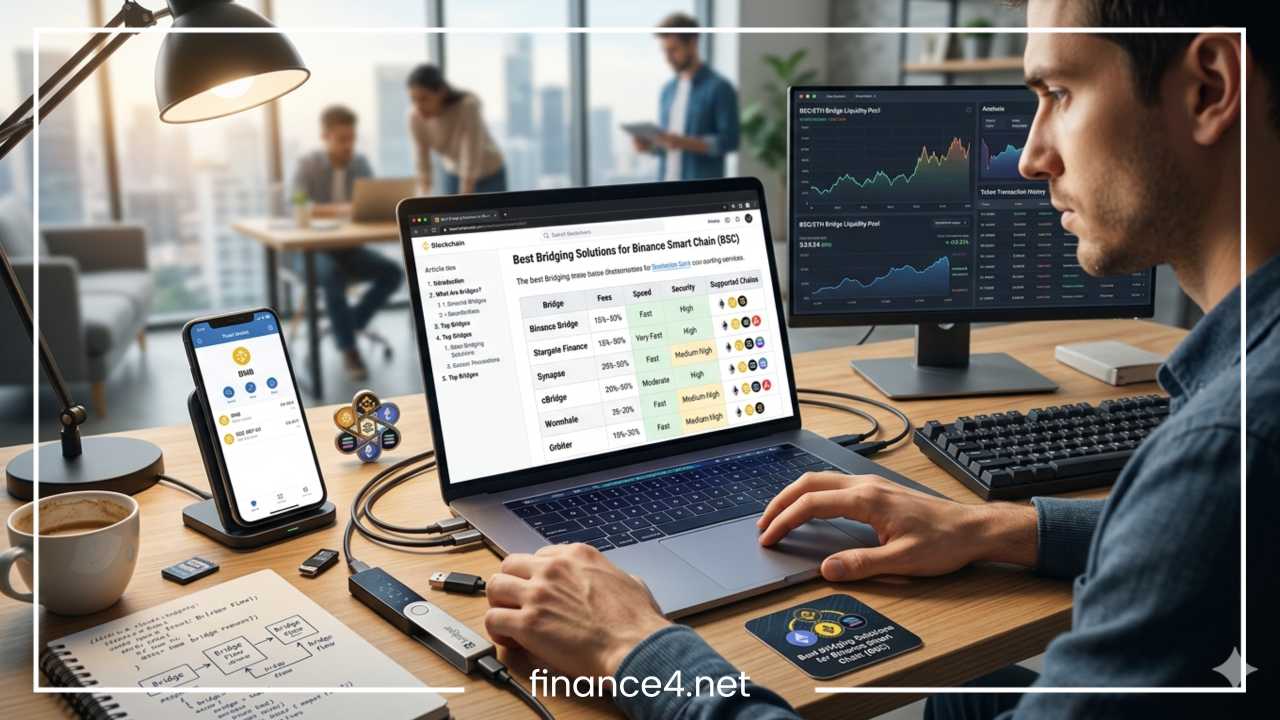
Best Bridging Solutions for Binance Smart Chain (BSC)
In the rapidly evolving landscape of decentralized finance, the concept of a single, isolated blockchain is becoming a relic of the past. As the industry matures, the focus has shifted toward blockchain interoperability—the ability for different blockchain networks to communicate, share data, and transfer value seamlessly. Without interoperability, the crypto ecosystem would remain a series of “walled gardens,” where assets trapped on Ethereum could not benefit from the innovations on other chains, and vice versa.
Central to this interconnected future are blockchain bridges. These protocols act as the vital infrastructure that links disparate networks, allowing liquidity to flow where it is most needed. Among the most prominent destinations for this liquidity is the Binance Smart Chain (BSC), now often referred to as the BNB Smart Chain. Since its inception, BSC has carved out a massive niche in the market by offering a high-performance alternative to Ethereum, characterized by significantly lower transaction fees and faster block times.
The BSC ecosystem has grown into a titan of DeFi, gaming, and NFT activity. From the massive liquidity of PancakeSwap to a myriad of play-to-earn games, the network provides a fertile ground for both retail users and institutional capital. However, to access these opportunities, users must first move their assets onto the chain. Whether you are moving USDT from Ethereum to farm high-yield pools or shifting BNB from a centralized exchange to a self-custody wallet, bridging is the gatekeeper of the experience.
This article provides a comprehensive deep dive into the best bridging solutions for Binance Smart Chain. We will explore how these bridges function, evaluate the top contenders in the market based on security and cost, and provide the necessary knowledge to navigate the risks inherent in cross-chain movements. By the end of this guide, you will be equipped to choose the bridge that best fits your specific needs, whether you prioritize speed, low fees, or maximum decentralization.
What Are Blockchain Bridges?
A blockchain bridge is a protocol that allows the transfer of data or tokens between two different blockchain ecosystems. Because blockchains are typically built with different consensus mechanisms, programming languages, and ledger structures, they cannot natively “talk” to one another. An asset on Ethereum exists on a ledger that the BNB Smart Chain cannot see or modify. A bridge solves this by creating a communication layer between them.
How Bridges Work
While the user experience often feels like a simple transfer, the underlying mechanics are more complex. Most bridges utilize one of three primary methods:
-
Lock-and-Mint: This is the most common mechanism. When you send an asset (like ETH) to a bridge to move it to BSC, the bridge locks your ETH in a smart contract on the source chain (Ethereum). It then mints an equivalent “wrapped” version of that asset (like bin-ETH) on the destination chain (BSC).
-
Burn-and-Release: This method is used when returning assets to their native chain. The bridge burns the wrapped tokens on the destination chain and unlocks the original assets from the smart contract on the source chain.
-
Liquidity Pools: Some modern bridges do not mint wrapped assets. Instead, they maintain large pools of native assets on both sides of the bridge. When you send USDT on Ethereum, the bridge simply sends you USDT from its existing reserve on BSC. This is often faster and avoids the risks associated with wrapped tokens.
Types of Bridges
Bridges are generally categorized by their level of centralization and their technical architecture.
Centralized Bridges (Trusted) rely on a central entity or intermediary to manage the funds. Many users interact with these via centralized exchanges like Binance. While they are user-friendly, they require users to trust the operator with their private keys and funds.
Decentralized Bridges (Trustless) operate using smart contracts and a network of independent validators. The security is derived from the underlying code and the economic incentives of the validators rather than a single company.
Wrapped Asset Bridges focus specifically on creating pegged versions of assets. For example, moving Bitcoin to BSC requires a bridge that creates BTCB (Binance-pegged BTC), allowing the value of Bitcoin to be used within BSC’s DeFi ecosystem.
In a multi-chain DeFi world, these bridges are the highways. They allow for capital efficiency, enabling users to move to whichever chain offers the best opportunities at any given moment.
How BSC Bridging Works Specifically
Bridging to Binance Smart Chain is unique because of the network’s architectural relationship with the broader Binance ecosystem and its compatibility with the Ethereum Virtual Machine (EVM).
The EVM Advantage
Because BSC is EVM-compatible, it uses the same address format as Ethereum. This significantly simplifies the bridging process. A user can use the same MetaMask wallet address for both Ethereum and BSC, making the transition seamless. When assets are bridged to BSC, they typically arrive as BEP-20 tokens, which is the BSC equivalent of Ethereum’s ERC-20 standard.
Typical Assets and Use Cases
The most frequently bridged assets to BSC include stablecoins (USDT, USDC, DAI), major cryptocurrencies (ETH, BTC), and the network’s native token, BNB. The motivations for moving these assets are usually driven by the specific strengths of the BSC ecosystem:
-
DeFi Farming and Staking: BSC is home to PancakeSwap and Venus Protocol. Users often bridge stablecoins to participate in yield farming where the gas costs of compounding rewards are cents rather than dollars.
-
Lower Gas Fees: For many retail users, Ethereum mainnet fees can be prohibitive. Bridging to BSC allows them to execute many transactions for the cost of a single Ethereum trade.
-
Gaming Assets: BSC has a robust GameFi sector. Many play-to-earn games require assets to be on-chain to purchase in-game items or earn rewards.
-
NFT Transfers: While Ethereum remains the hub for high-value art, BSC is a popular destination for affordable NFT collections and utility-based NFTs used in decentralized applications.
The Binance Bridge concept originally started as a centralized service provided by the Binance exchange, but it has evolved. Today, the “official” route is often integrated directly into the Binance exchange or handled through decentralized partners that support the BNB Chain’s mission of high-speed, low-cost interoperability.
Criteria for Evaluating a Good Bridge
Choosing a bridge is not just about finding the one with the lowest fee. Because bridges are high-value targets for hackers, security must be the primary consideration. When evaluating a bridging solution for BSC, consider the following factors:
Security and Audits
Has the bridge been audited by reputable security firms? Does it have a history of exploits? You should look for bridges that use multi-signature wallets or decentralized validator sets rather than those controlled by a single entity. Transparency regarding their security practices is a hallmark of a reliable protocol.
Speed and Finality Time
The time it takes for a transaction to be confirmed on the source chain and for the assets to appear on the destination chain can vary from minutes to hours. Bridges that utilize liquidity pools tend to be faster than those requiring multiple layers of confirmation for minting wrapped assets.
Fees
There are usually three types of fees involved:
-
Gas fees on the source chain.
-
Bridge fees charged by the protocol (often a percentage or a flat fee).
-
Gas fees on the destination chain to claim the assets.
A good bridge provides a clear breakdown of these costs before you confirm the transaction.
Liquidity Depth
If you are moving a large amount of capital, you need to ensure the bridge has enough liquidity on the destination chain. Low liquidity can lead to “slippage,” where you receive significantly less value than you sent.
User Experience (UI/UX)
The interface should be intuitive. It should clearly show which chain you are sending from, which chain you are receiving on, and provide a transaction hash for tracking. Integration with popular wallets like MetaMask, Trust Wallet, and Binance Wallet is essential for a smooth experience.
Best Bridging Solutions for Binance Smart Chain
Binance Bridge (Native BNB Chain Bridge)
The Binance Bridge is the most direct way for users to move assets between various chains and the BNB Smart Chain. While the original standalone web portal was retired in favor of integration, the functionality remains the “official” pathway.
Today, this most commonly takes the form of the Binance Exchange itself as a bridge. Users can deposit assets from Ethereum or Tron and withdraw them via the BSC network. Additionally, the Binance Web3 Wallet provides a decentralized bridging experience integrated directly into the app.
-
Pros: It is backed by the security and liquidity of the largest exchange in the world. It is incredibly simple for beginners who already have a Binance account.
-
Cons: Using the exchange is a centralized process (KYC may be required). It does not offer the “pure” DeFi experience some users prefer.
Multichain (formerly Anyswap)
Multichain has historically been one of the giants in the cross-chain space, supporting dozens of blockchains and thousands of tokens. It was one of the first to provide deep liquidity for BSC.
Multichain uses a network of nodes known as Secure Multi-Party Computation (SMPC) to manage the locking and minting of assets. This allows for a very broad range of supported tokens that other bridges might ignore.
-
Pros: Massive coverage of long-tail assets and support for almost every EVM-compatible chain.
-
Cons: The protocol has faced significant security and leadership challenges in the past. Users should exercise extreme caution and check the current status of the protocol’s health and decentralization before use.
Wormhole
Wormhole is a generic message-passing protocol that connects high-value networks. While it gained fame for connecting Solana to the rest of the crypto world, its support for BSC is robust and highly efficient.
Wormhole works by having “Guardians” monitor the state of the source chain. When they see an asset locked, they sign a message that allows the asset to be minted on the destination chain. This architecture makes it very scalable.
-
Pros: Fast transactions and a very professional, institutional-grade infrastructure. It is excellent for moving assets between BSC and non-EVM chains like Solana.
-
Cons: The technical architecture is complex, and the user interface can be slightly more intimidating for a first-time user compared to simpler liquidity-pool bridges.
cBridge (Celer Network)
Celer’s cBridge is a favorite among DeFi power users. It focuses on a non-custodial, “State Channel” based approach for some transfers and liquidity pools for others. It is specifically optimized for speed and low cost.
cBridge is particularly effective for stablecoins. If you need to move USDT from Ethereum to BSC, cBridge often offers some of the lowest fees in the industry because it avoids expensive on-chain computations where possible.
-
Pros: High speed and very competitive pricing. The UI is clean and provides real-time tracking of the bridge’s liquidity.
-
Cons: For very obscure or “exotic” tokens, liquidity can sometimes be thin, leading to higher slippage.
Synapse Protocol
Synapse is a cross-chain layer zero protocol that powers frictionless interoperability between blockchains. By providing a universal bridge and a cross-chain AMM (Automated Market Maker), Synapse allows users to swap assets across chains in a single transaction.
On BSC, Synapse is a go-to for stablecoin and ETH transfers. Instead of just bridging, you are often performing a cross-chain swap, which can be more efficient than minting a wrapped token.
-
Pros: Excellent liquidity for core assets (USDC, USDT, ETH). It has a proven track record of security and a very active community.
-
Cons: It supports fewer chains than Multichain or Wormhole, focusing instead on the most popular Layer 1s and Layer 2s.
Stargate Finance (LayerZero-powered)
Stargate Finance is the first dApp built on LayerZero, a protocol designed to achieve “Omnichain” interoperability. Stargate solves the “Bridging Trilemma” by offering instant guaranteed finality, native asset security, and unified liquidity.
When you bridge via Stargate to BSC, you are moving native assets, not wrapped tokens. This eliminates the risk that the wrapped token might lose its peg. It uses a sophisticated “Delta Algorithm” to manage liquidity across all chains simultaneously.
-
Pros: Extremely high security and the best-in-class experience for stablecoin transfers. You get “real” USDT on BSC, not a bridge-specific version.
-
Cons: It is primarily focused on stablecoins and high-liquidity assets; you won’t find small-cap altcoins here.
Orbiter Finance
Orbiter Finance is a decentralized cross-rollup bridge that has expanded its reach to include BSC. It is unique because it uses an “Optimistic” mechanism involving “Makers” who provide liquidity.
It is incredibly lightweight and fast because it doesn’t require the deployment of complex smart contracts on every chain to facilitate a move. For a user moving small to medium amounts of ETH or stablecoins to BSC, Orbiter is often the fastest experience available.
-
Pros: Near-instant transfers and very low interface fees.
-
Cons: The asset range is quite limited compared to giants like Wormhole or Synapse.
Comparison Table
| Bridge | Best For | Speed | Security Level | Fees |
| Binance Bridge | Beginners / Large Assets | Fast | High (Centralized) | Low |
| Stargate Finance | Stablecoins (USDC/USDT) | Very Fast | High (Decentralized) | Medium |
| Synapse | DeFi Power Users | Fast | High | Low/Medium |
| cBridge | Low-cost transfers | Fast | Medium/High | Very Low |
| Wormhole | Multi-ecosystem (Solana) | Moderate | High | Medium |
| Orbiter | Small ETH transfers | Instant | Medium | Low |
Recommendations by User Type:
-
For Beginners: Stick to the Binance Web3 Wallet or the exchange deposit/withdrawal method. It minimizes the risk of sending funds to the wrong network.
-
For Stablecoin Farmers: Stargate Finance is the gold standard for moving USDT and USDC with maximum security and native asset finality.
-
For Multi-chain Explorers: Synapse or cBridge provide the best balance of supported networks and cost-efficiency.
Risks and Security Concerns of Bridging
Bridging is one of the most high-risk activities in the crypto space. Because bridges hold massive amounts of collateral in their smart contracts, they are “honeypots” for malicious actors.
Common Risks
-
Smart Contract Vulnerabilities: Even the best-coded bridges can have bugs. If the contract on the source chain is exploited, the wrapped assets on the destination chain may become worthless because there is no longer any collateral backing them.
-
Custodial Risk: In centralized or semi-centralized bridges, the individuals or entities controlling the keys could theoretically abscond with the funds or be coerced by external parties.
-
Impermanent Loss: If you are providing liquidity to a bridge (not just using it to cross), you are subject to impermanent loss just like in any other AMM.
-
User Error: This is the most common cause of lost funds. Users often send assets to the wrong contract address or choose the wrong destination network.
Best Practices for Safe Bridging
-
Verify the URL: Phishing sites often mimic bridge interfaces. Always use links from official documentation or reputable aggregators like DefiLlama.
-
Start Small: Before moving a large amount of capital, perform a small “test” transaction to ensure everything is working correctly and you understand the steps.
-
Check the “Wrapped” Asset: Ensure the token you receive on BSC is the one you intended to get. Some bridges mint their own version of tokens (e.g., anyUSDC) which may have less liquidity than the standard BEP-20 USDC.
-
Revoke Permissions: After bridging, use a tool like Revoke.cash to remove the bridge’s permission to spend your tokens. This protects you if the bridge is exploited later.
Future of Cross-Chain Bridging and BSC Ecosystem
The future of bridging for the Binance Smart Chain is moving away from traditional “lock-and-mint” models toward “Omnichain” communication. Protocols like LayerZero and Chainlink CCIP (Cross-Chain Interoperability Protocol) are paving the way for a future where users don’t even realize they are bridging.
In this future, a user could use a lending protocol on BSC using collateral that stays on Ethereum, with the communication happening silently in the background. We are also seeing the rise of Zero-Knowledge (ZK) Bridges, which use mathematical proofs to verify transfers rather than relying on a set of validators, potentially offering the highest level of security possible.
For the BSC ecosystem, this means more integration. As bridging becomes safer and cheaper, the friction of entering the BSC ecosystem will disappear, further solidifying its position as a primary hub for global decentralized finance.
Final Thoughts
Bridging is the backbone of the modern multi-chain experience. For Binance Smart Chain users, the options have never been more diverse or powerful. Whether you choose the official Binance pathways for their simplicity and liquidity, or decentralized protocols like Stargate and Synapse for their transparency and DeFi integration, the key is to prioritize security and verify every step of the process.
The “best” bridge is ultimately the one that aligns with your specific transaction. For a $50 transfer of ETH, Orbiter Finance might be your best bet. For a $50,000 transfer of USDT, Stargate Finance is likely the superior choice. By understanding the mechanics and risks outlined in this guide, you can move your assets across the crypto landscape with confidence, taking full advantage of everything the Binance Smart Chain ecosystem has to offer.
FAQ
Is bridging safe?
Bridging carries more risk than holding assets on a single chain. However, using well-audited, high-liquidity bridges and following security best practices significantly mitigates these risks.
Which bridge is the cheapest for BSC?
cBridge and Orbiter Finance often offer the lowest fees for small to medium transactions, while Stargate is highly efficient for larger stablecoin moves.
How long does it take to bridge to BSC?
Most bridges take between 5 and 20 minutes. The speed depends primarily on the confirmation time of the source chain (Ethereum is slower than Layer 2s or Avalanche).