Bridging NFTs Across Networks
 by
by 
Bridging NFTs Across Networks: Unlocking the True Potential of Digital Assets
Non-Fungible Tokens (NFTs) have rapidly transformed the digital economy, revolutionizing how we perceive ownership, art, and digital scarcity. At their core, NFTs are unique digital assets, typically secured on a blockchain, each with a distinct identifier that sets them apart from one another. From digital art and collectibles to virtual real estate and in-game items, NFTs represent a groundbreaking shift, enabling true digital ownership in a way previously unimaginable. However, the burgeoning NFT landscape faces a significant hurdle: fragmentation. NFTs, by default, are tethered to the specific blockchain on which they are minted. This creates isolated ecosystems, limiting their reach and potential.
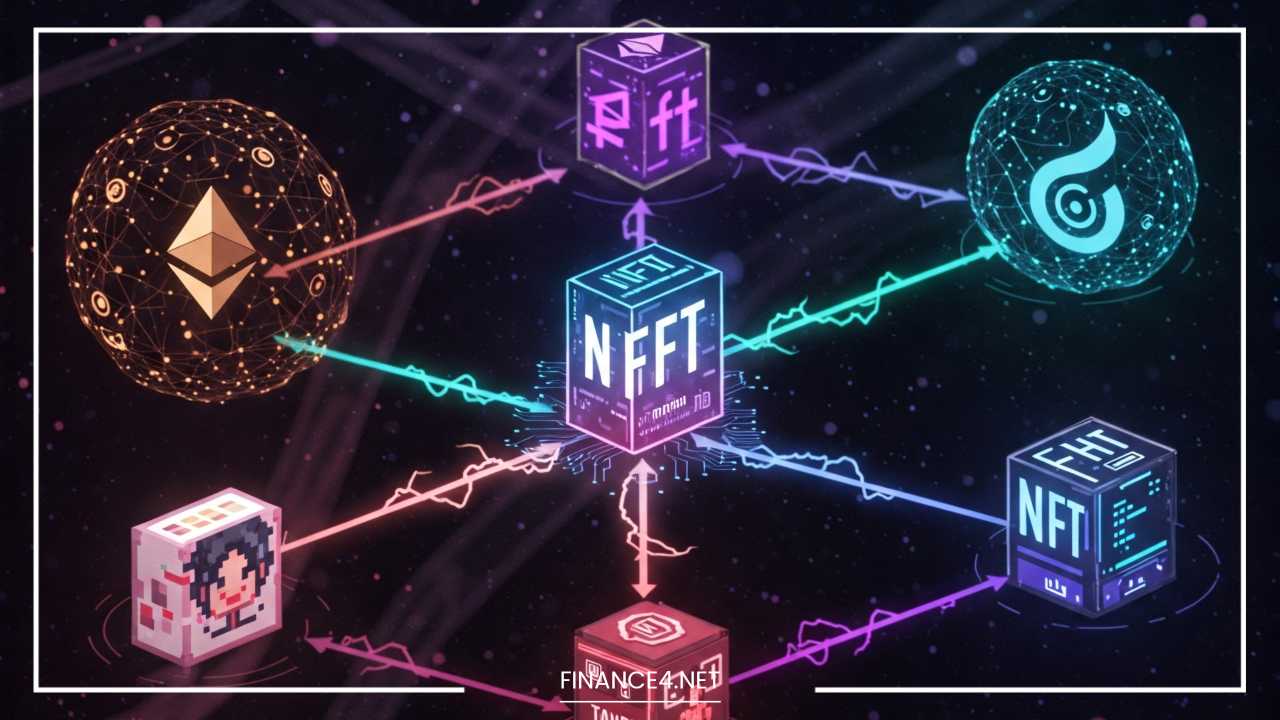
This article delves into the critical concept of NFT interoperability, specifically focusing on “bridging NFTs” across disparate networks. The ability to seamlessly move NFTs between different blockchains is not merely a technical advancement; it’s a fundamental necessity to unlock their full utility, enhance liquidity, and foster a truly interconnected digital asset space. Without effective bridging solutions, the vast potential of NFTs remains confined, hindering adoption and stifling innovation within the broader Web3 ecosystem.
The Problem: Fragmentation of NFT Ecosystems
The current NFT landscape is characterized by a vibrant yet fragmented ecosystem. NFTs are minted and traded across a diverse array of blockchains, each with its own technical specifications, community, and marketplace. Ethereum, with its robust smart contract capabilities and established infrastructure, was the genesis of many prominent NFT projects and remains a dominant force. However, alternative blockchains like Solana, Tezos, Polygon, Avalanche, and Binance Smart Chain (BSC) have emerged as strong contenders, offering faster transaction speeds, lower fees, or specialized features. This diversity, while fostering innovation, has inadvertently led to significant challenges due to limited interoperability.
The fundamental issue is that NFTs are inherently siloed within their native networks. An NFT minted on Ethereum cannot, by default, be directly used, displayed, or traded on Solana, and vice versa. This lack of cross-chain compatibility creates isolated liquidity pools, meaning that the demand and supply for a particular NFT might be concentrated on one blockchain, making it difficult for users on other chains to access or trade it. For creators, this fragmentation can limit their audience reach and potential revenue, as their art or collectibles might only be accessible to users on a specific chain. Collectors face a similar predicament, finding it cumbersome to manage assets spread across multiple wallets on different networks, often leading to a disjointed user experience. Furthermore, the overall NFT market suffers from reduced liquidity and diminished discoverability, as assets remain confined within their respective blockchain “gardens.” This fragmentation ultimately hinders the widespread adoption and true potential of NFTs as universally accessible digital assets.
What is NFT Bridging?
At its core, NFT bridging is the process of enabling the transfer of Non-Fungible Tokens from one blockchain network to another. It’s a crucial mechanism designed to overcome the inherent isolation of blockchain ecosystems, allowing digital assets to move freely and seamlessly across different chains. Unlike fungible tokens, which can often be “swapped” or converted across chains via decentralized exchanges, NFTs present a unique challenge due to their non-fungible and singular nature.
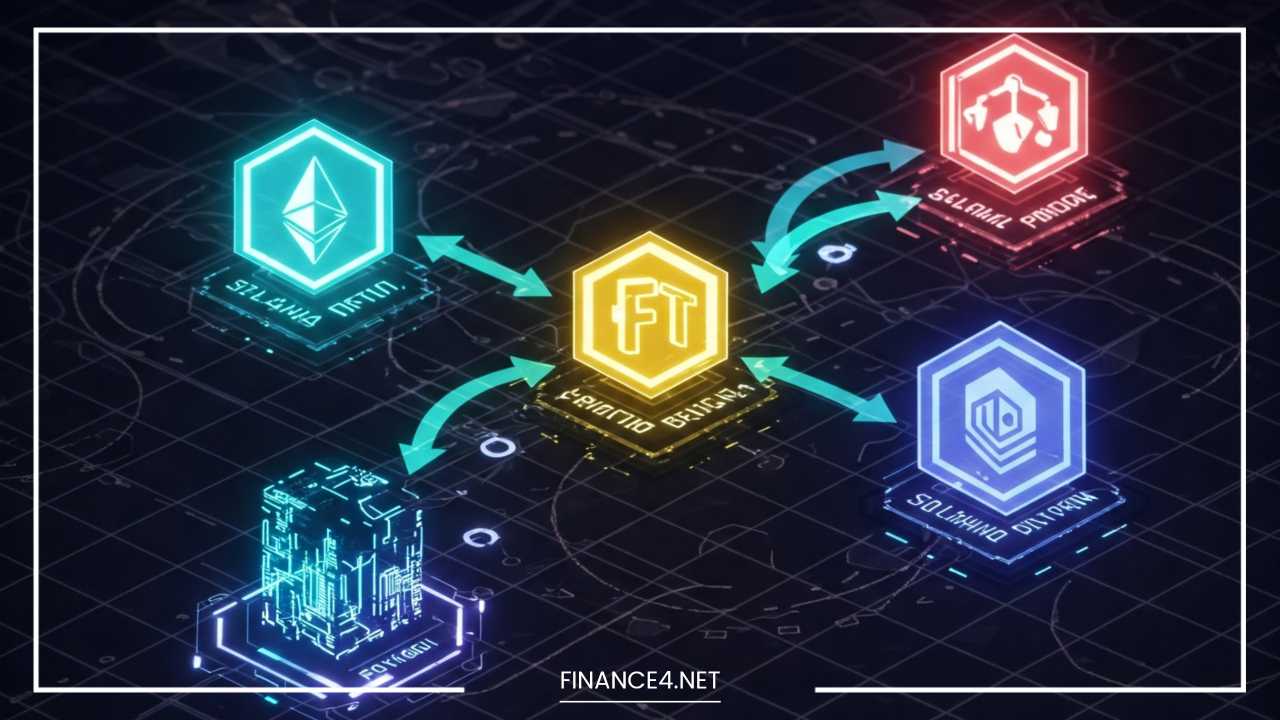
The fundamental principle behind most NFT bridges involves a “lock-and-mint” or “burn-and-mint” mechanism. When an NFT is bridged from its native chain (e.g., Ethereum) to a target chain (e.g., Polygon), the original NFT on the native chain is typically locked in a smart contract or “burned” (made irretrievable). Simultaneously, a “wrapped” or mirrored version of that NFT is then minted on the target chain. This wrapped NFT represents the original asset and retains its unique characteristics, metadata, and provenance. When the user wishes to move the NFT back to its native chain, the wrapped NFT on the target chain is burned, and the original NFT on the native chain is unlocked. This ensures that only one authentic version of the NFT exists and is active at any given time across the connected networks.
There are primarily different types of NFT bridges, each with its own architectural nuances and trust assumptions:
- Centralized Bridges: These bridges rely on a central entity or a trusted third party to facilitate the transfer. Users typically deposit their NFTs with the central entity, which then issues a corresponding wrapped NFT on the destination chain. While potentially simpler to implement, they introduce a single point of failure and require users to place significant trust in the centralized operator.
- Decentralized Bridges: These bridges leverage smart contracts and decentralized consensus mechanisms to enable cross-chain transfers without relying on a single intermediary. They often involve a network of validators or a multi-signature scheme to secure the assets and verify transactions. Decentralized bridges generally offer greater security and censorship resistance.
- Custodial vs. Non-Custodial Solutions: This distinction refers to who holds the private keys to the NFTs during the bridging process. Custodial solutions involve the bridge operator temporarily taking custody of the user’s NFT, while non-custodial solutions allow users to retain control of their assets throughout the bridging process, often through smart contracts. Non-custodial solutions are generally preferred for their enhanced security and user autonomy.
- Tokenized Bridging Solutions (NFT Wrapping): As mentioned, NFT wrapping is a common method where the original NFT is locked, and a new, equivalent NFT (the “wrapped” version) is minted on the target chain. This wrapped NFT is usually a standard token (e.g., ERC-721 or ERC-1155) on the destination chain, making it compatible with existing marketplaces and dApps on that network.
Understanding these mechanisms and types is crucial for appreciating the technical complexity and security considerations involved in building a truly interoperable NFT ecosystem.
Key Technologies Behind NFT Bridging
The seamless movement of NFTs across disparate blockchains is underpinned by sophisticated technological advancements in the realm of blockchain interoperability. This field is dedicated to enabling different blockchain networks to communicate, share data, and transfer assets in a secure and efficient manner.
Blockchain Interoperability: At its core, interoperability is the ability of different blockchain systems to exchange information and value without the need for a trusted third party. For NFTs, this means being able to verify the authenticity and ownership of an asset on one chain, and then represent that asset on another chain while maintaining its unique properties. Without interoperability, each blockchain operates as an isolated silo, severely limiting the reach and utility of NFTs.
Cross-Chain Protocols: Several innovative protocols and frameworks are being developed to facilitate cross-chain functionality.
- Polkadot and Cosmos: These are prominent examples of “blockchain of blockchains” architectures. Polkadot enables different “parachains” (specialized blockchains) to connect and communicate via its Relay Chain, while Cosmos uses its Inter-Blockchain Communication (IBC) protocol to facilitate data exchange between independent, interconnected blockchains. While not exclusively for NFTs, these protocols provide the fundamental infrastructure for assets, including NFTs, to move between their respective ecosystems. They offer a secure and standardized way for different chains to achieve consensus on the state of bridged assets.
- Layer 2 Solutions: Solutions like Optimism, Arbitrum, Polygon, and ZkSync are designed to scale existing Layer 1 blockchains (primarily Ethereum) by processing transactions off-chain and then batching them for settlement on the mainnet. Many of these Layer 2s also act as efficient bridging solutions for NFTs, allowing users to move their assets from the high-cost, congested Ethereum mainnet to a more scalable and affordable Layer 2 environment. This is particularly beneficial for NFT gaming and smaller transactions where high gas fees would be prohibitive.
Atomic Swaps: While more commonly discussed for fungible tokens, the underlying principle of atomic swaps can also be applied to NFT transfers, albeit with greater complexity. Atomic swaps allow for the direct exchange of assets between two different blockchains without the need for an intermediary, ensuring that either both transactions occur or neither does. For NFTs, this would involve a highly coordinated smart contract interaction on both chains to ensure the simultaneous transfer of ownership. While technically feasible, the specific non-fungible nature and often intricate metadata of NFTs make widespread, generalized atomic swaps for NFTs a more challenging implementation compared to fungible tokens.
Oracles and Smart Contracts: These two technologies are indispensable for the secure and reliable operation of NFT bridges.
- Smart Contracts: At the heart of every NFT bridge are smart contracts deployed on both the source and destination blockchains. These contracts govern the locking, burning, minting, and unlocking of NFTs. They contain the logic for verifying the original NFT’s existence, ensuring that the wrapped NFT is correctly minted, and managing the return of the NFT to its native chain. The security and immutability of these smart contracts are paramount, as vulnerabilities can lead to significant financial losses.
- Oracles: Oracles play a crucial role in providing off-chain data to on-chain smart contracts. In the context of NFT bridging, decentralized oracles can be used to verify events on the source blockchain, such as an NFT being locked or burned, and relay this information securely to the smart contract on the destination blockchain. This ensures that the minting of the wrapped NFT on the destination chain is only triggered when the corresponding action has been definitively confirmed on the source chain. They act as trusted intermediaries for cross-chain communication, ensuring the authenticity and integrity of the bridging process.
Together, these technologies form the backbone of a future where NFTs can transcend their native blockchain boundaries, unlocking new use cases and fostering a truly interconnected digital asset economy.
Real-World Examples of NFT Bridging
The concept of bridging NFTs is no longer purely theoretical; numerous platforms and protocols are actively facilitating the cross-chain movement of these unique digital assets, proving the viability and necessity of interoperability in the burgeoning NFT space.
One of the most prominent examples of an operational NFT bridge is Wormhole. Initially gaining significant traction for bridging fungible tokens, Wormhole has expanded its capabilities to include NFTs, primarily facilitating transfers between Solana and Ethereum, as well as other EVM-compatible chains like Polygon, BNB Chain, and Avalanche. Wormhole utilizes a decentralized network of “Guardians” who observe events on connected blockchains. When an NFT is deposited into a Wormhole smart contract on the source chain, the Guardians verify the transaction and then sign a “validity attestation.” This attestation is then used on the destination chain to mint a wrapped version of the NFT. This bidirectional bridge has been instrumental in allowing users to leverage the lower transaction fees and faster speeds of Solana for certain NFT activities, while still maintaining access to the vast liquidity and established ecosystem of Ethereum.
While not a standalone bridge, Bridge Protocol (often associated with cross-chain communication protocols) represents the broader movement towards standardized ways of moving data and assets, including NFTs, between different blockchain ecosystems. Many projects are building their own “bridge protocols” leveraging underlying cross-chain communication frameworks to enable their specific NFTs or digital assets to move between chains. These often involve custom smart contracts designed to handle the nuances of particular NFT standards and metadata.
The drive towards interoperability is also evident in the evolution of multi-chain NFT marketplaces. Platforms like OpenSea, Rarible, and Magic Eden have made significant strides in integrating multiple blockchain networks into their platforms. While OpenSea primarily started on Ethereum, it now supports NFTs on Polygon, Klaytn, Arbitrum, Optimism, and Solana, allowing users to browse, buy, and sell NFTs from various chains within a single interface. Similarly, Rarible supports Ethereum, Flow, Polygon, and Tezos. These marketplaces, while not performing the direct bridging themselves, play a crucial role by aggregating NFTs from different chains, providing a unified storefront that reduces the friction for users to discover and interact with assets across the fragmented landscape. This integration by marketplaces significantly enhances the user experience, making it easier for collectors to manage their diverse portfolios and for creators to reach a broader audience without needing to choose a single “home” blockchain.
The impact of NFT bridging extends beyond mere trading; it significantly enhances the experience within various NFT communities and ecosystems. For instance, in the realm of virtual real estate, projects like Decentraland (Ethereum-based) could potentially allow land parcels to be represented or even interacted with on a more scalable Layer 2 solution or another chain for in-game activities, before settling back on Ethereum for core ownership. In NFT art, bridging allows artists to mint their work on a high-throughput, low-fee chain for initial sales, then offer bridging options for collectors who prefer to hold their assets on Ethereum or vice-versa. For gaming assets, interoperability is paramount. Players want to use their in-game NFT items across different games or transfer them to marketplaces on different chains without incurring prohibitive transaction costs. Bridges facilitate this fluidity, creating a more interconnected and dynamic gaming experience where assets are truly owned and portable. These real-world applications underscore the transformative potential of NFT bridging in fostering a more accessible, liquid, and user-centric digital asset ecosystem.
The Challenges of Bridging NFTs
Despite the immense promise and ongoing development in NFT bridging, the technology is not without its significant challenges. These hurdles encompass security, technical complexity, economic considerations, and the inherent nature of NFTs themselves.
Security Concerns: This is arguably the most critical and pressing challenge. NFT bridges, by their very design, often involve locking valuable assets in smart contracts on one chain and minting wrapped representations on another. This creates large honeypots of value, making them prime targets for malicious actors. The history of blockchain has unfortunately seen numerous high-profile bridge hacks and exploits, resulting in the loss of hundreds of millions of dollars. Vulnerabilities can arise from flaws in the smart contract code, compromised oracle networks, or weaknesses in the underlying consensus mechanisms of the bridge. Ensuring the integrity of cross-chain communication and the security of the locked assets requires rigorous auditing, robust cryptographic safeguards, and continuous monitoring, yet the risk of a catastrophic exploit remains a significant concern for users and developers alike.
Loss of Value or Authenticity: A common concern for collectors is the perceived “loss of value” or “authenticity” when an NFT is wrapped or bridged. While technically the wrapped NFT represents the original, some purists argue that the true essence of an NFT lies in its native blockchain and the original smart contract. There’s a psychological hurdle to overcome where users might feel that a wrapped NFT is a less “pure” or less valuable version of the original. Furthermore, if a bridge faces a security breach and a wrapped NFT becomes irredeemable for its original counterpart, the holder could suffer a complete loss of value. Maintaining the provable authenticity and scarcity of an NFT across multiple representations is a complex task that requires meticulous technical implementation and transparent communication.
Technical Complexity: Building and using NFT bridges can be technically challenging for both developers and end-users. For developers, designing secure, scalable, and decentralized bridges requires deep expertise in multiple blockchain protocols, smart contract development, and cryptography. The nuances of different NFT standards (ERC-721, ERC-1155, Solana’s Metaplex standard, etc.) add further layers of complexity. For users, the process of bridging can sometimes be counter-intuitive, involving multiple steps, wallet connections to different networks, and an understanding of gas fees across chains. This complexity can deter mainstream adoption, as many users are still navigating the basic functionalities of single-chain NFT interactions.
High Gas Fees and Network Congestion: While bridging often aims to escape the high fees of congested networks like Ethereum, the bridging process itself can incur significant costs. Transferring an NFT to a bridge contract on Ethereum and then receiving a wrapped version on another chain still requires multiple transactions, each incurring gas fees. If the destination chain also experiences congestion, the overall cost of bridging and subsequent transactions can remain high, undermining one of the primary motivations for moving assets off the native chain. This economic friction can limit the frequency of bridging, especially for lower-value NFTs or for users with limited capital. The variable nature of gas fees also adds uncertainty to the bridging cost, making it difficult for users to predict their expenses accurately.
Addressing these challenges is paramount for the widespread and secure adoption of NFT bridging. Solutions require a multi-faceted approach involving advanced cryptographic techniques, robust auditing, user-friendly interfaces, and a commitment to continuous improvement in security and efficiency.
The Future of NFT Bridging
The future of NFT bridging is poised for significant advancements, moving towards a more seamless, secure, and user-friendly experience that will fundamentally reshape the landscape of digital asset ownership and interaction.
Improvement of Cross-Chain Bridges: We can anticipate a new generation of cross-chain bridges that are far more robust, scalable, and secure. This will involve the continued development of more decentralized bridge architectures, moving away from reliance on centralized operators. Innovations in cryptographic proofs, such as zero-knowledge proofs, could play a vital role in enhancing the security and privacy of cross-chain transactions by allowing verification of transfers without revealing sensitive data. The focus will be on designing bridges that are less susceptible to single points of failure and more resilient to attacks, ultimately building greater trust among users. We may also see the emergence of standardized protocols for NFT bridging, akin to ERC standards for tokens, which would foster greater interoperability and reduce fragmentation among different bridging solutions.
The Role of Layer 2 Solutions: Layer 2 solutions are undeniably critical to the future of NFT bridging. As Ethereum continues to be a dominant force for high-value NFTs, Layer 2s like Polygon, Arbitrum, Optimism, and ZkSync will become the primary highways for day-to-day NFT transactions. They offer significantly lower gas fees and faster transaction speeds, making activities like minting, trading, and gaming with NFTs much more accessible and affordable. The ability to efficiently bridge NFTs from Ethereum to these Layer 2s and back will democratize access to the NFT market, allowing a wider range of users to participate without being deterred by prohibitive costs. We can expect improved native bridging solutions within Layer 2 ecosystems, making the user experience of moving assets between Layer 1 and Layer 2 virtually seamless.
The Impact on NFT Ownership and Copyright: Bridging could profoundly impact the concept of NFT ownership and copyright. By enabling NFTs to transcend network boundaries, it democratizes access to a broader audience, fostering more diverse communities and increasing liquidity. This portability means an NFT isn’t confined to a single market, potentially increasing its discoverability and value. For creators, it opens up new revenue streams and opportunities for collaboration across different blockchain ecosystems. However, it also introduces complexities around copyright and licensing. If an NFT exists as a wrapped version on multiple chains, how are licensing agreements enforced universally? This will necessitate the development of more robust legal and technical frameworks to manage intellectual property rights across a multi-chain environment. Bridging also redefines ownership by emphasizing the underlying asset and its verifiable provenance, rather than its location on a specific chain.
Cross-Chain Marketplaces and Ecosystems: The ultimate vision for the future is a world where users can buy, sell, and trade NFTs freely across blockchains without even realizing they are interacting with multiple networks. This will be realized through the maturation of truly cross-chain marketplaces and integrated ecosystems. Imagine a single marketplace where you can browse an NFT from Solana, pay for it with Ethereum, and have it delivered to your Polygon wallet, all through a streamlined process powered by invisible underlying bridges. This requires not only robust bridging infrastructure but also sophisticated user interfaces that abstract away the complexity of cross-chain transactions. Such ecosystems would unlock unprecedented liquidity, foster greater innovation by enabling developers to build applications that leverage assets from various chains, and ultimately create a more unified and accessible global digital asset economy. The future of NFT bridging is not just about moving assets; it’s about building a truly interconnected and interoperable digital realm.
Final Thoughts
Non-Fungible Tokens have irrevocably altered our understanding of digital ownership, carving out a vibrant new sector within the digital economy. However, the initial fragmentation of NFT ecosystems across disparate blockchains presented a significant hurdle to their widespread adoption and utility. The concept of NFT bridging has emerged as the crucial solution to this challenge, enabling the seamless transfer of these unique digital assets between different networks.
We’ve explored how bridging mechanisms, whether centralized or decentralized, custodial or non-custodial, fundamentally involve locking an NFT on its native chain and minting a wrapped representation on a target chain. Key technologies like cross-chain protocols (Polkadot, Cosmos), Layer 2 solutions, smart contracts, and oracles underpin the technical feasibility and security of these bridges. Real-world examples like Wormhole and the multi-chain integration of marketplaces such as OpenSea demonstrate that the vision of interoperable NFTs is already taking shape, enhancing liquidity and user experience across diverse communities.
Yet, the journey is not without its obstacles. Security vulnerabilities remain a paramount concern, as do the technical complexities, potential for perceived loss of authenticity, and the ever-present challenge of high gas fees and network congestion. Addressing these challenges is vital for building trust and facilitating broader adoption.
Looking ahead, the future of NFT bridging promises more secure, scalable, and user-friendly solutions, heavily reliant on advancements in Layer 2 technologies and innovative cryptographic techniques. This evolution will not only democratize access to the NFT market but also fundamentally redefine the notions of digital ownership and copyright in a truly interconnected digital realm. The ultimate goal is a future where cross-chain marketplaces and ecosystems allow users to interact with NFTs seamlessly, irrespective of their underlying blockchain. Bridging NFTs is not merely a technical fix; it is a transformative force that will unlock the full potential of digital assets, driving the continued growth and evolution of the entire Web3 space. The ability to transcend network boundaries is paramount for NFTs to achieve their true destiny as universally accessible and valuable digital commodities.