Best Cross-Chain Solutions for NFTs
 by
by 
The Interconnected Canvas: Best Cross-Chain Solutions for NFTs
🧱 1. Introduction
The world of Non-Fungible Tokens (NFTs) has exploded, revolutionizing digital ownership and empowering creators and collectors. However, this burgeoning ecosystem faces a significant challenge: fragmentation. NFTs often reside on a single blockchain, limiting their reach, utility, and liquidity. Imagine a vibrant art gallery where each masterpiece is confined to its own isolated room, unable to be viewed alongside others or easily transferred to different exhibitions. This is the current reality for many NFTs.
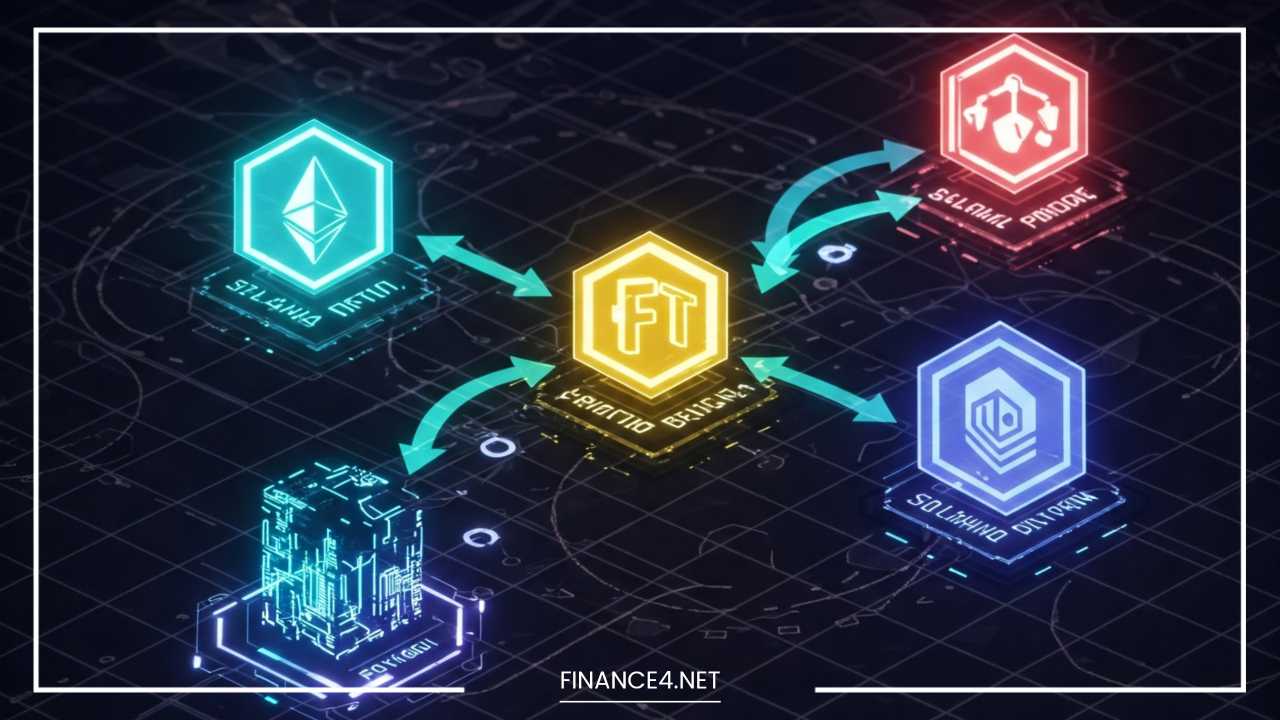
Cross-chain functionality emerges as the crucial bridge connecting these isolated islands. By enabling seamless movement and interaction of NFTs across disparate blockchain networks, cross-chain solutions unlock unprecedented possibilities for the entire NFT landscape. This article will delve into the critical need for cross-chain interoperability in the NFT space and highlight the top solutions paving the way for a truly interconnected digital future.
🔗 2. Why Cross-Chain Interoperability Matters for NFTs
The challenges posed by siloed NFT ecosystems are numerous and impact every participant. For creators, limiting their NFTs to a single chain restricts their potential audience and market reach. A stunning piece of digital art minted on Ethereum might not be easily accessible to collectors primarily active on Solana, and vice versa. This fragmentation stifles innovation and limits the creative potential of NFTs.
Collectors, too, suffer from this isolation. Managing NFTs across multiple wallets on different chains can be cumbersome and confusing. Furthermore, the inability to easily transfer NFTs between chains limits their utility. An NFT representing an in-game asset on one blockchain cannot readily be used in a game on another, hindering the true potential of interoperable metaverse experiences.
For developers, building multi-chain applications is a complex endeavor, requiring them to account for the unique characteristics and limitations of each blockchain. This increases development time, costs, and the potential for security vulnerabilities.
Cross-chain interoperability addresses these pain points by:
- Expanding Market Reach and Liquidity: By allowing NFTs to move across chains, they become accessible to a much larger pool of buyers and sellers, increasing liquidity and potentially stabilizing prices.
- Enabling Richer Use Cases: This is where the true power lies. Imagine:
- Gaming: In-game assets, characters, and achievements could be transferred and utilized across different blockchain-based games, creating a truly interoperable metaverse.
- Marketplaces: NFT marketplaces can offer a wider array of assets from various chains, providing a more comprehensive experience for users.
- DeFi Integrations: NFTs can be used as collateral for loans, leveraged in yield farming protocols, or fractionalized across different DeFi ecosystems, unlocking new financial opportunities.
- IP Ownership Transfer: Seamlessly transferring intellectual property rights represented by NFTs across diverse platforms.
- Fostering Innovation: Developers gain the freedom to build applications that leverage the strengths of multiple chains without being constrained by single-chain limitations.
- Improving User Experience: A more seamless experience for collectors, who can manage their diverse NFT portfolios from a single interface or easily move assets as needed.
⚙️ 3. How Cross-Chain Technology Works (High-Level Overview)
Achieving cross-chain interoperability for NFTs involves various mechanisms, each with its own advantages and security considerations. At a high level, these technologies enable communication and asset transfer between otherwise independent blockchains.
- Bridges: These are the most common form of cross-chain solution. A blockchain bridge typically works by locking an NFT on the source chain and then minting an equivalent “wrapped” or “representative” NFT on the destination chain. When the NFT is moved back, the wrapped NFT is burned, and the original is unlocked. The security of bridges heavily relies on the trust model of their validators or relayers.
- Wrapping (e.g., Wrapped NFTs): As mentioned with bridges, wrapping involves creating a new token on a different blockchain that represents an original asset on another chain. This “wrapped NFT” functions identically to the original within the new ecosystem, while the original remains locked. This mechanism effectively extends the utility of an NFT to multiple chains without truly moving the original.
- Atomic Swaps: While more common for fungible tokens, atomic swaps can, in theory, facilitate direct, peer-to-peer exchanges of NFTs across different blockchains without a centralized intermediary. These rely on hashed timelock contracts (HTLCs) to ensure that either both parties complete the swap or neither does, eliminating counterparty risk. However, atomic swaps for complex NFTs with varying metadata and standards are still a nascent area.
- Interoperability Protocols: These are more fundamental frameworks designed to enable secure and generalized message passing and asset transfers between blockchains. They often leverage a network of validators or a specialized blockchain (like a relay chain) to verify and relay cross-chain transactions. These protocols aim to provide a more robust and decentralized approach to interoperability compared to simple bridges.
Security and Decentralization Considerations: The security of any cross-chain solution is paramount. Bridges, in particular, have been targets of significant exploits due to vulnerabilities in their smart contracts or the centralization of their validation mechanisms. Decentralized bridges and robust interoperability protocols that employ advanced cryptographic proofs (like zero-knowledge proofs) and a large, distributed set of validators are generally considered more secure. Decentralization in these solutions aims to minimize single points of failure and reduce reliance on trusted intermediaries.
🚀 4. Criteria for Evaluating Cross-Chain NFT Solutions
Choosing the right cross-chain solution for NFTs requires careful consideration of several key factors:
- Security & Audit Status: Given the history of bridge exploits, the security posture is non-negotiable. Look for solutions that have undergone rigorous security audits by reputable firms, employ robust cryptographic methods, and have a strong track record of protecting user assets. Decentralization of the validation process is also a key indicator of security.
- Supported Chains: The breadth of supported blockchains directly impacts the reach and utility of the solution. A comprehensive solution should connect to major NFT ecosystems like Ethereum, Solana, Polygon, Avalanche, and newer high-throughput chains.
- Speed & Cost-Efficiency: Cross-chain transfers should be fast and affordable. High gas fees or prolonged transaction times can significantly diminish the user experience and practical utility of moving NFTs. Solutions that optimize for low transaction costs and rapid finality are preferable.
- Developer Adoption & Ecosystem Growth: A thriving developer community and a growing ecosystem of dApps and projects built on the solution are strong indicators of its long-term viability and potential for innovation. This suggests active development, ongoing improvements, and a wider range of integrated services.
- User Experience & Wallet Compatibility: The process of bridging or interacting with cross-chain NFTs should be intuitive and user-friendly. Broad wallet compatibility (e.g., MetaMask, Phantom, Coinbase Wallet) is also crucial for seamless adoption.
🏆 5. Top Cross-Chain Solutions for NFTs
This section explores some of the leading cross-chain solutions making significant strides in NFT interoperability.
LayerZero
- Overview: LayerZero is an omnichain interoperability protocol designed to facilitate secure and efficient message passing across different blockchains. It aims to be the underlying communication layer for the multi-chain future, allowing developers to build “omnichain” applications.
- How it works (brief): LayerZero utilizes “Ultra Light Nodes” (ULNs) which are smart contracts that verify transactions from other chains with minimal on-chain storage. It relies on a network of oracles (like Chainlink) and relayers to transmit and verify messages between chains. For NFTs, LayerZero enables the creation of “Omnichain NFTs” (ONFTs), which can exist natively on multiple chains.
- Supported chains: Extensive support including Ethereum, Avalanche, BNB Chain, Polygon, Arbitrum, Optimism, Fantom, Metis, Aptos, and more.
- Use cases or real-world adoption: Powers various omnichain applications, including NFT marketplaces and gaming projects seeking true cross-chain asset ownership. A prime example is the Gh0stly Gh0sts NFT collection, which was minted as ONFTs, allowing holders to seamlessly move their NFTs across multiple LayerZero-supported chains.
- Pros & Cons:
- Pros: True omnichain approach, flexible for developers, strong security model leveraging external oracles, growing ecosystem.
- Cons: Relatively new, relies on external oracles and relayers, potential complexity for new developers.
Wormhole
- Overview: Wormhole is a popular general-purpose message-passing protocol that enables assets and data to flow freely across various high-value blockchains. It’s known for its speed and broad chain support.
- How it works (brief): Wormhole operates through a network of 19 “Guardians” (validator nodes) who observe and verify events on connected blockchains. When an NFT is bridged, the Guardians attest to the event on the source chain, allowing a wrapped version to be minted on the destination chain.
- Supported chains: A wide array of EVM and non-EVM chains, including Solana, Ethereum, Avalanche, Polygon, BNB Chain, Fantom, Arbitrum, Optimism, Sui, Aptos, and Near.
- Use cases or real-world adoption: Widely used for bridging NFTs and tokens across ecosystems, particularly prominent in connecting Solana with EVM chains for various DeFi and NFT applications. Many NFT collections have leveraged Wormhole to expand their reach.
- Pros & Cons:
- Pros: Fast transaction speeds, extensive chain support, widely adopted.
- Cons: Centralization risk with 19 Guardians (though actively working towards decentralization), past security exploits highlight bridge inherent risks.
Axelar
- Overview: Axelar is a secure cross-chain communication network designed to allow developers to build dApps that span multiple blockchains. It provides a generalized message-passing layer for arbitrary data and token transfers, including NFTs.
- How it works (brief): Axelar operates its own Proof-of-Stake blockchain, where validators collectively secure cross-chain messages and asset transfers. It uses a network of validators to relay messages and a “Gateway” smart contract on each connected chain to facilitate interaction.
- Supported chains: Supports a growing number of EVM chains and Cosmos-SDK chains, including Ethereum, Avalanche, Polygon, BNB Chain, Fantom, Moonbeam, and Osmosis.
- Use cases or real-world adoption: Used by various DeFi protocols and NFT projects for secure cross-chain asset movement and general message passing. Its focus on security and generalized message passing makes it suitable for complex NFT applications that require more than just simple bridging.
- Pros & Cons:
- Pros: Robust security model with a decentralized validator set, generalized message passing for complex dApp interactions, strong focus on developer tools.
- Cons: Can be more complex to integrate for simple bridging needs, adoption is growing but still catching up to some older solutions.
Polygon zkEVM / Polygon PoS with cross-chain bridges
- Overview: Polygon offers a powerful multi-chain architecture, with Polygon PoS (Proof-of-Stake) being a popular sidechain for NFTs due to its low fees and high throughput, and Polygon zkEVM providing Ethereum-equivalent security with faster finality. Both leverage dedicated bridges for cross-chain functionality.
- How it works (brief):
- Polygon PoS Bridge: A two-way bridge secured by a validator set, allowing assets to move between Ethereum and Polygon PoS.
- Polygon zkEVM Bridge: Leverages ZK-rollup technology to provide cryptographic proofs for trustless validation, enabling faster and more secure transfers between Ethereum and Polygon zkEVM.
- Supported chains: Primarily facilitates transfers between Ethereum and Polygon PoS/zkEVM. Many third-party bridges also connect Polygon to other networks.
- Use cases or real-world adoption: Polygon PoS is a major hub for NFT gaming and digital collectibles, with projects like Decentraland and Sandbox utilizing its ecosystem. Polygon zkEVM is gaining traction for projects requiring higher security and scalability.
- Pros & Cons:
- Pros: Low transaction fees on Polygon PoS, high throughput, strong ecosystem for gaming and collectibles, zkEVM offers Ethereum-grade security.
- Cons: Primarily focused on the Ethereum-Polygon bridge (though third-party bridges exist for wider connectivity), zkEVM is still relatively new.
Chainlink CCIP (Cross-Chain Interoperability Protocol)
- Overview: Chainlink CCIP is a secure and robust cross-chain communication framework developed by Chainlink, known for its decentralized oracle networks. CCIP aims to become the industry standard for cross-chain data and token transfers.
- How it works (brief): CCIP leverages Chainlink’s decentralized oracle networks to securely transmit messages and token transfers across blockchains. It uses “Risk Management Networks” and “Canonical Token Bridges” to ensure the integrity and security of cross-chain operations, with a focus on defense-in-depth security.
- Supported chains: Initially supporting major EVM chains like Ethereum, Avalanche, Optimism, Arbitrum, and Polygon, with plans for broader expansion.
- Use cases or real-world adoption: While newer to direct NFT bridging compared to other solutions, CCIP’s generalized messaging capabilities enable complex cross-chain interactions for NFTs, such as triggering actions on a different chain based on NFT ownership or events. This includes cross-chain gaming and multi-chain DeFi integrations involving NFTs.
- Pros & Cons:
- Pros: Leverages Chainlink’s battle-tested oracle infrastructure for high security, robust and generalized message passing, strong emphasis on risk management.
- Cons: Newer entry into the dedicated NFT bridging space, may be more complex for simple NFT transfers compared to dedicated bridges.
Router Protocol
- Overview: Router Protocol is a cross-chain liquidity and communication protocol designed to facilitate seamless asset transfers, including NFTs, across various blockchain networks. It aims to aggregate liquidity from different chains.
- How it works (brief): Router Protocol uses a network of validators and smart contracts to enable the transfer of assets. It employs a “Pathfinder” algorithm to identify the most efficient and cost-effective routes for cross-chain transfers. For NFTs, it focuses on providing a smooth bridging experience.
- Supported chains: Supports a growing number of EVM chains, including Ethereum, Polygon, BNB Chain, Avalanche, Arbitrum, Optimism, and more.
- Use cases or real-world adoption: Focuses on enabling seamless token and NFT bridging for users and dApps, enhancing liquidity and accessibility across fragmented ecosystems.
- Pros & Cons:
- Pros: Aims for optimal routing for efficiency, user-friendly interface for bridging, expanding chain support.
- Cons: Still building out its ecosystem and broader adoption compared to more established players.
Rarimo
- Overview: Rarimo is an innovative cross-chain identity and asset management protocol. It takes a unique approach by focusing on the underlying data and identity associated with digital assets, including NFTs, to enable their secure movement across chains.
- How it works (brief): Rarimo uses a network of validators and zero-knowledge proofs to verify the authenticity of an asset and its associated data across different blockchains without revealing sensitive information. This allows for the secure “transfer” of an NFT’s identity and ownership, rather than just a wrapped representation.
- Supported chains: Supports various EVM chains and is expanding to other ecosystems.
- Use cases or real-world adoption: Particularly strong for use cases involving cross-chain identity, verifiable credentials, and complex NFT functionalities where the integrity of the underlying data is crucial. It is used for applications like cross-chain proof of humanity and universal NFT checkout solutions.
- Pros & Cons:
- Pros: Focus on true identity and data portability for NFTs, innovative use of zero-knowledge proofs for security, enables more complex cross-chain NFT functionalities.
- Cons: Newer and less widely known than some other solutions, the concept of “identity transfer” might be more complex for casual users.
Polkadot/XCM
- Overview: Polkadot is a sharded, heterogeneous multi-chain network that provides native interoperability between its constituent blockchains, called parachains. The Cross-Consensus Message Format (XCM) is Polkadot’s language for communicating between these parachains.
- How it works (brief): XCM allows for direct, trustless message passing and asset transfers (including NFTs) between parachains without the need for external bridges. NFTs can be “teleported” or “reserved” on different parachains, maintaining their unique identity and ownership within the Polkadot ecosystem.
- Supported chains: Primarily within the Polkadot ecosystem (Polkadot Relay Chain and its parachains like Moonbeam, Acala, Unique Network).
- Use cases or real-world adoption: Enables a highly interconnected ecosystem for NFTs within Polkadot, facilitating use cases like cross-parachain gaming, NFT-backed DeFi, and shared NFT marketplaces. Unique Network, a parachain dedicated to NFTs, heavily leverages XCM for native cross-chain NFT capabilities.
- Pros & Cons:
- Pros: Native, trustless interoperability at the protocol level, high security due to shared security model, purpose-built for multi-chain interactions.
- Cons: Limited to the Polkadot ecosystem for native interoperability (though bridges to external chains exist), requires understanding of parachain architecture.
Composable Finance
- Overview: Composable Finance is a DeFi infrastructure layer aiming to unlock seamless interoperability and composability across various blockchain networks, including for NFTs. It focuses on abstracting away the complexities of cross-chain communication.
- How it works (brief): Composable Finance utilizes the Inter-Blockchain Communication (IBC) Protocol, a standard for cross-chain communication, and its own Composable Virtual Machine (CVM) to enable smart contracts to interact across chains. This allows for complex DeFi and NFT composability.
- Supported chains: Primarily focused on the Cosmos ecosystem via IBC, but aims to bridge to EVM chains and other networks.
- Use cases or real-world adoption: Designed for advanced DeFi and NFT use cases that require deep composability across different chains, allowing for novel financial products and applications built around NFTs.
- Pros & Cons:
- Pros: Deep composability for complex DeFi and NFT applications, leverages robust IBC standard, focuses on abstracting cross-chain complexities.
- Cons: Still in development and ecosystem building, adoption is primarily within the Cosmos ecosystem with ongoing efforts to bridge to EVM.
🧩 6. Notable Cross-Chain NFT Projects & Use Cases
The growing adoption of cross-chain solutions is powering innovative NFT projects and expanding their utility:
- Gaming: The metaverse vision relies heavily on cross-chain assets. Games like The Sandbox and Decentraland, while primarily on Polygon/Ethereum, are exploring ways to allow users to bring in assets from other chains. Newer blockchain games are being built with omnichain compatibility from the ground up, allowing players to truly own and use their in-game items across different virtual worlds and even different games. This includes concepts like universal avatars and character NFTs that can traverse metaverses.
- NFT Marketplaces Supporting Multiple Chains: Marketplaces are at the forefront of user experience. Leading platforms like Magic Eden (initially Solana-focused, now expanding to Ethereum, Polygon, and more) and OpenSea (supporting Ethereum, Polygon, Klaytn, Arbitrum, Optimism, etc.) have integrated cross-chain capabilities, allowing users to browse, buy, and sell NFTs from a variety of networks within a single interface. This significantly reduces friction for collectors.
- Identity & Reputation Systems Using NFTs: Imagine a decentralized identity (DID) represented by an NFT that can move across chains, carrying your reputation, credentials, and achievements. Projects like Rarimo are building the foundational layers for such cross-chain identities, enabling users to prove ownership or verify attributes seamlessly across different Web3 applications, regardless of the underlying blockchain.
- DAO Membership NFTs that Move Across Chains: Decentralized Autonomous Organizations (DAOs) often issue NFTs to represent membership or voting rights. With cross-chain solutions, these governance NFTs can be designed to be chain-agnostic, allowing DAO members to participate in governance or access exclusive benefits on whichever chain is most convenient or cost-effective for them, fostering greater participation and flexibility.
🔮 7. Future of Cross-Chain NFTs
The trajectory of cross-chain NFTs points towards a future where digital assets are truly fluid and unbound by blockchain limitations. The growing demand for a seamless multichain user experience is undeniable. Users no longer want to be constrained by network silos, and creators seek wider audiences for their digital creations.
However, challenges remain. Security continues to be the paramount concern. The complexity of cross-chain interactions introduces new attack vectors, and ensuring the integrity of assets as they traverse different networks requires continuous innovation and rigorous auditing. User experience (UX) also needs significant improvement. While some solutions offer relatively smooth bridging, the process can still be daunting for mainstream users. Simplifying gas fee management across chains and providing intuitive interfaces will be crucial for mass adoption. Standardization of cross-chain protocols and NFT metadata formats is another vital area for development. A lack of universal standards can lead to fragmentation even within cross-chain solutions, hindering true interoperability.
Looking ahead, several trends will shape the future of cross-chain NFTs:
- Modular Blockchains: The rise of modular blockchain architectures, where different layers specialize in specific functions (e.g., execution, data availability, consensus), will inherently facilitate cross-chain communication. This modularity will make it easier to connect and transfer assets between these specialized layers.
- Layer 2s: Ethereum’s Layer 2 scaling solutions (rollups like Arbitrum, Optimism, zkSync, StarkNet) are already playing a significant role in making NFT transactions faster and cheaper. Cross-chain solutions will increasingly focus on enabling seamless movement between these L2s and the mainnet, as well as between different L2s.
- Cross-Chain Identity: The concept of a persistent digital identity that transcends individual blockchains is gaining traction. NFTs are perfectly positioned to represent these cross-chain identities, enabling users to carry their reputation, credentials, and social graphs across various Web3 platforms. This will unlock new possibilities for personalized experiences and trustless interactions in the decentralized web.
📝 8. Final Thoughts & Recommendations
Cross-chain solutions are not merely a convenience; they are critical for the long-term growth and adoption of NFTs. By dismantling the walls between blockchain ecosystems, they unlock unprecedented liquidity, utility, and creative potential for digital assets. The fragmented nature of the early NFT landscape is gradually giving way to a more interconnected and expansive digital realm.
For creators, embracing cross-chain solutions means reaching a broader audience, fostering more engaging communities, and unlocking novel ways for their art or creations to be used. Explore platforms that offer broad chain support and focus on user-friendly bridging experiences.
For developers, understanding and integrating with cross-chain protocols is essential for building the next generation of truly decentralized applications. Solutions offering robust developer tools, secure generalized message passing, and a growing ecosystem should be prioritized.
For investors and collectors, cross-chain interoperability offers enhanced liquidity, more diverse investment opportunities, and the ability to leverage their NFTs in new and exciting ways across different DeFi and gaming environments. However, always prioritize security and due diligence when interacting with cross-chain bridges.
To those new to using cross-chain platforms, a good starting point would be to experiment with established multi-chain NFT marketplaces like OpenSea or Magic Eden, which abstract much of the underlying complexity. For those looking to bridge their own NFTs, begin with well-audited and widely adopted bridges associated with prominent chains, like the Polygon Bridge, and always verify transaction details carefully. The future of NFTs is undoubtedly multichain, and understanding these cross-chain solutions is key to navigating and thriving in this evolving digital frontier.