Future of Cross-Chain NFT Domain Names
 by
by 
The Seamless Horizon: The Future of Cross-Chain NFT Domain Names
The internet, as we know it, is undergoing a profound transformation. From a centralized network controlled by a few large entities, we’re steadily moving towards Web3 – a decentralized, user-owned, and permissionless digital landscape. At the heart of this revolution lies the concept of digital ownership, and within that, the emergence of Non-Fungible Token (NFT) domain names. These aren’t just web addresses; they are foundational elements of digital identity, branding, and a truly decentralized internet. However, the true potential of NFT domain names remains constrained by the inherent fragmentation of the blockchain ecosystem. The future, therefore, hinges on cross-chain interoperability, promising a seamless, universally accessible digital experience.
1. Introduction
NFT domain names, such as those ending in .eth or .crypto, represent a paradigm shift from traditional domain name systems (DNS). Unlike their Web2 counterparts, which are managed by centralized authorities, NFT domains are owned by individuals as verifiable, immutable NFTs on a blockchain. This fundamental difference empowers users with true ownership, censorship resistance, and a new frontier for digital identity.
The blockchain space, while vibrant and innovative, is a mosaic of independent networks – Ethereum, Solana, Polygon, Avalanche, and many more. Each boasts unique strengths in terms of speed, cost, and functionality. However, this diversity often leads to isolation, where assets and identities are confined to their native chains. This is where cross-chain interoperability becomes paramount. It’s the ability for these disparate blockchain networks to communicate, transfer data, and interact seamlessly, effectively breaking down these digital silos.
In the evolving landscape of Web3, decentralized applications (dApps), and self-sovereign digital identities, the significance of decentralized domains is growing exponentially. They are not merely entry points to decentralized websites but serve as universal usernames, payment addresses, and verifiable credentials. The fusion of NFT domain names with robust cross-chain capabilities promises to unlock an unprecedented level of utility, convenience, and reach, paving the way for a truly interconnected decentralized web.
2. Understanding NFT Domain Names
What are NFT domain names?
At their core, NFT domain names are human-readable addresses, similar to “.com” or “.org” domains, but instead of being registered with a traditional registrar, they are minted as NFTs on a blockchain. This means that ownership is recorded on a public, immutable ledger, granting the holder complete control and verifiable proof of their digital asset. Examples include “.eth” domains from the Ethereum Name Service (ENS) and “.crypto”, “.nft”, or “.wallet” domains offered by Unstoppable Domains. They serve as simplified representations for complex blockchain addresses (e.g., transforming a long string of alphanumeric characters into “yourname.eth”), making interactions within the Web3 ecosystem far more user-friendly.
Current Popular NFT Domain Platforms:
Two prominent players dominate the NFT domain space:
- Unstoppable Domains: This platform offers a wide array of top-level domains (TLDs) like .crypto, .nft, .wallet, .blockchain, and more. Their unique selling proposition is a one-time purchase model, meaning no renewal fees. Unstoppable Domains aims to be a universal username for Web3, allowing users to send and receive cryptocurrencies, host decentralized websites, and log into dApps with a single, memorable name.
- Ethereum Name Service (ENS): Built directly on the Ethereum blockchain, ENS provides .eth domains. It functions as a decentralized naming system, mapping human-readable names to Ethereum addresses, content hashes, and other identifiers. ENS is deeply integrated into the Ethereum ecosystem and widely supported by wallets and dApps.
Benefits of NFT domains:
The advantages of owning an NFT domain are compelling:
- Ownership: Unlike traditional domains, which are leased, NFT domains are truly owned by the individual. They are digital assets in their own right, held in a crypto wallet.
- Immutability: Once registered on the blockchain, the ownership and associated data of an NFT domain cannot be altered or removed by any central authority.
- Censorship Resistance: Due to their decentralized nature, NFT domains are resistant to takedowns or censorship from governments or corporations, upholding the principles of free speech and open access.
- Potential for Branding: Just like traditional domains, NFT domains offer a powerful tool for personal and corporate branding in the decentralized digital sphere. They can become recognizable identifiers for individuals, projects, and businesses.
The Role of NFTs in the Web3 Ecosystem:
NFT domains are a cornerstone of the Web3 revolution. They simplify interactions with decentralized applications (dApps), enable easy crypto payments by acting as human-readable wallet addresses, and contribute significantly to the concept of self-sovereign digital identity. As Web3 evolves, NFT domains are becoming increasingly vital for navigating decentralized finance (DeFi), metaverses, and the broader digital landscape.
3. The Importance of Cross-Chain Interoperability
What is cross-chain interoperability?
Cross-chain interoperability refers to the ability of different blockchain1 networks to seamlessly communicate and interact with each2 other. Imagine a world where every country spoke a different language, and there were no translators or common tongue – that’s the current state of fragmented blockchains. Cross-chain solutions act as these translators and bridges, enabling the transfer of assets, data, and even smart contract calls between otherwise isolated networks. This can involve various technologies, including atomic swaps, relays, merged consensus, and specialized blockchain bridges.
Why cross-chain support is crucial:
The blockchain ecosystem is vast and diverse, with numerous networks optimized for different purposes. Users often hold digital assets, engage with dApps, and maintain digital identities across multiple chains. Without cross-chain support, this creates a fragmented and cumbersome experience. Users desire a unified interface to manage all their digital assets and identities, regardless of the underlying blockchain. Cross-chain interoperability is crucial for:
- Unlocking Liquidity: Assets confined to one blockchain have limited market exposure. Cross-chain capabilities allow assets to move freely, increasing liquidity and market efficiency.
- Enhanced User Experience: Jumping between different wallets and interfaces for each blockchain is a significant barrier to mainstream adoption. Seamless cross-chain interactions simplify the user journey.
- Broader Utility: The functionality of dApps and digital assets can be significantly expanded when they can leverage the strengths of multiple blockchains.
- Reduced Fragmentation: Interoperability combats the “walled garden” effect, fostering a more cohesive and integrated decentralized web.
Challenges without cross-chain support:
The absence of robust cross-chain support presents several significant challenges:
- Lack of Seamless Integration: Users are forced to manually bridge assets, often through complex and risky processes, or maintain separate accounts and identities on each chain.
- Restricted Utility: An NFT domain on Ethereum might only be recognized by Ethereum-based dApps, limiting its functionality on other popular chains like Solana or Avalanche.
- Fragmentation of Assets: Digital identities, NFTs, and cryptocurrencies remain isolated, hindering a holistic view and management of one’s digital presence. This can lead to missed opportunities for creators and limited reach for users.
Cross-chain interoperability in NFTs:
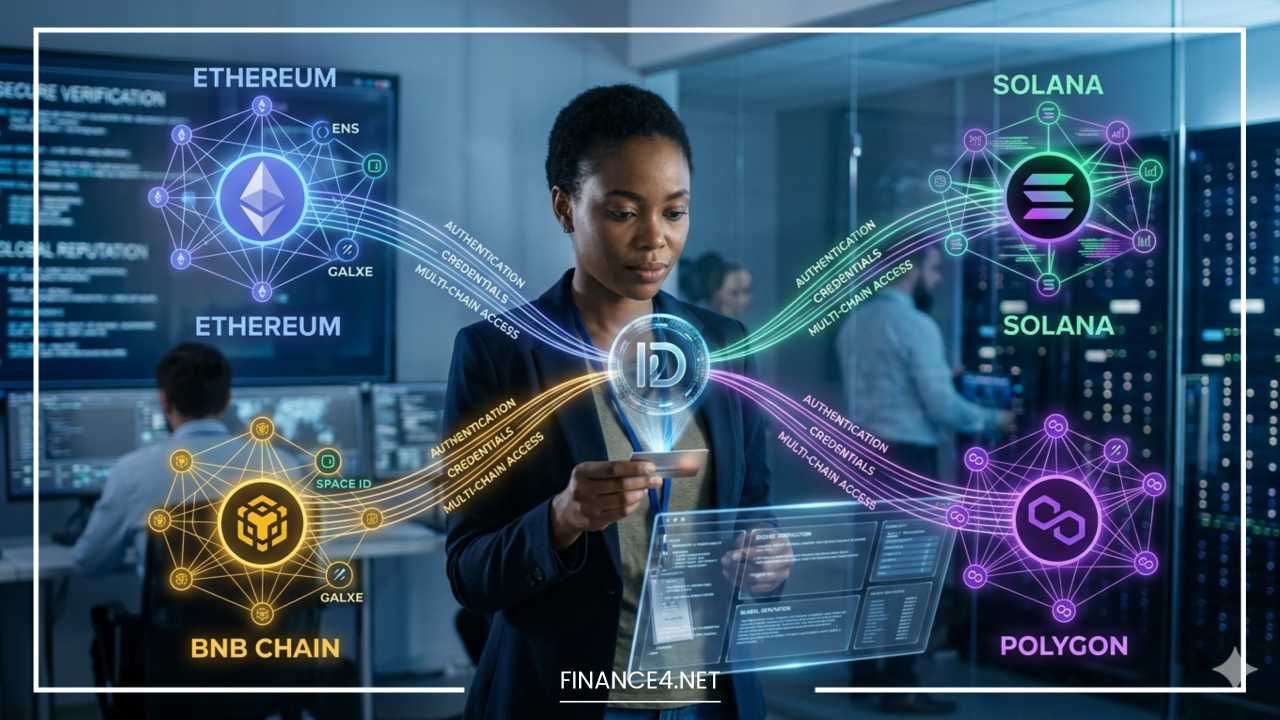
For NFT domains, multi-chain support is a game-changer. Imagine registering “yourname.eth” and having it instantly recognized as your digital identity and payment address across Solana, Polygon, and Binance Smart Chain. This broadens the adoption of NFT domains by:
- Increasing Accessibility: Users on different blockchains can easily acquire and utilize NFT domains.
- Enhancing Functionality: An NFT domain can serve as a universal identifier for various Web3 activities, from logging into a metaverse on one chain to receiving payments on another.
- Promoting Standardization: As cross-chain solutions mature, they naturally drive the development of universal standards for how NFT domains are recognized and interpreted across different networks.
4. Current State of Cross-Chain NFT Domain Names
The journey towards truly seamless cross-chain NFT domain names is ongoing, with existing solutions offering varying degrees of interoperability. While the vision of a universally recognized decentralized identity is still materializing, significant progress has been made.
Existing solutions and platforms:
The current landscape of NFT domain names is largely dominated by platforms like Unstoppable Domains and ENS, which are making strides in expanding their reach beyond their native blockchains.
- Unstoppable Domains: From its inception, Unstoppable Domains has aimed for a multi-chain approach. While their domains are minted on Polygon (and previously Ethereum), they are designed to resolve across various blockchains. Users can link their .crypto, .nft, or other Unstoppable Domains to addresses on Ethereum, Bitcoin, Solana, and many other cryptocurrencies, allowing for simplified payments across a wide range of networks. This is achieved through their resolution service which can translate the human-readable domain into the correct blockchain address for the chosen cryptocurrency.
- Ethereum Name Service (ENS): Primarily focused on the Ethereum ecosystem, ENS’s .eth domains are inherently tied to Ethereum. However, efforts are underway to integrate ENS names with other Layer 2 solutions and potentially other blockchains through various bridging mechanisms and community-driven initiatives. While direct cross-chain resolution for ENS names to addresses on entirely different Layer 1s is not as native as Unstoppable Domains, the Ethereum Virtual Machine (EVM) compatibility of many chains allows for some level of integration.
Ethereum and other blockchains:
Ethereum, being the largest NFT ecosystem, naturally plays a central role. ENS domains are deeply embedded within Ethereum’s infrastructure. Other blockchains, such as Solana, Avalanche, and BNB Chain, have their own nascent domain naming services or leverage partnerships with existing ones. The challenge lies in ensuring that a domain registered on one chain can be recognized and utilized on another. This often involves:
- Bridges: Blockchain bridges are critical for transferring assets (including wrapped NFTs representing domain ownership) and data between different chains. However, these bridges can be complex, and their security has been a recurring concern in the broader blockchain space.
- API Integrations: Projects on different blockchains can integrate with domain resolution services, allowing them to look up and display NFT domain names, even if the underlying domain is on a different chain.
Success stories:
Unstoppable Domains provides a compelling example of successful cross-chain implementation. By allowing users to link a single domain to multiple cryptocurrency addresses across different blockchains, they have simplified the process of sending and receiving funds. For instance, a user can provide “myname.crypto” to someone who wants to send them Bitcoin, Ethereum, or Solana, and the Unstoppable Domains resolution service handles the routing. This has significantly enhanced user experience for crypto payments.
Another success, albeit more within the Ethereum ecosystem, is the increasing adoption of ENS names as universal usernames across various dApps and wallets. While not strictly “cross-chain” in the sense of bridging to a non-EVM chain, it demonstrates the power of a single, human-readable identifier across a diverse set of applications on a common platform.
Challenges faced by current platforms:
Despite these advancements, the current state of cross-chain NFT domain names faces several hurdles:
- User Adoption: The concept of NFT domains and cross-chain interactions can still be complex for the average user, hindering widespread adoption.
- Technical Limitations: Building secure and efficient cross-chain bridges and resolution mechanisms is technically challenging, often leading to performance bottlenecks and potential security vulnerabilities.
- Interoperability Issues: True “plug-and-play” interoperability where any NFT domain works seamlessly across any blockchain without specific integrations is still a distant goal. Different chains have different architectures, consensus mechanisms, and smart contract languages, making universal compatibility difficult.
- Cost and Speed: Transactions involving cross-chain operations can sometimes incur higher fees and longer confirmation times, especially on congested networks.
5. The Future of Cross-Chain NFT Domain Names
The trajectory of cross-chain NFT domain names points towards a future characterized by enhanced technological sophistication, standardized protocols, and a significantly improved user experience. This evolution will be driven by advancements across several key areas.
Technological advancements needed:
For NFT domains to truly flourish across chains, fundamental improvements are required in the underlying cross-chain infrastructure:
- Robust and Secure Bridging Solutions: The current generation of blockchain bridges, while functional, has been susceptible to exploits. The future demands more secure, audited, and decentralized bridging mechanisms, potentially leveraging zero-knowledge proofs (ZKPs) or multi-party computation (MPC) for enhanced security and privacy during cross-chain transfers.
- Atomic Swaps and Direct Chain-to-Chain Communication: Moving beyond traditional bridges, advancements in atomic swaps and direct communication protocols between blockchains could offer more trustless and efficient asset transfers, including NFT domain ownership.
- Standardized NFT Representations: The development of universal standards for NFT metadata and ownership representation across different blockchains will be crucial. This ensures that an NFT domain minted on one chain is instantly recognizable and verifiable on another, regardless of the underlying blockchain’s native token standard.
The role of Layer 2 solutions:
Layer 2 solutions and sidechains (e.g., Polygon, Arbitrum, Optimism, zkSync) will play a pivotal role in scaling cross-chain domain name services. By offloading transaction processing from congested Layer 1 blockchains (like Ethereum), Layer 2s can offer significantly faster and cheaper transactions. This is critical for the frequent updates and resolutions required for dynamic NFT domain functionalities. Cross-chain solutions between Layer 2s, and between Layer 2s and Layer 1s, will further enhance the fluidity of NFT domain usage.
Interoperability protocols and standards:
The fragmented nature of the blockchain space necessitates the development of universal interoperability protocols and standards. Initiatives like Polkadot’s parachain model, Cosmos’s Inter-Blockchain Communication (IBC) protocol, and Chainlink’s Cross-Chain Interoperability Protocol (CCIP) are at the forefront of this effort. For NFT domains, this means developing:
- Universal Resolution Protocols: A standardized way for any dApp or wallet, regardless of its native blockchain, to resolve an NFT domain name to its corresponding addresses or content hashes across multiple chains.
- Cross-Chain Smart Contract Standards: Protocols that allow smart contracts associated with NFT domains (e.g., for sub-domains, rental, or transfer logic) to be executed and verified across different blockchains.
- Identity Layer Abstraction: A higher-level abstraction layer that can consolidate digital identities across various chains, with NFT domains serving as the primary identifier.
AI and smart contracts in cross-chain domains:
The integration of Artificial Intelligence (AI) and advanced smart contracts will revolutionize cross-chain NFT domains:
- Automated Domain Management: AI could automate the management of sub-domains, renewal alerts, and even dynamic pricing based on market demand and usage patterns.
- Dynamic Resolution and Routing: AI algorithms could intelligently route domain resolution requests to the most efficient and secure blockchain, optimizing for speed and cost.
- Decentralized Autonomous Organizations (DAOs) for Governance: Smart contracts can enable decentralized governance models for NFT domain registries, allowing token holders to vote on key decisions, such as new TLDs, pricing policies, and interoperability standards across chains.
- Enhanced Security with AI: AI can be employed to detect anomalies and potential security threats in cross-chain domain transactions, providing an additional layer of protection against fraud and exploits.
User experience improvements:
Ultimately, the success of cross-chain NFT domains hinges on a significantly improved user experience. This will involve:
- Intuitive Wallet Interfaces: Wallets need to evolve to seamlessly integrate cross-chain NFT domain management, allowing users to view, manage, and use their domains across different networks without complex manual configurations.
- Simplified Onboarding: Reducing the technical barriers for new users to acquire and utilize NFT domains, including streamlined fiat-to-crypto ramps and easy domain registration processes.
- “One-Click” Cross-Chain Transactions: The ability to perform cross-chain transfers or interactions involving NFT domains with minimal clicks and without requiring deep technical knowledge.
- Unified Digital Identity Dashboards: Platforms that allow users to view and manage their entire cross-chain digital identity, with NFT domains as the central anchor.
6. Potential Use Cases for Cross-Chain NFT Domains
The realization of robust cross-chain NFT domain names will unlock a plethora of transformative use cases, extending their utility far beyond simple website addresses. They will become foundational elements of a truly interconnected and user-centric Web3.
Digital Identity:
Cross-chain NFT domains are poised to become the universal identifiers across the Web3 landscape. Imagine “john.eth” or “acme.crypto” serving as:
- Decentralized Passports: A single, verifiable identity that can be used to log into any dApp, platform, or metaverse, regardless of the underlying blockchain. This eliminates the need for multiple usernames and passwords, enhancing user convenience and security.
- Reputation Systems: Linking an NFT domain to a user’s on-chain activity across various networks, allowing for the development of decentralized reputation scores or credentials based on their interactions, contributions, and verified achievements.
- Professional Profiles: A decentralized resume or professional identity, showcasing skills, certifications, and work history, verifiable on the blockchain and accessible across different professional Web3 platforms.
Decentralized Websites & dApps:
Cross-chain domains will enable truly decentralized websites and dApps to be accessible across different blockchains.
- Multi-Chain Hosting: A website hosted on IPFS and linked to an NFT domain could be accessible to users interacting from different blockchains, ensuring broad reach and censorship resistance.
- Seamless dApp Interaction: Users could interact with dApps on various chains using their single NFT domain, simplifying payment, login, and data retrieval processes. For example, a user with “mybrand.nft” could seamlessly engage with a DeFi protocol on Avalanche and an NFT marketplace on Solana without needing to switch identities or re-authenticate.
Cross-chain integrations for Web3 projects:
Web3 projects can leverage cross-chain NFT domains for broader marketing, community-building, and adoption:
- Unified Branding: Projects can establish a consistent brand identity across multiple blockchain ecosystems using a single NFT domain, making it easier for users to recognize and connect with them.
- Simplified Airdrops and Rewards: Projects can distribute tokens or NFTs to a single NFT domain, simplifying the process and reducing user errors, even if the user’s primary wallet for that token is on a different chain.
- Community Management: NFT domains can serve as unique identifiers for community members, facilitating cross-chain governance, voting, and communication within decentralized autonomous organizations (DAOs).
Branding and Marketing:
NFT domains will become indispensable tools for brand identity across the decentralized web:
- Digital Real Estate: Owning a premium NFT domain name will be akin to owning prime digital real estate, signifying authority, trust, and prominence in the Web3 space.
- Unique Digital Assets: Brands can mint unique NFT domains for specific campaigns, products, or events, creating memorable and interactive branding experiences.
- SEO for the Decentralized Web: As search engines for Web3 evolve, NFT domains will play a crucial role in discoverability and visibility within the decentralized internet.
Gaming, Virtual Worlds, and Metaverse:
The metaverse and virtual worlds are inherently cross-chain, and NFT domains will be critical for seamless integration:
- Universal Avatars and Identities: An NFT domain could be linked to a user’s avatar, in-game assets, and progression across multiple metaverse platforms, allowing for a consistent and portable digital persona.
- Cross-Metaverse Communication: Enabling communication and interaction between users in different virtual worlds, all identified by their unique NFT domain.
- Shared Economies: NFT domains could facilitate seamless transactions and asset transfers within and between virtual economies residing on different blockchains, fostering truly interoperable metaverse experiences. For instance, a weapon earned in a game on one blockchain could be transferred and used in a virtual world on another, with ownership verified by the NFT domain.
7. Challenges and Barriers to Adoption
While the future of cross-chain NFT domain names holds immense promise, several significant challenges and barriers must be addressed for widespread adoption. Overcoming these hurdles will require concerted efforts from developers, regulators, and the broader Web3 community.
Technical hurdles:
The inherent complexity of blockchain technology and cross-chain communication presents formidable technical challenges:
- Security Risks: Cross-chain bridges and protocols are often complex, making them vulnerable to sophisticated attacks. A single vulnerability in a bridge could compromise assets transferred across chains. Ensuring the security of NFT domain ownership and resolution across multiple networks is paramount.
- Scalability Issues: While Layer 2 solutions offer scalability improvements, the sheer volume of transactions and data required for a truly interconnected cross-chain NFT domain system could still strain network capacities. Efficient data synchronization and validation across chains remain a challenge.
- Standardization Challenges: The lack of universally adopted standards for NFT metadata, ownership representation, and cross-chain communication protocols hinders seamless interoperability. Different chains and projects often implement their own solutions, leading to fragmentation and compatibility issues.
- Data Integrity and Consistency: Maintaining data integrity and consistency of NFT domain records across multiple blockchains, especially during transfers or updates, is a complex technical feat. Ensuring that all linked addresses and associated data remain accurate and up-to-date across disparate networks is crucial.
Regulatory and legal considerations:
The decentralized and global nature of NFT domain names and cross-chain protocols introduces significant regulatory and legal complexities:
- Jurisdictional Ambiguity: How different countries and legal systems will classify and regulate NFT domain names (as property, securities, or something else) is still evolving. This uncertainty can deter institutional adoption and create compliance headaches for platforms.
- Intellectual Property Rights: The immutability of blockchain records can clash with traditional intellectual property laws, particularly regarding copyright infringement or trademark disputes over domain names.
- Censorship and Takedown Requests: While a benefit of decentralization, the resistance to censorship in Web3 domains could also present challenges for law enforcement or regulatory bodies in cases of illegal content or malicious activity.
- Consumer Protection: The lack of centralized oversight in decentralized systems raises questions about consumer protection, dispute resolution, and liability in case of technical failures or malicious acts.
Market adoption:
Beyond technical and legal challenges, overcoming user reluctance and market fragmentation is crucial for widespread adoption:
- Overcoming User Reluctance: The learning curve associated with crypto wallets, seed phrases, and blockchain interactions remains a significant barrier for mainstream users. Simplifying the user experience is paramount.
- Market Fragmentation: The existence of multiple NFT domain platforms and numerous blockchains can confuse users and dilute market liquidity. A unified and easy-to-understand ecosystem is needed.
- Trust in New Cross-Chain Technologies: Past exploits of blockchain bridges and the nascent nature of cross-chain solutions mean that users may be hesitant to entrust their valuable digital assets and identities to these new technologies. Building trust through robust security measures, audits, and transparent operations is essential.
- Awareness and Education: Many individuals are still unaware of the concept or benefits of NFT domain names, let alone their cross-chain potential. Extensive education and outreach are required to drive broader understanding and adoption.
Integration with traditional Web2 systems:
Bridging the gap between the decentralized Web3 and the centralized Web2 is another significant challenge:
- DNS Resolution Integration: For NFT domains to truly compete with traditional DNS, there needs to be a seamless way for Web2 browsers and applications to resolve and display decentralized websites. This requires the development of new browser extensions, DNS resolvers, and potentially changes to existing internet infrastructure.
- API and SDK Development: Robust APIs and Software Development Kits (SDKs) are needed to allow Web2 applications to easily integrate with NFT domain services, enabling features like single sign-on using NFT domains or displaying NFT domain names in traditional user interfaces.
- Enterprise Adoption: Convincing traditional businesses and enterprises to adopt and integrate NFT domain names into their existing IT infrastructure will require demonstrating clear benefits, security, and scalability.
8. Final Thoughts
The future of cross-chain NFT domain names represents a pivotal frontier in the evolution of the internet. We stand at the precipice of a truly decentralized web, where digital identity, ownership, and interaction are liberated from centralized control. NFT domain names, as human-readable and immutable identifiers, are fundamental to this vision. However, their true potential can only be unlocked through robust and seamless cross-chain interoperability.
The journey from fragmented blockchain silos to a fully integrated Web3 ecosystem is a complex one, fraught with technical hurdles, regulatory ambiguities, and the perennial challenge of user adoption. Yet, the rapid advancements in Layer 2 solutions, interoperability protocols, and the burgeoning integration of AI with smart contracts paint a promising picture. Projects like Unstoppable Domains have demonstrated the tangible benefits of multi-chain resolution, setting a precedent for wider adoption.
Looking ahead, we envision a future where your NFT domain name isn’t merely an address but your universal digital passport. It will be the single identifier for all your online activities, from receiving payments and accessing dApps to navigating immersive metaverse environments and verifying your digital reputation across disparate blockchain networks. This unified digital identity will not only simplify the user experience but also empower individuals with unprecedented control over their online presence.
The importance of interoperability and decentralization for the Web3 ecosystem cannot be overstated. They are the twin pillars upon which a truly open, fair, and accessible internet will be built. As technology matures and communities collaborate on shared standards, the barriers to cross-chain functionality will diminish, paving the way for a more cohesive and interconnected digital realm. The future holds the promise of a fully integrated Web3 experience, where NFT domains can be universally used across chains, transforming how we interact with the decentralized world and forging a truly seamless digital horizon.