How to Create a Multi-Chain NFT
 by
by 
How to Create a Multi-Chain NFT: Unlocking the Future of Digital Assets
The world of Non-Fungible Tokens (NFTs) has exploded, transforming how we perceive and interact with digital ownership. What began as a niche interest in digital art has rapidly expanded into a multi-billion dollar industry, impacting everything from gaming to real estate. As the NFT landscape matures, the limitations of single-blockchain deployments are becoming increasingly apparent, paving the way for a revolutionary concept: Multi-Chain NFTs. This article will delve into the intricacies of creating multi-chain NFTs, exploring the underlying technologies, practical steps, and crucial considerations for navigating this exciting frontier.
Introduction to NFTs
At its core, an NFT is a unique digital asset, verifiable on a blockchain, that represents ownership of a specific item or piece of content. Unlike cryptocurrencies, which are “fungible” (meaning each unit is interchangeable, like a dollar bill), NFTs are “non-fungible,” meaning each one is distinct and irreplaceable. This inherent uniqueness is what gives NFTs their value. They leverage blockchain technology, a decentralized and immutable ledger, to record ownership and transaction history, ensuring transparency and authenticity.
The rise of NFTs has been nothing short of phenomenal. From Beeple’s record-breaking digital artwork “Everydays: The First 5000 Days” selling for $69 million, to popular play-to-earn games like Axie Infinity, NFTs have carved out significant niches in various industries. In the art world, they offer artists new avenues for monetization and direct interaction with collectors. In gaming, NFTs empower players with true ownership of in-game assets, creating vibrant digital economies. Even in real estate, NFTs are being explored for fractional ownership and streamlined property transfers. This widespread adoption underscores the transformative potential of NFTs in redefining digital asset ownership.
What is a Multi-Chain NFT?
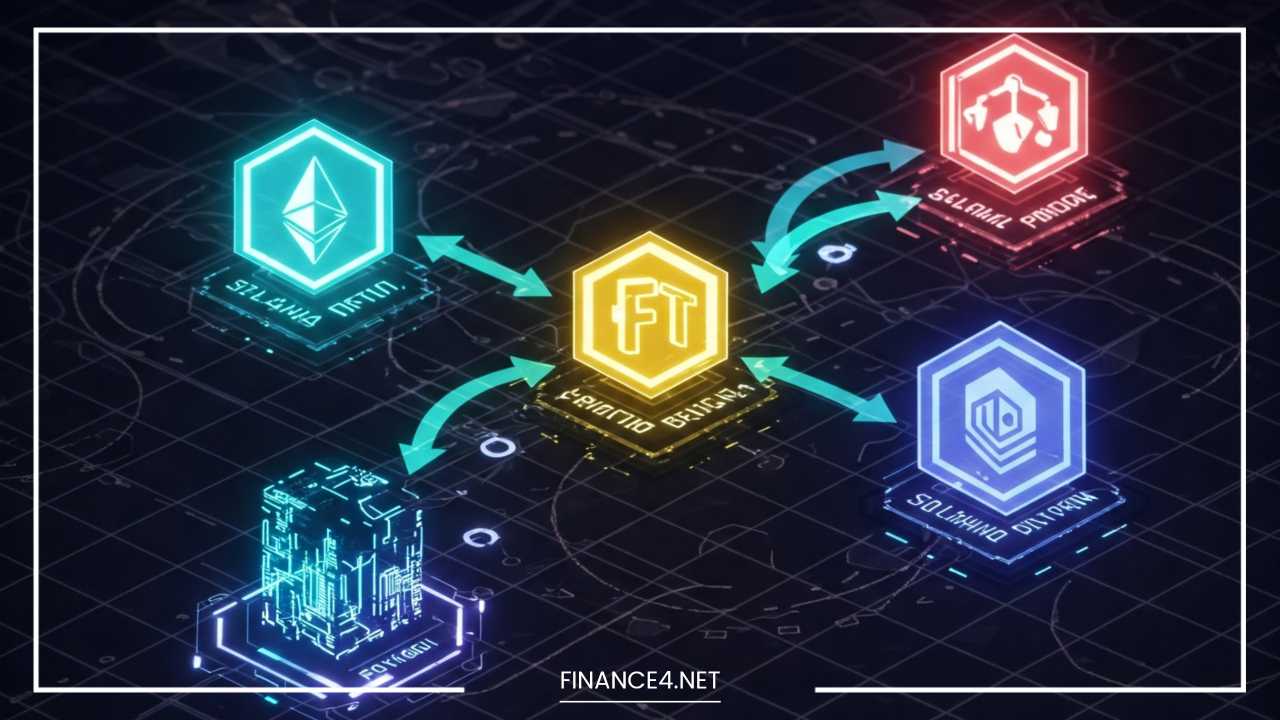
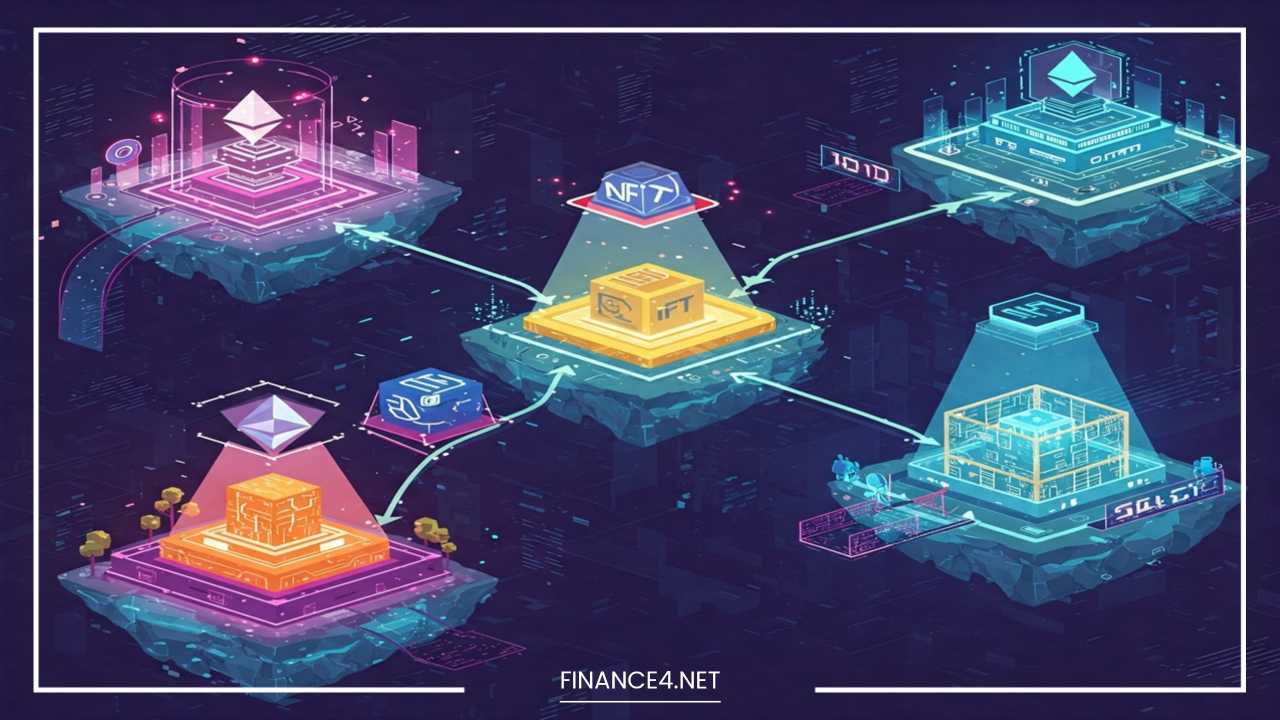
A Multi-Chain NFT, as the name suggests, is an NFT that exists or is accessible across multiple blockchain networks. Instead of being confined to a single blockchain ecosystem, a multi-chain NFT can be transferred, traded, or utilized on various compatible blockchains. This concept introduces a new era of interoperability and flexibility for digital assets.
The significance of multi-chain NFTs cannot be overstated. Traditional NFTs are inherently siloed, limited by the specific blockchain they are minted on. This creates fragmentation within the broader NFT market, restricting liquidity, visibility, and user access. Imagine an NFT created on Ethereum that cannot be easily traded or used on a Solana-based marketplace. Multi-chain NFTs directly address these limitations by enabling seamless interaction between different blockchain ecosystems. This enhanced interoperability translates to several key benefits: greater visibility and access to a wider audience, increased liquidity for NFT owners, and the ability to leverage the unique advantages (e.g., lower gas fees, faster transactions) of different blockchains. Examples of multi-chain NFTs are still emerging, but projects like those utilizing Wrapped NFTs or cross-chain bridging solutions are demonstrating the early potential of this paradigm shift.
Understanding Blockchain Ecosystems
To effectively create multi-chain NFTs, a foundational understanding of various blockchain ecosystems is crucial. The NFT space has blossomed across numerous networks, each with its own strengths and weaknesses.
Popular Blockchains for NFTs:
- Ethereum: The pioneer of NFTs, Ethereum boasts the largest and most mature ecosystem. Its robust security and established developer community make it a popular choice, though it’s notorious for high gas fees and slower transaction speeds, especially during peak network congestion.
- Solana: Known for its high throughput and significantly lower transaction fees, Solana has emerged as a strong contender for NFT projects, particularly those requiring fast and frequent transactions, such as gaming.
- Binance Smart Chain (BSC): Offering EVM compatibility and lower fees compared to Ethereum, BSC has attracted a large user base, especially for projects seeking a more cost-effective alternative.
- Polygon: As a Layer 2 scaling solution for Ethereum, Polygon provides much faster and cheaper transactions while still benefiting from Ethereum’s security. It’s a popular choice for developers looking to reduce gas costs.
- Tezos: Tezos distinguishes itself with its energy-efficient proof-of-stake consensus mechanism and on-chain governance. It’s gaining traction for art-focused NFT platforms.
- Avalanche: Another high-performance blockchain with EVM compatibility, Avalanche offers fast finality and scalability, making it suitable for various DeFi and NFT applications.
The differences between these blockchains are significant and directly impact the user experience and development process. Factors like transaction speed (e.g., Solana’s near-instant transactions vs. Ethereum’s minutes), gas fees (ranging from negligible on Solana to potentially hundreds of dollars on Ethereum), and scalability (how many transactions per second the network can handle) are paramount.
Choosing the right blockchains for your NFT project is a strategic decision. Consider your target audience: are they primarily on Ethereum, or are you aiming for a wider reach across multiple networks? Evaluate the specific needs of your NFT: if it requires frequent micro-transactions (like in a game), a low-fee blockchain like Solana or Polygon might be more suitable. If high security and established liquidity are paramount, Ethereum remains a strong option, perhaps augmented by a Layer 2 solution. The ultimate goal is to select a combination of blockchains that best serves your project’s goals and user base.
How Multi-Chain NFTs Work
The magic behind multi-chain NFTs lies in the sophisticated interplay of token bridges and smart contracts. These technologies enable assets to traverse different blockchain networks, breaking down the silos that traditionally confined NFTs to a single chain.
Token Bridges and Interoperability: The core mechanism facilitating cross-chain transactions is the token bridge. A blockchain bridge is a protocol that connects two disparate blockchains, allowing the transfer of assets and data between them. When an NFT is “bridged” from one chain to another, it’s not actually moved in its original form. Instead, the original NFT is typically locked on its native chain, and a “wrapped” or “representative” version of that NFT is minted on the destination chain. This wrapped NFT is pegged 1:1 to the original, ensuring its value and uniqueness. Examples of popular bridges include AnySwap (now Multichain), RenVM, and various bespoke bridges built for specific ecosystems. These bridges are crucial for achieving true interoperability, allowing NFTs to flow freely across the blockchain landscape.
Smart Contracts for Multi-Chain NFTs: Smart contracts are the self-executing agreements written in code that govern the creation, ownership, and transfer of NFTs. For multi-chain NFTs, these smart contracts become more complex, incorporating logic to manage assets across multiple chains. This often involves a “standard” NFT contract on the native chain and a “wrapper” or “bridge” contract on the destination chain. These contracts ensure that when an NFT is locked on one chain, its representation is correctly minted on another, and vice-versa when it’s bridged back. Platforms like Polkadot and Cosmos are designed from the ground up with interoperability in mind, utilizing concepts like “parachains” (Polkadot) and the “Inter-Blockchain Communication (IBC) protocol” (Cosmos) to enable seamless communication and asset transfer between their constituent chains. Chainlink, while not a direct bridging solution, plays a vital role in secure cross-chain data transfer through its oracle network, which can be leveraged to verify events on one chain to trigger actions on another, enhancing the reliability of multi-chain NFT operations.
Steps to Create a Multi-Chain NFT
Creating a multi-chain NFT involves a series of technical and strategic steps, combining digital asset creation with blockchain deployment and interoperability solutions.
Step 1: Create your Digital Asset
This is the artistic and creative heart of your NFT. Whether it’s a piece of digital art, a 3D model, music, a GIF, or even a virtual property, the quality and uniqueness of your digital asset are paramount.
- Designing and creating the artwork or content for your NFT: Utilize industry-standard tools like Adobe Photoshop, Illustrator, Blender, Cinema 4D, or even simpler online design tools depending on the complexity of your asset. Ensure high resolution and appropriate file formats (e.g., JPG, PNG, GIF, MP4, GLB).
- Metadata: Beyond the visual or audio asset, you’ll need to prepare metadata for your NFT. This typically includes a name, description, properties (e.g., traits, attributes), and a link to the digital asset’s file (often stored on decentralized storage like IPFS).
Step 2: Choose the Blockchains
This is a critical strategic decision that will impact your project’s reach, costs, and user experience.
- Decision factors: Consider gas fees (e.g., Ethereum’s high fees vs. Solana’s low fees), the target audience for your NFT (e.g., Ethereum has a large collector base, Polygon is popular for gaming), the existing ecosystem and infrastructure, and the security implications of each chain.
- Setting up accounts on multiple blockchains: You’ll need compatible cryptocurrency wallets (e.g., MetaMask for EVM chains like Ethereum, Polygon, BSC; Phantom for Solana) and ensure you have enough native cryptocurrency in each for transaction fees (gas).
Step 3: Create Smart Contracts
This is where the technical heavy lifting begins. You’ll need smart contracts that can handle the complexities of multi-chain deployment and bridging.
- Explanation of creating multi-chain smart contracts: For simple multi-chain deployment, you might deploy identical or slightly modified smart contracts on each chosen chain. However, for true bridging, you’ll need more intricate contracts. This typically involves an ERC-721 or ERC-1155 compliant contract on each chain, along with a separate bridging contract that facilitates the locking and minting of NFTs across chains.
- Platforms like OpenZeppelin for smart contract deployment: OpenZeppelin provides battle-tested, secure, and standardized smart contract libraries (e.g., ERC-721, ERC-1155) that can serve as a foundation. You’ll likely need to customize these to include specific functionalities for your NFT and potentially integrate with bridging protocols. Tools like Remix IDE, Truffle Suite, and Hardhat are essential for developing, compiling, testing, and deploying your smart contracts, especially for Ethereum-compatible chains.
Step 4: Deploy on Multiple Blockchains
Once your smart contracts are ready, it’s time to deploy them to your chosen blockchains.
- Tools and platforms to deploy NFTs on multiple chains: While some platforms offer multi-chain minting directly (e.g., Mintable, Rarible increasingly support multiple chains), for a custom multi-chain solution, you’ll typically interact directly with the blockchain networks.
- Integrating NFT on Ethereum, Polygon, Binance Smart Chain, etc.: Using your chosen development environment (e.g., Hardhat, Truffle), you’ll deploy your smart contract to each blockchain network. This involves configuring network details in your development environment and executing deployment scripts. For each deployment, you’ll incur gas fees.
Step 5: Bridging Your NFTs
This is the core of making your NFT multi-chain.
- Using bridges like AnySwap (Multichain), RenVM, or Chainlink: Once your NFT is minted on one chain (its native chain), you can use a bridging service to make it accessible on another. For example, if your NFT is on Ethereum, you would send it to the bridge contract, which locks it on Ethereum and then mints a wrapped version on, say, Polygon. The specific process varies by bridge. Some bridges are more generalized, while others are purpose-built for specific asset types or chains. For custom solutions, you might integrate a bridge directly into your smart contract architecture.
Step 6: Testing and Minting
Thorough testing is crucial to ensure your multi-chain NFT functions as expected across all chosen networks.
- Testing your NFT for compatibility across chains: Before a public launch, test the minting process, transfers, and bridging functionalities extensively. Verify that the metadata is consistent and that the NFT appears correctly on marketplaces across all chosen chains. Test bridging an NFT back and forth between chains.
- Minting on different chains using platforms like Mintable, OpenSea, etc.: Once your smart contracts are deployed and tested, you can begin the minting process. While you’ve set up the infrastructure, platforms like OpenSea (which supports multiple chains like Ethereum, Polygon, Solana), Mintable, and Rarible provide user-friendly interfaces for creators to mint and list their NFTs. Ensure your deployed smart contract is recognized by these platforms on each respective chain. You might choose to mint an initial batch directly through your contract and then list them on marketplaces.
Tools and Platforms for Creating Multi-Chain NFTs
The burgeoning NFT ecosystem provides a diverse array of tools and platforms to facilitate the creation and management of multi-chain NFTs.
NFT Creation Platforms:
These platforms offer user-friendly interfaces for minting and listing NFTs, often with support for multiple blockchains.
- OpenSea: The largest NFT marketplace, OpenSea supports Ethereum, Polygon, Solana, Klaytn, and Avalanche, making it a key platform for multi-chain visibility.
- Mintable: Offers a simplified minting experience and supports Ethereum and Immutable X (a Layer 2 scaling solution for Ethereum).
- Rarible: A community-governed marketplace supporting Ethereum, Flow, and Tezos.
Blockchain-specific Tools:
These tools are essential for interacting directly with individual blockchain networks.
- Etherscan (for Ethereum), Polygonscan (for Polygon), BscScan (for Binance Smart Chain), Solscan (for Solana): Blockchain explorers allow you to view transactions, smart contracts, and token balances on their respective chains, crucial for debugging and verification.
- Solana’s Candy Machine: A popular toolset for creating and managing NFT collections on the Solana blockchain, often used for generative art projects.
Cross-Chain Tools:
These are the linchpins of multi-chain functionality.
- Bridge tools like Chainlink or Anyswap (Multichain): While Chainlink is primarily an oracle network, its cross-chain interoperability protocol (CCIP) is designed for secure arbitrary message passing and asset transfers. Anyswap (now Multichain) is a prominent cross-chain router protocol that enables asset transfers between numerous blockchains.
- Multi-chain NFT creation services like Polkadot’s parachains: Polkadot’s architecture allows for specialized blockchains (parachains) to connect and communicate, enabling seamless multi-chain operations within its ecosystem. Similarly, Cosmos’s IBC protocol offers a framework for sovereign blockchains to interoperate.
Smart Contract Tools:
For developers, these tools are indispensable for building and deploying secure and efficient smart contracts.
- Remix IDE: A web-based integrated development environment for writing, compiling, and deploying Solidity smart contracts.
- Truffle Suite: A development environment, testing framework, and asset pipeline for blockchains using the Ethereum Virtual Machine (EVM).
- Hardhat: A flexible and extensible development environment for compiling, deploying, testing, and debugging Ethereum software. These tools are critical for creating the underlying logic that governs your multi-chain NFT.
Costs and Considerations for Multi-Chain NFTs
While the benefits of multi-chain NFTs are compelling, it’s crucial to understand the associated costs and operational considerations.
Gas Fees and Transaction Costs:
The most significant cost factor in blockchain interactions is gas fees, the computational cost of performing transactions.
- Differences between Ethereum, Solana, Binance Smart Chain, etc.: Ethereum’s gas fees can be notoriously high, especially during periods of network congestion, making frequent small transactions impractical. Solana and Binance Smart Chain offer significantly lower fees, often fractions of a cent, making them more attractive for high-volume transactions or gaming. Polygon, as a Layer 2 solution for Ethereum, also provides much lower transaction costs.
- How to optimize for lower fees (e.g., using layer-2 solutions): Strategically choosing blockchains with lower fees for certain aspects of your multi-chain NFT is key. Utilizing Layer 2 scaling solutions like Polygon or Immutable X for Ethereum-based NFTs can drastically reduce transaction costs. Batching transactions where possible and monitoring network congestion can also help in optimizing fees.
Maintenance of Multi-Chain NFTs:
Managing NFTs across multiple chains introduces new complexities.
- Managing updates and transfers on multiple chains: If your NFT has dynamic metadata or requires updates, ensuring consistency across all chains can be challenging. Transfers across chains involve navigating bridging protocols, which can sometimes be complex or experience delays.
- Challenges in keeping track of ownership and authenticity across chains: While bridging aims to maintain a 1:1 representation, the concept of “true” ownership might be debated if the original asset is locked on one chain while a wrapped version is actively traded elsewhere. Robust indexing and tracking solutions are needed to ensure accurate ownership records and authenticity across all connected chains.
Legal and Ethical Considerations
Navigating the legal and ethical landscape of multi-chain NFTs is as crucial as the technical implementation, especially given the nascent and evolving nature of the space.
Intellectual Property Rights and Copyrights for Digital Assets:
- Ensuring ownership of the digital artwork being tokenized: Before minting, creators must ensure they possess the necessary intellectual property rights to the digital asset. This includes ensuring they are the original creator or have obtained proper licenses for any copyrighted material used. The NFT itself represents ownership on the blockchain, but it does not automatically transfer copyright. It’s essential to clearly define what rights are conveyed with the NFT purchase.
Legalities of Cross-Chain NFTs:
- Compliance with regulations and the complexities of working across multiple jurisdictions: The regulatory environment for NFTs is still developing, and laws can vary significantly across countries. Cross-chain functionality adds another layer of complexity, as transactions might span multiple legal jurisdictions. Understanding and complying with potential regulations regarding securities, anti-money laundering (AML), and consumer protection in all relevant jurisdictions is paramount. Bridges themselves may face regulatory scrutiny.
Security Risks:
- Risks associated with bridges and smart contract vulnerabilities: Blockchain bridges are often complex pieces of software and have historically been targets for exploits due to vulnerabilities in their smart contracts or underlying infrastructure. A breach in a bridge could lead to significant loss of assets. Similarly, any smart contract deployed for your multi-chain NFT, if not thoroughly audited, could contain bugs that lead to theft or loss of funds.
- Best practices for securing NFTs across chains: This includes rigorous smart contract auditing by reputable third parties, using battle-tested bridge solutions, implementing robust access controls, and educating users on the security risks of interacting with different blockchain environments. Decentralization of bridging mechanisms and multisig wallets can also enhance security.
Future of Multi-Chain NFTs
The trajectory of multi-chain NFTs points towards a future of enhanced interoperability, liquidity, and a more seamless user experience within the digital asset space.
Emerging Trends:
- Growth in decentralized finance (DeFi) and its impact on NFTs: The convergence of DeFi and NFTs is a significant trend. Multi-chain NFTs will be crucial for unlocking new DeFi primitives, such as NFT collateralized loans across different chains or enabling NFTs to participate in yield farming on various platforms. This will significantly increase the utility and financial value of NFTs.
- Modular Blockchains and Rollups: The rise of modular blockchain architectures (e.g., Celestia, Polygon’s AggLayer) and advanced rollup technologies (e.g., ZK-rollups) will further facilitate cross-chain communication and scalability, making multi-chain NFT creation even more efficient and secure.
Challenges and Opportunities:
- Scalability, transaction costs, and future developments: While progress is being made, scaling solutions and further reductions in transaction costs across all chains remain crucial challenges. Innovations in sharding, new consensus mechanisms, and more efficient bridging technologies will continue to drive down costs and improve throughput.
- User Experience: Simplifying the process of creating, managing, and interacting with multi-chain NFTs for the average user presents a significant opportunity. Abstracting away the complexities of bridges and multiple wallets will be key to mainstream adoption.
What’s Next for Multi-Chain NFTs?
The future holds exciting possibilities. We can anticipate the development of more standardized cross-chain protocols, allowing for more robust and secure asset transfers. The concept of “abstracted” multi-chain NFTs, where users don’t even need to be aware of the underlying chains, could become a reality. This could involve universal asset identifiers or smart accounts that seamlessly manage assets across various networks. Furthermore, the integration of multi-chain NFTs into the metaverse will be pivotal, enabling digital identities, items, and experiences to traverse virtual worlds built on different blockchain foundations.
Final Thoughts
The creation of multi-chain NFTs represents a significant leap forward in the evolution of digital asset ownership. By breaking free from the constraints of single-chain ecosystems, multi-chain NFTs unlock unprecedented interoperability, visibility, and liquidity for creators and collectors alike. We’ve explored the fundamental concepts, from the definition of NFTs to the intricacies of blockchain ecosystems and the pivotal role of token bridges and smart contracts. The step-by-step guide illuminated the practical pathway, while the overview of tools, costs, and legal considerations provided a comprehensive perspective.
While challenges remain, particularly in terms of scalability, cost optimization, and regulatory clarity, the future of multi-chain NFTs is undeniably bright. As the blockchain landscape matures, with continuous innovation in bridging technologies and cross-chain protocols, we can expect a more seamless and interconnected digital future. For creators and enthusiasts alike, now is the opportune moment to start experimenting with multi-chain NFTs, exploring the vast opportunities they present for the next generation of digital assets. Embrace the multi-chain future – the possibilities are limitless.