NFT Marketplace Fees Comparison
 by
by 
NFT Marketplace Fees Comparison: Top Platforms and Rates
The digital asset ecosystem has transitioned from a speculative “Wild West” into a sophisticated pillar of the broader decentralized finance (DeFi) landscape. As NFTs move beyond simple profile pictures (PFPs) into functional utility—ranging from digital real estate and gaming assets to intellectual property and philanthropic tokens—the infrastructure supporting these trades has matured. However, with maturity comes complexity. For creators, collectors, and high-frequency traders, the most significant hurdle to profitability is no longer just market volatility; it is the “silent partner” in every transaction: fees.
In a market where efficiency dictates the success of a collection, understanding the cost of doing business is a fundamental skill. Marketplace fees are no longer a flat percentage. They involve a shifting interplay of blockchain network costs, platform-specific commissions, and evolving standards for creator royalties. This guide provides an exhaustive, 2600-word breakdown of the current NFT marketplace landscape. We will dissect the granular costs associated with top platforms, compare the underlying blockchain technologies, and provide actionable strategies to ensure your digital ventures remain as lean and profitable as possible.
Understanding NFT Marketplace Fees
To master the economics of digital assets, one must first deconstruct the various layers of costs associated with every on-chain interaction. These fees generally categorize into four distinct areas:
Listing Fees and Account Initialization
A listing fee is an upfront cost charged by a marketplace simply to host an NFT for sale. While most mainstream platforms have transitioned to a “free listing” model to drive volume, certain high-end, curated galleries may still require small administrative fees to cover the costs of curation and decentralized storage.
Beyond the listing itself, many Ethereum-based marketplaces require a one-time Account Initialization or “Proxy” fee. This occurs the first time you interact with a specific marketplace’s smart contract. You are essentially granting the marketplace permission to move NFTs from your wallet when a sale occurs. Because this requires a write-operation on the blockchain, it incurs a gas cost that can range from $10 to $50 depending on network congestion.
Transaction Fees (Marketplace Commission)
This is the primary revenue driver for platforms. It is a percentage-based “cut” taken from the final sale price. In the current competitive climate, these fees are highly variable. Aggressive, trader-focused hubs often drop fees to 0% to attract liquidity, while premium galleries that provide marketing support and “white-glove” service may charge upwards of 15% on primary sales.
Gas Fees and Network Computational Costs
Gas fees are paid to the blockchain’s validators or miners, not the marketplace. They represent the cost of the computational energy required to process a transaction and secure it on the ledger.
-
Ethereum (Mainnet): The gold standard for security and high-value “Blue Chip” assets, but its Proof-of-Stake (PoS) model still sees gas spikes during periods of high demand.
-
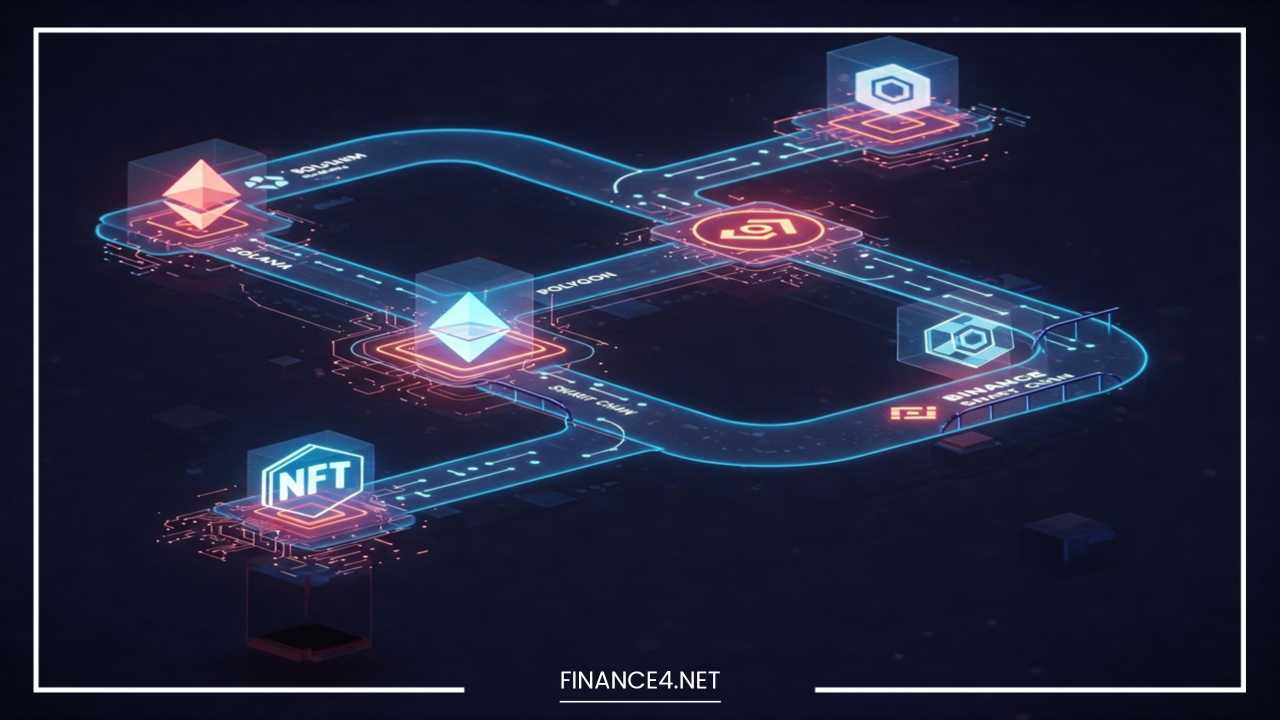
Layer-2 Scalability: Solutions like Polygon, Base, and Arbitrum utilize “Rollups” to bundle thousands of transactions into a single batch, reducing costs to a fraction of a cent.
-
Solana: Built for speed, Solana uses a Proof-of-History (PoH) mechanism that keeps fees consistently near-zero, regardless of transaction volume.
Creator Royalties: The Great Debate
Royalties enable artists to receive a percentage of every secondary sale, fulfilling the original “social contract” of Web3. Historically, these were set at 5–10%. However, a “Race to the Bottom” occurred where several marketplaces made royalties optional to lower the entry price for buyers. Today, the industry is split: some platforms use ERC-2981 (the NFT Royalty Standard) to enforce payments via smart contracts, while others rely on “Social Enforcement” or allow buyers to choose whether to tip the artist.
Top NFT Marketplaces: Profiles and Performance
OpenSea: The Multi-Chain Giant
OpenSea remains the most versatile platform, serving as the primary gateway for retail users. By supporting a vast array of chains including Ethereum, Solana, and various Layer-2s, it offers unparalleled liquidity.
-
Fee Structure: 2.5% on all secondary sales.
-
Pros: Massive audience reach; robust “Studio” tools for non-technical creators; excellent integration with mobile wallets.
-
Cons: Higher fees than “pro” competitors; inconsistent royalty enforcement across different contract types.
Blur: The High-Frequency Trading Terminal
Blur disrupted the market by catering specifically to “whales” and professional “flippers.” Its interface prioritizes data density, floor-price tracking, and rapid execution.
-
Fee Structure: 0% marketplace fees.
-
Pros: Zero commission; advanced “floor sweeping” and “sniping” tools; native aggregator that pulls listings from other sites.
-
Cons: Significant technical learning curve; lacks the “artistic” feel of a gallery; focused almost entirely on Ethereum.
Magic Eden: The Cross-Chain Innovator
Originally the king of Solana, Magic Eden successfully pivoted to a multi-chain model, becoming a leader in Bitcoin Ordinals and Web3 gaming assets.
-
Fee Structure: 2% (variable by chain).
-
Pros: Dominant in the Solana ecosystem; specialized gaming launchpads; early mover in the Bitcoin NFT (Ordinals) space.
-
Cons: The cross-chain user experience can occasionally lead to fragmentation of funds across different wallets.
Rarible: Decentralized Governance
Rarible is governed by the $RARI DAO, emphasizing a community-first approach. It is known for its “Aggregator” which allows users to buy NFTs from OpenSea and LooksRare directly through the Rarible interface.
-
Fee Structure: 1% to 2.5% (regressive based on volume).
-
Pros: Strong emphasis on artist control; allows creators to build custom, branded storefronts with zero coding.
-
Cons: Lower overall trading volume compared to the “Big Three.”
Foundation and SuperRare: The Fine Art Galleries
These platforms are the “Sotheby’s” of the digital world. They focus on 1-of-1 high-value pieces and high-end digital photography.
-
Fee Structure: 5% to 15%.
-
Pros: High prestige; attracts institutional and “whale” collectors; strictly enforces a 10% secondary royalty for artists.
-
Cons: Higher entry barriers for creators; less liquidity for “collectible” or “gaming” style NFTs.
Detailed Comparison Table
| Platform | Marketplace Fee | Listing Fee | Royalty Enforcement | Best For |
| Blur | 0% | $0 | Optional (Min 0.5%) | Pro Traders / Flippers |
| OpenSea | 2.5% | $0 | Variable | Beginners / General Public |
| Magic Eden | 2% | $0 | Fully Enforced | Solana / Gaming / Ordinals |
| Rarible | 1% | $0 | Fully Enforced | Independent Artists |
| Foundation | 5% | $0 | Fixed 10% | High-End Fine Art |
| LooksRare | 0.5% | $0 | Enforced | Community Rewards |
| Binance NFT | 1% | $0 | Optional | Centralized Exchange Users |
The “Net Profit” Reality Check
Imagine you sell an NFT for 2 ETH. Assume a 5% creator royalty and a standard gas cost for the transfer.
-
On Blur: You pay 0 ETH to the platform and 0.01 ETH (min royalty) to the artist. Total Take-home: ~1.99 ETH.
-
On OpenSea: You pay 0.05 ETH (2.5%) to the platform and 0.1 ETH (5%) to the artist. Total Take-home: ~1.85 ETH.
-
On Foundation: You pay 0.1 ETH (5%) to the platform and 0.2 ETH (10% fixed) to the artist. Total Take-home: ~1.70 ETH.
The difference between trading on a pro-platform vs. a curated gallery can be as much as 15% of the total asset value.
Factors That Affect Real-Time Costs
Blockchain Congestion and Gwei
On Ethereum, “Gas” is measured in Gwei. During a major NFT mint—often called a “Gas War”—the price to simply click “Buy” can exceed the price of the NFT itself. Users must understand that marketplace fees are the baseline, but network fees are the variable that usually causes the most financial pain.
Asset Complexity (Metadata and Storage)
Where is your NFT’s image stored?
-
On-Chain: The image data is stored directly in the smart contract. This is incredibly secure but extremely expensive to mint (fees can be hundreds of dollars).
-
IPFS/Arweave: The NFT contains a link to a decentralized file system. This is the industry standard and balances cost with permanence.
-
Private Servers: If a marketplace stores your NFT on their own servers, minting is free, but if the company goes out of business, your NFT could become a “broken link.”
Smart Contract Optimization
Modern developers use ERC-721A, a contract standard popularized by the Azuki project. This standard allows users to mint multiple NFTs in a single transaction for almost the same price as minting one. When choosing a marketplace, check if their minting tool uses optimized contracts to save you up to 70% in gas.
How to Minimize NFT Fees
Strategic Timing
Blockchain activity follows the sun. Statistical analysis shows that Ethereum gas prices are typically lowest between 01:00 and 08:00 UTC, or on weekends when institutional trading volume drops. Waiting a few hours to list your collection can save you hundreds in deployment costs.
Embrace Layer-2 Solutions
The future of retail NFTs is on Polygon, Base, and Arbitrum. These networks offer:
-
Gasless Minting: The marketplace covers the cost.
-
Micro-transactions: You can trade $5 NFTs without paying $10 in fees.
-
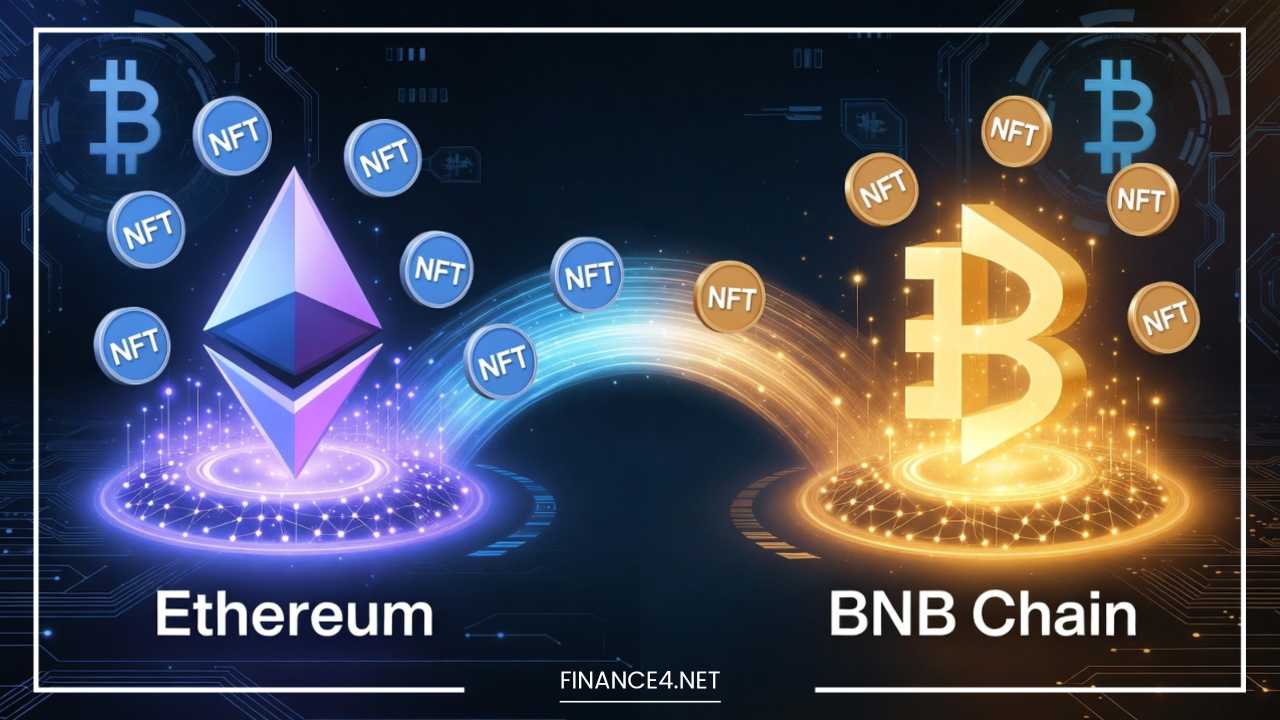
Bridge Aggregators: Use tools like Hop Protocol or Stargate to move your funds from Ethereum to a Layer-2 for a one-time fee, then trade indefinitely for pennies.
Lazy Minting
“Lazy Minting” is a feature where the NFT isn’t officially created on the blockchain until someone actually buys it. This allows creators to list 10,000 items without paying a single dollar in gas. The buyer pays the gas fee as part of the purchase price. This is the best strategy for new artists testing the market.
Case Studies: The Impact of Scale
The Independent Creator
An artist launches 50 unique illustrations on Ethereum. If they pay for minting upfront, they might spend $500 in gas. If they only sell 10 pieces at $100 each ($1,000 total), half their revenue is gone. By switching to Solana (via Magic Eden), their total cost to list 50 items would be less than $1.00, allowing them to keep 98% of their revenue.
The High-Frequency “Flipper”
A trader with a 100 ETH monthly volume on OpenSea pays 2.5 ETH ($7,500+) in platform fees. By moving to Blur, they pay 0 ETH. That $7,500 saved is enough to buy several more “Floor” NFTs, allowing them to compound their gains significantly faster than a retail trader.
Emerging Trends in NFT Marketplace Fees
The Rise of Aggregators
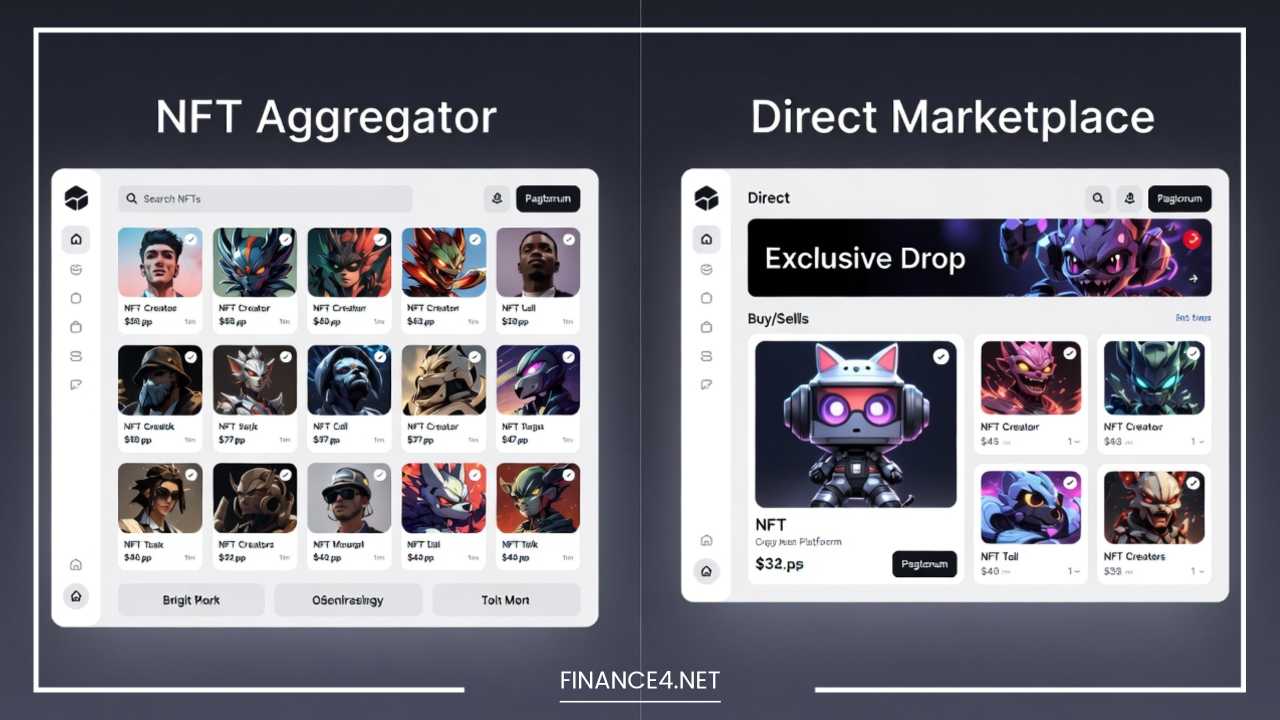
Platforms like Uniswap NFT and Blur are now “Aggregators.” They don’t just show their own listings; they show listings from across the entire web. This allows users to find the lowest price and the lowest fee listing for the same item across multiple sites simultaneously.
Subscription and Loyalty Models
Some marketplaces are experimenting with “SaaS” (Software as a Service) models. Instead of a transaction fee, users pay a monthly subscription for “Pro” features, 0% fees, and early access to drops. This mirrors the transition seen in traditional stock brokerages like Robinhood.
Vertical Marketplaces
We are seeing a shift away from “General Stores” toward specialized marketplaces. For example, a gaming ecosystem like Axie Infinity or Star Atlas has its own internal marketplace. Because these are “Closed Loops,” they can offer 0% fees to keep their players within their own ecosystem, subsidizing the costs through other in-game mechanics.
Final Thoughts
Managing fees is the difference between a hobby and a business in the NFT space. Friction in the form of costs is the greatest enemy of liquidity.
-
For Creators: Start with OpenSea (using Polygon) or Magic Eden (on Solana). Utilize lazy minting to prove your concept before committing heavy capital to Ethereum deployment.
-
For Collectors: Look for Aggregators. Never buy directly from a single marketplace without checking an aggregator to see if the same NFT is listed cheaper elsewhere due to lower platform commissions.
-
For Fine Artists: Do not be afraid of the 5-10% fees on Foundation or SuperRare. The “brand” of the marketplace acts as a marketing engine that can lead to a much higher sale price than a zero-fee “discount” site.
Before any transaction, always check a live Gas Tracker. In the world of NFTs, a little bit of patience and technical knowledge is the most effective way to protect your profit margins.