How to Stake Your Tokens in Cross-Chain Aggregator Pools
 by
by 
How to Stake Your Tokens in Cross-Chain Aggregator Pools | Step-by-Step Guide
Staking has become a cornerstone of the crypto world, offering a way for users to earn passive income by participating in a network’s security and governance. In the early days, staking was a simple, single-chain affair, locking up tokens on one network like Ethereum or Solana. However, as the crypto landscape has exploded with diverse and independent blockchains, this single-chain model has proven to be a silo, limiting liquidity and opportunities.
This fragmentation led to the rise of cross-chain ecosystems, where assets can move and interact seamlessly across different networks. At the heart of this evolution are cross-chain aggregator pools. These are smart contract protocols that bring together liquidity from various blockchains, allowing users to stake their tokens and earn rewards from a unified, multi-network system. For users, staking in these pools is a way to access higher yields, improve capital efficiency, and diversify their holdings beyond the confines of a single blockchain. It’s a key step towards a more interconnected and fluid DeFi (Decentralized Finance) landscape.
Understanding Cross-Chain Aggregator Pools
A cross-chain aggregator pool is a decentralized protocol that combines liquidity from multiple blockchains into a single, unified pool. Their primary purpose is to solve the problem of blockchain fragmentation, making it possible for users to provide liquidity and earn rewards without being restricted to a single network.
Unlike single-chain staking, which locks up assets on their native network, cross-chain aggregators use sophisticated technologies like bridges and relayers to facilitate the movement and aggregation of assets. This means a user could, for example, deposit ETH and BTC into the same liquidity pool, even though they originate from different blockchains. Platforms like Thorchain, Symbiosis, and Chainflip are prominent examples of protocols built to enable this type of cross-chain interoperability. They use a variety of mechanisms, including wrapped tokens and atomic swaps, to ensure that assets maintain their value and can be moved securely between chains.
Benefits of Staking in Cross-Chain Aggregator Pools
Staking in these pools offers several significant advantages for users:
- Higher Yield Opportunities: By aggregating liquidity from multiple networks, these pools can tap into a broader range of yield-generating strategies. This often results in higher and more stable annual percentage yields (APYs) compared to single-chain staking.
- Better Liquidity Access: Cross-chain pools break down liquidity silos, allowing users to access a much larger pool of capital. This is especially beneficial for traders and liquidity providers who need to move large volumes of assets efficiently.
- Diversification Across Networks: Instead of holding all their assets on one chain, users can diversify their exposure across multiple ecosystems, reducing the risk associated with a single network.
- Auto-Optimization and Aggregation: Many cross-chain aggregators are designed to automatically optimize for the highest possible yield. They route assets through the most profitable liquidity pools and bridges, saving users the time and effort of manually searching for the best opportunities.
Risks and Considerations
While the benefits are compelling, staking in cross-chain aggregator pools isn’t without its risks. It’s crucial to understand these before committing your funds.
- Smart Contract Risk: As with any DeFi protocol, there’s always the risk of a bug or vulnerability in the smart contract code. An exploit could lead to the loss of all staked funds. It’s essential to only use platforms that have been audited by reputable firms.
- Bridge Risk: Cross-chain transfers rely on bridges, which have historically been a primary target for hackers. A bridge exploit could result in a loss of funds as assets are moved from one chain to another.
- Slashing: Some Proof-of-Stake (PoS) networks have a slashing mechanism that penalizes validators for malicious behavior or downtime. While most aggregators handle this for you, it’s a risk to be aware of, especially if you’re directly delegating to a validator.
- Impermanent Loss: Many cross-chain aggregator pools operate as automated market makers (AMMs) where users provide liquidity to a trading pair (e.g., ETH/BTC). When the price of one asset changes significantly relative to the other, you may experience impermanent loss, where the value of your staked assets is less than if you had simply held them in your wallet.
- Platform Security and Centralization: A platform’s security is only as strong as its weakest link. Be sure to research the team behind the protocol, its governance model (is it a DAO with multisig control?), and its track record of security.
Preparing to Stake: Wallets, Tokens & Platforms
Before you can stake, you need to get your ducks in a row.
- Compatible Wallets: You’ll need a crypto wallet that can connect to multiple blockchain networks. Popular choices include MetaMask for EVM-compatible chains (Ethereum, Polygon, BNB Chain) and Keplr for the Cosmos ecosystem. Other wallets like Trust Wallet also support a wide range of networks.
- Supported Chains: Check which blockchains are supported by your chosen aggregator. A good platform will typically connect major chains like Ethereum, BNB Chain, and layer-2 solutions like Arbitrum and Optimism.
- Selecting a Reputable Aggregator: This is perhaps the most important step. Evaluate a platform based on its Total Value Locked (TVL), which indicates its liquidity and user trust. Look for platforms that have undergone independent security audits and have a strong, public reputation in the crypto community.
- Understanding Token Requirements and Network Fees: Each pool will have specific token requirements. Ensure you have the right tokens in your wallet and enough of the native currency of each chain (e.g., ETH for Ethereum, BNB for BNB Chain) to cover gas fees for transactions.
Step-by-Step Guide: How to Stake Tokens in Cross-Chain Aggregator Pools
This process can vary slightly by platform, but the general flow is similar. Here is a general walkthrough:
- Connect Your Wallet: Navigate to the aggregator’s website and click the “Connect Wallet” button, usually located in the top right corner. A pop-up will appear, prompting you to choose your wallet (e.g., MetaMask).
- Choose Aggregator Pool and Supported Tokens: Once connected, you’ll see a dashboard of available liquidity pools. These pools are often listed by the token pairs they hold (e.g., RUNE/ETH on Thorchain) and their APY. Select the pool that matches your tokens and risk appetite.
- Bridge or Swap Assets: If your tokens are on a different chain than the pool’s native chain, you may need to use a bridge or a cross-chain swap function. Most aggregators have this functionality built-in, allowing you to seamlessly convert or move your assets. This might involve a two-step process: swapping an asset on one chain for a wrapped version on another, then depositing the wrapped asset.
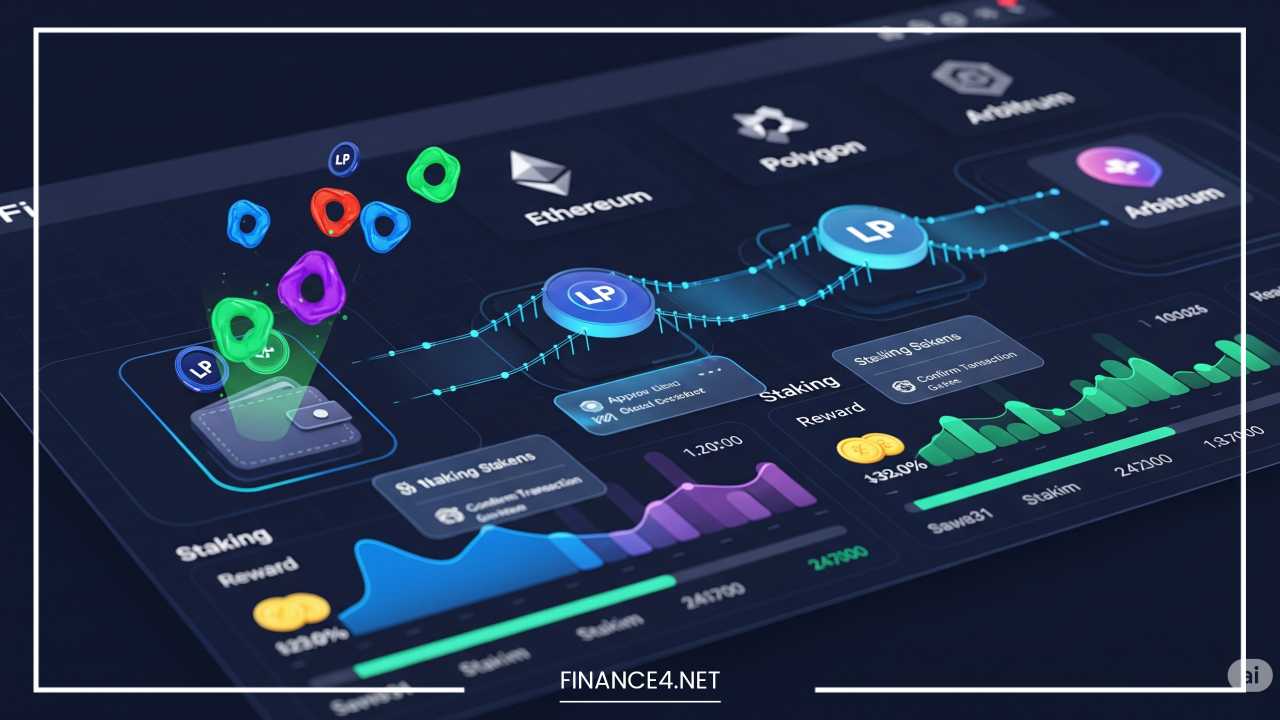
- Approve Tokens and Stake: Before you can stake, you’ll need to give the smart contract permission to interact with your tokens. This is a one-time process called “approving” the token. After that, you can enter the amount of tokens you wish to stake and click “Stake” or “Deposit.”
- Confirm Transaction: Your wallet will pop up with a transaction request. It will show the gas fee required to complete the transaction. Review the details, and if everything looks correct, confirm the transaction. Be patient, as cross-chain transactions can sometimes take a few minutes to complete.
- Monitor Performance and Rewards: After the transaction is confirmed, your staked assets and accrued rewards will be visible on the aggregator’s dashboard. You can monitor your APY and track your earnings in real-time.
How Cross-Chain Aggregators Work Behind the Scenes
The magic of cross-chain aggregators lies in their underlying technology. They are not just simple staking protocols; they are complex systems of smart contracts, bridges, and relayers that work in concert.
- Smart Contract Interactions: The core of the aggregator is its smart contract, which manages the liquidity pools, routes transactions, and distributes rewards. These contracts are designed to be “trustless,” meaning they execute automatically based on predefined rules without the need for a central authority.
- Use of Bridges and Relayers: To move assets from one chain to another, aggregators use bridges and relayers. Bridges are protocols that facilitate the transfer of assets, often by locking tokens on the source chain and minting an equivalent “wrapped” version on the destination chain. Relayers are external actors that monitor events on one blockchain and relay that information to another, triggering the necessary actions on the destination chain.
- Dynamic Rebalancing: Many advanced aggregators employ algorithms for dynamic rebalancing. They automatically shift assets between different pools or chains to optimize for the highest yield, ensuring that liquidity is always where it is needed most.
- Role of Liquidity Providers and Incentives: The entire system is powered by liquidity providers (LPs)—users who stake their tokens to provide the capital necessary for the pools to function. In return for providing this liquidity, LPs are incentivized with a portion of the transaction fees and, in many cases, additional rewards in the form of the platform’s native token.
Managing and Unstaking Your Assets
Managing your staked assets is an ongoing process.
- How to Monitor Staked Tokens: Your aggregator’s dashboard will provide a summary of your staked position, including the amount of tokens, your current rewards, and the overall performance of the pool. Use this dashboard to keep track of your investment.
- Unstaking Process: When you’re ready to withdraw your assets, you’ll initiate an “unstake” or “withdraw” transaction from the dashboard. Be aware that some protocols have a cool-down period, a time during which your funds are locked before they can be withdrawn.
- Claiming Rewards: Rewards can often be claimed separately from unstaking your principal. You may have the option to “harvest” your rewards at any time, but be mindful of the gas fees associated with each transaction.
- Gas Fees and Timing: Cross-chain transactions can be more expensive than single-chain ones due to the multiple steps involved. It’s often strategic to unstake and claim rewards during periods of lower network congestion to minimize gas fees.
Tips for Maximizing Staking Rewards
To get the most out of your cross-chain staking experience, consider these tips:
- Choosing Optimal Staking Times: Gas fees fluctuate throughout the day. Using a gas tracker tool can help you identify times when transaction costs are at their lowest.
- Reinvesting Rewards (Auto-Compounding): Some aggregators offer an auto-compounding feature, which automatically reinvests your rewards back into the pool to generate even more returns. This is an easy way to maximize your yield without manual intervention.
- Diversifying Across Pools: Instead of putting all your eggs in one basket, consider spreading your capital across different pools and even different protocols to mitigate risk.
- Following Community Updates and Governance: Stay engaged with the community of the protocols you’re using. Following their social media, blogs, and governance forums will keep you informed of any major changes, upgrades, or potential risks.
Future of Cross-Chain Staking & Aggregators
The future of cross-chain staking is bright and dynamic.
- Growing Interoperability Protocols: Protocols like IBC (Inter-Blockchain Communication) from Cosmos and LayerZero are making cross-chain communication more efficient and secure than ever before. These innovations will continue to improve the user experience for cross-chain aggregators.
- Role of L2s and Rollups: The rise of Layer-2 solutions and rollups (like Arbitrum and Optimism) on Ethereum is making DeFi transactions faster and cheaper. This will significantly improve the user experience for staking, especially for users who were previously priced out by high gas fees.
- Potential for Institutional Adoption: As the technology matures and becomes more reliable, we are likely to see increased institutional adoption. This would bring a massive influx of capital into the ecosystem and legitimize cross-chain DeFi as a whole.
Final Thoughts
Staking in cross-chain aggregator pools represents the next evolution of passive income in decentralized finance. It offers users the ability to earn higher yields and diversify their portfolios by breaking down the silos of single-chain ecosystems. However, it’s crucial to approach this with a clear understanding of the risks, from smart contract vulnerabilities to impermanent loss.
As always, the golden rule of crypto applies: DYOR (Do Your Own Research). By carefully selecting reputable platforms, understanding the underlying technology, and managing your assets responsibly, you can take full advantage of this innovative and lucrative corner of the DeFi world. The continued innovation in cross-chain technology promises a future where decentralized finance is not a collection of isolated islands, but a single, interconnected ocean of opportunity.
To learn more about the different types of token pools, watch this video from the Cross-Chain Token (CCT) Standard.