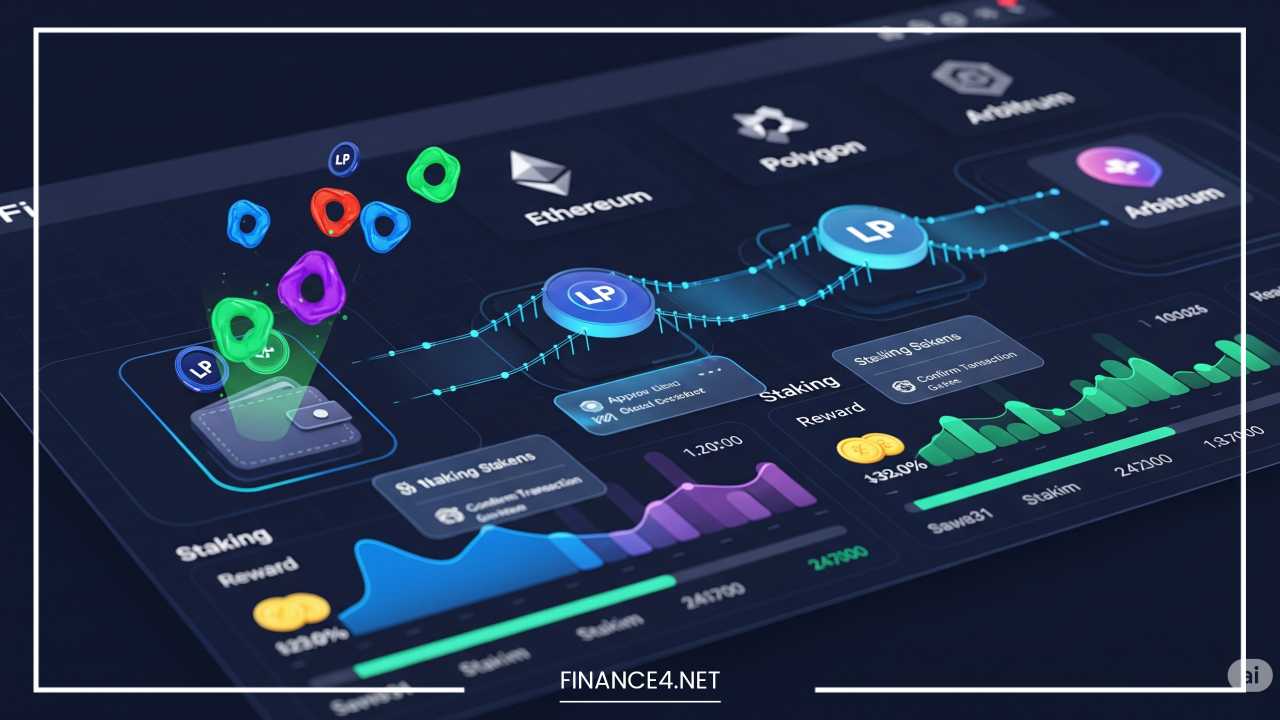
How to Stake Tokens on Cross-Chain Pools
 by
by 
Staking on Cross-Chain Pools: Unlocking the Multi-Chain Future of DeFi
Staking tokens on cross-chain pools represents a significant evolution in the decentralized finance (DeFi) landscape, merging the benefits of traditional staking with the immense potential of cross-chain interoperability. By allowing users to provide liquidity across different blockchain networks, these pools unlock a new level of capital efficiency, enabling users to earn passive income while contributing to a more connected and liquid crypto ecosystem. This article will provide a comprehensive guide on how to stake tokens on cross-chain pools, from understanding the core concepts to a step-by-step guide and important risk considerations.
Understanding Cross-Chain Technology
At its core, cross-chain interoperability is the ability of different blockchain networks to communicate and exchange data or assets. Blockchains are inherently isolated, or “siloed,” meaning assets on one chain (like Ethereum) cannot be used natively on another (like Solana). Cross-chain technology solves this problem by creating bridges and protocols that enable this communication.
Bridges are the primary mechanism for this process. A blockchain bridge typically works by locking a user’s tokens on one chain and then minting a “wrapped” or equivalent representation of that asset on the destination chain. For example, if you want to move Ether (ETH) from the Ethereum network to the Avalanche network, you would lock your ETH in a smart contract on Ethereum, and the bridge would then mint an equivalent amount of Wrapped ETH (WETH) on Avalanche. This allows the asset to be used in DeFi protocols on the new chain while the original asset remains securely locked.
Some popular cross-chain protocols include:
- Polkadot: Designed to be a multi-chain network, Polkadot allows different blockchains (called “parachains”) to connect and communicate using its relay chain.
- Cosmos: Known as the “Internet of Blockchains,” Cosmos uses the Inter-Blockchain Communication (IBC) protocol to enable seamless token transfers between its independent blockchains.
- Thorchain: A decentralized liquidity protocol that facilitates native asset swaps and liquidity provision across different blockchains without the need for wrapped tokens.
The emergence of these protocols and technologies is crucial because it addresses the problem of fragmented liquidity, where assets and capital are locked on individual chains. Cross-chain pools leverage this technology to create a more unified and efficient financial system.
Basics of Token Staking
Staking in crypto is the process of locking up or holding cryptocurrency in a wallet to support the operations of a blockchain network, typically one that uses a Proof-of-Stake (PoS) consensus mechanism. By staking their tokens, participants (called “validators” or “delegators”) help to validate transactions and secure the network. In return for their efforts, they earn rewards, often in the form of new tokens.
There are two main types of staking:
- Single-Chain Staking: This involves staking a native token on its own blockchain, like staking ETH on the Ethereum network. It is a straightforward way to earn passive income and contribute to network security.
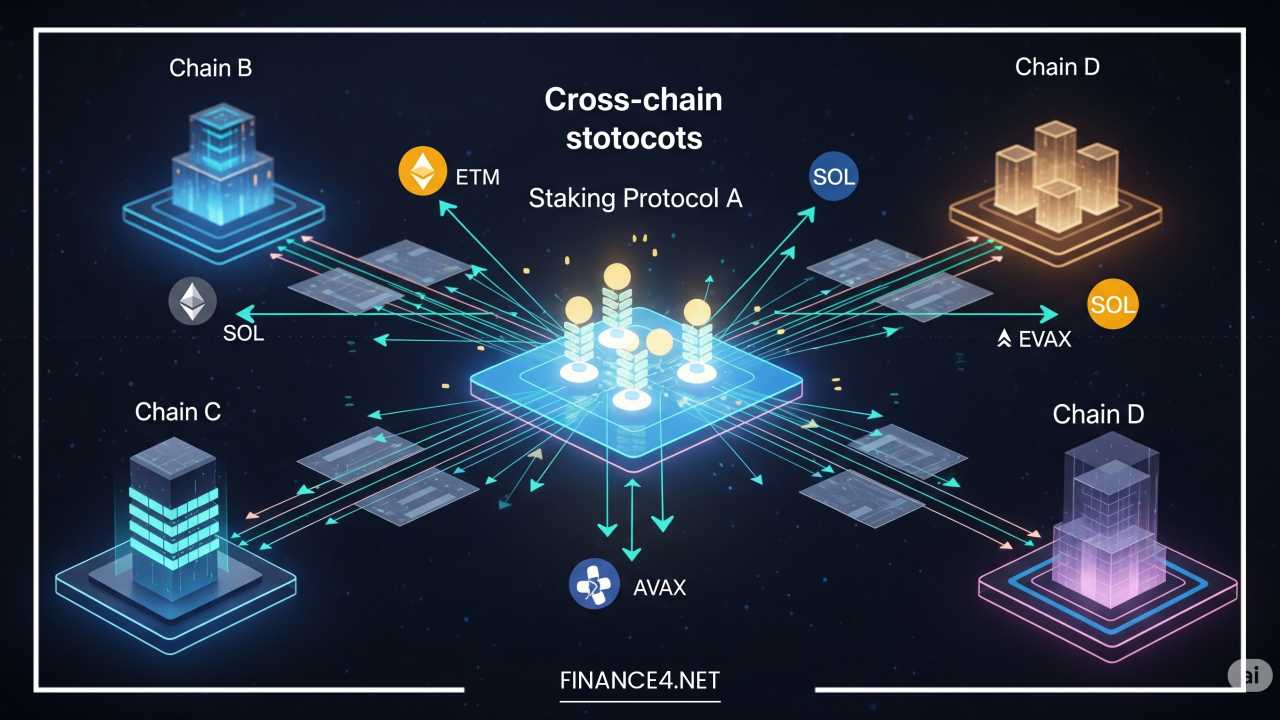
- Cross-Chain Staking: This involves staking tokens in a pool that operates across multiple blockchains, often in the context of providing liquidity. Instead of simply securing one network, you are enabling asset transfers and liquidity for multiple chains simultaneously. This is where the concept of cross-chain pools becomes relevant.
While both types of staking offer rewards, they also carry risks. Rewards are generally tied to the network’s inflation rate and transaction fees. Risks include slashing (losing staked tokens for dishonest behavior or network downtime) and market volatility, where the value of your staked tokens decreases.
What Are Cross-Chain Pools?
Cross-chain pools are a type of liquidity pool that facilitates asset transfers and swaps between two or more different blockchains. Unlike traditional liquidity pools, which are confined to a single network, these pools leverage cross-chain bridges to enable liquidity across disparate ecosystems. They function as a decentralized exchange (DEX) that can handle assets from different chains.
A great example is a cross-chain liquidity pool on a platform like Thorchain. Users can deposit native tokens, such as Bitcoin and ETH, into a single pool. This allows other users to swap their native Bitcoin for native ETH directly, without the need for wrapped tokens or a centralized exchange. The liquidity providers (LPs) who deposited their tokens earn a portion of the trading fees from these swaps and staking rewards, creating a powerful incentive to provide liquidity.
The primary benefit for users is yield generation and diversification. By participating in these pools, you’re not only earning staking rewards but also a share of the fees from cross-chain swaps. This allows for a more efficient use of capital and the ability to earn yield on assets that might otherwise be idle.
Prerequisites for Staking on Cross-Chain Pools
Before you begin, you need to prepare a few things to ensure a smooth staking experience.
- Wallet Setup: You’ll need a crypto wallet that is compatible with multiple blockchain networks. Most modern wallets, such as MetaMask, Trust Wallet, or Phantom, can connect to multiple chains. For EVM-compatible chains (like Ethereum, Polygon, and Avalanche), MetaMask is a popular choice. For non-EVM chains like Solana, a dedicated wallet may be necessary. Ensure your wallet is secure and you have backed up your seed phrase.
- Acquire Tokens: You’ll need the specific tokens required for the cross-chain pool you wish to join. For example, a BTC/ETH cross-chain pool would require you to have both Bitcoin and ETH. You can acquire these tokens from a centralized exchange (CEX) or a decentralized exchange (DEX).
- Understand Gas Fees: Transactions on every blockchain require a small fee, known as “gas,” to be processed. These fees are paid in the network’s native token (e.g., ETH for Ethereum, AVAX for Avalanche). You will need to have a small amount of the native token on each chain to cover transaction costs for bridging, staking, and later, unstaking.
- Platform Research: Not all cross-chain platforms are created equal. You must vet a platform for its security, audit history, and community reputation. Stick to well-known and battle-tested protocols to minimize risk.
Step-by-Step Guide: How to Stake Tokens on Cross-Chain Pools
This guide provides a general overview, as the exact steps may vary slightly depending on the platform.
1. Selecting a Cross-Chain Staking Platform
The first step is to choose a reliable platform. Consider factors like supported chains, token pairs, fees, and the overall security of the protocol. Popular choices include:
- Thorchain (RUNE): A decentralized liquidity protocol for native asset swaps.
- Synapse Protocol (SYN): A cross-chain bridge and AMM that enables seamless asset transfers.
- Avalanche Bridge: A canonical bridge that facilitates asset movement between Ethereum and Avalanche.
2. Connecting Your Wallet
Once you’ve chosen a platform, navigate to its dApp and click the “Connect Wallet” button. Your wallet (e.g., MetaMask) will prompt you to approve the connection. Ensure you are on the correct network for the initial connection.
3. Bridging Tokens
If your tokens are on a different blockchain from the pool’s entry point, you’ll need to use a bridge to move them.
- Go to the bridging section of the platform.
- Select the “source chain” (where your tokens currently are) and the “destination chain” (where you want them to be).
- Choose the token you want to bridge and enter the amount.
- Confirm the transaction in your wallet. The bridge will lock your tokens on the source chain and a new, wrapped version will be minted on the destination chain. This process can take a few minutes.
4. Adding Liquidity or Staking Tokens
After your tokens have arrived on the correct chain, you can now add them to the cross-chain pool.
- Find the liquidity pool you want to join (e.g., a BTC/ETH pool).
- Click “Add Liquidity” or “Stake.”
- Enter the amount of each token you want to provide. Most pools require a 50/50 value ratio of the two assets.
- The platform will prompt you to approve the use of your tokens by its smart contract. This is a one-time approval per token.
- Once approved, confirm the final staking transaction in your wallet. This transaction will deposit your tokens into the pool’s smart contract.
5. Tracking Rewards and Unstaking
You can usually track your rewards on the platform’s dashboard. Rewards are often auto-compounding or can be claimed manually. When you decide to exit the pool, the process is the reverse of staking:
- Go back to the pool and select “Unstake” or “Remove Liquidity.”
- Choose the amount of tokens you want to withdraw.
- Confirm the transaction. The smart contract will return your original tokens plus any earned rewards to your wallet on that chain.
Tips for Avoiding Pitfalls
- Double-check everything: Always verify the platform URL, contract addresses, and transaction details before confirming.
- Start small: If you are new to cross-chain staking, start with a small amount of capital to understand the process and risks.
- Monitor gas fees: Gas fees can fluctuate wildly. Try to transact during off-peak hours to save on costs.
Risks and Considerations
While cross-chain staking offers attractive rewards, it’s crucial to be aware of the associated risks.
- Smart Contract Risks: DeFi protocols rely on complex smart contracts. A bug or vulnerability in the code can lead to the loss of all staked funds. Always choose platforms that have been audited by reputable firms.
- Bridge Vulnerabilities: Blockchain bridges are often a prime target for hackers due to the large amount of locked funds. A compromised bridge can lead to significant financial losses.
- Impermanent Loss: This risk is specific to providing liquidity in pools. Impermanent loss occurs when the price of your deposited assets changes compared to when you deposited them. It can result in a loss of value compared to simply holding the assets in your wallet.
- Market Volatility: The value of your staked tokens can decline, regardless of the rewards you earn. If the market experiences a downturn, the total value of your staked assets may be less than your initial investment.
To mitigate these risks, always conduct thorough research, understand the mechanisms of the protocol, and only invest what you are willing to lose.
Popular Cross-Chain Staking Platforms and Pools
- Thorchain (RUNE): As a decentralized cross-chain liquidity network, Thorchain’s pools are designed for native asset swaps, meaning you don’t use wrapped tokens. This significantly reduces trust assumptions and reliance on centralized bridges. Users stake RUNE alongside other assets like BTC or ETH to provide liquidity and earn rewards.
- PancakeSwap Cross-Chain: While primarily known for its Binance Smart Chain (BSC) pools, PancakeSwap has integrated cross-chain functionality through bridges, allowing for a wider range of liquidity pools that include assets from multiple chains.
- Anyswap (Multichain): A leading cross-chain bridge and protocol that enables asset swaps between different chains. It’s a key piece of infrastructure for many cross-chain applications and a good example of how liquidity pools facilitate interoperability.
Each platform has its own pros and cons, including fee structures, security models, and the range of supported assets. User feedback and community discussion are valuable resources for understanding a platform’s reputation and reliability.
Future of Cross-Chain Staking and Pools
The future of DeFi is undeniably multi-chain. Innovations like Chainlink’s Cross-Chain Interoperability Protocol (CCIP) are creating more secure and standardized ways for blockchains to communicate. As these technologies mature, we can expect to see a more seamless and user-friendly experience for cross-chain staking.
The goal is to create a truly interconnected Web3 where the underlying blockchain becomes an invisible detail to the user. This will enable applications to leverage the unique strengths of multiple chains without users having to manually bridge assets. This evolution will not only deepen liquidity but also make DeFi more accessible and efficient for a broader audience, paving the way for mainstream adoption.
Final Thoughts
Staking tokens on cross-chain pools is a powerful way to earn passive income and contribute to the growth of a more interconnected blockchain ecosystem. By providing liquidity across different networks, you unlock new opportunities for yield and diversification that are not possible with traditional single-chain staking. However, this advanced form of DeFi comes with significant risks, including smart contract vulnerabilities, bridge exploits, and impermanent loss.
By understanding the technology behind cross-chain interoperability, conducting thorough research on platforms, and following a disciplined approach, you can navigate this complex landscape safely. Remember, the key to success in this space is continuous learning and a cautious approach to risk management. As the crypto world continues to evolve, cross-chain solutions will undoubtedly play a central role in shaping a more decentralized and liquid future.