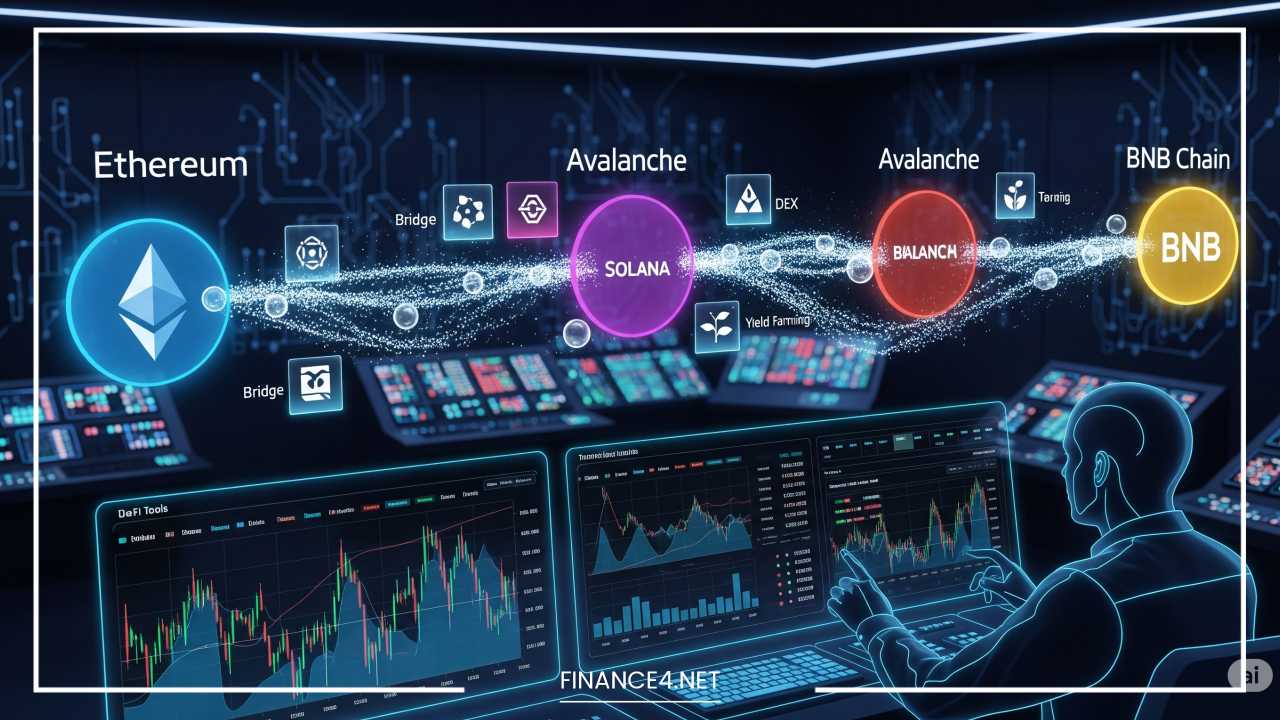
How to Create a Cross-Chain Liquidity Pool
 by
by 
How to Create a Cross-Chain Liquidity Pool | Step-by-Step Guide
The decentralized finance (DeFi) revolution has fundamentally reshaped our understanding of finance, replacing centralized intermediaries with code-driven, transparent, and permissionless protocols. At the heart of this transformation lies the liquidity pool, a cornerstone innovation that powers decentralized exchanges (DEXs), lending protocols, and other financial primitives. A liquidity pool is simply a collection of funds locked in a smart contract, providing the necessary liquidity for trades and other operations. Instead of traditional order books that match buyers and sellers, liquidity pools use automated market maker (AMM) algorithms to facilitate instant, continuous trading.
However, the rapid proliferation of different blockchains has created a fragmented landscape, where assets and liquidity on one chain are isolated from another. This is the blockchain equivalent of having a separate currency for every country, making it difficult and expensive to trade between them. This is where cross-chain interoperability becomes crucial. It’s the technology that allows different blockchains to communicate and transfer assets seamlessly, breaking down these digital silos.
Cross-chain liquidity pools represent the next evolution of this concept. By connecting liquidity from multiple blockchains, they unlock a unified, deep, and capital-efficient market. They are essential for a truly decentralized and global financial system, enabling users to move assets, access liquidity, and find the best prices regardless of the underlying blockchain. This article will provide a comprehensive guide on how to create a cross-chain liquidity pool, from the foundational concepts to the practical, step-by-step implementation.
Understanding Cross-Chain Liquidity Pools
A cross-chain liquidity pool is a distributed system of smart contracts that enables assets to be swapped between two or more disparate blockchains. Unlike a single-chain liquidity pool, which holds a pair of assets from the same network (e.g., ETH/USDC on Ethereum), a cross-chain pool manages asset pairs where each asset resides on a different chain (e.g., ETH on Ethereum and BNB on Binance Smart Chain). The core concept involves locking a user’s tokens on one chain and then releasing an equal value of tokens from a pool on the destination chain.
The primary benefit of a cross-chain liquidity pool is the aggregation of fragmented liquidity. Without them, a user wanting to swap ETH for BNB would have to use a multi-step, cumbersome, and expensive process: converting ETH to a wrapped token, using a bridge, and then swapping the wrapped token for BNB. A cross-chain pool streamlines this into a single, seamless transaction. This not only improves capital efficiency by making liquidity available across multiple chains but also significantly reduces user friction and trading costs.
However, these benefits come with significant challenges. Security is paramount, as bridges and cross-chain communication protocols are prime targets for hackers. The complexity of managing state across multiple, asynchronous chains introduces a new set of vulnerabilities. Furthermore, balancing liquidity across the different chains in the pool can be a challenge, as one-sided demand can lead to imbalances that must be managed, often through dynamic fee models or incentives for rebalancing.
Fundamental Technologies Behind Cross-Chain Liquidity Pools
Creating a cross-chain liquidity pool requires a deep understanding of several key technologies that enable interoperability.
Blockchain Interoperability Protocols
These protocols are the fundamental frameworks that allow different blockchains to “speak” to each other. They define the rules and mechanisms for secure and reliable cross-chain communication.
- Polkadot: Uses a relay chain to secure and connect different parachains (custom blockchains). It provides a shared security model and a standardized way for parachains to communicate.
- Cosmos: Dubbed the “Internet of Blockchains,” it uses the Inter-Blockchain Communication (IBC) protocol, which allows independent blockchains to exchange data and assets directly without relying on a central hub. IBC is a robust and trust-minimized protocol.
- LayerZero: A “blockchain-agnostic” omnichain interoperability protocol that provides a lightweight message-passing layer. It uses a combination of an on-chain smart contract (the Endpoint), an off-chain oracle (e.g., Chainlink), and a relayer to send messages between chains. This design minimizes the trust assumptions required.
Cross-Chain Bridges
Bridges are the most common and critical components for transferring assets and information between blockchains. There are several types of bridges:
- Liquidity Network Bridges: These bridges rely on liquidity pools on both the source and destination chains. When a user deposits assets on the source chain, the protocol burns the tokens and releases an equivalent amount from the liquidity pool on the destination chain. This model is efficient and widely used by protocols like Stargate Finance and Synapse Protocol.
- Lock and Mint Bridges: This is a more centralized model where the original asset is locked in a smart contract on the source chain, and a new “wrapped” token is minted on the destination chain. The wrapped token is pegged 1:1 to the original asset. The classic example is Wrapped Bitcoin (WBTC) on Ethereum. While simple, this requires a degree of trust in the central entity managing the minting process.
Smart Contracts and Oracles
Smart contracts are the backbone of any DeFi application. In a cross-chain liquidity pool, you’ll need a set of contracts on each connected chain to manage deposits, withdrawals, swaps, and reward distribution for liquidity providers (LPs). These contracts must be designed to handle cross-chain messages securely and accurately.
Oracles are essential for providing real-world data to smart contracts. For a cross-chain liquidity pool, an oracle is often needed to verify events on one chain and relay that information to the smart contract on another. For example, a reliable oracle like Chainlink CCIP (Cross-Chain Interoperability Protocol) can provide a secure, decentralized way to verify that a deposit event has occurred on the source chain before a withdrawal is enabled on the destination chain.
Pre-requisites and Considerations
Before you begin building, you must have the right skills and be aware of the significant challenges.
Required Technical Skills
- Smart Contract Programming: Proficiency in languages like Solidity (for EVM-compatible chains like Ethereum and BSC) is non-negotiable. You’ll need to write and audit complex smart contracts for token handling, liquidity management, and cross-chain messaging.
- Blockchain Basics: A solid understanding of blockchain architecture, consensus mechanisms (e.g., Proof-of-Work, Proof-of-Stake), and transaction lifecycles is crucial.
- Interoperability Protocol Knowledge: You must be familiar with the specific cross-chain protocols you plan to use, including their documentation, SDKs, and security models.
Understanding Token Standards
Liquidity pools are built around specific token standards. For EVM chains, the ERC-20 standard is a universal requirement. Similarly, you’ll need to understand BEP-20 on Binance Smart Chain and other relevant standards for the blockchains you choose to integrate. This ensures that the tokens you are pooling are compatible with the smart contracts.
Security and Gas Fees
- Security: This is the single most important factor. Cross-chain bridges are among the most frequent targets for exploits. A single vulnerability can lead to the loss of millions or even billions of dollars in locked assets. A non-negotiable step is a comprehensive smart contract audit by a reputable third-party firm.
- Gas Fees: Each transaction on a blockchain incurs a fee (gas). Cross-chain transactions are particularly complex, often requiring multiple on-chain steps on both the source and destination chains, which can result in high cumulative costs for the user. Your design must be as gas-efficient as possible to remain competitive.
Step-by-Step Guide: How to Create a Cross-Chain Liquidity Pool
This guide outlines a high-level, practical approach to building a liquidity network-based cross-chain pool.
Step 1: Choose the Blockchains to Connect
The first decision is which chains your pool will support. Ethereum is the largest and most liquid network, but its high gas fees can be a barrier. Binance Smart Chain (BSC), Polygon, and Arbitrum offer lower fees and faster transactions, making them popular choices. Your choice should be based on your target audience, the assets you want to pool, and the existing liquidity on those chains. For example, a pool connecting Ethereum (for deep liquidity) and Polygon (for cheap transactions) could be very attractive to users.
Step 2: Set Up Smart Contracts on Each Chain
You’ll need a core smart contract on each blockchain you’re connecting. These contracts will handle the logic for the liquidity pool. At a minimum, each contract must include:
- Deposit Function: Allows users (LPs) to deposit a pair of tokens (e.g., DAI/USDC) into the pool in exchange for LP tokens.
- Withdrawal Function: Allows LPs to burn their LP tokens and withdraw their share of the underlying assets and accrued fees.
- Swap Function: The core function that allows users to swap one token for another within the pool, using an AMM formula (like or a more capital-efficient version for stablecoins like the Curve Finance formula).
- Message-Handling Logic: This is the critical cross-chain component. The contract must be able to securely receive and process messages from the other chain, verified by your chosen communication protocol.
Step 3: Deploy Cross-Chain Communication Protocols
This is the most complex and critical step. You won’t build a cross-chain bridge from scratch; instead, you’ll integrate with an existing, audited protocol like LayerZero, Chainlink CCIP, or Wormhole.
- Integration with LayerZero: You’ll deploy LayerZero’s Endpoint smart contracts on your chosen chains. These endpoints serve as the communication gateway. When a user initiates a cross-chain swap on Chain A, your liquidity pool contract on Chain A sends a message to its local LayerZero Endpoint. The message is then passed to a Relayer and an Oracle (e.g., Chainlink), which work together to verify the transaction and deliver the message to the Endpoint on Chain B.
- Integration with Chainlink CCIP: Similar to LayerZero, CCIP provides a secure message-passing service. You’ll use CCIP’s router contracts to send a cross-chain message. The CCIP network of nodes will verify the transaction on the source chain and then execute the corresponding action on the destination chain.
Step 4: Provide Liquidity Tokens and Set Pool Parameters
Once the contracts are deployed and the communication layer is active, you need to bootstrap the liquidity pools on each chain. This involves depositing the initial assets (e.g., ETH on Chain A, WBTC on Chain B) into the respective smart contracts. This initial liquidity is essential for the pools to function.
You also need to define the pool’s parameters:
- Trading Fees: What percentage of each trade goes to liquidity providers?
- Slippage Tolerance: The maximum price change a user is willing to accept for a trade, which is a key setting to protect users from large price fluctuations during volatile periods.
Step 5: Testing and Deployment
Before deploying to the mainnet, rigorous testing is a must. Use testnets for each blockchain (e.g., Sepolia for Ethereum, BSC Testnet) to simulate cross-chain swaps, liquidity provision, and message passing. Check for:
- Functionality: Do swaps, deposits, and withdrawals work as expected?
- Gas Efficiency: Are transaction costs reasonable?
- Security: Are there any potential vulnerabilities or logical flaws in the cross-chain message handling?
After thorough testing, you can deploy your smart contracts and front-end interface to the mainnet.
Step 6: Monitoring and Maintenance
The work doesn’t stop after deployment. You need to continuously monitor the pools for:
- Liquidity Imbalances: If one pool is heavily used, its liquidity may run low, requiring rebalancing. This can be done through dynamic fees that incentivize users to deposit on the low-liquidity side or by protocol-level incentives.
- Security Threats: Use monitoring tools to track all transactions and get real-time alerts for suspicious activity.
Tools and Platforms to Build Cross-Chain Liquidity Pools
Building a cross-chain liquidity pool is not for the faint of heart. Fortunately, a growing ecosystem of tools and platforms can streamline the process.
- Existing Cross-Chain Bridge Services: Instead of building your own bridge, you should integrate with established services.
- Chainlink CCIP: Provides a secure and reliable way to send data and tokens across chains. Its security is enhanced by a network of reputable nodes and a risk management system.
- Wormhole: A generic message-passing protocol that allows dApps to build cross-chain features, including liquidity pools.
- LayerZero: Offers a unified API for cross-chain communication, simplifying the development process.
- SDKs and APIs: Most major blockchain networks and interoperability protocols offer software development kits (SDKs) and APIs to help developers interact with their networks and services.
- Smart Contract Development Frameworks: Tools like Hardhat and Foundry are essential for writing, testing, and deploying smart contracts. They provide a local development environment and a testing framework.
- Analytics and Monitoring Tools: Platforms like Dune Analytics, Token Terminal, and Etherscan/BscScan allow you to track pool metrics, transaction volumes, and on-chain activity. For more in-depth security monitoring, services like Tenderly or Blocknative can provide real-time alerts.
Security and Risk Management
Security is the single biggest risk in cross-chain DeFi. A successful attack on a bridge or liquidity pool can be catastrophic.
- Common Vulnerabilities:
- Smart Contract Flaws: Bugs in the code can be exploited to drain funds.
- Bridge Vulnerabilities: Oracles and relayers can be compromised, leading to the fraudulent transfer of assets.
- Replay Attacks: A transaction on one chain is replayed on another, causing unintended asset movements.
- Best Practices for Security:
- Multi-Signature Wallets: Use a multi-signature wallet to manage the pool’s administrative functions, requiring multiple trusted parties to approve any critical action.
- Code Audits: NEVER launch a cross-chain protocol without multiple, independent, and thorough security audits from highly reputable firms.
- Bug Bounty Programs: Incentivize ethical hackers to find vulnerabilities before malicious actors do.
- Circuit Breakers: Implement an emergency pause function that can halt all withdrawals and swaps in case of a suspected attack.
Use Cases and Applications
Cross-chain liquidity pools unlock a new level of functionality and capital efficiency in DeFi.
- Decentralized Exchanges (DEXs): The most obvious use case. Cross-chain DEXs like THORChain allow for native swaps (e.g., BTC to ETH) without the need for wrapped tokens, providing a seamless user experience.
- Yield Farming and Staking: Users can provide liquidity on multiple chains simultaneously to earn fees and tokens from different protocols.
- Cross-Chain Asset Swaps: Enables users to swap any asset on any connected chain in a single transaction, reducing the complexity and cost of inter-chain transfers.
- Future Potential: Cross-chain liquidity is the foundation for more advanced applications like cross-chain lending protocols (where you can post collateral on one chain and borrow on another) and yield aggregators that can automatically route funds to the highest-yielding opportunities across a multi-chain ecosystem.
Challenges and Future Trends
While the future of cross-chain liquidity is bright, there are still significant hurdles to overcome.
- Scalability Issues: As more chains and users are added, the complexity of managing state and liquidity grows exponentially.
- Regulatory Challenges: The decentralized and global nature of cross-chain systems makes them difficult to regulate. Regulatory clarity is needed to foster trust and adoption by institutional players.
- Emerging Technologies: The landscape is evolving rapidly. Zero-Knowledge (ZK) rollups and Optimistic rollups are scaling solutions that could simplify cross-chain communication and reduce costs. New bridge designs using ZK proofs are emerging, which could enhance security by providing cryptographic guarantees for cross-chain transactions.
The future outlook for cross-chain DeFi is one of increasing integration and sophistication. As the technology matures, we will likely see a shift from a fragmented ecosystem to a single, interconnected web of liquidity.
Final Thoughts
Creating a cross-chain liquidity pool is a highly complex yet incredibly rewarding endeavor. It’s a journey that combines deep technical knowledge of smart contracts and interoperability protocols with a steadfast commitment to security. By breaking down the barriers between isolated blockchain ecosystems, these pools are not just creating more efficient financial tools; they are building the foundational infrastructure for a truly decentralized and global financial system. The road ahead is filled with challenges, but with careful design, rigorous auditing, and a focus on user experience, developers can help usher in the next era of DeFi. The importance of cross-chain liquidity cannot be overstated; it is the lifeblood of a healthy, interconnected, and universally accessible decentralized economy.