How to Diversify in Cross-Chain DeFi
 by
by 
Navigating the Interconnected Frontier: A Comprehensive Guide to Diversifying in Cross-Chain DeFi
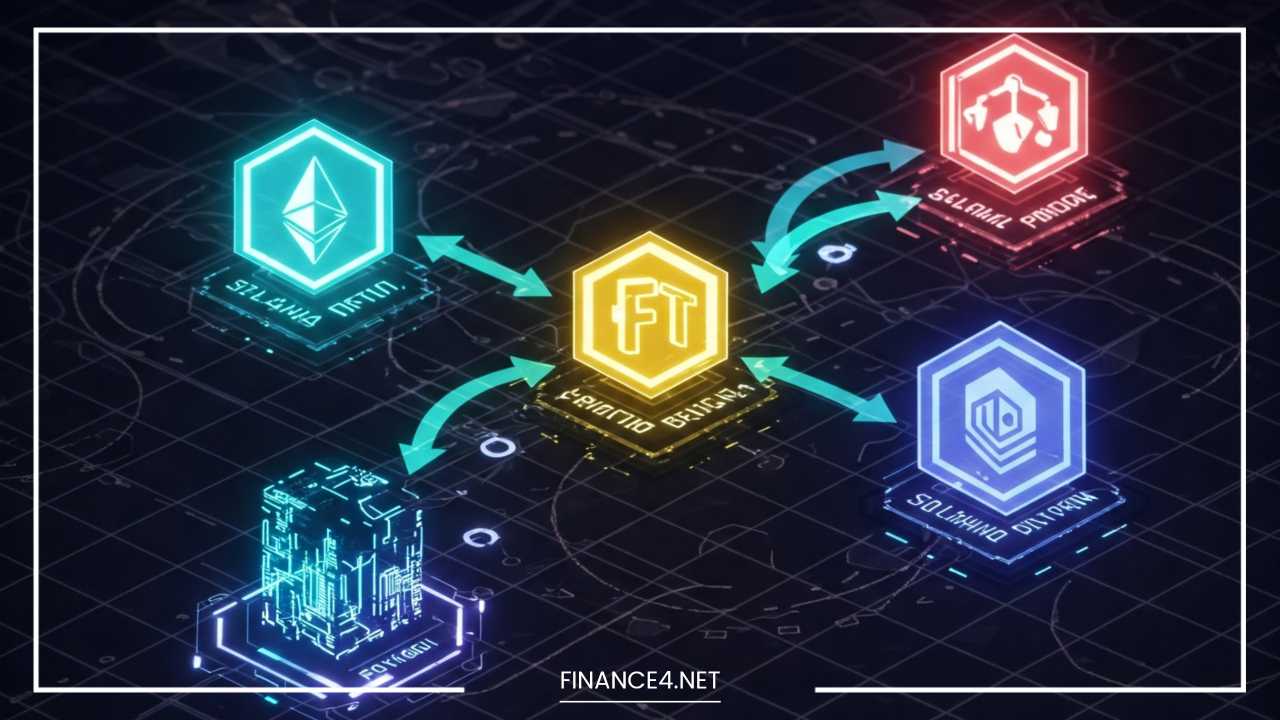
The decentralized finance (DeFi) landscape is rapidly evolving beyond the confines of single blockchains. As we move further into 2025, the once-dominant silos are dissolving, giving way to a vibrant, interconnected ecosystem where value and data flow across disparate networks.
This emergence of cross-chain compatibility unlocks unprecedented opportunities for users to optimize their strategies, access a wider range of assets and protocols, and potentially enhance returns.
However, this interconnectedness also introduces new layers of complexity and risk. For participants looking to thrive in this multi-chain future, understanding and implementing effective diversification strategies is no longer optional—it is paramount.
This article delves into the world of cross-chain DeFi diversification, exploring the motivations behind it, the various strategies available in 2025, the inherent risks and how to mitigate them, the tools facilitating this interconnectedness, and the promising future that lies ahead.
The Imperative of Cross-Chain Diversification
From Ethereum-Centric to Multi-Chain Reality
Historically, participating in DeFi often meant committing to a single blockchain ecosystem, primarily Ethereum. While this offered a degree of simplicity, it also came with limitations.
Users were exposed to the specific risks and opportunities present only on that chain. High transaction fees and network congestion on popular chains like Ethereum also became significant barriers to entry and active participation for many.
The Rise of Layer-1s and Layer-2s
The advent of new, high-performance blockchains and Layer-2 scaling solutions has fractured the DeFi landscape, distributing liquidity, protocols, and assets across numerous networks.
Chains like Solana, Avalanche, BNB Chain, and Cosmos have attracted unique communities and protocols, while Layer-2s such as Arbitrum, Optimism, and zkSync offer fast, low-cost alternatives to Ethereum mainnet.
Why Diversification is a Strategic Necessity
While this fragmentation can present challenges, it also creates the very conditions that make cross-chain diversification essential. By strategically allocating assets and engaging with protocols across multiple chains, users can:
- Reduce Concentration Risk: Relying on a single blockchain exposes users to potential issues specific to that network, such as smart contract exploits, network failures, or governance disputes. Diversifying across chains spreads this risk.
- Access a Wider Array of Opportunities: Different blockchains excel in different areas. Some may offer higher yield farming opportunities, while others specialize in lending, borrowing, or emerging markets like NFTs and GameFi. Cross-chain capabilities allow users to cherry-pick the best opportunities regardless of the underlying chain.
- Optimize Costs and Speed: Transaction fees and speeds vary significantly between blockchains. By utilizing cross-chain bridges and protocols, users can move assets to networks where participating in DeFi activities is more cost-effective and faster.
- Benefit from New and Innovative Protocols: The multi-chain landscape fosters innovation, with new protocols and applications constantly emerging on different networks. Diversification allows users to explore and participate in these nascent ecosystems early on.
- Enhance Capital Efficiency: Cross-chain strategies, such as depositing collateral on one chain to borrow assets on another, can lead to more efficient use of capital and potentially higher overall returns.
Strategies for Diversifying in Cross-Chain DeFi (2025)
Diversification in the cross-chain DeFi era goes beyond simply holding different assets. It involves strategically deploying capital and engaging with various protocols across multiple networks. Here are some key strategies being employed in 2025:
Multi-Chain Yield Farming and Liquidity Provision
Yield farming remains a popular way to earn passive income in DeFi by providing liquidity to decentralized exchanges (DEXs) or lending protocols.
In a cross-chain environment, this strategy involves identifying and participating in high-yielding farms across different blockchains.
How It Works
Users bridge their assets to various chains (e.g., moving stablecoins from Ethereum to Polygon or Avalanche) to deposit them into liquidity pools or staking contracts on those networks.
Benefits
- Access to a wider range of yield opportunities.
- Potentially higher Annual Percentage Yields (APYs) on newer or less congested chains.
- Diversification of impermanent loss risk across different liquidity pools.
Considerations
- Managing assets and tracking yields across multiple platforms and chains can be complex.
- Gas fees for bridging and interacting with protocols on different networks must be factored in.
- Tools and aggregators that track multi-chain yields, such as DeFi Llama and Beefy Finance dashboards, are becoming increasingly valuable.
Cross-Chain Lending and Borrowing
DeFi lending and borrowing protocols allow users to earn interest on their idle assets or borrow funds against collateral. Cross-chain capabilities expand this by enabling users to lend on one chain and borrow on another.
How It Works
Protocols are emerging that facilitate cross-chain collateralization and borrowing. For example, a user might lock up ETH on Ethereum as collateral and borrow stablecoins on Arbitrum to farm yields or participate in a launchpad.
Benefits
- Access to a wider range of lending and borrowing rates.
- Ability to leverage assets across ecosystems.
- Increased capital efficiency without necessarily selling core holdings.
Considerations
- Managing collateralization ratios across different chains is crucial to avoid liquidation risks.
- Protocols like Aave, Compound, and cross-chain focused ones like Radiant and Angle are developing integrated risk management dashboards.
Diversifying Across Different Blockchain Architectures
Beyond individual chains, diversifying across different types of blockchain architectures adds another layer of risk management.
Types of Blockchain Architectures
- Layer-1 Blockchains: Ethereum, BNB Chain, Solana, Avalanche, Fantom.
- Layer-2 Solutions: Arbitrum, Optimism, zkSync, Starknet.
- App-Specific Chains and Sidechains: Ronin for gaming, Immutable X for NFTs, and Cosmos-based zones like Osmosis.
Benefits
- Reduced exposure to technical or governance risks of a single blockchain type.
- Enhanced access to innovation at different layers of the Web3 stack.
Considerations
- May require additional wallets or browser extensions (e.g., Keplr for Cosmos, Phantom for Solana).
- Understanding consensus mechanisms and transaction finality differences is key to informed decisions.
Diversifying Across DeFi Protocol Categories
Within each blockchain ecosystem lies a diverse range of DeFi protocols. Diversification should also extend to the types of protocols used:
Categories of DeFi Protocols
- DEXs: Uniswap, SushiSwap, PancakeSwap, Trader Joe, and cross-chain aggregators like LI.FI.
- Lending Platforms: Aave, Compound, Venus, JustLend.
- Yield Aggregators: Yearn, Beefy, Autofarm, Reaper.
- Derivatives Platforms: dYdX, GMX, Lyra.
- NFT Protocols: Blur, Magic Eden, LooksRare, Tensor.
Benefits
- Reduces protocol-specific smart contract risk.
- Access to different reward structures (e.g., token incentives, governance perks).
Considerations
- Protocols vary in maturity, audit history, and decentralization levels.
- Users must stay informed of updates, forks, or migrations that affect capital.
Cross-Chain Arbitrage and Trading
Arbitrage is the process of profiting from price differences across markets. Cross-chain arbitrage extends this to opportunities between DEXs on different chains.
How It Works
A user identifies a price discrepancy for the same token between a DEX on Ethereum and another on Polygon. They buy the token on the cheaper chain, bridge it, and sell it on the higher-priced chain.
Benefits
- Potential for quick, low-risk profits.
- Aids in price discovery and efficiency across markets.
Considerations
- Requires low latency and efficient bridging.
- Gas fees, slippage, and bridge confirmation times can affect profitability.
- Often executed by bots or advanced traders using automated tools.
Diversifying NFT Holdings Across Chains
NFTs are becoming increasingly cross-chain, with ecosystems developing around specific themes or use cases.
How It Works
Investors and collectors seek NFTs on chains that cater to specific verticals—gaming on Ronin or Immutable, art on Ethereum, collectibles on Solana.
Benefits
- Exposure to diverse communities and utility frameworks.
- Opportunity to invest in early-stage projects before they gain broader visibility.
Considerations
- Liquidity and market depth vary between chains.
- Metadata permanence, royalties enforcement, and wallet compatibility differ across ecosystems.
Risks Associated with Cross-Chain Diversification
Cross-chain strategies introduce both technical and operational risks that require active management.
Common Cross-Chain Risks
- Bridge Exploits: Bridges remain prime targets for attacks due to the volume of assets and complexity.
- Smart Contract Failures: Each additional protocol and chain multiplies exposure to potential bugs or malicious code.
- Fragmented Liquidity: Thin liquidity pools can result in poor execution for large trades.
- User Errors: Sending tokens to the wrong chain, incorrect bridge settings, or incompatible wallets can result in irreversible loss.
- Cascading Failures: A bug in one protocol (e.g., a bridge) can trigger liquidations or losses in dependent strategies.
- Regulatory Risk: Unclear or shifting regulation can affect access, especially in cross-jurisdictional interactions.
- Cognitive Overload: The constant need to monitor positions, yields, gas prices, and protocol health across chains can overwhelm users.
Mitigating Cross-Chain Diversification Risks
Strategic tools and disciplined practices can help manage the complexities of the cross-chain world.
Key Risk Mitigation Practices
- Use Reputable Bridges: Stargate, Synapse, Hop, and LayerZero-integrated bridges are increasingly secure due to audits and decentralization.
- Understand Bridge Architecture: Some bridges mint synthetic assets; others lock originals. Knowing the difference impacts trust and security.
- Start Small: Test transactions before deploying significant funds.
- Spread Risk Across Bridges and Protocols: Don’t over-rely on a single solution.
- Track Exploits and Patches: Follow platforms like DeFiSafety, Certik, and RugDoc.
- Use Dashboard Tools: Tools like DeBank, Zapper, and Revoke.cash help users monitor positions and permissions across chains.
- Avoid Unvetted Protocols: High APYs often come with hidden risks.
- Practice Wallet Security: Use hardware wallets, avoid signing arbitrary contracts, and regularly revoke unused permissions.
- Factor in Impermanent Loss: Especially when using volatile token pairs on different chains.
- Watch for Market Volatility: Market crashes affect cross-chain collateral and arbitrage opportunities more severely due to confirmation lags.
Tools and Platforms Facilitating Cross-Chain Diversification (2025)
The backbone of cross-chain DeFi is the growing ecosystem of tools enabling seamless movement and visibility across chains.
Core Tools and Infrastructure
- Bridges: Stargate, Synapse, Wormhole, Hop Protocol, and Axelar.
- Cross-Chain DEX Aggregators: OpenOcean, LI.FI, Rango Exchange.
- Yield Optimizers: Beefy, Autofarm, Reaper Farm, Yearn v3.
- Lending Protocols: Radiant Capital, Angle, and Interport.
- Wallets: Rabby, MetaMask, Trust Wallet, and hardware wallets with multi-chain support.
- Data Tools: DeFi Llama, Token Terminal, Zapper, Arkham.
- Cross-Chain Messaging: LayerZero, Chainlink CCIP, Axelar GMP.
The Future of Cross-Chain DeFi and Diversification (2025 and Beyond)
Cross-chain DeFi is maturing rapidly, with key trends shaping its future trajectory.
Trends Shaping the Future
- Bridge Security Innovations: Zero-knowledge and optimistic bridges are reducing attack surfaces.
- Protocol-Native Interoperability: Projects are being built “omnichain-first” using standards like CCIP.
- Abstracted UX: Users won’t need to know what chain they’re using—interfaces will abstract complexity.
- Institutional Entry: Regulated products and custody solutions are driving institutional DeFi adoption.
- Dynamic Risk Tools: AI-driven analytics and insurance options for complex portfolios are emerging.
- Use Cases Beyond Finance: Interoperable identity, gaming assets, and decentralized social platforms are expanding the frontier.
Final Thoughts
The era of single-chain dominance in DeFi is yielding to a future where interconnectedness is the norm.
Cross-chain diversification offers a powerful approach to unlock new opportunities, optimize strategies, and mitigate risks in this evolving landscape.
By understanding the various diversification strategies, recognizing the inherent risks, and utilizing the growing suite of cross-chain tools and platforms available in 2025, users can position themselves to thrive in the exciting and complex world of multi-chain decentralized finance.
As the barriers between blockchains continue to fall, the ability to strategically navigate and capitalize on opportunities across multiple networks will define success for DeFi participants.
However, it is crucial to approach cross-chain interactions with caution, prioritizing security, conducting thorough research, and starting with a clear understanding of the risks involved.
The future of DeFi is undeniably cross-chain, and diversification is the key to navigating its complexities and unlocking its full potential.