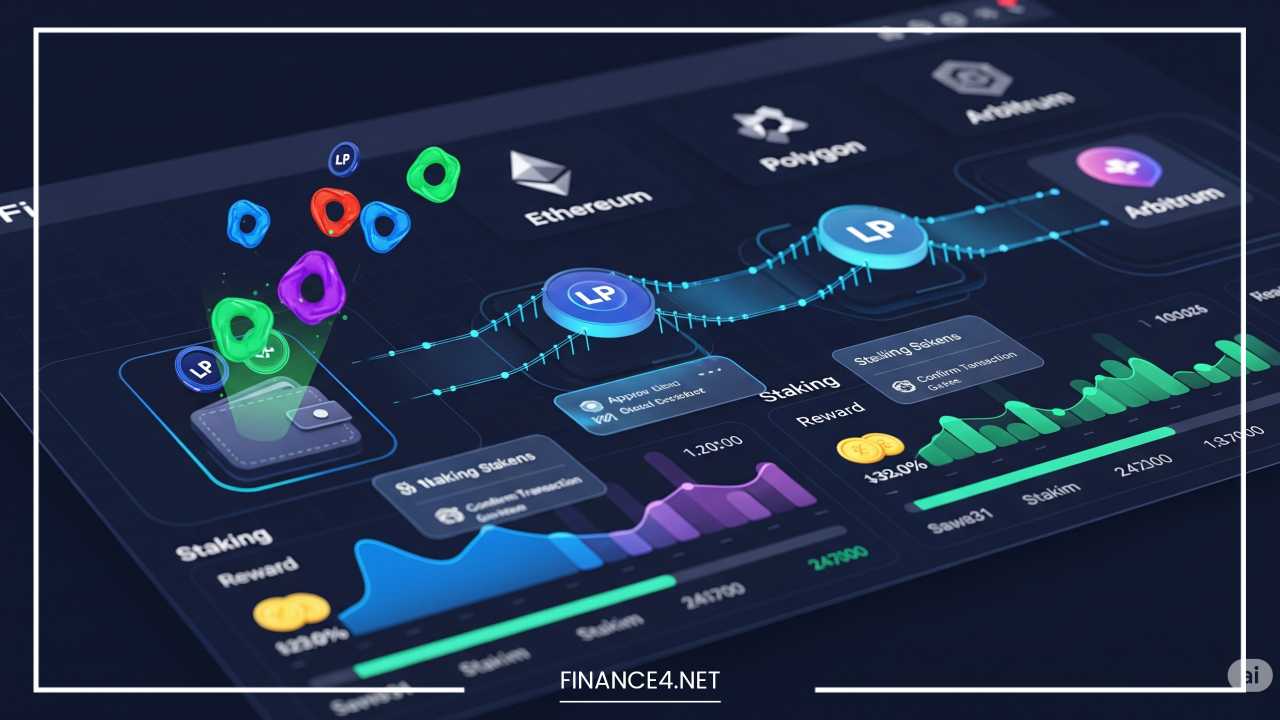
Reward Structures for Bridging Aggregator Stakers
 by
by 
Reward Structures for Bridging Aggregator Stakers | Staking Incentives Explained
In the ever-evolving landscape of decentralized finance (DeFi), cross-chain interoperability has emerged as a critical frontier. As the crypto ecosystem expands across a multitude of independent blockchains—each with its own unique strengths and communities—the need for seamless asset and data transfers between them has become paramount. This is the domain of bridging protocols, which act as digital highways connecting disparate networks. However, the burgeoning complexity of this multi-chain world has given rise to an even more sophisticated solution: bridging aggregators.
These protocols do not just connect two chains; they intelligently scan multiple bridges and liquidity sources to find the most efficient, secure, and cost-effective path for a user’s transaction. Think of them as the Kayak or Skyscanner of the crypto world, routing your assets through the best possible journey.
At the heart of these aggregators is a crucial economic engine powered by stakers. Staking, a foundational concept in many crypto networks, involves participants locking up assets to support a protocol’s operations. For bridging aggregators, stakers provide the essential liquidity, security, and capital that enable these complex cross-chain swaps. In return, they receive rewards. But how these rewards are structured is not a trivial detail; it is the very mechanism that dictates the protocol’s health, security, and long-term sustainability. A poorly designed reward structure can lead to capital flight, centralization, or even catastrophic failure. Conversely, a well-thought-out system can attract a robust and loyal base of stakers, fostering a virtuous cycle of growth and utility.
This article will delve into the intricate world of reward structures for bridging aggregator stakers. We will explore the fundamental role of stakers, break down the various models used to compensate them, examine real-world case studies, and discuss the principles for designing a structure that aligns the interests of stakers, users, and the protocol itself. Ultimately, we will uncover why the art and science of incentivizing stakers is a decisive factor in building the future of a truly interconnected, multi-chain DeFi ecosystem.
Understanding Bridging Aggregators
Bridging aggregators represent the next evolution in cross-chain technology, moving beyond the simple point-to-point connections of traditional bridges. A standard bridge might allow a user to move ETH from Ethereum to Polygon. However, a bridging aggregator, like LI.FI or Socket, would analyze all available routes, including multiple bridges, decentralized exchanges (DEXs), and liquidity networks. The aggregator’s smart contracts and routing algorithms work to identify the optimal path based on parameters such as gas fees, transaction speed, and final slippage. For instance, a user wanting to swap AVAX on Avalanche for USDC on Optimism might find the most efficient route is to first swap AVAX for a stablecoin on Avalanche, bridge that stablecoin to Arbitrum, and then swap for USDC on Optimism—a complex journey that the aggregator abstracts into a single, seamless user experience.
The core function of these protocols is to provide efficiency and reliability. As the number of blockchains and available bridges grows, the user experience becomes fragmented and confusing. Aggregators solve this by acting as a single, trusted interface. This convenience is a powerful value proposition. Their ability to choose the “best” route is not just about finding the cheapest gas; it’s also about mitigating risk by routing transactions through the most secure or most liquid paths available. They are, in effect, a crucial layer of infrastructure that makes the entire multi-chain ecosystem more navigable and secure for everyday users.
Where do stakers fit into this system? The routes that aggregators select are often dependent on the availability of liquidity. Some bridges, for example, rely on a liquidity pool model where users provide capital on both the source and destination chains to facilitate swaps. Other models may involve a network of validators or relayers who must bond capital to perform their duties securely. Stakers, in this context, are the individuals or entities who provide this foundational capital. By locking up their assets, they become a vital part of the protocol’s functionality, whether by providing deep liquidity to a pool or by acting as a security guarantor. Without their staked capital, the aggregator would be little more than a directory of bridges, unable to actually execute the efficient, seamless swaps it promises.
Role of Stakers in Bridging Aggregators
The term “staker” in the context of a bridging aggregator can encompass a wide range of roles, each contributing to the protocol’s health in a distinct way. At its most basic, a staker is an individual who locks up a protocol’s native token or another accepted asset within a smart contract for a specified period. The primary motivation for this action is to earn rewards, but their contribution is far from passive.
One of the most common roles for stakers is to act as liquidity providers. In a liquidity pool-based bridge, stakers deposit capital on either or both sides of a cross-chain pair (e.g., ETH on Ethereum and ETH on Arbitrum). This capital is essential for facilitating fast swaps. When a user wants to bridge ETH from Ethereum to Arbitrum, the protocol can immediately provide the user with the ETH that stakers have supplied on the Arbitrum side, and then the stakers’ liquidity on the Ethereum side can be used to rebalance the pool. This model, often seen in automated market makers (AMMs), is vital for ensuring low slippage and instant execution for users.
Beyond liquidity, stakers can also be involved in security and validation. In some aggregator models, stakers act as validators or relayers. These individuals may be responsible for signing off on transactions or ensuring the correct state of a cross-chain transfer. To perform this role, they are often required to stake a significant amount of capital as a security bond. This “skin in the game” aligns their interests with the protocol’s integrity, as any malicious behavior, such as falsifying a transaction, would result in the loss of their staked funds through a process known as slashing. This provides a powerful economic deterrent against fraudulent activity.
Finally, stakers can play a key role in protocol governance. By holding and staking the native token, stakers often gain voting rights that allow them to participate in important decisions, such as adjusting fee structures, selecting new chains to integrate, or proposing new features. This governance function ensures that the protocol remains decentralized and responsive to the needs of its community. The tension between staker incentives and protocol sustainability is a constant balancing act. Stakers want to maximize their returns, while the protocol needs to maintain a healthy economy, avoid excessive inflation, and attract new users. A well-designed reward structure must navigate this tension by creating a system where the staker’s success is directly tied to the protocol’s long-term utility and growth.
Types of Reward Structures
Bridging aggregators employ a variety of reward structures to incentivize stakers. Each model has its own unique set of pros and cons, influencing staker behavior and protocol economics. The choice of structure is a fundamental design decision that can make or break the protocol’s long-term success.
a. Fixed APR (Annual Percentage Rate)
The fixed APR model is one of the most straightforward and appealing reward structures, especially for new stakers. In this system, the protocol promises a predictable, pre-determined return on staked assets, often expressed as an annual percentage rate (APR). For example, a protocol might offer a 20% APR to all stakers. This predictability is a major selling point, as stakers can easily calculate their potential earnings and feel more confident in their investment. This model is excellent for attracting initial liquidity and bootstrapping a new network, as it removes the uncertainty of fluctuating rewards based on network usage.
However, a fixed APR model carries significant risks. The primary concern is unsustainability and inflation. If the rewards are paid out in the protocol’s native token, a high, fixed APR can lead to a rapid increase in the token supply. This inflation can dilute the value of the token, effectively reducing the real-world value of stakers’ returns. If the protocol’s revenue or usage does not grow to match the rate of token emission, the system becomes a kind of Ponzi scheme, relying on new capital to support existing returns. This model is often a short-term solution, effective for launch but difficult to sustain over time without a large, consistent increase in protocol usage.
b. Performance-Based Rewards
In contrast to a fixed model, performance-based rewards tie staker compensation directly to the protocol’s activity and revenue. In this model, stakers are essentially revenue-sharing partners. For example, a protocol might charge a small fee on every transaction routed through its aggregator. These fees, generated from real protocol usage, are then collected and distributed to stakers. The more volume the aggregator routes, the more fees are collected, and the higher the rewards for stakers. This model is often referred to as “real yield” because the rewards are generated from actual economic activity rather than from newly minted tokens.
This structure inherently benefits long-term holders and aligns stakers’ interests with the protocol’s success. When the protocol thrives and generates more fees, stakers’ earnings increase. This incentivizes stakers to support the protocol’s growth and marketing efforts. The primary drawback, however, is the unpredictability of returns. In periods of low market activity or low protocol usage, stakers’ rewards can drop significantly. This fluctuation can make the system less attractive to risk-averse investors who prefer stable returns, potentially leading to capital flight during a downturn.
c. Token Emissions
Token emissions are a common form of reward where stakers are compensated with the protocol’s native token, often in a structured, time-based manner. This is distinct from a fixed APR model in that the total amount of tokens released might be determined by a pre-set schedule rather than a percentage of the staked amount. For example, a protocol might release a fixed number of tokens per day, which are then shared among all stakers. This model provides the protocol with a powerful tool for bootstrapping its network, as it can distribute tokens widely and quickly to build a large user base and a decentralized community.
However, token emissions come with the significant risk of dilution. As new tokens are minted and distributed, the value of existing tokens can be diluted. The long-term success of this model depends entirely on whether the utility and demand for the token grow faster than its supply. Protocols often implement vesting schedules or lock-ups to manage this. For example, a staker might receive their rewards in a “locked” state, which they can only access after a certain period. This encourages a longer-term mindset and prevents an immediate sell-off that could crash the token’s price.
d. Tiered or Loyalty Models
A tiered or loyalty model introduces a more nuanced approach to rewards by differentiating stakers based on their commitment. Protocols using this model might offer boosted rewards for stakers who lock their assets for a longer period (e.g., a staker who locks for one year receives a higher APR than one who locks for one month). Alternatively, a tiered system might offer higher rewards to stakers who hold a larger amount of tokens. Some protocols even gamify this by offering “badges” or “levels” to long-term or significant stakers, providing social status and exclusive benefits.
The primary benefit of this model is its ability to foster long-term alignment with the protocol’s vision. By rewarding commitment, the protocol can create a stable, loyal base of supporters who are less likely to sell their tokens during short-term market volatility. It discourages mercenary capital—capital that moves from protocol to protocol in search of the highest, short-term yield. The main challenge is balancing the rewards to prevent excessive concentration of power. If the highest rewards are only available to a few large stakers, it can lead to centralization, which undermines the decentralized ethos of the protocol.
e. Slashing and Penalties
While not a reward structure itself, slashing and penalties are an integral part of many staking systems, particularly those that require stakers to perform validation or security-related tasks. Slashing is the process of confiscating a portion of a staker’s locked capital as a penalty for malicious or negligent behavior. For example, if a staker-validator on a bridging aggregator signs off on a fraudulent transaction or goes offline for an extended period, they risk losing a percentage of their staked tokens.
The inclusion of slashing adds a crucial element of “skin in the game”. It raises the stakes for stakers, making their decision to participate a significant financial commitment. This economic disincentive for bad behavior is a powerful tool for ensuring the security and integrity of the entire network. Without slashing, there would be little to prevent stakers from acting maliciously, as the potential rewards might outweigh the risks. However, the system must be implemented carefully. Unfair or overly punitive slashing rules could deter potential stakers and lead to a lack of participation, weakening the network. A well-designed slashing mechanism is transparent, predictable, and only triggered by clearly defined violations.
Case Studies or Comparisons
Examining existing protocols and other staking models provides valuable context for understanding the practical application of these reward structures. While many bridging aggregators are still in their early stages, their designs often draw inspiration from more mature L1 and L2 networks.
Consider the Ethereum staking model, which serves as a benchmark for proof-of-stake security. Ethereum validators must stake a fixed 32 ETH. Their rewards are not a fixed APR; they are dynamic and based on a combination of transaction fees and protocol inflation, which in turn depends on the number of active validators. Slashing is a key component, with penalties for both malicious behavior and simple downtime. This model prioritizes network security and decentralization over maximum staker returns, creating a robust, albeit complex, system. In a bridging aggregator context, this would translate to stakers receiving a share of the fees from every successful bridge and swap, with penalties for any failure in the transaction’s lifecycle.
Similarly, the Cosmos ecosystem offers another point of comparison. Cosmos validators and delegators receive rewards from both block rewards (inflation) and a portion of transaction fees. Stakers can choose to delegate their tokens to a validator, sharing in the rewards while also being subject to a portion of the validator’s potential slashing penalties. This model has proven effective at fostering a vibrant, interconnected network of sovereign blockchains. Bridging aggregators could adapt this by allowing users to delegate their tokens to a network of professional relayers or liquidity providers who would handle the technical aspects of bridging, with both delegator and relayer sharing in the rewards and risks.
In contrast, early bridging protocols often leaned heavily on simple, high-APR token emission models to attract liquidity quickly. The goal was to reach a critical mass of capital as fast as possible to make the protocol viable. While effective for initial bootstrapping, many of these protocols struggled to maintain a sustainable model once the initial hype faded and the high inflation diluted token value. This has led to a shift in focus toward more sustainable, fee-based models. A few have successfully transitioned by introducing token burn mechanisms or by tying rewards to governance, thereby giving the token additional utility beyond just a speculative asset. The most successful aggregators today often use a hybrid approach, combining a small token emission for initial incentives with a larger focus on sharing “real yield” from protocol fees.
Designing an Effective Reward Structure
Designing a reward structure is an exercise in balancing competing interests and long-term vision. The most effective models are not the ones that offer the highest APR, but the ones that create a symbiotic relationship between all participants.
1. Aligning Incentives: The core principle of a good reward structure is to align the incentives of stakers, users, and the protocol itself. Stakers should be rewarded for behavior that benefits the entire ecosystem. If stakers are providing liquidity, their rewards should be proportional to the volume they enable and the fees they help generate. If they are securing the network, their rewards should reflect the value of the security they provide. A perfect system ensures that a staker’s profitability is a direct result of the protocol’s utility and success.
2. Balancing Inflation and Sustainable Growth: A reward structure must be designed with an eye toward economic sustainability. High token emissions can quickly devalue the native token, harming both stakers and the protocol. The ideal model balances the need to attract new stakers with a long-term plan for revenue generation. This often involves a transition from a token emission-heavy model in the early stages to a fee-sharing, real-yield model as the protocol matures and finds product-market fit. Mechanisms like revenue distribution and token buybacks can create a deflationary pressure that offsets the inflationary effects of token emissions.
3. Transparency and Auditability: Stakers need to have confidence in the system they are supporting. The reward structure should be transparent and auditable. The formulas for calculating rewards, the schedule for token emissions, and the conditions for slashing should all be clearly documented and verifiable on-chain. This transparency builds trust and empowers the community to participate in governance and hold the protocol accountable. A lack of transparency can lead to suspicion and capital flight, especially in a competitive market.
4. Role of Governance: An effective reward structure is not static; it is dynamic and adaptable. The needs of a protocol in its early stages are different from its needs as a mature network. Therefore, governance plays a crucial role in adjusting reward parameters over time. By empowering stakers to vote on changes to the reward structure, the protocol can remain agile and responsive to changing market conditions. This decentralized governance ensures that the community can collectively steer the protocol toward long-term sustainability. For instance, the community might vote to reduce token emissions as real yield from fees becomes a more significant source of revenue.
Future Trends in Staker Rewards for Bridging Aggregators
As the crypto ecosystem continues to mature, so too will the reward structures for stakers in bridging aggregators. We are already seeing a shift toward more sophisticated and sustainable models.
One of the most significant trends is the move toward “real-yield” and fee-sharing models. Rather than relying on speculative token emissions, protocols are focusing on capturing the real economic value they create. This means distributing a greater portion of transaction fees to stakers, offering them a clear and tangible return that is not subject to token inflation. This focus on real yield attracts more serious, long-term investors and creates a more robust economic foundation for the protocol.
Another emerging trend is the development of dynamic reward systems based on market conditions. Instead of fixed rates, future protocols may use algorithms to automatically adjust staker rewards based on factors like network congestion, volatility, or the total value locked (TVL) in the protocol. For example, rewards could temporarily increase to attract more liquidity during periods of high demand for cross-chain swaps and then decrease when demand falls. This allows the protocol to optimize its incentives and avoid overpaying for capital when it’s not needed.
The potential for MEV (Maximal Extractable Value) integration is also a fascinating frontier. MEV refers to the value that can be extracted by reordering or censoring transactions. In a bridging context, a relayer or validator could potentially extract MEV by front-running large cross-chain swaps. Future reward structures might incorporate this, sharing a portion of the extracted MEV with stakers to provide an additional layer of rewards and further align incentives. Similarly, the use of ZK proofs (Zero-Knowledge proofs) to enhance security could also be tied to rewards, with stakers receiving bonuses for successfully participating in a ZK-based validation process. Finally, the use of AI in optimizing cross-chain routing and incentives is an area of significant potential. AI models could predict future liquidity needs and adjust rewards dynamically in real-time to attract capital to where it is needed most, maximizing the protocol’s efficiency.
Final Thoughts
The reward structure for stakers is the lifeblood of any bridging aggregator. It is far more than a simple mechanism for paying participants; it is the strategic lever that dictates a protocol’s security, liquidity, and long-term viability. We’ve seen a clear evolution from simplistic, inflation-heavy token emission models to more sophisticated, performance-based, and real-yield-focused systems. The most successful protocols recognize that a sustainable reward structure must align the interests of all stakeholders, balancing the need for growth with the risks of inflation and centralization.
As the multi-chain universe expands, the role of bridging aggregators will become increasingly critical. The protocols that win will not be those that offer the highest short-term yield, but those that design an elegant and transparent incentive system that fosters a community of dedicated, long-term participants. The future of cross-chain interoperability is not just about faster routes or cheaper fees; it’s about building a robust and resilient economic foundation, and the design of staker rewards is at the very heart of that endeavor.