Top Cross-Chain NFT Flippers
 by
by 
Top Cross-Chain NFT Flippers: Navigating the Interoperable Future of Digital Assets
The Non-Fungible Token (NFT) market has experienced exponential growth over the past few years, revolutionizing the concept of digital ownership. NFTs, ranging from digital art, in-game assets, and avatars, to virtual real estate, have created new dimensions for the broader cryptocurrency ecosystem.
Initially, the NFT market was mostly concentrated on Ethereum due to its robust smart contract capabilities.
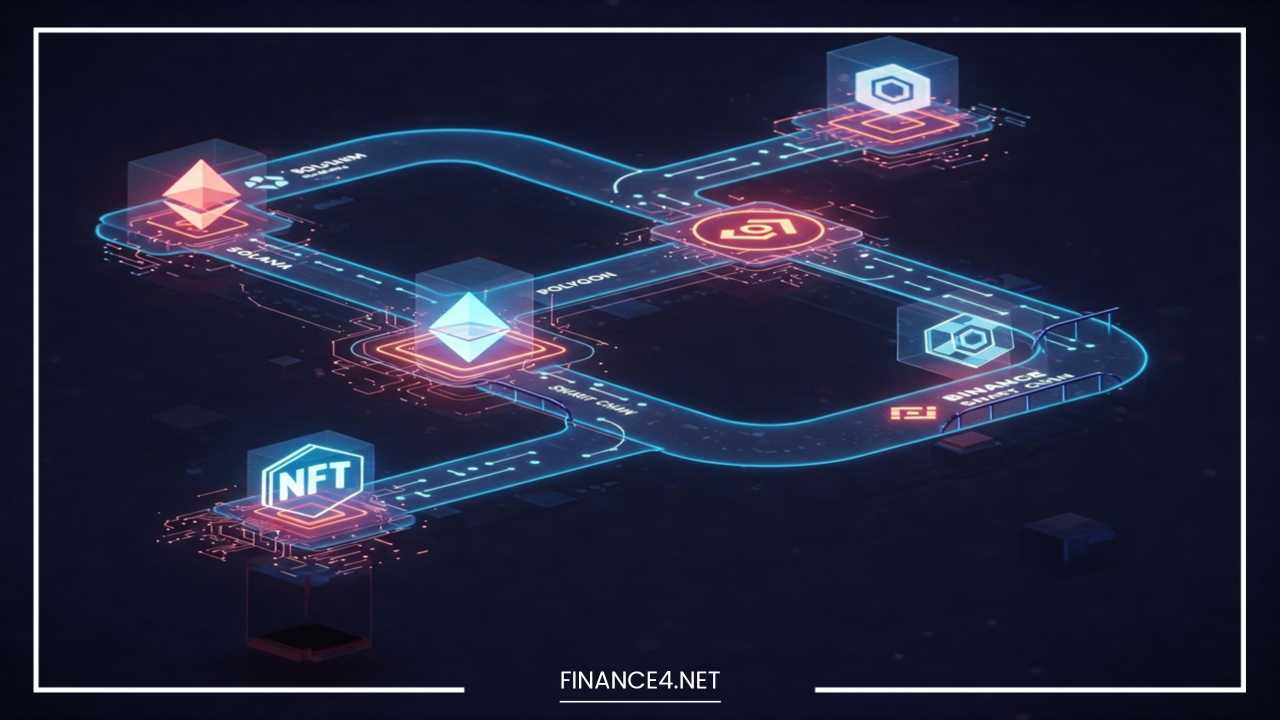
However, the landscape has rapidly evolved, and today, NFTs thrive on multiple blockchains, including Solana, Polygon, Binance Smart Chain (now BNB Chain), and several others. This diversification is what has given rise to a new breed of NFT traders: the cross-chain flippers.
Cross-chain NFT flipping requires a specialized skill set, understanding the nuances of various blockchain ecosystems, and leveraging this knowledge to identify and capitalize on price discrepancies between different NFT marketplaces.
As the NFT market continues to fragment, the savvy trader sees opportunities for arbitrage, leveraging inefficiencies to their advantage.
This practice is not for the faint of heart—it demands a sophisticated grasp of blockchain technology, decentralized finance (DeFi) principles, and the complex dynamics of NFT ecosystems. However, those who are able to master these complexities can realize substantial gains.
This article takes an in-depth look at the world of top cross-chain NFT flippers—exploring the strategies they employ, the tools they use, and what makes them stand out in a rapidly changing digital marketplace.
We will delve into the motivations that drive cross-chain flipping, the challenges and risks inherent to the practice, and what it truly takes to succeed in this high-stakes and fast-paced domain.
The Multi-Chain NFT Universe: A Landscape of Opportunities
The multi-chain proliferation in the NFT space stems from a variety of reasons, with blockchain scalability and high transaction fees being central to the shift.
While Ethereum remains the dominant blockchain in terms of total NFT volume, it has faced challenges related to high gas fees and congestion.
These issues have pushed both creators and collectors to explore alternative chains that offer faster transaction times, lower costs, and improved scalability.
Solana: Speed and Low Costs Drive NFT Growth
Solana has emerged as one of the most popular alternatives to Ethereum for NFT minting and trading. Its high throughput, coupled with minimal transaction fees, has made it an attractive blockchain for NFT projects, especially those that require rapid minting and large-scale transactions.
Solana has become home to numerous NFT collections, particularly for those looking for cost-efficient ways to engage with digital assets.
The growing number of NFT projects migrating to Solana represents a significant opportunity for cross-chain traders to tap into undervalued assets before they reach the broader market.
Polygon: Layer-2 Scalability on Ethereum
Polygon, a layer-2 scaling solution for Ethereum, enables faster, cheaper transactions without compromising Ethereum’s security and decentralization.
It has gained traction as an affordable environment for minting and trading NFTs while maintaining access to Ethereum’s vast user base and ecosystem.
With its low fees and faster transaction speeds, Polygon is a natural home for NFT collectors and traders looking for efficiency without the hefty gas fees often associated with Ethereum-based NFTs.
Binance Smart Chain (BNB Chain): Affordability Meets Accessibility
Binance Smart Chain, now rebranded as BNB Chain, has attracted a wide range of NFT projects due to its affordability and accessibility.
BNB Chain’s low-cost structure and high transaction speed have made it a popular destination for developers and creators who want to avoid Ethereum’s congestion and costly fees.
For NFT traders, the BNB Chain presents numerous opportunities to explore underappreciated NFT projects and flip them across chains for profit.
The fragmented nature of the NFT space, with assets spread across various blockchains, creates an environment ripe for cross-chain trading.
This dynamic enables traders to exploit price discrepancies between similar or identical NFTs listed on different blockchains.
In doing so, they serve as arbiters of value, capitalizing on market inefficiencies and helping to stabilize prices across disparate platforms.
The Evolution of Cross-Chain NFT Flipping: How Flippers Are Capitalizing on Multi-Chain Ecosystems
Cross-chain NFT flipping is an evolving art, and successful traders often employ several strategies to maximize profits.
These strategies are based on a combination of technical expertise, market analysis, and a deep understanding of how different NFT marketplaces operate. Below, we dive into the key strategies employed by top cross-chain NFT flippers.
1. Identifying Undervalued Gems on Emerging Chains
One of the most rewarding strategies for cross-chain flippers is identifying emerging NFT projects on newer or less-established blockchains.
The key here is to recognize potential before a project gains widespread attention, allowing the trader to acquire NFTs at low prices and sell them at a premium once the project gains traction.
Emerging blockchains, such as Solana and Avalanche, often offer new opportunities that aren’t yet saturated with traders.
This presents an advantage for early movers who can identify strong projects that have the potential for explosive growth.
Flippers looking for undervalued gems pay close attention to the fundamentals of a project, including the experience of its team, the quality of its roadmap, the size and engagement level of its community, and the innovation behind the NFT collection itself.
Successfully identifying a diamond in the rough requires deep research, including monitoring on-chain data, social media channels, and community discussions.
By getting in early on these projects, flippers can buy NFTs at relatively low prices and capitalize on the hype and increased demand as the project matures.
2. Arbitrage Across Different Blockchains: Capitalizing on Price Discrepancies
Arbitrage—the practice of buying low on one marketplace and selling high on another—is one of the core strategies employed by cross-chain NFT flippers.
Price discrepancies arise when the same NFT or collection trades at different prices across blockchains due to varying liquidity, demand, or transaction fees.
A typical arbitrage strategy involves tracking NFTs listed on different blockchains and identifying opportunities where an asset is underpriced on one chain compared to another.
This discrepancy could arise due to factors like differing levels of community engagement, marketing efforts, or network effects on each chain.
Flippers relying on arbitrage will often use real-time tracking tools, automated bots, and APIs that aggregate pricing information from multiple NFT platforms.
Using this data, they can quickly execute buy and sell orders to take advantage of these price differences before the opportunity fades.
3. Leveraging Cross-Chain Marketplaces and Aggregators
Cross-chain marketplaces and aggregators have simplified the process of trading NFTs across multiple blockchains.
These platforms offer a unified interface to search for, buy, and sell NFTs across several chains simultaneously. As a result, cross-chain traders can streamline their operations and identify lucrative opportunities with less effort.
For instance, platforms like OpenSea, Magic Eden, and Rarible support NFTs from multiple blockchains, allowing users to compare prices and trends across Ethereum, Solana, and other chains.
Aggregators bring all relevant data into one place, enabling flippers to access a comprehensive view of the market and make informed decisions based on real-time information.
Top NFT flippers frequently use these platforms to monitor trends, track pricing discrepancies, and perform trades with high efficiency.
Aggregators also provide data analytics tools that can help identify patterns and predict which NFTs are likely to appreciate in value. These insights can be the difference between making a profitable trade and missing out on an opportunity.
4. Capitalizing on Cross-Chain Collaborations and Integrations
As the NFT space matures, we are witnessing an increasing number of cross-chain collaborations and integrations between projects across different blockchains.
These partnerships often result in increased demand for specific NFTs as users from one blockchain ecosystem are introduced to assets on another.
Cross-chain collaborations create hype and excitement within the NFT community, driving up demand for certain assets.
Top flippers stay ahead of the curve by keeping track of these collaborations, anticipating when a particular NFT will be integrated into a new blockchain or community.
By purchasing these assets early, flippers can sell them at a premium when the collaboration or integration is publicly announced and demand spikes.
These opportunities can arise from a variety of sources, including major blockchain networks announcing new cross-chain bridges or NFT collections releasing multi-chain versions of their assets.
As more blockchains and ecosystems work together to foster interoperability, flippers can continue to take advantage of the buzz generated by these integrations.
5. Flipping Wrapped NFTs and Bridged Assets: Unlocking New Profit Paths
A relatively new but highly profitable strategy in the cross-chain NFT ecosystem involves flipping wrapped NFTs and bridged assets.
The concept of wrapped NFTs allows users to transfer NFTs between blockchains by creating a wrapped version of the original asset.
For instance, an Ethereum-based NFT can be wrapped and represented as a version of the asset on another blockchain like Polygon, allowing it to be traded within that network’s ecosystem. However, these wrapped assets often trade at a premium or discount compared to their native counterparts.
The price discrepancies for wrapped NFTs arise due to a variety of factors, including differences in liquidity, trading volumes, and the perceived risks associated with bridge security and the wrapping process itself.
Cross-chain flippers are quick to recognize these price differences and capitalize on them by buying NFTs on one chain, wrapping them, and then selling them on another chain at a higher price. Alternatively, they might buy wrapped NFTs at a discount, unwrap them, and sell the native versions for a profit.
This strategy, however, requires a high degree of caution. Wrapping and unwrapping NFTs usually come with associated fees, which can eat into profits, so flippers must carefully evaluate these costs.
In addition, the risks associated with bridge security cannot be ignored. Some bridges have experienced vulnerabilities that led to significant losses in the past.
Therefore, successful cross-chain flippers must remain vigilant when using bridging protocols and be aware of any security concerns before engaging in wrapped NFT transactions.
Characteristics of Top Cross-Chain NFT Flippers
Successful cross-chain NFT flippers share several core characteristics that contribute to their effectiveness in navigating this complex and ever-evolving space.
While strategies may differ, these individuals generally embody certain qualities that give them a competitive edge in a market full of volatility and rapid technological advancement.
Deep Understanding of Multiple Blockchains
Top cross-chain flippers possess an in-depth understanding of the technical specifications, ecosystem dynamics, and community characteristics of various blockchains.
It is not enough to simply be familiar with the most popular chains like Ethereum or Solana. Successful traders are proficient in understanding the subtle differences between ecosystems—such as transaction costs, speed, and security—which play a crucial role in determining where and when to execute trades.
By understanding these technical nuances, flippers can make informed decisions about where to buy and sell NFTs to maximize profit.
Proficiency in Using Cross-Chain Tools and Technologies
The ability to use advanced cross-chain tools and technologies is another hallmark of a successful NFT flipper.
The market is filled with decentralized finance (DeFi) protocols, NFT marketplaces, and platforms that enable cross-chain asset transfers.
Flippers who succeed in this space are adept at using bridges, wrapped tokens, cross-chain marketplaces, and aggregators to facilitate seamless transactions between different blockchains. The use of these tools allows them to quickly identify opportunities and execute trades efficiently.
Strong Research and Analytical Skills
Cross-chain NFT flipping requires a strong research methodology. The market is incredibly fast-paced, and understanding the nuances of different NFT projects across multiple blockchains is vital.
Top flippers are constantly analyzing data, tracking market movements, and assessing the health of different blockchain ecosystems.
Research is crucial for identifying undervalued NFTs, tracking upcoming NFT launches, and understanding which projects might be poised for growth.
Those who succeed in this space are not just passive traders—they are diligent analysts, always seeking new insights that can give them an edge.
Risk Management Expertise
Risk management is a fundamental aspect of successful NFT flipping, particularly in the cross-chain space.
The volatility of the NFT market is well-known, but the risks involved in transferring assets between chains introduce an additional layer of complexity.
Cross-chain flippers need to understand the security implications of using bridges, the liquidity risks inherent to smaller chains, and the potential for price slippage.
They must weigh these risks against potential rewards and have risk management strategies in place—whether it’s diversifying their investments across multiple blockchains or using stop-loss orders to minimize potential losses.
Access to Capital and Infrastructure
A successful NFT flipper typically has access to substantial capital to execute trades and the infrastructure necessary to support their trading activities.
Having sufficient capital enables them to capitalize on high-value NFT projects and bridge assets between chains when necessary.
In addition, the proper infrastructure, including secure wallets, stable internet connections, and sometimes even automated trading tools, is essential for ensuring smooth operations.
The ability to execute trades quickly and securely is a key differentiator for top flippers in a market where timing is everything.
Community Engagement and Networking
Building a network within various NFT communities across different blockchains is another crucial characteristic of successful flippers.
These individuals understand that networking can provide valuable insights, such as early access to upcoming NFT drops, insider knowledge about a project’s trajectory, or tips on underpriced assets.
They engage in active community discussions, follow key influencers in the space, and stay abreast of trends that can impact their cross-chain NFT flipping strategy.
Community involvement is not only a way to stay informed but also helps flippers maintain a pulse on sentiment across various platforms, which can be critical for making timely, well-informed decisions.
Adaptability and Agility
The NFT and blockchain landscapes are constantly evolving. As new platforms emerge, technologies advance, and market trends shift, the strategies that worked in the past may no longer be as effective.
Top cross-chain flippers are adaptable and able to pivot their strategies quickly when necessary. Whether it’s learning how to use a new bridging protocol or capitalizing on the next hot blockchain, successful traders are flexible and ready to embrace new technologies and opportunities.
This adaptability is key to long-term success, as it allows them to stay ahead of the curve and remain competitive in a constantly changing market.
Challenges and Risks of Cross-Chain NFT Flipping
Despite the high potential rewards, cross-chain NFT flipping presents several challenges and risks that traders must navigate carefully.
Complexity and Technical Barriers
One of the main obstacles for newcomers to cross-chain NFT flipping is the complexity of the process. Understanding how different blockchains function, how to bridge assets securely, and how to use cross-chain tools effectively can be daunting.
The technical barriers involved can make it difficult for beginners to gain a foothold in the market. It requires a steep learning curve, a deep understanding of blockchain interoperability, and the willingness to experiment and learn from mistakes.
Transaction Fees and Bridge Costs
While transaction costs on some blockchains are relatively low, cross-chain transfers often come with added fees.
For instance, bridging assets between Ethereum and Solana might require paying fees on both chains.
Additionally, wrapping and unwrapping NFTs also involve their own associated costs. These transaction fees can eat into profits, especially when flipping smaller-value NFTs, making it essential for flippers to carefully evaluate potential profit margins before executing trades.
Security Risks and Bridge Vulnerabilities
Security is one of the biggest concerns when it comes to cross-chain NFT flipping. Cross-chain bridges, though incredibly useful, have been targeted by hackers in the past, leading to significant losses of funds.
These vulnerabilities can be disastrous for NFT flippers who rely on bridges to transfer assets between chains.
It’s crucial for flippers to stay updated on the security of the bridges they use, conduct thorough due diligence, and adopt best practices to minimize exposure to potential hacks or failures in bridge technology.
Market Volatility and Liquidity Issues
The NFT market is notoriously volatile, and cross-chain NFT flipping is no exception. Prices can fluctuate rapidly, and liquidity can vary significantly across different blockchains and NFT collections.
While arbitrage opportunities exist, executing trades at the desired price point is not always possible, especially if the market is moving quickly or liquidity is low.
Flippers must be prepared for these fluctuations and have contingency plans in place to mitigate potential losses.
Information Asymmetry
One of the key challenges in cross-chain NFT flipping is the need to stay constantly informed about the latest market developments.
With numerous blockchains and NFT platforms in play, keeping track of new projects, upcoming releases, and market sentiment can be overwhelming.
Flippers need to engage in thorough research, track a variety of information sources, and monitor trends across multiple ecosystems to identify profitable opportunities before they disappear.
Regulatory Uncertainty
The regulatory landscape surrounding NFTs and cryptocurrencies is still developing. Governments around the world are grappling with how to regulate digital assets, and the uncertainty regarding future regulations can pose a risk to cross-chain NFT flippers.
New regulations could impact the ease with which digital assets can be transferred between chains or introduce compliance requirements that affect the broader NFT ecosystem.
The Future of Cross-Chain NFT Flipping
The future of cross-chain NFT flipping looks promising, especially as blockchain interoperability continues to improve.
With more secure and efficient bridging solutions on the horizon, along with the rise of cross-chain marketplaces, flippers will have access to new and better tools to facilitate seamless transactions across different networks.
As Web3, the metaverse, and decentralized ecosystems continue to evolve, cross-chain NFT flipping is likely to become an increasingly valuable skill.
The demand for digital assets that can easily move between virtual environments will only grow, and flippers who can master the complexities of this space will find themselves well-positioned to capitalize on the increasing interconnectedness of blockchain networks.
Final Thoughts: Mastering the Art of Interoperable NFT Trading
Cross-chain NFT flipping is a dynamic and sophisticated practice at the intersection of blockchain technology, decentralized finance, and digital art. It requires a blend of technical expertise, market knowledge, and a deep understanding of multiple blockchain ecosystems.
While the rewards are significant, the challenges are equally formidable, and those who succeed in this space are constantly evolving their strategies and adapting to new developments.
The top cross-chain NFT flippers are not just traders—they are pioneers, exploring the frontiers of blockchain interoperability and shaping the future of digital ownership.
As the multi-chain future of NFTs unfolds, those who can seamlessly navigate this interconnected landscape will be poised for success in the next wave of the NFT revolution.