How to Create Bridging-Based Stablecoin Baskets
 by
by 
How to Create Bridging-Based Stablecoin Baskets | Step-by-Step Guide
The landscape of decentralized finance (DeFi) is constantly evolving, moving from single-chain ecosystems to a multi-chain reality. In this new paradigm, assets need to flow seamlessly between different blockchains to access liquidity and arbitrage opportunities. This is where the concept of a bridging-based stablecoin basket becomes a powerful and necessary financial primitive. By bundling multiple stablecoins and enabling their movement across chains, these baskets provide a robust solution for a more interconnected, resilient, and capital-efficient DeFi ecosystem. This article explores the “why” and “how” of creating such a system, from its core design principles to practical implementation and crucial risk management considerations.
🤝 Introduction to Stablecoin Baskets
Stablecoins are cryptocurrencies designed to maintain a stable value, typically pegged to a fiat currency like the U.S. dollar ($). While a single stablecoin like USDC or USDT offers a haven from crypto volatility, it’s still subject to specific risks, such as a depeg event or a centralized issuer’s failure. A stablecoin basket addresses this by bundling multiple stablecoins into a single token.
This bundling strategy offers several key advantages. First, it provides hedging against the failure of any one stablecoin. For example, if a major stablecoin like USDC were to depeg, a basket containing USDC, DAI, and LUSD would only see a fractional loss, mitigating the overall risk for the holder. Second, it promotes diversification, spreading exposure across different stablecoin types (e.g., fiat-backed, crypto-collateralized, and algorithmic). Third, it enhances liquidity stability by aggregating liquidity from various sources. Finally, it creates new arbitrage opportunities, as a basket token’s price may deviate from the sum of its constituent parts, allowing traders to profit by minting and redeeming the basket.
🌉 Understanding Blockchain Bridges
At its core, a blockchain bridge is a protocol that enables the transfer of assets or data between two or more different blockchains. Without bridges, blockchains exist as isolated “islands,” and liquidity is fragmented. Bridges are the critical infrastructure that connects these islands, allowing for the creation of truly multi-chain applications.
There are several types of bridges, each with its own security model and trust assumptions:
- Lock-and-Mint/Burn-and-Redeem Bridges: This is the most common model. To move a token from Chain A to Chain B, the user locks the original token in a smart contract on Chain A. A corresponding “wrapped” version of the token is then minted on Chain B. To move the token back, the wrapped token is burned on Chain B, and the original token is unlocked on Chain A. Examples include the Polygon Bridge and the Avalanche Bridge.
- Liquidity Networks: Protocols like LayerZero and Synapse operate by using liquidity pools on both the source and destination chains. Instead of wrapping assets, a user provides liquidity on one chain and receives an equivalent amount from a liquidity pool on the other. This model is often more capital-efficient for certain types of transfers.
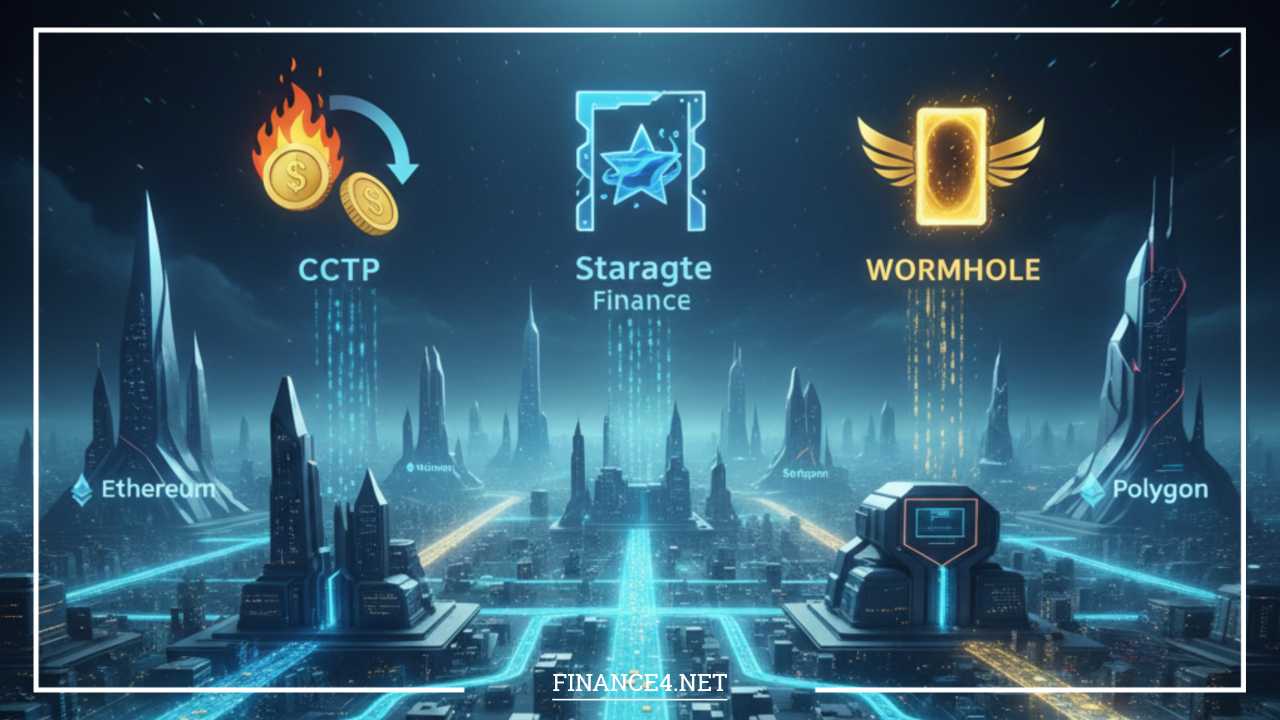
- Generic Message Passing Bridges: Protocols such as Chainlink CCIP and Axelar focus on secure cross-chain communication, enabling not just asset transfers but also the passing of arbitrary data and smart contract calls. This allows for the development of more complex, natively multi-chain applications.
A key challenge with bridges is their security. The large amounts of locked assets in bridge contracts make them prime targets for hackers. High-profile hacks, such as the $600 million Ronin Bridge hack and the $326 million Wormhole hack, have highlighted the immense security risks and vulnerabilities inherent in this technology.
❓ Why Combine Bridging With Stablecoin Baskets?
The true innovation of a bridging-based stablecoin basket lies in its ability to solve the problem of liquidity fragmentation across different blockchain ecosystems. A stablecoin’s utility is limited to the chain it resides on. For example, USDC on Ethereum cannot be directly used on Avalanche or Solana without a bridge. By creating a basket that can be moved across chains, we unlock several powerful capabilities:
- Cross-Ecosystem Liquidity Access: A user on Avalanche can gain exposure to a diverse basket of stablecoins that may include assets from Ethereum, Arbitrum, and Solana. This eliminates the need for users to manually bridge multiple assets, saving on gas fees and transaction time.
- Enhanced Arbitrage: A basket’s price may differ across chains due to demand, liquidity, or latency. A bridging-based system allows arbitrageurs to exploit these price discrepancies by seamlessly minting, bridging, and redeeming the basket token, ensuring that the basket’s value remains consistent across different chains.
- Improved Risk Mitigation: If one chain experiences a significant outage or exploit, the basket can be moved to a more stable chain, providing an escape hatch and enhancing the overall resilience of the system.
🎨 Design Principles of Bridging-Based Stablecoin Baskets
Designing a robust bridging-based stablecoin basket requires careful consideration of its core components and mechanics.
1. Selecting Constituent Stablecoins
The choice of stablecoins to include in the basket is paramount. A well-designed basket should include a mix of stablecoins with different collateralization models to diversify risk.
- Fiat-backed Stablecoins (e.g., USDC, USDT): These are the most liquid and widely used. However, they carry counterparty risk and are subject to centralized control.
- Crypto-collateralized Stablecoins (e.g., DAI, LUSD): These are backed by on-chain crypto assets, which provides greater decentralization but also introduces the risk of over-collateralization and liquidation cascades during market downturns.
- Algorithmic/Hybrid Stablecoins (e.g., FRAX): These coins use a combination of collateral and algorithmic mechanisms to maintain their peg. While innovative, their models can be more fragile and less battle-tested.
2. Choosing Target Chains and Bridges
The target chains (e.g., Ethereum, Solana, Arbitrum, Optimism) should be chosen based on their ecosystem size, transaction costs, and developer activity. The choice of bridge is also critical, balancing security, speed, and cost.
3. Weighting Strategies
The allocation of each stablecoin within the basket determines its risk profile.
- Equal-Weighted: Each stablecoin is given an equal weight (e.g., 33% USDC, 33% DAI, 33% FRAX). This is the simplest strategy but doesn’t account for the differing risks and liquidity of each asset.
- Market Cap-Weighted: Stablecoins with larger market caps are given a higher weight. This aligns the basket with the broader market but can increase exposure to a single asset (e.g., USDT or USDC).
- Risk-Adjusted: The weighting is dynamically adjusted based on the perceived risk of each stablecoin, often using metrics like depeg history, collateralization ratio, and audit results. This is the most sophisticated but also the most complex strategy.
4. Handling Depegs and Blacklists
The system must have a mechanism to handle stablecoin depegs. For instance, if a constituent stablecoin’s price falls below its peg, the basket’s smart contract could temporarily freeze minting and redemption of that specific coin or automatically rebalance the basket by selling the depegged asset. Additionally, the system should be designed to handle potential blacklisting of assets by their centralized issuers, ensuring that the basket remains composable and functional.
🏛️ Architecture of a Bridging-Based Basket System
The architecture of a bridging-based basket system is a multi-layered design.
Layer 1: The Bridge Layer
This is the foundation of the system. It’s the layer that connects the different blockchains. This layer can be built using an off-the-shelf solution like LayerZero, Axelar, or Chainlink CCIP, or a custom-built, lock-and-mint mechanism. This layer is responsible for the secure and reliable transfer of data and messages across chains.
Layer 2: The Aggregation Layer
This layer lives on each of the target blockchains and contains the smart contracts that manage the stablecoin basket itself.
- The Basket Token Contract: This is a standard ERC-20 contract (or a similar token standard on other chains) that represents the stablecoin basket.
- The Vault Contract: This contract holds the constituent stablecoins. It has functions for minting and redeeming the basket token. When a user wants to mint a basket token, they deposit the required mix of stablecoins into this vault. The vault then mints the basket token. To redeem, the user burns the basket token, and the vault releases the underlying stablecoins.
- The Rebalancing Contract: This is a crucial component that ensures the basket’s composition remains consistent with the chosen weighting strategy. It can be triggered manually or automatically to swap assets within the vault to maintain the target weights.
Layer 3: The Oracle and Relayer Layer
This layer provides external data and facilitates cross-chain communication.
- Oracles: These services, like Chainlink, provide real-time price feeds for the constituent stablecoins. Oracles are essential for the rebalancing contract and for determining the value of the basket for minting and redemption.
- Relayers: These are off-chain entities that listen for events on one chain and relay them to another, often in conjunction with the bridge layer. For example, a relayer might observe a user locking assets on Ethereum and then trigger the minting process on Avalanche.
The system’s full architecture looks like this: A user initiates a transaction on a source chain to mint a basket token. The request is sent through the Bridge Layer (Layer 1). The Relayer (Layer 3) on the destination chain picks up this message and, based on the instructions, the Aggregation Layer‘s (Layer 2) smart contracts mint the basket token, using local liquidity or liquidity bridged from the source chain.
🛠️ Implementation Strategies
Creating a bridging-based stablecoin basket is a complex undertaking that requires a blend of smart contract development and multi-chain architecture design.
1. Off-the-shelf Tools
The easiest way to get started is by using existing, battle-tested protocols.
- Chainlink CCIP: Provides a secure and reliable way to pass messages and tokens across chains. You can use it to build the messaging layer that orchestrates the minting and burning process across different blockchains.
- LayerZero: Its “omn-ichain” messaging protocol allows you to create a single smart contract that can be deployed on multiple chains, making it easier to manage a shared state and logic. You can use its SDKs to build a multi-chain vault that can be accessed from any connected chain.
- Axelar SDK: Offers tools for building decentralized applications that span across multiple blockchains. It provides a generalized message passing protocol that can be used to coordinate asset transfers and smart contract calls.
2. Manual Bridge Integrations
For those who want to build a custom solution or integrate with a specific bridge, this approach involves using low-level bridge SDKs and APIs. This gives you more control over the system’s security and logic but also increases the development complexity and potential for errors.
3. Building a Multi-chain Rebalancing Engine
A key component of a successful basket is a robust rebalancing engine. This can be built using a combination of on-chain smart contracts and off-chain keepers or bots. The engine’s logic should be triggered by oracles reporting on-chain prices and liquidity imbalances. The rebalancing logic must be highly secure and gas-efficient.
Example Smart Contract Frameworks
- Solidity: The dominant language for smart contract development on Ethereum and EVM-compatible chains.
- Foundry/Hardhat: These are development environments that make it easier to write, test, and deploy smart contracts. Foundry, in particular, is known for its speed and developer-centric features.
🔒 Security and Risk Management
The dual complexity of stablecoins and bridges makes security the single most critical factor in a bridging-based stablecoin basket.
- Bridge Hacks: The history of DeFi is littered with bridge exploits. A vulnerability in any bridge used by the basket can lead to a catastrophic loss of funds. A basket must be designed to mitigate this risk by using audited, multi-signature, and formally verified bridges. The system should have circuit breakers or freeze functions that can temporarily halt operations if a bridge is compromised or a depeg event occurs.
- Stablecoin Depeg Risks: The 2023 Silicon Valley Bank (SVB) collapse, which caused USDC to depeg temporarily, highlights that even the most liquid stablecoins are not immune to risks. The basket’s design must account for such events, perhaps by temporarily excluding a depegged asset from the basket or rebalancing it into other, more stable assets.
- Audits and Formal Verification: Before any public launch, the entire system, including all smart contracts, bridge integrations, and rebalancing logic, must undergo rigorous audits by multiple reputable firms. Additionally, formal verification, a process that mathematically proves a program’s correctness, should be used for the most critical parts of the code.
⚖️ Regulatory and Compliance Considerations
The regulatory landscape for stablecoins and DeFi is in a state of flux. Projects must be mindful of potential legal and compliance requirements.
- Jurisdictional Considerations: Regulations on stablecoins vary significantly from country to country. A basket that uses fiat-backed stablecoins issued in a specific jurisdiction may be subject to that jurisdiction’s rules.
- KYC/AML: If the basket uses any custodial or fiat-backed assets, it might be required to implement Know Your Customer (KYC) and Anti-Money Laundering (AML) checks, especially if it operates in a centralized or semi-centralized manner.
- Regulatory Clarity: The lack of clear regulatory guidance on “basket tokens” or “protocol-issued assets” can create legal uncertainty. Projects should monitor legislative developments and engage with regulators to ensure compliance.
📈 Real-World Examples and Case Studies
While a fully-fledged, bridging-based stablecoin basket is a new primitive, some existing protocols offer a glimpse into its potential.
- mStable: This protocol was an early pioneer in the stablecoin basket space, allowing users to mint “mUSD” by depositing various stablecoins. It operates on a single chain but its core aggregation and rebalancing logic provides a good template.
- Curve Stable Pools: The 3pool on Curve, which consists of DAI, USDC, and USDT, is one of the most liquid stablecoin pools in DeFi. Its success demonstrates the market’s demand for a multi-stablecoin asset.
- Angle Protocol: This protocol issues agEUR, a decentralized Euro stablecoin, but it also has a native stablecoin basket. This is another example of a working model for stablecoin aggregation.
A hypothetical cross-chain basket could involve a token called mBasket that is deployed on Ethereum, Polygon, and Arbitrum. The basket’s composition on all three chains would be 50% USDC, 30% DAI, and 20% LUSD. The system would use Chainlink CCIP to pass messages between the chains to ensure a consistent composition. When a user mints mBasket on Polygon, they deposit the required mix of assets. If the liquidity for a particular asset (e.g., LUSD) is low on Polygon, the system can use the bridge to bring in LUSD from Ethereum, facilitating the mint and maintaining the basket’s integrity.
🔮 Final Thoughts and Future Outlook
Bridging-based stablecoin baskets are a crucial step toward a more integrated, resilient, and capital-efficient DeFi ecosystem. They move beyond the limitations of single-chain finance, addressing the fundamental problems of liquidity fragmentation and single-asset risk. As DeFi matures, we’re moving toward a “DeFi 3.0” where composability is not just within a single blockchain but across all of them.
The future of these baskets is bright. We can envision a future with automated, AI-driven basket management, where algorithms dynamically adjust the basket’s composition based on real-time market data, risk scores, and liquidity metrics, all without human intervention. This would create a truly decentralized, self-sustaining financial instrument. While challenges in security and regulation remain, the potential for these primitives to reshape global finance is undeniable.