How to Stake Bridging Aggregator Tokens for Extra APY
 by
by 
How to Stake Bridging Aggregator Tokens for Extra APY | Guide & Tips
The world of decentralized finance (DeFi) is a dynamic and ever-evolving landscape. As the ecosystem expands across multiple blockchains, the challenge of seamless interoperability has become a central focus. Users need to move assets between chains efficiently and securely. This need has given rise to bridging aggregators, a crucial innovation that solves the problem of liquidity fragmentation. For savvy crypto investors, these platforms offer more than just utility; their native tokens provide a unique opportunity to earn passive income through staking.
This comprehensive guide will walk you through the concept of staking, the critical role of bridging aggregators, and a detailed, step-by-step process on how you can stake their native tokens to earn extra Annual Percentage Yield (APY). We will explore the factors that influence these returns, the risks involved, and the best practices to maximize your earnings while mitigating potential pitfalls. Whether you are a DeFi veteran or a newcomer to the crypto space, this article is designed to equip you with the knowledge to navigate this promising niche and turn your assets into a source of compounding returns.
Understanding Staking in DeFi
At its core, staking is the process of locking up crypto assets in a wallet or a smart contract to earn rewards. This practice is fundamental to Proof-of-Stake (PoS) blockchains, where it serves as a mechanism to secure the network and validate transactions.
How Staking Works:
In a PoS system, instead of relying on computational power (as in Proof-of-Work), network participants called “validators” are chosen to create new blocks and confirm transactions based on the amount of tokens they have “staked.” The more tokens a validator stakes, the higher their chance of being selected to validate the next block.
For the average user who may not have the technical expertise or the capital to run a validator node, staking is made accessible through “staking pools.” These pools allow multiple users to combine their tokens to increase the collective staking amount, thereby raising the probability of being chosen as a validator. When the pool successfully validates a block, the rewards are distributed among all participants proportional to their stake, minus a small fee for the pool operator.
Why People Stake:
The primary motivation for staking is to generate passive income. By locking up your tokens, you are essentially lending them to the network to ensure its security and functionality, and in return, you are rewarded with newly minted tokens or a portion of transaction fees. This allows you to earn a yield on your crypto holdings, similar to earning interest in a traditional savings account, but often with a much higher APY. Beyond financial incentives, staking also allows users to actively participate in the governance and security of a decentralized network, contributing to its health and decentralization.
Risks Involved in Staking:
While the rewards are attractive, staking is not without risks. These include:
- Impermanent Loss: A risk specific to providing liquidity in a pool, where the price of your staked assets changes relative to each other, leading to a loss in dollar value compared to simply holding the assets in your wallet.
- Lock-up Periods: Many staking protocols require you to lock up your assets for a fixed period. During this time, you cannot withdraw or trade your tokens, exposing you to potential market volatility without the ability to react.
- Slashing: In some protocols, validators who fail to perform their duties correctly (e.g., going offline or attempting malicious activities) can be penalized, or “slashed,” which results in a loss of a portion of their staked tokens.
- Smart Contract Risks: Staking involves interacting with smart contracts, which can have bugs or vulnerabilities that could be exploited by hackers, leading to the loss of staked funds.
The Role of Bridging Aggregators in DeFi
The multichain future of crypto is here, but with it comes the challenge of a fragmented ecosystem. Different blockchains, like Ethereum, Solana, and Avalanche, operate as separate silos, making it difficult to move assets between them. This is where bridging aggregators come in.
What Is a Bridging Aggregator?
A bridging aggregator is a platform or protocol that consolidates multiple cross-chain bridges into a single, unified interface. Think of it as a smart travel agent for your digital assets. Instead of you having to manually find and compare different bridges to move your tokens from one chain to another, the aggregator automatically scans and selects the most optimal route based on factors like fees, speed, liquidity, and security.
Why Bridging Aggregators Are Important:
Before aggregators, users had to navigate a complex web of individual bridges, each with its own set of rules, liquidity pools, and risks. This led to a fragmented user experience and inefficiencies. Bridging aggregators solve this by:
- Solving Liquidity Fragmentation: By tapping into multiple liquidity sources, they ensure that users can always find a bridge with sufficient liquidity for their transfer, minimizing slippage and failed transactions.
- Enabling Better Interoperability: They act as a central hub, connecting disparate blockchains and making the entire DeFi ecosystem more cohesive and accessible.
- Improving User Experience: They simplify the process of cross-chain transfers, abstracting away the underlying technical complexity and providing a single, user-friendly platform.
Examples of popular bridging aggregators include LI.FI and Jumper Exchange, which don’t have their own tokens but rather aggregate existing bridges, and platforms like Synapse Protocol (SYN) and Multichain (MULTI), which have their own native tokens tied to their specific bridging infrastructure.
What Are Bridging Aggregator Tokens?
Bridging aggregator tokens are the native cryptocurrencies that power the underlying protocols of these platforms. They are not merely speculative assets; they serve a crucial role in the ecosystem’s functionality and economic model.
Definition of Bridging Aggregator Tokens:
These tokens are typically used for:
- Governance: Holders of the token can participate in the platform’s decentralized governance, voting on key decisions such as protocol upgrades, fee structures, and the addition of new chains.
- Staking Rewards: Users can stake their tokens to earn a share of the platform’s revenue, which can come from transaction fees or newly minted tokens.
- Facilitating Liquidity: In many cases, these tokens are a component of the liquidity pools that enable cross-chain transfers. By providing liquidity with these tokens, users are incentivized with a portion of the bridge fees.
Examples of Bridging Aggregator Tokens:
- BNB (Binance Bridge): While primarily the native token of the Binance ecosystem, BNB is used for transactions on the Binance Bridge, which facilitates cross-chain transfers.
- MULTI (Multichain): The native token of the Multichain protocol, used for governance and to incentivize liquidity providers.
- SYN (Synapse Protocol): The governance token of Synapse, which rewards liquidity providers and stakers.
- RUNE (THORChain): RUNE is the native asset that secures and powers the THORChain network, enabling permissionless cross-chain liquidity.
How to Stake Bridging Aggregator Tokens for Extra APY
Staking bridging aggregator tokens is a powerful way to earn a high APY on your crypto assets. The process is straightforward, but it requires careful attention to detail.
Step-by-Step Guide on Staking Bridging Aggregator Tokens:
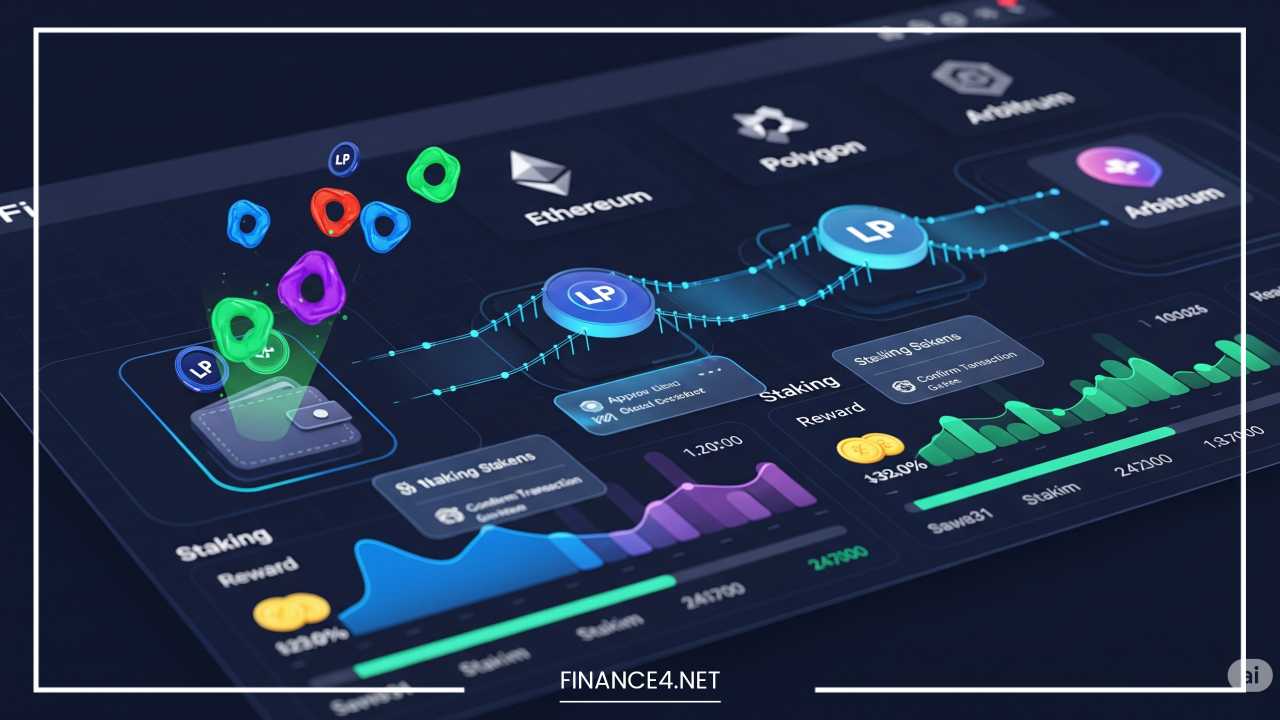
- Choose a Staking Platform: The first step is to identify a reputable platform where you can stake your tokens. This could be a decentralized exchange (DEX) like Uniswap or PancakeSwap, a dedicated staking platform, or a liquid staking protocol. For bridging aggregator tokens, you will often be staking in a liquidity pool.
- Acquire the Tokens: You need to own the specific bridging aggregator tokens you want to stake. You can purchase these on a DEX or a centralized exchange (CEX).
- Connect Your Wallet: Navigate to the platform’s website and connect a compatible Web3 wallet, such as MetaMask, Trust Wallet, or Phantom. Ensure you are on the correct blockchain network (e.g., Ethereum, BNB Chain, Polygon) where the tokens are held.
- Find the Staking Pool: Use the platform’s interface to find the liquidity pool for your desired token. For example, on Uniswap, you would search for a
[TOKEN NAME]/ETHor[TOKEN NAME]/USDCpair. For some protocols, you might find a dedicated “Stake” or “Earn” section. - Add Liquidity: Liquidity pools typically require you to deposit an equivalent value of two different tokens. For example, if you want to stake in a
SYN/ETHpool, you would need to provide an equal dollar value of both SYN and ETH. - Confirm the Transaction: Once you have selected the amount of tokens to stake, the platform will prompt you to confirm the transaction in your wallet. Be sure to review the details, including gas fees, before approving.
- Monitor Rewards: After the transaction is confirmed, your tokens are locked in the liquidity pool. You can now track your staked amount and earned rewards on the platform’s dashboard.
How to Select the Best Staking Pool:
To maximize your returns, you must be discerning about which pool you choose. Consider these criteria:
- APY (Annual Percentage Yield): This is the most crucial metric. A higher APY means more potential earnings, but be wary of rates that seem too good to be true, as they often come with higher risks.
- Lock-up Period: Determine if there is a fixed lock-up period and if it aligns with your investment strategy. Some pools offer “flexible staking” with no lock-up, while others require you to lock your assets for weeks or months.
- Fees: Pay attention to the fees charged by the platform and the pool operator, as these can eat into your profits.
- Platform Reputation and Security: Use well-known and audited platforms to minimize the risk of smart contract exploits. Research the track record and community sentiment of the bridging aggregator protocol itself.
Maximizing APY:
- Reinvest Rewards (Compounding): One of the most effective strategies is to periodically “compound” your rewards by adding them back to your staked amount. This increases your principal and allows your earnings to grow exponentially over time.
- Choose High-APY Pools: Actively search for new or high-APY pools. Platforms often offer boosted rewards for new pools to attract initial liquidity.
- Leverage Staking Rewards: Some protocols offer additional benefits, such as airdrops or governance rights, which can add to your overall returns.
Factors That Affect APY on Bridging Aggregator Tokens
The APY on staking bridging aggregator tokens is not static; it is influenced by a number of variables. Understanding these factors is key to managing your expectations and optimizing your strategy.
- Liquidity and Demand: The APY is often a function of a pool’s liquidity. If a pool has low liquidity but high demand for cross-chain swaps, the fees generated will be higher, leading to a higher APY for liquidity providers. Conversely, if a pool is over-saturated with liquidity, the APY may drop as the rewards are spread across more stakers.
- Network Fees and Gas Costs: The profitability of staking, especially on networks like Ethereum, can be significantly impacted by high gas fees. High transaction costs for staking, unstaking, and compounding rewards can make it unprofitable for smaller stakes.
- Platform-Specific Incentives: Protocols often use their native tokens to incentivize certain behaviors. This can include temporary “yield farming” rewards, token airdrops, or exclusive governance voting rights, all of which can increase the effective APY.
- Market Conditions: The broader crypto market’s volatility can affect the price of your staked token. While a high APY might look great on paper, a significant drop in the token’s price can wipe out all your earnings, and more.
Risks of Staking Bridging Aggregator Tokens
Beyond the general risks of crypto staking, a few specific risks are associated with staking bridging aggregator tokens.
- Impermanent Loss: As mentioned earlier, if you are providing liquidity in a pool with another token (e.g.,
SYN/ETH), and the prices of SYN and ETH diverge significantly, you may suffer impermanent loss. This means the value of your staked tokens, when you withdraw them, could be less than if you had simply held them in your wallet. - Smart Contract Risks: Bridging aggregators are complex protocols that rely on intricate smart contracts. A bug or exploit in these contracts could lead to a catastrophic loss of all staked funds. Always verify that the protocol has been audited by reputable firms.
- Volatility: Bridging aggregator tokens, like many altcoins, can be highly volatile. A sudden market downturn can drastically reduce the value of your staked principal, even if you are earning a high APY.
- Regulatory Risks: The regulatory landscape for DeFi and staking is still evolving. Governments around the world are increasingly scrutinizing these activities, and new regulations could impact the legality or profitability of staking, leading to a sudden shift in the market.
Tips and Best Practices for Staking Bridging Aggregator Tokens
To navigate the risks and maximize your returns, consider these best practices:
- Diversification: Do not put all your eggs in one basket. Diversify your stake across different tokens and platforms to reduce your exposure to any single protocol or smart contract risk.
- Stay Informed: The DeFi space moves at a breakneck pace. Follow project updates, join community forums on Discord and Telegram, and monitor staking platforms for changes in APY or new opportunities. Being an active and informed participant is your best defense against unexpected changes.
- Rebalancing Your Portfolio: Regularly review your staked positions. If a token’s price has plummeted or a pool’s APY has dropped significantly, it might be time to unstake and redeploy your assets to a more lucrative or stable position.
- Start Small: If you are new to staking, start with a small amount of capital to get a feel for the process and the risks involved before committing a larger sum.
Final Thoughts
Staking bridging aggregator tokens offers a compelling avenue for earning passive income in the decentralized finance ecosystem. By participating, you are not only earning a potentially high APY but also contributing to the security and efficiency of the very protocols that are building the multichain future.
However, as with any investment, the rewards come with a commensurate level of risk. The high APYs are a reflection of the volatility and technical complexities inherent in this nascent market. Before you commit your capital, take the time to conduct your own thorough research. Understand the mechanics of the protocol, evaluate the risks, and choose a strategy that aligns with your financial goals and risk tolerance.
The journey to higher APY is a continuous process of learning and adaptation. By staying informed, diversifying your portfolio, and approaching the market with a cautious and strategic mindset, you can successfully leverage the power of bridging aggregator tokens to grow your crypto wealth.
FAQs
- What is the difference between staking and yield farming?
- Staking typically involves locking tokens to secure a network and earn rewards, while yield farming often involves providing liquidity to a pool to earn a yield, which can include both transaction fees and additional rewards. Staking can be a component of yield farming.
- Is impermanent loss a risk when staking single tokens?
- No. Impermanent loss is a risk associated with providing liquidity in a pool with two or more assets. If you are staking a single token in a dedicated staking pool, you do not face this risk.
- How do I find out the APY of a staking pool?
- Most DEXs and staking platforms display the current APY on their liquidity pool or staking pages. Always check these numbers, as they can fluctuate in real-time.