Low-Gas NFT Deployment Platforms
 by
by 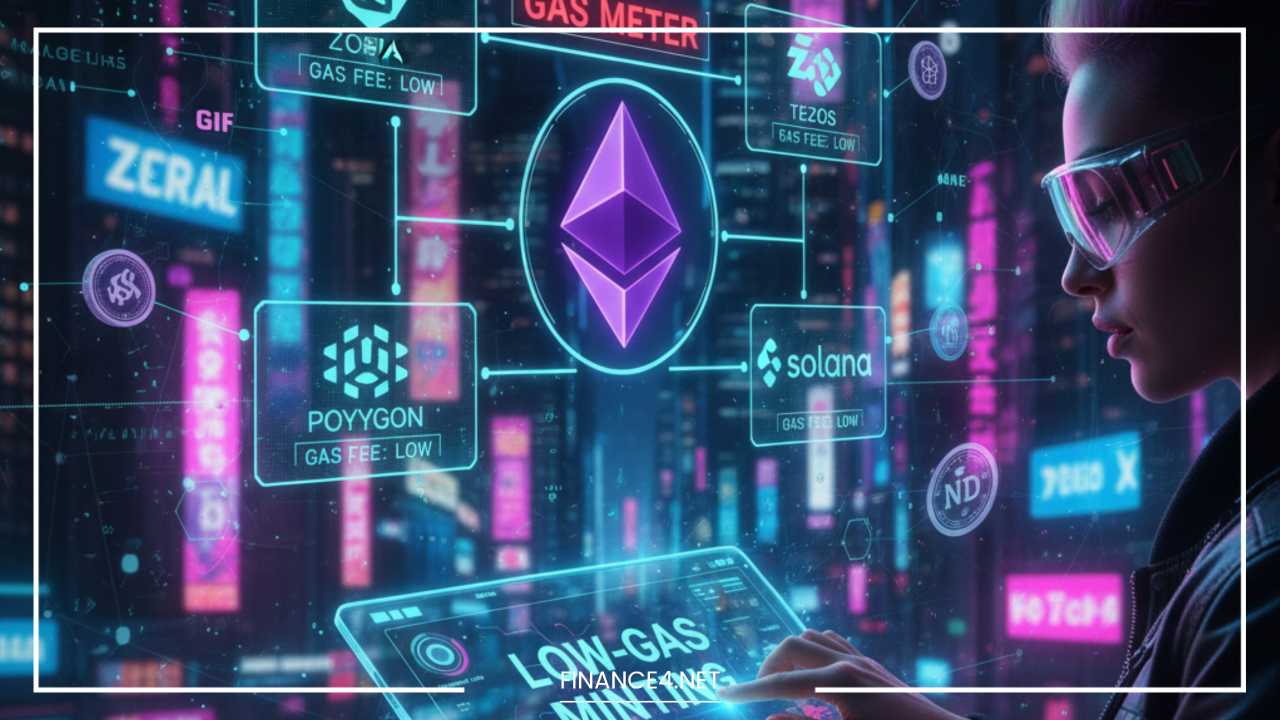
Low-Gas NFT Deployment Platforms | Save on Minting & Transaction Fees
The rise of Non-Fungible Tokens (NFTs) ushered in a new era of digital ownership and creation, but it was quickly shadowed by a persistent and prohibitive barrier: the unpredictable, often astronomical cost of gas fees. For many creators and small projects, these fees turned a potentially profitable venture into a high-stakes gamble. The industry’s response has been a revolution in efficiency, leading to the proliferation of Low-Gas and Gasless NFT Deployment Platforms. These innovative ecosystems are decentralizing access, making digital creation affordable for everyone from the independent artist to the massive gaming studio.
This article delves into the core of this transformation, exploring the technical architecture, key platforms, and future trends that are making the dream of low-cost NFT deployment a reality.
Introduction to Gas Fees in NFTs
In the world of blockchain, a gas fee is the transaction cost required to execute an operation on a decentralized network. Much like the ‘gas’ needed to run a car, this fee is paid to the network’s validators (or miners, in older proof-of-work systems) to compensate for the computational energy and storage resources consumed by a transaction.
For NFTs, gas fees are critical because nearly every action—from minting (creating the NFT) to transferring (selling or moving it) and even listing it for sale—is an on-chain transaction that requires computational proof.
The Impact of High Gas Fees
High gas fees, particularly those that plagued Ethereum during NFT bull markets, have a devastating impact on the ecosystem:
- Exclusion of Creators: Artists with smaller fanbases or limited capital often cannot afford the to required just to mint a single piece. This effectively centralizes access to professional-grade NFT launches.
- Friction for Collectors: High fees mean that buying a low-value collectible (e.g., a
game asset) becomes uneconomical when the transaction fee is
. This limits the adoption of NFTs in crucial areas like gaming and high-volume collectibles.
- Unpredictable Launches: NFT projects attempting a large-scale drop faced “gas wars,” where users intentionally paid excessively high fees to jump the queue, leading to failed transactions, financial loss for those who bid too low, and network instability.
The necessity of mitigating this friction drove developers to create the ecosystem of low-gas and gasless NFT platforms we see today, fundamentally changing the economics of digital creation.
What is a Low-Gas NFT Platform?
A Low-Gas NFT Platform is any marketplace, protocol, or dedicated blockchain environment designed and optimized to minimize the user’s transaction costs associated with NFT minting and interaction.
The solutions typically fall into two categories:
- Low-Gas (Gas-Optimized): These platforms operate on blockchains or layers that are inherently cheaper than Ethereum Layer 1 (L1), dramatically reducing the fee from tens or hundreds of dollars to cents or fractions of a cent. Examples include platforms built on Layer 2 networks like Arbitrum or sidechains like Polygon.
- Gasless (Zero-Gas for the Creator): This advanced model involves abstracting the gas fee entirely from the user. The platform, the collector, or a third-party entity (known as a Paymaster) pays the gas fee instead. The creator can mint and list an NFT without any upfront cost, significantly lowering the barrier to entry.
The core benefit is cost-efficiency, which unlocks scalability and speed. Low-gas environments allow for the mass minting of thousands of assets in a single, cheap transaction, enabling complex use cases like:
- Generative Art: Minting entire 10,000-piece collections affordably.
- Blockchain Games: Creating and transferring in-game assets (weapons, skins, land) at high volume and low cost.
- Ticketing & Memberships: Issuing high-volume, low-cost NFTs for utility purposes.
Why Ethereum Has High Gas Fees
Ethereum, the original home of NFTs via the ERC-721 standard, faced—and still faces—a trilemma of its own success: decentralization, security, and scalability.
The primary reasons for Ethereum’s high gas fees stem from its architecture and historical consensus mechanism:
- Limited Block Space: Ethereum’s L1, even after the transition to Proof-of-Stake (The Merge), has a finite capacity for the amount of data and transactions it can process per block.
- Network Congestion (Supply and Demand): When demand for block space surges—during major NFT drops, DeFi liquidations, or token launches—users must bid higher priority fees to incentivize validators to include their transactions quickly. This bidding war is what causes the infamous gas spikes.
- Smart Contract Complexity: NFT minting is not a simple token transfer; it involves executing complex smart contract logic (e.g., checking ownership, calculating royalties, generating unique token IDs, and writing data to the blockchain). More complex logic consumes more “gas units,” which, when multiplied by a high gas price (gwei), results in an expensive transaction.
This combination of scarcity, demand, and computational intensity provided the fundamental economic and technical impetus for the creation of Layer 2 (L2) solutions and alternative Layer 1 (L1) chains, all aimed at solving this scaling challenge.
Technologies Powering Low-Gas NFT Platforms
The reduction of gas fees is achieved through sophisticated technical maneuvers, broadly categorized by where the transaction execution takes place relative to the main Ethereum chain.
Layer 2 Solutions (L2)
L2s are protocols built on top of Ethereum that process transactions off-chain and then submit the compressed data back to L1 for final settlement, inheriting Ethereum’s security.
- Optimistic Rollups (Optimism, Arbitrum): They “optimistically” assume all off-chain transactions are valid, allowing for quick processing and extremely low gas costs (often $0.01 – $0.10 per complex transaction).
- Zero-Knowledge Rollups (zkSync, StarkNet): These use cryptographic proofs (Zk-Proofs) to verify the validity of thousands of transactions in a single, compact bundle. This is generally considered the most secure and scalable long-term solution, offering the lowest data costs after the implementation of EIP-4844 (Protodanksharding), which dramatically lowers the cost for L2s to post data to L1.
Sidechains and Alternative L1s
- Sidechains (e.g., Polygon PoS): These are independent, EVM-compatible blockchains with their own consensus mechanisms, often a less resource-intensive Proof-of-Stake model. They offer extremely low, stable fees (often $0.003 – $0.05) but rely on their own security, not Ethereum’s. Polygon is widely used for high-volume, low-cost NFT projects.
- Alternative L1s (e.g., Solana, Tezos, Avalanche, NEAR): These are entirely separate base-layer blockchains built with different architectures to prioritize throughput and speed over Ethereum’s design choices. They boast transactions often measured in fractions of a cent, making them ideal for high-frequency applications like blockchain gaming and social collectibles. Tezos and NEAR Protocol, for example, have extremely efficient NFT ecosystems like Fxhash and Mintbase, respectively.
Technical Strategies for Gas Reduction
Beyond scaling networks, platforms employ smart contract and user experience (UX) tricks to cut costs:
- Lazy Minting (Off-Chain Minting): The creator signs a transaction that registers the NFT’s metadata and token ID off-chain (e.g., on a platform’s database). The NFT is only “truly” minted and written to the blockchain when a buyer purchases it, with the buyer incurring the gas fee. This eliminates the creator’s upfront cost entirely.
- Batch Minting: A technical optimization that bundles the creation of multiple NFTs (e.g., 50 collectibles) into a single smart contract execution. Since the fixed cost of initiating the transaction is amortized across many assets, the cost per NFT drops significantly.
- Gas Abstraction/Meta-Transactions (The Future): This is the foundation of “gasless” deployment and is discussed in detail below. It involves a third party paying the gas on the user’s behalf.
Top Low-Gas NFT Deployment Platforms (Comparative Overview)
The ecosystem is highly diversified, with platforms optimizing for either the highest security (L2s) or the lowest cost (Alternative L1s/Sidechains). The choice of platform dictates the technical method used to achieve low-gas deployment.
| Platform | Primary Blockchain/Layer | Type | Gas-Saving Mechanism | Approx. Creator Minting Cost (Example) | Notable Focus/Use Case |
| Zora | Zora Network (Optimistic L2) | L2 Rollup | Gas-optimized smart contracts, L2 settlement, Protocol Fee | Near Zero ($0.01 – $0.10) | Culture, 1/1 Artists, Gas-Efficient Protocol for building |
| OpenSea | Polygon (Default), Ethereum | Sidechain/L1 | Lazy Minting (on Polygon/Ethereum L1), Direct L2 support (Base, Optimism) | Zero upfront cost (Lazy Minting), Cents (on Polygon/L2) | Largest Marketplace, Secondary Trading, Generative Collections |
| Manifold | Ethereum L1 (with optional L2) | L1 Smart Contract Toolkit | Highly-optimized, custom smart contracts, Batch Minting | Medium ($10 – $50+) – Varies widely | Custom Smart Contracts, High-End Art, Absolute Ownership |
| Fxhash | Tezos | Alternative L1 (PoS) | Extremely low, fixed-rate transaction fees | Near Zero ($0.002 – $0.05) | Generative Art, Sustainable Art, Low-Cost Experimentation |
| Mintbase | NEAR Protocol | Alternative L1 (PoS) | NEAR’s high-speed, low-cost consensus | Near Zero ($0.01 – $0.05) | NFT as Service (NFTaaS), Ticketing, High-Volume Events |
| Stargaze | Cosmos Ecosystem | Alternative L1 | Cosmos IBC-enabled, custom NFT module | Extremely Low (Cost in STARS/Gas) | Community-Centric Drops, PFP Projects, Cosmos Interoperability |
| Rarible | Polygon, Tezos, Flow, Ethereum | Multi-Chain Marketplace | Lazy Minting, Multi-chain support | Zero upfront cost (Lazy Minting on Polygon) | Cross-chain Minting, Community Governance |
| Foundation | Ethereum L1 (with L2 integrations) | L1/L2 Marketplace | L2 integration support for cheaper transactions | Medium to High (L1) / Low (L2) | Curated 1/1 Art, Premium Drops |
| Objkt.com | Tezos | Alternative L1 | Tezos’ efficient Proof-of-Stake consensus | Near Zero ($0.002 – $0.05) | Largest Tezos Marketplace, Broad Art/Collectibles |
Gasless Minting: How Does It Work?
Gasless Minting is the ultimate goal of low-gas platforms, offering a frictionless experience where the creator or user never needs to pay an upfront gas fee, or even hold the native token (e.g., ETH) in their wallet. This is primarily achieved through a technology called Meta-Transactions and the newer standard of Account Abstraction.
Meta-Transactions and Relayers (Older Method)
In a meta-transaction, the user signs a message (the intent of the transaction, like “Mint NFT X”), but does not submit the transaction to the network. Instead:
- A Relayer (a third-party server, often operated by the platform) takes the signed message.
- The Relayer wraps this message into a new transaction.
- The Relayer pays the actual gas fee in the native currency (e.g., ETH) and submits the transaction on the user’s behalf.
The creator avoids the gas fee, and the platform can either absorb the cost or charge the buyer a premium upon sale. Platforms like Mintable and Rarible used this model to implement their “Gasless” or “Lazy Minting” features on L1.
Account Abstraction (AA) and ERC-4337 (The Future)
The latest, most robust method for gasless deployment is Account Abstraction (AA), formalized on Ethereum by ERC-4337. AA turns the standard user wallet (an Externally Owned Account or EOA) into a programmable Smart Contract Wallet.
This new architecture allows for:
- Paymasters: A specialized smart contract that can be programmed to pay the gas fees for other users. A dApp, a DAO, or a project sponsor can fund a Paymaster to subsidize or cover all transaction costs for its users, enabling a truly gasless experience for the user.
- Alternative Fee Payment: The user can pay the Paymaster in a token other than the native currency (e.g., paying gas in USDC), eliminating the need to hold ETH or MATIC.
- Bundlers: Entities that collect multiple user operations (transactions signed by smart accounts) and bundle them into a single, efficient L1 transaction.
This innovation is paramount for mass adoption, as it removes the confusing “buy ETH first” step and allows the blockchain UX to mimic a familiar Web2 experience (e.g., “Sign in with Google,” then simply click a button to mint).
Benefits of Using Low-Gas Platforms
The transition to low-gas and gasless infrastructure offers widespread benefits across the ecosystem:
- Accessibility for New Creators: By removing the high initial investment, low-gas platforms democratize creation, allowing artists from any socioeconomic background to experiment, launch, and monetize their work affordably.
- Affordable Experimentation: Developers and artists can conduct multiple, small-scale drops, test new mechanics, or launch complex smart contracts without the fear of prohibitive deployment costs.
- Better UX for Onboarding: The gas fee is the single biggest point of friction for newcomers. Gasless options, powered by Account Abstraction, create a smooth, intuitive onboarding process necessary to pull users from traditional Web2 applications.
- Environmental Sustainability: While the move to Proof-of-Stake significantly reduced Ethereum’s energy consumption, low-gas L2s and efficient L1s reduce the computational load per transaction even further, offering a more environmentally friendly approach to digital ownership.
Potential Drawbacks or Considerations
While offering tremendous value, the shift to low-gas platforms is not without trade-offs:
- Fragmented Liquidity: Spreading collections across multiple L2s, Sidechains (Polygon), and L1s (Solana, Tezos) fragments the market. A collector on Ethereum L1 might not see or easily purchase an NFT on the NEAR protocol, leading to lower liquidity and visibility for smaller projects.
- Lower Decentralization and Security (in some cases): While L2s inherit Ethereum’s security, certain sidechains and L1s have different security models. Furthermore, gasless systems relying on a single Relayer or Paymaster (before full AA adoption) can introduce a level of centralization risk or platform dependency.
- Interoperability Challenges: Moving an NFT between different chains (e.g., from Ethereum to Solana) requires costly and complex bridging mechanisms, which adds complexity for both creators and collectors.
- Platform Lock-in: Marketplaces that offer proprietary gasless solutions can sometimes lock the creator’s NFT metadata within their platform’s framework, potentially limiting where the NFT can be traded later.
Future of Low-Gas NFT Deployment
The next wave of innovation is entirely focused on abstracting away the underlying complexity of the blockchain—starting with gas.
The Rise of Full Account Abstraction
The full adoption of ERC-4337 across Ethereum and its L2s will be the single most disruptive development. It enables Programmable Wallets that allow:
- Social Recovery: Users can recover a lost wallet using trusted friends instead of a seed phrase.
- Session Keys: Allowing continuous, gasless in-game actions for a set period without re-signing every transaction.
- Invisible Crypto: The user never interacts with a gas fee, a native token, or a seed phrase, truly enabling mainstream products to run on blockchain rails.
Modular and Intent-Based Transactions
- Modular Blockchains: New architectures, where separate layers handle Execution, Settlement, Consensus, and Data Availability (e.g., Celestia and its ecosystem), promise to drive data posting costs (the main expense for rollups) to near zero, making transactions almost free.
- Intent-Based Transactions: Rather than telling the blockchain how to execute an action (a rigid transaction), users will simply state what they want to happen (e.g., “I intend to swap
for the best possible price”). Specialized infrastructure will execute the necessary complex, batched, and gas-optimized transactions on the backend to fulfill the intent, completely shielding the user from gas and technical overhead.
Programmable Royalties and AI
The low-gas environment is also making advanced features practical. Low costs enable sophisticated programmable royalties, complex on-chain generative art, and the real-time minting of AI-generated NFTs, all of which require frequent, cheap interactions with smart contracts.
Final Thoughts
The era of painfully expensive, high-stakes NFT minting is rapidly drawing to a close. Low-Gas NFT Deployment Platforms—whether they are high-speed L1s like Solana, efficient sidechains like Polygon, or the emerging zk-Rollups—are the engine of Web3 scalability.
For creators, these platforms represent liberation: the freedom to create, experiment, and monetize without the crushing burden of upfront capital. For developers, they are the toolset for building high-volume applications like games and social networks that can finally compete with Web2 infrastructure on cost and speed. For the entire industry, the shift to seamless, near-zero-cost deployment, epitomized by Account Abstraction, is the non-negotiable step toward true mainstream adoption. Choosing the right low-gas platform is no longer a luxury; it is the fundamental decision that dictates a project’s economic viability and its user experience.