How to Track Floor Price Across Blockchains
 by
by 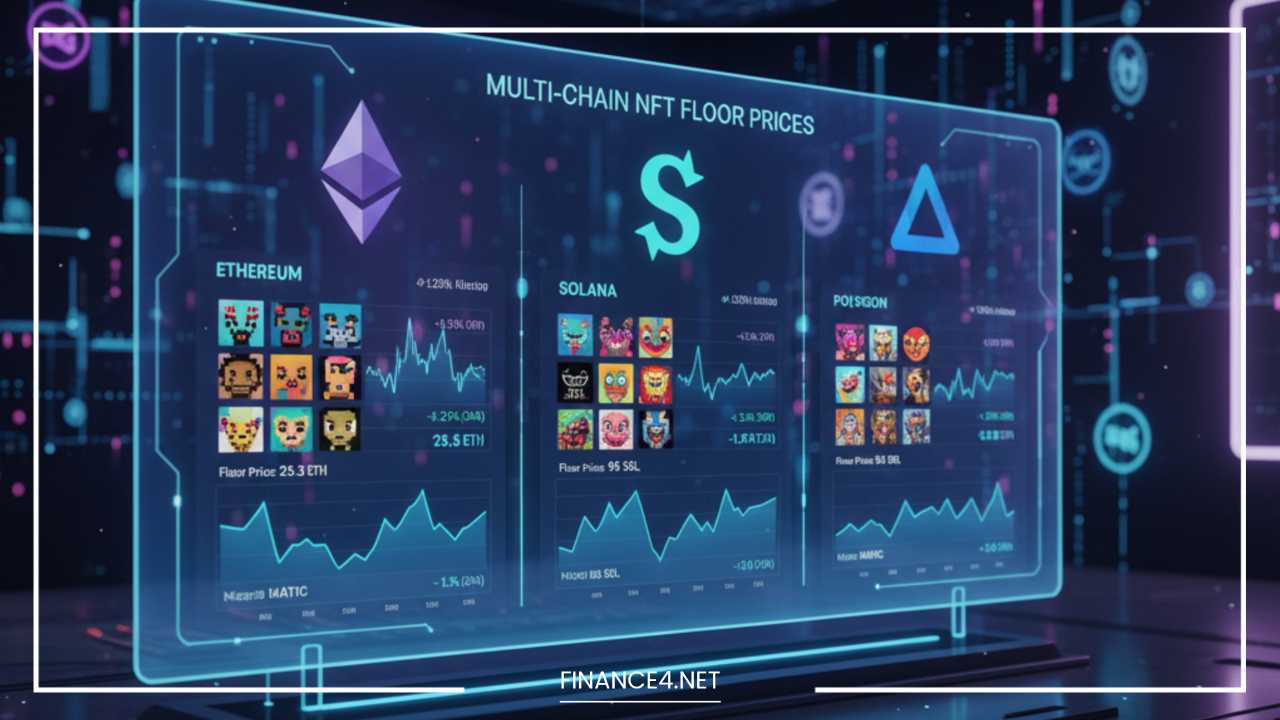
How to Track Floor Price Across Blockchains: A Complete Multi-Chain NFT Guide
The world of Non-Fungible Tokens (NFTs) has exploded beyond its Ethereum origins, evolving into a complex, multi-chain ecosystem. As the market matures, the need for sophisticated analytical tools has become paramount, particularly for tracking one of the most fundamental metrics: the floor price.
The floor price is simply defined as the lowest listed price for any NFT within a specific collection. For collectors, investors, and traders, tracking this metric is akin to monitoring the bid price of a stock; it represents the minimum capital required to gain entry into a project.
Tracking the floor price is crucial for several reasons: it informs purchasing decisions, aids in portfolio valuation, and serves as a quick barometer of a collection’s health and immediate market sentiment. However, with major collections now spread across or migrating between ecosystems like Ethereum, Solana, Polygon, and others, the challenge is no longer just tracking a single floor price on one chain—it’s tracking the true floor price across all relevant blockchains.
This guide is designed to provide a comprehensive roadmap for navigating the multi-chain NFT landscape, detailing the tools, techniques, and best practices necessary to accurately track floor prices, capitalize on market inefficiencies, and make informed decisions in the evolving digital asset space.
Understanding Floor Price
The concept of floor price is deceptively simple but central to the NFT market. In essence, it is the lowest listed price for a non-fungible token within a given collection. If a collection has 10,000 items, the floor price is the price of the least expensive item currently available for sale. It serves as the baseline entry point for an investor.
What is Floor Price?
The floor price acts as a liquid entry or exit point. When a collector decides to “sweep the floor,” they are buying up all the NFTs listed at the lowest prices, typically driving the floor price higher in a bid to signal conviction or reduce circulating supply. Conversely, a rapid drop in the floor price can signal panic selling, weak hands, or a fundamental issue with the project.
Factors That Influence Floor Price
Several dynamic factors contribute to the volatility and stability of a collection’s floor:
- Rarity: While the floor price is defined by the cheapest item, the overall distribution of rare traits impacts the floor. If a collection has many highly-priced rare pieces, the general perception of value often supports a higher floor.
- Project Popularity & Hype: Market sentiment, social media buzz, influencer endorsements, and news events (like a major partnership or upcoming utility announcement) can dramatically spike demand and, consequently, the floor price.
- Community Strength & Utility: Collections with strong, engaged communities and clear, delivered utility (e.g., staking rewards, access to exclusive events, intellectual property rights) tend to maintain a more resilient floor price than purely speculative projects.
- Overall Market Conditions: The floor price is highly correlated with the broader crypto market. During a “crypto winter,” even strong collections can see their floor prices drop significantly as liquidity dries up.
Limitations of Using Floor Price Alone
While a necessary metric, relying solely on the floor price for valuation is risky. A project with a floor might appear stronger than one with a
floor, but this is only half the story. The floor price does not account for:
- Listings Depth (Price Walls): A collection might have a
floor but only one NFT listed at that price, with the next 1,000 NFTs listed at
. The floor is thin and easily swept.
- Liquidity and Volume: A project with a high floor but zero trading volume over a week is likely illiquid and difficult to sell quickly.
- Owner Distribution: If a large percentage of the collection is held by a few wallets, the floor is susceptible to manipulation or large-scale selling from whales.
Therefore, the floor price must be viewed as a key entry metric, but always cross-referenced with volume, owner count, and listing depth for a complete picture of the collection’s health.
Overview of Blockchains with NFTs
The NFT landscape is a mosaic of different blockchain ecosystems, each offering unique trade-offs in terms of security, cost, speed, and community. Understanding these differences is the foundation of multi-chain floor price tracking, as market dynamics, tools, and pricing conventions vary significantly between them.
Top NFT-Supporting Blockchains
1. Ethereum (![]() ETH)
ETH)
- Dominance: The undisputed king of NFTs, hosting the vast majority of blue-chip collections (e.g., CryptoPunks, Bored Ape Yacht Club).
- Marketplaces: OpenSea, Blur, Rarible.
- Pros: Highest liquidity, perceived security, largest community, established ecosystem.
- Cons: High transaction fees (Gas) during peak usage, slower transaction speeds relative to L1 competitors.
2. Solana (![]() SOL)
SOL)
- Dominance: The primary competitor to Ethereum, known for its speed and low cost, appealing to high-frequency traders and mass-market projects.
- Marketplaces: Magic Eden, Tensor.
- Pros: Extremely fast transactions, near-zero transaction fees.
- Cons: Historically experienced network outages, less decentralization relative to Ethereum.
3. Polygon (![]() MATIC)
MATIC)
- Dominance: An Ethereum Layer-2 scaling solution, excellent for projects requiring mass adoption, like gaming or brand-specific drops (e.g., Reddit Collectible Avatars).
- Marketplaces: OpenSea, Zora.
- Pros: Low-cost transactions, leverages Ethereum’s security, ideal for scaling.
- Cons: Liquidity is generally lower than on Ethereum mainnet.
4. BNB Chain (![]() BNB)
BNB)
- Dominance: Popular for gaming NFTs and projects targeting a broader, often more Asia-centric, user base.
- Pros: Low fees, fast finality.
- Cons: Perceived as more centralized than Ethereum or Solana.
5. Avalanche (AVAX![]() )
)
- Dominance: Known for its fast, scalable architecture and appeal to institutional DeFi and gaming projects.
- Pros: High throughput, low latency.
- Cons: Smaller overall NFT market cap compared to the leaders.
6. Tezos (XTZ![]() )
)
- Dominance: A niche but strong player, particularly favored by traditional artists and for generative art due to its energy-efficient consensus and focus on clean art.
- Pros: Low fees, energy efficiency, strong artistic community.
- Cons: Low market liquidity for most collections.
Why Floor Prices Vary Across Chains
Floor prices can vary dramatically for the same or similar projects across different chains primarily due to:
- Transaction Costs: An arbitrage opportunity of $50 might be profitable on Solana, where fees are pennies, but immediately erased by a $100 Gas fee on Ethereum.
- Liquidity: The deepest liquidity on Ethereum often results in higher overall price floors for blue-chip projects, as investors are willing to pay a premium for the certainty of market depth.
- Community and Culture: Each chain fosters a unique community. Solana tends to have a highly active trading culture, whereas Ethereum is more dominated by long-term hodlers of high-value assets. These behavioral differences impact willingness to sell at the lowest possible price.
Why Multi-Chain Tracking Matters
In the early days of NFTs, tracking the floor price was a single-chain effort. Today, the market complexity demands a multi-chain approach. Ignoring other blockchains means potentially missing critical investment signals and profitable opportunities.
1. Cross-Chain NFT Projects
The migration of major projects is a key factor. For instance, the high-profile movement of the y00ts collection from the Solana blockchain to Ethereum demonstrated that a project’s ecosystem can fundamentally change, requiring trackers to pivot instantly. Multi-chain tracking is essential for collections that launch on one chain and later bridge or relaunch on another, as the floor price on the origin chain can become an indicator of future prices on the destination chain.
2. Arbitrage Opportunities
Arbitrage is the act of simultaneously buying an asset in one market and selling it in another to profit from a price difference. In the multi-chain NFT world, a price discrepancy can emerge for the same NFT collection (if bridged or dual-issued) or even for functionally similar collections. For example, if a major project’s floor is $10,000 on Ethereum, and a related project’s floor is
$5,000 on Solana, this differential must be analyzed in the context of the respective market conditions. By tracking multiple chains, traders can identify temporary price imbalances created by slow cross-chain transfers or differences in localized liquidity.
3. Avoiding Liquidity Fragmentation
A lack of multi-chain insight leads to liquidity fragmentation. If a trader only monitors OpenSea on Ethereum, they might mistakenly believe a collection is illiquid and sell below market value, not realizing a deep, active market exists for the same asset on Magic Eden on Solana. Comprehensive tracking ensures the user has a holistic view of the total supply, total listings, and true liquidity across all supported platforms.
Tools to Track Floor Price Across Blockchains
To effectively track floor prices across a fragmented, multi-chain environment, relying on single-marketplace websites is insufficient. A suite of dedicated, multi-chain analytics tools is required. These tools aggregate data, provide historical context, and offer critical alerts.
Comprehensive Multi-Chain Aggregators
| Tool | Focus | Key Chains Supported | Pros | Cons |
| NFTGo | Portfolio Tracking, Analytics | Ethereum, BNB Chain, Polygon | Excellent historical data, whale tracking, multi-chain portfolio sync. | Requires subscription for full suite of advanced features. |
| DappRadar | Cross-Chain Dapp & NFT Data | Ethereum, Solana, Polygon, BNB Chain, Flow, Wax, etc. | Very broad chain support, includes Volume and User metrics alongside Floor. | NFT-specific data can be less granular than specialized tools. |
| ICY.tools | Real-Time Data & Trending | Ethereum, Solana | Ultra-fast data updates, excellent for finding trending collections, provides detailed rarity/floor breakdowns. | Primarily focused on popular/high-volume chains; often requires a subscription for real-time access. |
| Crossmint | Multi-Chain Infrastructure | Solana, Ethereum, Polygon, Avalanche, Tezos | Unique focus on cross-chain infrastructure; provides APIs for multi-chain analytics and payment processing. | Primarily a developer tool, less focused on a consumer-facing dashboard. |
Specialized and Niche Tools
| Tool | Focus | Key Chains Supported | Key Feature |
| NFTPriceFloor | Floor Price History | Ethereum, Solana | Dedicated focus on long-term floor price charts and historical market cap. |
| Flip.xyz | Smart Money Tracking | Ethereum, Solana | Provides insight into what profitable wallets are buying and selling. |
| Gem / Genie (now part of OpenSea) | Aggregator/Sweeping | Ethereum, Polygon | Allows “sweeping” the floor across multiple marketplaces on the same chain (and in some cases, across chains). |
| MoonRank/HowRare.is | Rarity and Solana Metrics | Solana | Essential for Solana collections; provides accurate trait rarity and floor prices. |
Visual Dashboards and Alerts
The true value of these tools lies in their presentation of data and their ability to generate real-time alerts.
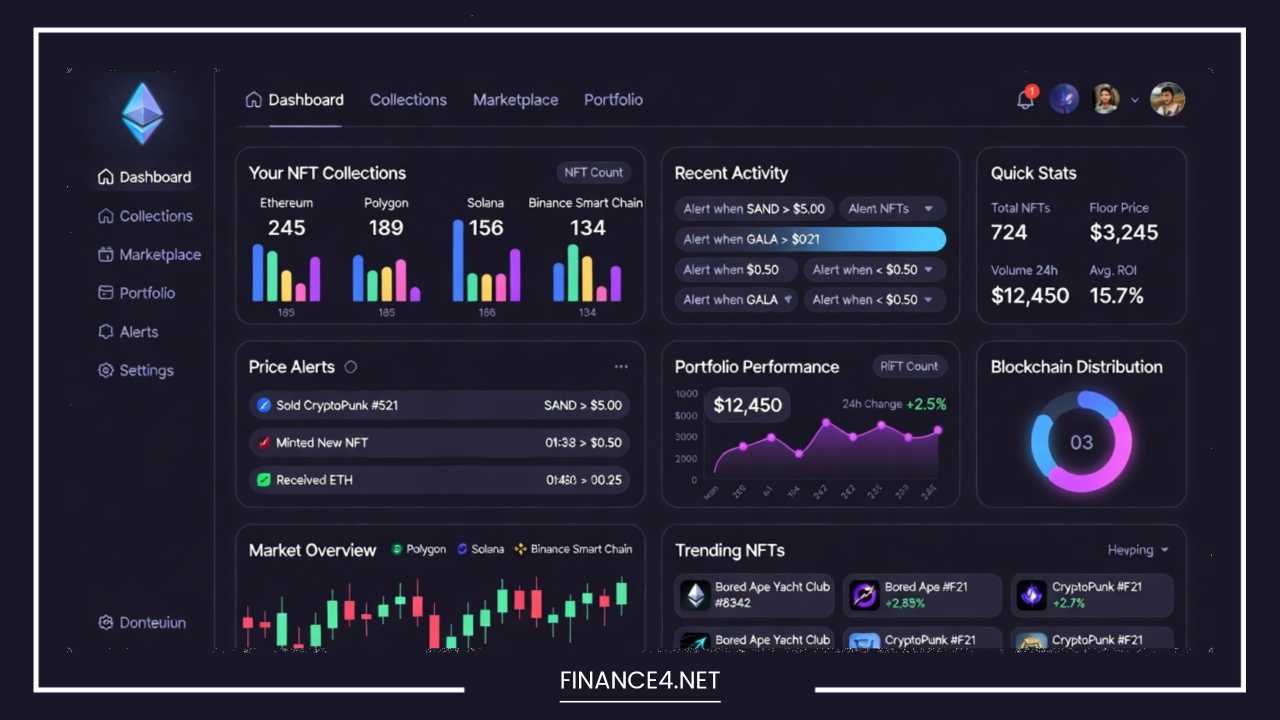
- Visual Dashboards: Tools like NFTGo and ICY.tools provide customizable dashboards where users can pin their favorite collections across different chains (e.g., Bored Apes on Ethereum next to a top Solana project) to compare floor prices side-by-side. The use of candlestick charts and time-series data allows for clear visualization of floor price volatility.
- Alerts: The most powerful feature is the ability to set floor price alerts. For example, a user can set an alert for a collection on Ethereum to notify them if the floor drops below 2 ETH, or for a Solana project if the floor rises above 50 SOL. These alerts, often delivered via Discord, email, or browser notification, ensure users can react instantly to market movements without constant manual checking.
By combining the broad cross-chain coverage of DappRadar with the real-time depth of ICY.tools and the historical context of NFTGo, an investor can construct a robust, multi-chain floor tracking strategy.
How to Track Floor Prices Manually
While automated tools provide efficiency, understanding the manual process is crucial for verification, particularly when dealing with small-cap or newly launched collections that may not yet be indexed by major aggregators. Manual tracking involves directly accessing the source data: the marketplaces and the underlying blockchain explorers.
1. Visiting Marketplaces and Filtering
The fundamental manual process is to visit the dominant marketplaces for each chain and filter for the lowest price.
- OpenSea (Ethereum, Polygon): OpenSea remains the largest volume marketplace. To find the floor, navigate to the collection page and sort by “Price: Low to High.” The very first listing is the floor. It’s crucial to select the correct network (Ethereum or Polygon) at the top of the interface.
- Magic Eden (Solana, Ethereum): Magic Eden is the leading marketplace on Solana. The process is identical: find the collection and apply the “Price Low to High” filter. Magic Eden has expanded to Ethereum, requiring users to switch the network toggle for cross-chain comparison.
- Tensor (Solana): A newer, increasingly popular marketplace on Solana, known for being fast and liquidity-focused. It often displays the floor price prominently, but a manual sort is still recommended to verify the absolute lowest listing.
2. Monitoring Sales and Listings
A quick look at the Activity tab on any marketplace provides immediate insight into floor volatility. A flurry of sales near the floor price suggests buying pressure, while a sudden increase in listings at the current floor suggests selling pressure.
3. Using Blockchain Explorers for Smart Contract Insights
For the most advanced manual tracking, one can consult blockchain explorers, which provide the raw, unadulterated data directly from the network.
- Etherscan (Ethereum/Polygon) or Solscan/Solana Explorer (Solana): By finding the collection’s smart contract address, advanced users can monitor the “Events” or “Internal Transactions” tab. This allows users to see:
- Mint Activity: How quickly the supply was created.
- Transfer Activity: Large transfers (often OTC sales or whale movements) that can precede a price change.
- Listing/Sale Proxies: While explorers don’t show the floor price directly, a sudden increase in transactions involving the contract can signal a massive sweep or a major drop, which is then confirmed on the marketplace. This is a crucial step for verifying data integrity against marketplace numbers.
Manual tracking offers high data fidelity but is highly time-consuming, highlighting the necessity of combining it with automated tools.
Setting Up Alerts and Automation
In the high-speed NFT market, a matter of minutes can mean the difference between capitalizing on a dip or watching a floor sweep pass you by. Automation is essential for real-time, multi-chain floor price tracking.
How to Get Real-Time Alerts
The primary methods for receiving instant floor price notifications rely on popular communication and development tools:
- Dedicated Analytics Tools (NFTGo, ICY.tools): As mentioned, the simplest method is utilizing the built-in alert features of professional dashboards. These allow you to set specific price thresholds for collections across their supported chains, with notifications delivered directly to your web or mobile app.
- Discord and Telegram Bots: Many communities and specific analytics providers offer bot services.
- Discord Bots: A common utility for NFT projects is a bot that scrapes marketplace data and posts an alert directly into a designated Discord channel when a sale occurs or the floor price breaches a set level. This is often customizable using commands like
/set-floor-alert <collection_name> <price>. - Telegram Bots: Similar in function, Telegram bots can push immediate notifications, often favored for their speed and mobile integration.
- Discord Bots: A common utility for NFT projects is a bot that scrapes marketplace data and posts an alert directly into a designated Discord channel when a sale occurs or the floor price breaches a set level. This is often customizable using commands like
- Webhooks via Zapier or IFTTT: For advanced users and developers, webhooks allow data from one service to trigger an action in another. A service like Moralis (see below) can detect a floor price change and send a webhook to a platform like Zapier. Zapier can then be configured to send an email, a custom Discord message, or even update a Google Sheet, creating a highly customized, multi-stage alert workflow.
Use of APIs (For Devs or Advanced Users)
For those capable of scripting, direct API access offers the most control, lowest latency, and the ability to integrate floor price data into custom trading bots or personal dashboards.
- OpenSea API (Ethereum, Polygon): Provides endpoints to fetch collection statistics, including the current floor price, historical price data, and total volume. This is the official and most reliable source for OpenSea-listed projects.
- Moralis & Alchemy NFT APIs: These are node service providers that offer powerful, aggregated API endpoints for multiple blockchains (Ethereum, Solana, Polygon, etc.). They simplify the process of gathering data by handling the complex blockchain-indexing work. For example, a single Moralis API call can return the current floor price for a collection, its recent sales, and owner data across multiple chains. This is the most effective method for large-scale, automated cross-chain tracking.
By leveraging these automation tools, users transform from passive observers to active participants, capable of reacting to floor price movements the instant they occur across any major blockchain.
Best Practices for Analyzing Floor Prices
While the floor price is the initial signal, it is never the final word on a project’s valuation. Effective multi-chain analysis requires synthesizing the floor price with a constellation of other vital metrics to gain a comprehensive, actionable view.
Don’t Rely Solely on Floor Price
A project’s apparent strength, indicated by a high floor price, can be easily undermined by underlying market mechanics. A collection with a $5,000 floor but very few holders and no sales volume is a liquidity trap. Instead, combine the floor price with these four key indicators:
- Listing-to-Sale Ratio: This metric reveals market confidence. If 100 NFTs are listed for sale (listings) but only 5 are selling per day (sales), the ratio is 20:1. A low ratio (e.g., 2:1 or 3:1) suggests high demand and buying pressure is outpacing supply, often leading to a rising floor. A high ratio suggests weak demand and a falling floor.
- Volume Trends: Compare the 24-hour, 7-day, and 30-day volume across all relevant chains. A rising floor accompanied by stagnant or falling volume is a warning sign; the price increase might be due to a single whale sweep rather than organic demand. A rising floor with steadily increasing volume, particularly from organic buyers, is the strongest signal of sustained growth.
- Owner Distribution (Unique Holders): A healthy collection has a high percentage of unique owners (e.g.,
unique holders for a 10k supply). Tools like NFTGo provide this data. If the majority of the collection is held by a handful of wallets (e.g.,
unique holders), the floor is precarious and subject to mass sales from these large holders. The more decentralized the ownership, the more stable the floor.
- Price Walls (Listing Depth): This is the single most important metric to pair with the floor. Check the listings page and scroll down:
- Is the floor price thin? (e.g., only 5 listings at
ETH).
- Is there a massive “price wall” nearby? (e.g., 500 listings at
ETH).
- A deep floor with listings gradually increasing in price suggests strong market support. A thin floor followed by a massive wall suggests strong selling pressure is imminent once the wall is hit.
- Is the floor price thin? (e.g., only 5 listings at
Compare Historical Floor Prices
Always contextualize the current floor price against its history. If the current floor is 1 ETH, but the all-time low was 0.1 ETH and the all-time high was 5 ETH, the current price represents a moderate recovery. Using historical charting tools is crucial to understanding whether the current floor is a temporary dip, a new stable base, or a local peak.
Risks & Challenges in Cross-Chain Tracking
The multi-chain NFT world, while lucrative, is rife with complexities and pitfalls that can lead to misinformed decisions if not carefully managed.
1. Fake Collections / Wash Trading
- Fake Collections: A pervasive danger is the creation of “copycat” or “fake” collections that scrape legitimate metadata and artwork. These often appear with an artificially low floor price to bait unsophisticated buyers. Mitigation: Always verify the official smart contract address against the project’s official Twitter/Discord and ensure you are on the primary, verified marketplace listing (look for the checkmark). This risk is amplified when a project bridges, as scammers rush to create fake contracts on the new chain.
- Wash Trading: This is the deceptive practice where an owner buys and sells their own NFT between wallets they control to artificially inflate volume and manipulate the floor price. Challenge: Wash-traded volume can trick automated trackers into believing a collection is highly liquid and in high demand. Mitigation: Look at the unique holder count and the addresses involved in recent transactions. If the same few wallets are constantly trading the floor pieces, it’s likely wash trading.
2. Inconsistent Data Between Platforms
Different analytics tools and marketplaces use varying methodologies to calculate metrics, especially across chains.
- Currency Conversion: Some tools might calculate the total USD value based on the current ETH/SOL price, which is inherently volatile. Slight discrepancies in real-time exchange rates can lead to conflicting USD floor prices between two tools.
- Indexing Latency: A sale that occurs on a Solana marketplace may take a few seconds longer to be indexed by an Ethereum-focused multi-chain tool, leading to a temporary difference in the reported floor.
3. Latency in Updates
While APIs have improved, the blockchain is inherently a ledger that needs time to finalize blocks. Cross-chain activity introduces even more latency. In a fast-moving market, a floor sweep might be completed before an investor’s automated alert is triggered and received, causing missed opportunities. Challenge: The speed of the market often outpaces the speed of the trackers.
4. Market Manipulation & Thin Liquidity
Collections with low liquidity (thin floor) are highly susceptible to manipulation. A large wallet can easily sweep the floor and relist the NFTs at a much higher price, creating an artificial pump that inexperienced traders might chase. Tracking owner distribution and price wall depth is the best defense against this challenge.
Future of Multi-Chain NFT Analytics
The current multi-chain tracking environment, while functional, is still clunky. The future is moving toward a highly integrated, low-latency, and chain-agnostic analytical experience.
1. Emergence of NFT Aggregators
The next generation of tools will not just track floor prices; they will aggregate listings and allow for seamless, cross-chain purchasing within a single interface. Imagine buying the lowest-priced NFT from a collection, regardless of whether it’s listed on OpenSea (Ethereum) or Magic Eden (Solana), with the transaction seamlessly executed in the background. Tools like Gem/Genie (for same-chain aggregation) are precursors to this truly cross-chain trading future.
2. On-Chain Indexing Improvements
Companies like Moralis and Alchemy will continue to refine their indexing technology, making data retrieval from multiple L1s and L2s nearly instantaneous. The goal is a “single source of truth” API where a developer can request the floor price for Any Collection X and receive the lowest listing across All Blockchains simultaneously and reliably.
3. Interoperability Protocols
The rise of protocols like LayerZero, Wormhole, and various other cross-chain bridges will enable true token and data fluidity. As NFTs become genuinely inter-operable—moving seamlessly between chains rather than being “wrapped” or “re-issued”—tracking the floor price will simplify. The market will effectively function as one large, interconnected pool of liquidity, where the “true” floor price is naturally homogenized across all chains due to instantaneous arbitrage.
Final Thoughts
Tracking the floor price across blockchains is no longer a luxury but a fundamental necessity for anyone serious about the NFT market. The explosion of ecosystems like Solana, Polygon, and Avalanche alongside Ethereum demands a sophisticated, multi-chain analytical framework. By utilizing dedicated aggregation tools, understanding the nuances of listing depth and owner distribution, and leveraging automation for real-time alerts, you can gain a distinct competitive advantage. The market will continue to evolve, with tools becoming faster and more integrated. Staying informed about these continuous improvements is key to making informed, profitable decisions in the dynamic and decentralized world of digital collectibles.