How to Create Bridging Tokens for Events
 by
by 
How to Create Bridging Tokens for Events | Step-by-Step Guide
The modern event landscape is rapidly evolving, transcending the traditional confines of physical space. Events today are complex ecosystems blending live attendance with virtual participation, demanding seamless cross-platform experiences. At the heart of this convergence lies a potent technology: bridging tokens. These digital assets are more than just fancy tickets; they are the keys to a truly interconnected event economy, offering features like virtual access control, sophisticated gamification, and streamlined cross-chain utility.
Bridging tokens are essential for any event organizer or developer looking to leverage the full potential of Web3. By allowing a single token—representing a ticket, a reward, or a point of access—to move fluidly between different blockchain networks, they solve critical issues like high gas fees and network fragmentation. This article will serve as a comprehensive guide, meticulously covering both the strategic rationale and the technical steps required to design, create, and deploy a robust bridging token system for your next event. We will explore everything from choosing the right blockchain to implementing advanced bridging protocols and ensuring maximum security.
Understanding Bridging Tokens
Bridging tokens are a specific class of digital asset designed for interoperability within an event’s ecosystem. They are not merely native tokens of a single chain but assets whose value or function can be mirrored or transferred across two or more separate blockchain networks.
Definition of Bridging Tokens
A bridging token is a cryptographic token that exists on one blockchain (the “source” chain) and is facilitated to exist or be represented on a different blockchain (the “target” chain) through a mechanism called a token bridge. Crucially, the supply remains controlled, ensuring that for every bridged token on the target chain, a corresponding amount is either locked or burned on the source chain, and vice-versa. This mechanism maintains the token’s scarcity and consistent value proposition across multiple environments.
Use Cases in Events
The utility of bridging tokens in the event space is vast, enabling sophisticated, interconnected experiences:
- Connecting Physical & Virtual Spaces: A single NFT ticket could be created on the high-security Ethereum mainnet, but bridged to a lower-cost chain like Polygon for quick, repeated scanning at physical venue entry points.
- Cross-Platform Interaction: Attendees might earn a Fungible Token (FT) reward for completing a scavenger hunt in a VR metaverse platform. That token can then be bridged to a different chain to be instantly redeemed for a discount voucher at a real-world event booth.
- Access Gating: A user who purchases a premium NFT access pass on Solana could bridge that NFT to a chain like Binance Smart Chain (BSC) to unlock exclusive content streamed via a platform built on that network.
Types: Fungible vs. Non-Fungible (NFTs)
The choice between token types depends entirely on the asset’s intended function:
| Token Type | Standard | Event Use Case | Key Characteristics |
| Fungible Tokens (FTs) | ERC-20, BEP-20 | Event currency, redeemable vouchers, event rewards, loyalty points, voting rights. | Interchangeable, divisible, all units are identical. Best for large-scale utility and rewards. |
| Non-Fungible Tokens (NFTs) | ERC-721, ERC-1155 | Event passes, VIP access, digital collectibles, commemorative badges (POAPs), ownership of digital art or content. | Unique, indivisible, each unit has distinct metadata. Ideal for ticketing and unique assets. |
In the context of bridging, both FTs and NFTs can be bridged, though the technical implementation for NFTs (which require transferring unique identifiers and metadata) is often more complex.
What is Token Bridging?
To understand how to create a bridging token, one must first grasp the core concept of token bridging—the mechanism that facilitates cross-chain movement.
Explanation of Token Bridges in Blockchain
A token bridge is essentially a set of smart contracts and off-chain relayers (or validators) that facilitate the transfer of assets between two disparate blockchains. Blockchains, by design, are isolated, like separate national economic systems. A bridge is the “customs and exchange” that permits value to flow between them while maintaining a verifiable record.
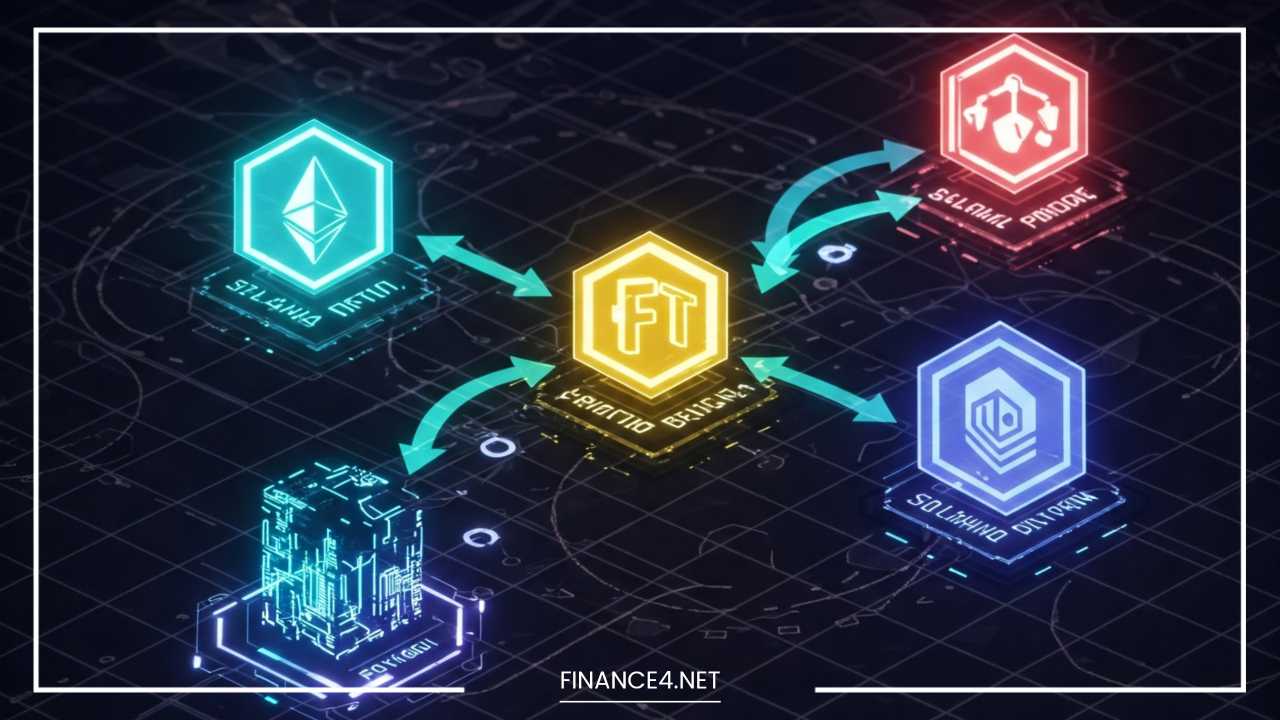
The most common model for bridging is the “Lock and Mint” mechanism:
- Lock: An attendee sends their token on Chain A (the source) to a specific smart contract address on that chain. This token is now locked and unusable on Chain A.
- Verification: The bridge’s relayers or validators observe this locking transaction on Chain A and verify its authenticity.
- Mint: Upon successful verification, the bridge’s smart contract on Chain B (the target) mints a new, corresponding “wrapped” or “bridged” token. This new token represents the locked asset and can be used on Chain B.
- Redeem/Burn: When the user wishes to move the token back to Chain A, they burn the wrapped token on Chain B, and the verification process triggers the release (unlocking) of the original token on Chain A.
Cross-Chain Interoperability
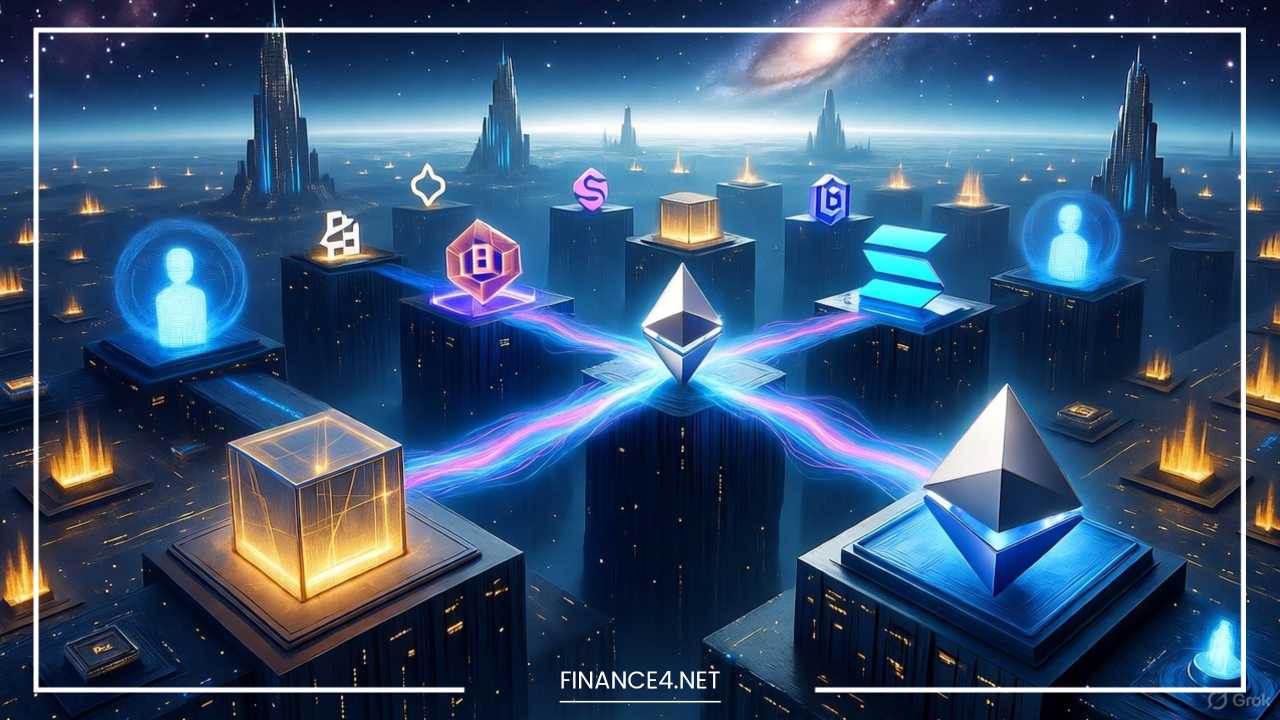
This mechanism delivers cross-chain interoperability, allowing tokens to be used seamlessly in environments beyond their native network. This is fundamentally important for event ecosystems because it addresses the “Chain Trilemma”—the trade-off between security, decentralization, and scalability.
By bridging:
- An event can leverage the high security of a settlement layer like Ethereum for the initial token creation and secure storage of high-value assets (like lifetime passes).
- It can then utilize the high scalability and low cost of a Layer-2 or sidechain (like Polygon, Arbitrum, or Optimism) for high-frequency transactions—such as daily check-ins, micro-rewards, or real-time event voting.
This flexibility allows event organizers to provide a superior User Experience (UX). Attendees don’t need to worry about the prohibitive $50 gas fee of Ethereum just to claim a $2 reward; the token is simply bridged to a more efficient network for daily use.
Prerequisites Before Creating a Bridging Token
Before diving into smart contract development, a clear strategic framework is required. Preparation is paramount to avoid costly mistakes and security vulnerabilities.
Choose Your Blockchain(s)
The decision of which networks to use is the most critical first step, driven by your event’s requirements:
- Primary (Source) Chain: This is where the core, official supply of your token will live. It should be a chain known for security and established infrastructure (e.g., Ethereum, Solana, Cosmos Hub). Use this for token genesis, long-term storage, and high-value NFT sales.
- Secondary (Target) Chain(s): These are the chains for daily utility, high-volume transactions, and low fees (e.g., Polygon, BNB Smart Chain, Avalanche C-Chain). Use these for in-event redemptions, ticketing scans, and micro-rewards.
Considerations: Analyze the transaction costs (gas fees), the finality time (how long transactions take to confirm), and the existing community/platform support for each network.
Choose a Token Standard
Selecting the correct standard ensures maximum compatibility with wallets, exchanges, and third-party platforms.
- For Fungible Event Currency/Rewards: The ERC-20 standard (or its equivalents like BEP-20) is the global benchmark. It defines the basic functions: totalSupply, balanceOf, transfer, and approve.
- For Event Tickets/Access Passes (NFTs): ERC-721 is the standard for unique, non-divisible assets. ERC-1155 is excellent for hybrid use cases, allowing a single contract to manage both fungible (e.g., event meal vouchers) and non-fungible tokens (e.g., VIP passes) simultaneously, which can significantly reduce gas costs for deployment.
Development Environment
You’ll need a robust setup to write, test, and deploy your contracts:
- Wallets: MetaMask (for EVM chains like Ethereum, Polygon) or Phantom (for Solana) are essential for paying deployment gas fees and testing interactions.
- Smart Contract Development Frameworks:
- Hardhat or Truffle for professional, large-scale projects requiring advanced testing, local development networks, and complex deployment scripts.
- Remix IDE for simpler, browser-based contract writing and deployment, often sufficient for basic event tokens.
- Code Libraries: Utilize well-audited open-source libraries like OpenZeppelin Contracts. Never write a token contract from scratch; leverage battle-tested code to minimize security risk.
Understanding Gas Fees and Network Costs
Be prepared for the financial reality of blockchain deployment. Gas fees (the cost to perform a transaction) are highly variable. You must estimate the cost of:
- Contract Deployment: A one-time, potentially high cost, especially on Ethereum mainnet.
- Token Minting/Distribution: The cost to issue the initial supply or distribute NFTs to attendees.
- Bridging Transactions: The gas fee required on both the source and target chain for the bridging process, plus any service fee charged by the bridging protocol.
A solid strategy involves deploying the initial token supply on a cost-effective chain (like Polygon) if high security isn’t the primary concern, or leveraging testnets for cost-free development before a final mainnet deployment.
How to Create the Base Token (Step-by-Step)
The base token is the asset you will eventually bridge. It must be created and deployed on your primary source chain first.
1. Writing the Smart Contract
Using the ERC-20 standard as an example for an event reward currency:
- Use OpenZeppelin: Start with the
ERC20.solandERC20Capped.solcontracts. - Define Core Parameters: Within the contract constructor, you must set:
_name: e.g., “Event Rewards Token”_symbol: e.g., “ERT”_cap: The maximum total supply allowed (important for preventing inflation).
- Implement Minting Logic: Determine who has the authority to create new tokens (the
minterrole). For event tokens, this is often the event organizer’s cold wallet or a secure multi-signature wallet. Use_mint(address to, uint256 amount)to issue tokens.
Example (Simplified Solidity Code Snippet for ERC-20):
Solidity
// SPDX-License-Identifier: MIT
pragma solidity ^0.8.0;

import "@openzeppelin/contracts/token/ERC20/ERC20.sol";
import "@openzeppelin/contracts/access/Ownable.sol";

contract EventRewardToken is ERC20, Ownable {
    constructor(uint256 initialSupply) ERC20("Event Rewards Token", "ERT") {
        // Mints the initial supply to the contract deployer (the Owner)
        _mint(msg.sender, initialSupply);
    }

    // Function to allow only the owner to mint more tokens (if capped)
    function mint(address to, uint256 amount) public onlyOwner {
        _mint(to, amount);
    }
}
2. Deploying it on Your Primary Blockchain
Once the contract is written and thoroughly tested on a local Hardhat network, it’s time for deployment:
- Compile: Use your framework (Hardhat or Remix) to compile the Solidity code into ABI (Application Binary Interface) and bytecode.
- Connect Wallet: Connect your development wallet (e.g., MetaMask) to the desired blockchain network (e.g., Ethereum, Polygon). Ensure it’s funded with the network’s native currency (ETH or MATIC) to cover the gas fee.
- Deploy: Execute the deployment function, passing the required constructor arguments (like the
initialSupply). - Verify: After the transaction confirms, verify the contract code on a block explorer (e.g., Etherscan, Polygonscan). This proves the deployed code matches the source code, increasing attendee trust.
3. Using Tools and Testnets
- Remix IDE: For simple contracts, use Remix’s “Deploy & Run Transactions” tab. Set the environment to “Injected Provider – MetaMask” and click “Deploy.”
- Hardhat/Truffle: Write a deployment script (e.g., in Javascript) that uses a provider (like Alchemy or Infura) and your wallet’s private key to programmatically send the deployment transaction.
- Testnets: Always deploy and test the entire token lifecycle on a testnet first (e.g., Sepolia for Ethereum, Mumbai for Polygon). This costs no real money and allows you to find bugs before a costly mainnet deployment.
4. Best Practices for Naming, Supply, and Metadata
- Naming: The token name and symbol should be unique and clearly linked to the event (e.g., Decentraland Event Pass (DEP)).
- Supply: For FTs, use a capped supply (
ERC20Capped) to assure users that the total will not exceed a limit. For NFT tickets, the supply is the exact number of tickets. - Metadata (for NFTs – ERC-721): The metadata is crucial. It’s a JSON file that defines the asset’s properties (ticket tier, seat number, unlockable content link). This file is usually stored on a decentralized file storage system like IPFS or Arweave, and the smart contract stores the URI pointer to this file. Crucially, the bridging process must preserve the metadata integrity.
How to Bridge Your Token to Another Chain
The process of bridging is where the token becomes truly useful for a multi-chain event ecosystem. This involves selecting a reliable bridge and executing the locking/minting process.
Choose a Bridging Protocol
Selecting the right bridge is a decision based on security, cost, and the specific chains you are connecting.
- LayerZero: A generalized messaging protocol, not a bridge itself, but a powerful foundation for building cross-chain applications (dApps) that need to pass arbitrary data (like ‘transfer this token’) across chains. Highly favored for new event dApps due to its flexibility.
- Wormhole: A decentralized message-passing protocol that connects over 20 different chains (EVM and non-EVM). Excellent for events seeking broad reach across chains like Solana, Ethereum, and Polygon. Uses a decentralized network of Guardians to attest to transactions.
- Axelar: Focuses on secure, generalized interchain communication. It has a dedicated security layer and is strong for connecting new, complex event dApps that need to call functions on other chains, not just transfer tokens.
- Synapse: A widely used, multi-chain bridge specializing in fast, low-cost token transfers. It uses a stablecoin-based liquidity model for fungible tokens, making it great for event currency bridging.
- Custom Bridges: For maximum control and customization, an event can develop its own bridge (usually a multi-signature contract on the source chain and a minting contract on the target chain). This is the most complex and expensive option, only suitable for large-scale, high-budget, permanent event ecosystems.
Step-by-Step: Lock, Mint, and Verify
We will use the generic “Lock and Mint” model, which is the underlying principle of most protocols:
- User Initiates Bridge: The attendee accesses the event’s custom bridging interface (a dApp) or the bridging protocol’s website. They specify the amount of tokens to move and the target chain address.
- Lock Transaction (Source Chain): The user’s wallet approves the transfer and sends the tokens to the bridge contract on the Source Chain (e.g., Ethereum).
- Technical Action: The bridge contract’s
lock()function is called, and the tokens are held in escrow.
- Technical Action: The bridge contract’s
- Cross-Chain Communication: The bridge’s validators/relayers (e.g., Wormhole Guardians, LayerZero Relayers) detect the
lock()event on the Source Chain.- Technical Action: These entities sign an attestation that the token has been successfully locked. This signed message is the proof of the transaction.
- Mint Transaction (Target Chain): The signed proof is submitted to the bridge contract on the Target Chain (e.g., Polygon).
- Technical Action: The target contract executes a
mint()function to create the equivalent wrapped token (e.g., wERT) and send it to the user’s wallet address on Polygon.
- Technical Action: The target contract executes a
Handling Security and Transaction Confirmations
Bridging is the highest-risk activity in a multi-chain environment.
- Security: Always use audited and well-established protocols. Check the bridge’s security model: Is it relying on a small committee of signers (higher risk) or a large, decentralized validator set (lower risk)?
- Transaction Confirmation: The time it takes for a token to arrive on the target chain is the confirmation delay. For event applications, this needs to be fast (ideally under 1 minute). Ensure the bridging protocol provides a clear transaction status/tracker so users know their funds are safe and en route.
Cost Considerations
Bridge costs can include:
- Gas Fees: On both the source and target chain.
- Bridge Protocol Fees: A small percentage or fixed fee charged by the bridge service for using their infrastructure.
- Liquidity Provider Fees: In the case of liquidity-based bridges (like Synapse), a fee is paid to the pool providers.
Organizers must decide if they will absorb these costs for the users (to create a seamless UX) or pass them on. For mass-market events, absorbing the cost for the attendee is highly recommended to eliminate crypto barriers.
Use Cases for Bridging Tokens in Events
The flexibility of bridging tokens allows for event designs that were previously impossible, creating rich, layered experiences.
Ticketing: Tokenized Access
- Dual-Chain Ticketing: Sell the primary ERC-721 NFT Ticket on Ethereum for security and public record. Attendees who want to use their ticket for physical entry can bridge it to Polygon. The venue’s scanning app only needs to verify ownership on the Polygon network (fast, low-cost scan) before the user enters.
- Tiered Access: A single NFT can represent access to both a physical keynote and a virtual Q&A session hosted on a different chain, with the bridging status dictating the available function.
Cross-Platform Experiences
Imagine an international, week-long event:
- Day 1 (Virtual): Attendees log into the event’s metaverse built on a chain like Immutable X (for gaming scale). They complete a challenge and earn 100 ERT (Event Reward Tokens).
- Day 2 (Physical): The attendee bridges their 100 ERT from Immutable X to BNB Smart Chain (BSC) using a bridging tool integrated into the event app.
- Redemption: They use the BSC tokens to instantly redeem a free meal at a food truck that uses a simple BSC-compatible point-of-sale system. The seamlessness of the token following the attendee is the key value proposition.
Rewards and Collectibles
- NFT Badges (POAPs): Proof-of-Attendance Protocols (POAPs) are often minted on the low-cost xDai (Gnosis Chain). If an attendee wishes to showcase their rare POAP alongside their other high-value collectibles on their Ethereum-based gallery, they can bridge the POAP NFT from Gnosis Chain to Ethereum.
- Dynamic Rewards: High-tier attendees receive a fungible token that, when bridged to a governance-focused chain (like Aragon), grants them voting power over the event’s future location—a powerful engagement tool.
Sponsorships and Brand Engagement
Bridging tokens can be leveraged by sponsors:
- Sponsor-Specific Vouchers: A sponsor could create a coupon FT on one chain. Event organizers can airdrop this FT to their attendees on a different chain. Attendees must bridge the token to the sponsor’s native chain to redeem the discount at the sponsor’s platform, creating clear, trackable, and verifiable engagement metrics for the sponsor.
Integration With Event Platforms and Tools
A bridging token is useless if it cannot interact with the tools attendees use. Seamless integration is crucial for adoption.
Connecting with Platforms
Event organizers don’t need to reinvent the wheel; many existing Web3 ticketing and access tools are bridge-compatible:
- Tokenproof: Allows users to verify NFT ownership in their wallet without transferring the asset, which is critical for bridged tickets.
- Unlock Protocol: Provides infrastructure for token-gated membership and content. A bridging token can serve as the access key on a variety of chains supported by Unlock.
- Traditional Platforms: The most significant challenge is integrating with Web2 giants like Eventbrite. This usually requires a custom smart contract interface (dApp) that verifies an attendee’s on-chain token ownership and then uses a private, signed message (a “claim code” or “token grant”) to generate a traditional Eventbrite QR code or ticket.
Custom Interfaces or dApps for Redemption
The core of the event experience must be a user-friendly dApp. This interface should:
- Check Balances: Display the user’s token balance across all relevant chains.
- Initiate Bridge: Offer a simple “Move Tokens” button, abstracting the complex smart contract calls.
- Redemption Portal: For event rewards, the dApp should connect to the token’s smart contract to facilitate the burning or transfer of the token in exchange for a physical item or virtual reward.
Wallet Support
The system must support the most common wallets and integrate WalletConnect to ensure compatibility across a wide range of mobile and desktop wallets (MetaMask, Rainbow, Trust Wallet, etc.). The bridging process should automatically detect the user’s current chain and prompt the necessary network switches.
Security, Compliance & User Education
Security failures and poor user experience are the two biggest threats to the success of a tokenized event.
Risks of Bridging
The history of blockchain is unfortunately littered with bridge exploits, with billions of dollars lost.
- Smart Contract Bugs: Flaws in the locking or minting contracts can allow attackers to mint unauthorized tokens. Mitigation: Strict, multiple third-party audits (e.g., CertiK, ConsenSys Diligence) are non-negotiable.
- Bridge Exploits: Attackers can compromise the bridge’s validators/relayers to sign fraudulent minting transactions. Mitigation: Use bridges with the highest level of decentralization, a large validator set, and transparent governance.
- Front-End Phishing: Users must be vigilant. The event’s dApp URL should be clearly displayed and repeatedly verified to prevent users from accidentally connecting their wallets to malicious lookalike sites.
Regulatory Considerations for Token Use
The regulatory status of your token is crucial and often depends on how it is used.
- Utility vs. Security: If the token is purely for in-event access and cannot be traded on open exchanges (a utility token), the regulatory burden is lower. If it represents a share in event profits or is marketed as an investment (a security token), compliance becomes significantly more complex, involving securities laws (e.g., SEC regulations). Consult legal counsel specializing in blockchain law before launching.
- KYC/AML: For tokens that can be sold for significant real-world value, you may need to implement Know Your Customer (KYC) and Anti-Money Laundering (AML) procedures, especially if accepting fiat currency.
Educating Non-Crypto Users at Events
The majority of event attendees are not crypto-natives. The UX must be dead simple:
- Simple Wallet Setup: Provide a one-page, QR-code-based guide for setting up MetaMask or a similar simple wallet. Focus on the core concepts: seed phrase security and how to add a new network.
- QR Code Usage: Use the token as the final key. The entire process should be initiated by scanning a QR code at a physical or virtual checkpoint. This QR code links to the event dApp, which then uses WalletConnect to verify token ownership.
- Abstracting Gas: If the event absorbs gas fees (by subsidizing or using a gas-less relaying service), the user experience is drastically improved, making the blockchain element virtually invisible.
Future of Bridging Tokens in Events
The technology is accelerating, pointing toward an even more integrated and personalized event future.
Trends: Cross-Metaverse Events and AI Personalization
- Cross-Metaverse Events: An NFT event pass in one platform (e.g., Decentraland) will be bridged to another (e.g., Sandbox) to grant access to a linked event or after-party. Bridging protocols will become the underlying fabric of the open metaverse.
- Real-World Asset Tokenization (RWA): Event tokens could be bridged to represent ownership of a fractionalized piece of the event’s infrastructure (e.g., a fraction of the land used for a recurring festival).
- AI Personalization: Future bridging tokens could contain on-chain behavioral data (e.g., which sessions an attendee attended). When bridged to a new chain, this data is used by an AI engine to instantly personalize the attendee’s experience on the target platform, suggesting relevant content or meetups.
Predictions on Scalability, UX Improvements, and Decentralized Identity
- Scalability: Layer-2 networks (Arbitrum, Optimism) will become the primary deployment locations, eliminating high gas fees and the need to bridge just for cost reduction. Interoperability protocols will shift from “token transfer” to “data transfer” (like LayerZero’s approach), allowing for more complex, cross-chain smart contract calls.
- UX Improvements: Account Abstraction (ERC-4337) will allow users to treat their wallet like a traditional account, paying gas fees in the event token itself (instead of ETH) or allowing the event to pay on their behalf. This will dramatically simplify the user onboarding process.
- Decentralized Identity (DID): Event tokens will become inseparable from an attendee’s Self-Sovereign Identity (SSI). The token (and its bridged versions) will be a verifiable credential that proves not only access but also identity and attendance history without reliance on a central authority.
Final Thoughts
Bridging tokens are far more than a technical curiosity; they are the architectural necessity for building the next generation of seamless, cross-platform events. By enabling a single asset to maintain its utility and value across disparate blockchain ecosystems, event organizers can finally design truly fluid experiences that connect the physical, virtual, and digital worlds.
The creation process is complex, demanding careful planning in token standards, contract development, and bridge protocol selection. However, the potential return—in enhanced user engagement, verifiable data, and innovative revenue models—is transformative. Start small: experiment with an ERC-20 token on a simple network like Polygon Mumbai Testnet, and practice the bridging process to Sepolia. Understanding the lock and mint mechanics in a low-stakes environment is the most important preparatory step.
The future of events is interoperable, and the bridging token is the key that unlocks it. Go build the future of events today!