Buy & Sell NFTs on a Multi-Chain NFT Marketplace
 by
by 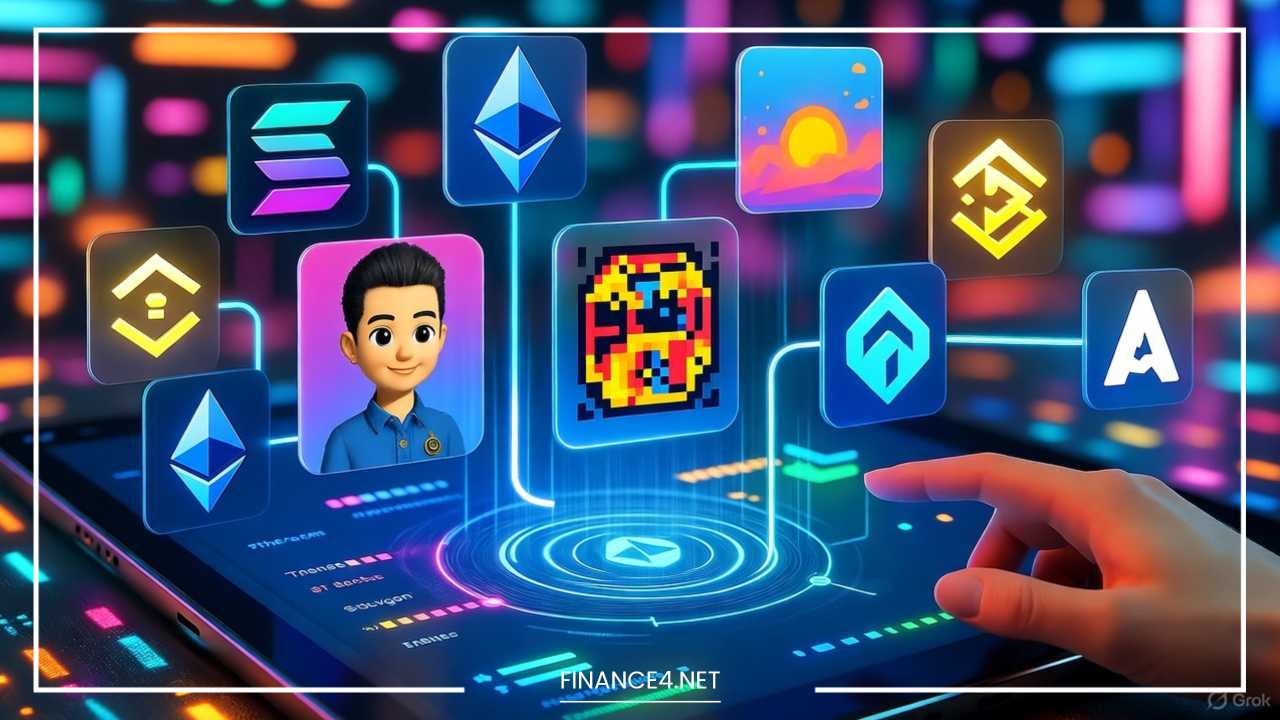
Buy & Sell NFTs on a Multi-Chain NFT Marketplace | Seamless Cross-Chain Trading
The digital landscape is undergoing a profound transformation, one rooted in verifiable digital ownership. At the heart of this shift is the Non-Fungible Token, or NFT. These unique digital assets—ranging from artwork and music to virtual real estate and gaming items—have redefined how value, scarcity, and property rights are managed in the twenty-first century. An NFT is essentially a digital certificate of authenticity and ownership recorded on a blockchain.
To buy, sell, or trade these tokens, users interact with an NFT marketplace, which functions as the central exchange point. Originally, these platforms were tethered to a single blockchain, most famously Ethereum. However, the market’s evolution has been driven by a demand for greater efficiency, lower costs, and broader access, leading to the rise of the multi-chain NFT marketplace. This shift from single-chain platforms to interconnected, multi-chain ecosystems is not just a trend; it is the fundamental architectural upgrade necessary for the NFT space to achieve mainstream scale and global liquidity. A multi-chain marketplace is the ultimate venue for unlocking an asset’s full potential, giving users the freedom to transact where it is fastest, cheapest, and most convenient.
What is a Multi-Chain NFT Marketplace?
A multi-chain NFT marketplace is a sophisticated digital platform that enables users to trade Non-Fungible Tokens across two or more independent blockchain networks. Unlike earlier platforms, which were essentially walled gardens operating solely on one network—such as OpenSea’s initial Ethereum-only focus—a multi-chain marketplace integrates various major blockchains, creating a single, unified storefront for assets that live on disparate chains.
This architectural difference is a game-changer. By providing a single point of access to multiple ecosystems, the marketplace dissolves the historical barriers that once confined an NFT collection to a single blockchain’s user base.
The multi-chain model delivers several critical benefits:
- Flexibility and Choice: Users are no longer forced to use the expensive, congested Ethereum network for every transaction. They can choose to buy or mint on cheaper, faster alternatives.
- Lower Gas Fees: By supporting Layer-2 solutions and alternative Layer-1 chains—like Solana, Polygon, BNB Chain, or Avalanche—the platform allows users to sidestep the high, unpredictable transaction costs (gas fees) associated with older, congested networks.
- Broader Audience and Liquidity: For creators, listing on a multi-chain platform instantly exposes their work to a vastly larger global pool of buyers, increasing the potential for sales and enhancing the overall liquidity of their collections.
- Access to Diverse Ecosystems: Different blockchains often specialize in different niches. Solana may be a hub for gaming, while Tezos might be preferred for curated art. A multi-chain marketplace aggregates these specialized communities into one place.
Examples of chains commonly supported by leading multi-chain platforms today include Ethereum, Solana, Polygon, Avalanche, BNB Chain, Tezos, Flow, and even the integration of Bitcoin Ordinals. This comprehensive support structure defines the modern NFT trading environment.
Why Use a Multi-Chain NFT Marketplace?
The rationale for migrating from single-chain to multi-chain marketplaces is compelling, offering significant advantages for three key user groups: collectors, creators, and professional traders.
User Benefits (The Collector)
For the everyday collector, the primary attraction of a multi-chain platform is the dramatic improvement in transaction cost efficiency. High gas fees on a network like Ethereum can often exceed the price of the NFT itself, especially for smaller or more casual purchases. By shifting activity to cheaper chains via the marketplace, collectors gain:
- Cost Savings: The ability to complete purchases or bids with minimal network fees, making entry-level collecting accessible to a wider demographic.
- Wider Selection: Access to an unparalleled variety of NFTs. A user can browse Ethereum’s established blue-chip collections and simultaneously explore fast-rising Solana-based gaming assets or Polygon-based collectibles from the same dashboard.
- Easier Onboarding: Non-Ethereum native users, who may prefer wallets and tokens from other ecosystems, can easily connect their preferred multi-chain wallet (like MetaMask or Phantom) and begin trading without complicated chain-switching procedures.
Creator Benefits (The Artist/Project)
For digital artists and development teams launching NFT projects, the multi-chain approach is essential for modern business strategy.
- Expanded Reach: A creator no longer has to choose between different communities. By listing their work, they target the entire crypto-native audience, significantly increasing their total addressable market.
- Strategic Launch Flexibility: Creators can launch different parts of a collection on different chains to suit their utility. For example, a core collection could live on Ethereum for perceived value, while a corresponding series of utility tokens or in-game assets could be minted on the low-fee Polygon or Avalanche network. This allows for a tiered value proposition.
- Assured Royalty Enforcement: Leading multi-chain marketplaces are increasingly focusing on creator royalty solutions, ensuring that the artist receives a commission on secondary sales, regardless of which supported chain the transaction occurs on.
Trader and Investor Perspective
Sophisticated investors and market makers benefit from the interconnectedness provided by multi-chain platforms.
- Arbitrage Opportunities: Discrepancies in pricing for the “same” or “equivalent” NFT across different blockchain ecosystems are much easier to spot and exploit on a unified marketplace, allowing for profitable arbitrage trades.
- Aggregated Liquidity: The ability to access liquidity pools across multiple chains from one interface means traders can execute large or complex trades more efficiently and with less price impact, leading to a healthier overall market.
How Multi-Chain Marketplaces Work
The technology underpinning a multi-chain NFT marketplace is a sophisticated blend of blockchain engineering designed to manage assets that are fundamentally separated by independent network rules. It is a simplified layer built on top of complex interoperability protocols.
The Technical Overview (Simplified)
At its core, a multi-chain platform achieves its functionality through three main technical elements:
- Smart Contracts that Support Multiple Chains: The marketplace’s listing and bidding smart contracts are designed to be chain-agnostic where possible or to have unique instances deployed on each supported chain (e.g., an OpenSea-style contract on Ethereum, another on Polygon, another on BNB Chain). The marketplace’s front-end aggregates all these separate contract listings into one seamless display.
- Bridges and Wrapped Assets: For truly cross-chain transactions—where an NFT needs to move from Chain A to Chain B—the platform may utilize or integrate with a blockchain bridge. A bridge works by locking the original NFT on Chain A (the source) and minting a “wrapped” or representative version of that NFT on Chain B (the destination). This wrapped asset maintains a verifiable, one-to-one link to the original, allowing it to be traded using the destination chain’s native token and low gas fees. While the NFT is traded on Chain B, the original ownership proof is secured by the bridge protocol.
- Cross-Chain Indexing: The platform employs a massive indexing layer that constantly scans the transaction history of every supported chain (Ethereum, Solana, Polygon, etc.). This index gathers all the data—who owns what, what is listed where, and at what price—and compiles it into the single, searchable database that powers the user’s interface.
Handling Cross-Chain Transactions
When a user executes a trade on a multi-chain platform:
- Wallet Connection: The user connects their multi-chain compatible wallet, which allows the platform to recognize the user’s assets and funds across all integrated networks.
- Chain Selection: The user selects an NFT, and the marketplace identifies its home chain (e.g., Solana).
- Transaction Execution: The platform prompts the user to confirm the transaction using the native token of the NFT’s chain (e.g., SOL for a Solana NFT), and the associated gas fee is paid in that chain’s native token.
- Ownership Update: The transaction is executed on the NFT’s native blockchain, and the marketplace’s index updates the ownership record. If the NFT is being “bridged” to a new chain, the platform or its integrated protocol handles the locking/wrapping process transparently.
Major platforms leveraging this technology, such as OpenSea, Magic Eden, and Rarible, are continuously refining their indexing and bridging layers to make the multi-chain experience as simple as clicking “buy,” regardless of where the asset truly resides.
Top Multi-Chain NFT Marketplaces (2025)
The landscape of NFT marketplaces has matured and consolidated by 2025, with multi-chain support becoming the standard rather than a niche feature. The leading platforms are distinguished by their supported chains, fee structures, and focus on either general-purpose trading or specific art/collector niches.
| Platform | Core Chains Supported | Key Features and Focus | Best For |
| OpenSea | Ethereum, Polygon, Solana, BNB, Avalanche, etc. | Largest liquidity, brand partnerships, beginner-friendly interface. | Beginners and general collectors seeking maximum liquidity. |
| Magic Eden | Solana, Ethereum, Bitcoin Ordinals, Polygon, Base. | Started as Solana-dominant, strong focus on gaming and low-fee transactions. | Gamers and collectors prioritizing speed and low fees, especially on Solana and Bitcoin Ordinals. |
| Rarible | Ethereum, Tezos, Flow, Polygon, Immutable X. | Community-governed via $RARI token, high flexibility for creator royalties (up to 50%). | Creators and artists who value platform autonomy and high royalty protection. |
| NFTrade | Multi-chain aggregator and marketplace. | Aggregator and direct marketplace, known for NFT utility features like staking and farming. | Advanced users interested in NFT utility (staking, lending) across chains. |
| Mintable | Ethereum, Polygon. | Gas-free ‘lazy minting’ on Ethereum, simple user interface. | New creators and casual sellers focused on the Ethereum and Polygon ecosystems. |
OpenSea
As the largest and most recognizable name, OpenSea supports the broadest range of major chains, making it the default general-purpose marketplace. Its massive user base ensures high liquidity, though its fee structure is generally higher than its competitors, with a standard platform fee on sales. The addition of OpenSea Pro caters to advanced traders by aggregating listings across other marketplaces.
Magic Eden
Magic Eden’s rapid expansion from its dominant position on Solana to embracing Ethereum, Polygon, and, notably, Bitcoin Ordinals, positions it as the most agile challenger to OpenSea. Its strength lies in its fast transaction speeds and its strong connection to the gaming and metaverse communities, often offering competitive platform fees, especially on its non-EVM chains.
Rarible
Rarible has carved out a niche as the community-first, artist-focused platform. Its decentralized autonomous organization (DAO) governance model, managed by holders of the $RARI token, gives users a direct say in the platform’s future. It appeals particularly to digital artists because of its strong support for creator royalties and its early integration of non-EVM art chains like Tezos and Flow.
Choosing the Right Platform
- For Buyers: Look for platforms with high liquidity (OpenSea) or the lowest fees on your preferred chain (Magic Eden for Solana).
- For Sellers: Choose the platform where your specific audience is concentrated. An art-focused creator may prefer Rarible or a curated platform, while a major PFP collection will seek the volume of OpenSea. For utility-focused NFTs, a platform like NFTrade, which focuses on staking and farming features, might be ideal.
How to Buy NFTs on a Multi-Chain Marketplace
Buying an NFT on a multi-chain marketplace is streamlined, yet it requires a few critical steps to ensure a secure and efficient transaction, especially regarding chain compatibility.
Step-by-Step General Guide
- Set Up and Fund Your Wallet: Start with a multi-chain compatible wallet, such as MetaMask, which supports Ethereum and EVM-compatible chains (like Polygon, BNB Chain, Avalanche), or a wallet like Phantom, which is essential for Solana. Fund the wallet with the native cryptocurrency of the chain you intend to transact on (e.g., ETH for an Ethereum NFT, SOL for a Solana NFT, or MATIC for a Polygon NFT).
- Connect to the Marketplace: Navigate to your chosen multi-chain platform (e.g., OpenSea, Magic Eden). Click “Connect Wallet” and select your wallet provider. The marketplace will prompt you to approve the connection.
- Choose a Chain and Browse: Use the marketplace’s filtering tools to select the blockchain you wish to browse. This is a crucial step; ensure the selected chain matches the currency you have funded your wallet with. Browse the NFTs, using filters for price, rarity, and collection.
- Verify and Purchase:
- Verify Legitimacy: Always check the collection’s authenticity. Look for the blue “verified” checkmark on major marketplaces and cross-reference the contract address with the project’s official website or social media. Scams and fake collections are a constant risk.
- Execute the Purchase: Select the NFT and choose to either “Buy Now” (for fixed-price listings) or “Place Bid” (for auctions).
- Wallet Confirmation: Your connected wallet will open a pop-up window showing the full cost, including the NFT price and the network’s gas fee. Critically, ensure the gas fee is being paid in the correct chain’s token.
- Confirm and Wait: Once confirmed, the transaction is processed on the chosen blockchain, and the NFT is transferred to your wallet address.
Tips for Beginners
- Chain Compatibility is Key: Never attempt to buy an Ethereum NFT using Solana tokens, or vice versa. Always verify that your wallet is switched to the correct network and contains the correct native currency for the NFT’s underlying blockchain.
- Start with Low-Fee Chains: For your first few purchases, consider experimenting with NFTs on Polygon or Solana. The lower gas fees mean that a small mistake in the process won’t result in a costly loss of funds.
- Check the Metadata: On the NFT’s page, check the “Details” tab to see the Contract Address and Token Standard (e.g., ERC-721, SPL). This information confirms the asset’s legitimacy and which chain it lives on.
How to Sell NFTs on a Multi-Chain Marketplace
Selling an NFT on a multi-chain platform requires a few additional strategic considerations beyond simply listing the item, particularly in choosing the right chain for minting and listing.
Steps to List an NFT
- Connect Wallet and Select Asset: Connect your wallet to the marketplace and navigate to your profile or collection. Select the NFT you wish to sell. If it is a new asset, you will first need to mint it.
- Minting (or Connecting Existing NFTs):
- If you are a Creator: The marketplace will guide you through uploading your digital file and creating the NFT. This process involves executing a smart contract on a chosen blockchain (e.g., Ethereum or Polygon). You must select the chain before minting. Many platforms offer “lazy minting,” allowing you to list the NFT without paying the gas fee upfront; the buyer covers it upon the first purchase, a great option for low-cost chains.
- If you are a Reseller: The marketplace will automatically recognize NFTs already in your connected wallet.
- Choosing Chain and Pricing:
- Chain Selection: If you have the option, list the NFT on a chain where you expect the most liquidity or where the transaction fees are low enough not to deter the buyer.
- Pricing Strategy: Choose your listing method: Fixed Price (requires you to set a price and pay a small listing gas fee), Auction (the NFT sells to the highest bidder after a set time), or Offer-only (allows users to make bids without a fixed price).
- Paying Listing/Minting Fees: Depending on the chain and the marketplace, you will pay a small, one-time gas fee to finalize the listing contract. This fee is paid in the chain’s native token (e.g., a tiny amount of SOL or a slightly higher amount of ETH).
Cross-Chain Listing Options
The “multi-chain” aspect allows for strategic listing: an NFT minted on Ethereum can be listed on any multi-chain marketplace that supports Ethereum. However, truly cross-chain listing—where a single Ethereum NFT is simultaneously available for purchase using Solana tokens—is complex and usually relies on a bridge being integrated into the marketplace’s smart contract logic.
- In most cases, an NFT remains on its native chain (e.g., the original ERC-721 is on Ethereum). The multi-chain marketplace simply serves as the unified interface for transactions happening across different underlying blockchains.
Best Practices for Visibility
- Detailed Metadata: Use rich, descriptive metadata for your NFT. A clear title, detailed description, and relevant tags (e.g., “AI art,” “gaming asset,” “1/1,” “Polygon”) are crucial for searchability.
- Collection Verification: Apply for collection verification as soon as you meet the marketplace’s criteria. A verified collection builds trust and appears higher in search rankings.
- Pricing Strategy: Research floor prices for comparable NFTs in your collection or genre. For fixed prices, competitive, slightly below-market pricing is the best way to encourage a quick sale.
Risks & Considerations
While multi-chain marketplaces provide immense utility, the added complexity of cross-chain interaction introduces unique risks and considerations that users must be aware of. The motto “do your own research” (DYOR) is never more important than in the multi-chain environment.
Smart Contract Risk
Every NFT and every marketplace listing is governed by smart contracts. A bug, vulnerability, or exploit in these contracts—either the NFT’s contract itself or the marketplace’s listing contract—can lead to assets being locked, stolen, or lost. The use of multiple contracts across multiple chains increases the surface area for these exploits. Always use marketplaces that undergo regular, third-party smart contract audits.
Chain-Specific Issues and Congestion
Transacting on any blockchain carries the inherent risk of network failure.
- Congestion: During periods of high demand (e.g., a major NFT drop), networks like Ethereum can experience severe congestion, leading to soaring gas fees and slow confirmation times.
- Finality Issues: Some chains have probabilistic finality, meaning a transaction could theoretically be reversed, though this is rare on major L1s. Users should monitor transaction health, especially for high-value sales.
Market Fragmentation
While multi-chain access is a benefit, it also means that liquidity for a specific collection can be scattered across different chains and different marketplaces. This market fragmentation can make price discovery difficult and lead to less depth of bidding for any single asset, potentially impacting the resale value.
Scams and Fake NFTs
The multi-chain nature makes it easier for bad actors to create counterfeit or fake NFT collections. A scammer can copy a legitimate project’s metadata and artwork, mint it on a cheap chain (like Polygon), and list it on a multi-chain platform, hoping that buyers will confuse it with the authentic, high-value collection on Ethereum.
- Mitigation: Always verify the Contract Address and the official collection page using external resources, not just the marketplace’s display name.
Cross-Chain Bridge Risks
The protocols (bridges) used to move assets between chains represent the most significant systemic risk in the multi-chain ecosystem. If a bridge is exploited (as has happened to major bridges in the past), assets locked on the source chain, which back the “wrapped” tokens on the destination chain, can be stolen, leading to the potential loss of value for the bridged NFT. Users should only rely on battle-tested, reputable bridge solutions directly integrated into the marketplace.
Future of Multi-Chain NFT Marketplaces
The multi-chain model, while currently complex, is moving rapidly toward true seamless interoperability. The marketplace of 2025 is a stepping stone to a vision where the user is agnostic to the underlying blockchain.
Trends in Interoperability and Scaling
- Layer 2 Adoption: The explosive growth of Layer-2 scaling solutions for Ethereum—such as Arbitrum, Optimism, and Base—will be a dominant trend. These L2s offer Ethereum-grade security with near-instant, low-cost transactions, largely neutralizing the primary reason to move to entirely separate L1 chains for many use cases. Multi-chain marketplaces are prioritizing integration with these L2s.
- Cross-Chain Standards: The development of universal standards, such as an iteration of ERC-721 designed for native cross-chain minting (e.g., the concept of ERC-721C), will simplify the developer experience. Interoperability protocols like LayerZero and Wormhole will become invisible infrastructure, allowing an NFT to be transacted using the native gas of any connected chain without the user having to manually worry about “wrapping” or bridging.
- Decentralized Indexing: Current marketplaces often rely on centralized services to index the millions of NFTs across all chains. The future will see a shift toward decentralized indexing and data aggregation, making the marketplaces more robust, censorship-resistant, and transparent.
New NFT Functionalities
The expanded capabilities of multi-chain infrastructure are fueling new types of NFTs:
- Dynamic NFTs: These tokens change their appearance or utility based on real-world data, external events, or wallet activity. A multi-chain marketplace can tap into data streams from different chains to update the NFT’s metadata dynamically.
- AI-Generated and Curated NFTs: AI is being used for both creation and curation. Marketplaces will increasingly feature AI-driven tools for discovering rarity, setting prices, and even verifying the originality of new artworks.
As the underlying technology matures, the friction points of today—manual chain switching, bridge risk, and disparate gas fees—will largely disappear. The marketplace of the future will simply present a single price in a standard currency (like USD or a stablecoin) and automatically handle the optimal, lowest-cost transaction on the best available chain behind the scenes. This level of abstraction will pave the way for true global, mass-market adoption.
Final Thoughts
The multi-chain NFT marketplace represents a crucial and irreversible stage in the evolution of digital ownership. It is the necessary bridge that takes the NFT concept from a niche Ethereum application to a globally accessible form of commerce and culture. By dissolving the high cost barriers and limited liquidity of the early single-chain model, these platforms have successfully created a more democratic, efficient, and expansive ecosystem.
For buyers and collectors, the multi-chain environment means unprecedented choice and the freedom to pursue digital assets on the cheapest, fastest networks. For creators and artists, it represents the ability to reach a true global audience without sacrificing their ability to earn royalties. And for investors, it provides the unified liquidity and sophisticated tools required to manage a diverse, multi-asset digital portfolio.
While the risks associated with cross-chain technology require vigilance and careful research, the trajectory is clear: interoperability will continue to improve, and the user experience will only become simpler. For anyone looking to seriously engage with the world of digital assets, exploring and utilizing the top multi-chain platforms—whether it’s OpenSea for breadth, Magic Eden for speed, or Rarible for community focus—is no longer optional; it is the standard way to buy and sell NFTs today. The future of decentralized digital ownership is multi-chain, and the marketplace is ready.