Best Cross-Chain Token Bridges
 by
by 
Best Cross-Chain Token Bridges | Top Crypto Bridge Platforms
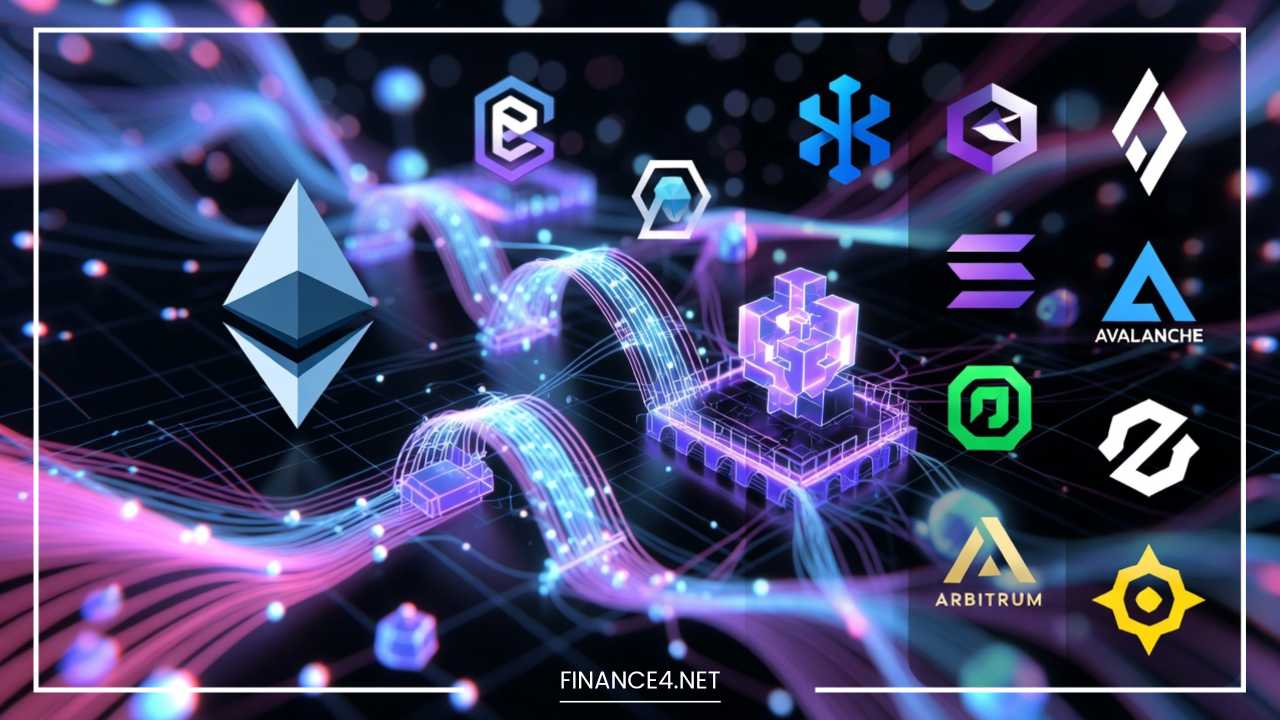
The blockchain world has rapidly evolved from a single dominant network to a vibrant multi-chain ecosystem, featuring high-performance Layer 1s (like Solana and Avalanche) and scalable Layer 2s (like Polygon and Arbitrum). While this explosion of networks has driven innovation, it has also created a significant challenge: fragmentation. Assets, liquidity, and users are siloed on their respective chains, limiting capital efficiency and hindering the true potential of decentralized finance (DeFi).
This is where cross-chain token bridges emerge as indispensable infrastructure.
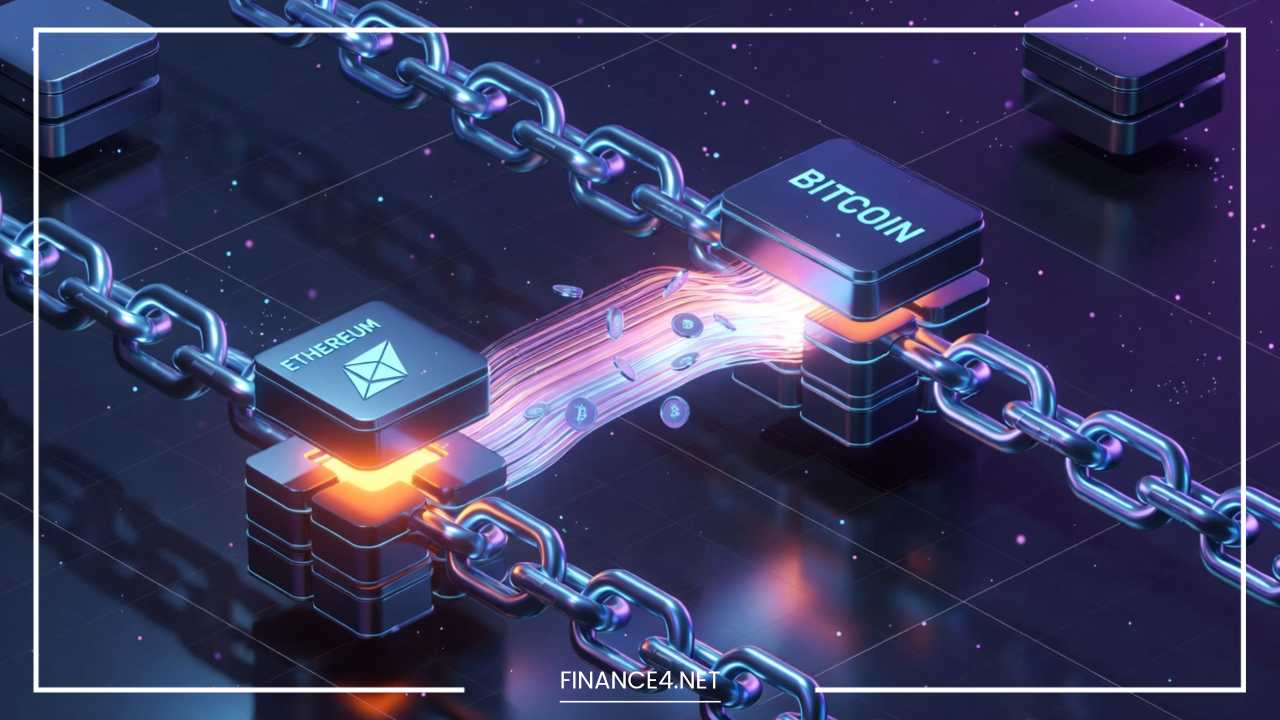
A cross-chain token bridge is essentially a protocol that allows a digital asset or data to be securely transferred from one independent blockchain network to another. They are the essential plumbing of the multi-chain universe, solving the critical problem of interoperability. Without bridges, a Bitcoin holder, for instance, would be unable to participate in a lending protocol on the Ethereum network or a yield farm on the BNB Smart Chain without first selling their BTC for a native token on a centralized exchange—a process that is costly, slow, and requires trust in a third party.
For both users and developers, bridges unlock a world of possibility. Users gain the flexibility to move their assets to where the fees are cheapest and the yield is highest, while developers can build truly multi-chain decentralized applications (dApps) that leverage the unique strengths of various underlying networks. This article will dive deep into the mechanics, benefits, risks, and, most importantly, the top-tier options currently defining the landscape of cross-chain communication.
What Are Cross-Chain Token Bridges?
A token bridge is a technology that connects two disparate blockchain protocols, allowing for the transfer of value and/or information between them. Since blockchains are isolated by design—each having its own consensus mechanism, smart contract language, and set of rules—they cannot natively read or verify transactions on another chain. The bridge acts as a trust-minimized intermediary to solve this communication gap.
How Cross-Chain Bridges Work
The most common mechanism is the “Lock and Mint” model.
- Locking: A user initiates a transfer of a token (e.g., ETH) from a Source Chain (e.g., Ethereum) to a Destination Chain (e.g., Avalanche). The bridge’s smart contract on the Source Chain locks the user’s native ETH.
- Verification: A set of specialized actors—often called Validators, Guardians, or Relayers—on the bridge network verify that the locking transaction has occurred on the Source Chain.
- Messaging: These actors then attest to the transaction, sending a cryptographically signed message to the Destination Chain.
- Minting: A smart contract on the Destination Chain uses this verified message to mint a wrapped version of the asset (e.g., wETH.e) for the user. This wrapped token is fully backed 1:1 by the original asset locked on the Source Chain.
To move the asset back, the reverse process—“Burn and Unlock”—occurs, where the wrapped token is burned on the Destination Chain and the native token is unlocked on the Source Chain.
Centralized vs. Decentralized Bridges
Bridges can be broadly categorized based on their trust model:
- Centralized Bridges: Rely on a single entity or small, known set of entities (e.g., a multi-signature wallet) to custody the locked assets and confirm transactions. They are fast but carry counterparty risk and are vulnerable to a single point of failure (e.g., a private key compromise).
- Decentralized Bridges: Utilize a larger, decentralized set of validators, an optimistic or zero-knowledge-proof security model, or liquidity pools to secure assets and verify messages, significantly reducing the trust required and increasing security, albeit sometimes at the cost of speed or complexity.
Common Use Cases
The utility of bridges extends beyond simple asset transfer:
- Asset Portability: Moving tokens to cheaper chains to save on gas fees.
- DeFi Interplay: Using collateral locked on one chain to borrow or farm on another.
- NFT Interoperability: Allowing non-fungible tokens to be traded on marketplaces across different networks.
Benefits of Using Cross-Chain Token Bridges
Cross-chain bridges are not just a convenience; they are a foundational necessity for the continued growth and scaling of the blockchain industry. Their benefits are far-reaching and impact every segment of the ecosystem.
Asset Liquidity Across Different Blockchains
In a siloed environment, capital remains static. Bridges turn isolated pools of assets into a unified, vast pool of capital. For example, a significant amount of Bitcoin (BTC) is made usable in the Ethereum DeFi ecosystem via wrapped assets like wBTC, which functions as a bridged asset, unlocking billions in liquidity that would otherwise be dormant. This shared liquidity leads to better pricing and deeper markets for all users.
Reduced Network Congestion
When a single chain like Ethereum mainnet becomes congested, transaction costs skyrocket. Bridges allow users to efficiently move their assets to cheaper, faster networks—Layer 2 solutions (L2s) or alternative Layer 1s (L1s)—to execute transactions like swapping or staking. This act of migrating activity offloads transactional volume from the most congested chains, benefiting all users by keeping fees manageable across the ecosystem.
Enabling Multi-Chain DeFi Strategies
The true power of bridges lies in the complexity of the strategies they enable. A user can now hold governance tokens on one chain, use them as collateral on another, and earn yield on a third. Bridges make it possible to build decentralized applications that are not bound by the limitations of a single network, fostering innovation and capital efficiency across the entire DeFi landscape.
Access to Multiple Ecosystems
Instead of relying on a centralized exchange to swap Chain A’s token for Chain B’s token, bridges allow for a direct, trust-minimized transfer. This opens the door to participating in emerging ecosystems, new decentralized exchanges (DEXs), and unique dApps without the friction and counterparty risk associated with a centralized intermediary. They create a seamless user journey across the multi-chain world.
Risks and Challenges
Despite their foundational importance, cross-chain bridges represent the largest attack surface in the Web3 space. The complexity of managing assets and state across two non-native environments makes them a prime target for malicious actors. Understanding these risks is crucial for anyone using a bridge.
Smart Contract Vulnerabilities and Hacks
The most significant and devastating challenge is the risk of a hack targeting the bridge’s smart contracts or verification mechanism. Because bridges custody assets worth billions of dollars, they are incredibly attractive targets.
- Ronin Bridge Hack (2022): The protocol securing the bridge for the Axie Infinity game was compromised due to a social engineering attack that targeted the multi-signature wallet, resulting in the theft of over $600 million in crypto—one of the largest DeFi hacks in history. The vulnerability was not in the underlying blockchain, but in the centralized nature of the validator set.
- Wormhole Hack (2022): Attackers exploited a vulnerability in the smart contract’s verification logic to forge a signature, tricking the contract into minting 120,000 wETH without having locked any native ETH, resulting in a loss of over $320 million. This highlighted the risk inherent in generalized messaging protocols and their complex codebases.
These events underscore the principle that the security of a bridged asset is only as strong as the security of the bridge itself.
Bridge Fees and Transaction Speed Considerations
Using a bridge often incurs several costs, which can become prohibitively expensive, especially for smaller transfers:
- Gas Fees: Users must pay transaction fees on both the source and destination chains.
- Bridge Service Fees: The bridge protocol itself may charge a small percentage fee to compensate its validators, relayers, or liquidity providers.
- Relayer Costs: Some bridges use a relayer network, which is paid to submit the transaction to the destination chain.
Furthermore, while the source chain transaction may confirm quickly, the time it takes for the verification and minting process to complete on the destination chain can sometimes lead to significant delays, particularly during periods of high network congestion.
Slippage and Wrapped Token Issues
Bridges that use liquidity pools for transfers (instead of Lock and Mint) can suffer from slippage, where the user receives less than the expected amount due to a lack of depth in the pool. Additionally, the asset received is a wrapped token (e.g., wETH or MATIC on Ethereum). The usability and liquidity of this wrapped token are entirely dependent on the bridge’s continued operation and security. If the underlying bridge fails, the wrapped token may lose its 1:1 peg and become worthless.
Regulatory and Compliance Concerns
As value moves across jurisdictions and networks, the regulatory landscape remains murky. Regulators may view certain centralized bridge operations as money transmitters, and the lack of a clear framework poses a risk to the long-term viability and operation of some protocols.
How to Choose the Best Cross-Chain Bridge
Selecting a cross-chain bridge should be a decision based on due diligence and a balance of technical factors. The “best” bridge is subjective and depends on a user’s priorities (security, cost, or speed) and the chains they need to connect.
Security and Audits
Security is paramount. Given the history of large-scale hacks, this is the first and most important consideration.
- Decentralization: Opt for bridges with a large, diverse, and well-known set of validators or those using trustless models like Zero-Knowledge proofs (ZK-proofs) or optimistic rollups. Avoid bridges controlled by a small multi-sig wallet.
- Audits and Bug Bounties: Check for multiple, recent, and thorough security audits by reputable firms (e.g., CertiK, Trail of Bits). A strong bug bounty program demonstrates commitment to ongoing security.
- Time-Tested Track Record: While not a guarantee, bridges that have been operating without incident for a long time generally inspire more confidence.
Supported Chains and Assets
A bridge is only useful if it connects the networks you need.
- Connectivity: Confirm the bridge supports both your source and destination chains (e.g., Ethereum to Arbitrum, or Solana to Polygon).
- Asset Support: Verify that the exact token you wish to transfer is supported. Note the difference between transferring a native asset and a wrapped version of an asset.
Transaction Fees and Speed
These factors determine the cost-efficiency of the transfer.
- Fee Structure: Compare the gas fees and the bridge’s native service fee. Look for bridges that aggregate fees or offer gas subsidies on the destination chain.
- Finality: Check the typical transaction time. Native bridges (like the Polygon Bridge) or liquidity-based bridges (like Synapse) can often be faster than generalized messaging protocols.
User Experience and Community Reputation
A seamless interface reduces the chance of user error, which can be just as costly as a hack. A robust community reputation, transparency regarding governance, and a responsive support channel are all strong indicators of a reliable, well-managed protocol. Look up public commentary and discussions about the bridge before entrusting it with significant assets.
Top Cross-Chain Token Bridges
The landscape of cross-chain solutions is highly competitive, with protocols employing diverse security models, from multi-signature vaults to advanced generalized message passing. The following are some of the most established and widely used bridges, categorized by their primary design and focus.
1. Wormhole
Wormhole is not just a token bridge; it is a generalized message passing protocol that enables data and value to flow between disparate networks. It is a foundational layer, securing cross-chain communication for over 30 chains.
- Overview: Wormhole uses a decentralized network of 19 Guardians (validators) who observe and verify messages (Verifiable Action Approvals or VAAs) across connected blockchains. A transaction requires consensus from at least two-thirds (13/19) of the Guardians to be considered valid and executed on the destination chain.
- Supported Chains: Extensive and rapidly growing, including major Layer 1s like Ethereum, Solana, Avalanche, Sui, Aptos, and numerous EVM-compatible networks and Layer 2s like Polygon, Arbitrum, and Optimism.
- Key Features: Its core strength is Generic Message Passing, allowing developers to build complex, cross-chain dApps (e.g., cross-chain DAOs, multi-chain lending). Its token bridge is built on top of this messaging layer.
- Pros: Highly decentralized validator set compared to many bridges; vast connectivity, offering access to non-EVM chains like Solana.
- Cons: History of a major exploit (though quickly recapitalized); reliance on the security of the Guardian set.
2. Multichain (Anyswap)
Multichain, formerly Anyswap, was one of the earliest and most dominant cross-chain services, known for its extensive support across a huge number of chains and assets.
- Overview: Multichain utilizes Secure Multi-Party Computation (SMPC) nodes to manage the private keys required for its lock-and-mint bridge model. These keys are sharded, meaning no single node holds the complete private key, aiming for a degree of decentralization and security.
- Supported Assets & Chains: Supported a vast ecosystem of over 1,000 tokens across dozens of blockchains, including Ethereum, Fantom, BNB Chain, Polygon, and Arbitrum.
- Benefits: Exceptional reach across the multi-chain universe; often featured low-slippage transfers due to its design.
- Limitations: The project faced significant operational and security issues, including the disappearance of its CEO and a major exploit that effectively halted its core functionality. While it was once a top contender, its operational status and future are now questionable, serving as a cautionary tale on bridge trust and centralization.
3. Polygon Bridge (PoS Bridge)
This is the native bridge specifically designed for moving assets between the Ethereum mainnet and the Polygon PoS Chain.
- Overview: The Polygon Bridge uses the dual security of the Polygon PoS Validator network and the underlying security of Ethereum. It utilizes a Plasma-like bridge (for fast, native token transfers) and an Fx-Portal bridge (for asset transfers and cross-chain communication between the two networks).
- Focus: Its exclusive focus is facilitating transfers for the Polygon ecosystem.
- Pros: Highly secure due to leveraging Polygon’s own validator set and Ethereum’s finality; the primary, official conduit for the massive Ethereum-Polygon ecosystem.
- Cons: Solely focused on Ethereum ↔ Polygon; withdrawal (transfer back to Ethereum) can sometimes take up to an hour due to Polygon’s checkpointing mechanism on Ethereum.
4. Avalanche Bridge (AB)
The Avalanche Bridge is the official mechanism for transferring assets between the Ethereum network and the Avalanche C-Chain.
- Overview: The AB employs an innovative security model involving a set of Wardens (run by reputable firms) that use Intel SGX (Software Guard Extensions) technology to create a trusted execution environment. This is designed to ensure that the keys securing the bridge are processed in a highly secure, tamper-proof setting.
- Focus: Dedicated to the Ethereum ↔ Avalanche connection, one of the most trafficked bridging routes.
- Pros: Fast transaction finality; high level of security through the SGX hardware-based trust model; smooth user experience.
- Cons: Not a generalized messaging protocol; reliance on the Wardens and the security assumptions of the SGX hardware.
5. Synapse
Synapse is a prime example of a liquidity-based cross-chain protocol that focuses on connecting Layer 1s and Layer 2s with low-cost, secure transfers.
- Overview: Synapse uses an Optimistic verification model combined with a robust network of validators and an invariant-checking mechanism. Crucially, it uses liquidity pools for certain transfers (especially stablecoins), allowing for swaps without the need for wrapped tokens, which mitigates the risk of a wrapped token losing its peg.
- Supported Chains: Supports a wide array of networks including Ethereum, Arbitrum, Optimism, Polygon, Avalanche, and BNB Chain.
- Key Features: Highly efficient for stablecoin transfers; also supports a generalized message passing protocol for complex dApp functionality; allows for native asset swaps where liquidity is available.
- Pros: Low fees and fast finality; flexible design utilizing both lock-and-mint and liquidity pool models; focus on connecting major L2s.
- Cons: Security of liquidity pool bridges can be complex; fees may fluctuate based on liquidity pool depth.
Comparison of Top Cross-Chain Bridges
| Bridge Name | Primary Security Model | Supported Chains (Examples) | Typical Fees (Avg) | Avg Transaction Time | Security Notes |
| Wormhole | 19 Decentralized Guardians (2/3 consensus) | ETH, SOL, AVAX, APTOS, ARB, POLYGON (30+ chains) | Variable (Gas + Small Fee) | 2–5 Minutes | Generalized messaging, high decentralization, has been exploited. |
| Polygon Bridge | Polygon PoS Validator Network (Native) | Ethereum ↔ Polygon PoS Chain (Exclusive) | Medium-High (Ethereum gas fees are primary cost) | 1–3 Minutes (to Polygon); $\sim$45–60 Minutes (to Ethereum) | Highly secure, but withdrawals are slow. |
| Avalanche Bridge | Trusted Wardens (Intel SGX) | Ethereum ↔ Avalanche C-Chain (Exclusive) | Medium-Low (Gas + Small Fee) | 1–5 Minutes | Focus on fast finality and strong hardware security assumptions. |
| Synapse | Optimistic Protocol + Liquidity Pools | ETH, ARB, OP, POLYGON, AVAX, FTM (20+ chains) | Low (Pool-based, can be very low for stablecoins) | 1–4 Minutes | Liquidity-based swaps and lock-and-mint for other tokens. |
Step-by-Step Guide: How to Use a Cross-Chain Bridge
Using a cross-chain bridge is a straightforward process, but requires careful attention to detail to ensure funds are not lost. The basic steps are largely consistent across most major protocols.
1. Connect Your Wallet
Navigate to the official website of the chosen cross-chain bridge (e.g., Wormhole, Synapse, Avalanche Bridge).
- Connect: Click the “Connect Wallet” button. The bridge will support popular wallets like MetaMask, Trust Wallet, or WalletConnect.
- Select Network: Ensure your connected wallet is set to the Source Chain (e.g., Ethereum) where your tokens currently reside.
2. Select Source and Destination Chains
The core function of the bridge requires two essential inputs:
- From Chain (Source): The blockchain your tokens are currently on.
- To Chain (Destination): The blockchain where you want the tokens to arrive.
3. Choose Token and Amount
- Token Selection: Choose the specific token you wish to transfer from the drop-down list (e.g., ETH, USDC, DAI).
- Amount: Input the amount of the token you want to bridge. Always leave a small amount of the native gas token (e.g., ETH, MATIC, AVAX) in your source wallet to cover the transaction fee.
4. Initiate and Confirm Transaction
- Review: The bridge interface will display the estimated gas fees on the source chain, any bridge service fees, and the estimated arrival time.
- Approve (First Time Only): If this is your first time transferring a specific token, you will need to grant the bridge’s smart contract an “Approval” to spend your token. This is a small, separate transaction.
- Confirm Transfer: Once approved, click the “Transfer” or “Bridge” button and confirm the transaction in your wallet.
5. Wait for Completion
The transaction is now in process. You must wait for the bridge’s validator network to confirm the lock event on the source chain and execute the minting event on the destination chain.
Tips to Avoid Mistakes
- Verify the URL: Always double-check the URL to ensure you are on the official bridge site to avoid phishing scams.
- Check Destination Gas: Ensure you have a small amount of the native gas token (e.g., AVAX on Avalanche, MATIC on Polygon) on the destination chain before bridging. You will need it to interact with the received token. Many modern bridges offer a “gas drop-off” feature to send a tiny bit of native gas along with the transfer.
- Start Small: For your first time using a new bridge, always test with a small, insignificant amount of funds.
Future of Cross-Chain Bridges
The current generation of cross-chain bridges, while effective, is largely a transitional technology. The future of interoperability is moving towards more trustless, seamless, and integrated solutions that address the inherent security flaws and friction points of the “lock-and-mint” model.
Trends in Interoperability
- Layer 0 Protocols: Projects like Polkadot and Cosmos are pioneering “Layer 0” solutions that provide native, foundational interoperability. Polkadot’s Relay Chain and Parachain architecture, and Cosmos’s Inter-Blockchain Communication (IBC) protocol, are built on the premise that chains should be able to communicate securely without a separate, external bridge/validator set. This significantly lowers the trust assumption.
- Native Cross-Chain Communication: Protocols are evolving from just transferring assets to enabling Generic Message Passing (as seen in Wormhole and Chainlink’s CCIP). This allows one smart contract to call or trigger an action in another smart contract on a different chain, enabling truly complex multi-chain dApps.
- Trustless Liquidity Networks: Bridges like Synapse and Connext are focusing on liquidity-based models and optimistic verification to achieve faster finality and avoid the need for wrapped tokens, or to utilize techniques like state channels to make transfers safer and more instantaneous.
Emerging Solutions
The industry is seeing the rise of cutting-edge solutions designed to eliminate the reliance on external validator sets:
- Zero-Knowledge Proofs (ZK-bridges): These bridges use cryptographic proofs to verify the state transition on the source chain without needing an external party to attest to it. This is the most trust-minimized model, but is technically complex and computationally expensive.
- Modular Bridges: These are highly composable solutions where security and functionality are layered, allowing developers to choose the trust model (e.g., optimistic vs. ZK) that best suits their application.
The long-term vision is a user experience where the complexity of bridging is hidden, and liquidity is viewed as a single, global pool, with the user simply selecting their desired outcome and the protocol seamlessly executing the fastest, safest, and most cost-effective cross-chain path.
Final Thoughts
Cross-chain token bridges are the essential backbone of the decentralized, multi-chain world. They have solved the initial problem of fragmentation, enabling billions in capital to flow freely, reducing network congestion, and opening up unprecedented opportunities for innovation in DeFi and beyond. Without them, the ecosystem would remain a collection of isolated islands.
However, the rapid growth of this sector has come with painful lessons, chief among them the stark reality that bridges are the weakest link in the security chain. The massive exploits suffered by top-tier protocols underscore that the convenience of bridging must always be weighed against the custodial risk inherent in the process.
For any user navigating the multi-chain ecosystem, the key takeaway is simple: due diligence is non-negotiable. Prioritize bridges with proven security and audits, a highly decentralized validator or trustless model, and a strong community reputation. As the technology matures toward Layer 0 protocols and ZK-bridges, the risk profile will improve, but for now, careful consideration of security, usability, and supported chains remains the most critical step before entrusting funds to any cross-chain solution.