Best Sidechains for NFT Minting
 by
by 
Best Sidechains for NFT Minting | Top Options for Faster, Cheaper Transactions
The Non-Fungible Token (NFT) revolution has fundamentally reshaped how we perceive and prove ownership of digital assets. From high-value digital art and music to gaming assets and virtual real estate, NFTs have carved out a significant and permanent niche in the digital economy. They represent a paradigm shift, enabling artists, creators, and brands to monetize their digital content and interact with their communities in entirely new ways.
The NFT market, however, is not without its challenges. The earliest and most dominant platform for NFTs, Ethereum, while offering unparalleled security and decentralization, suffers from a critical drawback: scalability. The network’s popularity frequently leads to network congestion and soaring gas fees, which are the variable costs required to process transactions.
During peak times, the cost of simply minting a new NFT—the process of creating and registering it on the blockchain—can cost hundreds of dollars, effectively pricing out emerging artists, small creators, and casual collectors. This volatility and high entry barrier is fundamentally antithetical to the mass adoption necessary for a truly decentralized creator economy.
This is where sidechains and similar scaling solutions have emerged as the great democratizers of the NFT space. A sidechain is a separate blockchain that runs parallel to the main chain (the “mainnet,” usually Ethereum). Its primary role is to process transactions off the mainnet, offering a conduit for assets to be moved back and forth. By doing so, sidechains drastically reduce transaction costs, increase transaction speeds, and alleviate the congestion plaguing the main network, making the dream of fast, cheap NFT minting a reality.
What Are Sidechains?
A sidechain is essentially a separate, independent blockchain that is cryptographically connected to the main blockchain, often referred to as the parent chain or mainnet. They are designed to improve the performance of the mainnet by offloading the bulk of the transaction traffic.
Definition and Explanation
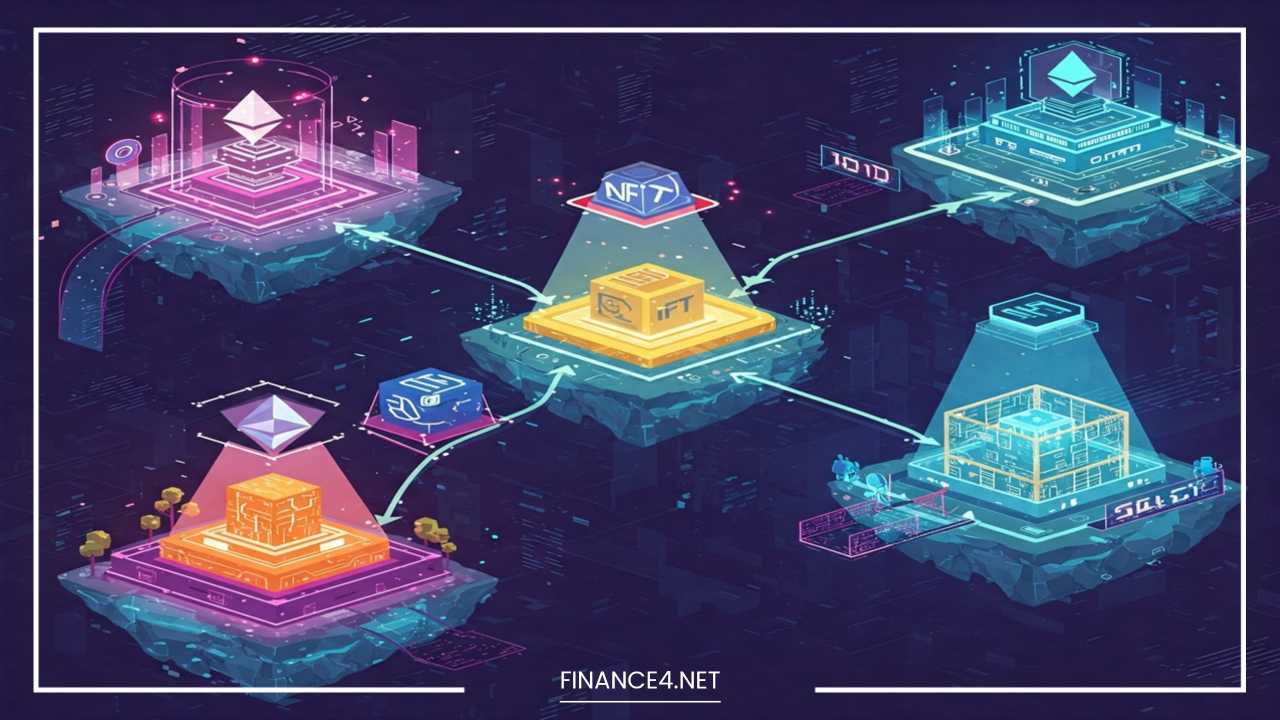
The key distinction of a sidechain is its two-way peg (2WP) mechanism. This mechanism allows assets, such as Ethereum’s native token (ETH) or ERC-20 tokens, to be securely transferred from the main chain to the sidechain and back again. When an asset is moved to a sidechain, it is “locked” on the mainnet, and an equivalent amount of the asset is “minted” on the sidechain. This ensures that the total supply of the asset remains constant and verifiable across both chains.
This architecture differs from the main blockchain in a few critical ways:
-
Consensus Mechanism: Sidechains often use a different, and typically faster, consensus mechanism than the mainnet (like Proof-of-Stake or Proof-of-Authority) to achieve higher transaction throughput.
-
Security: While they aim to maintain security, sidechains typically have their own set of validators or consensus participants, meaning their security is independent of the mainnet, unlike true Layer-2 solutions which inherit the mainnet’s security.
How Sidechains Work
The core operational component is the bridge. A blockchain bridge is a protocol that connects the two chains and manages the two-way peg.
-
Depositing (Moving to the Sidechain): A user sends an asset (e.g., ETH) to a specific smart contract on the mainnet. This contract locks the asset. The bridge mechanism then verifies the lock and mints the corresponding wrapped token (e.g., WETH or the sidechain’s native token) on the sidechain, which the user receives.
-
Transacting: The user can now perform transactions, such as minting NFTs or trading, on the sidechain using the wrapped asset. These transactions benefit from the sidechain’s faster processing and minimal fees.
-
Withdrawing (Moving to the Mainnet): To bring the asset back, the user burns the wrapped token on the sidechain. The bridge verifies this burn and releases the original, locked asset from the smart contract on the mainnet, returning it to the user.
Benefits of Sidechains
The benefits derived from this architecture are immediate and profound for NFT minting:
-
Lower Transaction Costs: By using a less congested network with a more efficient consensus mechanism, the computational cost, and therefore the fee, for a transaction plummets, often to mere cents.
-
Faster Speeds: Transactions are confirmed much quicker, leading to a smoother, near-instant user experience that is crucial for high-volume activities like gaming and real-time marketplaces.
-
Reduced Congestion: Offloading transactions from the mainnet helps keep the primary blockchain clear, improving the experience for all users.
Why Choose Sidechains for NFT Minting?
The decision to choose a sidechain over a mainnet like Ethereum for NFT minting is overwhelmingly driven by practical economics and user experience.
Minting Costs
The cost of minting on Ethereum can fluctuate wildly, often reaching hundreds of dollars (gas fees). This volatility makes cost prediction impossible for creators and can consume a significant portion of an NFT’s initial sale price, or even exceed it, for less expensive or free mints. Sidechains, in stark contrast, provide predictable and extremely low minting costs, typically costing less than a dollar. This is essential for:
-
Large Collections: Minting a collection of 10,000 NFTs on Ethereum is prohibitively expensive. On a sidechain, the cost is manageable.
-
Airdrops and Giveaways: Distributing tokens or NFTs to a community becomes economically viable.
-
New Creators: Low fees drastically lower the barrier to entry for artists and developers experimenting with the technology.
Faster Transactions
A slow transaction speed on the mainnet can lead to a phenomenon known as “gas wars,” where users must pay higher fees to have their transaction processed before others—a critical problem for popular NFT drops. Sidechains boast throughputs often thousands of times higher than Ethereum, leading to:
-
Instant Confirmation: Transactions, including the critical minting process, can be confirmed in seconds.
-
Better User Experience: Near-instant interactions are necessary for decentralized applications (dApps), especially in gaming (Play-to-Earn) and interactive Metaverse experiences.
Scalability for Mass Adoption
True mass adoption of NFTs requires a network that can handle millions of daily transactions without grinding to a halt. Ethereum’s capacity limitations mean it cannot support a global-scale NFT market on its own. Sidechains and Layer-2 solutions are the scalability layer that allows the NFT ecosystem to grow exponentially, supporting games, decentralized social media, and other high-frequency dApps.
Decentralization & Security: The Trade-Off
While sidechains solve the scaling problem, they often involve a trade-off with decentralization and security compared to the heavily scrutinized Ethereum mainnet.
-
Security: A sidechain’s security is derived from its own set of validators. If this set is small or controlled by a single entity (as in a Proof-of-Authority system), it can be more vulnerable to attacks or collusion. However, many sidechains leverage the security of the mainnet through various staking and fraud-proof mechanisms.
-
Decentralization: Some sidechains prioritize speed by having a smaller set of block producers, making them more centralized. Users must weigh the trade-off between the high cost and full decentralization of Ethereum versus the low cost and slightly reduced decentralization of a fast sidechain.
Key Considerations Before Choosing a Sidechain for NFT Minting
Choosing the right platform for an NFT project is a strategic decision that depends on the creator’s goals, community, and technical requirements.
Transaction Fees
While all sidechains are cheaper than Ethereum’s mainnet, the fees can still vary. Some platforms charge a negligible fee (a fraction of a cent), while others charge a few cents. For a collection involving tens of thousands of individual mints, even a small difference in fee can result in significant cost savings. The fee mechanism (gas or fixed cost) also plays a role in predictability.
Speed and Scalability
A sidechain’s ability to handle high transaction volumes smoothly is crucial for preventing mini-congestion during a popular drop. Look for high Transactions Per Second (TPS) metrics and low time-to-finality (the time it takes for a transaction to be confirmed as irreversible). High TPS is paramount for gaming and real-time dApps.
Security & Decentralization
The project must assess the risk tolerance of its investors and community. High-value, unique art pieces might still gravitate towards Ethereum’s mainnet for ultimate security, while mass-produced collectibles or gaming assets can safely leverage a sidechain. Projects should research the sidechain’s:
-
Consensus Mechanism: Is it a highly distributed Proof-of-Stake (PoS) system, or a more centralized Proof-of-Authority (PoA) system?
-
Validator Set: How many validators secure the network? A larger number generally means greater decentralization and security.
Ecosystem Support
A thriving ecosystem means more opportunities for the NFT project. This includes:
-
Marketplaces: Which major NFT marketplaces (like OpenSea, Rarible) natively support the sidechain?
-
Developer Tools: Availability of robust software development kits (SDKs), documentation, and an active developer community.
-
Wallets: Easy integration with popular crypto wallets (e.g., MetaMask, Trust Wallet).
Compatibility with Main Networks (e.g., Ethereum)
EVM (Ethereum Virtual Machine) compatibility is a major advantage. EVM-compatible sidechains allow developers to easily port their smart contracts and use existing Ethereum tools (like Solidity and MetaMask). This ease of use dramatically lowers the barrier for developers already familiar with the Ethereum ecosystem. Furthermore, simple bridging back to the mainnet is vital for ensuring high liquidity for the NFTs.
Top Sidechains for NFT Minting
The scaling landscape for NFTs is dynamic, with multiple competitors offering unique approaches to solving the transaction speed and cost problem.
1. Polygon (Matic)
Polygon is the undisputed champion in the current sidechain landscape for NFTs, often described as the “Internet of Blockchains.” It is not a single sidechain but a framework that facilitates various Layer 2 solutions. Its most popular product is the Polygon PoS Chain, a highly scalable and Ethereum-compatible sidechain.
-
Overview: Polygon’s PoS sidechain utilizes a Proof-of-Stake consensus mechanism with its own set of validators. It acts as an execution layer that settles transactions quickly and cheaply before periodically checkpointing its state to the more secure Ethereum mainnet.
-
Benefits for NFT Minting:
-
Ethereum Compatibility: Full EVM compatibility allows easy porting of Ethereum smart contracts and widespread use of MetaMask.
-
Extremely Low Fees: Transaction costs are typically just a few cents.
-
Massive Ecosystem: It has attracted a huge number of dApps and users, capitalizing on the Ethereum network effects without the congestion.
-
-
Popular Marketplaces & Projects: Polygon is widely integrated across the NFT space. OpenSea supports Polygon natively, allowing users to mint, buy, and sell Polygon NFTs. Major projects like Decentraland, The Sandbox, and various high-profile corporate partnerships (e.g., Reddit, Starbucks) have chosen Polygon for their NFT initiatives.
-
Notable Projects: Its ecosystem is vast, covering gaming, DeFi, and digital identity. Its stability, security, and integration with established platforms make it a default choice for many large-scale NFT projects.
2. Binance Smart Chain (BSC)
Binance Smart Chain (now often referred to as BNB Smart Chain) is a high-performance blockchain network that runs in parallel to the Binance Chain. While often categorized as an alternative Layer 1, its architecture and use of a cross-chain bridge make it functionally similar to a sidechain solution for the Ethereum ecosystem.
-
Overview: BSC uses a Proof-of-Staked Authority (PoSA) consensus mechanism, which offers fast block times (around 3 seconds) and low transaction costs. It is also EVM-compatible.
-
NFT Minting Benefits:
-
Speed and Low Fees: BSC provides some of the fastest and cheapest transactions available, often just fractions of a dollar.
-
Ethereum-Based Tooling: Its EVM compatibility means developers can use familiar tools, which speeds up development.
-
-
Popular Marketplaces & Projects: Key NFT marketplaces include BakerySwap and TreasureLand. It has a strong presence in the DeFi and gaming sectors.
-
Drawbacks/Challenges: The primary concern is its centralized nature. The PoSA consensus relies on a small set of validators who are frequently selected or influenced by the Binance ecosystem, raising questions about censorship resistance and decentralization compared to true Layer 1 chains.
3. Flow Blockchain
Flow is a purpose-built blockchain, optimized from the ground up specifically for digital collectibles, NFTs, and large-scale games. It does not operate as a sidechain to Ethereum but as a successful, independent competitor.
-
Overview: Developed by Dapper Labs, the creators of CryptoKitties, Flow uses a unique multi-role architecture (Collector, Consensus, Execution, and Verification nodes) to distribute work and scale without sharding, maintaining high speed and low cost.
-
NFT Advantages:
-
Optimized for Collectibles and Gaming: The architecture is designed to handle high-frequency transactions required by gaming dApps without congestion.
-
Developer-Friendly: It uses the resource-oriented Cadence programming language, which is designed to make smart contracts for digital assets more secure and easier to audit.
-
-
Examples: It is home to some of the most famous NFT projects, including NBA Top Shot, CryptoKitties, and UFC Strike.
-
Drawbacks: Its custom language, Cadence, and non-EVM compatibility mean less flexibility for developers familiar only with Solidity and Ethereum tools. Its ecosystem is highly focused on its core projects, which can limit broader application.
4. Avalanche (C-Chain)
Avalanche is a high-speed, open-source platform for launching decentralized applications. It achieves massive scalability through a unique consensus mechanism and a customizable infrastructure known as subnets. Its C-Chain (Contract Chain) is the main home for NFTs.
-
Overview: Avalanche is an EVM-compatible chain that boasts near-instant finality—the guarantee that a transaction will not be reversed. The network is composed of three interconnected chains: X-Chain (assets), P-Chain (platform/subnets), and C-Chain (EVM smart contracts).
-
NFT Minting on Avalanche:
-
High Transaction Speed & Low Fees: Avalanche is celebrated for its low latency and high throughput, making minting and trading swift and affordable.
-
EVM Compatibility: Developers can easily port Ethereum dApps and use familiar tools on the C-Chain.
-
-
Notable NFT Projects: Avalanche’s ecosystem is rapidly growing, particularly in DeFi and gaming, with various PFP (profile picture) and generative art projects gaining traction.
-
Drawbacks: While growing quickly, its NFT ecosystem is still developing compared to the massive liquidity and user base of Ethereum or Polygon. Marketplaces are still gaining the same level of prominence as those on rival chains.
5. Arbitrum
Arbitrum is a leading Optimistic Rollup, a specific type of Layer 2 scaling solution for Ethereum. Rollups bundle hundreds of transactions off-chain and submit them to the Ethereum mainnet as a single, highly compressed transaction.
-
Overview: Arbitrum inherits the security of the Ethereum mainnet. It achieves low cost and high speed by executing transactions off-chain, relying on a dispute resolution system—if anyone suspects a fraudulent transaction, they can submit a fraud proof to the mainnet.
-
NFT Minting Benefits:
-
Security of Ethereum: Its core advantage is offering Ethereum-level security guarantees, which is attractive for high-value NFT collections.
-
Cheaper and Faster Minting: Transaction costs are significantly lower than Ethereum mainnet, often by 90% or more, while still being faster.
-
Full EVM Compatibility: It is one of the most EVM-compatible solutions, allowing for seamless integration.
-
-
Challenges: While technically superior in security to many sidechains, Arbitrum is still gaining traction in the NFT space compared to the massive adoption of Polygon. Its user base has historically focused more on DeFi applications, though its NFT ecosystem is catching up.
6. Solana (Alternative Layer 1/Sidechain Equivalent)
Solana is a standalone Layer 1 blockchain, not an Ethereum sidechain, but is included in this list because it functions as a primary, high-speed alternative for NFT minting. It leverages a unique consensus mechanism called Proof-of-History (PoH), which acts as a cryptographic clock to enable incredibly fast processing.
-
Overview: Solana is known for its ability to process tens of thousands of transactions per second (TPS) and its minimal transaction fees.
-
Benefits for NFT Minting:
-
Ultra-Low Fees: Transactions often cost a fraction of a cent.
-
Blazing Fast Processing: High throughput makes it perfect for high-volume transactions and fast-paced gaming.
-
-
Popular Marketplaces: It hosts a vibrant and distinct NFT ecosystem with marketplaces like Magic Eden (which has eclipsed some Ethereum-based marketplaces in volume at times) and Solanart.
-
Challenges: The major drawback has been network stability and outages. Solana has faced several highly publicized network downtime events, raising concerns about its long-term reliability for critical applications. Its non-EVM nature also requires developers to learn new languages like Rust.
7. Ronin
Ronin is a specialized Ethereum-linked sidechain developed by Sky Mavis, the creator of the wildly successful play-to-earn game, Axie Infinity.
-
Overview: Ronin was built specifically to solve the scalability issues faced by Axie Infinity on the Ethereum mainnet. It is a highly optimized, Proof-of-Authority (PoA) sidechain focused almost exclusively on gaming NFTs.
-
Benefits for Gaming NFTs:
-
Extremely Low Transaction Costs: Designed to support the massive volume of micro-transactions (breeding, trading, in-game actions) required by a successful play-to-earn game.
-
Tailored Speed: Ensures a fast and seamless experience essential for real-time gaming.
-
-
Challenges: Ronin’s success is highly dependent on the Axie Infinity ecosystem. It is a centralized solution with limited use cases outside its parent company’s applications, making it less suitable for general NFT projects.
8. Other Notable Options
-
Tezos: An independent Layer 1, not a sidechain, but often cited for its growing and eco-friendly NFT presence. It uses a Liquid Proof-of-Stake (LPoS) mechanism, ensuring low transaction costs and a low energy footprint, which is a key selling point for environmentally conscious artists.
-
xDai (now Gnosis Chain): Known for its fast, inexpensive, and stable transactions. It is a highly EVM-compatible sidechain that has been a long-standing, reliable alternative for smaller and medium-sized NFT projects.
How to Mint NFTs on a Sidechain
The process of minting an NFT on a sidechain is remarkably similar to minting on the Ethereum mainnet, but with a crucial extra step and the benefit of lower fees.
Step-by-Step Guide (Example: Polygon)
-
Wallet Setup: Ensure you have a Web3 wallet, like MetaMask.
-
Connect to the Sidechain Network: You must configure your wallet to connect to the chosen sidechain’s network (e.g., Polygon Mainnet). This usually involves adding the network’s details (RPC URL, Chain ID) manually or using a tool like Chainlist.
-
Bridge Funds: You will need the sidechain’s native token (e.g., MATIC for Polygon) to pay the gas fees. You must bridge your ETH or another token from the Ethereum mainnet over to the sidechain using the official bridge interface. This is the only step that will incur a high, one-time Ethereum gas fee.
-
Use a Compatible Platform: Navigate to an NFT marketplace or a dedicated minting platform that supports the sidechain (e.g., OpenSea on Polygon, or Magic Eden on Solana).
-
Create and Mint: Use the platform’s interface to upload your digital asset, fill in the details (name, description, royalties), and select the “Mint” option. The transaction will be processed by the sidechain network, and the gas fee will be paid in the sidechain’s native token (MATIC). The minting cost will be minimal.
Tools and Platforms
-
Marketplaces: OpenSea (supports Polygon, Arbitrum), Rarible (supports Polygon, Flow), Magic Eden (Solana), BakerySwap (BSC), and dedicated platform launchers.
-
Wallet Setup: MetaMask is the standard for all EVM-compatible sidechains (Polygon, BSC, Avalanche C-Chain, Arbitrum). Wallets like Phantom or Solflare are necessary for the Solana ecosystem.
Final Thoughts
The scalability crisis of Ethereum was the catalyst for innovation, and sidechains and Layer 2 solutions are the result. They have proven essential in bridging the gap between blockchain security and the real-world performance requirements of mass adoption. The choice of the “best” sidechain for NFT minting depends entirely on a creator’s priorities.
Summary of Best Sidechains for NFT Minting
| Sidechain/Platform | Primary Strength | Best For | Security/Decentralization Note |
| Polygon (Matic) | Unmatched ecosystem size and Ethereum compatibility. | Large-scale collections, corporate brands, ease of use. | Relies on its own PoS validators; highly successful. |
| Solana | Ultra-low fees and extreme transaction speed. | Gaming, high-frequency transactions, low-cost assets. | Faster, but has faced network stability issues. |
| Arbitrum | Inherits Ethereum’s core security model (Rollup). | High-value art, projects requiring mainnet-level security. | Highest security guarantee of the Layer 2 options. |
| Flow | Purpose-built architecture for collectibles. | High-volume gaming and major brand partnerships (NBA Top Shot). | Less flexible due to non-EVM; highly centralized. |
Why Sidechains Are the Future of NFT Minting
Sidechains provide the answer to Ethereum’s central paradox: decentralization at scale. They offer a tiered system where the high-stakes security of the mainnet can be leveraged for asset finality, while the sidechains handle the daily operational throughput with unparalleled efficiency. The future of the NFT space will not be dominated by a single chain but by an interoperable ecosystem where sidechains act as the primary engines for creation and commerce, connected to the ultimate security layer of Ethereum.
For new creators, platforms like Polygon offer the lowest friction entry point: low cost, fast speed, and access to major marketplaces like OpenSea. For experienced developers or those building high-throughput gaming dApps, Solana offers the speed advantage, while Arbitrum provides the comfort of Layer 2 security. Ultimately, the rapid evolution of sidechains ensures that the NFT market will continue to grow, welcoming the next generation of digital artists and entrepreneurs.