Best NFT Bridging Aggregator
 by
by 
Best NFT Bridging Aggregator | Seamless NFT Transfers
The world of Non-Fungible Tokens (NFTs) has exploded in popularity, transforming digital ownership and opening up vast new markets for art, collectibles, gaming assets, and even virtual real estate. An NFT, at its core, is a cryptographic token on a blockchain that represents a unique item. The initial success was largely centered around networks like Ethereum, but as the Web3 ecosystem expands, hundreds of specialized blockchains have emerged, each offering different advantages in speed, cost, and community.
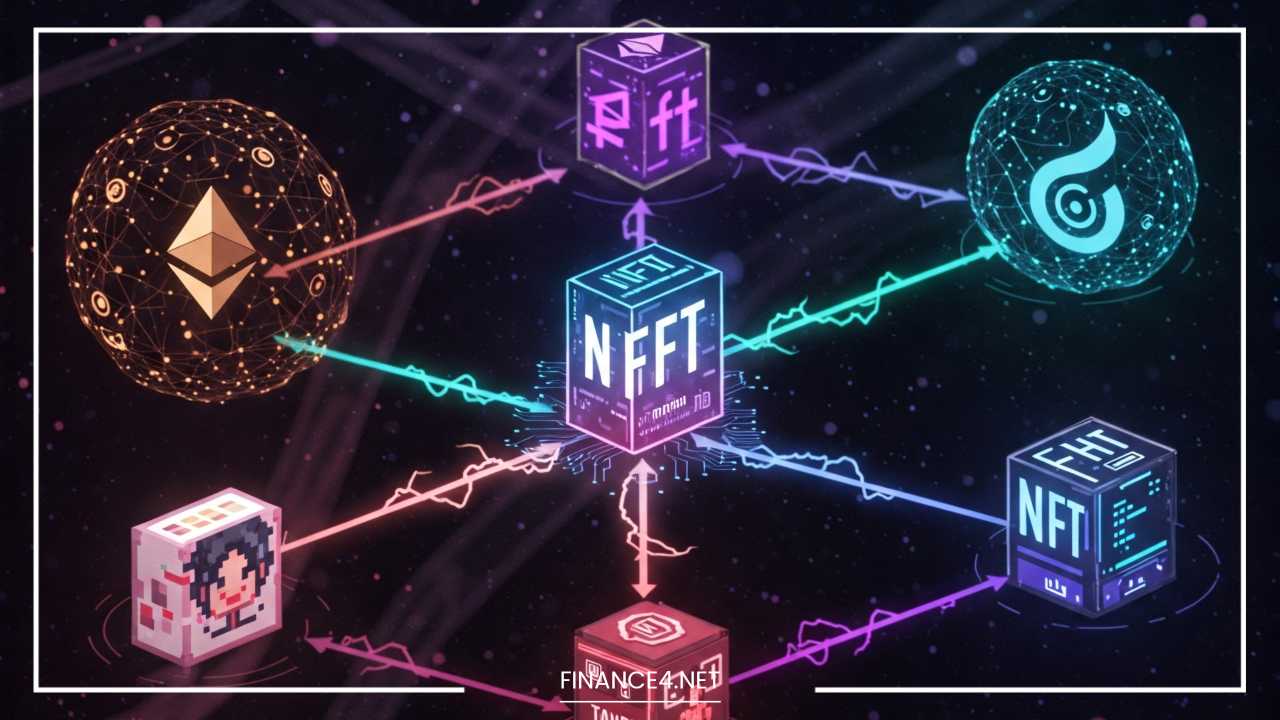
This proliferation of networks, however, creates a significant challenge: siloed liquidity. An NFT minted on Ethereum is stuck on Ethereum; an item on Solana cannot easily interact with a game on Polygon. The solution to this fragmentation is NFT bridging, the process of transferring an NFT from one blockchain to another.
This is where the NFT bridging aggregator steps in. In a complex multi-chain world, the aggregator acts as the essential hub, simplifying cross-chain transfers and ensuring that your digital assets can move seamlessly to where they are most valuable, needed, or marketable. This comprehensive article explores the mechanics, necessity, and leading providers in this critical segment of the Web3 infrastructure.
What is an NFT Bridging Aggregator?
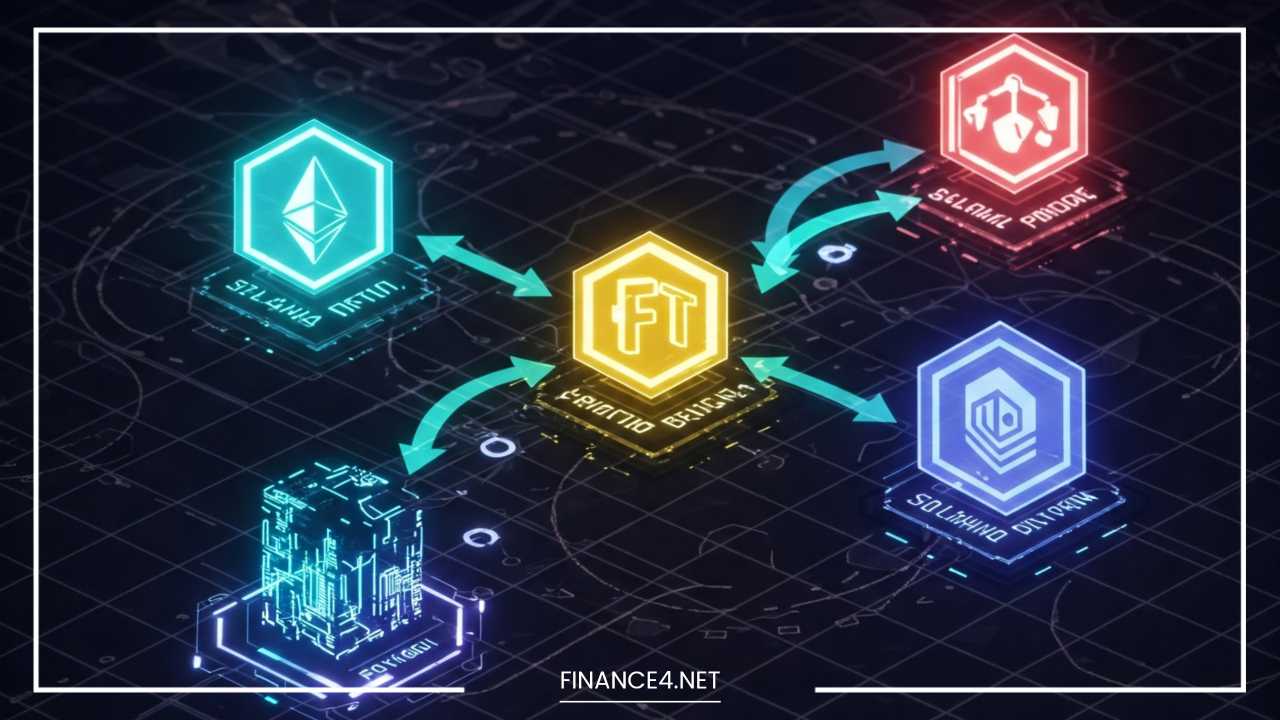
An NFT bridging aggregator is a platform designed to search, compare, and execute NFT transfers across multiple underlying cross-chain bridge protocols.
To understand its role, first consider a standard NFT bridge. A single bridge (like the native Polygon Bridge or a protocol like Wormhole) typically facilitates transfers between a specific set of chains (e.g., Ethereum to Polygon, or Solana to BNB Chain). When you use a single bridge, you are subject to its specific fees, speed, security model, and supported chains.
An aggregator is fundamentally different. It does not replace the individual bridges but sits on top of them, functioning as a smart routing layer. It uses sophisticated algorithms to analyze real-time data from various integrated bridge protocols.
Key Distinction and Role
-
Standard Bridge: A single route from Chain A to Chain B, with fixed parameters.
-
NFT Bridging Aggregator: A meta-router that finds the optimal route for your NFT transfer.
Its primary role is to aggregate multiple bridges, identifying the fastest, most cost-efficient, and secure pathway for a user’s NFT to move from the source chain (e.g., Ethereum) to the destination chain (e.g., Avalanche). This provides a single, easy-to-use interface, abstracting away the underlying technical complexity and the need for the user to compare dozens of bridge providers manually.
Why NFT Bridging Matters
The necessity of bridging has grown exponentially as the multi-chain universe matures. Without a robust solution, the NFT ecosystem faces three core problems:
Problems Without Bridging
-
Isolated NFT Ecosystems: A collector’s assets are trapped in the chain they were minted on. This limits the NFT’s utility. For example, a gaming asset on Polygon cannot be used as collateral for a loan on an Ethereum DeFi protocol.
-
Fragmented Liquidity: The total market for an NFT collection is divided across all the chains it may exist on. If a popular collection is listed on both Ethereum and Solana, the true liquidity (and therefore price discovery) for that collection is fractured. This makes it harder for buyers and sellers to meet.
-
Lack of Cross-Chain Ownership: True digital ownership and identity in the metaverse requires assets to be portable. A digital identity NFT (like an ENS domain name) or a piece of virtual land should be usable regardless of the underlying blockchain technology hosting the application.
Benefits of Bridging
NFT bridging unlocks these limitations, leading to:
-
Interoperability: This is the core benefit—allowing NFTs to function seamlessly across different blockchain environments. This is crucial for Web3 gaming, where in-game assets should be tradable on any major marketplace.
-
Wider Audience and Market: Bridging allows NFT projects initially launched on high-fee chains like Ethereum to reach users on low-fee chains like Solana or BNB Chain, vastly increasing the potential audience and sales volume.
-
Increased Utility and Value: An NFT that can be used in a dozen dApps across different chains is inherently more valuable than one confined to a single ecosystem. Bridging enhances the utility of the asset.
Key Features of a Good NFT Bridging Aggregator
A top-tier NFT bridging aggregator must go beyond simple aggregation to offer a comprehensive, safe, and efficient user experience. Selecting the right platform requires evaluating several critical features:
1. Cross-Chain Support (The Breadth of the Network)
The value of an aggregator is directly tied to the number of major blockchains it supports. Look for:
-
EVM-Compatible Chains: Full support for Ethereum, Polygon, BNB Chain, Avalanche, Arbitrum, Optimism, and other major Ethereum Virtual Machine (EVM) chains.
-
Non-EVM Chains: Integration with non-EVM giants like Solana, Cosmos, and Polkadot, which often require specialized bridging technology.
-
Layer-2 Solutions (L2s): Seamless routing between various L2 rollups and the Ethereum Mainnet (L1) for maximal efficiency.
2. User Interface & Experience (UI/UX)
The platform must simplify the underlying complexity. A good aggregator features:
-
One-Click Bridging: A clear, intuitive dashboard where a user can select the source chain, destination chain, and NFT with minimal steps.
-
Real-Time Comparison: A transparent display of all potential bridge routes, showing estimated time, total cost (including gas and bridge fees), and security rating for each option.
-
Wallet Compatibility: Supports all major Web3 wallets, including MetaMask, WalletConnect, Phantom, and others relevant to the supported chains.
3. Transaction Speed & Cost Efficiency
The aggregator’s main job is optimization.
-
Best Price Execution (Routing): It should automatically select the most gas-efficient route for the current network conditions, which can involve complex multi-hop transfers (e.g., Chain A to an L2, then to Chain B).
-
Low and Transparent Fees: The total cost should be clear before the transaction is confirmed, with a breakdown of the bridge’s fee versus the native gas fee.
4. Security & Reliability
Cross-chain bridges are high-value targets for hackers. Security is paramount.
-
Smart Contract Audits: The aggregator’s own routing contracts, and the bridges it relies upon, must have undergone rigorous, public audits by reputable third-party security firms.
-
Decentralization: Preference for protocols that use decentralized security models (e.g., multi-party computation, decentralized relayers) over centralized multi-signature wallets.
-
Bridge Insurance/Recovery: Some advanced aggregators may offer bridge insurance options or have robust fallback mechanisms for failed transactions.
5. Analytics & Tracking
Users need peace of mind during a cross-chain transaction, which can take time.
-
Bridge Explorer: A dedicated tracking page or integrated explorer link to monitor the status of the NFT transfer across both the source and destination chains in real-time.
-
Transaction History: A clear record of all past bridging activities, including fees paid, the bridge used, and final confirmation status.
How NFT Bridging Works
While the aggregator makes the process look simple, the underlying mechanics are complex and rely on what is typically a “Lock-and-Mint” or “Burn-and-Mint” mechanism. The aggregator’s role is to choose the most efficient method among its integrated protocols.
The General Bridging Process (Step-by-Step)
1. Connecting a Wallet and Selecting the Asset
The user connects their wallet (e.g., MetaMask). The aggregator scans the wallet to display all held NFTs and their current source chain (e.g., an $ERC-721$ NFT on the Ethereum network). The user then selects the NFT(s) they wish to transfer.
2. Choosing the Destination Blockchain
The user specifies the target blockchain (e.g., Polygon).
3. Aggregator Calculates the Best Route
This is the core value-add. The aggregator’s smart routing algorithm instantly queries all compatible bridge protocols in its network. It evaluates:
-
Gas Price: Current network congestion and the resulting transaction cost on the source chain.
-
Bridge Fee: The fee charged by the specific bridge protocol.
-
Time Estimate: The predicted latency for the transfer.
- Liquidity: For bridges that use liquidity pools (less common for NFTs, but possible for wrapped tokens), it checks for available funds.The aggregator presents the user with the optimal route—the best balance of speed and cost—or offers a list of alternatives.
4. Confirming Transaction and Bridging NFT
The user approves the final route and confirms the transaction. This initiates the core bridging mechanism:
-
Locking/Burning: On the source chain (e.g., Ethereum), the user’s NFT is either locked in a smart contract (the “lock-and-mint” model) or burned (the “burn-and-mint” model). The locking contract acts as a digital custodian for the original asset.
-
Verification: An off-chain mechanism (often called a Relayer or Oracle Network) detects the locking/burning event on the source chain, verifies its legitimacy, and sends a proof or message to the destination chain.
-
Minting/Unlocking: On the destination chain (e.g., Polygon), a wrapped or canonical version of the NFT is instantly minted and sent to the user’s wallet. This new NFT represents a verified claim on the original locked asset.
-
The Bridge Connection
-
Source Chain: Original NFT Locked $\rightarrow$ Event Emitted
-
Relayer/Oracle: Verifies Event $\rightarrow$ Sends Proof
-
Destination Chain: Wrapped NFT Minted $\rightarrow$ Sent to User Wallet
-
5. Completion
The user receives the wrapped NFT in their wallet on the destination chain, which they can now trade on local marketplaces, use in dApps, or hold. To move it back, the reverse process occurs (burning the wrapped NFT to unlock the original).
Top NFT Bridging Aggregators
The space of bridging aggregators is highly competitive, often overlapping with token swap aggregators, but a few platforms distinguish themselves in their cross-chain functionality and NFT support.
1. Aggregator A: Jumper Exchange
Jumper, powered by Li.Fi, is one of the most prominent cross-chain aggregators in the wider DeFi space, and its architecture extends seamlessly to NFT and token transfers by combining various protocols.
-
Supported Blockchains: Extensive. Supports nearly every major EVM-compatible chain (Ethereum, Polygon, Arbitrum, Optimism, Avalanche, Gnosis, etc.) by aggregating various underlying bridges like Across, Connext, and Stargate.
-
Fees & Speed: Designed for speed and optimal execution. By aggregating multiple liquidity and message bridges, it can often find multi-hop routes that are faster than a single direct bridge, especially across Layer-2 networks. The final fee depends on the chosen underlying bridge.
-
Security & UX: High security due to its focus on trustless and decentralized messaging protocols. The UX is highly streamlined, offering a transparent breakdown of all bridge options.
-
Unique Features: “Best Price Routing” across all integrated protocols for both tokens and NFTs, providing a powerful, one-stop solution for all cross-chain needs.
2. Aggregator B: Portal Bridge (Wormhole)
While technically a bridge protocol, Wormhole, often accessed via the Portal Bridge interface, acts as an effective aggregator for non-EVM to EVM chain transfers due to its massive network. It excels in connecting chains that other protocols struggle with.
-
Supported Blockchains: Best for multi-chain support, including historically difficult connections. It natively supports Ethereum, Solana, Polygon, Avalanche, BNB Chain, Fantom, Arbitrum, Optimism, and many others.
-
Fees & Speed: Fees rely on the gas costs of the source and destination chains, which can be high during peak times on Ethereum, but the speed for transfers to and from non-EVM chains like Solana is often market-leading.
-
Security & UX: Relies on the Wormhole Guardian Network—a decentralized set of validators—for security. It’s highly reliable for large-volume transfers, though the UX is slightly less “aggregator-like” than Jumper.
-
Unique Features: Canonical Token/NFT Standard. It’s often the trusted path for moving official or high-value assets between major ecosystems like Ethereum and Solana, making it the go-to for high-value assets.
3. Aggregator C: Synapse Protocol
Synapse is a general-purpose cross-chain communication layer that supports a wide array of chains and has a specific focus on asset transfers, including NFTs.
-
Supported Blockchains: Strong support for EVM chains, including many niche ones like Harmony, Moonbeam, and Metis, making it best for multi-chain support across the long-tail of the EVM ecosystem.
-
Fees & Speed: Focuses on low fees using its proprietary Synapse Message Bus which allows for generalized communication between chains. Generally offers predictable and low costs, especially for its core supported set of networks.
-
Security & UX: Utilizes an Optimistic Security Model and has been rigorously audited. The platform is well-regarded for its simple, no-frills UI that focuses purely on efficient transfers.
-
Unique Features: Its underlying message-passing protocol allows for more than just asset transfers, potentially enabling cross-chain governance and dApp functionalities for the linked NFT projects.
Tips for Safe NFT Bridging
The convenience of an aggregator does not eliminate all risks. The greatest risks in bridging remain at the protocol layer, which is why prudent steps are essential:
-
Verify Bridge Contracts are Audited: Before initiating a transfer, especially a high-value one, ensure that the underlying bridge protocol the aggregator selects is well-known and has passed multiple, recent smart contract audits.
-
Start with Small NFT Transfers First: Test the water. Bridge a low-value or “burner” NFT first to confirm the process works, the fees are accurate, and the asset arrives safely on the destination chain before transferring a multi-million-dollar collectible.
-
Keep Private Keys Secure: The bridge only moves the asset; the security of your wallet is always your responsibility. Never share your private key or seed phrase.
-
Avoid Unofficial or Suspicious Platforms: Only use aggregators and bridges linked directly from official project documentation or widely-trusted industry portals. Phishing scams that mimic popular bridge sites are common. Always double-check the URL.
-
Understand the “Wrapped” Asset Risk: Remember that when you bridge, you are often receiving a wrapped representation of your original NFT. This wrapped asset is only as secure as the contract locking the original asset. If the locking contract is exploited, the wrapped asset may become worthless.
Future of NFT Bridging and Cross-Chain NFTs
The trend toward cross-chain NFTs is inevitable. As the Web3 space matures, the need for siloed networks to communicate will only increase. Bridging aggregators will evolve to become the de-facto operating system for digital asset mobility.
Trends in Multi-Chain NFT Adoption
-
“One Asset, Multiple Chains”: Future protocols will enable true canonical ownership where a single NFT can exist and be validated across multiple chains simultaneously, rather than simply being locked and minted.
-
Integration with DeFi and Gaming: The primary use case for seamless bridging will be utility. Gamers will demand that their in-game items can be moved instantly to whatever blockchain hosts the next big game. DeFi users will require NFTs to serve as collateral on the highest-yielding platform, regardless of its underlying chain. The ability to move an asset and its associated metadata/logic will be key.
-
Rise of Intent-Based Architectures: New cross-chain frameworks, such as those leveraging LayerZero and other omnichain solutions, will move away from simple “move-and-lock” to allow users to express an “intent” (e.g., “I want to sell my NFT for $10,000 USDC on the fastest chain”). The aggregator’s role will shift from finding the best path to executing the best outcome.
-
Impact on Marketplaces and Metaverse: Major marketplaces are already becoming aggregators themselves, listing NFTs from multiple chains. The future metaverse will be a patchwork of interconnected experiences, and only frictionless cross-chain mobility will allow assets like virtual land and identity tokens to retain their utility across all environments.
The market for cross-chain NFT solutions is forecast to experience exponential growth, driven by the demand for interoperability that enhances market efficiency and asset utility.
Final Thoughts
The rise of the NFT bridging aggregator marks a pivotal moment in the evolution of the NFT market, symbolizing the transition from a single-chain curiosity to a truly multi-chain ecosystem. By abstracting the complexity of cross-chain infrastructure, these platforms deliver essential convenience, security, and optimization.
For collectors and traders, leveraging the best NFT bridging aggregator is no longer a luxury but a necessity for seamless transfers. It empowers you to break free from the liquidity silos of single blockchains, ensuring your digital assets can chase the best opportunities, whether they lie in a new gaming metaverse, a high-liquidity marketplace, or a novel DeFi protocol. The future of NFTs is not on one chain, but across all of them, and the aggregator is the key to that interconnected world.