Best Cross-Chain NFT Bridging Solutions
 by
by 
Best Cross-Chain NFT Bridging Solutions | Top NFT Bridge Platforms
The blockchain revolution, spearheaded by Bitcoin and later diversified by Ethereum, has ushered in an era of decentralized, digital scarcity represented by Non-Fungible Tokens (NFTs). These digital assets, which represent unique items like art, collectibles, real estate, and in-game assets, have seen explosive growth. However, this growth has occurred across numerous independent blockchain networks—Ethereum, Polygon, Solana, BNB Chain, and many others—creating a highly fragmented ecosystem.
This fragmentation is a major roadblock to the full realization of the NFT market’s potential. An NFT minted on Ethereum cannot, by default, be used or traded directly on Solana, and vice versa. This lack of cross-chain interoperability severely limits liquidity, stifles the development of truly multi-chain NFT markets, and restricts user freedom, especially in gaming and metaverse applications where assets need to move seamlessly across different environments.
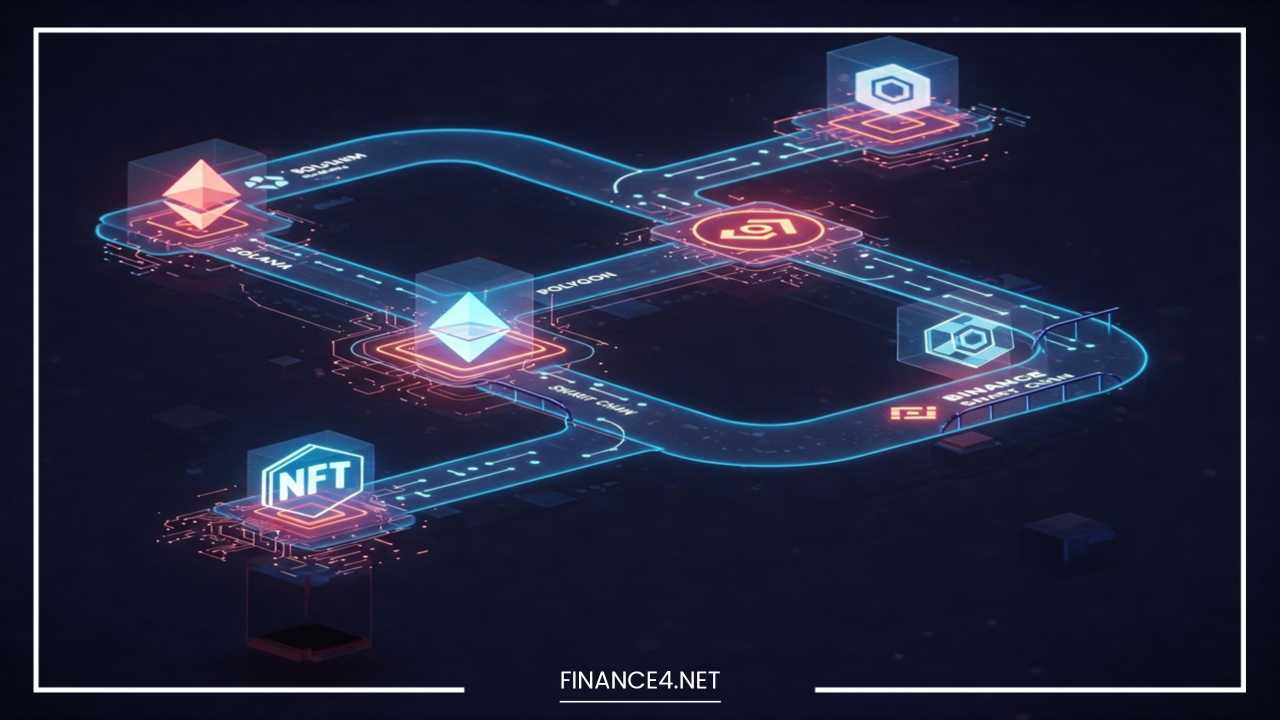
Cross-chain NFT bridging solutions are the vital middleware designed to solve this problem. These platforms act as secure, decentralized conduits, allowing the transfer of NFTs between disparate blockchains. They unlock massive potential by unifying liquidity, enabling arbitrage, and allowing creators to tap into multiple communities without re-minting their assets. The ability to move NFTs to chains with lower gas fees (like Polygon or Layer-2s) or faster transaction times (like Solana or Avalanche) is not just a convenience—it is a necessity for mainstream adoption.
How Cross-Chain NFT Bridging Works
Bridging Non-Fungible Tokens is fundamentally more complex than bridging fungible tokens (like ETH or USDC). While a fungible token only requires maintaining the quantity of the asset, an NFT bridge must accurately preserve its uniqueness, metadata, ownership history, and provenance.
Basic Mechanisms
Most NFT bridges operate using variations of two core mechanisms:
-
Lock-and-Mint: This is the most common model.
-
The user sends their original NFT to a designated smart contract (the “vault”) on the source chain (e.g., Ethereum).
-
The bridge’s network of validators or relayers detects this locking event.
-
An equivalent, “wrapped” NFT is minted on the destination chain (e.g., Polygon). This wrapped NFT is a new token that points back to the locked original and carries identical metadata (like the image URI and properties).
-
The wrapped NFT is sent to the user’s address on the destination chain.
-
To bridge back, the wrapped NFT is burned on the destination chain, and the original NFT is released from the vault on the source chain.
-
-
Burn-and-Mint (Less Common for NFTs): This model is typically used when the original token is completely destroyed on the source chain before a new, native token is minted on the destination chain. For NFTs, this is riskier as it requires greater trust in the bridge’s logic to perfectly recreate the uniqueness of the asset, and it complicates provenance tracking.
Key Difference: NFTs vs. Fungible Tokens
The challenge for NFTs lies in preserving the following:
-
Metadata: An NFT’s core value is often tied to its specific metadata (traits, artwork, name). The bridge must ensure the wrapped NFT’s metadata URI is identical to the original’s, maintaining its visual and functional integrity.
-
Ownership and ID: Unlike fungible tokens which only need a balance update, the NFT bridge must map the unique Token ID and ensure that the new wrapped NFT is only claimable by the original owner.
-
Smart Contract Representation: NFT standards like ERC-721 and ERC-1155 are not universal. Bridging between an EVM chain (like Ethereum) and a non-EVM chain (like Solana) requires translating the asset’s ownership and properties between two completely different virtual machine environments.
Security Models and Architecture
The security of a bridge is determined by the mechanism used to verify the transaction on the source chain and trigger the minting/releasing on the destination chain.
-
External Validators/Relayers (Federated Bridges): A set of independent entities (validators or relayers) monitor the source chain. Once a supermajority of these entities attest to the lock event, the destination chain contract is triggered to mint the wrapped asset. Platforms like XP.Network or the original Wormhole used this model. The security relies on the integrity and decentralization of this validator set.
-
Oracles/Message Passing: Protocols like LayerZero and Celer use a more general cross-chain messaging layer. Instead of dedicated NFT bridges, they provide an infrastructure (oracles and relayers) for smart contracts on one chain to communicate securely with smart contracts on another. The application (the NFT bridge logic) is built on top of this messaging layer, abstracting away the consensus mechanism.
-
Proof Systems (e.g., Light Clients, ZK-Bridges): These are the most mathematically secure but also the most complex. They involve the destination chain validating the source chain’s transaction by running a “light client” (a compact, verifiable version of the source chain’s state) or by using zero-knowledge proofs (zk-proofs) to cryptographically prove that a transaction occurred on the source chain without revealing unnecessary data.
Architectural Vulnerabilities and Mitigation
The complexity of these mechanisms makes bridges a prime target. Key vulnerabilities include:
-
Centralized Validator Set: If a small group controls the vault keys, they become a single point of failure (a honeypot), vulnerable to collusion or compromise.
-
Smart Contract Bugs: Flaws in the lock/mint logic can be exploited to mint infinite wrapped tokens or steal the assets in the vault.
-
Oracle Failure/Manipulation: If the oracle or relayer provides false information about a lock event, it can lead to unauthorized minting or theft.
Mitigations include mandatory security audits, bug bounties, decentralized governance of the validator set, and the adoption of advanced cryptographic proofs.
Key Challenges in Cross-Chain NFT Bridging
Despite the innovation, cross-chain NFT bridging faces significant hurdles that impact user experience and widespread adoption.
Security Risks: The Bridge Honeypot
Security remains the single greatest challenge. Bridge hacks have accounted for the largest crypto thefts in history. The locked funds in a bridge’s smart contract vault represent a massive, centralized treasury, making them irresistible to attackers. The security is only as strong as the weakest link, which could be the consensus mechanism of the relayer network, or a subtle vulnerability in the bridge’s smart contract code.
High Gas Fees and Transaction Costs
Bridging often involves multiple, costly transactions: approving the NFT transfer, locking the NFT on the source chain (which may be a high-fee chain like Ethereum L1), the relaying fee, and the final minting/claiming transaction on the destination chain. These costs, particularly during periods of high network congestion, can make bridging impractical for lower-value NFTs.
Latency and Bridging Speed
The time required for a bridge to finalize a transfer can vary wildly, from a few minutes to hours. This delay is due to the need for multiple block confirmations on the source chain, the relayers/validators performing their consensus mechanism, and the final transaction confirmation on the destination chain. For fast-paced use cases like in-game item transfers, high latency is unacceptable.
Maintaining NFT Metadata and Provenance
NFTs derive value from their history and unique attributes. A reliable bridge must guarantee that the wrapped asset is a perfect, verifiable mirror of the original. Any loss or alteration of metadata can render the bridged NFT worthless. Furthermore, tracking the provenance (the chain of ownership and creation) across chains is complex but essential for authenticity.
Royalty Enforcement and Smart Contract Compatibility
A critical issue is ensuring that creator royalties are respected across chains. If an NFT is sold on a destination chain marketplace, the original creator’s smart contract on the source chain may not be able to enforce the royalty payments. New standards are needed to allow smart contracts across chains to recognize and enforce royalty structures globally.
UX Challenges
For the average user, the process of selecting the right chain, configuring two wallets, paying fees in two different native tokens, and waiting for the transaction to finalize is cumbersome. Simplified interfaces, integrated gas abstraction (allowing users to pay fees in a single token), and one-click bridging are necessary to improve the user experience (UX).
Top Cross-Chain NFT Bridge Solutions / Platforms
The market offers several high-profile solutions, each with its own architectural approach and set of trade-offs.
1. NFT Bridges
What it is: A decentralized, non-custodial bridge specifically built for NFTs (ERC-721 and ERC-1155). It focuses purely on the lock-and-mint mechanism for non-fungible assets.
How it works: Uses a federated network of validators or a multi-party computation (MPC) committee to monitor the source chain’s lock event and attest to its validity, triggering the minting of a wrapped NFT on the destination chain.
Strengths: Often provides strong support for maintaining NFT metadata and complex token standards, as its design is tailored for non-fungibility. It is designed to be highly secure for high-value collectibles.
Supported Chains: Typically focuses on high-volume chains like Ethereum, Polygon, and BNB Chain.
Limitations: Can be slower and more expensive than general message-passing protocols due to its dedicated verification steps.
2. XP.Network
What it is: A multichain NFT bridge and aggregator designed to support a vast number of both EVM and non-EVM blockchains. It aims to be the universal hub for NFT movement.
How it works: Utilizes its own independent network of validators (Relay Validators) and smart contracts across all supported chains. When a user locks an NFT, the validators reach consensus on the event and initiate the minting of a wrapped NFT on the destination chain, ensuring metadata is preserved.
Strengths: Broadest Chain Support. It is highly flexible, supporting dozens of different blockchains and multiple NFT standards, addressing the fragmentation problem comprehensively. It includes features for tracking cross-chain transactions.
Supported Chains: Ethereum, Polygon, BNB Chain, Avalanche, Elrond, Algorand, Fantom, and many others.
Limitations: The security model relies on the decentralization and integrity of its proprietary validator set, which must be constantly audited and monitored.
3. Portal (Wormhole)
What it is: Portal is the token bridge application built on the Wormhole generic messaging protocol. Wormhole is a highly decentralized interoperability platform, often described as a cross-chain “message bus.”
How it works: Wormhole uses a network of Guardians (validator nodes) to observe the state of connected chains. When a user locks an NFT on a source chain, the Guardians sign an “observation” (a Verifiable Action Record, or VAA). This VAA is then used by the target chain’s smart contract to safely mint the wrapped NFT. This is a secure, two-step cryptographic proof system.
Strengths: Speed and Security. Wormhole is known for its fast finality and high level of decentralization (with major entities running Guardian nodes). It supports a vast number of chains, including non-EVM ones like Solana and Terra.
Supported Chains: Ethereum, Solana, Polygon, BNB Chain, Avalanche, Fantom, Oasis, and more.
Limitations: It was the victim of a major exploit in 2022, highlighting the inherent risks in bridge architecture. Although it was secured afterward, the history underscores the constant security battle.
4. Celer cBridge
What it is: Celer cBridge is a multi-chain asset bridge built on the Celer Inter-chain Messaging (Celer IM) framework, enabling both fungible token and NFT transfers.
How it works: It leverages the State Guardian Network (SGN), a Tendermint-based blockchain, as its decentralized security layer and message relayer. The SGN monitors and verifies events across chains, allowing for quick, secure message relay between smart contracts. For NFTs, the SGN ensures the lock event on the source chain is valid before triggering the minting on the destination chain.
Strengths: Unified Architecture. By using a generic message-passing layer (Celer IM) secured by a PoS sidechain (SGN), it offers a consistent security model for both token and NFT transfers. It is highly optimized for fast, multi-chain dApp experiences.
Supported Chains: Ethereum, Polygon, BNB Chain, Arbitrum, Optimism, Avalanche, Fantom, and many other EVM-compatible chains and Layer-2s.
Limitations: The security ultimately relies on the decentralization and economic incentive of the SGN, making it a “sidechain-verified bridge” rather than a native light-client bridge.
5. LayerZero / Stargate
What it is: LayerZero is an omnichain interoperability protocol that enables permissionless messaging between smart contracts across chains. Stargate is one of the premier applications built on LayerZero.
How it works: LayerZero separates validation from relaying. It uses an Oracle (e.g., Chainlink) and a Relayer (which can be run by anyone) that work independently. A transaction is considered valid only if the Oracle reports the block header and the Relayer provides the proof of the transaction from that block header. The LayerZero Omnichain Non-Fungible Token (ONFT) Standard allows NFTs to exist natively across multiple chains with a single, unified state, simplifying the bridging process.
Strengths: Omnichain Composability. It offers a highly generalized, capital-efficient, and secure architecture by decoupling security responsibilities. The ONFT standard is a forward-looking approach to true multi-chain NFT ownership.
Supported Chains: A rapidly growing number, including Ethereum, Polygon, BNB Chain, Avalanche, Arbitrum, Optimism, and more.
Limitations: It is an infrastructure layer; the security relies heavily on the independence and honesty of the selected Oracle and Relayer pair for any given transfer.
6. Synapse Protocol
What it is: A cross-chain messaging protocol and liquidity network that focuses on seamless asset movement and generalized communication between blockchains.
How it works: Synapse uses a decentralized, consensus-driven network of validators called the Synapse Multi-Party Computation (MPC) Network to secure cross-chain transactions. When bridging an NFT, the Synapse AMM facilitates the transfer logic, ensuring the lock-and-mint process is validated by the MPC network before finalizing the asset on the destination chain.
Strengths: Optimized for Speed and Liquidity. Known for its ability to facilitate low-slippage, stablecoin transfers, its underlying messaging layer also provides robust support for generalized communication needed for NFT bridging.
Supported Chains: Supports major EVM chains and Layer-2s like Ethereum, Arbitrum, Optimism, Polygon, and Avalanche.
Limitations: Historically more focused on fungible token liquidity than NFTs, though its messaging layer is fully capable of supporting NFT transfers.
Bridge Aggregators vs Native Bridges
The proliferation of bridging solutions has led to the emergence of a new category of tools: Bridge Aggregators.
What is a Bridging Aggregator?
A bridge aggregator is a platform that does not perform the bridging itself, but rather sources and compares rates and routes from multiple underlying, or native, bridge protocols (like Celer, LayerZero, Synapse, etc.). It acts as a meta-interface, providing users with the best combination of cost, speed, and security for their requested transfer.
Pros of Aggregators
-
Route Optimization: Aggregators automatically scan the entire ecosystem to find the most efficient path for a transfer, potentially utilizing a multi-hop route (e.g., Chain A to Arbitrum to Chain B) if it is faster or cheaper than a direct, native bridge.
-
Cost Savings: By comparing fee structures and liquidity pools across various bridges, aggregators ensure users pay the minimum required transaction and protocol fees.
-
Multiple Bridges in One UI: Users do not need to visit and connect to a dozen different bridge websites; the entire process is streamlined into a single, user-friendly interface.
-
Better Fallbacks: If a specific native bridge is down, slow, or low on liquidity, the aggregator can instantly reroute the transaction to a different, functioning protocol.
When to Use an Aggregator vs. Direct Bridge
| Scenario | Recommendation | Rationale |
| High-Value NFT Transfer | Direct Native Bridge (Audited & Battle-Tested) | Prioritizes maximum security and direct custody/provenance link over marginal cost savings. |
| Commonly Traded, Lower-Value NFT | Aggregator | Prioritizes cost and speed optimization for frequent transactions. |
| Bridging to/from a New, Niche Chain | Direct Native Bridge (Specializing in that chain, like XP.Network) | Aggregators may not yet integrate the newest or most niche bridges. |
| New User / Focus on UX | Aggregator | The simplest way to navigate the fragmented ecosystem without protocol expertise. |
Security Considerations & Risk Management
Given the immense value transacted across these protocols, a dedicated focus on security is paramount.
Lessons from Historical Bridge Exploits
The history of blockchain bridges is littered with catastrophic exploits, most often caused by:
-
Improper Validation of Deposits: Attackers exploiting flaws in the bridge’s logic to trick the destination chain into minting assets without a legitimate lock on the source chain.
-
Private Key Compromise: Centralized or insufficiently decentralized validator/custodian sets having their private keys compromised, allowing attackers to steal the locked assets in the vault.
-
Governance Attacks (Insider Risk): Malicious actors gaining control of the bridge’s governance mechanism to modify smart contracts or siphon funds.
Best Practices for Users
-
Use Audited Bridges: Only interact with protocols that have undergone rigorous, public security audits by reputable firms.
-
Start with Small Test Transfers: Always perform a minimal value test transaction before attempting to bridge a high-value or entire collection of NFTs.
-
Verify the URL: Due to phishing attacks, double-check that the URL of the bridge platform is correct before connecting your wallet.
-
Understand the Security Model: Know how the bridge secures your assets (MPC, Federated, Light Client, etc.) and assess the inherent risks.
Bridge Design Improvements
The industry is moving towards more robust designs:
-
Zero-Knowledge Proof Bridges (zk-Bridges): Considered the gold standard for security. ZK-bridges use cryptographic proofs to verify the state of the source chain directly on the destination chain without relying on external entities (oracles or relayers). This eliminates the man-in-the-middle risk.
-
Decentralized Oracles: Using highly decentralized oracle networks (like Chainlink) to provide the necessary data inputs, making it exponentially harder for a single entity to manipulate the transaction.
-
Upgradeable Architecture with Time Locks: Smart contracts should be upgradeable to fix bugs, but these upgrades should be subject to a time lock (e.g., 48 hours) to allow the community to detect and halt a malicious upgrade.
Use Cases & Real-World Applications
Cross-chain NFT bridging unlocks novel and high-impact applications that were previously impossible.
NFT Marketplaces: Cross-Chain Listings and Trading
A user can list their Ethereum NFT on a high-speed, low-fee marketplace on Polygon without permanently migrating the asset. The bridge allows the NFT to be used in the new environment while its core security remains rooted in the original chain. This unifies liquidity, leading to better price discovery and deeper markets.
Gaming / Metaverse: Cross-Chain Game Assets
In a multi-chain metaverse, game assets (skins, weapons, land) need to move freely. A player might earn an item on a low-fee gaming Layer-2, then bridge it to a Layer-1 like Ethereum to sell it for higher liquidity, or to another chain like Solana to use in a different game. Bridging transforms isolated game economies into a single, cohesive, multi-chain gaming ecosystem.
Multi-Chain Collections: Creator Flexibility
Creators can launch an NFT collection that is strategically deployed across multiple chains (e.g., the high-end pieces on Ethereum, the utility pieces on Polygon). The bridge allows them to manage a single collection contract, letting users purchase on one chain and optionally move their assets to another based on their utility or preferred ecosystem.
Arbitrage and Yield Strategies
Bridging enables arbitrage opportunities where an NFT can be bought cheaply on a market in Chain A, quickly bridged to a market in Chain B (where it is undervalued), and sold for a profit. Similarly, collectors can bridge assets to specific chains that offer better DeFi opportunities, such as using the NFT as collateral in a lending protocol native to that chain.
Future Trends in NFT Bridging
The cross-chain landscape is rapidly evolving, driven by the need for better security and a cleaner user experience.
Zero-Knowledge Proof Bridges (zk-Bridges)
The future trajectory of bridging strongly favors cryptographic security over economic security. ZK-bridges, which rely on mathematical certainty rather than trusted third parties, are poised to become the standard. Protocols are heavily investing in this technology to build genuinely trustless, low-latency bridges.
Standardization for NFT Metadata and Royalty Enforcement
Current protocols often have proprietary solutions for metadata handling. The industry needs universal, cross-chain standards (like an extended ERC) that guarantee metadata integrity and, crucially, automatically enforce creator royalties across any chain the NFT is sold on. This will eliminate the royalty bypass issue inherent in many current multi-chain marketplaces.
Improved UI/UX: Gas Abstraction and Automation
Future bridges will abstract away the complexity. Gas abstraction will allow users to pay all cross-chain fees (source chain gas, bridge fee, destination chain gas) in a single transaction using the token they are bridging, or the native token of the source chain. Automated chain selection will guide users to the fastest and cheapest route without them needing to become cross-chain routing experts.
Institutional Adoption and Fractionalization
As NFTs mature, institutions and large-scale funds will require secure, compliant mechanisms for moving high-value assets. This will drive demand for audited, compliant bridge infrastructure. Furthermore, bridging is a key enabler for fractionalized cross-chain NFT ownership, where parts of a collection are tokenized and traded on separate blockchains for better liquidity.
Regulatory and Compliance Considerations
The regulatory landscape for digital assets is tightening. Bridges, as significant financial infrastructure, will face increasing scrutiny. Future solutions must build in compliance features, potentially including tools for sanction screening or identity verification, to ensure they can function legally in major jurisdictions.
Final Thoughts
The development of robust cross-chain NFT bridging solutions is not merely an optional feature of the Web3 ecosystem; it is the foundational technology that will unlock its multi-trillion-dollar potential. The ability to move unique digital assets seamlessly between high-throughput chains, low-fee environments, and legacy powerhouses is essential for building a unified, liquid, and ultimately, more useful decentralized internet.
The fragmentation that has characterized the early NFT market is gradually being healed by top-tier protocols like XP.Network, Portal (Wormhole), Celer cBridge, and the next-generation LayerZero/Stargate architecture. These platforms represent the cutting edge of interoperability, each tackling the dual challenges of security and efficiency with different architectural trade-offs.
For users, understanding the difference between the lock-and-mint mechanism, the associated security model (federated vs. message passing vs. zk-proofs), and the inherent risks is crucial. While bridging unlocks unprecedented utility for digital assets, it remains a high-risk sector of the blockchain landscape. By using audited platforms and adopting risk-aware practices, the community can collectively steer the NFT ecosystem towards a future where digital scarcity is truly borderless and universally composable. The era of isolated blockchain kingdoms is ending; the age of the omnichain NFT is just beginning.