NFT-Based Social Media Bridging Aggregator Possibilities
 by
by 
NFT-Based Social Media Bridging Aggregator Possibilities
The digital landscape is undergoing a profound transformation, shifting from a centralized Web2 model to the decentralized ethos of Web3. At the forefront of this shift are Non-Fungible Tokens (NFTs), which have exploded from niche digital art collectibles into foundational elements of a new online economy. Their rise is intrinsically linked to a growing demand for digital ownership, verifiable identity, and direct creator monetization.
Simultaneously, the modern internet user is grappling with the fractured nature of their digital life. We inhabit a multitude of social media silos—Twitter, Instagram, Discord, LinkedIn, and more—each containing a piece of our identity, network, and content. This fragmentation necessitates social media bridging, the technical and conceptual effort to connect these disparate platforms, and aggregators, which aim to provide a unified user experience by compiling content and activity from all these sources.
The confluence of these three concepts—NFTs, social media bridging, and aggregation—presents a radically innovative possibility: a cohesive, user-owned, and verifiable digital social experience. By leveraging the unique, verifiable ownership layer of NFTs within a platform designed to bridge and aggregate, we can move beyond the current limitations of platform-locked data and identity. This article will meticulously explore this convergence, detailing the technical, practical, and future possibilities of NFT-based social media bridging aggregators.
Understanding NFTs and Their Role in Digital Ecosystems
At its core, an NFT is a unique, irreplaceable unit of data stored on a blockchain, usually Ethereum, Solana, or Polygon. Unlike cryptocurrencies, which are fungible (one bitcoin is identical and interchangeable with another), an NFT represents ownership of a specific, non-interchangeable digital asset. This can be anything from a piece of digital art to a virtual land deed in a metaverse, or a unique avatar. The key innovation is the blockchain-backed ownership and the verifiable provenance of the asset.
The use cases for NFTs have rapidly expanded far beyond their initial association with high-priced digital art. In the gaming sector, they represent in-game assets, allowing players to truly own and trade their virtual swords or skins, creating a player-driven economy. In collectibles, they offer tamper-proof authenticity. Crucially, they are emerging as forms of digital identity and social credentials.
How do NFTs create value in online communities? They introduce scarcity and verifiable social signalling. Owning a specific NFT from a project or community—like a Bored Ape Yacht Club token or a specific POAP (Proof-of-Attendance Protocol)—functions as a digital badge that confers status, access, and belonging. It transforms an abstract connection into a tangible, provable asset.
When linked to social media, NFTs operate as social signals or credentials. A user displaying their NFT as a profile picture is not just showing an image; they are broadcasting their wallet’s asset history, their participation in a particular community, and their financial staking in the Web3 space. In this context, the NFT becomes a portable identity layer that carries reputation and access across different digital environments.
Social Media Bridging: Concept and Benefits
Social media bridging is the effort to establish interoperability between different, otherwise siloed, social media platforms. It involves creating mechanisms—whether technical, conceptual, or protocol-based—that allow a user’s data, content, or identity to flow seamlessly, or at least verifiably, from one platform to another.
The primary benefit of successful bridging is a unified user experience. Instead of managing separate identities, follower lists, and content streams across five different apps, a user could have a more cohesive digital presence. More significantly, bridging enables data portability and cross-platform reputation. If a user builds a significant follower base and reputation on Platform A, bridging technology could allow them to leverage that reputation instantly on Platform B, circumventing the need to “start over” on every new network. This concept is vital for creators whose livelihoods depend on their accumulated audience reach.
However, the current digital ecosystem is defined by siloed platforms—massive, centralized entities (Meta, Google, X) that operate as closed gardens. They control the user data, the monetization mechanisms, and the rules of engagement. This intentional lack of interoperability is a business strategy designed to lock users into their respective ecosystems.
Traditional examples of bridging technologies are often superficial, such as simple content sharing buttons or single sign-on (SSO) features. More advanced initiatives, however, include open-source, decentralized social protocols like Lens Protocol or Farcaster. These protocols aim to treat the social graph—the user’s identity, followers, and content—as open, common infrastructure, allowing many different front-end applications to plug into the same underlying social data layer. This protocol-based approach is the most promising path toward true bridging.
Aggregators in the Social Media Space
Aggregators are essential tools in managing the information overload of the modern internet. In the social media context, an aggregator is a service or application designed to compile content, activity, or social profiles from a wide variety of sources into a single, unified interface or dashboard. Think of it as a personalized digital newspaper or a master control panel for your entire social existence.
Technically, aggregators primarily function by interacting with social media platforms using Application Programming Interfaces (APIs). Platforms like Twitter and Reddit offer APIs that allow third-party tools to read and sometimes write data, enabling the aggregation of content feeds and notifications. More complex aggregators may also use techniques like web scraping (though often restricted) or, increasingly, leverage blockchain feeds from decentralized social protocols.
The immediate benefit for users is the single dashboard experience. Instead of endlessly hopping between apps, users can monitor all their essential social activity, notifications, and content streams in one place, leading to easier content discovery and more efficient time management. For businesses and power users, aggregation is key to monitoring brand mentions and tracking multi-platform engagement.
Yet, aggregators face significant potential challenges. Platform restrictions are constant; social networks frequently change or limit their APIs to prevent third-party competition or to force users back to their native apps, rendering existing aggregators useless. Privacy is another major concern, as aggregators inherently handle vast amounts of sensitive user data from multiple sources. Finally, maintaining data accuracy and ensuring a consistent user experience across wildly different platform data formats (e.g., a tweet vs. an Instagram reel) requires continuous, complex technical maintenance.
Combining NFTs, Social Media Bridging, and Aggregators
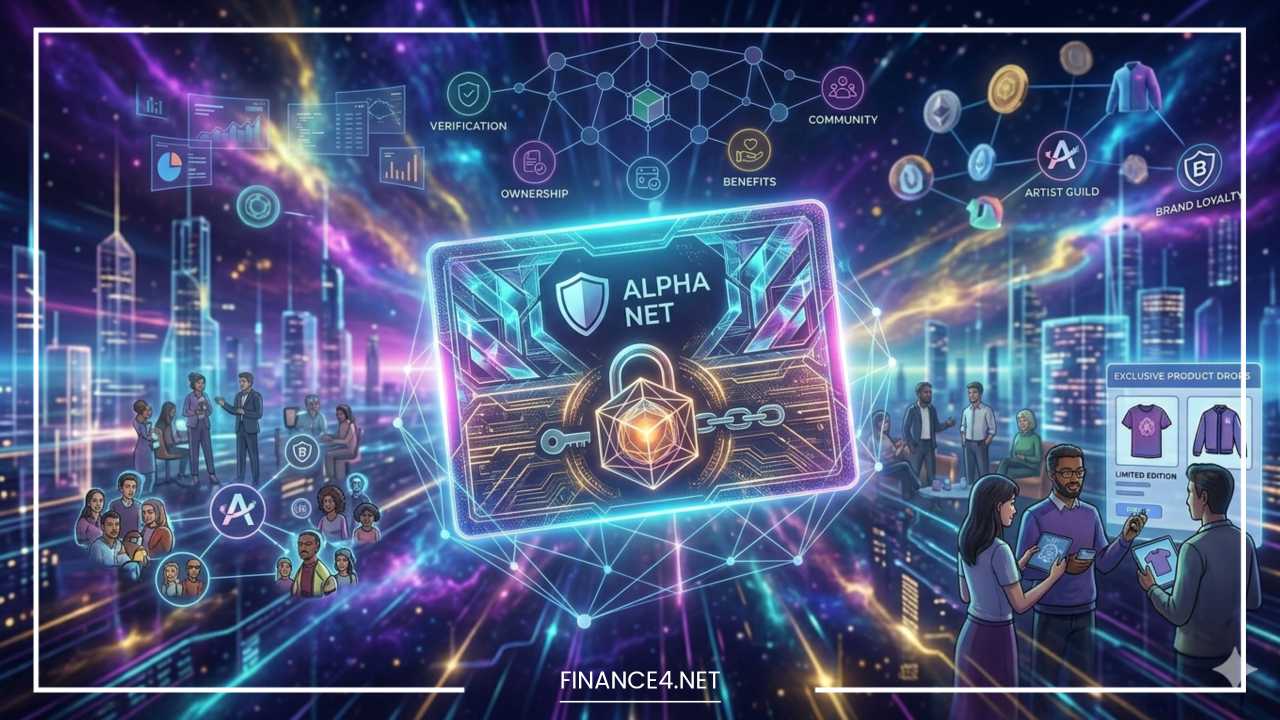
The true paradigm shift occurs when the verifiable ownership and unique identity provided by NFTs are fused with the connectivity of social media bridging and the utility of aggregation. NFTs act as the trust layer and portable access pass that binds the system together.
How NFTs Enhance Bridging and Aggregation
-
Unique Identity Verification Across Platforms: An NFT, particularly one linked to a decentralized identity (DID) system, can serve as a single, verified proof of identity that operates across all bridged platforms. Instead of relying on a centralized platform’s username/password, an aggregator can use the user’s public wallet address and the associated NFT as the primary login and authentication method. This prevents ‘sybil attacks’ (fake accounts) and provides a higher level of trust.
-
NFT-Based Content Ownership and Monetization: If a user posts content through the aggregated platform, that content can be instantly tokenized as an NFT (e.g., a “Post-NFT”). The aggregator then facilitates the cross-posting of this content onto traditional platforms (bridging), but the ownership and the master record of the content remain with the user via the NFT on the blockchain. This allows the user to directly monetize engagement metrics (tips, micro-sales) regardless of which front-end platform their content is being viewed on.
-
Unlocking Premium Features or Access using NFTs: Aggregators can implement token-gating for specific features. For instance, the ability to see highly detailed, cross-platform analytics or to access an exclusive, zero-spam, verified feed could be unlocked only by holding a specific governance NFT or a “Pro-Tier” membership NFT. This creates a powerful, cryptographically-enforced loyalty program that works instantly across every platform the aggregator connects.
Conceptual Examples
-
NFT Badges Showing Achievements Across Platforms: Imagine an aggregator displaying a user’s “Social Degen” NFT, which automatically tracks and verifies accomplishments from multiple platforms: Proof of having over 10,000 followers on Twitter, Proof of having created a Top 10 post on Reddit, and Proof of active governance voting in a DAO on Ethereum. The NFT is the compiled, portable credential.
-
Aggregator Dashboards Where NFT Ownership Impacts Visibility or Interaction: A decentralized aggregator could prioritize content based on the verified Web3 identity of the poster. If a user holds a specific, high-reputation NFT (perhaps a token tied to a long-standing, verified identity) their content might receive an algorithmic boost in the feed or be tagged as “Verified by Web3 Identity.” Conversely, the aggregator could allow users to filter out content from wallets that don’t hold any NFTs, effectively creating a “Web3-only” social experience.
The synergy here accelerates the potential for decentralized social networks. The NFT-based aggregator becomes the user’s personal, sovereign interface, pulling data from the open-source social graph protocols (bridging) and authenticating the user via their crypto wallet (NFT identity). This architecture radically shifts power away from the centralized platform gatekeepers and back toward the users and creators.
Technical and Practical Considerations
Building a robust NFT-based social media bridging aggregator involves navigating a complex web of technical choices, primarily centered on blockchain infrastructure and security.
Blockchain Selection and Scalability Concerns
The choice of blockchain is critical. While Ethereum offers the most secure and battle-tested infrastructure, its high gas fees and lower transaction throughput (scalability) can be prohibitive for high-frequency social interactions (like ‘likes’ or micro-posts). Projects are increasingly turning to Layer 2 (L2) solutions like Polygon or Optimism, or alternative Layer 1 chains like Solana or Avalanche, which offer near-instant, low-cost transactions necessary for a fluid social media experience. The aggregator must abstract these complexity differences so the user interaction remains seamless, regardless of the underlying chain.
NFT Standards for Social Use
The foundational NFT standards must be leveraged effectively. ERC-721 (the standard for unique, non-divisible items) is ideal for profile pictures, high-value art, or unique membership passes. ERC-1155 (the multi-token standard) is better suited for things that may require multiple copies, such as thousands of “Achievement Badges” or fractionalized ownership of a high-value asset, offering greater efficiency for community tokens. Future standards focused on dynamic NFTs (which change based on a user’s activity or reputation score) will be key for representing evolving social credentials.
Privacy and Security Considerations
A core promise of Web3 is user control, but an aggregator handling data from centralized APIs, decentralized protocols, and private wallet information introduces significant privacy risks. The system must employ robust encryption. Ideally, the aggregator should only store pointers to data (like a user’s wallet address and the token ID) and allow users to access private data directly through their decentralized identifiers, adhering to principles of zero-knowledge proofs where possible, meaning the system can verify a user’s eligibility (e.g., “they own the required NFT”) without knowing the specific private details of their data.
Integrating with Traditional Social Media APIs
While the long-term vision is pure Web3, any successful aggregator today must integrate with traditional social media APIs (e.g., Twitter, Instagram). This creates a technical challenge: the aggregator must constantly maintain API compatibility and navigate the shifting restrictions imposed by these centralized platforms. Moreover, it must securely map the user’s decentralized NFT-based identity to their various centralized platform handles, a process that usually requires a one-time, cryptographically-signed verification of ownership.
Future Possibilities and Trends
The NFT-based aggregator is not just a better dashboard; it is a catalyst for the next generation of social interaction.
Web3 Social Media Evolution
The aggregation layer is pivotal in the transition to Web3 social media. It provides the necessary bridge for existing users to dip their toes into the decentralized world without abandoning their established Web2 networks. The next trend will see the aggregator morph into a full-fledged Decentralized Social Application (dApp), where the aggregated content is not just displayed, but generated and owned entirely on a blockchain social protocol. The aggregator becomes the ultimate personalization layer on top of a shared, open data graph.
NFT-Based Reputation Systems
One of the most transformative possibilities is the development of a verifiable, portable, NFT-based reputation system. Current reputation is platform-specific (a high follower count on Instagram means little on GitHub). NFTs, such as soulbound tokens (non-transferable NFTs), can be issued by DAOs, communities, or reputable third parties to recognize achievements, expertise, or trustworthy behavior. The aggregator could compile these diverse reputation NFTs into a single, comprehensive “Trust Score” visible across all bridged platforms. This score would be earned, owned, and carried by the user, independent of any single platform’s algorithmic whims.
Monetization Models for Users and Platforms
NFTs unlock novel monetization models. Creators can directly sell access to their aggregated, cross-platform content feed via a subscription NFT. The aggregator platform itself can move away from invasive, data-harvesting advertising and instead rely on transaction fees from NFT marketplace activity within the app, or from staking and governance tokens tied to the platform’s utility. Users, for the first time, can be compensated directly (in crypto or tokens) for providing high-value content or data to the aggregated feed.
Potential Adoption Barriers and Solutions
The primary adoption barrier remains User Experience (UX) complexity. Setting up a crypto wallet, managing private keys, and navigating gas fees is still far more cumbersome than clicking “Sign in with Google.” Solutions must focus on UX abstraction: non-custodial smart wallets that hide the complexity of blockchain interactions, or gas-less transactions subsidized by the platform to mimic the fluidity of Web2. The aggregator’s success will depend on making the seamless, cross-platform experience so compelling that it outweighs the initial technical hurdle.
Challenges and Criticisms
While the possibilities are immense, the path to a fully realized NFT-based aggregator is fraught with practical and philosophical difficulties.
Technical Challenges
Interoperability remains the single largest technical hurdle. Standardizing the way content and identity are represented across wildly different blockchains, let alone integrating with legacy Web2 APIs, is a continuous, resource-intensive task. Gas fees, even on L2s, can still pose a micro-transaction issue for high-volume social activity, potentially requiring specialized application-specific chains (app-chains) or highly efficient scaling solutions. Furthermore, the UX complexity of managing multiple tokens and wallets must be solved before mass adoption is possible.
Social/Ethical Concerns
The use of NFTs introduces immediate social/ethical concerns. The concept of exclusivity is central to token-gating: if all premium social features are locked behind NFTs, it risks creating a two-tiered internet where quality interaction and content discovery are only available to the wealthy. Furthermore, the market for social NFTs is prone to speculation, turning social networking into a financial gamble. Finally, the environmental impact of certain proof-of-work blockchains, while being largely mitigated by the shift to proof-of-stake, remains a significant environmental criticism that can deter wider acceptance.
Regulatory Considerations
The entire ecosystem exists in a regulatory gray area. NFTs are still being categorized by global regulators, blurring the line between digital collectibles, securities, and utility tokens. Digital identity is highly sensitive, and any aggregator that attempts to create a universal ID based on wallet ownership will face strict data protection laws (like GDPR) in many jurisdictions. Finally, the act of data aggregation itself is constantly under antitrust and privacy scrutiny, meaning these platforms must be designed with regulatory compliance as a first principle, emphasizing user data sovereignty and encryption.
Final Thoughts
The convergence of Non-Fungible Tokens, social media bridging, and aggregation is not merely an evolutionary step but a potential revolution in how we interact online. NFTs provide the essential layer of verifiable ownership and identity that fundamentally changes the relationship between the user and the platform. Aggregation offers the necessary unified, cross-platform interface to make a multi-siloed digital life manageable. Bridging protocols deliver the underlying data portability to prevent platform lock-in.
By combining these forces, the NFT-based social media bridging aggregator promises a world where a user’s reputation, content ownership, and identity are their own—portable, secure, and monetizable—independent of any single corporate gatekeeper. While significant technical, financial, and ethical challenges remain, the future of a user-centric, decentralized social web depends heavily on the successful realization and widespread adoption of this powerful, intertwined architecture.