Best Cross-Chain NFT Tools
 by
by 
Best Cross-Chain NFT Tools | Top Platforms & Resources
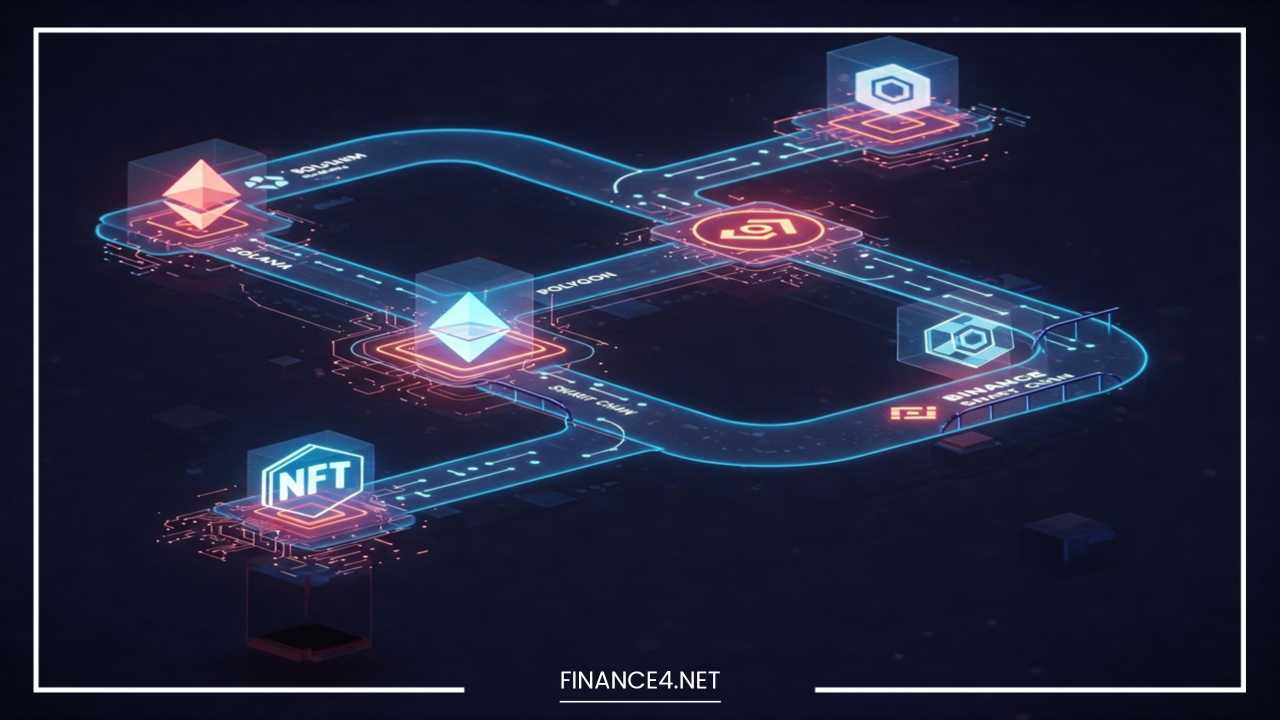
Why Cross-Chain NFTs Matter: The world of Non-Fungible Tokens (NFTs) has exploded, creating vibrant ecosystems for digital art, collectibles, gaming assets, and tokenized real-world assets. However, this growth has come at a cost: fragmentation. Most NFTs are locked onto the specific blockchain where they were minted—Ethereum, Solana, Polygon, or another Layer 1 (L1) or Layer 2 (L2) network.
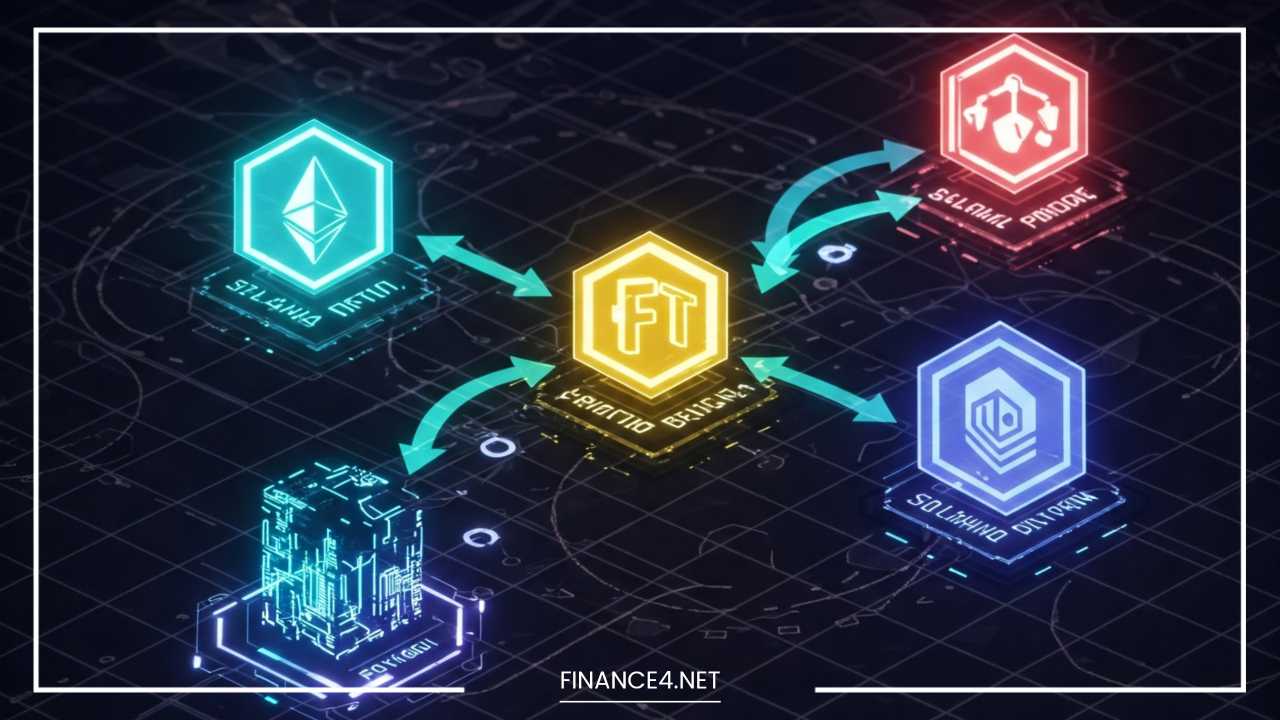
This is where the concept of “cross-chain NFTs” emerges. A cross-chain NFT is one that can be seamlessly minted, transferred, or utilized across multiple different blockchain networks. This movement from a single-chain asset to a multi-chain or omnichain asset is not merely a technical upgrade; it is the essential catalyst for the NFT space to achieve its true potential.
The Problem with Single-Chain Silos
The current fragmentation in the NFT ecosystem presents significant challenges:
-
Limited Audience and Liquidity: An NFT on a high-fee chain like Ethereum is inaccessible to users who only operate on a low-fee chain like Polygon or Solana, reducing its potential market size and liquidity.
-
Chain-Specific Lock-in: Developers are forced to choose a single chain, potentially limiting their application’s reach or forcing users to deal with chain-specific gas tokens and wallets.
-
High Gas Fees: While less of an issue on newer chains, the primary chains for NFTs often impose high transaction costs, making frequent trading, fractionalizing, or in-game use economically unviable.
-
Wasted Strengths: Different blockchains excel in different areas (security, speed, cost). A single-chain application cannot leverage the high security of Ethereum for asset storage while simultaneously using the high speed and low cost of an L2 for in-game transactions.
Cross-chain interoperability solves these issues, offering liquidity, reach, flexibility, and a unified user experience. By enabling assets to move or interact across chains, cross-chain tools are building the internet of value, where the underlying blockchain becomes an invisible utility layer rather than a user hurdle.
Core Concepts: How Cross-Chain NFT Tools Work
Moving an asset that is fundamentally defined by a single smart contract on a specific chain to another chain is a complex technical challenge. The core mechanism involves ensuring that the NFT remains unique (non-fungible) across all environments and that its metadata and ownership status are never duplicated.
Bridging vs. Native Multi-Chain Support
It is crucial to understand the two main philosophical approaches to cross-chain NFTs:
-
Bridging: This is the most common method today. It involves creating a separate, secure layer—the “bridge”—to facilitate the transfer of an asset from a source chain to a destination chain. The original NFT is typically locked in a smart contract vault on the source chain, and a functionally equivalent, wrapped version is simultaneously minted on the destination chain. The key is the “lock-and-mint” or “burn-and-mint” mechanism, which ensures only one instance of the NFT exists at any given time.
-
Native Multi-Chain (Omnichain) Support: Newer protocols are built to be multi-chain from the ground up, often referred to as “omnichain messaging protocols.” These do not necessarily “move” the entire asset but enable the original NFT contract on the source chain to send a message to a smart contract on the destination chain. This message proves ownership and triggers a specific action, allowing the NFT to interact with a dApp on a different chain without ever being wrapped. This is often considered more elegant and less vulnerable than traditional lock-and-mint bridges.
Smart-Contract Mechanisms
The secure movement of NFTs relies on several core mechanisms:
-
Locking and Burning: The original NFT is locked in a vault contract on Chain A. A unique cross-chain message is generated.
-
Minting and Wrapping: Upon validation of the message, a wrapped version (often called a “canonical” or “bridged” NFT) is minted on Chain B. This wrapped NFT points back to the locked original on Chain A.
-
Cross-Chain Message Passing (CCMP): This is the underlying technology of protocols like LayerZero or Axelar. It’s the secure relay of verified information—such as a transfer instruction or an application-specific function call—from one blockchain to another. This is the difference between simply moving an asset and enabling true cross-chain application logic.
-
Metadata Synchronization: Since the NFT’s visual representation and attributes (metadata) are critical, tools must ensure that this data remains consistent, irrespective of which chain the NFT currently resides on or is interacting with.
Security and Standards
The most significant challenge in cross-chain interoperability is security, particularly concerning bridges, which have historically been major targets for exploits. Cross-chain tools must adhere to established NFT standards like ERC-721 (for unique items) and ERC-1155 (for semi-fungible items) while creating robust, audited systems. The security model—whether it relies on a decentralized network of validators, a limited set of guardians, or a trust-minimized light client—is the most important factor when evaluating any cross-chain tool.
Types of Cross-Chain NFT Tools & Platforms
The ecosystem of cross-chain tools can be divided into four major categories, each serving a distinct user or developer need.
1. Cross-Chain Bridges & Messaging Protocols
These are the fundamental layers that enable communication and asset movement.
-
Wormhole (Portal Bridge): One of the most widely adopted and fastest bridging protocols, Wormhole connects numerous chains including Ethereum, Solana, Polygon, Avalanche, and many others. It uses a network of independent “Guardians” to verify and attest to cross-chain messages, making it highly versatile for both token and NFT transfers.
-
LayerZero: An “omnichain interoperability protocol” that focuses on generalized cross-chain messaging rather than simple asset bridging. It uses an Oracle and a Relayer to send verified proofs between chains, allowing developers to build “omnichain” decentralized applications (dApps) where the application logic spans multiple networks. This is essential for building next-generation, bridge-less NFT applications.
-
Axelar: Functions as a decentralized Proof-of-Stake (PoS) network that secures inter-chain communication. Axelar provides a universal overlay network that connects many L1s and L2s, offering developers an SDK to build complex, secure cross-chain applications. Its focus is on secure, generalized messaging and composability, making it a strong choice for enterprise and large-scale dApp development.
2. Multi-Chain NFT Marketplaces & Launch Platforms
These platforms abstract away the underlying technical complexity and offer a unified experience for users.
-
Magic Eden: Initially a Solana-native marketplace, Magic Eden aggressively expanded to become a multi-chain platform, notably supporting Ethereum, Polygon, and others. It allows users to browse collections and trade assets across these different ecosystems from a single interface, significantly boosting cross-chain liquidity.
-
NFTrade: Positioned explicitly as a multi-chain and cross-chain NFT marketplace, NFTrade supports a wide array of networks (Ethereum, Avalanche, Polygon, BNB Chain, etc.). It enables users to transfer NFTs between supported chains directly on the platform and offers cross-chain listing capabilities.
-
Launch Platforms: Many launchpads are now multi-chain, allowing artists to mint their collection simultaneously across multiple chains or to launch collections on a cheaper chain while maintaining compatibility with major chains like Ethereum.
3. Cross-Chain NFT Minters and Deployment Tools
These tools cater to artists and developers who want their collections to be “multi-chain native” from the point of creation.
-
Holograph: A protocol and suite of tools specifically designed to allow creators to mint their NFTs across any supported blockchain. It enables a single smart contract to be deployed across multiple chains, ensuring that the NFT is natively recognized as the same asset on all networks, simplifying cross-chain management for the creator.
-
Developer SDKs (AxelarJS, LayerZero Endpoints): While not direct minting tools, the Software Development Kits (SDKs) provided by the core messaging protocols are the back-end building blocks. They allow developers to programmatically define how an NFT contract will behave and communicate when a transaction is initiated on a different chain.
4. Aggregators & Analytics Tools for Multi-Chain NFT Tracking
As collections spread across multiple chains, users need unified dashboards to track them.
-
Cross-Chain Portfolio Trackers: Tools are emerging to consolidate NFT holdings, sales data, and floor prices across networks like Ethereum, Solana, and Polygon into one view. These platforms are crucial for investors who manage a diverse portfolio.
-
Analytics Dashboards: Platforms that monitor collection volume, holder counts, and market movements, providing a holistic view of a project’s health irrespective of the chain on which the activity occurred.
Highlight of Top Tools / Platforms
A deeper dive into the leading protocols reveals the different security and functional trade-offs they offer.
| Platform/Tool | Primary Function | Core Mechanism | Supported Chains (Examples) | Key Feature for NFTs |
| LayerZero | Omnichain Messaging | Ultra-Light Node (ULN) Architecture with Oracle/Relayer | Ethereum, Arbitrum, Polygon, BNB, Avalanche, Fantom, Aptos, Sui | Enables omnichain applications; the core logic can live anywhere. |
| Wormhole | Cross-Chain Bridging & Messaging | Decentralized Guardian Network | Ethereum, Solana, Polygon, BNB, Avalanche, Algorand, Klaytn, Near | Fast, wide-ranging support for NFT transfers and data messaging. |
| Axelar | Universal Interoperability | Proof-of-Stake (PoS) Validator Network | Ethereum, Avalanche, Cosmos, Polkadot, Moonbeam, Fantom, Polygon | Secure, generalized messaging with a focus on developer SDKs and composability. |
| Magic Eden | Multi-Chain Marketplace | Unified front-end interface (often relies on third-party bridges for transfer) | Solana, Ethereum, Polygon, BNB Chain | Centralized trading hub for major cross-chain collections. |
The choice between protocols like Axelar, LayerZero, and Wormhole often comes down to the balance between security, speed, and the specific application design. Wormhole favors speed and broad adoption through its Guardian network. LayerZero favors a minimalistic approach for highly efficient, lightweight messaging. Axelar favors robust security and composability through a decentralized PoS validator set. For the end user, platforms like Magic Eden or NFTrade are the user-friendly entry points that utilize one or more of these underlying protocols.
Use-Cases & Real-World Applications
Cross-chain technology is unlocking previously impossible scenarios for NFTs:
-
Creators Reaching Max Audience: An artist launches a generative collection on a low-fee chain like Polygon to ensure low entry costs for collectors, but simultaneously lists the NFTs on an Ethereum marketplace to tap into the deep liquidity of the Ethereum user base.
-
Decentralized Gaming Assets: A GameFi developer mints core in-game items (weapons, skins) as NFTs on a fast, cheap L2 network for frequent trading, but the virtual land (a high-value asset) is secured on the main Ethereum L1. Cross-chain tools allow the L2 game to verify the L1 land ownership and vice versa.
-
Unified Collector Portfolios: A collector holds a blue-chip collectible on Ethereum and a new generative piece on Solana. Cross-chain portfolio trackers allow them to view the total value of their diverse holdings, regardless of the underlying chain, streamlining wealth management.
-
Metaverse Interoperability: Virtual land or avatar NFTs can be moved between different metaverse platforms, which may be built on entirely different blockchains. The same asset can be used as an avatar in a game on BNB Chain and as a display piece in a gallery on Ethereum.
Challenges, Risks & What to Watch Out For
While transformative, the cross-chain space is complex and fraught with risks, primarily tied to the security of bridges.
-
Security Vulnerabilities: Cross-chain bridges are tempting targets, often holding millions or billions in locked assets (“honeypots”). Exploits often arise from flaws in the smart contract logic that manages the lock/mint process, or compromise of the centralized or multi-sig entities/validators that secure the bridge. The history of large bridge hacks necessitates extreme caution and a preference for protocols with robust, decentralized security models and proven audit histories.
-
Compatibility Issues: Not all chains support the same technical standards. Moving an NFT from an EVM-compatible chain (like Ethereum) to a non-EVM chain (like Solana or Cosmos) is significantly more complex, requiring sophisticated wrapping and metadata handling.
-
Gas Fees and Transaction Costs: While moving to cheaper chains reduces trading fees, the initial act of bridging the NFT often involves transactions on both the source and destination chains, incurring cumulative gas fees. These can be substantial on the main Ethereum network.
-
User Experience (UX) Friction: The process of switching networks, managing different native tokens for gas, and understanding the concept of “wrapped” vs. “native” assets remains confusing for the average user, creating a steep learning curve.
-
Metadata and Royalty Sync: A critical risk is the loss or corruption of metadata during a cross-chain transfer. Furthermore, ensuring that the original creator’s royalty agreements are upheld when the NFT is sold on a new chain (especially one with different royalty standards) is an ongoing technical and legal challenge.
What to Look for When Choosing a Cross-Chain NFT Tool / Platform
When selecting a tool or platform, due diligence is paramount, particularly in light of security risks.
-
Supported Blockchains and Interoperability Breadth: Does the platform connect the chains that matter to you (e.g., Ethereum, Polygon, Solana, Avalanche)? A wide range of support indicates a broader user base and liquidity pool.
-
Security Track Record and Audits: This is the most critical factor. Look for protocols that have undergone rigorous, public third-party security audits. Investigate the security model: Is it secured by a large, decentralized Proof-of-Stake validator set (like Axelar)? Or a small, trusted group of “Guardians” (like Wormhole)? The more decentralized the security model, the lower the single point of failure risk.
-
Cost Transparency and Fee Structure: Compare bridging fees, gas fees on the source/destination chain, and any network-specific costs. Look for tools that offer transparent, competitive pricing, especially for developers and frequent users.
-
Ease of Use (UX) and Wallet Support: A good platform should offer a seamless user interface, clearly explain the bridging process, and support all major wallets for the involved chains (e.g., MetaMask for EVM, Phantom for Solana).
-
Community and Liquidity: Choose platforms with high Total Value Locked (TVL) and active communities. High TVL suggests trust in the platform, while an active community indicates potential for future growth and liquidity for your assets.
-
Flexibility and Standards Support: For developers, ensure the tool supports arbitrary data messaging (not just asset transfer) and maintains metadata and royalty synchronization across chains.
Future Trends & What’s Next for Cross-Chain NFTs
The cross-chain landscape is evolving rapidly, moving beyond basic “lock-and-mint” bridges toward sophisticated, trust-minimized communication protocols.
-
Adoption of Omnichain Protocols: The future lies in omnichain applications built with protocols like LayerZero and Axelar. These next-generation dApps will hide the bridging process entirely, allowing users to interact with a single application that executes logic or accesses liquidity across any connected chain, making the blockchain invisible. This is the move to “bridge-less” NFT standards.
-
Real-World Asset (RWA) Integration: The tokenization of real estate, luxury goods, and intellectual property as NFTs will require secure, regulatory-compliant cross-chain standards to allow these assets to move between private enterprise chains and public settlement layers.
-
Gaming and Metaverse Convergence: The gaming industry will be a major driver. Game assets must be able to move instantly between an L2 for gameplay and a more secure L1 for storage and trading. This will foster true cross-platform gaming experiences.
-
Improved Analytics and Portfolio Tools: As the ecosystem matures, advanced analytics will emerge, offering robust tracking, risk assessment, and tax reporting for multi-chain NFT portfolios, addressing the current complexity faced by investors.
-
Stronger Security Standards: Following major exploits, the industry is prioritizing security. Future solutions will likely involve cryptographic trust models, such as Zero-Knowledge Proofs, to authenticate cross-chain messages with higher assurance and less reliance on external validators.
Final Thoughts — Summing Up & Recommendations
Cross-chain NFT tools represent the necessary evolution of the digital asset space, breaking down the walled gardens of fragmented blockchain ecosystems. They are the infrastructure required to scale the utility and liquidity of NFTs beyond single chains.
The primary categories to focus on are:
-
Messaging Protocols (Axelar, LayerZero, Wormhole): The essential secure plumbing for developers.
-
Multi-Chain Marketplaces (Magic Eden, NFTrade): The user-friendly front-ends that aggregate liquidity.
For the end user or collector, the best platform will be the one that offers the highest security, the lowest cumulative fees for the chains they use, and a smooth, transparent user experience. For a developer, the optimal choice hinges on the required security model and the breadth of chains needed for their application logic.
As the technology shifts from rudimentary bridging to sophisticated omnichain protocols, users are encouraged to maintain a skeptical eye on security, prioritize platforms with rigorous audits, and embrace the tools that make the underlying blockchain technology an efficient, invisible foundation for a truly interconnected Web3. The era of the siloed NFT is ending; the future of the multi-chain, interoperable NFT has begun.