NFT Bridging Aggregator for Cross-Chain Collectibles
 by
by 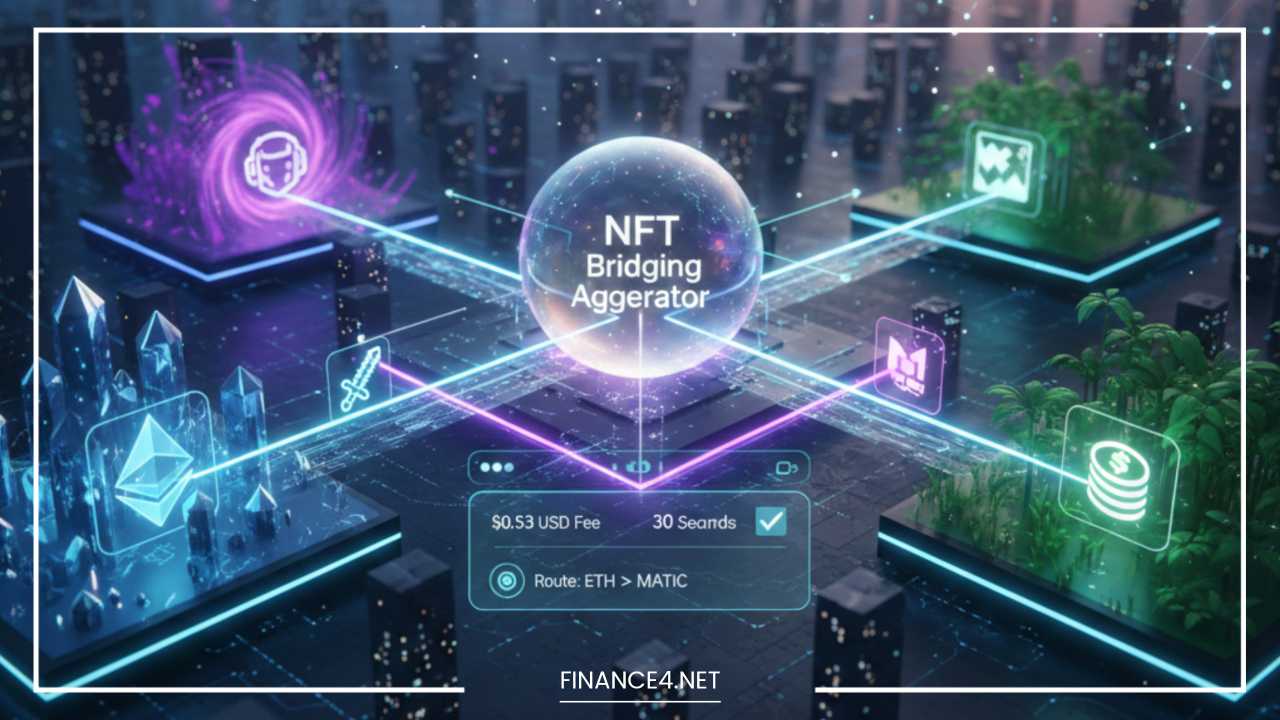
NFT Bridging Aggregator for Cross-Chain Collectibles | Seamless Multi-Chain Transfers
The digital asset landscape, specifically the realm of Non-Fungible Tokens (NFTs), has exploded from a niche concept to a global phenomenon, revolutionizing digital ownership. However, this revolutionary growth has introduced a significant complexity: fragmentation. As NFTs proliferate across dozens of different, sovereign blockchains, the need for a solution that provides secure, efficient, and seamless movement between these isolated ecosystems has become paramount. This solution is the NFT Bridging Aggregator, a powerful tool designed to usher in the era of true cross-chain collectibles.
The journey of NFTs began primarily on the Ethereum blockchain, utilizing the robust and battle-tested ERC-721 standard. As demand surged, so did Ethereum’s gas fees, pushing creators and users to seek alternative ecosystems. This led to the rise of L2s (Layer 2s) like Polygon and Arbitrum, and rival Layer 1s (L1s) such as Solana, BNB Chain, and Avalanche. Each chain offered unique advantages—lower costs, faster transaction speeds, or specialized gaming infrastructure.
This multi-chain explosion, while beneficial for innovation and scalability, created the problem of ecosystem fragmentation. A collectible minted on Ethereum is inherently stuck on Ethereum. A player’s in-game asset on Polygon cannot be easily used as collateral on the Avalanche DeFi ecosystem. This isolation restricts liquidity, limits the potential audience for creators, and forces users to manage assets across multiple, disparate wallets and interfaces.
Cross-chain interoperability is the essential key to unlocking the full potential of NFTs. It promises a future where digital assets are not confined by the blockchain they were minted on, but are free to move where transaction costs are cheapest, where the community is largest, or where the most innovative utility exists. Bridging aggregators directly address this need, acting as a critical layer that simplifies and secures the complex process of moving high-value, non-fungible digital items across network boundaries.
What is an NFT Bridging Aggregator?
To understand an aggregator, it is crucial to first distinguish between several core concepts:
-
Bridging: The process of moving an asset (like an NFT or a fungible token) from one blockchain to another. For NFTs, this usually involves a “lock and mint” mechanism, where the original NFT is locked on the source chain, and a wrapped or representative version is minted on the destination chain.
-
Swapping: The exchange of one token for another on the same network (e.g., exchanging ETH for USDC on Uniswap).
-
Wrapping: Converting a token (often a Layer 1 asset like ETH) into an ERC-20 standard token to be used on another network or protocol (e.g., converting ETH to WETH).
An NFT Bridging Aggregator is a technological layer that sits above multiple existing NFT bridge protocols. Instead of being a single bridge with its own smart contracts and chain connections, an aggregator is a smart routing engine.
Key Functions of an Aggregator:
-
Unified Routing: It connects to and integrates the APIs and smart contracts of numerous independent bridges (e.g., Protocol A, Protocol B, Protocol C).
-
Best-Route Discovery: When a user initiates a transfer, the aggregator simultaneously queries all connected bridges for the specific path (e.g., “Ethereum to Polygon”). It then calculates the Optimal Route based on user-defined criteria.
-
Execution & Transparency: It presents the user with a single, clear transaction that executes the cross-chain transfer via the selected underlying bridge, abstracting away the complexity of the chosen path.
The aggregator unifies what was once a fragmented user experience. The benefits are immediate and transformative: cost optimization by always selecting the path with the lowest fees, greater reliability through redundant routing options, and broader chain support than any single bridge could offer. It essentially makes the process of moving an NFT as simple as choosing the source and destination chains, much like a travel aggregator chooses the best flight path.
The Problem With Traditional NFT Bridges
Before the advent of aggregators, users relied on single, purpose-built bridges. While functional, these standalone solutions were fraught with limitations and risks that stifled the growth of true cross-chain commerce.
1. Limited Chain Coverage
Most bridges were designed for a specific pair or small set of chains (e.g., Ethereum to Polygon). If a user needed to move an asset from Solana to Avalanche, they would often have to use a complex, multi-step process: Solana $\to$ BNB Chain $\to$ Polygon $\to$ Avalanche, each step involving a different bridge, more gas fees, and increased risk.
2. Security Risks and Centralization
A single bridge represents a single point of failure. History is littered with examples of bridge hacks—often the result of smart contract vulnerabilities or compromises of the bridge’s multisig or relayer network. When users lock up valuable NFTs, they are placing total trust in the security of that one bridge’s smart contract. The total value locked (TVL) in bridges often makes them prime targets for malicious actors.
3. Slow Transfer Confirmation Times
Cross-chain transfers rely on the finality rules of the source and destination chains, as well as the speed of the intermediary relayer network. This can lead to unpredictable confirmation times, sometimes ranging from minutes to hours, which is unacceptable for real-time applications like gaming or trading.
4. High Gas Fees and Lack of Fee Transparency
Each bridge charges its own fees (often variable) in addition to the native network gas fees. Users had no easy way to compare these costs in real-time, often overpaying simply because they were unaware of a cheaper, equally secure route offered by a different protocol.
5. Complex User Experience (UX)
The underlying technology of cross-chain communication is inherently complex. Traditional bridges often expose this complexity to the user, requiring deep understanding of gas fees, chain finality, and token wrapping mechanisms, making them inaccessible to the average collector or gamer.
How Cross-Chain NFT Transfers Work (Technical but clear)
Moving a non-fungible asset requires a sophisticated technical mechanism to maintain its uniqueness and integrity across separate ledger environments. The primary methods revolve around proof-of-burn and secure messaging.
Core Mechanisms
-
Lock & Mint (Most Common):
-
Source Chain: The original NFT (e.g., ERC-721 token $T_A$ with ID $ID_1$) is sent to and locked in a secure smart contract (the bridge or vault contract). This effectively removes it from circulation on the source chain.
-
Destination Chain: A new, corresponding token ($T’_B$ with the same ID $ID_1$) is immediately minted on the destination chain. This new token is a representative asset, often referred to as a wrapped NFT. This process ensures the asset’s total supply remains one.
-
Unlocking/Burning: When the user wishes to move the NFT back, the wrapped NFT on the destination chain is burned, and the original NFT is released from the vault on the source chain.
-
-
Burn & Mint (Less Common for Existing Collections):
-
The original NFT is burned (destroyed) on the source chain.
-
A new, identical NFT is minted on the destination chain. This requires a high degree of trust in the bridge protocol to manage the collection’s total supply and metadata integrity.
-
-
State Synchronization/Message Passing:
-
Advanced protocols (like LayerZero or Chainlink CCIP) focus on sending a secure, authenticated message from the source chain to the destination chain. The message verifies that the lock/burn event has occurred. The destination chain’s smart contract acts only upon receiving this verifiable proof, ensuring atomicity.
-
Metadata Handling and Integrity
The true value of an NFT lies in its metadata (traits, rarity, image URI, etc.). Preserving this is critical:
-
Metadata Consistency: The minted representative NFT on the destination chain must point to the exact same metadata URI as the original. If the original metadata is stored off-chain (e.g., on IPFS or Arweave), the bridge only needs to ensure the new token’s $tokenURI$ function returns the correct hash.
-
On-chain Metadata: If the traits are stored directly in the source chain’s smart contract, the bridge must securely relay this data (traits, attributes, and collection IDs) to the destination contract for proper reconstruction.
Royalty and Provenance Preservation
A major challenge is royalty enforcement. Different chains have different standards for tracking creator royalties (e.g., the EIP-2981 standard on Ethereum vs. proprietary marketplace fee structures). A robust bridge must ensure that the original creator’s address is correctly associated with the new token so that secondary sales on the destination chain marketplaces can properly allocate fees. Provenance, the historical record of ownership, is maintained because the mint transaction of the representative token is essentially recorded as the new token’s first transfer on the destination chain, pointing back to the lock event.
Secure Verification
The most critical technical hurdle is verification—proving that the lock/burn event on the source chain actually happened before minting on the destination chain. This is achieved through:
-
Relayers: Off-chain entities that monitor the source chain, wait for transaction finality, and submit proof to the destination chain. Their security relies on either staking, reputation, or decentralization.
-
Light Clients/Optimistic Proofs: Destination chain contracts can occasionally query the source chain’s state, or the transfer is assumed valid unless explicitly disputed within a time window (optimistic approach).
-
Zero-Knowledge (ZK) Proofs: The most advanced method. A compact cryptographic proof is generated, verifying the lock/burn event without revealing any other transaction data, offering the highest security and efficiency.
Why an Aggregator Matters: Core Advantages
The bridging aggregator transforms the cross-chain NFT experience from a high-risk, high-complexity chore into a simple, optimized process. Its value is derived from its ability to introduce competition, redundancy, and intelligence into the routing decision.
1. Security: Intelligent Risk Scoring
Instead of forcing a user to rely on a single bridge that could be compromised, the aggregator can incorporate risk scoring based on the underlying bridges’ history, audit status, and decentralization level (e.g., the size of its validator set or the number of multisig signers).
-
Safer Routing: It can automatically deselect routes offered by bridges that have recently failed an audit or experienced a security incident, offering a safer path as a default.
-
Redundancy: If one bridge is temporarily down for maintenance or is experiencing a known security alert, the aggregator instantly falls back to an alternative, vetted route, ensuring service continuity.
2. Cost Efficiency: Real-Time Fee Optimization
This is a primary driver for user adoption. The fee structure for bridges changes constantly based on network congestion, the bridge’s own operational costs, and the specific route.
-
Cheapest Route Finder: The aggregator queries the current quote for gas, bridge fees, and relay fees across all integrated bridges in real-time. It then executes the transfer via the bridge offering the lowest total cost for that specific transfer (e.g., Ethereum $\to$ Polygon via Bridge A might be cheaper, but Ethereum $\to$ Arbitrum via Bridge B might be cheaper).
3. Speed Optimization: Choosing the Fastest Path
Like fees, transfer speed is highly variable. It depends on the relayer network’s latency and the destination chain’s block finality requirements.
-
Fastest Relayer Network: The aggregator can track historical transfer times and select the bridge currently reporting the lowest estimated time-to-finality, prioritizing Speed Optimization for time-sensitive assets (like in-game items).
4. Unified UX: Single Interface, Multiple Bridges
For the end-user, the underlying complexity of multiple protocols disappears. They interact with one intuitive interface:
-
Streamlined Process: Connect wallet $\to$ Select NFT $\to$ Select Destination Chain $\to$ Confirm. The routing, quoting, and transaction execution are all handled by the aggregator’s smart contract layer, eliminating the need to research and learn the nuances of half a dozen different protocols.
5. Multi-Chain Reach: EVM + Non-EVM Connection
The most powerful aggregators are not limited to EVM-compatible chains (Ethereum, Polygon, etc.). By integrating specialized bridging solutions, they can connect disparate ecosystems:
-
EVM to Non-EVM: Facilitating transfers between Ethereum and Solana (which uses the SPL token standard) or Flow (which uses its own cadence language). This dramatically expands the reach and utility of digital assets.
6. Batch Transfers: Bridging Multiple NFTs at Once
Traditional bridges often required a separate transaction for each NFT transfer, leading to compounding gas costs. Aggregators can optimize this by enabling Batch Transfers—allowing a collector to select multiple NFTs from the same collection and bridge them in a single, aggregated transaction, significantly reducing overall fees and time.
Supported Blockchains and Ecosystems
A successful NFT bridging aggregator must aim for maximum coverage to deliver on the promise of multi-chain transfers. The ecosystem is defined by both the major Layer 1 and Layer 2 chains, and the underlying token standards.
Major EVM-Compatible Chains
-
Ethereum (L1): The primary source chain and most secure layer for NFTs.
-
Polygon (L2): A dominant sidechain for gaming and low-cost collectibles.
-
BNB Chain: A popular choice for high-volume, low-fee transactions.
-
Avalanche (AVAX): Known for its high throughput and C-Chain for EVM compatibility.
-
Arbitrum & Optimism (L2s): Leading Ethereum scaling solutions utilizing Optimistic Rollups.
-
Base: Coinbase’s Ethereum L2.
Specialized & Non-EVM Ecosystems
-
Solana: Uses the SPL token standard, requiring specialized bridges for connectivity with EVM chains.
-
Flow: Designed for consumer applications, using the Cadence programming language.
-
Immutable X (L2): A Layer 2 specifically optimized for high-volume NFT gaming with zero gas fees.
-
Cosmos Ecosystem: Requires bridges (like the Gravity Bridge) to connect its IBC-enabled zones to EVM chains.
Token Standard Compatibility
A core function of the bridge is handling different NFT standards:
-
ERC-721: The foundational non-fungible standard.
-
ERC-1155: A multi-token standard that allows for both fungible and non-fungible assets within the same contract, crucial for gaming assets.
-
SPL (Solana): The unique standard used on Solana.
The aggregator ensures that when an ERC-721 is locked on Ethereum, its representative token minted on Solana correctly adheres to the SPL standard, while maintaining the non-fungible nature and metadata integrity. This cross-standard translation is a complex technical feat managed by the underlying bridges and coordinated by the aggregator.
Use Cases for Cross-Chain NFT Bridges
The utility of a seamless bridging aggregator extends far beyond simple transfers, enabling new economic and creative possibilities in the web3 space.
1. Collectors: Storage and Trading Optimization
-
Fee Arbitrage: A collector may have minted a high-value PFP collection on Ethereum but wants to move it to a cheaper chain like Polygon or Arbitrum for secondary trading, reducing transaction costs for flips and listing.
-
Cold Storage: High-value assets can be moved to a chain with very high security and finality for long-term cold storage, while lower-value, actively traded NFTs can be kept on a high-speed, low-cost chain.
2. Gamers: Multiverse Asset Transfer
-
Interoperable Assets: A core promise of the metaverse is true digital ownership. An NFT representing a weapon in “Game A” on BNB Chain can be bridged to an L2 like Immutable X to be used as a cosmetic skin in “Game B.” The aggregator makes this required transfer instant and cheap.
-
Liquidity Access: Gamers can move their in-game currency or assets from a proprietary game chain to a mainstream chain to cash out or trade on major decentralized exchanges (DEXs).
3. Creators: Audience Expansion and Market Diversification
-
Multi-Chain Launch: A creator can launch a primary collection on a main chain (like Ethereum for prestige) but immediately offer a bridging route to L2s or sidechains, ensuring that their audience, regardless of their preferred chain, can access the asset.
-
Marketplace Optimization: By enabling transfers to niche marketplaces on other chains, creators tap into specialized communities (e.g., an artist bridging to an eco-friendly chain known for its art community).
4. Marketplaces: Enhanced User Service
-
Integrated Routing: Major NFT marketplaces can integrate an aggregator’s API directly. This means a user viewing an NFT on the site can instantly see the cost and time to bridge that asset to any other supported chain before purchase, significantly enhancing the buying experience.
5. DeFi & NFT-Fi: Unlocking Cross-Chain Collateral
-
Leveraging Assets: An NFT is illiquid collateral if it can only be used on one chain. By bridging, a collector can use their Ethereum-based blue-chip NFT as collateral for a loan on an Avalanche-based lending protocol, unlocking new forms of leverage and liquidity across DeFi ecosystems.
Security Considerations
The history of crypto has proven that bridges are a critical attack vector. Given the high value locked in NFT collections, security is not just a feature—it is the foundational requirement for an aggregator’s success.
Bridge Vulnerabilities: Lessons Learned
Past hacks (involving hundreds of millions of dollars) have generally targeted:
-
Private Key Compromise: Attacking the multisig or centralized authority governing the bridge’s vault.
-
Smart Contract Exploits: Finding flaws in the complex lock/mint or burn/release logic that allows an attacker to mint unbacked assets or drain the locked vault.
-
Relayer Network Failure: Compromising the off-chain entities responsible for relaying the proof of transfer.
How Aggregators Improve Safety
The aggregator fundamentally improves safety by leveraging redundancy and route vetting, turning a single point of failure into a network of potential routes.
-
Risk-Averse Routing: By integrating only audited and well-vetted bridges and implementing an automatic risk scoring mechanism, the aggregator guides users away from less secure or experimental protocols.
-
Decentralized Options: An aggregator’s ideal choice is a bridge utilizing a highly decentralized validation model (e.g., a massive set of independent relayers or ZK proofs) over a centralized multisig.
-
Route Fallback and Redundancy: If a transfer is initiated on Bridge A and the relayer network fails, a sophisticated aggregator can potentially offer a route to execute the remainder of the transfer (or refund the asset) via Bridge B, mitigating loss due to protocol failure.
-
Transaction Sanitization: The aggregator’s own smart contract must be meticulously audited. Its primary role is to pass the user’s intent securely to the underlying bridge’s contract. It serves as a filtering layer, ensuring the transaction is compliant and valid before execution.
The Importance of Chain Finality and Verification
Aggregators must strictly adhere to the finality rules of the source chain. For example, a transfer from Ethereum must wait for a sufficient number of block confirmations before the aggregator instructs the destination chain to mint the representative token. The use of zero-knowledge (ZK) proofs is increasingly seen as the gold standard, as they offer cryptographic certainty that the state transition occurred, bypassing the need for trust in external relayers.
Challenges and Limitations
Despite the significant advances aggregators represent, the cross-chain NFT space still faces non-trivial hurdles.
1. Liquidity Fragmentation
While the NFT itself can be moved, the liquidity for that collection remains fragmented. If a high-volume collection moves from Ethereum to an L2, the secondary market activity (bids, asks) on the L2 will initially be thin until a significant portion of the collection and trading volume follows.
2. Metadata Compatibility and Dynamic NFTs
Simple, static NFTs are relatively easy to bridge. However, dynamic NFTs—where the metadata changes based on on-chain activity, time, or external oracle data—pose a much harder challenge. The bridge must not only transfer the token but also securely transfer the logic or state variables that determine the NFT’s evolving appearance or utility.
3. Royalty Enforcement Differences
The lack of a universal royalty standard is a persistent problem. A royalty structure enforced on a major Ethereum marketplace might not be recognized or enforceable on a niche marketplace on a different chain. While bridges can carry the original creator’s address, the destination chain’s marketplace must have the technical and policy will to enforce it.
4. Chain Congestion and Network Fees
An aggregator can find the cheapest bridge fee, but it cannot eliminate the native network gas fees. During periods of high congestion on the source chain (e.g., Ethereum), the initial transaction to lock the NFT can still be prohibitively expensive, regardless of the chosen bridge route.
5. User Education Challenges
The concept of a “wrapped” asset, the difference between an L1 and an L2, and the concept of “finality” remain complex for non-technical users. Aggregators must maintain a UX that is simple, yet provides sufficient transparency about the risks and the chosen route.
Future of NFT Interoperability
The evolution of NFT bridging is rapidly moving toward more secure, capital-efficient, and truly seamless solutions. The aggregator of the future will be a component within a much larger, cohesive infrastructure.
1. ZK-Powered Cross-Chain Proofs
Zero-Knowledge technology is the future of secure bridging. ZK-proofs allow a chain to verify that an event occurred on a completely different chain without requiring a massive, expensive, or potentially compromised network of relayers. This will lead to bridges that are trustless, relying only on mathematics, not validators or multisigs, dramatically enhancing security and speed.
2. Decentralized Intent-Based Routing
Current aggregators route based on predefined bridge availability and cost. The next generation will move to intent-based protocols. A user declares their intent (“I want to bridge this NFT from Ethereum to Polygon, and the total cost must be under X USD”). The protocol then uses a decentralized network of liquidity providers and solvers to find and execute the most capital-efficient path to fulfill that intent, even utilizing complex, multi-hop routes.
3. NFT Omnichain Standards
The rise of universal messaging protocols (like LayerZero, which focuses on generic message passing, or Chainlink CCIP) will standardize the way assets and data move. The goal is the creation of Omnichain NFTs, where the token’s contract is natively present on multiple chains, and the token is moved not by locking/minting, but by a simple, secure state update message. This will eliminate the ‘wrapped’ asset problem.
4. Cross-Chain Gaming and Metaverse Growth
The most compelling use case is the Metaverse. True interoperability means a gamer can acquire a plot of land on an L2 chain, use an NFT deed from a different chain to prove ownership, and use the land to host a game developed on a third chain. Aggregators will be the foundational financial and logistical layer enabling this multi-chain, multi-protocol reality.
5. Universal Asset Identity
Ultimately, the goal is for an NFT to have a single, verifiable, Universal Asset Identity (UAI) that persists regardless of the chain it resides on. This ID would be recognized by all major marketplaces and protocols, allowing for seamless royalty enforcement, provenance tracking, and utility activation across any connected ecosystem.
Final Thoughts
The massive growth and inherent fragmentation of the NFT market created an urgent need for secure, efficient connectivity. The NFT Bridging Aggregator is the intelligent, centralized solution that successfully coordinates the decentralized chaos of multiple bridging protocols.
By delivering security through intelligent route selection, cost efficiency through real-time optimization, and a unified, seamless UX, aggregators are the essential catalysts for the next wave of web3 adoption. They abstract away the painful technical realities of cross-chain communication, empowering collectors to move their assets freely and creators to reach a truly global, multi-chain audience. The future of collectibles is not confined to a single chain; it is a unified, accessible, and interoperable digital universe, and the bridging aggregator is the engine making that movement possible.