Top Bridging Aggregator with the Best UI
 by
by 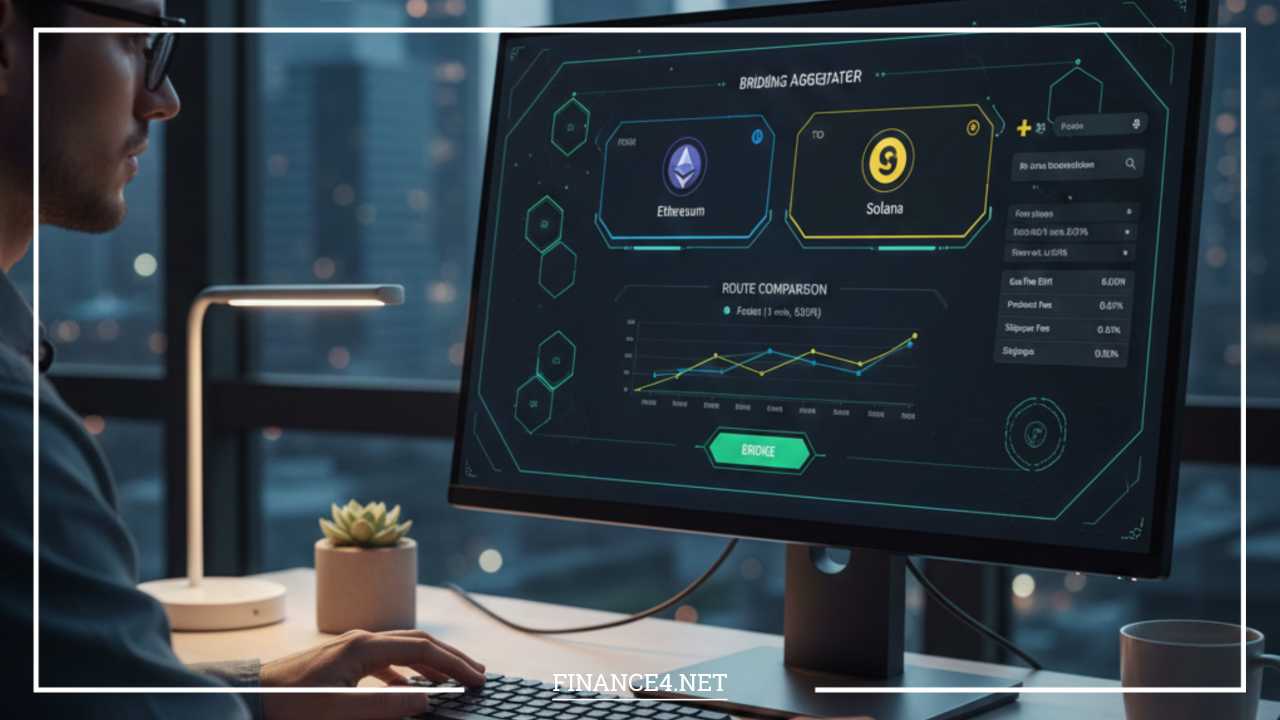
Top Bridging Aggregator with the Best UI
The decentralized finance (DeFi) landscape is a sprawling network of independent blockchains, each hosting unique assets, protocols, and communities. While this multi-chain world offers diversity and resilience, it also creates the critical challenge of interoperability—the need to move assets seamlessly from one network to another. This is where the bridging aggregator has emerged as an indispensable tool, but the complexity of cross-chain transfers means that a poor interface can turn a simple transaction into a stressful, expensive mistake.
In the highly competitive market of cross-chain solutions, the User Interface (UI) is no longer an afterthought; it is the primary differentiator. The platform that successfully abstracts away the technical risk and presents the best route with clarity and confidence is the one that wins user adoption. This article explores the top bridging aggregators in the industry, focusing specifically on which platforms deliver a superior user experience, blending technical efficiency with intuitive, best-in-class design.
What is a Bridging Aggregator?
A bridging aggregator is a sophisticated layer of technology designed to solve the problem of liquidity and route fragmentation in the multi-chain ecosystem. To understand its importance, one must first understand the fundamental concept of a cross-chain bridge.
Simple Bridges vs. Bridging Aggregators
A simple cross-chain bridge is a peer-to-peer connection between just two blockchains—for example, a dedicated link between Ethereum and Polygon. These bridges lock an asset on the source chain and either mint a wrapped version of it on the destination chain (lock-and-mint model) or use a pre-funded liquidity pool (liquidity network model). While functional, this approach is limited:
-
Liquidity Risk: If the bridge’s pool on the destination chain runs dry, the transaction stalls.
-
Route Fragmentation: A user moving funds from Arbitrum to Avalanche might need to use two or three different, dedicated bridges, adding steps and complexity.
-
Best Rate Uncertainty: The user has no easy way to know if they are getting the fastest or cheapest route.
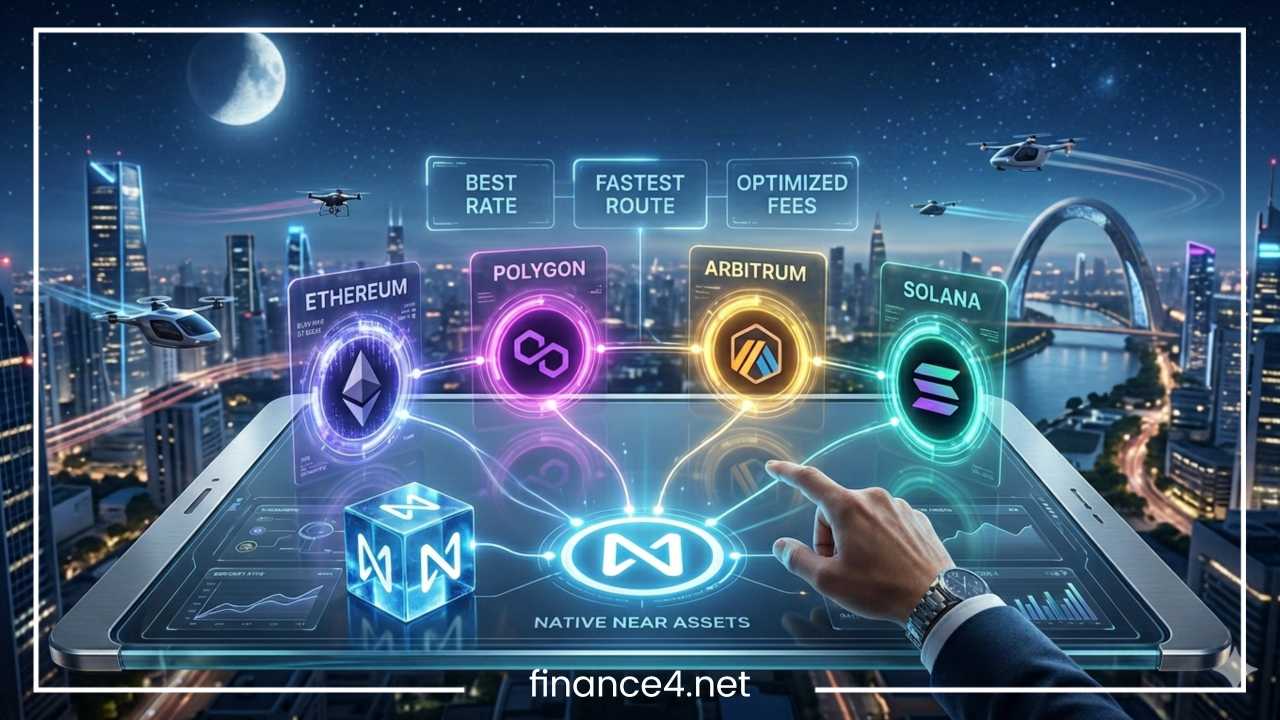
A bridging aggregator eliminates these pain points by acting as a smart routing layer. It does not own the bridge infrastructure itself but instead integrates with dozens of underlying single bridges, liquidity networks, and even Decentralized Exchange (DEX) aggregators to form thousands of possible routes. When a user inputs a source chain, token, destination chain, and amount, the aggregator instantly calculates and presents the best available path based on criteria like speed, cost, and final received amount.
How Aggregators Optimize
The core function of an aggregator is optimization:
-
Liquidity Optimization: By scanning multiple bridges, the aggregator ensures the transaction only attempts routes where sufficient liquidity exists, reducing failed transfers.
-
Fee Reduction: It compares the gas fees, bridge protocol fees, and slippage across all possible routes (e.g., using a direct bridge versus a route that swaps on Chain A, bridges via a relay network, and then swaps back on Chain B).
-
Efficiency and Speed: Many aggregators utilize fast relayers or specialized protocols that can drastically cut down the time it takes for a transaction to finalize, often moving funds in under a minute compared to 5–30 minutes on native bridges.
In essence, a bridging aggregator transforms a complex, multi-step chore into a single, optimized, and user-friendly transaction.
Importance of UI in Bridging Aggregators
In DeFi, where users are directly responsible for their funds and transactions are irreversible, the interface is paramount. For a bridging aggregator, which solves a technically complex problem, the UI’s role is to reduce cognitive load and prevent catastrophic user error. A technically superior backend is useless if the frontend is confusing or intimidating.
Why UI Impacts Adoption and Usability
The quality of the User Interface directly affects three critical aspects of the user experience:
-
User Confidence: Bridging involves moving assets between two separate smart contracts on two different networks. This is inherently high-stakes. A clean, modern, and trustworthy UI with clear labels and professional branding instills confidence that the platform is secure and well-maintained. Conversely, a clunky, slow, or poorly organized interface breeds suspicion and hesitation.
-
Error Prevention: The most common mistakes in bridging are selecting the wrong chain, the wrong token, or miscalculating the final amount due to hidden fees. A well-designed UI preemptively minimizes these errors through:
-
Clear Call-to-Actions (CTAs): The “Connect Wallet” and “Bridge” buttons should be obvious, and the flow must be linear.
-
Contextual Alerts: Immediate, visible warnings if a chain is congested, a token is unsupported, or the estimated slippage is too high.
-
Intuitive Dropdowns: Chain and token selectors should use clear logos and search functionality, not just technical contract addresses.
-
-
Speed of Execution: In a market driven by arbitrage and time-sensitive opportunities, speed is key. A good UI allows a power user to complete a cross-chain transaction in three clicks, while a beginner can follow a guided, step-by-step process without getting lost in unnecessary settings.
How UI Affects Key Metrics
-
Fee Transparency: A poor UI might hide the true cost until the final wallet confirmation. The best UIs offer a full, clear breakdown of every cost component: gas fee, protocol fee, and expected slippage, before the user approves the transaction.
-
Real-time Insights: The most powerful UI feature is the ability to compare multiple routes instantly. An effective design presents a mini-table or card view of the top 3–5 routes, showing the expected time, total fee, and final output amount for each.
The goal of a world-class bridging aggregator UI is to make the act of cross-chain transfer feel no more complicated than a simple in-chain DEX swap.
Key Features to Look for in a Bridging Aggregator
A top-tier bridging aggregator marries sophisticated technology with human-centered design. The best UIs showcase complex data in a simple, digestible manner. When evaluating a platform, users should look for the following essential UI and functional features:
| Feature Category | UI/Design Element | Functional Impact |
| Route Transparency | Real-time Comparison Table (Speed, Cost, Output) | Ensures the user always selects the best value route. |
| Transaction Visibility | Progress Bar/Stepper with ETA & Explorer Link | Provides user confidence and reduces anxiety during multi-minute waits. |
| Fee Clarity | Detailed Fee Breakdown (Gas + Protocol + Slippage) | Eliminates “surprise fees” and allows for easy cost calculation. |
| Chain Support | Visual Dropdowns with Logos and Search Functionality | Simplifies the selection process for the hundreds of available networks. |
| Error Handling | Proactive Alerts for Insufficient Gas or Low Liquidity | Prevents failed transactions and saves users wasted gas fees. |
| Accessibility | Responsive, Clean Mobile Interface | Enables safe, on-the-go bridging without needing a desktop. |
| Advanced Tools | Adjustable Slippage and Gas Priority Settings | Caters to power users who need fine-grained control over their transactions. |
Detailed Feature Breakdown
-
Cross-Chain Support: This is fundamental. The best aggregators support the widest range of networks (EVM, non-EVM like Solana and Bitcoin) and integrate with the highest number of underlying bridges (e.g., Stargate, Synapse, Across, Orbiter). The UI must elegantly display this complexity without overwhelming the user.
-
Transaction Speed and Confirmation Visibility: A top UI features a progress tracker (a simple visual bar or step-by-step checklist) that updates in real-time and clearly states the estimated time of arrival (ETA). Crucially, it must provide a direct link to the transaction on the block explorer of both the source and destination chains.
-
Fee Transparency: The platform must show the total estimated cost upfront. This includes the gas fee on the source chain, any relay/validator fees, the protocol fee for the bridge used, and a clear warning about potential slippage.
-
Real-time Rate Updates: The core bridge interface (the “From/To” boxes) must update instantly as the user changes the token or amount. This immediate feedback ensures the user knows exactly what they are getting before committing.
-
Error Alerts and Safety Measures: The UI should be predictive. Before the user clicks “Approve,” the system must check for common issues: is the user’s wallet connected to the wrong network? Do they have enough native gas token on the source chain? Are they attempting to bridge an unsupported asset? Clear, non-technical warnings are vital.
-
Mobile-Friendly Interface: Given the increasing volume of mobile DeFi usage, the platform must function flawlessly on small screens. The UI should be a responsive, clean vertical layout that minimizes scrolling and keeps the critical input fields immediately visible.
Top Bridging Aggregators with Best UI
The bridging aggregator market is highly dynamic, but a few platforms consistently stand out for their ability to deliver a complex service through an elegant and reassuring interface.
Aggregator A: Jumper Exchange (Powered by Li.Fi) – Clean, Beginner-Friendly UI
Jumper Exchange is often cited as the gold standard for blending powerful aggregation with simplicity. Powered by the Li.Fi SDK (a leading infrastructure provider), Jumper abstracts the complexity of 20+ bridges and 20+ DEXs into one cohesive, friendly interface.
-
UI Highlights and Design Strengths: Jumper features a clean, highly visual, and minimalist design. The core bridging window is large, with clear icons for chains and tokens. Its best feature is the “Route” display, which automatically selects the best path and shows a small, digestible flowchart of the steps (e.g., Swap on Chain A -> Bridge via Stargate -> Receive on Chain B).
-
Key Features: It excels at route comparison, presenting the top 3 routes with distinct tags for “Fastest,” “Cheapest,” and “Most Tokens Received.” It also provides a “Gas on Destination” feature, a crucial UI enhancement that alerts users if they need the gas token on the receiving chain and often allows a small amount to be bundled into the bridge transaction.
-
Pros: Highly intuitive for beginners; excellent transparency on all fees; deep integration with numerous routes.
-
Cons: The large number of routes can sometimes lead to slight initial loading lag when first fetching quotes.
-
Best For: All users, especially beginners and those who prioritize clarity and the ability to instantly see the multi-step nature of their cross-chain transfer.
Aggregator B: Rango Exchange – Advanced Features Without Clutter
Rango Exchange differentiates itself by aiming for maximum connectivity across EVM and non-EVM chains, including Bitcoin, Solana, and many Cosmos networks. Despite this high level of technical complexity, Rango maintains an uncluttered, professional UI.
-
UI Highlights and Design Strengths: Rango’s interface is characterized by its high-contrast, professional aesthetic. Its strength lies in its route selection feature, which not only compares routes but also gives users the flexibility to generate and view multiple non-aggregated routes with a simple click. The platform’s advanced search filters for assets and chains are robust, yet cleanly integrated into the main drop-downs.
-
Key Features: Unparalleled chain support (70+ networks). The most notable UI feature is the detailed route visualization, which maps out complex, multi-hop routes—for instance, bridging a token from a niche L2 to Solana. Users can easily see which bridge and which DEX swap is used at each step, building high user trust.
-
Pros: Widest network support, ideal for complex, non-EVM bridging; high level of customization for route selection.
-
Cons: Can be overwhelming for the absolute beginner due to the sheer number of options presented.
-
Best For: Experienced power users and those needing to bridge assets to or from non-EVM ecosystems who demand full transparency on the route.
Aggregator C: Rubic – The One-Click Experience
Rubic has dedicated its development to delivering a true “one-click swap,” focusing heavily on seamless background aggregation to minimize user interaction.
-
UI Highlights and Design Strengths: Rubic employs a clean, dark-mode-first design that is very easy on the eyes. The core widget is minimal, focusing only on the “From” and “To” fields, with the final rate and details condensed into an easily expandable section. The design emphasizes speed and reduction of friction.
-
Key Features: Strong focus on the actual transaction process. Rubic prioritizes displaying the single best route instantly, rather than a comparison table, catering to users who want the quickest decision. It is an aggressive aggregator, integrating 30+ bridges and 330+ DEXs to ensure optimal rates.
-
Pros: Exceptional focus on minimizing clicks; best for users who trust the algorithm to find the optimal route; fast loading times for quotes.
-
Cons: Less granular control over gas and slippage settings compared to more feature-rich competitors.
-
Best For: Users who value speed and a hyper-minimalist interface, especially for routine EVM-to-EVM or L2-to-L2 transactions.
How to Choose the Right Bridging Aggregator for You
Selecting the right bridging aggregator depends not just on the platform’s performance, but on your individual needs, experience level, and preferred workflow.
Factors to Consider
-
Experience Level (Beginner vs. Power User):
-
Beginners: Should prioritize aggregators with minimalist UIs and clear safety alerts, such as Jumper Exchange. Look for platforms that automatically manage complex settings and focus on clear communication of the final amount.
-
Power Users: Should look for platforms like Rango Exchange that offer granular control over slippage, gas priority, and the ability to view and select from multiple, complex routing options.
-
-
Frequency and Preferred Chains:
-
If you primarily bridge between a few major EVM Layer 2s (e.g., Arbitrum, Optimism, Polygon), an aggregator that excels at speed and low fees for L2s (like Jumper or Rubic) is ideal.
-
If you frequently transact across non-EVM chains (e.g., Solana, Cosmos), you must choose an aggregator with a broad mandate, like Rango Exchange, to ensure your chains are consistently supported.
-
-
UI Preferences (Minimalist vs. Feature-Rich):
-
Do you prefer an interface that only shows the necessary information and trusts the algorithm? Choose a minimalist platform like Rubic.
-
Do you prefer to see all the data, compare routes, and have explicit control over every parameter? A feature-rich UI like Rango Exchange or Jumper Exchange will be more satisfying.
-
Tips for Testing UI
Never commit a large transfer without first performing a small test transaction. This not only verifies the speed and cost of the route but also allows you to test the platform’s UI under live conditions:
-
Test the Error Handling: Connect your wallet to the wrong network (e.g., try to bridge from Arbitrum while your wallet is on Ethereum). Does the UI immediately prompt you to switch, or does it try to execute a doomed transaction?
-
Evaluate Visibility: Initiate a bridge and observe the transaction tracker. Does it give you clear progress, an accurate ETA, and a working link to the block explorers? A good UI maintains high visibility from the moment you click “send” to the moment the funds arrive.
-
Compare Transparency: Perform a test on two different aggregators simultaneously for the same route and token. Compare the final confirmed output and the fee breakdown to see which platform was more accurate and transparent in its initial quote.
Future Trends in Bridging Aggregators and UI
The field of cross-chain interoperability is still nascent, and the UI/UX layer is set for significant advancements that will continue to drive adoption and trust.
Upcoming UI Innovations
-
Real-Time Analytics and Predictive Pricing: Future UIs will move beyond simply fetching a static quote. They will integrate AI-assisted models to predict gas fluctuations, liquidity shifts, and even potential network congestion before the user clicks send. This predictive analysis will be presented as a confidence score or a real-time risk meter.
-
Chain Abstraction/Universal Gas: The ultimate UI innovation will be the complete abstraction of the chain layer. Users will simply select the token and the recipient address, without needing to know which chain that address lives on. The aggregator’s backend will handle the cross-chain routing, the gas token conversion, and all the necessary steps, making the experience identical to sending a token within a single app. Furthermore, UIs will universally adopt “gas token delivery,” ensuring users never get stranded on a destination chain with zero native gas.
-
Enhanced Mobile and Multi-Device Experiences: The push for seamless multi-device integration will accelerate. Aggregators will offer integrated mobile apps or highly optimized Progressive Web Apps (PWAs) that allow a transaction initiated on a desktop to be seamlessly tracked and finalized on a mobile device.
The role of the UI will evolve from merely displaying information to becoming an active, predictive safety and optimization co-pilot, guiding users through the complex multi-chain world. This shift is crucial, as the best UX will be the one that feels like the least amount of work.
Final Thoughts
The emergence of bridging aggregators has been a vital step forward in solving the liquidity fragmentation crisis in DeFi. However, the true success of these platforms is fundamentally tied to their User Interface. A bridging aggregator is, at its core, a promise: a promise to find the best route, the cheapest fee, and the fastest time. The UI is the vessel for delivering on that promise.
Platforms like Jumper Exchange, Rango Exchange, and Rubic have set the standard by proving that technical complexity can and must be met with intuitive, confidence-building design. They have transformed a historically perilous and complicated process into a routine, accessible transaction.
For investors and traders in the multi-chain world, the lesson is clear: prioritize the interface. A top-performing technical aggregator with a poor UI is a recipe for expensive errors. Look for transparency, clear error handling, and robust route comparison. The best bridging experience is one where you spend the least amount of time thinking about the bridge itself.