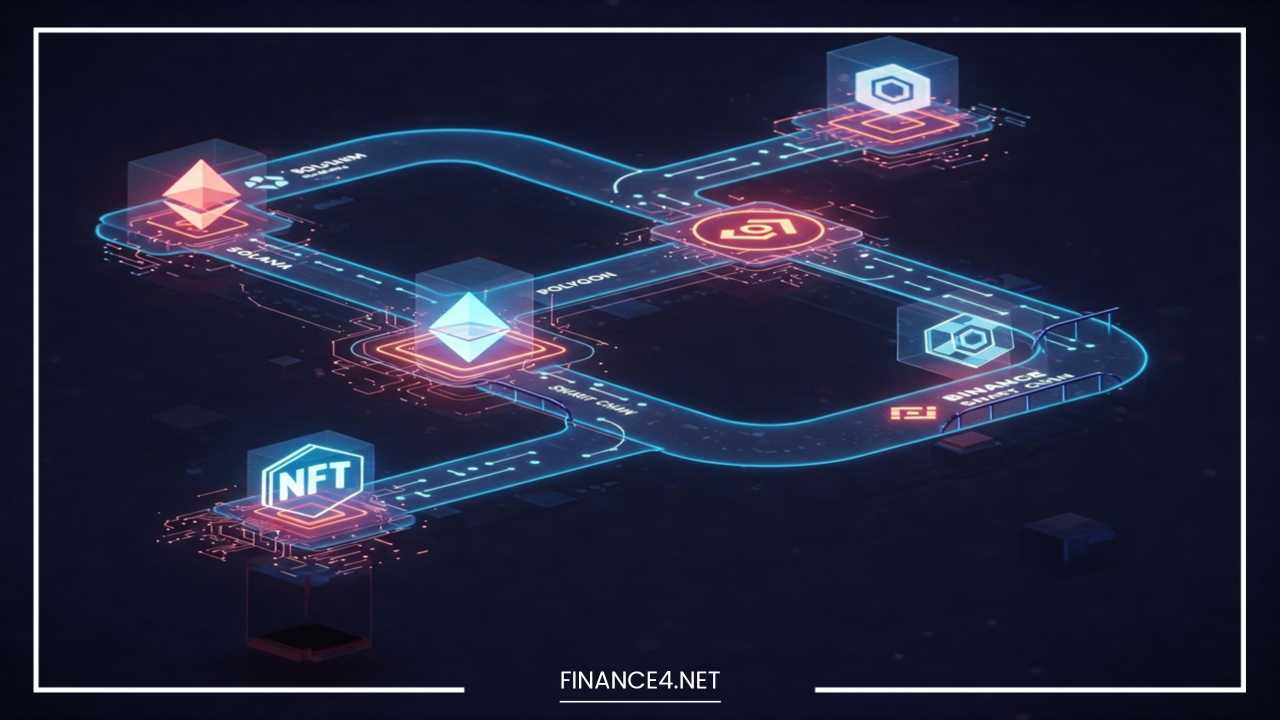
Minting Cross-Chain NFTs Made Easy
 by
by 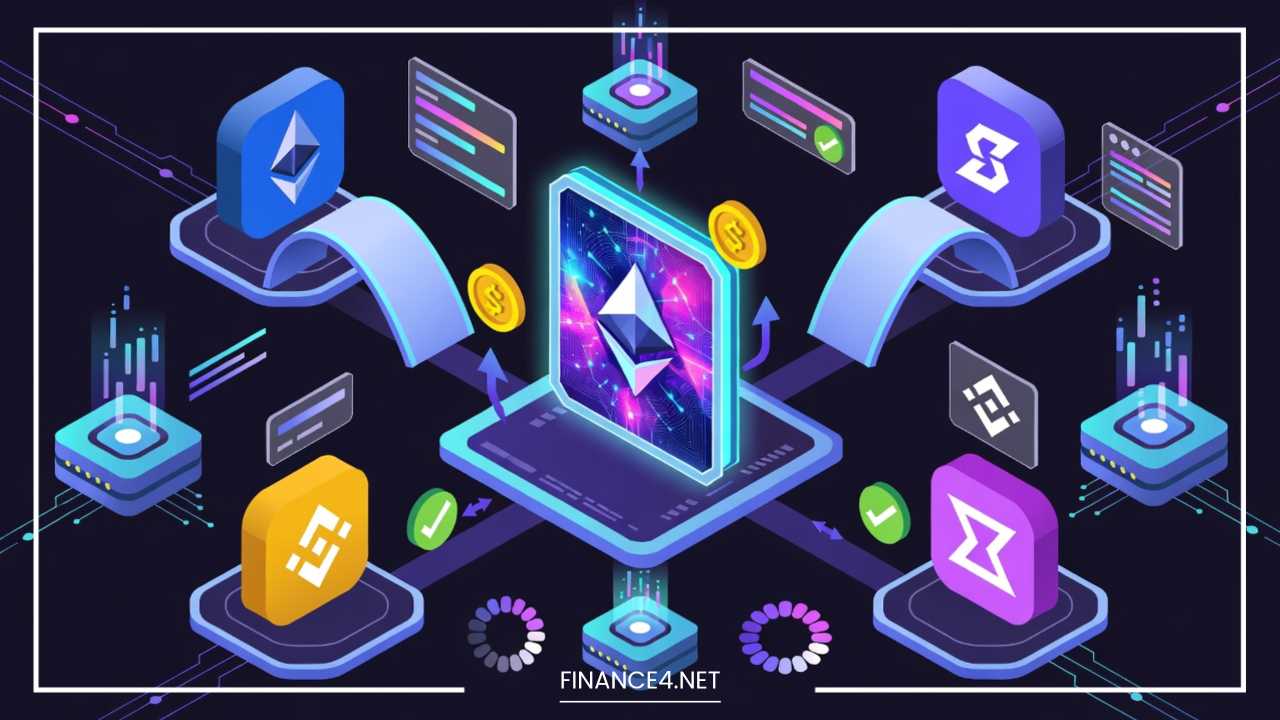
Minting Cross-Chain NFTs Made Easy
Why Cross-Chain NFTs Matter
The digital landscape has undergone a seismic shift since the inception of Non-Fungible Tokens (NFTs). What began as a niche experiment in digital scarcity has blossomed into a multi-billion-dollar industry encompassing art, gaming, finance, and identity. However, as the ecosystem matured, a significant roadblock emerged: fragmentation. For years, an NFT minted on Ethereum was “stuck” on Ethereum. If a creator wanted to reach users on Polygon or Solana, they often had to restart from scratch, leading to a fractured experience for both creators and collectors.
Traditional NFTs are often criticized for their inherent limitations. Single-chain assets suffer from ecosystem lock-in, where the value and utility of an asset are tethered to the health and traffic of a specific network. When gas fees on a primary chain skyrocket, smaller creators and collectors are priced out of the market. Furthermore, limited liquidity becomes a major hurdle; if your potential buyers are primarily active on a different blockchain, your NFT remains invisible to a significant portion of the market.
This is where cross-chain NFTs enter the fray. In simple terms, a cross-chain NFT is a digital asset that can move between different blockchain networks while maintaining its identity, provenance, and utility. The ability to mint these assets easily is the “Holy Grail” for the next generation of the internet. For gamers, it means a sword earned in one game can be used in another hosted on a different chain. For brands, it means launching a loyalty program that reaches customers regardless of which wallet they use. This article provides a comprehensive guide to understanding, creating, and leveraging cross-chain NFTs, demystifying the technology to make it accessible for everyone.
Understanding Cross-Chain Technology
To appreciate cross-chain NFTs, one must first understand the infrastructure that makes them possible. In the early days of crypto, blockchains were built as “walled gardens.” They were designed to be secure and decentralized, but they were not designed to talk to one another. “Cross-chain” technology refers to the various methods and protocols that allow different blockchains to share data and value.
It is important to distinguish between three commonly used terms: multi-chain, cross-chain, and bridges.
-
Multi-chain refers to a project or asset that exists on several different blockchains simultaneously, but these versions are often independent of each other. Think of it like a brand having separate stores in different cities that don’t share inventory.
-
Cross-chain refers to the actual movement of data or assets between those chains. This is the “shipping route” that connects the stores.
-
Bridges are the specific technical tools used to facilitate this movement.
Blockchains communicate through “message passing.” Since a blockchain cannot inherently see what is happening on another network, it relies on intermediaries—such as oracles or relayers—to monitor events. When an action happens on Chain A, a message is sent, verified, and then triggered on Chain B.
The path to seamless communication is not without challenges. Security is the most prominent concern; bridges have historically been targets for exploits because they hold large amounts of locked assets. Speed and latency are also factors, as transactions must be “finalized” on the source chain before they can be processed on the destination. Finally, the complexity of managing different gas tokens and address formats often creates a steep learning curve for users. Modern cross-chain protocols aim to abstract these complexities away, making the process feel as simple as sending an email.
What Are Cross-Chain NFTs?
A cross-chain NFT is fundamentally different from a traditional NFT in its portability. While a traditional NFT is a entry on a single ledger, a cross-chain NFT is designed with interoperability in its DNA. It is built using standards that allow it to be recognized and “teleported” across various environments without losing its metadata or history.
Ownership in a cross-chain world functions through a synchronized state. When you move an NFT from Ethereum to Avalanche, the original version on Ethereum is typically restricted or “locked,” and a new, identical version is activated on Avalanche. To the user, it feels like the same object moving through space, even though the underlying technical ledger entries are changing.
Metadata and storage considerations are crucial here. Most NFTs point to an external file (like a JPEG) stored on a decentralized storage system like IPFS or Arweave. For an NFT to be truly cross-chain, this metadata must be accessible and consistent regardless of which chain the NFT currently resides on. If the metadata is stored on-chain in a way that is specific to one network, the NFT may “break” when it moves.
The use cases for these assets are vast:
-
Gaming Assets: Players can take their character skins or weapons across different games in a unified “Metaverse.”
-
Digital Art: Artists can mint on a low-cost chain like Polygon but allow their collectors to move the piece to Ethereum for high-value auctions.
-
Membership NFTs: A brand can issue a loyalty pass that grants access to events or discounts across multiple platforms and ecosystems.
How Cross-Chain NFT Minting Works (High-Level Flow)
The process of minting a cross-chain NFT can be broken down into a logical flow that removes the “magic” and replaces it with clear steps. While the underlying code is complex, the conceptual path is straightforward.
-
NFT Creation: The creator prepares the digital asset and its associated metadata (name, description, traits, and image/video files).
-
Minting on a Source Chain: The NFT is first minted on a “home” chain. This is where the asset’s history begins.
-
Cross-Chain Message Interaction: When the user decides to move the NFT, a request is sent to a cross-chain protocol. This usually involves “burning” or “locking” the asset on the source chain so it cannot be used in two places at once.
-
Verification and Destination Minting: A relayer or oracle picks up the message and proves to the destination chain that the asset has been secured on the source. The destination chain then “mints” or “unlocks” a corresponding version of the NFT for the user.
Smart contracts are the workhorses of this process. They act as the “gatekeepers” on both ends, ensuring that the rules of the NFT are followed. Relayers and oracles act as the “messengers,” carrying the data between chains. In the past, this required manual bridging—a nerve-wracking process where users had to interact with complex bridge interfaces and wait long periods with little feedback. Today, many platforms offer “one-click” minting where the cross-chain logic is handled entirely in the background, making the experience indistinguishable from a standard mint.
Key Approaches to Cross-Chain NFT Minting
There is more than one way to move an NFT across chains. Depending on the project’s needs, developers choose between several technical models.
Lock-and-Mint Model
In this traditional bridge model, the original NFT is sent to a smart contract on the source chain where it is “locked” in a vault. An equivalent “wrapped” NFT is then minted on the destination chain. If the user wants to return to the source, the wrapped NFT is burned, and the original is released from the vault.
-
Pros: Preserves the original asset.
-
Cons: If the vault is hacked, the wrapped assets become worthless.
Burn-and-Mint Model
This is a more “native” feeling approach. Instead of locking the asset, the smart contract literally destroys (burns) the NFT on Chain A and creates an identical, official version on Chain B.
-
Pros: No central vault to hack; the asset exists natively on whichever chain it is currently on.
-
Cons: Requires the NFT contract to be deployed and managed across multiple chains with matching permissions.
Native Multi-Chain Minting
Some platforms allow you to mint an NFT on multiple chains simultaneously. This doesn’t necessarily “move” the NFT, but it ensures that the collection exists everywhere at once, allowing users to choose their preferred environment at the moment of purchase.
Omnichain NFT Standards (e.g., LayerZero’s ONFT)
This is the cutting edge of the technology. Omnichain standards allow an NFT to move across chains without the need for traditional bridges or “wrapping.” The NFT contract itself is aware of other chains, allowing for a seamless transfer of the “on-chain state.”
-
Pros: Best user experience; highest level of security.
-
Cons: Newer technology with less historical data.
Tools & Platforms That Make Cross-Chain Minting Easy
The barrier to entry for cross-chain NFTs has dropped significantly thanks to a new wave of user-friendly tools. You no longer need to be a senior solidity engineer to launch a cross-chain collection.
No-Code and Low-Code Platforms:
Platforms like NFTport, Thirdweb, and Manifold have begun integrating cross-chain capabilities. These tools provide a graphical interface where you can upload your art, set your parameters, and deploy to multiple networks with the click of a button. They handle the smart contract deployment and the cross-chain logic for you.
SDKs and APIs for Developers:
For those who want more control, Software Development Kits (SDKs) from protocols like LayerZero, Axelar, and Chainlink (CCIP) offer powerful building blocks. These APIs allow developers to integrate “transfer” buttons directly into their own websites, keeping the user within the project’s ecosystem.
Cross-Chain NFT Protocols:
Specific protocols like Holograph or Omnisea are dedicated entirely to the cross-chain NFT experience. They allow creators to mint “Holographic” NFTs that maintain the same contract address across all supported blockchains, which is a massive win for brand consistency and security.
Wallets and UX:
Modern wallets are also evolving. Instead of manually switching networks in a dropdown menu, newer “multichain-native” wallets automatically detect which chain you need to be on for a specific transaction. When looking for a platform, always prioritize those that offer robust security audits, support for the major chains (Ethereum, Polygon, Arbitrum, BSC), and a clear fee structure.
Step-by-Step: Minting a Cross-Chain NFT (Beginner-Friendly)
If you are ready to mint your first cross-chain NFT, follow this general guide. While specific platforms may vary slightly, the logic remains the same.
1. Preparation
Before you start, ensure you have a non-custodial wallet (like MetaMask or Rabby). You will need a small amount of “gas” tokens (like ETH, MATIC, or AVAX) on your source chain to pay for the initial minting and the cross-chain transfer fee.
2. Prepare Your Assets
Organize your image or video files and your metadata. Metadata is a JSON file that tells the blockchain what your NFT looks like and what its attributes are. Most no-code tools will provide a template for this.
3. Choose Your Platform
Select a cross-chain-enabled minting platform (e.g., Holograph or a similar service). Connect your wallet and select the “Create New Collection” option.
4. Configure the Mint
Upload your assets. You will be asked to choose a “Source Chain.” This is where the NFT will be born. For beginners, choosing a low-fee chain like Polygon or Base is often the best way to experiment without high costs.
5. Deploy and Mint
Click “Deploy.” Your wallet will prompt you to sign a transaction. Once the contract is live, you can “Mint” the NFT to your wallet. At this point, you have a standard NFT.
6. Bridge or “Beam” to a New Chain
Find the “Bridge” or “Transfer” option on the platform. Select the destination chain (e.g., moving from Polygon to Avalanche). The platform will calculate a “Cross-Chain Fee,” which covers the cost of the message being sent across the networks. Confirm the transaction.
7. Verification
After a few minutes, check a block explorer (like Etherscan or Snowtrace) for the destination chain. You will see your NFT sitting in your wallet address on the new chain, ready to be sold or used.
Common Beginner Mistakes:
-
Insufficient Gas: Forgetting that you need the native token of the source chain to start the process.
-
Wrong Network: Being connected to the wrong network in your wallet when trying to view the NFT.
-
Impatience: Cross-chain transfers take longer than standard transfers. Do not refresh or resubmit until the first transaction has been confirmed or failed.
Security, Fees, and Performance Considerations
While cross-chain technology is revolutionary, it is not a “magic button” without consequences. Users and creators must be aware of the trade-offs involved.
Security Risks:
The primary risk in cross-chain interactions is “Bridge Risk.” If a bridge’s smart contracts have a vulnerability, the assets locked within them can be drained. To mitigate this, use established protocols that have undergone multiple third-party audits and have a history of high volume without incident. Avoid “experimental” bridges with no track record.
Gas Fees and Cross-Chain Costs:
Minting cross-chain involves multiple transactions. You pay to mint on the first chain, and then you pay a “cross-chain fee.” This fee is often higher than a standard transaction because it covers the gas on the destination chain plus a service fee for the relayers. Always check the total estimated cost before clicking “confirm.”
Latency and Finality:
Blockchains have different “finality” times—the time it takes for a transaction to be considered irreversible. Moving an NFT from a “fast” chain to a “slow” chain (like Ethereum) will be bottlenecked by the slower network’s speed. Expect cross-chain moves to take anywhere from 2 to 20 minutes depending on the networks involved.
Best Practices:
-
Only use reputable platforms.
-
Test the process with a “dummy” NFT of no value before moving an expensive asset.
-
Keep your metadata stored on decentralized services like IPFS to ensure it doesn’t disappear if a private server goes down.
Real-World Use Cases & Examples
The move toward cross-chain NFTs isn’t just theoretical; it’s already happening across various sectors.
Gaming Ecosystems:
Imagine a game like Axie Infinity or Star Atlas. By using cross-chain NFTs, developers can allow players to trade their earned assets on secondary markets across different blockchains to find the best liquidity. This prevents players from being “trapped” in a dying ecosystem.
Metaverse Interoperability:
In the “Open Metaverse,” your digital avatar should be able to walk from a space in The Sandbox into a space in Decentraland. Cross-chain NFTs facilitate this by allowing the avatar “identity” to be verified across the different blockchains these platforms are built on.
Brand Loyalty and Memberships:
Global brands like Nike or Starbucks are experimenting with NFTs. If a brand issues a digital collectible, they don’t want to force their customers to learn about the nuances of “Layer 2” versus “Mainnet.” They use cross-chain technology to ensure the customer’s badge shows up in their app regardless of the technical backend.
Creator Economies:
Photographers and digital artists are using cross-chain tools to launch “omnichain” drops. By making their art available on five chains at once, they remove the friction for collectors who might only have funds on one specific network, effectively quintupling their potential market reach.
The Future of Cross-Chain NFTs
We are rapidly moving toward a future where the word “blockchain” becomes invisible to the average user. Just as you don’t care if an email was sent via Gmail or Outlook, you won’t care which chain your NFT lives on.
Omnichain Standards:
In the next few years, we expect to see the “normalization” of omnichain standards. New NFTs will be minted as “cross-chain by default,” rather than as an afterthought. This will lead to “Chain-Agnostic” NFTs that exist as a single global entity rather than multiple wrapped versions.
Abstraction and AI:
User Experience (UX) abstraction will be the biggest driver of adoption. We will see wallets that handle gas fees in any token (e.g., paying for an Ethereum move with USDC) and AI assistants that find the cheapest and fastest route for your asset transfer automatically.
The End of the “Bridge”:
As communication protocols become more integrated, the concept of “bridging” will likely disappear. Instead, we will simply “send” assets, and the cross-chain logic will happen as a background process within the wallet or the application itself. “Minting made easy” will eventually just be “Minting.”
Final Thoughts: Lowering the Barrier to NFT Innovation
The transition from single-chain to cross-chain NFTs represents the “growing up” phase of the digital asset industry. By breaking down the walls between blockchains, we are creating a more resilient, liquid, and inclusive digital economy.
The key takeaways for any creator or collector are simple:
-
Interoperability is no longer optional; it is a competitive advantage.
-
Tools have caught up with the vision; you don’t need to be a developer to participate.
-
Security and research remain paramount; always vet the protocols you use.
As the barriers to entry continue to fall, the focus will shift away from the technical “how” of minting and back toward the creative “what.” Whether you are an artist looking for a wider audience, a gamer seeking true ownership, or a brand building a new loyalty ecosystem, cross-chain NFTs are the bridge to your future. The era of the fragmented internet is ending—it’s time to start minting without borders.