Best Cross-Chain Liquidity Providers
 by
by 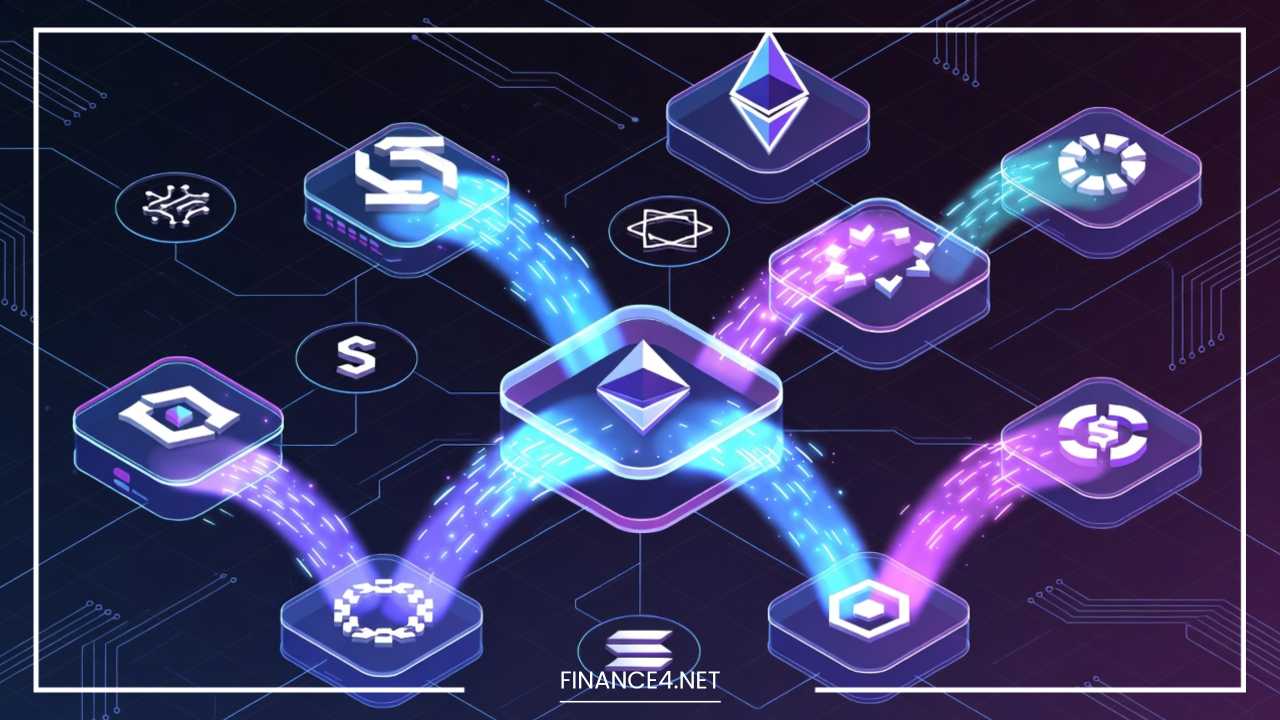
Best Cross-Chain Liquidity Providers for Fast, Secure Transfers
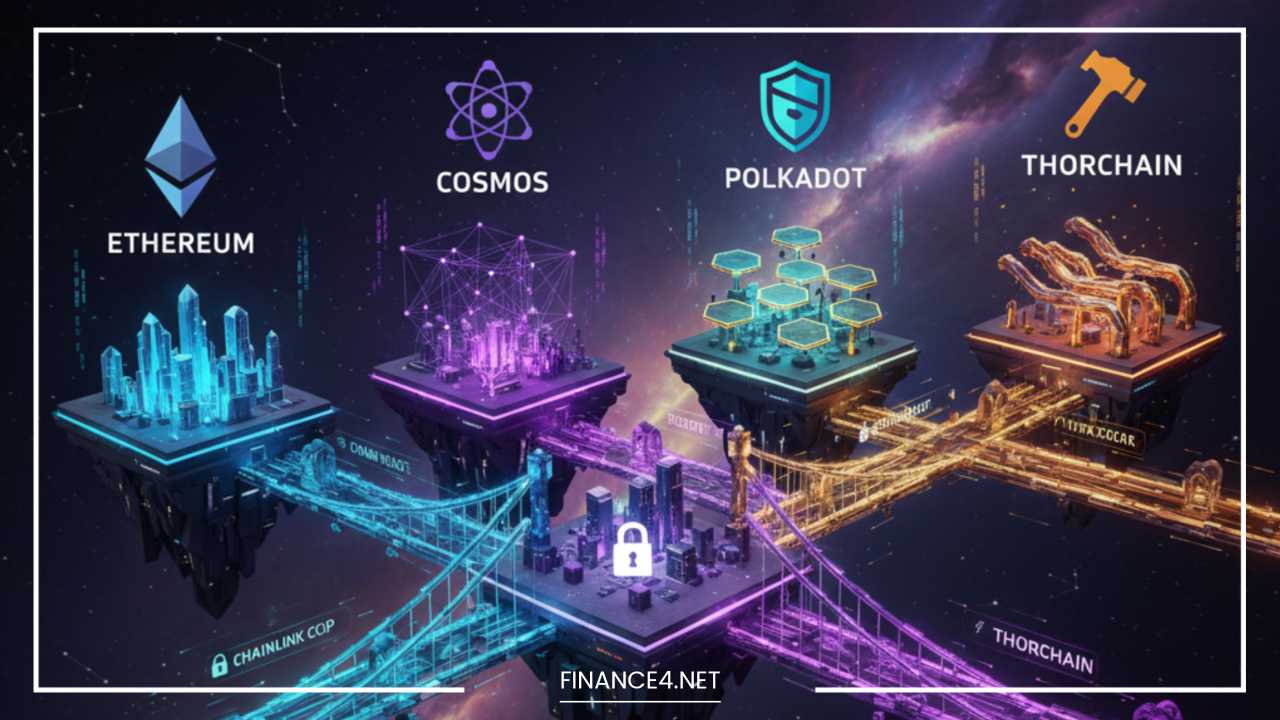
The dream of a unified global financial system has long been the North Star of the blockchain industry. However, for years, the reality has been one of “island” ecosystems—isolated blockchains like Ethereum, Solana, and Bitcoin that cannot natively speak to one another. As the number of Layer 2 (L2) scaling solutions and application-specific chains (app-chains) explodes in 2025, this fragmentation has become a significant barrier to entry.
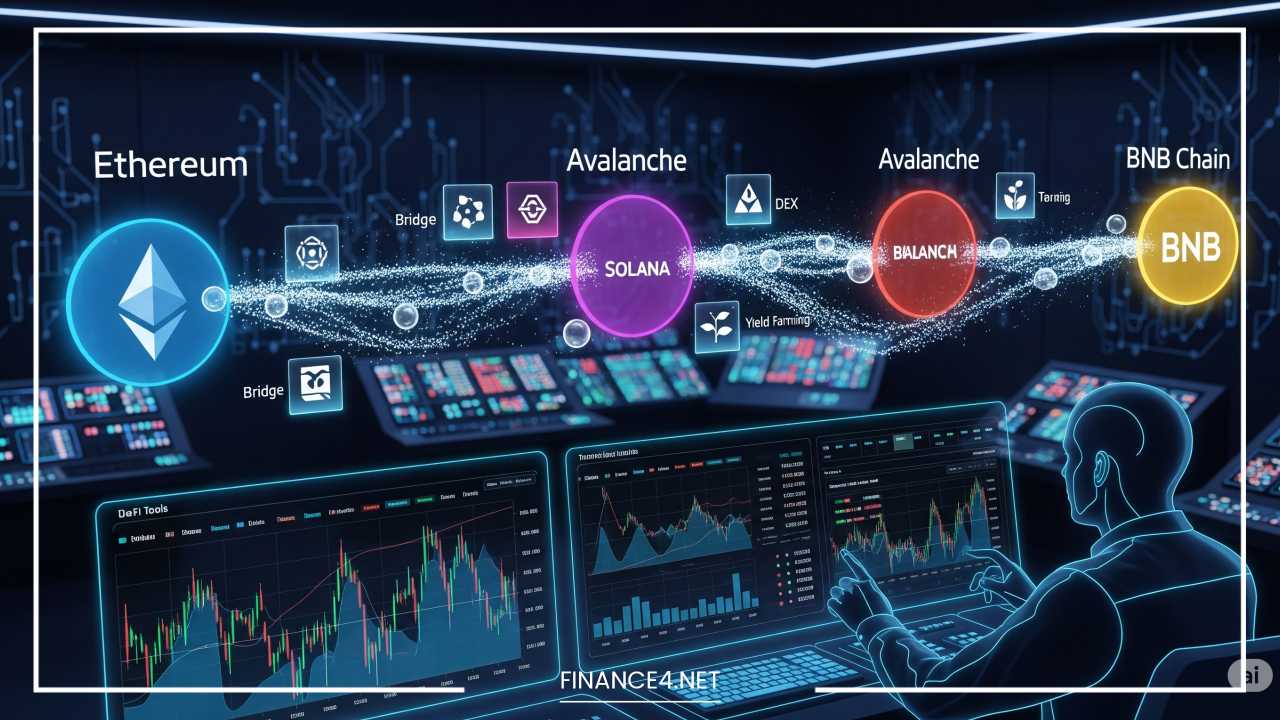
Liquidity fragmentation is the hidden tax on DeFi. It results in higher slippage for traders, lower capital efficiency for yield farmers, and a disjointed user experience that requires juggling multiple gas tokens and complex bridging interfaces. To solve this, a new generation of Cross-Chain Liquidity Providers (CCLPs) has emerged. These protocols don’t just move data; they move value instantly and securely, acting as the connective tissue of the multi-chain web.
This article explores the best cross-chain liquidity providers of 2025, evaluating them on the critical pillars of speed, security, and depth of liquidity. Whether you are a retail trader looking for a fast exit from an L2 or a protocol developer integrating “omnichain” functionality, understanding these providers is essential for navigating the modern DeFi landscape.
What Are Cross-Chain Liquidity Providers?
At its simplest, a cross-chain liquidity provider is a protocol or service that facilitates the exchange of assets between two different blockchain networks. While the term is often used interchangeably with “bridges,” there are nuances that distinguish a high-performance liquidity provider from a standard messaging bridge.
The Evolution of the Bridge
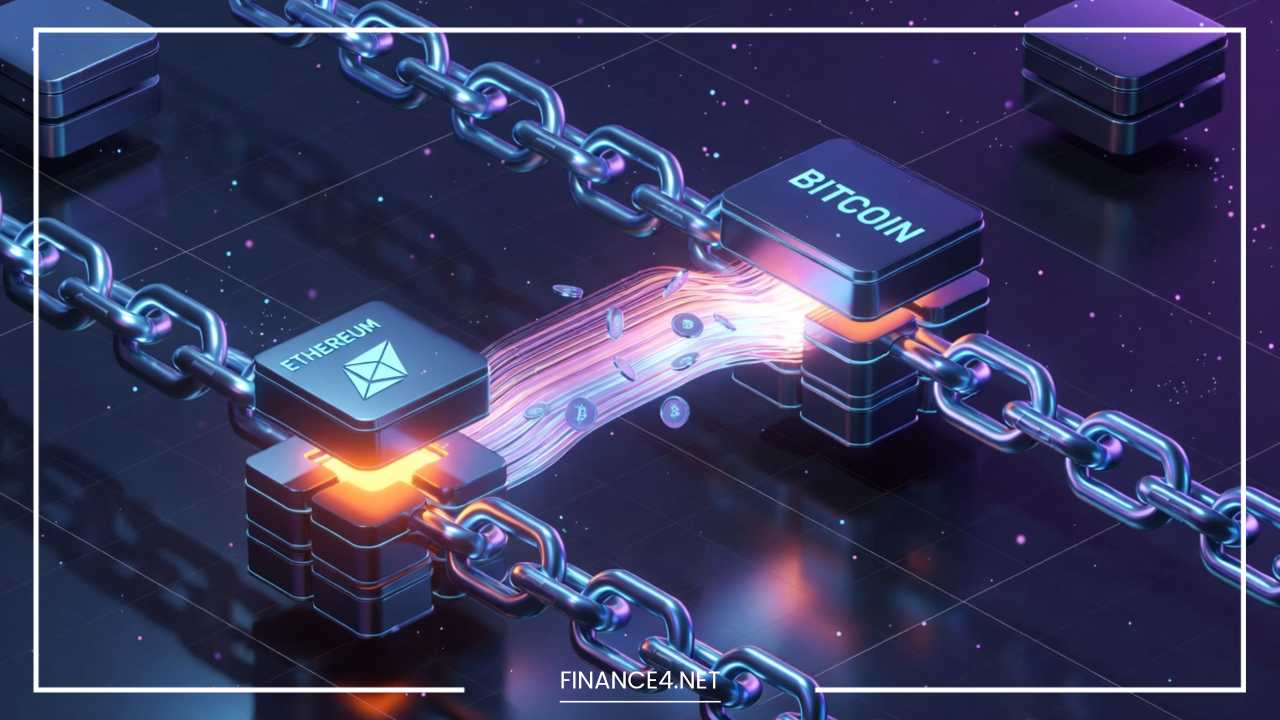
Traditional bridges often rely on a “Lock-and-Mint” mechanism. If you want to move 100 USDC from Ethereum to Solana, the bridge locks your native USDC in an Ethereum smart contract and mints 100 “wrapped” USDC on Solana. The problem? You are now holding a synthetic asset. If the bridge is hacked, your wrapped tokens become unbacked and worthless.
In contrast, modern liquidity providers focus on Native-to-Native transfers. Instead of minting synthetic assets, they maintain pre-funded liquidity pools on multiple chains. When you “bridge” USDC from Chain A to Chain B, you are essentially swapping your native USDC on Chain A for someone else’s native USDC on Chain B.
Key Components
-
Liquidity Pools: Reserves of assets (like ETH, USDC, or SOL) maintained on various chains to facilitate instant swaps.
-
Relayers/Solvers: Off-chain actors that monitor transactions and “fulfill” the user’s request on the destination chain in exchange for a fee.
-
Messaging Layers: The underlying communication protocols (like LayerZero or Axelar) that verify that the funds were indeed deposited on the source chain before triggering a release on the destination.
How Cross-Chain Liquidity Providers Work
To appreciate the security and speed of these providers, one must understand the underlying plumbing. The industry has shifted away from monolithic bridges toward more modular, intent-based, and liquidity-network models.
1. The Liquidity Network Model
This model, used by protocols like Across, operates like a global network of “money changers.”
-
Step 1: A user deposits 1 ETH into a pool on Arbitrum.
-
Step 2: An off-chain relayer sees this deposit and immediately provides 0.999 ETH to the user on Optimism from its own pocket.
- Step 3: The protocol eventually “rebalances” and compensates the relayer.Because the relayer uses its own capital to provide the exit, the user receives their funds almost instantly, often before the source chain transaction even achieves full finality.
2. Burn-and-Redeem
Mainly used for native tokens that have “omnichain” standards (like Circle’s CCTP for USDC), this model is highly secure.
-
Step 1: The protocol burns the asset on the source chain, removing it from circulation.
-
Step 2: A proof of the burn is sent to the destination chain.
- Step 3: The destination chain mints a fresh, native version of that same asset.This eliminates the risk of “unbacked” wrapped tokens because the total supply across all chains remains constant.
3. Intent-Based Transfers
The newest frontier in 2025 is intent-based architecture. Here, the user doesn’t specify how to bridge; they just sign an “intent” (e.g., “I want 1000 USDC on Polygon, and I’m willing to pay 2 USDC in fees”). “Solvers” then compete in an open market to fulfill this intent the fastest and cheapest way possible. This abstracts away the complexity of choosing a specific bridge.
Key Criteria for Evaluating Providers
Not all liquidity providers are created equal. When choosing where to route millions of dollars—or even just a hundred—users should evaluate providers based on these metrics:
-
Speed (Time to Finality): How long does it take for the funds to be spendable on the destination chain? Some providers offer “instant” transfers (under 30 seconds), while others require waiting for the source chain’s “canonical” finality (15+ minutes).
-
Security Assumptions: Is the bridge secured by a centralized multi-sig (risky), a decentralized set of validators, or a trustless zero-knowledge (ZK) proof?
-
Liquidity Depth: Can the provider handle a $1,000,000 swap without moving the price (slippage) significantly? Deep pools are essential for whales and institutions.
-
Chain Coverage: Does the provider support only EVM chains (Ethereum-compatible), or can it bridge to Solana, Cosmos, and Bitcoin?
-
Fees: This includes the bridge fee (usually a percentage), the gas cost on the source chain, and the gas cost on the destination chain.
-
Slippage: The difference between the expected price and the actual price. This is particularly relevant for “Cross-Chain Swaps” where you are changing asset types (e.g., ETH to SOL) during the bridge process.
-
Decentralization: Can the provider censor your transaction? Can a single entity run away with the pooled funds?
Best Cross-Chain Liquidity Providers
Based on 2025 market data and technical robustness, the following providers represent the “gold standard” for cross-chain transfers.
1. Stargate Finance (Powered by LayerZero V2)
Stargate is perhaps the most well-known CCLP, built on top of LayerZero’s omnichain messaging protocol. It was the first to solve the “Bridging Trilemma,” offering instant guaranteed finality, unified liquidity, and native asset swaps. In 2025, Stargate has expanded its reach through LayerZero V2, which allows for modular security configurations.
-
Supported Chains: 50+ networks, including Ethereum, BNB Chain, Avalanche, Polygon, and several L2s.
-
Speed: Very fast for EVM-to-EVM; usually 1–3 minutes.
-
Security: Uses LayerZero’s decentralized verifier/oracle model. Version 2 allows apps to choose their own “DVNs” (Decentralized Verifier Networks) for extra security.
-
Best For: Users moving large amounts of stablecoins (USDC/USDT) between major L1s and L2s who want native assets on both ends.
2. Across Protocol
Across has surged in popularity due to its intent-based, optimistic model. It is currently one of the fastest and cheapest ways to move assets between Ethereum Layer 2s like Arbitrum, Optimism, and Base. By utilizing a network of relayers who compete to fill orders, Across often settles transactions faster than any other provider in the EVM space.
-
Supported Chains: Focused heavily on the Ethereum ecosystem, L2s, and recently expanded to major EVM L1s.
-
Speed: Extremely fast (often under 30 seconds) because relayers “front” the capital to the user.
-
Security: Uses an optimistic oracle (UMA). Relayers are penalized if they provide incorrect data, and the protocol is backed by a robust verification window.
-
Best For: Frequent L2 users and DeFi traders who prioritize low fees and sub-minute speed.
3. Thorchain (RUNE)
Thorchain is a decentralized cross-chain liquidity network that stands out because it supports native Bitcoin, Dogecoin, and Litecoin—assets that are traditionally very difficult to bridge without wrapping. It functions as a decentralized exchange (DEX) where RUNE is the pairing asset for every pool, ensuring that value can flow between non-EVM chains without central intermediaries.
-
Supported Chains: Bitcoin, Ethereum, BNB Chain, Avalanche, Cosmos, Dogecoin.
-
Speed: Limited by the block times of the native chains (e.g., 10+ minutes for Bitcoin).
-
Security: A highly decentralized network of anonymous nodes. Security is economically guaranteed by the RUNE token—if nodes misbehave, their RUNE is slashed.
-
Best For: Privacy-conscious users and “maximalists” who want to swap native BTC for native ETH without any centralized intermediaries.
4. Synapse Protocol
Synapse is a versatile liquidity layer that supports an incredible variety of assets and chains. It uses a cross-chain AMM (Automated Market Maker) to allow users to swap assets while bridging. Synapse has become a favorite for those venturing into newer L2s and alt-L1s that haven’t yet been integrated into larger protocols.
-
Supported Chains: 20+ chains, including EVM and non-EVM like Solana.
-
Speed: 2–5 minutes.
-
Security: Secured by a cross-chain optimistic verification or a set of “notaries” depending on the version.
-
Best For: Users looking for “long-tail” assets (not just stables) on smaller or newer chains.
5. Axelar Network & Squid Router
Axelar acts more like a “blockchain for blockchains.” It provides a decentralized network and tools that allow developers to build cross-chain dApps. Its “Squid Router” is a popular front-end for users to access Axelar liquidity, allowing for any-to-any swaps in a single click.
-
Supported Chains: Extensive coverage of the Cosmos ecosystem (IBC), Solana, and EVM chains (80+ total).
-
Speed: 3–10 minutes depending on the path.
-
Security: Proof-of-Stake (PoS) consensus; same security model as major L1s.
-
Best For: Bridging between the Cosmos/IBC ecosystem and the Ethereum ecosystem, or performing complex swaps (e.g., OSMO to ARB).
6. Hop Protocol
One of the pioneers of L2-to-L2 bridging, Hop uses “Bonders” to provide instant liquidity. While its market share has been challenged by Across, it remains a reliable and battle-tested option for the Ethereum ecosystem. It uses a “hToken” system internally but allows users to exit into native assets almost instantly.
-
Supported Chains: Mainnet Ethereum, Arbitrum, Optimism, Polygon, Gnosis, Base.
-
Speed: Near-instant for L2-to-L2.
-
Best For: Simple L2 transfers for users who prefer a protocol with a long, clean track record and no history of major exploits.
7. Connext (Network)
Connext uses a “modular interoperability” approach. By leveraging the security of the underlying chains and using local verification for small transfers, it offers a high degree of security. It is particularly focused on “trust-minimized” transfers, making it a favorite for security-first developers.
-
Supported Chains: Major EVM chains and L2s.
-
Speed: 2–5 minutes.
-
Security: Relies on canonical bridges for high-value transfers and watchers to prevent fraud.
-
Best For: Users who are highly risk-averse and willing to wait an extra minute for higher security guarantees.
Security Risks & How Top Providers Mitigate Them
The history of cross-chain bridging is littered with high-profile hacks (Ronin, Wormhole, Nomad). These exploits usually target one of three vulnerabilities:
Common Attack Vectors
-
Smart Contract Bugs: Errors in the “lock” or “mint” logic that allow attackers to withdraw funds without a corresponding deposit.
-
Validator Compromise: If a bridge is secured by a 5-of-9 multi-sig, a hacker only needs to steal 5 private keys to drain the entire bridge.
-
Oracle Manipulation: Feeding the bridge false information about the state of the source chain to trigger a fraudulent release of funds.
Modern Mitigation Strategies
Top-tier providers in 2025 have implemented several layers of defense:
-
Rate Limiting: Protocols like Stargate and Axelar implement “circuit breakers” that cap the amount of liquidity that can leave a chain in a specific timeframe. If a massive, unusual withdrawal occurs, the system pauses.
-
Optimistic Verification: Protocols like Across assume a transaction is valid but allow a “challenge period” where anyone can prove fraud. This is often more secure than a small, centralized validator set.
-
ZK-Proofs: The cutting edge of security. Zero-knowledge bridges (like Polyhedra or Succinct) use math to prove the state of the source chain, removing the need for any “trusted” third party or validator set.
-
Multi-Client Validation: Using two or more independent security layers (e.g., LayerZero V2 allows developers to pick multiple Decentralized Verifier Networks) so that a failure in one doesn’t lead to a total loss.
Speed vs. Security Trade-Offs
In the world of cross-chain liquidity, there is no free lunch. You are usually trading off between speed and security.
The “Fast” Path (Liquidity Networks)
Providers like Across or Hop are fast because they rely on private liquidity. A “Bonder” or “Relayer” looks at your transaction, decides it’s probably safe, and gives you money on the other side immediately.
-
Risk: The risk is primarily on the relayer, not the user. If the source chain “reorgs” (reverses a block), the relayer might lose money, but the user already has their funds.
-
Use Case: Small-to-medium transfers, daily trading, and arbitrage.
The “Secure” Path (Canonical & ZK Bridges)
Canonical bridges (like the Arbitrum Bridge) or ZK-bridges wait for the blockchain to reach finality. This can take 15 minutes to several hours.
-
Risk: Extremely low. You are relying on the security of the blockchains themselves.
-
Use Case: Large institutional transfers, moving treasury funds, or “parking” assets for long-term storage.
Use Cases: Who Needs Cross-Chain Liquidity?
Cross-chain liquidity is no longer just for “degens” chasing airdrops. It has become foundational for several sectors:
-
DeFi Traders: Arbitrageurs use fast bridges to exploit price differences between a DEX on Solana and a DEX on Arbitrum. If a bridge takes 20 minutes, the arbitrage opportunity is gone.
-
Yield Farmers: Liquidity providers move capital to wherever the highest APY is. If a new pool opens on Base, they need to move their USDC from Mainnet instantly to capture the early rewards.
-
DAOs & Treasuries: Large organizations often hold assets across multiple chains to diversify risk or pay contributors. They require high-security, high-liquidity paths for multi-million dollar moves.
-
Cross-Chain dApps: New “omnichain” apps allow you to deposit collateral on one chain and borrow against it on another. This requires constant, background cross-chain liquidity.
How to Choose the Right Provider: A Checklist
Before you hit “Confirm” on a bridge transaction, ask yourself these questions:
-
Is this a Native asset or a Wrapped asset? (Always prefer native to avoid “de-pegging” risks).
-
What is the Total Fee? (Check if the destination gas is included or if you need to buy a separate token).
-
What is the “Minimum Received”? (This protects you against slippage in the liquidity pool).
-
Has the protocol been audited recently? (Look for names like Spearbit, Trail of Bits, or OpenZeppelin).
-
Is there a “Speed Up” option? (Some bridges allow you to pay a higher fee for faster relayer fulfillment).
Simple Decision Tree:
-
Moving <$10k between L2s? Use Across.
-
Moving >$100k of USDC? Use Stargate or Circle CCTP.
-
Moving Native BTC? Use Thorchain.
-
Bridging to the Cosmos ecosystem? Use Axelar.
Future of Cross-Chain Liquidity: Chain Abstraction
As we look toward 2026, the “bridge” as we know it may disappear. We are moving toward a world of “Chain Abstraction.”
In this future, you won’t know you are “bridging.” You will simply open your wallet, see your total balance (regardless of which chain it lives on), and click “Buy NFT.” The wallet will use a background liquidity provider to gather the funds, swap them, and execute the purchase across chains in a single click.
Zero-Knowledge (ZK) technology will be the backbone of this transition. ZK-bridges will allow for instant, mathematically-proven transfers without the need for human relayers or validator sets. Furthermore, Intent-based systems will continue to drive down costs as “solvers” become more efficient at routing liquidity through the deepest and cheapest paths.
Institutional Adoption
We are also seeing traditional financial institutions enter the fray. Projects like J.P. Morgan’s Onyx and various Central Bank Digital Currency (CBDC) pilots are exploring cross-chain liquidity to enable “atomic settlement” of traditional assets like bonds and stocks on public ledgers. For these players, security and regulatory compliance (KYC/AML) are paramount, leading to the rise of “Permissioned Liquidity Pools.”
Final Thoughts
Cross-chain liquidity providers are the unsung heroes of the decentralized economy. They have transformed the blockchain space from a collection of isolated silos into a vibrant, interconnected web of value.
While the technology has matured significantly since the “Bridge Hack Era” of 2022, users must remain vigilant. Always prioritize protocols with deep liquidity, transparent security models, and a history of successful audits. By choosing the right provider for your specific needs—balancing the need for speed with the absolute necessity of security—you can navigate the multi-chain world with confidence.
The era of the “siloed blockchain” is over. The era of the “connected web” is just beginning.