Best Multi-Chain NFT Creator Platforms
 by
by 
Best Multi-Chain NFT Creator Platforms | Top NFT Platforms
The digital art and asset landscape has undergone a seismic shift since the first “NFT summer.” What began as a niche movement on the Ethereum blockchain has evolved into a sophisticated, multi-billion-dollar global industry. However, as the market matured, the limitations of staying on a single blockchain—high gas fees, network congestion, and limited audience reach—became glaringly obvious.
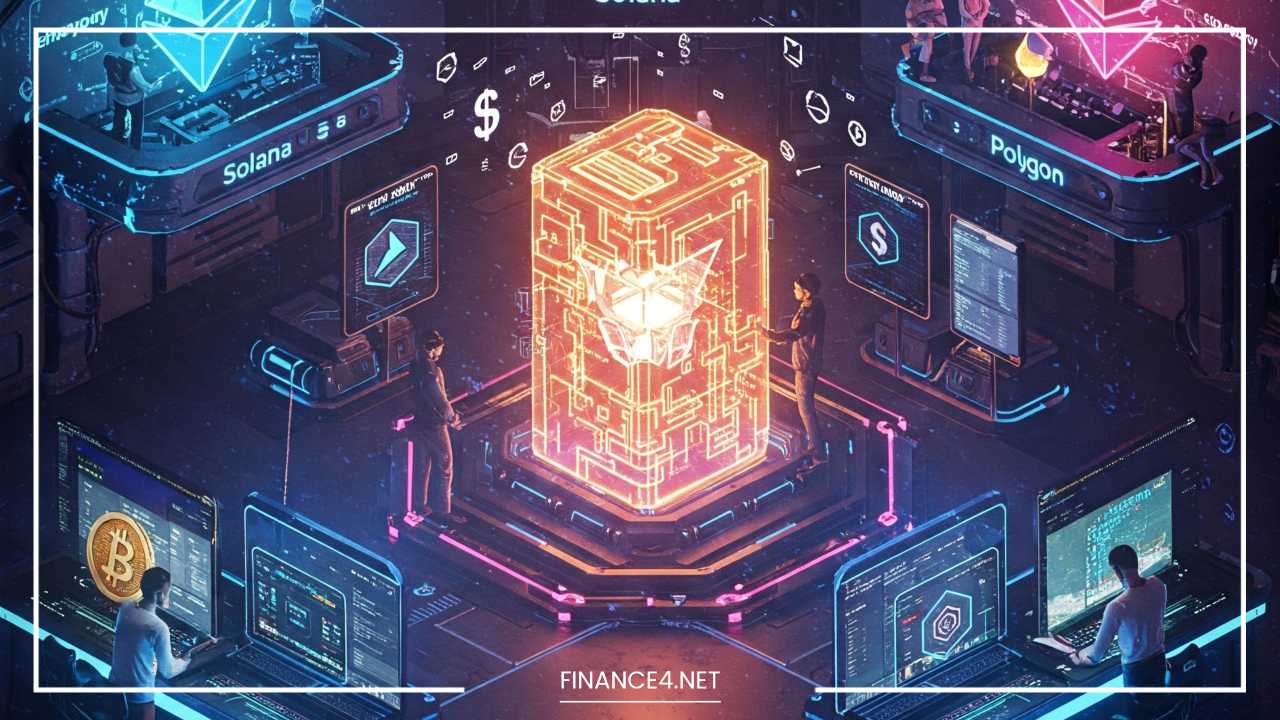
Enter multi-chain NFTs. This evolution allows creators to mint, manage, and sell their digital assets across multiple blockchain ecosystems simultaneously. Whether you are an independent artist, a game developer, or a brand manager, the choice of platform can determine the success of your project. Multi-chain platforms offer the flexibility to leverage the security of Ethereum, the speed of Solana, and the cost-efficiency of Polygon all in one place.
In this comprehensive guide, we will explore the best multi-chain NFT creator platforms, dive into why cross-chain compatibility is the future of digital ownership, and provide the deep technical and strategic insights needed to navigate this complex market.
What Are Multi-Chain NFT Platforms?
In the early days of NFTs, almost everything lived on Ethereum. While Ethereum remains the “gold standard” for security and liquidity, its high transaction costs (gas fees) often priced out smaller creators. A multi-chain NFT platform is a marketplace or creation suite that supports multiple blockchain networks, allowing users to interact with different ecosystems through a single interface.
Single-Chain vs. Multi-Chain: The Key Differences
A single-chain platform is locked into one ecosystem. For example, a platform that only supports Tezos requires every buyer to own Tezos (XTZ) tokens and use a Tezos-compatible wallet like Temple. If that network experiences a surge in traffic or a drop in users, the creator’s options are limited.
Multi-chain platforms, conversely, act as a bridge. They provide a unified dashboard where you can mint an affordable collection on Polygon, a high-value 1-of-1 on Ethereum, and a gaming utility asset on Solana. This removes the “silo” effect that has long plagued the crypto world.
The Strategic Benefits
-
Cross-Chain Compatibility: Users from different ecosystems can discover your work. A collector who only uses Solana wallets can now interact with your brand if you’re on a multi-chain platform that supports Solana-Ethereum bridging.
-
Lower Transaction Fees: By using Layer 2 solutions like Arbitrum or Base, or high-performance chains like Solana, creators can avoid the $50–$100 gas fees often associated with Ethereum mainnet.
-
Future-Proofing: The “winning” blockchain of today might not be the leader tomorrow. Multi-chain support ensures your digital assets aren’t stranded on a dying or stagnant network.
-
Increased Liquidity: By tapping into multiple pools of capital across different chains, your NFTs have a higher chance of being traded and maintaining value.
-
Scalability: For large-scale projects, such as a 10,000-piece avatar collection, the ability to choose a chain with high throughput ensures that your “mint day” doesn’t crash the network or result in failed transactions for your fans.
Popular Blockchains in the Multi-Chain Space
To understand these platforms, one must understand the chains they support:
-
Ethereum: The home of high-value blue-chip NFTs but expensive to use.
-
Polygon: An Ethereum Layer 2 that offers near-zero fees while staying connected to Ethereum’s security.
-
Solana: Known for incredible speed and a massive community of retail collectors and gamers.
-
Binance Smart Chain (BSC): Popular for its low fees and integration with the world’s largest exchange ecosystem.
-
Base: Coinbase’s Layer 2, which has rapidly become a hub for consumer-facing NFT apps.
-
Avalanche: Favored by developers for its sub-second finality and reliability.
Key Features to Look for in NFT Creator Platforms
Choosing a platform is about more than just finding the lowest fees. To build a sustainable NFT project, you need a toolkit that handles the technical heavy lifting so you can focus on the art.
1. User-Friendly Interface
You shouldn’t need a computer science degree to mint an NFT. The best platforms provide a “no-code” experience, guiding you through uploading files, setting metadata (the description and traits of your NFT), and deploying smart contracts with simple forms.
2. Advanced Minting Options
Look for platforms that offer Lazy Minting and Batch Minting.
-
Lazy Minting: This is a game-changer for new artists. It allows you to list an NFT for sale without actually “minting” it on the blockchain until someone buys it. This moves the gas fee burden from the creator to the buyer.
-
Batch Minting: Essential for large collections. It allows you to create hundreds or thousands of tokens in a single transaction, significantly reducing the cumulative cost of deployment.
3. Smart Contract Flexibility
Does the platform own the contract, or do you? Many beginner sites use a “shared contract,” which means your NFT is lumped in with thousands of others. Professional creators should look for platforms that allow them to deploy their own independent smart contracts. This ensures you have total control over your provenance and long-term royalties, and it makes your project look more professional on blockchain explorers like Etherscan.
4. Royalty Settings and Resale Mechanisms
Royalties are a core appeal of NFTs, providing a way for artists to earn a percentage of every secondary sale. However, royalty enforcement has become a controversial topic. Top multi-chain platforms should support EIP-2981 (the universal royalty standard) and provide tools to help enforce these payments across different marketplaces.
5. Security and Reputation
In a space prone to hacks and “rug pulls,” the reputation of your chosen platform reflects on your project. Look for platforms that have undergone third-party security audits and have a transparent leadership team.
Top Multi-Chain NFT Platforms: Detailed Analysis
The following platforms have established themselves as leaders by providing robust tools for creators across diverse blockchain networks.
1. OpenSea: The Industry Giant
Often called the “Amazon of NFTs,” OpenSea remains the dominant force. It was the first major marketplace to go truly multi-chain, and it continues to set the standard for ease of use.
-
Multi-Chain Support: Ethereum, Polygon, Solana, Arbitrum, Base, Avalanche, and Optimism.
-
Key Features: OpenSea’s “Studio” is perhaps the most powerful no-code tool available. It allows creators to launch entire collections, set up “allowlists” (early access for fans), and manage drop schedules without writing a single line of Solidity code.
-
Pros: It has the highest traffic of any NFT site, meaning your work is more likely to be seen. Its “Seaport” protocol has significantly reduced gas costs for all users.
-
Cons: Because it is so large, it can be hard for new artists to stand out. Furthermore, its 2.5% platform fee is considered high by some professional traders.
2. Rarible: The Creator’s Choice
Rarible has pivoted from a simple marketplace to a massive infrastructure provider. It is highly respected for its “community-first” approach and its push for decentralization.
-
Multi-Chain Support: Ethereum, Polygon, Tezos, Flow, and Immutable X.
-
Key Features: Rarible’s standout feature is the Rarible White Label. This allows brands and creators to build their own custom-branded marketplace using Rarible’s multi-chain technology. It also uses the RARI token to give users a say in how the platform is governed.
-
Pros: Excellent royalty protection tools and a highly customizable user experience. It also aggregates listings from other platforms, giving your NFTs more visibility.
-
Cons: The user interface can sometimes feel cluttered because of the sheer number of features and chains supported.
3. Magic Eden: The High-Performance Hub
Originally the king of Solana, Magic Eden has aggressively expanded. It is now the primary destination for anyone interested in the intersection of NFTs, gaming, and the new “Bitcoin Ordinals” movement.
-
Multi-Chain Support: Solana, Bitcoin, Ethereum, Polygon, and Base.
-
Key Features: Magic Eden’s “Launchpad” is a curated service that helps top-tier projects launch. They provide technical support, marketing, and a massive “degen” (active trader) audience. They are also leaders in “Ordinals,” which are NFTs minted directly on the Bitcoin blockchain.
-
Pros: Extremely fast and responsive UI. It has a very loyal community and the best mobile app experience in the industry.
-
Cons: The Launchpad is very exclusive; it is difficult for independent artists to get featured.
4. Mintable: The Accessible Pioneer
Mintable was one of the first platforms to advocate for “gasless” minting. It remains a top choice for people who want to try NFTs without any initial financial risk.
-
Multi-Chain Support: Ethereum, Ripple (XRP Ledger), and Immutable X.
-
Key Features: Mintable offers an “Advanced Pro” store for creators who want to manage their own branding. Their integration with the XRP Ledger is a unique selling point, as it opens up a different demographic of crypto users.
-
Pros: Very low barrier to entry. They offer great educational guides for beginners.
-
Cons: The marketplace volume is lower than OpenSea or Magic Eden, which means your NFT might sit on the shelf longer before finding a buyer.
5. Cargo: The Developer’s Power Tool
Cargo is less of a “social” marketplace and more of a heavy-duty minting engine. It is designed for creators who need to handle massive amounts of data or complex smart contract logic.
-
Multi-Chain Support: Ethereum, Polygon, xDAI (Gnosis), and Avalanche.
-
Key Features: Cargo excels at Batch Minting and Unlockable Content. If you want to sell an NFT that grants access to a massive 4GB file or a private server, Cargo’s infrastructure is built to handle that securely.
-
Pros: Incredible flexibility for developers and power users. Very affordable minting costs on its supported sidechains.
-
Cons: The learning curve is steeper than OpenSea. It is not designed for the “casual” artist.
6. OKX NFT Marketplace: The Global Aggregator
OKX is one of the world’s largest crypto exchanges, and its NFT marketplace is built to be a “one-stop shop” for everything Web3.
-
Multi-Chain Support: Over 20 chains including Ethereum, BSC, Solana, and even niche chains like Fantom and ZkSync.
-
Key Features: It is an aggregator. When you list an NFT here, the platform doesn’t just show it to OKX users; it scans other marketplaces to ensure you are getting the best price and the most views.
-
Pros: Zero platform fees for many transactions and a seamless bridge between your exchange account and your NFT wallet.
-
Cons: Because it is part of a large exchange, some “purist” NFT collectors avoid it in favor of more decentralized platforms.
7. Blur: The Professional Trading Floor
While primarily a marketplace for buyers, Blur is essential for creators to understand because it controls a massive portion of the Ethereum trading volume.
-
Multi-Chain Support: Ethereum and Blast (Layer 2).
-
Key Features: Blur is built for “pro” traders who buy and sell in bulk. For a creator, having your collection “verified” on Blur is a sign that your project has reached a certain level of liquidity and market interest.
-
Pros: Unmatched speed and zero marketplace fees.
-
Cons: It can be a “cold” environment for artists. It focuses on floor prices and charts rather than the aesthetic value of the art.
How to Choose the Right Platform
Selecting the right platform is a strategic decision that should be based on your specific profile and goals.
Identify Your Persona
-
The Fine Artist: If you are creating high-resolution, one-of-one digital paintings, you want a platform with “prestige.” OpenSea (on Ethereum) or Rarible are your best bets. They have the “collector” class that is willing to pay higher prices for unique art.
-
The PFP/Avatar Creator: If you are launching 5,000–10,000 characters, you need low fees and a “Launchpad.” Magic Eden or OpenSea Studio are the leaders here. You want a chain like Polygon or Solana so your fans don’t pay more in gas than they do for the NFT.
-
The Indie Game Dev: You need a platform that supports high-speed transactions for items like skins, swords, or land. Magic Eden and Immutable X (often accessed through Mintable or Rarible) are specifically designed for this.
-
The Brand Manager: If you are a company like Nike or Starbucks, you need a “White Label” solution. Rarible or Mintable’s enterprise wings allow you to host the marketplace on your own domain, keeping the customer inside your ecosystem.
The Budget Factor
Don’t ignore the hidden costs. While “Gasless Minting” sounds great, these platforms often take a higher percentage of the final sale. Conversely, minting your own contract on Ethereum might cost $50 today, but it gives you 100% ownership and often leads to higher resale value.
Checklist for Final Decision:
-
Wallet Compatibility: Does the platform support the wallets my target audience uses (e.g., MetaMask, Phantom, Coinbase Wallet)?
-
File Support: Can it host my 100MB video file, or does it have a 20MB limit?
-
Community Support: Does the platform have an active Discord or Twitter where I can get help if my mint fails?
-
Analytics: Does the platform provide data on who is buying my NFTs and what the “floor price” trends look like?
The Technical Reality: How Multi-Chain Interoperability Works
To truly master these platforms, it helps to understand the “magic” happening behind the scenes. Multi-chain functionality usually relies on one of three methods:
1. Burn and Mint
When you “move” an NFT from Ethereum to Polygon, you aren’t actually moving the file. You “lock” or “burn” the NFT on Ethereum, and a bridge tells a contract on Polygon to “mint” an identical version there. Multi-chain platforms automate this so the user never sees the code.
2. Multi-Chain Aggregation
Platforms like OKX and Rarible don’t necessarily move the NFT. Instead, they use “APIs” to look at ten different blockchains at once. They present all the data in one window, allowing you to buy a Solana NFT using your Ethereum-based stablecoins (like USDC) through an integrated swap.
3. Layer 2 Scaling
This is the most popular method today. Chains like Base and Arbitrum sit “on top” of Ethereum. They bundle thousands of NFT transactions into one single “proof” and send it to the Ethereum mainnet. This gives you the security of the big chain with the price of a small one.
Future of Multi-Chain NFT Platforms
The industry is moving toward a future where the “blockchain” part of NFTs becomes invisible. Just as you don’t care if a website is hosted on Amazon Web Services or Google Cloud, NFT collectors won’t care which chain an asset lives on.
1. Unified Liquidity
We are seeing the rise of “omnichain” NFTs (using technology like LayerZero). These are NFTs that can exist on any chain at any time. Future creator platforms will likely default to this, meaning you mint once and your NFT “floats” across the entire internet.
2. Physical-to-Digital (Phygitals)
Multi-chain platforms are beginning to support “tokenized real-world assets.” This means you could buy a physical pair of sneakers that comes with a multi-chain NFT. The NFT acts as a certificate of authenticity that follows the shoes, regardless of which digital world (metaverse) the owner enters.
3. Eco-Friendly Standards
The “Proof of Work” era of Ethereum is over, and nearly all multi-chain platforms now prioritize “Proof of Stake” chains. This has reduced the carbon footprint of NFTs by over 99.9%. This shift is making NFTs more palatable for mainstream brands and environmentally conscious artists.
4. AI Integration
We are already seeing platforms integrate AI generation tools directly into the minting dashboard. In the future, you might describe an image to an AI on OpenSea, and it will generate, optimize, and mint the NFT across three different chains in seconds.
Final Thoughts
The Best Multi-Chain NFT Creator Platforms are those that empower the creator while protecting the collector. The “siloed” era of crypto is fading, replaced by a vibrant, interconnected web of blockchains.
For the artist, this means your work is no longer limited by the high costs of a single network. For the developer, it means your game assets can reach players regardless of their wallet preference. And for the brand, it means a more professional, scalable way to engage with customers.
As you embark on your NFT journey, remember that the technology is just a tool. The real value lies in the community you build and the utility you provide. Start by exploring a low-cost chain like Polygon or Base via OpenSea or Rarible. Experiment with the tools, engage with the collectors, and find the digital home that best fits your creative vision.
The digital economy is being rewritten in real-time. By leveraging multi-chain platforms, you are positioning yourself at the forefront of the next generation of the internet—one where ownership is decentralized, global, and accessible to everyone.