NFT Ecosystem Expansions via Bridging
 by
by 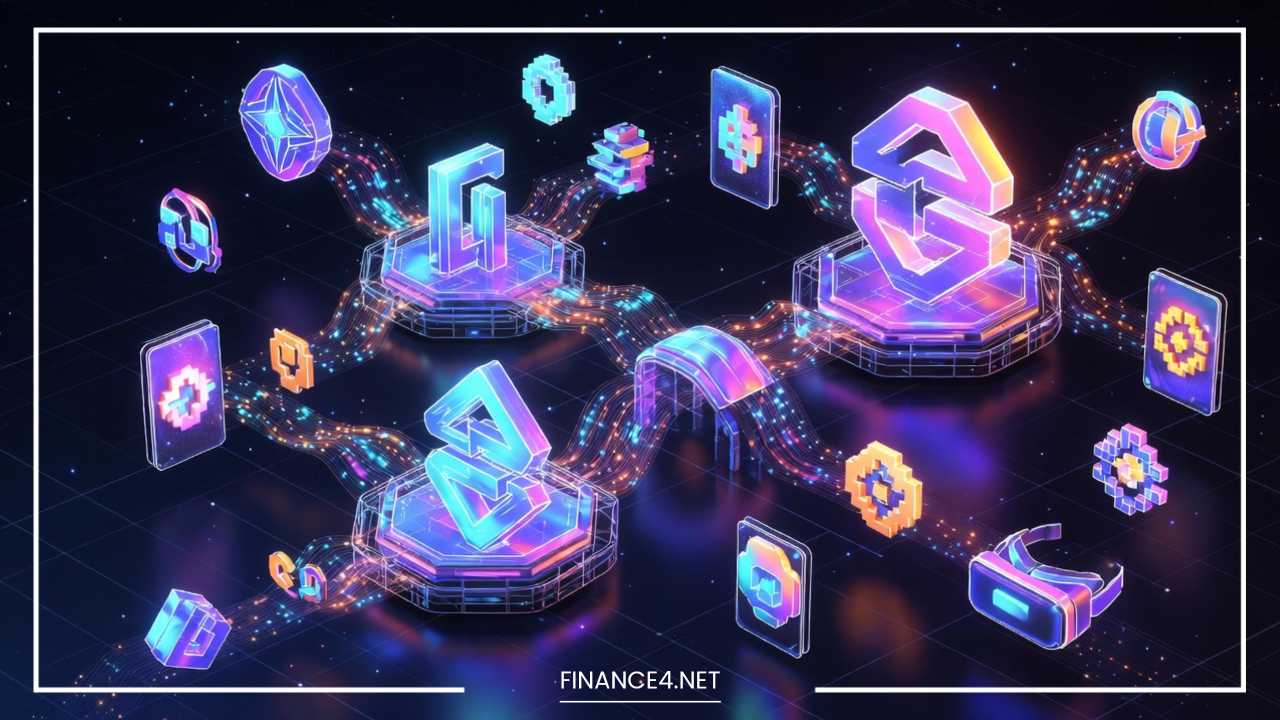
NFT Ecosystem Expansions via Bridging
Why NFT Ecosystems Need Expansion
The digital asset revolution, spearheaded by Non-Fungible Tokens (NFTs), has fundamentally altered our understanding of digital ownership, provenance, and value. In its early iterations, the NFT market was largely a monochromatic landscape dominated by the Ethereum mainnet. While this provided a centralized hub for liquidity and high-value blue-chip collections, it also highlighted a critical vulnerability: the limitation of single-chain ecosystems. As transaction costs soared and network congestion became a recurring obstacle, the need for a more expansive, fluid, and interconnected environment became undeniable.
An NFT ecosystem is not merely a collection of digital files stored on a ledger; it is a complex, living web of creators, marketplaces, developers, and collectors, all underpinned by a specific blockchain’s infrastructure. When an ecosystem is confined to a single chain, it is subject to that chain’s specific throughput, fee structures, and community demographics. Expansion is not just a luxury; it is a necessity for the long-term viability of digital assets.
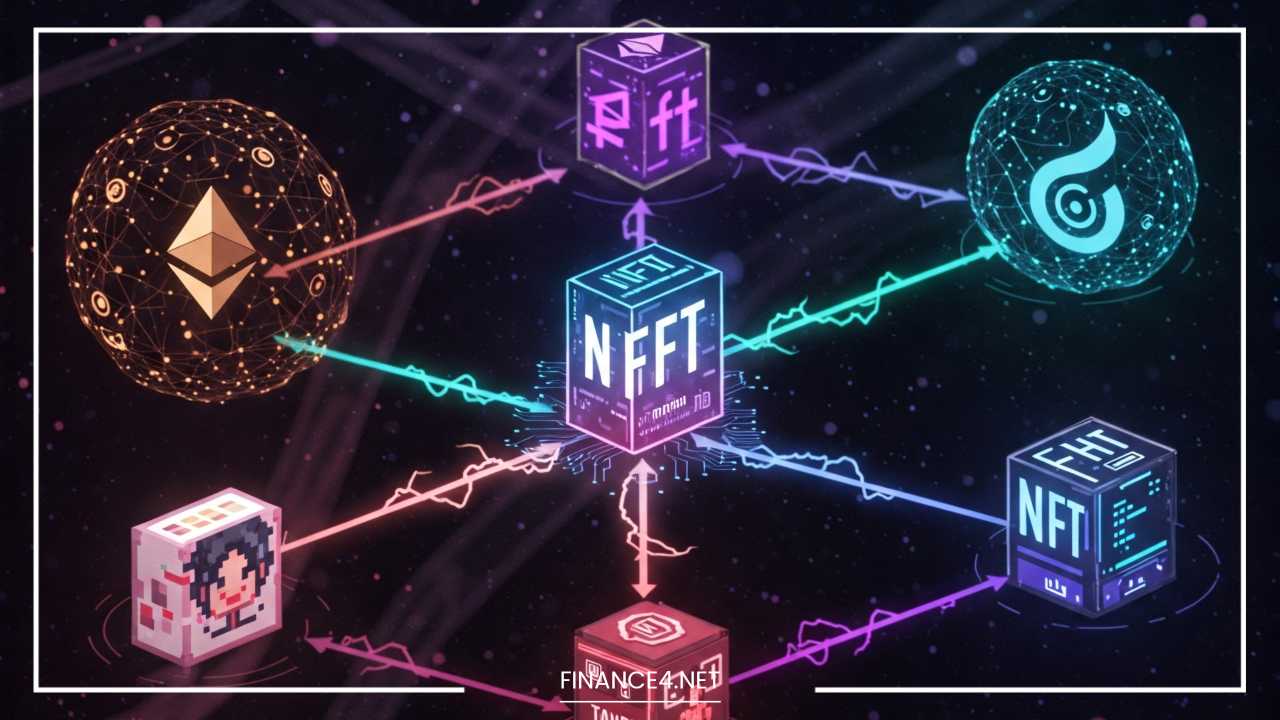
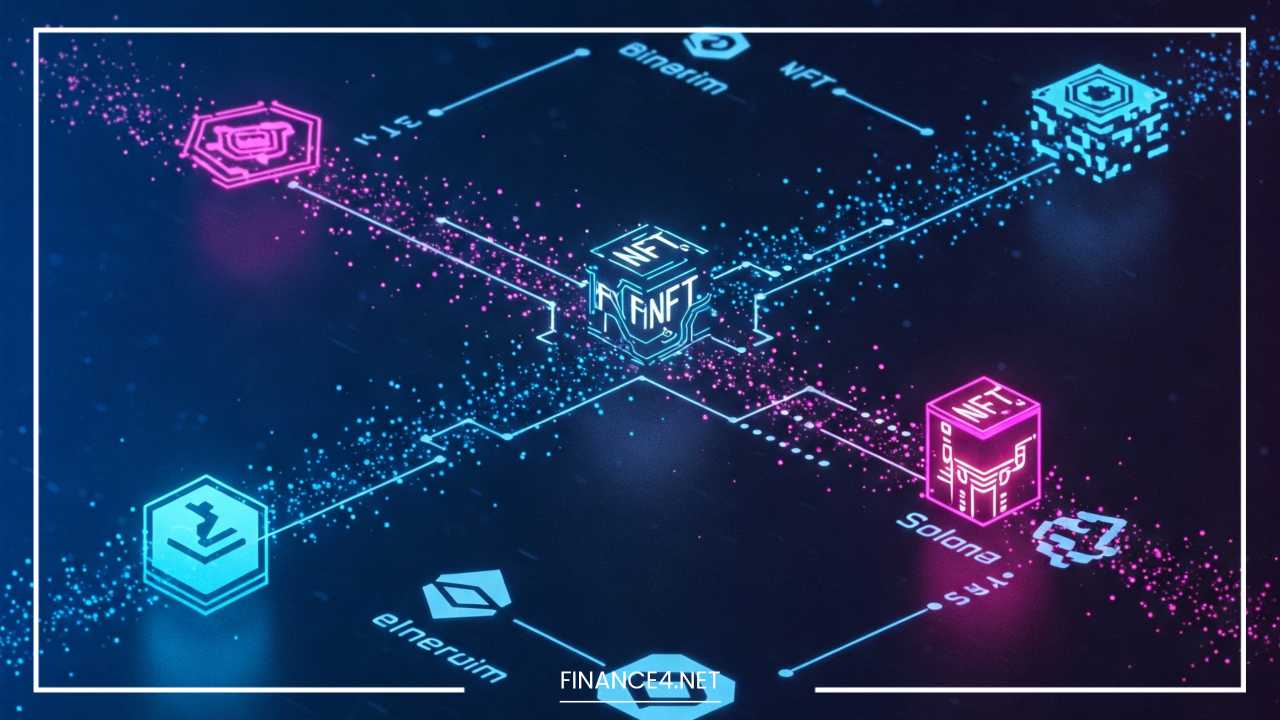
This expansion requires a bridge—a mechanism that allows value and data to flow between disparate networks. Bridging serves as the connective tissue that enables an NFT born on Ethereum to find utility in a high-speed gaming environment on Polygon, or to be collateralized in a DeFi protocol on Solana. By breaking down the “walled gardens” of individual blockchains, bridging facilitates a more robust liquidity profile, a broader reach for creators, and a fertile ground for cross-pollination of ideas and technology. This article explores how bridging serves as the primary catalyst for the next phase of NFT ecosystem growth, transforming isolated islands of digital property into a unified, global digital economy.
Understanding NFT Ecosystems
To appreciate the role of bridging, one must first understand the architecture of an NFT ecosystem. At its core, an NFT ecosystem is a symbiotic environment where various stakeholders interact using non-fungible digital assets. These ecosystems are built upon several foundational pillars that define how value is created and moved.
Key Components of an Ecosystem
-
Blockchains: The underlying ledger that records ownership and facilitates transfers. Each blockchain offers different trade-offs regarding security, decentralization, and scalability. For instance, Ethereum offers high security but higher costs, while Solana offers high speed but different decentralization profiles.
-
NFT Standards: Technical frameworks like Ethereum’s ERC-721 (for unique items) and ERC-1155 (for semi-fungible items) ensure that different applications can recognize and interact with the tokens. Without these standards, a marketplace would not know how to display or transfer a token.
-
Marketplaces: These are the “public squares” where assets are discovered, listed, and traded. Marketplaces like OpenSea, Blur, or Magic Eden act as the primary interface for the average user.
-
Stakeholders: This includes the creators (artists, musicians, developers), the collectors (investors, fans), and the infrastructure providers (wallet developers, node operators).
The Growth Trajectory
Ecosystems usually grow through two primary avenues: organic community building and infrastructure advancement. Organic growth occurs when a specific project, such as a high-profile art drop or a popular game, attracts thousands of new users. Infrastructure growth occurs when developers build tools—like faster wallets or cheaper scaling solutions—that lower the barrier to entry.
However, as these ecosystems mature, they inevitably face interoperability challenges. A collector holding a valuable asset on an expensive Layer 1 may find themselves “priced out” of using that asset in a micro-transaction-heavy game on a Layer 2 or a sidechain. Without interoperability, these ecosystems remain fragmented. A fragmented market is an inefficient market, where liquidity is trapped in silos and users are forced to manage multiple identities, gas tokens, and wallets across various networks. Bridging addresses these challenges by creating a pathway for assets to move where they are most useful.
What Is Bridging in the NFT Context?
In the broader blockchain world, bridging refers to the transfer of data or assets from one independent blockchain to another. In the context of NFTs, this process is more nuanced than simple fungible token swaps. While a fungible token (like ETH or USDC) is interchangeable—one unit is the same as any other—an NFT is unique. Therefore, bridging an NFT requires maintaining its unique identity, its specific metadata, and its historical provenance across different execution environments.
The Mechanics of NFT Bridging
There are several technical methods used to facilitate this movement, each with its own implications for security and ownership:
1. Lock-and-Mint
This is the most common approach. The original NFT is sent to a smart contract on the source chain, where it is “locked” or held in escrow. A corresponding “wrapped” version of that NFT is then minted on the destination chain. The wrapped NFT represents the original and carries its metadata. If the user wants to return to the source chain, the wrapped NFT is “burned” (destroyed) on the destination chain, which triggers a proof-of-transfer that releases the original NFT on the source chain.
2. Burn-and-Mint
In this scenario, the NFT on the source chain is permanently destroyed (burned), and an identical NFT is minted on the destination chain. This is often used for permanent migrations or when the underlying smart contract supports cross-chain minting. This method is technically cleaner as it doesn’t leave “orphaned” assets in escrow, but it requires the NFT contract to be designed with cross-chain capabilities from the start.
Wrapped NFTs and Metadata Preservation
A “wrapped” NFT is essentially a placeholder. The challenge lies in metadata preservation. Since an NFT’s value often resides in its associated data (images, traits, rarity, or in-game stats), the bridge must ensure that the URI (Uniform Resource Identifier) pointing to this data remains consistent and accessible on the new chain. If the metadata link is broken during the bridging process, the asset becomes a “blank” token, losing its aesthetic and functional value. Effective bridging protocols prioritize “state consistency,” ensuring that the version of the asset on Chain B is an accurate reflection of its status on Chain A.
Types of NFT Bridges
Not all bridges are created equal. The architecture of a bridge determines its security profile, transaction speed, and the level of trust a user must place in a third party.
Custodial vs. Non-Custodial Bridges
Custodial bridges rely on a central entity or a group of trusted validators to hold the locked assets and mint the new ones. While often faster and offering a smoother user experience, they introduce “counterparty risk”—if the custodian is compromised or goes offline, the original assets may be lost forever. Non-custodial bridges (or decentralized bridges) use smart contracts and mathematical proofs (such as Zero-Knowledge proofs) to handle the transfer, removing the need for a trusted middleman and ensuring the user maintains control over the process.
Native vs. Wrapped NFT Bridges
Native bridges are often built by the blockchain developers themselves (e.g., the Polygon PoS Bridge or the Arbitrum Bridge). They are generally considered safer because they are integrated into the network’s core consensus or security logic. Wrapped NFT bridges are third-party protocols (e.g., Wormhole, LayerZero, or Axelar) that create a generic “wrapper” around the asset to move it across many different, often unrelated, networks.
Chain-Specific vs. Cross-Chain Hubs
Some bridges are “point-to-point,” designed specifically to move assets between two particular networks, such as Ethereum to Optimism. Others are “omni-chain” hubs, designed to facilitate movement across an entire web of networks. These hubs act as a central clearinghouse for assets, allowing a user to move an NFT from Avalanche to Polygon to Ethereum without needing separate bridges for each leg of the journey.
One-way vs. Bi-directional Bridges
One-way bridges allow assets to move from a source to a destination but do not support the return journey. These are rare in modern NFT ecosystems and are usually used for “token migrations” where a project is permanently leaving an old chain. Bi-directional bridges allow for the free flow of assets back and forth, which is essential for maintaining a fluid, active market.
How Bridging Expands NFT Ecosystems
The implementation of bridging technology acts as a force multiplier for NFT growth. By removing the geographical boundaries of blockchains, it enables several key expansionary effects that were previously impossible.
Cross-Chain Liquidity
Liquidity is the lifeblood of any market. In a single-chain world, an NFT’s liquidity is limited to the users and capital of that specific chain. If you own a high-value NFT on a chain with low trading volume, you might find it difficult to sell at a fair price. Bridging allows an NFT to be moved to a chain where there is a higher concentration of buyers or specialized marketplaces. This prevents “liquidity fragmentation,” where price discovery is hindered by a lack of participants.
Access to New Communities and Demographics
Every blockchain has its own culture. Ethereum is often the home of “blue-chip” art and high-finance; Solana attracts a younger, high-frequency trading crowd; Polygon is a hub for retail brands and gaming. By bridging a collection to a new chain, a creator can tap into a completely different demographic. For example, a luxury fashion NFT on Ethereum can bridge to a gaming-centric chain like Immutable to find utility as a wearable for in-game characters, reaching players who might never interact with the high-end art market.
Multi-Chain Marketplaces
Bridging allows marketplaces to become chain-agnostic. Instead of a user having to switch networks in their wallet and manage multiple different gas tokens, a bridged infrastructure allows them to browse and buy NFTs from various chains within a single interface. This significantly reduces the friction of discovery and purchase, making the experience feel more like traditional e-commerce.
Network Effects and Composability
When NFTs can move between chains, they can interact with a wider variety of Decentralized Finance (DeFi) protocols. This is known as “cross-chain composability.” An NFT could be used as collateral for a loan on one chain, and the borrowed capital could be used to yield farm on another. This deepens the economic utility of the NFT beyond mere speculation or aesthetic appreciation. It turns the NFT into a productive financial instrument that can traverse the entire Web3 landscape.
Technical Challenges in NFT Bridging
Despite the immense benefits, bridging remains one of the most technically demanding and risky areas of blockchain development. Several hurdles prevent it from being a perfect solution.
Security Risks and “Honeypots”
Bridges are notorious targets for hackers. Because they often hold massive amounts of “locked” assets in a single smart contract, they represent what is known as a “honeypot.” If a hacker finds a single bug in the bridge’s code, they can potentially drain the entire supply of escrowed NFTs. Some of the largest thefts in crypto history have occurred via bridge exploits.
Smart Contract Heterogeneity
Different blockchains use different programming languages and virtual machines. Ethereum uses Solidity and the EVM (Ethereum Virtual Machine), while Solana uses Rust and a completely different architecture. Writing a bridge that translates logic perfectly between these disparate environments is incredibly complex. A small error in how a “burn” message is interpreted on the destination chain can lead to “double-spending” or the permanent loss of the asset.
The Metadata and URI Problem
If an NFT’s metadata (the image or data file) is stored on a centralized server or a chain-specific storage solution, bridging the token doesn’t necessarily mean the metadata follows it. If the link between the token ID on the new chain and the storage source is broken, the NFT becomes a “dead” asset. Ensuring that decentralized storage solutions like IPFS or Arweave are correctly mapped across chains is a constant logistical challenge.
Royalty Enforcement Issues
This is perhaps the biggest hurdle for creators. NFT royalties are typically enforced at the marketplace or smart contract level on a specific chain. When an NFT is bridged to a new chain and sold on a new marketplace, the original royalty instructions may not be recognized. This “broken royalty link” can deprive artists of their secondary sales revenue, which is often their primary incentive for using NFTs in the first place.
Security Considerations and Risk Mitigation
Given the high stakes, security must be the primary focus of any bridging expansion. The industry has moved toward several best practices to mitigate these risks.
Audits and Formal Verification
Bridges should undergo multiple rigorous audits by independent security firms. However, audits are just a snapshot in time. Many advanced protocols are now using formal verification—a process that uses mathematical proofs to ensure the code behaves exactly as intended under every possible scenario. This is becoming the gold standard for high-value bridging infrastructure.
Decentralized Validation Mechanisms
Instead of a single administrator holding a key to the bridge, modern bridges use Multi-Party Computation (MPC) or decentralized oracle networks (like Chainlink) to validate transactions. This ensures that no single point of failure can compromise the bridge. If one validator is hacked, the others can still maintain the integrity of the system.
Rate Limiting and Circuit Breakers
To prevent massive, sudden drains, some bridges implement rate limits on how much value can be moved within a certain timeframe. If an unusual spike in activity occurs—such as 90% of a collection being bridged in minutes—the “circuit breakers” can pause the bridge for manual inspection by the developers, preventing a full-scale exploit.
Economic and Market Impact of NFT Bridging
The ability to move NFTs across chains has a profound impact on market dynamics and the way value is perceived.
Price Discovery and Global Valuation
When an asset is restricted to one chain, its price is influenced by that chain’s local economy and the “whale” investors on that specific network. Bridging allows for “global” price discovery. If an NFT is undervalued on Chain A but highly sought after on Chain B, arbitrageurs and collectors will bridge the asset to the higher-value market. This eventually leads to a stabilized, fair market price across the entire global ecosystem.
Liquidity Unification vs. Fragmentation
While bridging aims to unify liquidity, it can temporarily cause fragmentation if too many different “wrapped” versions of the same NFT exist. For instance, if there are three different bridges moving an NFT from Ethereum to Polygon, you might end up with “Bridge-A-NFT,” “Bridge-B-NFT,” and “Bridge-C-NFT,” which are not interchangeable. The industry is currently working toward “canonical” wrapped assets to ensure that liquidity stays concentrated in one version of the bridged asset.
Creator Economics and New Monetization
For creators, bridging offers a “mint once, distribute everywhere” model. A musician could mint a limited edition song on a low-cost chain like Base to keep entry prices low for fans, while still providing the infrastructure for those fans to bridge the asset to a high-security chain for long-term “cold storage” or prestige. This flexibility allows creators to design more complex and inclusive economic models for their communities.
Real-World Use Cases and Ecosystem Examples
The theory of bridging is already being put into practice across the Web3 landscape, proving its value in real-time.
Cross-Chain Gaming (The “Multiverse” Concept)
In gaming, bridging is transformative. Consider a decentralized RPG where a player earns a rare sword on a dedicated gaming sidechain. Through bridging, that sword can be moved to a different game on another chain, or even to a social Metaverse platform where it can be displayed in a digital gallery. Projects like Aavegotchi and Axie Infinity have pioneered these movements, allowing assets to seek out the best gameplay environments and the most active economies.
Strategic Migrations: DeGods and y00ts
One of the most famous examples of ecosystem expansion via bridging occurred when the DeGods and y00ts collections announced they were bridging from Solana to Ethereum and Polygon. This wasn’t just a technical move; it was a strategic expansion to tap into the high-value liquidity of Ethereum and the corporate partnerships of Polygon. It demonstrated that a collection’s “home” is not permanent and that bridging allows a community to “pivot” to where the growth is.
Enterprise and Brand Expansions
Major brands like Nike (RTFKT) and Starbucks are looking at bridging to ensure their digital loyalty assets can interact with the wider world. A Starbucks “Stamp” (NFT) earned on their private or permissioned chain might eventually be bridged to a public chain like Ethereum, where the user can sell it or use it as a profile picture, blending corporate loyalty programs with the open internet.
Future of NFT Ecosystem Expansions via Bridging
Looking ahead, the goal of the industry is to reach a state of “Chain Abstraction.”
Invisible Infrastructure
In the future, the user won’t even know they are bridging. They will simply click “buy” or “use,” and the underlying infrastructure—powered by protocols like LayerZero or Axelar—will handle the movement of assets across chains in the background. The complexity of gas tokens and bridge waiting times will be abstracted away, making the experience as seamless as moving a file from a laptop to a cloud drive.
Standardization of Cross-Chain NFTs
We are likely to see the emergence of “Universal NFT Standards.” Much like the internet relies on TCP/IP to move data regardless of the hardware, a universal NFT standard would allow any bridge to recognize the metadata, royalty structures, and utility of an NFT regardless of its origin. This would solve the “fragmented liquidity” problem once and for all.
AI-Optimized Bridging
Artificial Intelligence may play a role in optimizing bridge routes. An AI agent could find the cheapest and fastest way to move a high-value asset, while simultaneously monitoring bridge smart contracts for signs of malicious activity. This “intelligent layer” would add both efficiency and an extra level of security for the average user.
Regulatory Considerations
As NFTs begin to represent real-world assets (RWAs) like real estate deeds or intellectual property, bridging will face new regulatory hurdles. We may see the rise of “permissioned bridges” that require Identity (KYC) checks before an asset can be moved. This would allow institutional players to participate in the NFT ecosystem while remaining compliant with international financial laws.
Final Thoughts
The expansion of NFT ecosystems via bridging marks a shift from the “experimental” phase of digital assets to the “infrastructure” phase. In the early days, it was enough for an NFT simply to exist on a blockchain. Today, for an NFT to be truly valuable, it must be useful, accessible, and portable.
Bridging is the fundamental technology that transforms NFTs from static digital objects into dynamic, multi-chain assets. It allows for a world where your digital identity and property are not held hostage by the limitations of a single network. While technical and security challenges remain, the progress made in decentralized validation and cross-chain communication is paving the way for a truly borderless digital economy.
As bridging technology matures and becomes “invisible,” the boundaries between different blockchains will fade. What will remain is a single, massive, and highly liquid global ecosystem—a digital frontier where value flows as freely as information does today. The future of NFTs is not on a single chain; it is on every chain.