Best Cross-Chain Tools for NFT Creators
 by
by 
Best Cross-Chain Tools for NFT Creators | Top NFT Development Tools
In the rapidly evolving landscape of 2026, the “walled garden” era of NFTs is officially over. For years, creators were forced to choose a single ecosystem—typically Ethereum for prestige or Polygon for speed—often sacrificing a significant portion of the global market in the process. Today, cross-chain technology has matured from a complex experimental niche into a fundamental requirement for any serious NFT project.
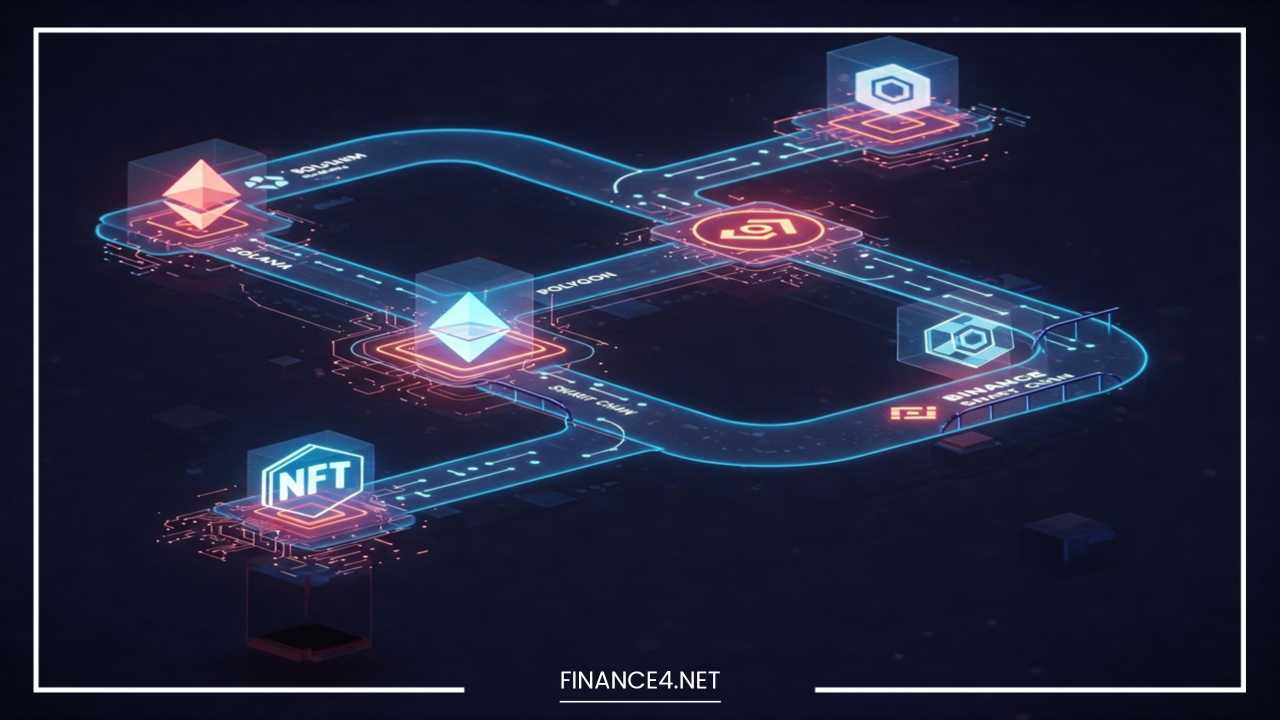
A cross-chain NFT is not just a digital asset; it is a traveler. It can exist on Ethereum for high-value security, migrate to Solana for high-frequency trading, or settle on a Layer 2 like Arbitrum for low-cost gaming utility. This article provides a comprehensive deep dive into the best cross-chain tools for NFT creators, exploring the infrastructure and development platforms that are defining the multi-chain frontier.
Understanding Cross-Chain Technology
Definition and Scope
Cross-chain technology refers to the protocols and tools that allow independent blockchains to communicate and share data. In the context of NFTs, this means an asset can move between different networks (interoperability) or exist as a single “omnichain” entity that maintains its metadata and state regardless of which chain it currently resides on.
The Importance for NFT Creators in 2026
The fragmentation of the blockchain space was once a major hurdle. Today, creators prioritize cross-chain functionality for several primary reasons:
-
Wider Audience Reach: By launching across multiple chains, you tap into diverse communities. A collector on Avalanche may never bridge funds to Ethereum, but they will happily buy your art if it is available natively on their preferred network.
-
Network Optimization: You can mint an NFT on a cheap, fast chain while allowing it to be bridged to high-liquidity marketplaces for secondary sales.
-
Risk Mitigation: If a specific blockchain experiences downtime, high congestion, or a loss of developer interest, your project remains viable because it exists elsewhere.
How It Works: The Mechanics of Interoperability
To understand the tools, one must understand the plumbing. Most cross-chain NFT tools rely on one of these three mechanisms:
-
Lock-and-Mint: The original NFT is locked in a smart contract on Chain A. A “wrapped” version (a synthetic representative) is then minted on Chain B. If the user wants to return, the wrapped version is burned, and the original is unlocked.
-
Burn-and-Mint: The NFT is completely destroyed on the source chain, and a fresh, native version is minted on the destination chain. This is often preferred for maintaining “clean” provenance.
-
Omnichain Protocols: This is the “gold standard” of 2026. Using protocols like LayerZero, the NFT doesn’t feel like it is “moving” between chains; rather, the protocol tracks which chain currently has the right to “house” the asset, allowing it to exist natively on any supported network without wrapping.
Benefits of Cross-Chain Tools for NFT Creators
The shift toward multi-chain development has unlocked a suite of advantages that were previously impossible:
Multi-Chain Minting
Modern tools allow for “unified minting” events. A creator can set up a single landing page where a user connects their wallet, and the site automatically detects the chain they are on. Whether they have ETH, SOL, or MATIC, they can mint the NFT immediately. This removes the friction of forcing users to use a bridge before they can even buy your work.
Enhanced Liquidity
Liquidity is the lifeblood of NFTs. By being available on OpenSea (Ethereum), Magic Eden (Solana), and various L2 marketplaces simultaneously, a project taps into multiple pools of capital. If a “whale” on one chain takes interest, they can sweep the floor without the creator needing to manually move assets between chains.
Better Collaboration Opportunities
Cross-chain tools allow for “inter-ecosystem” collaborations. For example, a creator on Ethereum could offer a free “airdrop” or “allowlist” spot to holders of a specific collection on Solana. Cross-chain messaging protocols make it possible to verify ownership across different technical architectures (EVM vs. Non-EVM).
Key Features to Look for in Cross-Chain NFT Tools
Selecting the right development stack is critical. When evaluating tools, look for these six pillars:
-
Breadth of Support: Does the tool support only EVM (Ethereum Virtual Machine) chains, or can it bridge to non-EVM environments like Solana, Cosmos, or Bitcoin (Ordinals)?
-
Developer Experience (DX): Does it offer low-code solutions, or is it strictly a CLI/SDK-based tool for senior engineers?
-
Security and Audits: Cross-chain bridges are frequent targets for exploits. Look for audited protocols with “defense-in-depth” security (e.g., Chainlink CCIP).
-
Metadata Management: Ensure the tool handles decentralized storage (IPFS/Arweave) correctly so that images and traits don’t “break” when moving chains.
-
Analytics and Tracking: Tracking a collection’s floor price and volume across five different chains is a nightmare without integrated cross-chain dashboards.
-
Smart Contract Flexibility: Does it support both ERC-721 (unique) and ERC-1155 (semi-fungible) standards?
Top Cross-Chain Tools for NFT Creators
The following tools represent the current “gold standard” of NFT development.
1. Thirdweb: The All-In-One Powerhouse
Thirdweb has evolved into the most user-friendly ecosystem for NFT creators. It provides a full-stack solution, from smart contract deployment to front-end SDKs.
-
Overview: A platform that allows you to build, launch, and manage web3 apps without writing all the boilerplate code yourself.
-
Key Features: Pre-built, audited “Modular Contracts” that support cross-chain functionality out of the box. Their “Engine” product handles server-side transactions, making it easy to manage multi-chain drops.
-
Supported Blockchains: Virtually all EVM chains (Ethereum, Polygon, Base, Arbitrum) and Solana.
-
Pros: Incredible UI; requires minimal coding knowledge; robust SDKs for Unity and Unreal Engine.
-
Cons: Higher-level features require a subscription; less control over the underlying infrastructure for power users.
2. LayerZero: The Omnichain Pioneer
LayerZero isn’t a marketplace; it’s a messaging protocol. It introduced the ONFT (Omnichain Non-Fungible Token) standard.
-
Overview: A protocol that enables “ultra-light nodes” on various chains to talk to each other directly.
-
Key Features: Allows NFTs to move across chains with “instant finality” and without the risks of traditional wrapping. It treats every chain as a “local” environment.
-
Supported Blockchains: 70+ networks including Ethereum, Solana, Aptos, and various Layer 2s.
-
Pros: Native asset movement; extremely lightweight; highly decentralized.
-
Cons: Requires significant technical expertise to implement; not a “no-code” tool.
3. Chainlink CCIP (Cross-Chain Interoperability Protocol)
Chainlink is the industry leader in decentralized oracle security. CCIP is its answer to the bridge problem.
-
Overview: A secure protocol for transferring data and tokens across different blockchain networks.
-
Key Features: Includes a “Risk Management Network” that constantly monitors for suspicious activity. It supports “Programmable Token Transfers,” allowing you to send an NFT and a command (like “stake this NFT”) in one step.
-
Supported Blockchains: Major EVM chains and expanding rapidly.
-
Pros: Unmatched security standards; backed by the most trusted name in oracles.
-
Cons: Can be slower than competitors due to high security checks; higher transaction costs.
4. Moralis: Backend Infrastructure for Multi-Chain
Moralis acts as the “Firebase of Web3.” If you are building a dApp that needs to show NFTs from multiple chains, Moralis is the go-to tool.
-
Overview: Provides a suite of APIs that index blockchain data in real-time.
-
Key Features: Their NFT API provides enriched metadata, floor price tracking, and ownership data across all chains in a single response.
-
Supported Blockchains: Ethereum, BSC, Polygon, Arbitrum, Solana, and more.
-
Pros: Best-in-class data indexing; reduces backend development time by months.
-
Cons: Focuses more on data and reading rather than the actual “minting” or “bridging” logic.
5. OpenSea + Seaport Protocol
While OpenSea is a marketplace, its Seaport protocol is a powerful developer tool for cross-chain listing and trading.
-
Overview: An open-source marketplace protocol that allows for complex trading of assets.
-
Key Features: Enables “cross-chain listings,” where an NFT on Polygon can be bought using ETH on Ethereum through automated bridge-and-buy mechanics.
-
Pros: Access to the largest pool of NFT collectors in the world.
-
Cons: High competition; fees can add up.
How to Choose the Right Tool for Your Project
The “best” tool depends entirely on your project’s goals and your team’s technical depth.
| Project Type | Recommended Tool | Why? |
| Independent Artist | Thirdweb | Easiest to use; great dashboard for management. |
| Web3 Game | LayerZero | Native movement of assets is vital for gameplay. |
| Enterprise / High Value | Chainlink CCIP | Security is the #1 priority; worth the extra cost. |
| Marketplace / Dashboard | Moralis | Best APIs for aggregating data across many chains. |
| Ethereum-to-Solana | Wormhole | Deepest liquidity and battle-tested for these specific chains. |
Detailed Comparison: EVM vs. Non-EVM Tooling
A major hurdle for creators is the technical gap between EVM (Ethereum-like) and Non-EVM (Solana, Move-based) chains.
-
EVM Tools: Tools like Hardhat, Foundry, and Remix are standard. Bridging between EVM chains is relatively “easy” because they share the same address formats and smart contract logic (Solidity).
-
Non-EVM Tools: Moving an NFT to Solana requires translating Solidity logic into Rust. Tools like Wormhole or LayerZero handle this “translation layer,” but creators must be aware that their NFT’s “smart contract” might behave differently on different architectures.
Step-by-Step Guide to Creating Cross-Chain NFTs
If you are ready to build, here is a simplified workflow for a modern cross-chain launch using the ONFT approach.
1. Define Your Asset and Metadata
First, ensure your artwork and metadata are stored on a decentralized network like IPFS or Arweave. In 2026, using centralized servers for NFT metadata is considered a major red flag for collectors.
2. Set Up Your Development Environment
Install the LayerZero SDK or use the Thirdweb Dashboard. If you are a developer, you will likely use Hardhat to manage your deployments.
3. Deploy the “Proxy” and “Remote” Contracts
With ONFTs, you deploy a “Proxy” contract on your home chain (e.g., Ethereum) and “Remote” contracts on your target chains (e.g., Polygon, Arbitrum). These contracts must be linked together so they recognize each other as valid “homes” for the NFT.
4. Configure the Messaging Layer
You must set “Pathways” between the chains. This tells the protocol that an NFT from Contract A on Ethereum is allowed to be “sent” to Contract B on Polygon.
5. Launch the Mint
Users can now mint on any of the supported chains. Once minted, they will see a “Bridge” or “Transfer” button in your UI, allowing them to move the asset between networks in seconds.
Challenges and Considerations for Cross-Chain NFTs
While the technology is powerful, it is not a “magic button.” Creators must navigate several complex challenges:
Transaction Fees (Gas)
Moving an NFT from Chain A to Chain B requires paying gas on both chains. Creators should consider “Gas Abstraction” tools (like Biconomy or Gelato) to pay for the user’s gas, making the cross-chain experience feel seamless and “free.”
Smart Contract Vulnerabilities
Every bridge is a potential point of failure. If the bridge contract is hacked, your NFTs on the destination chain could become worthless “ghost” tokens. Always prioritize audited tools like Chainlink or LayerZero.
Metadata Syncing Issues
If your NFT has “dynamic traits” (e.g., a gaming sword that gets sharper over time), updating those traits across all chains simultaneously is technically difficult. You must use a cross-chain state-syncing service to ensure the metadata stays uniform.
Market Fragmentation
Splitting your collection across five chains can sometimes “thin out” your community. It is often better to support two chains deeply than five chains poorly.
The Role of Oracles in Cross-Chain NFT Success
Oracles are often the unsung heroes of the NFT space. They provide the “real-world” or “cross-chain” data that makes advanced NFT utility possible.
-
Price Feeds: Ensure your NFT is priced correctly across different currencies (ETH, SOL, USDC).
-
Verifiable Randomness (VRF): Essential for fair mints and “loot box” mechanics. Chainlink VRF is the industry standard here.
-
Proof of Reserve: For high-value NFTs backed by real-world assets (RWAs), oracles prove that the underlying asset actually exists.
The Future of Cross-Chain NFTs: Chain Abstraction
As we look toward 2027 and beyond, the industry is moving toward Chain Abstraction. This is the idea that the user should never even know they are using a blockchain.
-
Unified Wallets: Future wallets will show a single “NFT Gallery” without segregating items by chain.
-
Automatic Bridging: If you list an NFT for sale on Ethereum, but the buyer only has SOL on Solana, the backend tools will automatically bridge the funds, swap the currency, and complete the trade in a single transaction.
-
AI-Enhanced Minting: AI agents will monitor gas prices across all chains and automatically suggest the cheapest network for a creator to launch their next drop.
Case Study: The Success of “Omnichain” Projects
In 2024 and 2025, projects like Lil Pudgys and Gh0stly Gh0sts proved the power of being “everywhere.” By utilizing LayerZero, these projects allowed their holders to move their avatars across multiple chains freely. This led to:
-
Higher secondary market volume than single-chain competitors.
-
A more resilient floor price.
-
Increased “social signaling” as holders could show off their NFTs in various ecosystems.
Final Thoughts
The NFT market has matured significantly. Collectors are no longer satisfied with static images locked on a single network; they want utility, liquidity, and freedom. For creators, this means the choice of development tools is now as important as the art itself.
By leveraging tools like Thirdweb for accessibility, LayerZero for native interoperability, and Chainlink for security, you can build a project that isn’t just a collection of files—it’s a global, multi-chain brand. The barriers are falling, and the tools are ready. The only question left is: where will your NFTs travel first?