Best DeFi Cross-Chain Solutions
 by
by 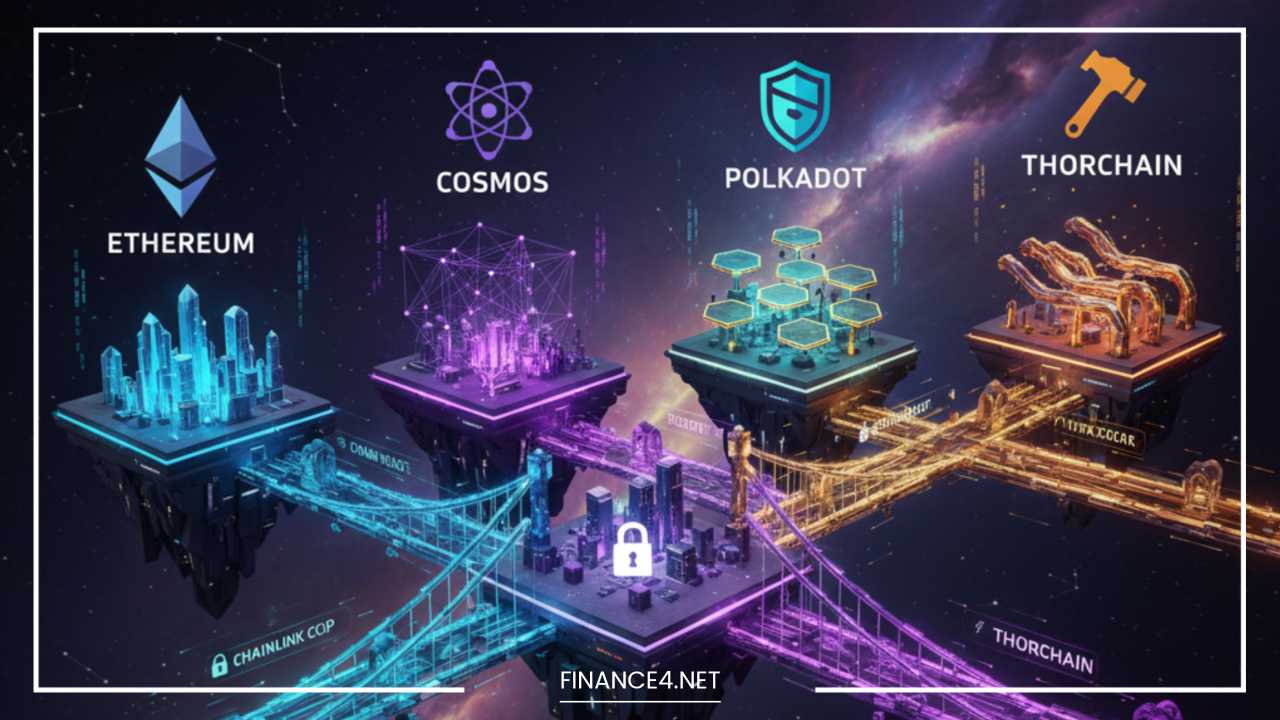
Best DeFi Cross-Chain Solutions | Top Blockchain Interoperability Platforms
In the early days of decentralized finance (DeFi), the ecosystem felt like a series of isolated islands. If your assets were on Ethereum, they stayed on Ethereum. If you wanted to explore the burgeoning world of Solana or Avalanche, you had to move through centralized exchanges, sacrificing the very decentralization that DeFi promised. This fragmentation created significant barriers to entry, diluted liquidity, and hindered the overall growth of the decentralized economy.
By 2026, the narrative has shifted entirely. We are no longer living in a “winner-takes-all” blockchain era but in a natively multi-chain world. Interoperability has moved from being a luxury feature to a day-one infrastructure requirement for any serious DeFi protocol. Cross-chain solutions are the bridges, tunnels, and shipping lanes that connect these disparate economies, allowing value, data, and user intent to flow seamlessly across the digital landscape.
This article explores the best DeFi cross-chain solutions currently defining the market, the technical mechanisms that power them, and the risks users must navigate in this interconnected future.
1. What Are Cross-Chain Solutions?
Cross-chain technology refers to the protocols and infrastructure that enable different blockchain networks to communicate and share data or assets with one another. Because blockchains are designed as closed-loop systems with their own consensus rules and state ledgers, they cannot inherently “see” what is happening on another chain. Cross-chain solutions break these silos.
The Power of Interoperability
In a mature DeFi ecosystem, interoperability serves three critical functions:
-
Liquidity Aggregation: Instead of having $1 billion in liquidity fragmented across five different chains, cross-chain protocols allow protocols to tap into a unified global pool, reducing slippage for traders.
-
Asset Portability: Users can move their collateral (e.g., ETH or BTC) to different chains to take advantage of higher yields, lower fees, or unique dApps without selling their underlying assets.
-
Functional Composability: Developers can build “omnichain” applications where a user on Chain A can trigger a complex smart contract action on Chain B.
Common Mechanisms
Most cross-chain operations fall into one of three categories:
-
Lock-and-Mint Bridges: Assets are locked in a smart contract on the source chain, and a “wrapped” representation is minted on the destination chain.
-
Liquidity Networks: Protocols maintain pools of native assets on multiple chains. When a user sends funds on Chain A, they receive native funds on Chain B from a local pool.
-
Cross-Chain Messaging: These protocols (like LayerZero or Chainlink CCIP) don’t just move tokens; they move “messages” or instructions, allowing a contract on one chain to call a function on another.
2. Key Features of a Good Cross-Chain DeFi Solution
Not all bridges are built equal. Given that cross-chain infrastructure has historically been a prime target for hackers, choosing a platform requires a rigorous assessment of several key pillars.
Security and Trust Assumptions
The most critical factor is the trust model. Trustless solutions rely on mathematical proofs (like ZK-proofs) or light clients to verify transactions, meaning you don’t have to trust a middleman. Trust-minimized solutions use a decentralized set of validators. The gold standard in 2026 is a “defense-in-depth” approach that combines multiple verification layers.
Speed and Finality
In DeFi, time is money. A cross-chain swap that takes 30 minutes is useless for high-frequency trading or liquidating a falling position. The best solutions offer “instant finality” or “optimistic” models that provide immediate liquidity to the user while the underlying chains settle in the background.
Cost Efficiency
Every cross-chain transaction involves gas fees on the source chain, destination chain, and often a protocol fee. Modern solutions optimize these costs by batching transactions or using gas-efficient messaging protocols to ensure that moving $100 doesn’t cost $50 in fees.
User Experience (UX)
The “abstraction” of complexity is a major trend in 2026. A top-tier solution should allow a user to interact with a cross-chain dApp without manually switching networks in their wallet or worrying about which bridge is being used under the hood.
3. Top DeFi Cross-Chain Solutions
The following platforms represent the pinnacle of interoperability in 2026, each offering a unique approach to connecting the fragmented blockchain world.
Chainlink CCIP (Cross-Chain Interoperability Protocol)
Chainlink has evolved from a simple price oracle into the “TCP/IP of blockchains.” CCIP is designed as a universal communication standard that allows institutions and DeFi protocols to move data and value across dozens of public and private chains.
-
How It Works: CCIP utilizes the same decentralized oracle networks (DONs) that secure billions in DeFi value. It features a unique Risk Management Network—an independent cluster of nodes that monitors cross-chain activity for anomalies or “fat-finger” errors, providing an extra layer of security that traditional bridges lack.
-
Strengths: Institutional-grade security, massive ecosystem support, and “programmable token transfers” that allow tokens and instructions to move in a single atomic transaction.
-
Weaknesses: Can be more expensive than simpler bridges due to the high security overhead.
THORChain
THORChain is the king of native, decentralized swaps. Unlike most bridges that use wrapped assets (like “Wrapped BTC”), THORChain allows you to swap native Bitcoin for native Ethereum directly.
-
How It Works: It functions as a Layer-1 blockchain built on the Cosmos SDK. It uses a 3:1 bonding model where node operators must stake RUNE (the native token) to secure the network. Liquidity is provided in pools paired with RUNE, acting as the settlement currency for all swaps.
-
Strengths: No wrapped asset risk; you always hold native coins. High decentralization and “Impermanent Loss Protection” for liquidity providers.
-
Weaknesses: Complexity of the RUNE economic model; history of early-stage exploits (though significantly hardened in recent years).
Polygon 2.0 & The AggLayer
Polygon has transitioned from a single sidechain into a vast “Aggregated Layer” (AggLayer). This is a decentralized protocol that unifies liquidity and state across all Polygon-based chains (CDK chains) and Ethereum.
-
How It Works: Using Zero-Knowledge (ZK) technology, the AggLayer allows near-instant, atomic transactions across the entire Polygon ecosystem. From a user’s perspective, interacting with ten different Polygon chains feels like using one single chain.
-
Strengths: Extremely low fees, massive developer adoption, and “unified liquidity” which prevents the fragmentation common in other Layer-2 ecosystems.
-
Weaknesses: Primarily focused on the Ethereum/Polygon ecosystem; less effective for non-EVM chains like Solana or Bitcoin.
Cosmos & IBC (Inter-Blockchain Communication)
Cosmos is the pioneer of the “Internet of Blockchains.” Its IBC protocol is arguably the most elegant and trustless interoperability standard in existence.
-
How It Works: IBC allows independent blockchains (Zones) to talk to each other without a central middleman. It uses light clients to verify the state of the counterparty chain. If Chain A wants to send tokens to Chain B, it sends a proof that the tokens were locked, and Chain B verifies this proof directly.
-
Strengths: Highly secure and decentralized; allows for sovereign chains to maintain their own rules while staying connected.
-
Weaknesses: Historically limited to the Cosmos ecosystem, though 2026 has seen successful expansions of IBC to Ethereum and Polkadot.
Avalanche & Warp Messaging (AWM)
Avalanche utilizes a unique “Subnet” architecture where anyone can launch their own custom blockchain. Avalanche Warp Messaging (AWM) provides the connective tissue for these Subnets.
-
How It Works: AWM allows Subnets to communicate natively using BLS (Boneh-Lynn-Shacham) signatures. This allows a validator on one Subnet to verify a message from another Subnet without needing an external bridge.
-
Strengths: Incredible speed (sub-second finality) and native interoperability between highly specialized institutional and gaming Subnets.
-
Weaknesses: Relies heavily on the Avalanche validator set; cross-ecosystem bridging (e.g., to Bitcoin) still requires third-party solutions like the Avalanche Bridge.
Polkadot & Parachains (XCM)
Polkadot takes a “sharded” approach to interoperability. It features a central Relay Chain that provides security for many parallel chains called Parachains.
-
How It Works: Interoperability is handled via XCM (Cross-Consensus Messaging). Because all parachains share the security of the Relay Chain, they can trust each other’s messages implicitly. This creates a “shared security” environment that is unique in the space.
-
Strengths: Extremely high security; sophisticated messaging that allows for complex cross-chain logic (e.g., remote governance).
-
Weaknesses: High barrier to entry for developers (parachain slots can be expensive); steeper learning curve compared to EVM-based solutions.
Wanchain
Wanchain is one of the oldest interoperability projects, focusing on decentralized cross-chain bridges using Secure Multi-Party Computation (sMPC).
-
How It Works: Wanchain uses a decentralized set of “Storemen” nodes that manage the cross-chain transactions. It was one of the first to bridge Bitcoin, Ethereum, and EOS, and has expanded to dozens of other chains.
-
Strengths: Strong focus on privacy (optional) and long-standing reputation for stability.
-
Weaknesses: Often overshadowed by newer, more heavily marketed protocols.
4. Risks and Challenges of Cross-Chain DeFi
Despite the incredible progress made by 2026, cross-chain operations remain one of the most high-risk areas of decentralized finance.
Smart Contract and Logic Vulnerabilities
Bridges are complex. They involve smart contracts on at least two different chains, often written in different languages. A bug in the “minting” logic on the destination chain can allow an attacker to print infinite tokens, even if the source chain is perfectly secure.
The “Honey Pot” Problem
Bridges that use the “lock-and-mint” model create massive centralized pools of capital on the source chain. These “vaults” are multi-billion dollar honey pots for hackers. If the private keys or the validator set of the bridge are compromised, the entire pool can be drained, leaving the wrapped tokens on the other side worthless.
Liquidity Fragmentation vs. Complexity
While interoperability aims to solve fragmentation, the proliferation of dozens of different “Wrapped USDT” versions (USDT.e, axlUSDT, stUSDT) can confuse users and dilute liquidity in DEX pools. The industry is moving toward native token standards to solve this, but the transition is ongoing.
Regulatory Scrutiny
In 2026, regulators have turned their focus toward cross-chain protocols, viewing them as potential avenues for money laundering due to their ability to hop between jurisdictions and privacy-preserving chains. Compliance layers and “Know Your Transaction” (KYT) tools are increasingly being integrated into bridge front-ends.
5. The Future of Cross-Chain DeFi
The next frontier of interoperability is the move toward Intent-Based Bridging. In this model, users don’t specify how to bridge; they specify an intent (e.g., “I want 100 USDC on Arbitrum and I have 0.05 ETH on Ethereum”). Professional “solvers” or “fillers” then compete to fulfill this intent in the most efficient way possible, abstracting the bridge, the gas, and the complexity away from the user.
Furthermore, AI-driven routing is becoming standard. AI agents can monitor gas prices, bridge liquidity, and security alerts in real-time to route transactions through the safest and cheapest path available at that exact second.
We are also seeing the rise of Cross-Chain Composability. Imagine a world where you can take a loan on Aave (Ethereum), use that collateral to provide liquidity on Osmosis (Cosmos), and have the rewards automatically compounded into a savings vault on Solend (Solana)—all with one click. This is the “End Game” of DeFi.
Final Thoughts
Cross-chain solutions are no longer just technical experiments; they are the backbone of the global decentralized financial system. As we have seen, the “best” solution depends entirely on your needs: THORChain for native swaps, Chainlink CCIP for institutional security, or Polygon AggLayer for seamless Ethereum scaling.
The siloed nature of early blockchains was a necessary stage of evolution, but the future is undeniably interconnected. For users and developers alike, the mantra for 2026 is clear: Don’t build for a chain; build for the ecosystem.
As you explore these platforms, remember that with great connectivity comes great responsibility. Always verify the security audits of the bridges you use, understand the risks of wrapped assets, and keep an eye on the emerging intent-based protocols that are making the multi-chain experience truly “invisible.”