Top Interoperability Protocols You Should Know in 2026
 by
by 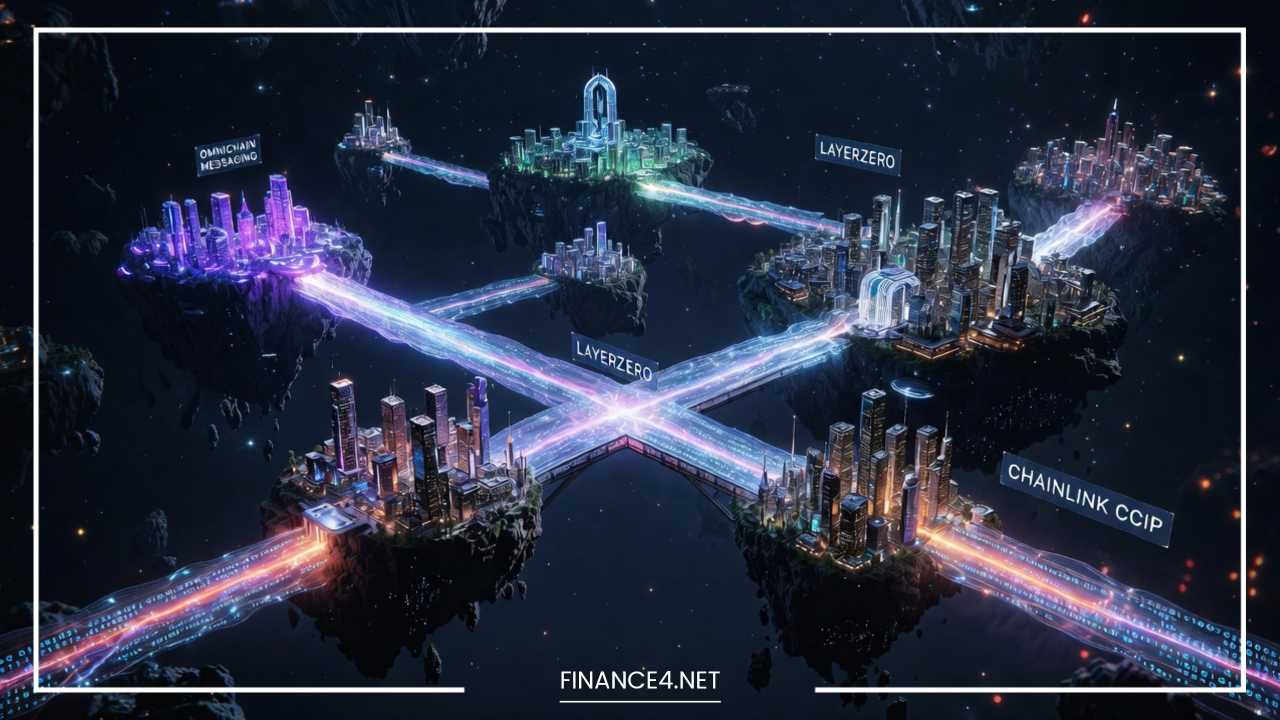
Top Interoperability Protocols You Should Know in 2026
In the early days of decentralized ledger technology, the industry operated like a series of isolated medieval kingdoms. Each blockchain had its own rules, its own language, and its own treasury, but moving between them was a hazardous journey. By 2026, those isolated kingdoms have evolved into a global, interconnected trade network.
The “multi-chain” thesis—the idea that no single blockchain will serve all human needs—has been fully realized. We now live in an era where thousands of specialized “appchains,” Layer 2 rollups, and institutional private ledgers coexist. However, this diversity created a new problem: fragmentation. Fragmented liquidity makes markets inefficient, and fragmented user experiences make decentralized applications (dApps) difficult for the average person to use.
Interoperability protocols are the solution to this fragmentation. They are the digital highways and diplomatic channels that allow data, assets, and logic to flow seamlessly across the entire decentralized web. In 2026, knowing these protocols isn’t just for developers; it is essential for anyone navigating the modern financial and technological landscape.
What Are Interoperability Protocols?
An interoperability protocol is a standardized communication layer that enables independent blockchain networks to share information and value. Think of it as the “Internet Protocol” (IP) for the blockchain world. Just as IP allows an email sent from a Gmail account to be read on an Outlook account, interoperability protocols allow an asset on Ethereum to be utilized in a decentralized exchange on Solana.
The Evolution: Beyond Simple Bridges
In 2021 and 2022, “interoperability” mostly meant token bridges. These were simple (and often vulnerable) smart contracts that locked an asset on one chain and minted a “wrapped” version on another. Unfortunately, these bridges became the single biggest point of failure in Web3, with billions lost to exploits.
By 2026, the industry has largely moved toward Generalized Message Passing (GMP). This allows for much more than just moving tokens; it allows for:
-
Cross-Chain Smart Contract Calls: A smart contract on Chain A can execute a function on Chain B.
-
Unified State: An application can keep a single record of a user’s balance across ten different networks.
-
Omnichain Governance: Users can vote on a proposal using tokens held on multiple different chains.
Key Types of Interoperability Protocols
To understand the landscape of 2026, we must categorize these protocols based on their architecture and security models.
1. Cross-Chain Messaging Protocols
These are the most versatile. They act as “couriers” of data. They don’t care what the data is—whether it’s a token transfer, a price feed update, or a governance vote. They focus on the secure delivery of that message from point A to point B.
-
Key Feature: They enable “Omnichain” applications.
-
Security: Often relies on a decentralized network of verifiers or oracles.
2. Token and Liquidity Interoperability
These protocols focus specifically on moving capital efficiently. They use “intent-based” models where the user doesn’t bridge the token themselves. Instead, they state their intent (e.g., “I want 100 USDC on Solana”), and a professional “solver” or market maker fulfills that intent immediately on the destination chain, settling the balance behind the scenes.
-
Key Feature: Near-instant transfers with zero slippage.
-
Security: The risk is shifted from the user to the professional market maker.
3. Shared Security and Modular Interoperability
This is the “family” approach to interoperability. Some ecosystems are built so that every chain within them shares the same security layer. Because they share a “brain,” they can talk to each other with 100% certainty and zero risk of the message being forged.
-
Key Feature: Highest possible security within the specific ecosystem.
-
Security: Inherited from a central “Hub” or “Relay Chain.”
Criteria for Evaluating Interoperability Protocols
In 2026, the “best” protocol isn’t just the one with the most supported chains. Security and efficiency are the primary battlegrounds.
-
Trust Assumptions: Does the protocol require you to trust a small group of people (a “multisig”), or is it secured by decentralized mathematics (ZK-proofs)?
-
Latency and Finality: How long must a user wait? In the high-frequency world of 2026, waiting ten minutes for a “bridge” is unacceptable. The top protocols offer “optimistic” finality in seconds.
-
Developer Experience (DX): How easy is it for a developer to integrate the protocol? The most successful protocols in 2026 are those that offer “one-click” integration tools.
-
Economic Security: If the protocol were attacked, how much would it cost the attacker? Protocols with billions of dollars in “staked” collateral provide the highest level of economic insurance.
Top Interoperability Protocols in 2026
The following protocols have emerged as the dominant players in the 2026 landscape, each serving a unique segment of the market.
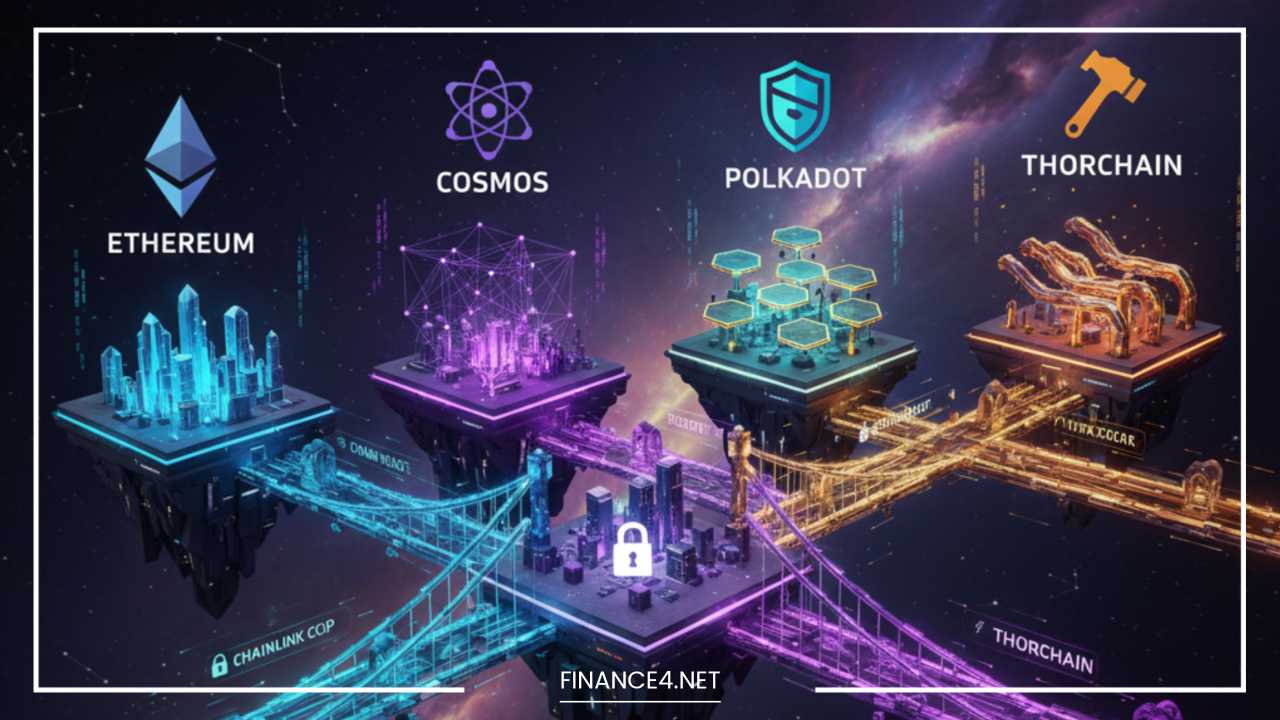
1. Cosmos IBC (Inter-Blockchain Communication)
Cosmos IBC remains the “gold standard” for sovereign interoperability. It is a peer-to-peer protocol, meaning it doesn’t require a middleman.
-
The 2026 Status: IBC has broken out of the Cosmos ecosystem. It is now widely used to connect Ethereum Layer 2s and even non-smart-contract chains like Bitcoin via “Peg Zones.”
-
Strengths: It is the most “decentralized” protocol because it relies on light clients. There is no central authority that can censor an IBC message.
-
Best For: Appchains that want total sovereignty but need to stay connected to the broader “Interchain.”
2. Polkadot XCM (Cross-Consensus Messaging)
Polkadot’s XCM has evolved into a sophisticated language for blockchains. It isn’t just a way to send messages; it’s a way for blockchains to describe complex tasks to one another.
-
Polkadot 2.0 and Coretime: In 2026, Polkadot’s “Agile Coretime” allows chains to buy security on-demand. XCM facilitates this by allowing chains to “borrow” processing power from each other seamlessly.
-
Strengths: Unrivaled security. Because all parachains are secured by the Polkadot Relay Chain, a message sent via XCM is as secure as the network itself.
-
Best For: Institutional applications and high-value DeFi that cannot afford even a 0.01% risk of a bridge hack.
3. LayerZero (Omnichain Messaging)
LayerZero has become the most widely adopted messaging protocol for developers building “Omnichain” dApps.
-
V2 and V3 Infrastructure: The latest versions of LayerZero utilize a decentralized network of verifiers (DVNs). This modular approach allows a developer to say, “For this small transaction, use a fast verifier; for this $10 million transfer, require verification from five different independent security providers.”
-
Strengths: Ease of use and massive chain coverage (100+ blockchains supported in 2026).
-
Best For: Consumer-facing apps, gaming, and NFT projects that need to be everywhere at once.
4. Chainlink CCIP (Cross-Chain Interoperability Protocol)
Chainlink CCIP is the primary bridge between the world of decentralized finance (DeFi) and Traditional Finance (TradFi).
-
The Swift Integration: By 2026, the global banking system (via Swift) has integrated CCIP as a primary way for banks to interact with public and private blockchains. This allows a bank in London to settle a trade on a private ledger and have the results reflected on a public Ethereum Layer 2.
-
Strengths: The “Risk Management Network”—a secondary, independent layer of nodes that acts as a “watchdog,” shutting down the bridge if any suspicious activity is detected.
-
Best For: Real-World Assets (RWA), tokenized gold, and institutional settlement.
5. Wormhole
Wormhole has transformed from a Solana-centric bridge into a global leader in high-velocity asset transfers.
-
The ZK Evolution: In 2026, Wormhole uses Zero-Knowledge (ZK) proofs to verify messages. This removes the need to trust the “Guardians” (the node operators) entirely. Instead, the mathematics of the source chain proves the transaction is valid to the destination chain.
-
Strengths: Speed. Wormhole is often the fastest protocol for moving assets between high-performance chains like Solana, Monad, and Sei.
-
Best For: High-frequency traders and “intent-based” bridge aggregators.
6. Axelar
Axelar serves as the “connective tissue” for the modular blockchain era. As more developers build “rollups-as-a-service,” Axelar provides the instant connectivity they need.
-
Interchain Amplifier: This 2026 feature allows a brand-new blockchain to connect to every other chain on Axelar’s network with a single integration. It’s “plug-and-play” interoperability.
-
Strengths: It acts as a translation layer between different blockchain “languages” (e.g., translating EVM logic to Cosmos logic).
-
Best For: New Layer 2 and Layer 3 projects that need immediate liquidity from day one.
Comparison Table: Interoperability Protocols (2026)
| Protocol | Architecture | Main Chains | Trust Model |
| Cosmos IBC | Light Client | Cosmos, ETH, BTC | Trustless (P2P) |
| Polkadot XCM | Shared Security | Polkadot Parachains | Shared Consensus |
| LayerZero | DVN Mesh | 100+ Chains | Configurable / Modular |
| Chainlink CCIP | Oracle Network | ETH, L2s, TradFi | Risk Management Net |
| Wormhole | ZK-Guardians | SOL, ETH, Sui | Cryptographic (ZK) |
| Axelar | PoS Hub-and-Spoke | Modular L2s, EVM | Decentralized Validators |
Interoperability Challenges in 2026
While we have come a long way, the “Interoperability Trilemma” (Security, Speed, and Extensibility) still poses challenges.
-
The “Honeypot” Problem: Even with advanced security, interoperability protocols are massive “honeypots.” Because they facilitate the movement of billions of dollars, they remain the primary target for state-sponsored hacking groups.
-
User Experience (UX) Complexity: While the backend is connected, the frontend often still requires users to switch networks in their wallets. In 2026, “Chain Abstraction” is the next big goal—making the user unaware that they are even using a blockchain.
-
Regulatory Hurdles: Cross-chain messaging can be used to obfuscate the trail of funds. By 2026, many protocols have had to implement “compliant” paths, which verify the identity (KYC) of users for large transfers, leading to a split between “permissioned” and “permissionless” interoperability.
Future Trends in Interoperability
Looking ahead from 2026, the next frontier is Bridgeless Interoperability.
ZK-Proof Based Everything
The transition to Zero-Knowledge proofs will eventually make third-party bridges obsolete. In the future, every blockchain will generate a ZK-proof of its state that can be easily and cheaply verified by every other blockchain. This is the ultimate “trustless” future.
Native Cross-Chain Smart Contracts
Soon, we will stop talking about “cross-chain apps” and start talking about “omnichain apps.” These are applications where the logic is spread across five different chains, but the user interacts with a single, unified interface. The choice of which chain to use for a specific part of the app (e.g., storage on Filecoin, execution on Solana, settlement on Ethereum) will be handled automatically by an AI-driven “intent layer.”
AI and Interoperability
In late 2026, we are seeing the rise of AI Agents that navigate the multi-chain world for us. These agents use interoperability protocols to hunt for the best yields, execute complex arbitrage, and manage portfolios across dozens of networks, all based on a single natural-language command from the user.
How to Choose the Right Interoperability Protocol
For a business or developer in 2026, the choice is no longer “which bridge is safest,” but “which protocol fits my specific use case.”
-
For DeFi Builders: Look for protocols with the highest liquidity density and lowest slippage, such as Wormhole or LayerZero.
-
For Enterprise & Government: Security and compliance are paramount. Chainlink CCIP or a private instance of Polkadot XCM are the likely winners.
-
For Gaming & Social: User friction is the enemy. Choose a protocol that supports gasless transactions and account abstraction, like Axelar or LayerZero.
Final Thoughts: The Multi-Chain Future Is Interoperable
In the year 2026, the question is no longer “Will there be many blockchains?” but “How fast can we connect them?” The protocols mentioned in this article are not just tools; they are the foundation of a new global economy that is more open, transparent, and efficient than the one that preceded it.
We are moving toward a “frictionless” digital world. The complexity of different chains, gas tokens, and bridge risks is slowly fading into the background, replaced by a seamless user experience. As these interoperability protocols continue to mature, they will do for value what the internet did for information: make it instant, global, and accessible to everyone.