NFT Bridging Aggregator for VR Events
 by
by 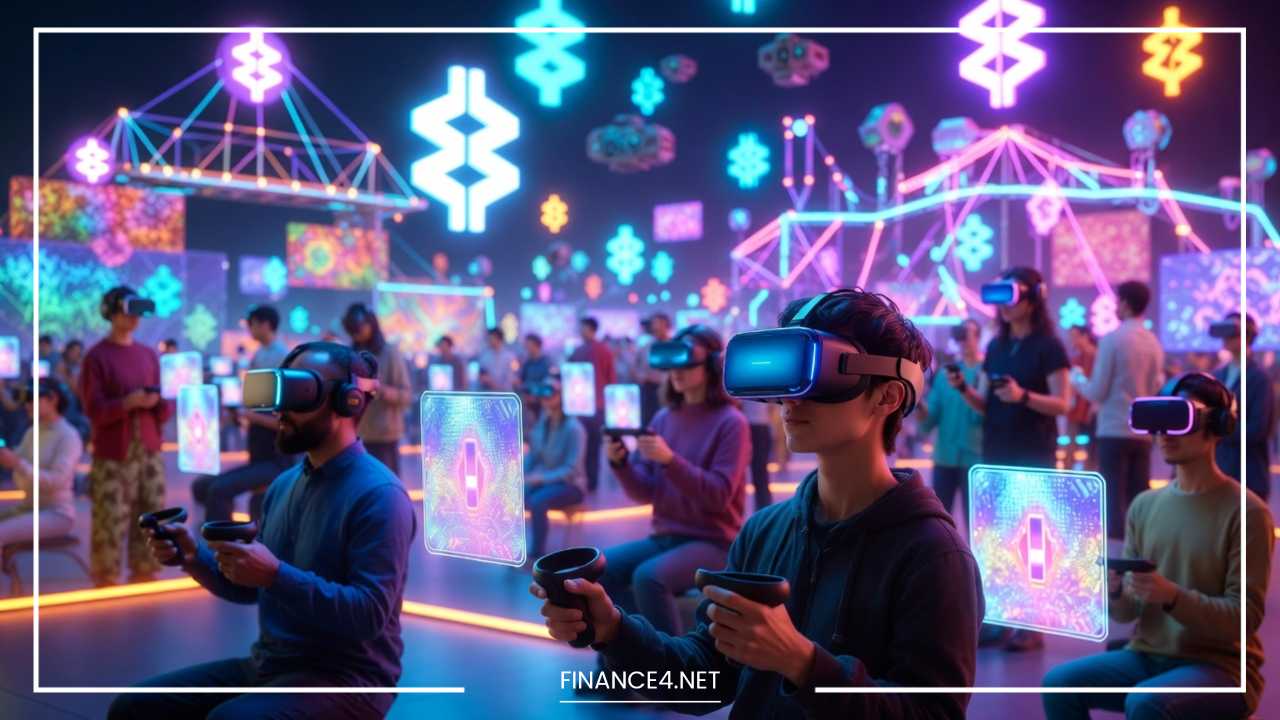
The New Frontier: NFT Bridging Aggregators for VR Events
In the rapidly evolving landscape of the digital age, two transformative technologies are converging to redefine how we experience community, ownership, and entertainment: Non-Fungible Tokens (NFTs) and Virtual Reality (VR). At the heart of this convergence lies a critical challenge: fragmentation. As the blockchain ecosystem expands into a multi-chain universe, and VR platforms proliferate into distinct “walled gardens,” the need for seamless interoperability has never been more urgent. This is where the concept of an NFT Bridging Aggregator for VR events becomes a revolutionary necessity.
NFTs have moved far beyond the initial hype of digital art. Today, they represent a fundamental shift in digital ownership, providing a verifiable, immutable record of authenticity for everything from virtual real estate to event tickets. Simultaneously, VR events—ranging from immersive concerts and global conferences to exclusive digital art exhibitions—have seen a meteoric rise. These events offer a level of presence and interaction that traditional web interfaces cannot match. However, a user holding a ticket on the Ethereum blockchain might find it difficult to use that asset to access an event hosted on a Solana-based VR platform.
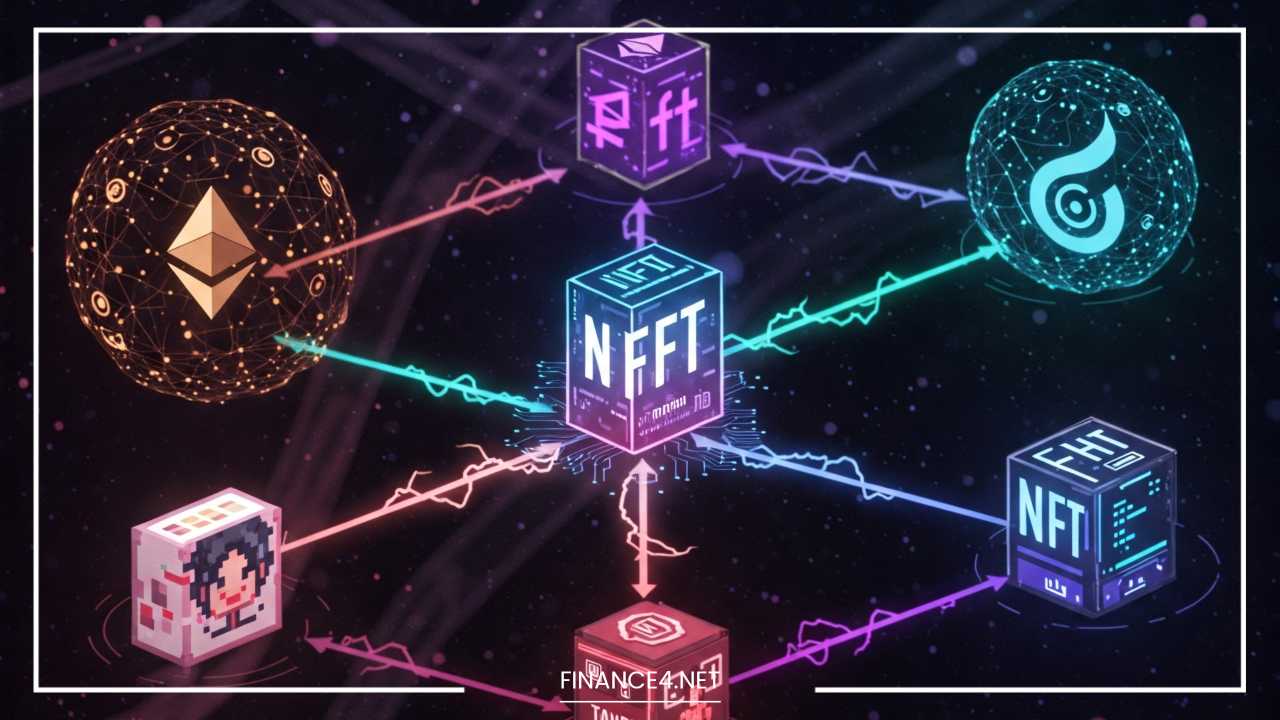
An NFT Bridging Aggregator acts as the connective tissue between these disparate ecosystems. By consolidating various bridging protocols into a single, streamlined interface, an aggregator allows users to move their digital assets across blockchains with minimal friction. This article explores the technical foundations, strategic importance, and future potential of NFT bridging aggregators specifically tailored for the burgeoning world of VR events. We will examine how this technology can dismantle digital borders, fostering a truly open metaverse where ownership is fluid and experiences are accessible regardless of the underlying blockchain architecture.
Understanding NFT Bridging
To appreciate the role of an aggregator, one must first understand the fundamental process of NFT bridging. In simple terms, NFT bridging is the process of transferring a non-fungible token from one blockchain to another. Because blockchains are inherently isolated databases that do not naturally communicate with one another, an asset created on Chain A cannot simply float over to Chain B without a structured technical intervention.
The most common mechanism for bridging is the Lock-and-Mint model. In this scenario, an NFT is locked into a smart contract on the source chain (e.g., Ethereum). Once the bridge confirms the lock, a perfectly identical wrapped version of that NFT is minted on the destination chain (e.g., Polygon or Avalanche). If the user wishes to move the asset back, the wrapped NFT is burned (destroyed) on the destination chain, which triggers the release of the original NFT on the source chain.
Another emerging method is the Burn-and-Mint approach, often used for assets that have native deployment on multiple chains. Here, the asset is completely destroyed on the source chain and a new, native version is created on the destination chain. While this reduces the risk of having assets “stuck” in a vault, it requires the NFT collection to be compatible with multi-chain standards from the outset.
Interoperability is the primary driver behind this technology. As the NFT ecosystem has matured, different blockchains have developed unique strengths. Ethereum remains the gold standard for security and high-value assets, but its high gas fees can be prohibitive for small-scale transactions like virtual merchandise or wearable skins. Networks like Polygon, Solana, and ImmutableX offer faster transaction speeds and lower costs, making them ideal for the high-frequency interactions typical of VR environments.
However, bridging is not without its hurdles. Current challenges include:
-
Security Risks: Bridges are often targets for hackers because they act as centralized or semi-centralized repositories of locked assets. If the “vault” on the source chain is compromised, the wrapped assets on the destination chain become effectively worthless.
-
Transaction Fees: Moving an asset across chains involves paying gas fees on both the source and destination networks, as well as potential service fees for the bridge provider.
-
Finality and Latency: The process of finality—the time it takes for a blockchain to confirm a transaction is irreversible—varies. This can result in delays where a user might have to wait several minutes or even hours for their NFT to appear on the new chain, which is a significant deterrent for someone trying to join a live VR event.
NFT Aggregators: Simplifying the Multi-Chain Experience
As the number of blockchains and bridging protocols grows, the user experience becomes increasingly fragmented. A user might need one bridge for Ethereum to Polygon, another for Solana to Ethereum, and yet another for moving assets to an Avalanche-based subnet. This complexity creates a “paradox of choice” that can alienate non-technical users. This is where NFT Aggregators step in.
An aggregator is a platform that sits on top of various underlying protocols, pulling data, pricing, and liquidity into a single dashboard. In the context of trading, aggregators like OpenSea or Gem allow users to view listings from multiple marketplaces simultaneously. An NFT Bridging Aggregator takes this a step further by scanning multiple bridge protocols to find the fastest, cheapest, or most secure route for a cross-chain transfer.
The Mechanism of Aggregation
Aggregators function by maintaining a real-time index of bridge health, liquidity, and fee structures. When a user wants to move a “VR Concert Pass” from Ethereum to a Layer-2 solution, the aggregator queries various providers like Wormhole, Axelar, and Stargate. It then presents the user with options based on:
-
Cost: Which route has the lowest combined gas and service fees?
-
Speed: Which protocol can guarantee finality in the shortest time?
-
Trust Score: Based on historical performance and security audits, which route is the safest?
Benefits of Aggregation
The benefits of aggregation for the end-user are significant:
-
Reduced Friction: Instead of researching which bridge supports which token standard (ERC-721 vs. ERC-1155), the user simply selects their source and destination. The aggregator handles the backend complexity.
-
Market Efficiency: By creating competition among bridge providers, aggregators drive down costs and encourage better service standards.
-
Liquidity and Access: Aggregators improve the overall liquidity of the market by making it easier for assets to move to where the demand is highest. For a VR event organizer, this means a wider pool of potential attendees who can easily bring their existing assets into the event’s ecosystem.
VR Events Landscape: A New Social Paradigm
The rise of Virtual Reality events represents one of the most exciting applications of spatial computing. Platforms like Decentraland, The Sandbox, VRChat, and Meta’s Horizon Worlds have pioneered the idea of the Metaverse—a persistent, shared virtual space where users can interact as avatars.
VR events are no longer limited to niche gaming communities. We are seeing a massive expansion into mainstream culture:
Virtual Concerts and Festivals
Artists are increasingly looking to VR to bypass the geographical and physical limitations of touring. These events allow for psychedelic, physics-defying stage designs that would be impossible in the real world. In these spaces, NFTs serve as more than just tickets; they are “proof of attendance” (POAP) and wearable souvenirs that allow fans to showcase their loyalty long after the music stops.
Professional Conferences and Trade Shows
The “Zoom fatigue” of the 2020s led to a demand for more immersive remote collaboration. VR conferences allow professionals to “walk” through exhibition halls, interact with 3D product prototypes, and engage in spatial audio conversations where the volume changes based on how close you are to another avatar. NFTs in this context can represent professional certifications, digital business cards, or exclusive access to VIP breakout rooms.
Digital Art and Museums
Galleries in platforms like OnCyber and Spatial allow collectors to display their NFT portfolios in high-fidelity 3D environments. This turns a static digital image into a social experience. However, if a collector has art on Ethereum but wants to host a party in a gallery built on a more cost-effective chain like Tezos or Polygon, they face a significant logistical hurdle—one that an aggregator is designed to solve.
The role of NFTs in these VR events is fundamental. They provide the exclusivity (only 500 people can enter this room), ownership (I truly own this digital shirt), and social status (everyone can see my rare badge) that drive human interaction in any social setting, virtual or physical.
NFT Bridging for VR Events: Use Cases and Integration
The integration of bridging aggregators into the VR event lifecycle is a game-changer for both organizers and attendees. Currently, many VR platforms are siloed. If a brand launches a collection of 3D sneakers on Ethereum, but the major fashion show is happening in a VR space built on the Polygon network, the owner of those sneakers faces a barrier to entry.
Cross-Chain Access for Tickets and Assets
Imagine a user who buys an “All-Access Pass” for a VR tech summit. The pass is issued on the Avalanche blockchain because of its low minting costs. However, the keynote speech is being held in a custom-built environment on Ethereum due to its high security. Without an aggregator, the user would have to navigate a complex bridge, find a secondary wallet, and pay multiple fees just to “get in the door.” An aggregator integrated directly into the VR interface could perform this bridge in the background, allowing for a “one-click” entry experience.
Increased Reach for Event Organizers
Organizers no longer have to worry about alienating potential customers who use different blockchains. By supporting a bridging aggregator, an event can effectively be “multi-chain.” This opens up the market to millions of users across different ecosystems, from “DeFi whales” on Ethereum to “Web3 gamers” on Polygon and Solana.
Use Case: The “Meta-Festival”
Consider a multi-day festival where Day 1 is an indie music show in VRChat (using Ethereum-based assets), Day 2 is a high-stakes gaming tournament in The Sandbox (on Polygon), and Day 3 is a digital fashion show in a custom Unreal Engine 5 environment (using Solana).
-
The Problem: The user has one digital identity but their assets are scattered across three networks.
-
The Aggregator Solution: The festival app uses an aggregator to “shuttle” the user’s avatar, tickets, and virtual currency between these platforms as the festival progresses. This creates a seamless narrative experience that feels like moving between different stages at a physical festival.
Interoperable Virtual Merchandise
If a user buys a limited-edition VR headset skin for their avatar, they want to wear it everywhere. Bridging allows that skin to move from a high-security “storage” chain to a high-speed “utility” chain where it can be rendered in real-time. The aggregator ensures that the metadata—the actual 3D file and its properties—is preserved during the move so the item doesn’t look different or break when it arrives on the new chain.
Technical Architecture: Under the Hood
Building an NFT bridging aggregator for VR requires a robust and secure technical stack. This is not just about moving data; it’s about moving value and utility in a high-pressure, live environment.
The Aggregation Logic Layer
This layer consists of a set of smart contracts and APIs that interface with various bridge protocols. The aggregator monitors these protocols for several key metrics:
-
Liquidity: Does the bridge have enough collateral to facilitate the transfer?
-
Validator Health: Are the nodes that confirm the bridge transactions currently active and honest?
-
Gas Estimation: Real-time calculation of the most cost-effective path.
Step-by-Step Bridging Process
-
Request and Selection: The VR platform sends a request to the aggregator API to move an NFT. The user selects the preferred route (e.g., “Fastest”).
-
Verification and Approval: The user approves the transaction. The aggregator verifies that the NFT is valid and that the user is the rightful owner.
-
Locking/Burning: The NFT is locked into a secure vault contract on the source chain.
-
Cross-Chain Communication: The aggregator uses a relayer (like LayerZero’s Ultra Light Nodes) to send a cryptographically signed message to the destination chain.
-
Execution: On the destination chain, the aggregator’s contract receives the message and triggers the minting of a wrapped NFT or the unlocking of an existing asset.
-
VR Rendering: The VR engine (Unity or Unreal) detects the new asset in the user’s wallet and renders the 3D model in the virtual space.
Smart Contracts and Oracles
Oracles are essential for maintaining the “state” of an NFT. If an NFT represents a weapon in a VR game that has “Level 10” status, the aggregator must ensure that when the NFT is bridged to a new chain, the Level 10 attribute is carried over. If the user levels up the item on the new chain, the oracle must update the original metadata when the asset is bridged back.
Handling “Flash Crowds”
VR events often experience massive spikes in traffic—think of thousands of people trying to enter a virtual stadium at exactly 8:00 PM. A bridging aggregator must be designed for extreme scalability. This involves:
-
Transaction Batching: Grouping hundreds of bridging requests into a single “bundle” to reduce the number of on-chain operations.
-
Off-Chain Indexing: Using services like The Graph to quickly verify ownership without constantly querying the blockchain directly.
-
Optimistic Bridging: In some cases, the bridge may “assume” a transaction is valid to provide instant access to the user, with a cooling-off period where the transaction can be challenged if fraud is detected.
Benefits and Challenges
The implementation of NFT bridging aggregators brings a host of advantages, but it also introduces complex hurdles that the industry must overcome.
Extensive Benefits
-
Improved Accessibility: By removing the “chain-specific” barrier, we make VR events as easy to join as clicking a link in a browser.
-
Enhanced User Experience: Users can stay within the VR environment. They don’t have to take off their headset, open a browser, navigate to a bridge website, and then put their headset back on.
-
New Revenue Streams: Creators can implement “bridge fees” or royalties that trigger every time their asset moves between ecosystems, providing a continuous income stream for virtual architects and fashion designers.
Critical Challenges
-
Security Risks (The “Honeypot” Problem): Bridges are essentially giant vaults of digital value. If an aggregator points users toward a bridge that has a vulnerability, it could lead to catastrophic loss. Aggregators must prioritize security audits and perhaps even offer “bridge insurance.”
-
Blockchain Fragmentation and Standards: There is no universal standard for how a 3D avatar should be formatted. If an NFT is bridged from Ethereum (using glTF format) to a chain that prefers a different format, the asset might not render correctly.
-
Regulatory and Legal Uncertainties: Is a bridged NFT a new financial product? Does moving an asset across chains count as a taxable event? Aggregators must navigate these murky waters as governments around the world begin to regulate Web3.
-
User Education: Many users still find the concept of “gas” and “wallets” confusing. Aggregators must focus on “invisible” technology, where the bridging happens without the user needing to understand the underlying mechanics.
Deep Dive: The Role of Layer-2 and Layer-3 Solutions
As the demand for VR events grows, the industry is shifting toward Layer-2 (L2) and Layer-3 (L3) solutions to handle the volume of data. L2s like Arbitrum or Optimism sit on top of Ethereum to provide faster and cheaper transactions. L3s are even more specialized, often designed for a single application or game.
An NFT bridging aggregator will be the primary tool used to navigate these layers. For example, a user might keep their high-value “Founder’s Avatar” on Ethereum (Layer-1) for safety. When they want to play a VR game, they use an aggregator to bridge a “functional copy” of that avatar to the game’s specific Layer-3. Once the gaming session is over, any experience points or items earned are bridged back to the Layer-1 “vault.”
This “hub-and-spoke” model allows for the best of both worlds: the unshakeable security of a major blockchain and the lightning-fast performance of a specialized VR network.
Future Outlook: Toward a Unified Metaverse
The long-term vision for NFT bridging aggregators is the creation of a “frictionless metaverse.” In this future, the user is unaware of the blockchain they are using. They simply have a digital “backpack” filled with their possessions—tickets, clothes, avatars, and tools—that follow them wherever they go in the virtual world.
Predictions for the Next Decade
-
Native Aggregation in Hardware: VR headsets like the Meta Quest or Apple Vision Pro may eventually include built-in, hardware-level bridging aggregators. This would allow users to manage their cross-chain assets directly through the headset’s operating system.
-
AI-Driven Bridging: Artificial Intelligence could be used to predict which chain a user will need to move their assets to based on their calendar or social activity, initiating the bridge before the user even asks.
-
Cross-Industry Integration: We will see the bridging of real-world assets into VR. A person who buys a physical pair of limited-edition sneakers might receive an NFT that can be bridged into various VR platforms, allowing them to wear the shoes both in the park and in the metaverse.
-
Decentralized Identity (DID): NFT bridging will evolve into “Identity Bridging.” Your reputation, achievements, and social graph will move with you, aggregated from various chains into a single, cohesive digital persona.
The metaverse is often criticized for being “disconnected.” Bridging aggregators are the technology that will finally connect the dots, turning a series of isolated experiments into a unified global economy.
Final Thoughts
The development of NFT bridging aggregators for VR events marks a pivotal moment in the evolution of the digital economy. By solving the problem of multi-chain fragmentation, these platforms are laying the groundwork for a truly interconnected and open metaverse.
We are moving away from the era of digital silos and toward a future defined by sovereign ownership and seamless mobility. For creators, this means their work has a larger market and a longer lifespan. For organizers, it means more vibrant and accessible events. And for attendees, it means a richer, more cohesive experience where their digital identity is not tied to a single platform or blockchain.
The path forward will require collaboration between blockchain developers, VR architects, and security experts. We must address the security vulnerabilities of bridges and work toward universal standards for digital assets. However, the reward—a world where our digital lives are as fluid and boundless as our physical ones—is well worth the effort. The technology is no longer just a theoretical possibility; it is the blueprint for the next generation of human interaction.
The NFT bridging aggregator is more than just a technical utility; it is an instrument of freedom in the digital age. It ensures that the user, not the platform, remains the center of the experience. As we step into the virtual arenas, concert halls, and galleries of the future, this technology will be the quiet engine that makes it all possible.