How to Trade NFTs on Multiple Chains
 by
by 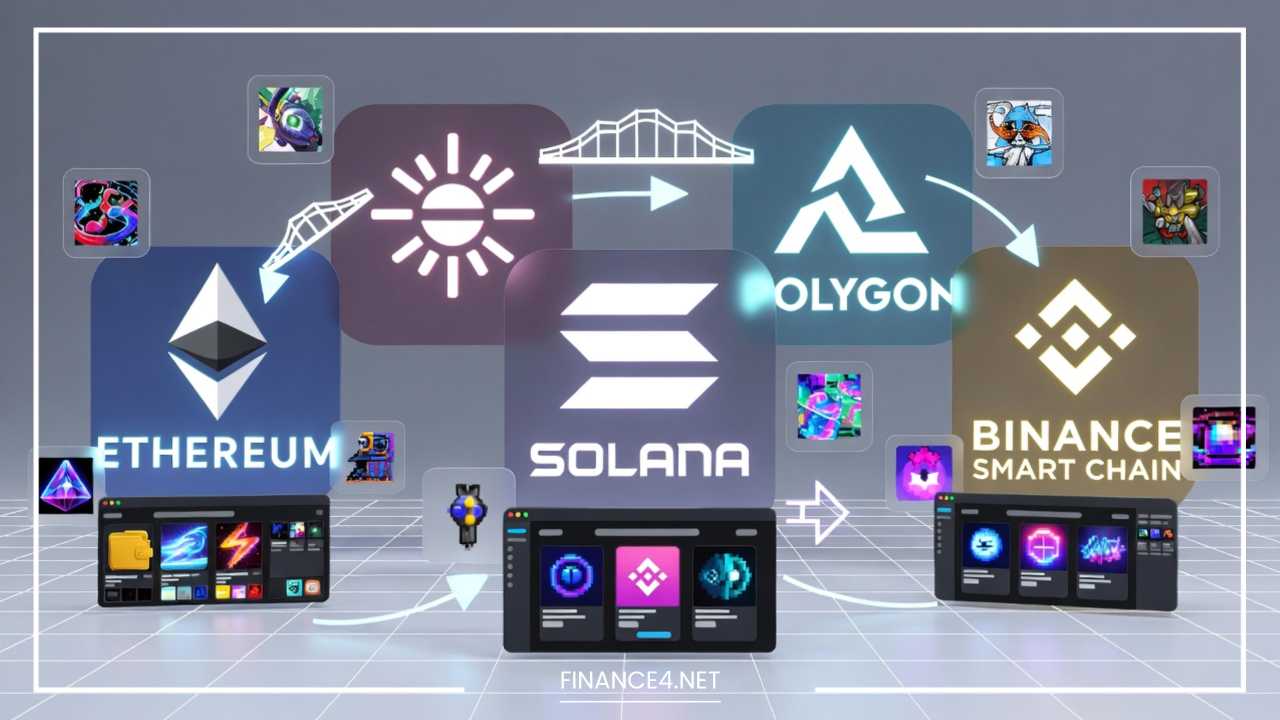
How to Trade NFTs on Multiple Chains | Beginner Guide
The world of Non-Fungible Tokens (NFTs) has evolved rapidly from a niche experiment on a single blockchain into a sprawling, multi-chain ecosystem. In the early days, if you wanted to collect or trade digital art, you were almost exclusively tethered to the Ethereum network. Today, the landscape is far more diverse. From the lightning-fast transactions of Solana to the cost-effective scaling of Polygon, the NFT market is now spread across dozens of interconnected digital highways.
For a beginner, this evolution is both exciting and intimidating. “Multi-chain” refers to the ability of decentralized applications and assets to exist and operate across different blockchain protocols. Instead of being limited to one marketplace or one currency, you can now explore various ecosystems, each with its own unique culture, price points, and technical advantages.
The purpose of this guide is to demystify the multi-chain experience. Whether you are a digital art enthusiast, a gamer looking for in-game assets, or a trader seeking the next big trend, understanding how to navigate multiple blockchains is a vital skill. We will cover everything from the foundational technology to the practical steps of setting up wallets and executing trades safely.
Understanding NFT Blockchains
To navigate the multi-chain world, you must first understand that a blockchain is essentially a specialized operating system. Just as an app built for an iPhone won’t natively run on an Android device without modification, an NFT minted on one blockchain does not automatically exist on another. Each “chain” has its own set of rules, speeds, and costs.
Key Blockchains to Know
Ethereum (The Pioneer)
Ethereum is the birthplace of the modern NFT. It remains the “gold standard” because it hosts the most valuable and historically significant collections. However, because it is so popular and decentralized, it can become congested. This congestion leads to “gas wars,” where users must pay high fees to get their transactions processed. For high-value art, Ethereum is the preferred choice due to its unmatched security.
Polygon (The Scaler)
Polygon is what we call a “Layer 2” or a “sidechain” to Ethereum. It was designed specifically to fix Ethereum’s high costs. It is fully compatible with Ethereum tools (like MetaMask) but offers transactions that cost fractions of a penny. Many major global brands, such as Starbucks and Nike, have used Polygon for their NFT loyalty programs because it allows them to onboard millions of users without the friction of high fees.
Solana (The Speedster)
Solana is a different beast entirely. It does not use the same underlying code as Ethereum (it is not “EVM-compatible”). This means it requires a different type of wallet, like Phantom. Solana is incredibly fast, capable of processing thousands of transactions per second. The Solana NFT community is known for its high-energy, fast-paced trading and “degen” culture, where projects launch and move at lightning speed.
Binance Smart Chain / BNB Chain (The Exchange Giant)
Developed by Binance, this chain offers a very centralized but highly efficient environment. It is popular for “Play-to-Earn” games and decentralized finance (DeFi) projects that incorporate NFTs. It is an excellent middle ground for those who already use the Binance exchange and want a familiar ecosystem.
Emerging Chains: Arbitrum, Optimism, and Avalanche
-
Arbitrum and Optimism: These are “Layer 2” rollups that inherit Ethereum’s security but process transactions elsewhere to keep fees low. They are becoming the go-to for serious NFT traders who want the safety of Ethereum without the $50 price tag per trade.
-
Avalanche: Known for its “subnets,” Avalanche is a favorite for gaming companies that want to create their own mini-blockchains specifically for their games.
NFT Standards and Gas Fees
When you trade, you are interacting with “smart contracts.” On Ethereum-based chains, you will encounter ERC-721 tokens (one-of-a-kind) and ERC-1155 tokens (multiple copies of the same item). On Solana, these are simply called SPL NFTs.
“Gas” is the fuel of the blockchain. Every action—buying, listing, or even “liking” an item in some cases—requires a transaction on the blockchain. On Ethereum, you pay in ETH; on Polygon, in MATIC; on Solana, in SOL. Always keep a small amount of the native token in your wallet to cover these costs.
What Does It Mean to Trade NFTs on Multiple Chains?
Trading on multiple chains means you aren’t putting all your digital eggs in one basket. It involves interacting with different protocols to find value. For instance, you might buy a high-value piece of art on Ethereum for long-term holding while actively flipping gaming items on Solana or Polygon.
Buying and Selling Across Borders
In a single-chain world, you are limited to the buyers and sellers on that specific network. In a multi-chain world, you are effectively a global merchant. You might find a specific artist whose work is undervalued on a newer chain like Base, buy it there, and then wait for the market to catch up.
Holding NFTs in One vs. Multiple Wallets
As a beginner, you have two choices:
-
The Multi-Wallet Approach: You use a different app for every chain. A MetaMask for Ethereum and a Phantom for Solana.
-
The Unified Approach: You use a single wallet app that supports multiple chains. This is highly recommended for beginners as it allows you to see your entire portfolio in one “gallery” view.
Common Misconceptions
A common mistake is thinking that if you own an NFT on Ethereum, you can simply “send” it to a Solana address. This is not possible. If you attempt to send an asset to a wallet address on an incompatible chain, that asset will likely be lost forever. You must always ensure the sender and receiver are on the same network.
Wallets for Multi-Chain NFT Trading
Your wallet is the most critical piece of software you will use. It serves as your identity, your bank account, and your trophy case.
Hot Wallets vs. Cold Wallets
-
Hot Wallets: These are apps on your phone or browser. They are “hot” because they are connected to the internet. They are great for daily trading but are susceptible to malware.
-
Cold Wallets (Hardware Wallets): These are physical devices like a Ledger or Trezor. They keep your private keys offline. Serious traders keep their most expensive NFTs in a cold wallet and only keep “spending money” in a hot wallet.
Best Multi-Chain Wallets
-
MetaMask: The industry standard. It supports almost every chain except Solana and Bitcoin. It is highly customizable, though the interface can be a bit technical for absolute beginners.
-
Phantom: Originally just for Solana, it now supports Ethereum and Polygon. It is arguably the most “beautiful” wallet, showing your NFTs in a clear, high-resolution grid.
-
Trust Wallet: Owned by Binance, this wallet supports a staggering number of blockchains. It is excellent for mobile users who want to trade on the go.
-
Coinbase Wallet: A very user-friendly bridge for those coming from the traditional finance world. It simplifies the process of switching between networks.
Security and Seed Phrases
When you set up a wallet, you will be given a 12 or 24-word seed phrase. This is your master key. If your computer breaks, you can use these words to recover your NFTs on any other device.
-
Never type your seed phrase into a website.
-
Never take a screenshot of it (hackers can find it in your cloud storage).
-
Always write it on paper and store it in a fireproof safe or a hidden location.
NFT Marketplaces That Support Multiple Chains
To trade, you need a marketplace—the “eBay” of the blockchain world. While some marketplaces started as chain-specific, most are now racing to support as many networks as possible.
The Big Players
-
OpenSea: The pioneer. It supports Ethereum, Polygon, Solana, Arbitrum, Base, and more. It has the most user-friendly search and filter tools, making it the best place to start.
-
Magic Eden: The king of Solana. It has expanded into Ethereum and Bitcoin Ordinals. It often has exclusive “Launchpads” where you can buy NFTs at the moment they are created (minted).
-
Blur: This is a “pro” marketplace on Ethereum. It is designed for speed and high-volume trading. It has a complex interface that looks like a stock market terminal, but it offers the best rewards for active traders.
-
Rarible: A great alternative that focuses on creator rights. It allows you to aggregate listings from other marketplaces, meaning you can see OpenSea listings directly on Rarible.
Fees and Royalties
Every time you sell an NFT, there are usually two fees:
-
Marketplace Fee: Usually around 1% to 2.5%. This is how the platform makes money.
-
Creator Royalties: A percentage (often 5% to 10%) that goes back to the original artist. Some marketplaces have made this optional, but it is a controversial topic in the community.
Step-by-Step: How to Trade NFTs on Multiple Chains
Let’s walk through the actual process of making a trade.
Step 1: Set Up and Secure Your Wallet
Download the Phantom or MetaMask browser extension. Create a new wallet and go through the security steps. Ensure you have the networks you want to use enabled in the settings.
Step 2: Funding Your Wallet
You need to move “gas” tokens from a centralized exchange (like Coinbase or Binance) to your wallet.
-
To buy on Ethereum: Send ETH via the Ethereum network.
-
To buy on Solana: Send SOL via the Solana network.
-
To buy on Polygon: Send MATIC via the Polygon network.
-
Pro Tip: Always send a small “test transaction” first to make sure you have the address correct.
Step 3: Connect to a Marketplace
Navigate to OpenSea.io. Click the wallet icon. You will receive a “Signature Request” in your wallet extension. This is free and does not require gas. It simply tells the website, “Yes, I am the owner of this wallet.”
Step 4: Finding and Buying an NFT
Use the search bar to find a collection. Look for the blue verified checkmark to ensure it isn’t a scam.
-
Click “Buy Now” to pay the current “Floor Price” (the lowest price for an item in that collection).
-
Click “Make Offer” if you want to try and bargain for a lower price.
-
Your wallet will pop up asking you to “Confirm” the transaction. This is where you will see the gas fee.
Step 5: Selling and “Listing”
To sell an NFT you own, go to your profile, select the item, and click “List.” You will set a price in the native currency (e.g., 0.5 ETH). Once listed, anyone in the world can buy it instantly. You do not need to be online for the sale to happen.
Step 6: Tracking Your Portfolio
Because you are trading on multiple chains, it can be hard to keep track of your spending. Use a tool like Enjin or Zapper.fi. You simply paste your wallet address, and it will show you the total value of your NFTs across all blockchains in one dashboard.
Bridging NFTs Between Chains (Advanced Beginner Topic)
As you get more comfortable, you might want to move an NFT from one chain to another. This is called bridging.
How Bridging Works
When you bridge an NFT, you aren’t actually “moving” it. Instead, you “lock” the original NFT on Chain A, and a bridge protocol creates a “wrapped” or “representative” version of it on Chain B. If you ever want the original back, you “burn” (destroy) the version on Chain B to unlock the original on Chain A.
Why Bridge?
-
To use an NFT in a game: A game might be built on Polygon, but the NFT was minted on Ethereum.
-
To save on fees: You might want to move an asset to a Layer 2 to trade it more frequently without high gas costs.
The Risks
Bridging is the most dangerous part of crypto. Bridges are “honey pots” for hackers because they hold vast amounts of locked assets. If a bridge is hacked, the “wrapped” NFT you hold on Chain B might become worthless because the original on Chain A has been stolen. Only use well-known, audited bridges.
Fees, Taxes, and Costs to Consider
A common beginner mistake is forgetting that every “click” has a cost.
The Cost of Doing Business
-
Gas Fees: On Ethereum, these change every minute. Avoid trading during “peak hours” (usually when the US and Europe are both awake and working).
-
Approval Fees: The first time you interact with a new marketplace or collection, you have to pay a small fee to “approve” the smart contract.
-
Slippage: If you are buying an NFT with a “liquid” price that changes rapidly, the price might change between the time you click “buy” and the time the transaction is confirmed.
Taxes
In most countries, the government views NFTs as “digital property.”
-
If you buy an NFT for $100 and sell it for $500, you owe tax on the $400 profit.
-
Even trading one NFT for another is considered a sale of the first NFT.
-
Disclaimer: Always consult a local tax professional. Using tools like CoinTracker can help automate this by pulling data directly from your wallet.
Risks and Security Tips for Beginners
The NFT world is the “Wild West.” There is no “Undo” button and no customer support line to call if you get robbed.
Common Scams to Avoid
-
The “Airdrop” Scam: You open your wallet and see a random NFT you didn’t buy. It might be titled “Claim $1000 Rewards.” Do not interact with it. If you try to “hide” or “send” it, the smart contract might contain code that drains your entire wallet. Just leave it alone.
-
Discord Hacks: Scammers often hack the Discord accounts of project founders. They will post a “Surprise Mint” link. If a mint feels too good to be true or “rushed,” it is likely a scam.
-
Fake Marketplaces: Always check the URL. Scammers create sites like “Opensea.cc” or “Magiceden.net.co” to steal your login info. Bookmark the official sites.
Best Practices
-
Use a separate “Burner Wallet” for minting new, unproven projects. Only keep the amount of money needed for that specific mint in the burner wallet.
-
If you are on a public Wi-Fi, always use a VPN when accessing your wallet.
-
Double-check everything. Before you click “Confirm” in your wallet, look at the website address one last time.
Tips to Succeed in Multi-Chain NFT Trading
Trading isn’t just about luck; it’s about information.
Research Before You Buy
Don’t just buy what looks cool. Look at the Utility. Does this NFT give you access to a private club? Does it earn you “staking rewards”? Is it a character in an upcoming game? Projects with utility tend to hold their value better than “just art” during market downturns.
Track the Trends
Each chain has its own trends.
-
Ethereum is for “Blue Chips” and fine art.
-
Solana is for high-speed flipping and meme-culture NFTs.
- Polygon is for gaming and mass-market collectibles.Understanding the “vibe” of each chain will help you decide where to put your money.
Diversify
Don’t put all your money into one collection or one chain. If Ethereum gas fees skyrocket, your Ethereum NFTs become harder to sell. Having some assets on Solana or Polygon ensures you can always stay active in the market regardless of gas prices.
Future of Multi-Chain NFTs
The end goal of the industry is Interoperability. This means a future where you don’t care what chain your NFT is on.
Layer 2 Dominance
We are seeing a massive shift toward “Layer 2” solutions. In the next few years, the average user will likely never interact with the “Main” Ethereum chain. They will live entirely on faster, cheaper sub-networks.
Unified Liquidity
New protocols are being built that allow you to list an NFT on one chain and accept payment from another. For example, a buyer could pay in SOL for an NFT that is hosted on Ethereum, and the “backend” of the marketplace will handle the swap instantly.
Institutional Adoption
As big companies like Disney, Warner Bros, and various sports leagues enter the space, they are pushing for a “multi-chain” approach to reach the widest possible audience. This means the tools we use today will become more like traditional banking apps—hidden behind a simple, easy-to-use interface.
Final Thoughts & Next Steps
Multi-chain NFT trading is a journey of constant learning. It can be overwhelming at first, but the rewards—both financial and in terms of joining vibrant global communities—are immense.
By mastering the use of multi-chain wallets, understanding the different strengths of blockchains like Solana and Ethereum, and following strict security protocols, you are already ahead of 90% of the people entering the space.
Your Homework:
-
Set up a Phantom wallet and enable both Solana and Ethereum/Polygon networks.
-
Fund it with a small amount (e.g., $20 worth of SOL or MATIC).
-
Explore a marketplace and find a low-cost “entry-level” NFT that appeals to you.
-
Practice a trade. The best way to learn is by doing.
The world of digital ownership is just beginning. Welcome to the multi-chain future.