How to Use Cross-Chain DeFi
 by
by 
How to Use Cross-Chain DeFi: A Beginner’s Guide
The evolution of Decentralized Finance (DeFi) has been nothing short of a digital gold rush. In its early stages, most activity was concentrated on a single highway: the Ethereum network. However, as the ecosystem matured, new “cities” began to emerge in the form of alternative blockchains like Binance Smart Chain (BSC), Solana, Avalanche, and Polygon.
While these new networks offered faster speeds and lower costs, they initially operated as isolated islands. If your assets were on Ethereum, they stayed on Ethereum. This fragmentation created a massive hurdle for the dream of a truly global, open financial system. Enter cross-chain DeFi.
Cross-chain DeFi is the connective tissue of the modern crypto economy. It represents the shift from a siloed landscape to an interconnected web of financial protocols. For the average user, mastering cross-chain movement is no longer just a “pro-level” skill; it is a necessity for anyone looking to maximize yields, minimize fees, and access the full breadth of innovation in the crypto space. This guide will walk you through everything you need to know to navigate this multi-chain world safely and effectively.
Basics of Cross-Chain DeFi
To understand cross-chain DeFi, we first must look at the limitations of single-chain environments. A blockchain, by its very nature, is a closed system. A smart contract on Ethereum cannot natively “see” or “talk” to a smart contract on the Avalanche network. This lack of communication creates liquidity silos, where capital is trapped within specific ecosystems.
Cross-chain DeFi refers to the suite of technologies and protocols that allow for the seamless transfer of data and value between different blockchain networks. It is the bridge that connects these isolated islands, allowing a user to take the value they hold in one ecosystem and utilize it in another without having to go back to a centralized exchange.
How it Differs from Single-Chain DeFi
In single-chain DeFi, your experience is dictated by the constraints of that specific network. If Ethereum is congested and gas fees spike to $100 per transaction, you are essentially “priced out” of your own money unless you are moving massive sums. In a cross-chain environment, you have mobility. You can move your assets to a Layer 2 solution or a sidechain where fees are fractions of a cent.
Furthermore, single-chain DeFi limits your exposure to innovation. Developers often choose specific chains based on technical requirements—Solana for high-frequency trading, or Polkadot for specialized parachains. Without cross-chain tools, you are a spectator to these developments rather than a participant.
Key Benefits
-
Liquidity Aggregation: In a perfect world, a trader should be able to access the best price for an asset regardless of which chain that asset lives on. By connecting chains, DeFi protocols can tap into deeper pools of capital, reducing “slippage” (the difference between the expected price of a trade and the price at which the trade is executed) and creating more stable markets.
-
Access to Diverse Protocols: Some of the most innovative lending, borrowing, and derivative platforms exist on newer, faster chains. If you are restricted to a single network, you miss out on these opportunities.
-
Better Yields and Arbitrage Opportunities: This is perhaps the biggest draw for retail users. If a lending platform on Polygon offers a 12% return on stablecoins while Ethereum only offers 2%, cross-chain tools allow you to move your capital to where it is most productive.
Key Challenges
It is not all smooth sailing, however. Cross-chain DeFi introduces technical complexity. Moving assets across chains requires interacting with multiple interfaces, managing different “gas tokens” (tokens used to pay for transaction fees), and understanding the nuances of different network speeds.
More importantly, it introduces security risks. Bridges are often the most targeted infrastructure in crypto because they act as massive central repositories of locked funds. If a bridge’s smart contract has a vulnerability, the assets moving through it could be at risk. As we will discuss later, bridge exploits have accounted for billions of dollars in lost funds over the last few years.
How Cross-Chain Technology Works
At its core, cross-chain technology is about achieving “consensus” between two different ledgers. Since Chain A cannot read Chain B, a third party or a specialized protocol must facilitate the message. There are several primary methods used to achieve this.
Understanding Interoperability
Interoperability is the ability of different blockchain systems to share information and value. Think of it like the early days of the internet: initially, different internal networks (intranets) couldn’t talk to each other. The development of TCP/IP allowed these networks to merge into the global internet we use today. In crypto, cross-chain protocols are the TCP/IP of money.
Bridges: The Primary Gateway
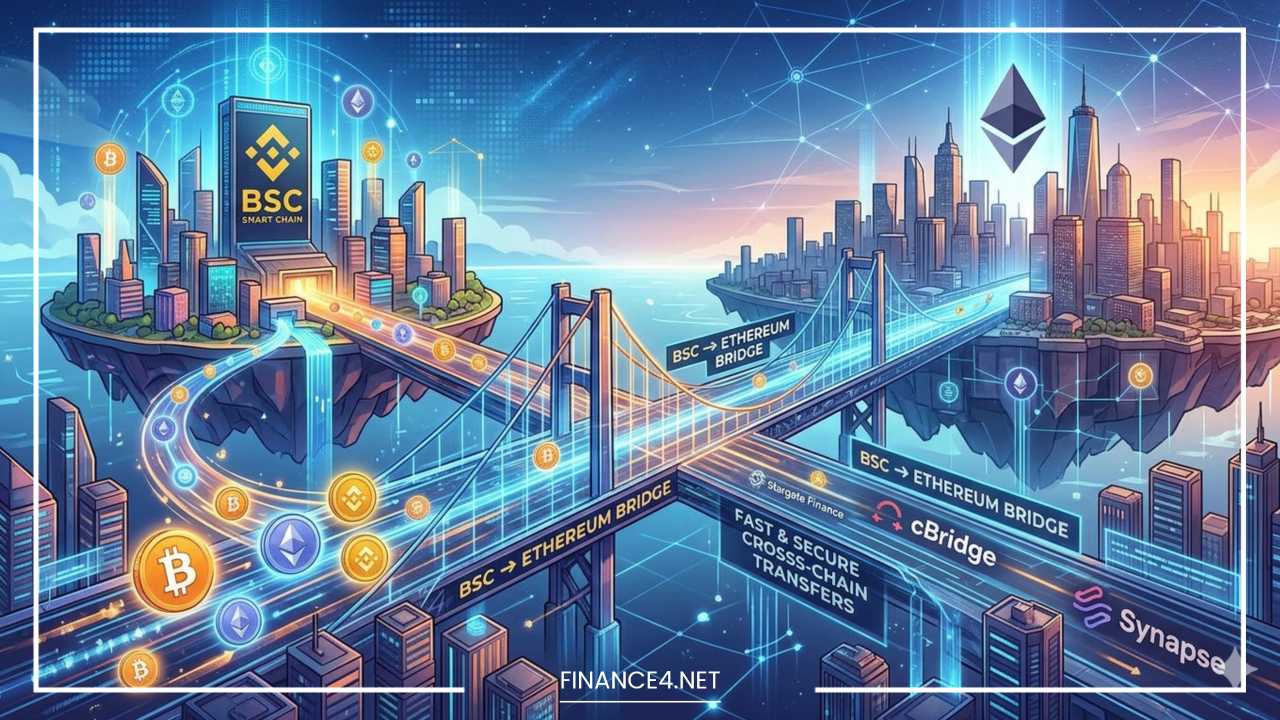
Bridges are the most common tool for cross-chain movement. They typically function through a lock-and-mint mechanism. When you want to send 1 ETH from Ethereum to Polygon, you send your ETH to a specific smart contract on Ethereum where it is “locked.” Once the bridge confirms the deposit, it “mints” an equivalent amount of ETH (often called a “wrapped” or “bridged” version, like WETH or PoS-ETH) on the Polygon network and sends it to your wallet address there.
When you want to go back, the process is reversed: the bridged tokens on Polygon are “burned” (destroyed), and the original ETH on Ethereum is “unlocked” and sent back to your wallet.
Popular Bridge Examples:
-
Wormhole: A decentralized universal message-passing protocol that connects over 30 different blockchains including Solana, Ethereum, and Cosmos.
-
Polygon Bridge: The official portal for moving assets between Ethereum and its most popular sidechain.
-
Avalanche Bridge: A high-speed bridge specifically designed to onboard users from Ethereum to the Avalanche C-Chain.
Wrapped Tokens
A wrapped token is essentially a digital receipt for an asset on another chain. The most famous example is Wrapped Bitcoin (wBTC). Since Bitcoin is its own blockchain and does not support DeFi smart contracts, you cannot use “real” BTC on Ethereum. Instead, you lock your BTC with a custodian and receive wBTC on Ethereum. This wBTC is pegged 1:1 to the price of Bitcoin, allowing you to use your BTC value as collateral in Ethereum-based lending protocols like Aave.
Atomic Swaps
Atomic Swaps are a more decentralized (though often more technically demanding) method. They use Hash Time-Locked Contracts (HTLCs) to ensure that a trade between two parties on different chains either happens completely or not at all. If one party fails to fulfill their end of the bargain within a certain timeframe, the funds are automatically returned to the original owners. This eliminates “counterparty risk” because you don’t have to trust the person you are trading with, nor do you have to trust a centralized bridge.
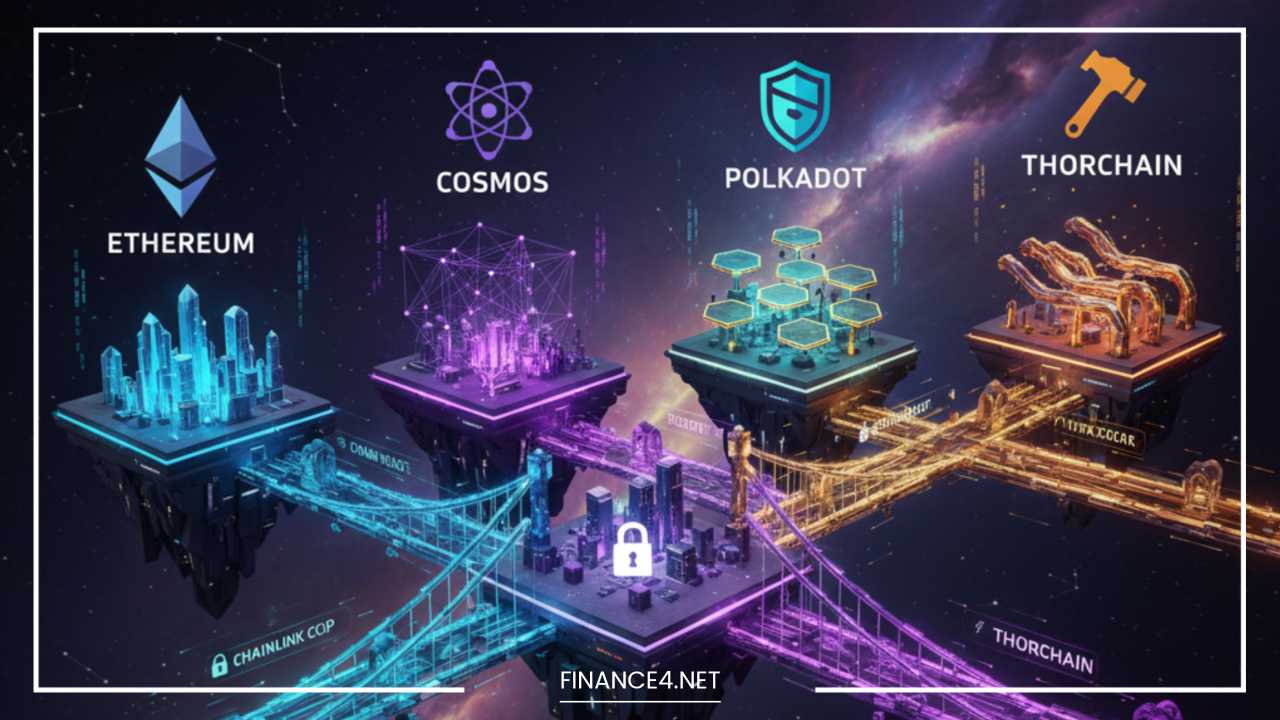
Cross-Chain Protocols (THORChain and Others)
Newer protocols like THORChain or Chainflip take a different approach. They act as decentralized liquidity networks that allow users to swap native assets (like native BTC for native ETH) without needing wrapped tokens or centralized intermediaries. They use a network of “vaults” and their own native tokens to facilitate these swaps directly across chains. This is often considered the “Holy Grail” of cross-chain DeFi because it avoids the security risks associated with minting “synthetic” wrapped versions of assets.
Popular Cross-Chain DeFi Use Cases
The ability to move value freely unlocks several advanced financial strategies that were previously impossible or prohibitively expensive for the average user.
Yield Farming Across Multiple Chains
Yield farming involves providing liquidity to a protocol in exchange for rewards. In a cross-chain world, farmers can “hop” from one chain to another to chase the highest Annual Percentage Yield (APY).
-
Example: A new Decentralized Exchange (DEX) launches on Fantom and offers 50% APY in its native token to attract users to its USDC/DAI pool. An Ethereum user sees this, bridges their stablecoins over to Fantom, farms the high rewards for two weeks, and then bridges back to Ethereum once the rewards normalize. This “mercenary capital” strategy is a cornerstone of the modern DeFi landscape.
Cross-Chain Lending and Borrowing
Imagine you hold a large amount of Solana (SOL) and believe its price will increase significantly over the next year. You don’t want to sell it, but you need some liquidity to pay for a real-world expense or to invest in a new project on Ethereum.
Using cross-chain lending protocols (like Radiant Capital or Aave’s cross-chain deployments), you could deposit your SOL as collateral on one chain and borrow a stablecoin like USDC on another. This allows you to maintain your “long” position on SOL while accessing capital elsewhere, all without triggered a taxable event (selling).
Arbitrage Opportunities between Chains
Prices for the same asset can vary slightly between different blockchains due to differences in supply, demand, and liquidity.
-
The Scenario: Link might be trading at $15.00 on a DEX on Binance Smart Chain but at $15.15 on a DEX on Avalanche.
-
The Move: A cross-chain trader can buy 1,000 Link on BSC, bridge it to Avalanche, and sell it for a $150 profit (minus fees). While automated bots often dominate this space, the development of “cross-chain aggregators” has made it easier for individuals to find and exploit these gaps.
Staking on Multiple Chains
Liquid Staking Derivatives (LSDs) have revolutionized how we think about proof-of-stake. You can stake your ETH to secure the network and receive a token like stETH in return. Through cross-chain DeFi, you can then take that stETH and bridge it to a Layer 2 like Arbitrum to use it as liquidity in a decentralized perpetual exchange. This allows you to earn “double yield”: the base staking reward from Ethereum plus the trading fees or incentives from the Layer 2 protocol.
Example Walkthrough: Chasing Yield
Let’s look at a practical move. Suppose you have 10,000 USDC sitting in an Ethereum wallet earning 1%. You notice that Solend on Solana is offering 6% for USDC deposits.
-
You use a bridge like Portal (Wormhole) to send your USDC from Ethereum to Solana.
-
The transaction costs roughly $15 on Ethereum (depending on gas).
-
Once on Solana, your USDC arrives in your Phantom wallet.
-
You deposit into Solend.
-
Within three months, the extra 5% yield has more than covered your bridging costs, and you are now earning significantly more than you would have on the base chain.
Step-by-Step Guide to Using Cross-Chain DeFi
Transitioning from theory to practice can be intimidating. This step-by-step guide is designed to help you navigate your first cross-chain journey without losing your assets.
Step 1: Set Up a Compatible Wallet
You need a wallet that can “speak” to the chains you intend to use. Most beginners start with MetaMask, but as you expand, you will need others.
-
MetaMask: The industry standard for EVM (Ethereum Virtual Machine) compatible chains. You can use MetaMask for Ethereum, BSC, Polygon, Avalanche, Arbitrum, Optimism, and Base.
-
Phantom: Essential for interacting with the Solana ecosystem. It now also supports Ethereum and Polygon, making it a strong “multi-chain” contender.
-
Keplr: The go-to wallet for the Cosmos ecosystem (the “Internet of Blockchains”).
Critical Safety Note: Always ensure you have downloaded the official version of these wallets from their verified websites. Never, under any circumstances, share your 12 or 24-word seed phrase with any website or individual.
Step 2: Acquire Tokens on Your Base Chain
Before you can bridge, you need assets. Most users start by buying crypto on a centralized exchange (CEX) like Coinbase, Binance, or Kraken.
-
Purchase your desired asset (e.g., ETH or USDC).
-
Withdraw it to your self-custody wallet (MetaMask).
-
Important: You must also have a small amount of the “native” token of your starting chain to pay for gas fees. If you are moving USDC from Ethereum, you need a little ETH in your wallet to pay the miners to process the move.
Step 3: Use a Bridge to Transfer Tokens
Let’s use the example of moving USDC from Ethereum to Polygon using the Polygon PoS Bridge.
-
Connect: Navigate to the official bridge website and click “Connect Wallet.”
-
Select Assets: Choose “Ethereum” as the “From” network and “Polygon” as the “To” network. Select USDC from the dropdown.
-
Approval: You will first need to click “Approve.” This is a transaction that gives the bridge permission to take the USDC from your wallet. Confirm this in MetaMask.
-
Deposit: Once approved, click “Transfer.” The bridge will show you a breakdown of the estimated time and gas fees.
-
Confirm: Confirm the final transaction in your wallet.
The Waiting Game: Cross-chain transfers are not instantaneous. The bridge must wait for a certain number of “block confirmations” on Ethereum to ensure the transaction is final before it mints the tokens on Polygon. This can take anywhere from 10 to 30 minutes. Do not panic if the funds don’t appear immediately.
Step 4: Interact with Cross-Chain Protocols
Once your funds arrive on Polygon, you will need to switch your MetaMask network to “Polygon Mainnet.” Most DeFi sites have a button that does this for you.
-
Now you can visit a protocol like QuickSwap (a DEX) or Aave (lending).
-
You will notice that transactions on Polygon cost mere pennies compared to the dollars you spent on Ethereum. This is the beauty of the multi-chain world.
Step 5: Monitoring and Managing Your Investments
As you spread your capital across different chains, it becomes easy to lose track of where your money is.
-
Use a Portfolio Tracker: Tools like DeBank, Zapper, or Pulsar Finance are lifesavers. You simply paste your wallet address, and they scan dozens of chains to show exactly where your tokens are staked, farmed, or held.
-
Track Gas Fees: Before moving assets back, check gas prices. If Ethereum gas is at 100 gwei, it might be better to wait until it drops to 20 gwei to save on exit fees.
Risks and Challenges: The Dark Side of the Bridge
If cross-chain DeFi is so great, why isn’t everyone doing it? The answer lies in the unique risks that this technology introduces.
Bridge Exploits and Hacks
Bridges are the “honeypots” of the crypto world. Because they hold massive amounts of collateral in centralized smart contracts, they are prime targets for hackers.
-
The Ronin Bridge Hack ($600M+): Hackers gained control of the validator keys to the bridge used by the Axie Infinity game.
-
The Wormhole Hack ($320M+): An attacker exploited a signature verification flaw to mint “free” ETH on Solana.
-
The Risk for You: If you hold “Wrapped ETH” on a chain and the bridge it came from is hacked, your wrapped ETH might lose its peg. If there is no collateral left on the Ethereum side to back it up, your tokens could become worthless.
Smart Contract Vulnerabilities
Every DeFi protocol is built on code. Even if the bridge is safe, the lending platform or yield farm you use on the other side might have bugs. While many protocols undergo audits by firms like CertiK or OpenZeppelin, these audits are not a 100% guarantee of safety. New, “untested” protocols offering 1,000% APY are particularly risky.
High Gas Fees and “Stuck” Transactions
If you are moving a small amount of money (e.g., $100), the gas fees on Ethereum might cost more than the value you are moving. Furthermore, if a transaction fails halfway through a bridge process (perhaps due to a sudden spike in gas prices), your funds can sometimes get “stuck” in the bridge’s contract. While usually recoverable, this requires manual intervention and can be a stressful experience for a beginner.
Regulatory Considerations
Governments around the world are still deciding how to regulate cross-chain activity. Some bridges have started implementing “Know Your Customer” (KYC) requirements or blocking IP addresses from certain jurisdictions. It is important to stay informed about the legal landscape in your country to ensure you don’t lose access to your funds due to sudden regulatory shifts.
Best Practices to Minimize Risk
-
Diversify Bridges: Don’t put all your capital through one bridge protocol.
-
Use “Canonical” Bridges: When possible, use the official bridge created by the developers of the blockchain (like the Arbitrum Bridge or the Polygon Bridge).
-
Revoke Permissions: Use a tool like Revoke.cash after you finish using a bridge. This ensures that even if the bridge is hacked later, the hacker doesn’t have permission to pull more funds from your wallet.
Tools and Resources for the Cross-Chain Explorer
To succeed in cross-chain DeFi, you need a robust set of tools. Here are the “must-haves” for any beginner.
Bridge Aggregators
Just as Kayak finds the best flight, bridge aggregators find the best bridge route. They compare fees, speed, and security across multiple bridges.
-
Bungee (Socket): A very user-friendly interface that helps you find the “Refuel” feature—allowing you to send a little bit of gas money to a new chain along with your main transfer.
-
Li.Fi (Jumper.exchange): One of the most powerful aggregators that combines bridging with swapping. You can turn Ethereum-USDC into Polygon-MATIC in one single step.
Analytics and Safety Tools
-
L2Beat: This site is essential for anyone using Ethereum Layer 2s. It provides a “risk analysis” for each chain, telling you how decentralized it actually is and how safe the bridge is.
-
DefiLlama: Use this to check the “Total Value Locked” (TVL) of a protocol. Generally, the more money a protocol has managed over a long period of time, the more “battle-tested” it is.
-
Dune Analytics: For those who want to dive deep into the data, Dune offers community-created dashboards showing bridge volumes, popular chains, and real-time transaction data.
Community and Education
-
Discord/Twitter: Most cross-chain protocols live on Twitter (X). Follow accounts like @WormholeCrypto or @LayerZero_Core for updates.
-
Bankless: A podcast and newsletter that provides deep dives into the “multi-chain” thesis.
The Future of Cross-Chain DeFi
The future of blockchain is undeniably multi-chain, but the way we interact with these chains is undergoing a radical transformation. We are moving toward a concept called “Chain Abstraction.”
The Death of the “Bridge” UI
In a few years, you likely won’t visit a “bridge website” at all. Instead, the wallets and applications will handle everything in the background. If you are on an Ethereum-based app and want to buy an NFT on Solana, the wallet will perform the swap and bridge automatically. This “intent-centric” design will make DeFi as easy to use as a traditional banking app, where you don’t care which server processed your transaction.
The Role of Layer 2 and Rollups
We are seeing the rise of “App-Chains”—blockchains dedicated to a single application. For example, the dYdX exchange moved to its own chain. Interoperability protocols like IBC (Inter-Blockchain Communication) in the Cosmos ecosystem or Chainlink’s CCIP (Cross-Chain Interoperability Protocol) are creating a world where these thousands of app-chains can share data as if they were one giant computer.
Impact on Traditional Finance (TradFi)
As cross-chain tech becomes more secure and “invisible,” traditional financial institutions are taking notice. BlackRock and JP Morgan are already experimenting with “tokenized assets.” Cross-chain DeFi will eventually allow these institutional players to move trillions of dollars between private bank ledgers and public blockchains seamlessly, potentially creating the most liquid and efficient financial market in human history.
Final Thoughts
The world of cross-chain DeFi is complex, fast-moving, and occasionally dangerous, but it is also the most exciting frontier in finance today. By breaking down the walls between blockchains, we are moving closer to a truly borderless digital economy.
For the beginner, the takeaway is simple: The future is multi-chain, but safety comes first.
-
Start with small amounts.
-
Use reputable, audited bridges.
-
Keep a close eye on your “permissions.”
-
Never stop learning.
As you become more comfortable moving between Ethereum, Solana, and the various Layer 2s, you will gain a massive advantage over those who stay confined to a single ecosystem. You are no longer just a “crypto holder”—you are a cross-chain navigator, able to move your capital to wherever it is most valued, most productive, and most secure.
The bridge to the future of finance is open. It’s time to take the first step.