Bridging Assets Between Blockchains
 by
by 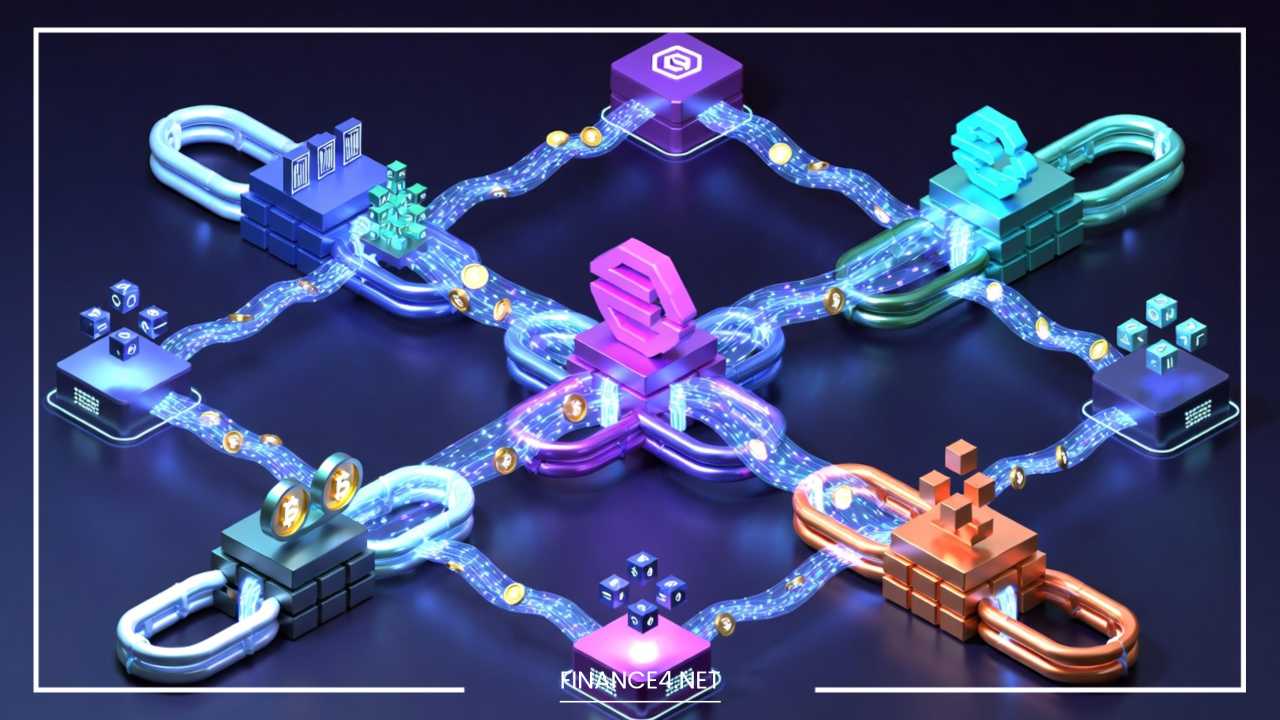
Bridging Assets Between Blockchains | Fast & Secure Solutions
The blockchain landscape has undergone a radical transformation over the last decade. What began as a singular focus on Bitcoin has blossomed into a sprawling multiverse of independent networks, each with its own unique architecture, consensus mechanisms, and specialized ecosystems. However, this explosion of innovation created a significant side effect: fragmentation. Assets and data are often trapped within the silos of their native chains, unable to interact with the broader decentralized world.
As the industry moves toward a multi-chain future, the ability to move value seamlessly across these digital borders has become the cornerstone of Web3. Bridging assets between blockchains is no longer just a technical luxury; it is a fundamental necessity for liquidity, scalability, and user experience. This article explores the mechanics, risks, and innovations driving the cross-chain revolution, providing a comprehensive guide to finding fast and secure solutions in an interconnected world.
Why Bridging Assets Matters
The current state of the crypto economy is decentralized yet disconnected. We have Ethereum, the powerhouse of decentralized finance (DeFi) and smart contracts; Solana, the high-speed alternative for low-latency applications; and a growing list of Layer 2 (L2) scaling solutions like Arbitrum and Optimism. While these networks thrive individually, they operate as isolated “island nations” with their own rules and languages.
Fragmentation is the primary hurdle for the modern user. If you hold ETH on Ethereum but want to participate in a high-yield pool on the BNB Chain or buy a specific NFT on Polygon, you face a barrier. You cannot simply “send” a token from one blockchain’s address to a different chain’s address because the two ledgers do not communicate natively.
This is where asset bridging comes in. Bridging is the process of transferring the value of a digital asset from a source blockchain to a destination blockchain. It allows users to chase better yields, lower transaction costs, and access diverse dApps (decentralized applications) without being restricted by their initial choice of network. As the multi-chain ecosystem grows, the demand for blockchain interoperability—the ability for different chains to talk to each other—has skyrocketed, turning bridges into the vital trade routes of the digital age.
What Does “Bridging Assets Between Blockchains” Mean?
At its core, a blockchain bridge is a protocol that enables the transfer of information and value between two or more blockchain networks. Because blockchains are closed-loop systems, “transferring” an asset doesn’t actually mean the asset leaves its original chain. Instead, bridges use various mechanisms to represent that asset on a new chain.
Types of Assets Bridged
-
Tokens: This includes fungible assets like ERC-20 (Ethereum), SPL (Solana), or BEP-20 (BNB Chain) tokens.
-
NFTs: Non-fungible tokens representing unique digital art or utility can also be moved between compatible chains.
-
Stablecoins: Often the most bridged assets, stablecoins like USDC or USDT are moved frequently to capitalize on liquidity opportunities across different DeFi platforms.
Native vs. Wrapped Assets
To understand bridging, one must understand Wrapped Tokens. If you want to move Bitcoin (native to the Bitcoin blockchain) to Ethereum to use it in DeFi, you cannot move the actual BTC. Instead, a bridge “locks” your BTC on its native chain and “mints” an equivalent amount of Wrapped Bitcoin (WBTC) on Ethereum. This WBTC is a claim check for the original asset.
Bridging vs. Swapping
It is important to distinguish bridging from swapping. A swap usually occurs on a single chain (e.g., swapping ETH for USDC on Uniswap). A bridge involves two different ledgers. While some platforms offer “cross-chain swaps,” these are actually a combination of a bridge and a swap happening in the background.
The Lock-and-Mint Analogy:
Think of a bridge like a high-tech casino. You walk into the “Ethereum Casino” with your native gold (ETH). To play in the “Solana Casino” next door, you lock your gold in a secure vault at the entrance. The vault attendant gives you a receipt or “poker chips” of equal value that are only valid in the Solana Casino. When you are done, you return the chips, they are destroyed, and your original gold is unlocked.
Why Cross-Chain Bridging Is Essential Today
The necessity of bridges stems from the “Blockchain Trilemma,” which suggests that a network can only prioritize two out of three qualities: security, decentralization, and scalability. Since no single chain has perfected all three, users must move between them to find the right balance for their specific needs.
Liquidity Fragmentation
In the early days of DeFi, liquidity was concentrated on Ethereum. Today, it is spread across dozens of chains. For a decentralized exchange (DEX) or a lending protocol to be effective, it needs a deep pool of capital. Bridges allow liquidity to flow where it is most needed, preventing “dead” ecosystems and ensuring that users can always find a counterparty for their trades.
Lowering the Cost of Entry
High gas fees on Ethereum Mainnet can often price out retail users. Bridging assets to Layer 2 solutions or alternative Layer 1s (like Avalanche or Fantom) allows users to perform the same actions—trading, staking, or minting—for a fraction of a cent. Without bridges, these cost-saving ecosystems would remain inaccessible to those who need them most.
Access to Specialized dApps
Different chains specialize in different niches. One might be optimized for high-frequency gaming, while another focuses on institutional-grade privacy. Bridging allows a user to keep their main capital in a highly secure network while moving small amounts to specialized chains for specific activities.
Institutional and Enterprise Use
For corporations, interoperability is a requirement. An enterprise might track its supply chain on a private, permissioned ledger but wish to settle payments in a public stablecoin. Bridges provide the “glue” that allows these disparate systems to function as a unified whole.
How Blockchain Bridges Work: A Technical Breakdown
While the user experience might be as simple as clicking a button, the underlying mechanics of a bridge are complex. There are four primary models used to facilitate these transfers.
1. Lock-and-Mint
This is the most common model.
-
Step 1: The user sends the asset to a specific smart contract address on the source chain.
-
Step 2: The asset is “locked” in that contract.
-
Step 3: A “relayer” or validator observes this transaction and sends proof to the destination chain.
-
Step 4: The destination chain’s contract “mints” a wrapped version of the asset and sends it to the user’s wallet.
2. Burn-and-Mint
This is often used for assets that have native minting rights on multiple chains.
-
Step 1: The user “burns” (permanently destroys) the asset on the source chain.
-
Step 2: Proof of this burn is provided to the destination chain.
-
Step 3: The destination chain mints a “native” version of the asset. This prevents the proliferation of “wrapped” versions and maintains a cleaner supply.
3. Liquidity Pool-Based Bridges (Atomic Swaps)
Instead of minting new tokens, these bridges maintain large pools of assets on both sides.
-
Step 1: You deposit USDC into a pool on Chain A.
-
Step 2: The bridge checks if there is enough USDC in its pool on Chain B.
-
Step 3: If available, the bridge sends you USDC on Chain B from its existing reserves.
This method is incredibly fast but is limited by the amount of liquidity the bridge provider has in its “vaults.”
4. Message-Passing Protocols
Advanced bridges are moving toward “generalized message passing.” Rather than just moving tokens, these protocols allow a smart contract on Chain A to trigger a function on Chain B. This is the holy grail of interoperability, allowing for “cross-chain yield farming” or “cross-chain governance” where you don’t even have to move your assets to interact with a different network.
The Role of Validators and Oracles:
Bridges rely on intermediaries to verify that a transaction actually happened on the source chain.
-
Validators: A set of nodes that reach a consensus on whether the “lock” or “burn” occurred.
-
Oracles: External data feeds (like Chainlink) that provide the bridge with real-time information about the state of the participating blockchains.
Types of Blockchain Bridges
Not all bridges are created equal. They can be categorized based on how they handle trust and who controls the assets.
Centralized (Custodial) Bridges
These are often managed by large entities, such as centralized exchanges (CEXs). When you move funds from Binance to your MetaMask wallet on a different chain, you are using a custodial bridge.
-
Pros: Extremely fast, user-friendly, and often has high liquidity.
-
Cons: You must trust the entity with your funds. It is a “honey pot” for regulators or hackers, and it goes against the “not your keys, not your crypto” ethos.
Decentralized (Non-Custodial) Bridges
These rely on smart contracts and a distributed network of validators. No single person or company has control over the locked funds.
-
Pros: Transparent, permissionless, and resistant to censorship.
-
Cons: Vulnerable to smart contract bugs. If the code has a hole, the funds can be drained.
Trust-Minimized / Native Bridges
These are considered the gold standard for security. They often use Light Clients or Zero-Knowledge (ZK) Proofs. Instead of trusting a group of people (validators), the destination chain mathematically verifies the state of the source chain.
-
Pros: Extremely high security; you only trust the math and the underlying blockchains.
-
Cons: Highly complex to build and can be slower/more expensive due to the heavy computation required for verification.
Layer 2 Bridges
These are specific bridges built to move assets between Ethereum (Layer 1) and its scaling solutions (Layer 2).
-
Optimistic Bridges: Use a “challenge period” where transactions are assumed valid unless someone proves otherwise (e.g., Arbitrum).
-
ZK-Bridges: Use cryptographic proofs to ensure instant and mathematically certain transfers (e.g., zkSync).
These bridges are generally more secure because they inherit the security of the Ethereum mainnet.
Security Risks in Cross-Chain Bridging
If there is a “weak link” in the current blockchain ecosystem, it is the bridge. In recent years, bridge exploits have accounted for billions of dollars in lost funds. Understanding these risks is vital for any user or developer.
Why Bridges Are Targets
Bridges are effectively massive vaults. To function, a bridge must hold a vast amount of “locked” collateral on one side to back the “minted” assets on the other. This creates a massive “honey pot” that attracts the most sophisticated hackers in the world.
Common Vulnerabilities
-
Smart Contract Bugs: Since bridges handle complex logic across different coding languages (e.g., Solidity on Ethereum vs. Rust on Solana), errors in the code can allow attackers to “mint” assets without actually locking any collateral.
-
Compromised Validators: In decentralized bridges, if a majority of the validators are hacked or collude, they can sign off on fraudulent transfers. The infamous Ronin Bridge hack (over $600 million) occurred because an attacker gained control of the majority of the validator keys.
-
Oracle Manipulation: If a bridge relies on an external price feed to determine how much an asset is worth, a hacker can “flash loan” and manipulate that price, tricking the bridge into releasing more funds than it should.
The Complexity Penalty
Securing a single blockchain is hard. Securing a bridge is exponentially harder because you are dealing with the security assumptions of two different environments. If Chain A is secure but Chain B is 51% attacked, the bridge connecting them may fail, even if its own code is perfect.
How “Fast & Secure” Bridges Are Designed
Despite the risks, the industry is innovating rapidly to create “hardened” bridges. The goal is to minimize the “time-to-finality” (speed) while maximizing the “cost-of-attack” (security).
Security Best Practices
-
Multi-Layer Audits: Top-tier bridges undergo multiple audits from different security firms.
-
Bug Bounties: Protocols like Immunefi offer millions of dollars to “white hat” hackers who find and report vulnerabilities before they can be exploited.
-
Threshold Signatures (TSS): Instead of a simple multi-sig where a few keys control the funds, TSS breaks the private key into many shards distributed among hundreds of nodes. No single node ever holds the full key.
Speed Optimizations
-
Liquidity Rebalancing: Using automated market makers (AMMs) to ensure there is always enough liquidity on the destination side to provide “instant” fills.
-
Optimistic Verification: Allowing a transaction to go through immediately but keeping it “bonded” for a short period. If no one proves the transaction was fraudulent, the funds are released. This provides a balance of speed for the user and a safety net for the protocol.
User-Side Safety Tips
-
Verify the URL: Phishing sites often mimic popular bridges. Always double-check the domain.
-
Start Small: When using a new bridge, send a small “test” amount first to ensure the path is working.
-
Check Finality: Do not close your browser or assume a transaction is done until you see the assets in your destination wallet.
-
Revoke Permissions: After bridging, use tools like Revoke.cash to remove the bridge’s permission to spend your tokens. This protects you if the bridge is hacked later.
Popular Blockchain Bridge Solutions
While this article remains neutral, it is helpful to understand the categories of solutions currently dominating the market.
Multi-Chain Hubs
Protocols like LayerZero and Axelar are not just bridges but infrastructure layers. They allow developers to build dApps that are “omnichain” by default. Instead of a user having to visit a bridge website, the bridge is baked into the application itself.
Ecosystem-Specific Bridges
These are the “official” paths created by the developers of a specific chain.
-
The Avalanche Bridge: Uses “Intel SGX” technology to create a secure enclave for processing transfers.
-
The Polygon PoS Bridge: A widely used path between Ethereum and Polygon.
-
The Rainbow Bridge: Connecting Near Protocol and Ethereum.
Aggregators
Just as 1inch aggregates DEXs to find the best price, bridge aggregators like Lifi or Bungee scan dozens of bridges to find the one with the lowest fees and the fastest transfer time for your specific pair. This is often the best route for retail users looking for efficiency.
Enterprise and Institutional Solutions
Companies are looking for “Permissioned Bridges” that comply with KYC (Know Your Customer) and AML (Anti-Money Laundering) regulations. These solutions prioritize legal compliance and insurance over pure decentralization.
Future of Cross-Chain Asset Bridging
The ultimate goal of the bridging industry is to become “invisible.” In the future, a user shouldn’t need to know they are “bridging” at all.
Chain Abstraction
We are moving toward an era of Chain Abstraction. Imagine using an app where you simply see your total balance. When you want to buy an item, the app automatically pulls liquidity from whichever chain holds your funds, bridges it in the background, and completes the purchase in one click. The technical hurdles are hidden behind a seamless user interface.
Zero-Knowledge Everything
As ZK-proof technology matures, we will see a shift away from “trusted” bridges. ZK-bridges allow for “trustless” interoperability where the destination chain can verify the state of the source chain with 100% mathematical certainty, effectively eliminating the risk of compromised validators.
Unified Liquidity Layers
Instead of every bridge having its own isolated pool of money, we are seeing the rise of unified liquidity layers. This would allow different bridges to draw from a shared “ocean” of capital, making cross-chain transfers much more efficient and less prone to “slippage” (price changes during the transfer).
Final Thoughts: Bridging Toward a Multi-Chain Future
The fragmentation of the blockchain world was an inevitable phase of its rapid growth. As different networks specialized to solve specific problems, they naturally grew apart. However, the next phase of Web3 is defined by reconvergence.
Bridging assets between blockchains is the mechanism that allows this reconvergence to happen. While the technology is still in its “frontier” stage—complete with high risks and technical complexities—the progress made in just a few years is staggering. We are moving from slow, risky, and manual processes to automated, secure, and near-instant cross-chain interactions.
For the user, the message is clear: the multi-chain world offers unparalleled opportunity, but it requires a commitment to safety and an understanding of the tools at hand. By choosing well-audited, high-liquidity, and trust-minimized bridges, you can navigate the vast blockchain ecosystem with confidence.
The bridges we build today are the foundations of a truly open and interconnected global financial system. As these “digital trade routes” become faster and more secure, the barriers between blockchains will eventually vanish, leaving behind a single, unified web of value.