NFT Sports Collectibles to Watch
 by
by 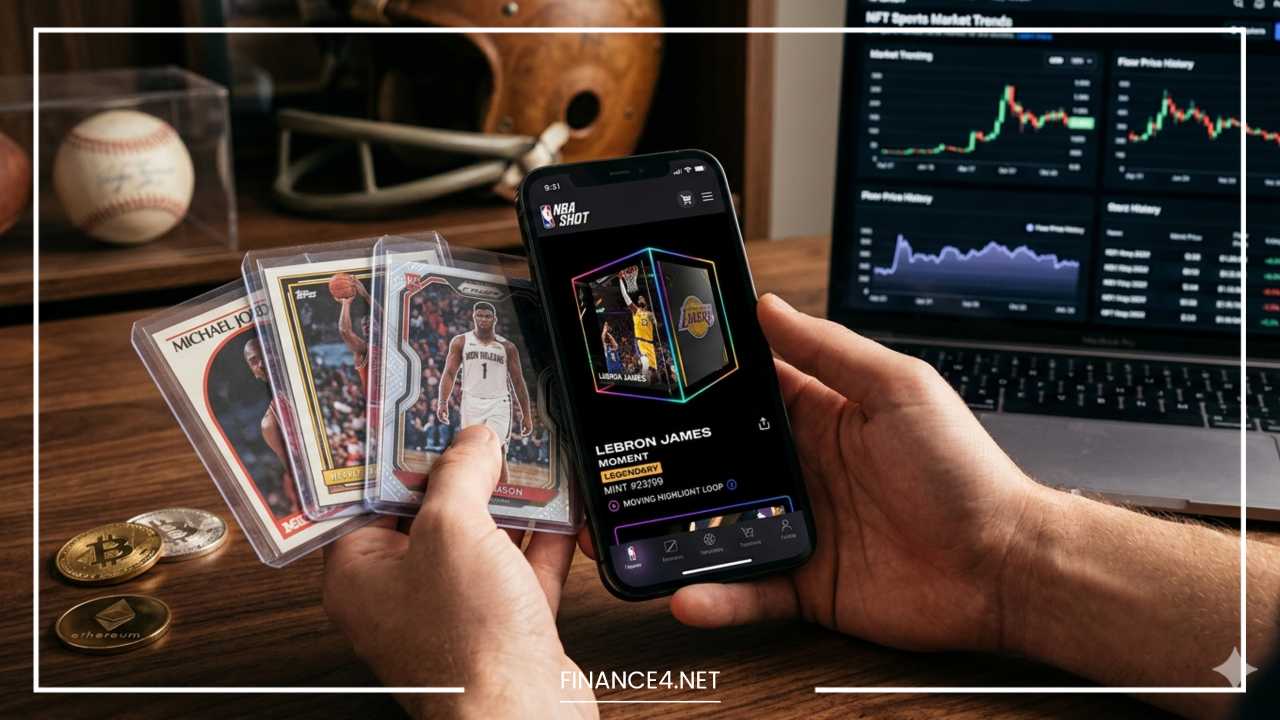
NFT Sports Collectibles to Watch: Top Projects and Market Trends
The intersection of professional sports and blockchain technology has birthed a multi-billion dollar industry that is fundamentally altering the concept of fandom. Once defined by physical cardboard, tattered ticket stubs, and signed jerseys kept in glass cases, sports memorabilia has migrated to the digital realm. NFT (Non-Fungible Token) sports collectibles have emerged not merely as digital images, but as programmable assets that grant ownership, utility, and a direct connection to the athletes and leagues that fans adore.
NFT sports collectibles represent a digital evolution of the traditional memorabilia market. By utilizing blockchain technology, these assets provide indisputable proof of ownership, authenticity, and scarcity for digital items ranging from video highlights to virtual trading cards. The journey of this asset class has been a volatile one. Following a massive explosion in 2021 characterized by astronomical sales and speculative frenzy, the market underwent a significant correction.
However, this correction was not a collapse but a stabilization. The market has matured, moving away from pure speculation toward a landscape defined by utility and long-term fan engagement. Current estimates place the market size at over $8 billion, showing a resilient recovery and a shift in investor sentiment. The thesis for the modern era of sports NFTs is clear: value is no longer derived solely from rarity, but from what the token allows the holder to do within a broader sports ecosystem.
The shift from “Hype” to “Utility” is the most critical transformation in this space. During the initial boom, investors treated sports NFTs like lottery tickets. Today, collectors treat them like memberships or functional game pieces. This article explores the fundamental mechanics of these digital assets, the historical evolution of the marketplace, the leading projects currently dominating the space, and the emerging trends that will define the future of the fan economy.
What Are NFT Sports Collectibles?
To understand why NFT sports collectibles are gaining such traction, one must first understand the underlying technology. An NFT is a unique digital identifier recorded on a blockchain. Unlike a cryptocurrency like Bitcoin, where every unit is identical and interchangeable, every NFT is distinct. In the context of sports, this means a “Moment” of a LeBron James dunk is mathematically unique from a “Moment” of a Stephen Curry three-pointer, even if they are part of the same digital set.
Digital vs. Physical Memorabilia
Traditional sports cards face several logistical hurdles: they require physical storage, are susceptible to environmental damage, and their authenticity is often questioned without expensive third-party grading. Digital collectibles solve these issues through:
-
Blockchain Verification: Every transfer is recorded on a public ledger, making forgery impossible. You can track a digital card’s history back to the moment it was minted by the league.
-
Instant Liquidity: Unlike mailing a physical card to a buyer and waiting for a check to clear, an NFT can be sold and transferred globally in seconds.
-
Programmed Scarcity: Smart contracts ensure that a league cannot “overprint” a specific set once the supply is locked. If a set is limited to 100 editions, the blockchain prevents a 101st from ever being created.
-
Condition Permanence: A digital asset never fades, creases, or develops “soft corners.” A “Mint” digital asset remains “Mint” forever.
Types of Sports NFTs
The ecosystem is diverse, catering to different types of collectors:
-
Digital Trading Cards: Modern versions of classic cards, often featuring animated stats, 3D renders, or interactive elements that update based on real-world data.
-
Video Moments: These are officially licensed video clips of iconic plays. They turn a broadcast highlight into a portable, ownable asset.
-
Tokenized Memorabilia: Digital twins of physical items, or “phygital” assets where the NFT acts as a deed of ownership for a physical jersey, ring, or trophy held in a secure vault.
-
Fantasy-Integrated NFTs: Cards that serve a dual purpose as a collectible and a functional piece in a digital game, where their value fluctuates based on the athlete’s actual performance on the field.
Evolution of the Market
The trajectory of sports NFTs provides a masterclass in the adoption of emerging technologies. It can be categorized into three distinct phases.
Phase 1: The Hype (2020–2022)
This period was characterized by the “gold rush” mentality. NBA Top Shot brought NFTs to the mainstream, generating hundreds of millions of dollars in secondary market sales in a matter of months. Celebrities and athletes rushed to launch their own collections, often with little regard for long-term roadmaps. Prices were driven by “the greater fool theory,” where buyers hoped to flip assets quickly for a profit. At the peak, rare moments were selling for over $200,000, driven by a cocktail of pandemic-era boredom, stimulus checks, and crypto-wealth.
Phase 2: The Correction (2022–2024)
As the broader crypto market entered a “winter,” the speculative bubble burst for sports NFTs. High-profile projects that lacked a functional product or official licensing saw their floor prices plummet by 90% or more. Many celebrity-led projects disappeared entirely, leading to a wave of skepticism. This phase was painful for many investors but necessary for the health of the industry, as it flushed out “vaporware” and left behind platforms with sustainable business models and real league partnerships.
Phase 3: Maturity (Ongoing)
We are currently in a phase of professionalization. Modern projects focus on the “3 Gs”: Gamification, Governance, and Gated Access. Fans are no longer satisfied with just owning a JPEG; they want to use their NFTs to play fantasy sports, vote on team decisions, or gain VIP access to stadiums. The market has moved from being a purely financial playground to a tool for deep-seated fan engagement. The focus has shifted from “How much can I sell this for tomorrow?” to “What does this get me access to today?”
Top NFT Sports Collectible Projects to Watch
As the market settles, a handful of “blue-chip” projects and innovative newcomers have emerged as the leaders of the pack.
NBA Top Shot
NBA Top Shot remains the gold standard for sports NFTs. Developed by Dapper Labs in partnership with the NBA, it turned basketball highlights—known as “Moments”—into tradable assets.
-
The Volume: With over $4 billion in total trading volume, it proved that there was a massive appetite for licensed digital goods. It survived the market crash by leaning into “Challenges” that require users to collect specific sets to earn rewards.
-
Accessibility: Its greatest strength was the “hidden blockchain” approach. Users could buy packs with a credit card, removing the technical barrier of managing complex crypto wallets.
-
The Ecosystem: Dapper Labs has built a mobile app experience that feels more like a social network for collectors than a financial exchange.
-
The Challenge: Its primary weakness is centralization. Because it exists on the Flow blockchain and is strictly controlled by Dapper Labs, users have less “sovereign” control compared to open-source Ethereum projects.
Sorare
Sorare has arguably created the most sustainable economic model in the space by blending NFTs with fantasy sports.
-
The Model: Users collect digital player cards (licensed from over 300 clubs across soccer, the NBA, and MLB) and use them to build lineups.
-
The Value Loop: The value of a Sorare card is tied directly to the player’s real-world performance. If a player scores a hat-trick in the Premier League, their Sorare card earns more points in the game, leading to rewards like ETH or rare new cards.
-
Scale: With over 3 million users, Sorare has proved that gamification is the ultimate retention tool. It has successfully moved beyond “speculation” because the cards have a high “utility value” within the game’s internal economy.
NFL All Day and UFC Strike
Following the success of NBA Top Shot, Dapper Labs expanded into the NFL and UFC. NFL All Day captures the high-intensity energy of American football through limited-edition digital reels. These platforms benefit from the “cross-pollination” of fans who already understand the Top Shot ecosystem but want to diversify into other sports. The UFC Strike platform specifically targets a younger, digitally native demographic that values the “savagery” of highlight finishes in a collectible format.
FIFA+ Collect
Football (soccer) is the world’s most popular sport, and FIFA’s entry into the NFT space marked a massive milestone. By tokenizing moments from World Cup history, FIFA+ Collect allows fans to own a piece of legendary matches. While it had a slower start than NBA Top Shot, its global reach across every continent gives it a higher long-term ceiling for mass adoption.
Athlete-Driven NFTs
Beyond league-wide platforms, individual athletes are becoming their own “mints.” Athletes like Lionel Messi, Cristiano Ronaldo, and Tom Brady have launched personal collections. These are often used as “super-fan” passes. For instance, holding a specific athlete’s NFT might grant the owner a signed jersey, a video shoutout, or even a chance to meet the player in person. This shifts the power dynamic, allowing athletes to monetize their brand directly without a middleman, creating a direct “creator-to-fan” economy.
Hybrid and Emerging Platforms (RWA)
A significant trend is the rise of Real-World Assets (RWAs). Platforms are now tokenizing high-end physical memorabilia.
-
Fractionalization: A rare 1952 Mickey Mantle card might be held in a secure vault, while its ownership is divided into 1,000 digital fractions via NFTs. This allows smaller investors to own a “piece” of sports history that would otherwise be priced at millions of dollars.
-
Phygital Goods: Brands like Nike and Adidas are releasing sneakers that come with an NFT counterpart. The NFT acts as a digital wearable in video games and a certificate of authenticity for the physical pair.
Key Market Trends
To understand where the market is going, one must look at the structural shifts occurring within the technology and the consumer base.
1. Utility Over Speculation
The most significant trend is the death of the “static NFT.” Modern collectors demand utility. This includes:
-
IRL (In Real Life) Rewards: Using an NFT to get a 20% discount at the team store or a free drink at the stadium.
-
Governance: Allowing NFT holders to vote on the jersey design for a pre-season game or the music played during warm-ups.
-
Enhanced Access: Holders of rare NFTs might get “behind the scenes” digital content, such as a live stream of the locker room or early access to playoff tickets.
2. Gamification and Fantasy Integration
The “Collect-to-Play” model is being adopted everywhere. Collecting is no longer a passive hobby; it is a competitive sport. This integration ensures that even in a “bear market,” the assets remain useful because they are needed to compete in weekly tournaments. We are seeing “Play-and-Earn” models where fans are rewarded for their sports knowledge rather than just their wallet size.
3. NFTs as Tickets and Memberships
The traditional PDF ticket is being replaced by NFT tickets. This solves the problem of scalping and fraud. If a team issues tickets as NFTs, they can program a “royalty” into the smart contract. If a fan resells their ticket on a secondary market, a percentage of that sale can automatically go back to the team or the league. Furthermore, the ticket doesn’t disappear after the game; it becomes a “digital stub” that serves as a permanent collectible, often updating with the game’s final score and stats.
4. Global Fan Engagement
Sports are regional, but fandom is global. A Manchester United fan in Tokyo may never visit Old Trafford, but they can own an official NFT. This allows leagues to monetize their international fanbases in a way that was previously impossible. It provides a sense of “digital belonging” that transcends borders, allowing a fan in India to participate in the same “challenges” as a fan in Manchester.
5. Multi-Chain Expansion
While Ethereum was the birthplace of NFTs, it suffered from high “gas fees” (transaction costs) and environmental concerns. We are seeing a migration toward more efficient blockchains:
-
Flow: Designed specifically for high-volume consumer applications.
-
Polygon: An Ethereum “Layer 2” that offers the security of Ethereum with the speed of a private chain.
-
Solana: Known for ultra-fast transactions, making it ideal for real-time sports betting and micro-collectibles.
6. Institutional and Brand Adoption
The entry of traditional financial institutions and massive consumer brands (like Visa, Mastercard, and Budweiser) into the NFT space has provided a “seal of approval.” When a major brand integrates NFTs into its loyalty program, it normalizes the technology for the average consumer, moving it away from the “crypto-bro” subculture and into the mainstream.
Risks and Challenges
No investment or technological shift is without its pitfalls. For the NFT sports market to reach its full potential, several hurdles must be cleared.
-
Market Volatility: Like all crypto-adjacent assets, prices can swing wildly based on macroeconomic trends. A player’s injury or a team’s losing streak can also negatively impact the value of specific collectibles.
-
Platform Dependency: If you own an NFT on a centralized platform and that platform goes out of business, the “viewer” for your NFT might disappear. While the token exists on the blockchain, its visual representation and utility are often tied to the company’s servers.
-
Regulatory Uncertainty: Governments worldwide are still deciding whether certain NFTs should be classified as securities. Changes in law could affect how these assets are traded, taxed, or marketed to the public.
-
Security Risks: Phishing scams and wallet hacks remain a threat. As NFTs become more valuable, they become bigger targets for cybercriminals. Collectors must educate themselves on “cold storage” and digital hygiene.
-
Liquidity Issues: While high-end “Grail” pieces (like a 1-of-1 LeBron James moment) are easy to sell, mid-tier or “common” NFTs can be difficult to move if there is no active buyer interest. Unlike Bitcoin, you cannot always sell an NFT instantly at the market price.
Future Outlook
The long-term forecast for NFT sports collectibles is bullish. We are moving toward a world where a fan’s “Digital Locker” is just as important as their physical closet. The future will likely see a deeper integration with emerging technologies:
The Metaverse and Virtual Stadiums
Imagine wearing a VR headset to attend a game in a “Virtual Madison Square Garden.” Your avatar is wearing an NFT jersey you bought from the team store, and your “VIP pass” (an NFT) allows you to sit in a virtual courtside seat with other collectors.
Augmented Reality (AR)
AR will bring digital collectibles into the physical world. You could point your smartphone at a physical poster on your wall, and through an AR app, it displays the “Video Moment” NFT you have linked to it. At live games, fans might see “digital flames” over players who have “Rare” NFT cards associated with them.
AI Personalization
Artificial Intelligence will allow NFTs to become dynamic. An NFT “card” could have an AI-driven voice that recites the player’s latest stats or even answers questions about their career. The artwork itself could “evolve” or change its aesthetic based on a player’s career milestones—turning from silver to gold when they win a championship.
Digital Identity
Ultimately, NFTs are becoming the digital identity layer for sports fans. Your digital wallet will act as a resume of your fandom. It will prove which games you attended, which players you supported before they became stars, and how many “points” you’ve earned in the league’s ecosystem. This data will allow teams to offer hyper-personalized rewards to their most loyal supporters.
Final Thoughts
The transition of sports collectibles from the physical to the digital world is an inevitable consequence of a society that spends an increasing amount of time in digital spaces. While the early days of the market were marred by excess and hype, the current landscape is one of building and refinement.
The top projects like NBA Top Shot, Sorare, and NFL All Day have laid the groundwork for a new type of fan economy—one that is interactive, global, and utility-driven. The shift from owning “things” to owning “experiences and access” is the defining characteristic of this new era.
Whether you are a casual fan looking to own a piece of your favorite team’s history or a serious collector seeking the next “digital Honus Wagner,” the NFT space offers opportunities that traditional memorabilia simply cannot match. As technology continues to lower the barriers to entry and the user experience becomes more seamless, the line between “fan” and “owner” will continue to blur. This creates a more immersive, rewarding, and transparent experience for sports enthusiasts everywhere, ensuring that the spirit of the game lives on in the digital frontier.
Appendix: Tips for New Collectors
For those looking to enter the market after reading this guide, keep the following principles in mind:
-
Collect What You Love: If the market value drops, you should still be happy to own the asset. Never buy a collectible purely for speculation if you don’t care about the athlete or the sport.
-
Research the License: Stick to officially licensed products. Unofficial “fan art” NFTs rarely hold long-term value and are often subject to copyright takedowns.
-
Understand the Scarcity: “Common” moments with 40,000 editions are unlikely to appreciate significantly. “Rare” or “Legendary” tiers with low double-digit mint counts are where the long-term value usually resides.
-
Security First: Use two-factor authentication (2FA) on all platforms. If you begin collecting high-value assets, consider moving them to a hardware wallet (like a Ledger or Trezor) for maximum security.
-
Watch the Real-World News: The value of sports NFTs is inextricably linked to real-world events. A player being traded, getting injured, or winning an MVP award will immediately reflect in the NFT’s market price. Stay informed to stay ahead.