Best Aggregator for Bridging Newly Minted Tokens
 by
by 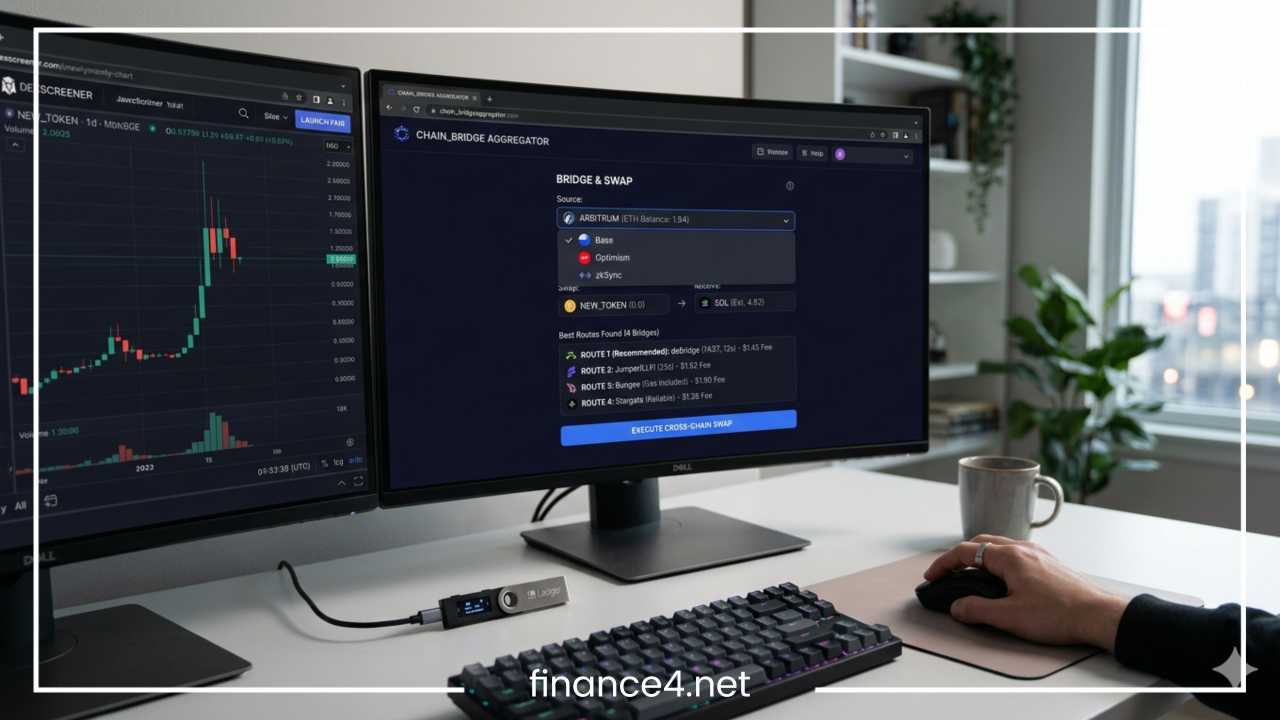
Best Aggregators for Bridging Newly Minted Tokens
The digital asset landscape has evolved from a single-chain dominance model into a sprawling, multi-chain universe. While Ethereum remains the foundational layer for decentralized finance, the rise of Layer 2 solutions like Arbitrum, Optimism, and Base, alongside alternative Layer 1 blockchains like Solana, Avalanche, and Cosmos, has created a fragmented ecosystem. This fragmentation is most evident when new tokens are launched. Today, a project might “fair launch” on a Base meme-coin deployer, gain traction on an Arbitrum decentralized exchange, and eventually seek liquidity on Ethereum Mainnet.
For the modern investor, the ability to move capital across these borders is no longer a luxury but a necessity. However, manual bridging is fraught with complexity, high costs, and the risk of significant slippage, especially when dealing with newly minted tokens that lack deep, established liquidity pools. This is where bridge aggregators enter the frame. They serve as the navigation system for the multi-chain world, ensuring that capital flows to the newest opportunities with minimal friction.
What Are Bridge Aggregators?
At its core, a bridge aggregator is a meta-layer that sits on top of individual cross-chain bridges. To understand their value, one must first distinguish between a single bridge and an aggregator. A single bridge, such as Wormhole, LayerZero, or the Avalanche Bridge, is a specific infrastructure provider that moves assets between two or more chains using its own security model and liquidity pools.
A bridge aggregator, by contrast, does not usually move the assets itself. Instead, it functions as a search engine and routing protocol. When a user wants to move a token from Chain A to Chain B, the aggregator scans dozens of available bridges to find the most efficient path.
The key functions of an aggregator include:
-
Route Optimization: Finding the path with the fewest steps and the lowest risk of transaction failure.
-
Fee Comparison: Transparently displaying the gas costs, bridge fees, and protocol takes across different providers so the user can choose the cheapest option.
-
Speed Optimization: Identifying which bridge is currently processing transactions the fastest, which is critical during high-volatility events like a new token launch.
By consolidating these services into a single interface, aggregators eliminate the need for users to manually check five different websites to see which one offers the best rate for a new altcoin.
Why Newly Minted Tokens Need Aggregators
Newly minted tokens present a unique challenge for cross-chain infrastructure. Unlike established assets like ETH or USDC, which have deep liquidity on almost every bridge, new tokens are often “long-tail” assets. They are volatile, have thin liquidity, and are frequently only available on one or two specific chains immediately after launch.
Liquidity Fragmentation
When a token is minted, the initial liquidity is usually concentrated in a single pool on a single Decentralized Exchange (DEX). If a trader on Polygon wants to buy a token that just launched on Base, they cannot simply “bridge” the new token because a bridge for that specific, obscure asset likely doesn’t exist yet. An aggregator solves this by performing a “cross-chain swap.” It swaps the user’s source asset for a stablecoin, bridges the stablecoin to the destination chain, and then swaps that stablecoin for the newly minted token on a local DEX—all in one click.
Slippage and Volatility
New tokens are notorious for price swings. A manual bridging process that takes ten minutes can result in the token price doubling or halving by the time the funds arrive. Aggregators often use “intent-based” or highly optimized routing to ensure that the time spent “in flight” is minimized, protecting the user from the high slippage associated with low-liquidity pools.
Arbitrage and Early Access
For airdrop hunters and early-stage investors, speed is everything. Aggregators allow these users to hop between ecosystems to catch the “meta” of the week. Whether it is a new DeFi primitive or a viral social-fi token, aggregators provide the infrastructure to move capital into the right chain before the window of opportunity closes.
Key Features to Evaluate
Choosing the right aggregator for new tokens requires a deep dive into several technical and operational categories. Not all aggregators are created equal, and for a new token, the “cheapest” route might not always be the best.
Supported Chains and Tokens
The most important metric for a new token trader is coverage. An aggregator is only as good as the networks it connects. You want a platform that supports not just the “Big Three” (Ethereum, Solana, Arbitrum), but also emerging chains where new tokens are frequently birthed. A good aggregator should have a high “token listing” velocity, meaning it picks up new DEX pairs within minutes of them going live.
Routing Intelligence
Advanced routing involves more than just picking a bridge. It involves “split routing,” where a large order is broken into smaller pieces and sent across different bridges or DEXs to minimize price impact. For newly minted tokens with thin liquidity, smart routing is the difference between a successful trade and losing 10% of your capital to slippage.
Fees and Cost Efficiency
Every cross-chain move involves multiple fees: source chain gas, the bridge fee, destination chain gas, and the aggregator’s service fee. High-quality aggregators are transparent about these costs and often offer “gasless” options or “refuel” services, which provide the user with a small amount of the destination chain’s native gas token so they aren’t “stranded” once they arrive.
Speed and Finality
Different bridges have different security models, which impact speed. Some bridges require 20 minutes for finality (safety), while others use optimistic models that are faster but carry different risks. When a new token is pumping, a user might be willing to pay a premium for a bridge that completes in 30 seconds versus one that takes 15 minutes.
Security and Trust Assumptions
Bridging is one of the most high-risk activities in crypto. Historically, bridges have been the target of the largest exploits in the industry. Users must evaluate whether an aggregator uses “canonical” bridges (the official ones built by the chain developers) or third-party liquidity providers.
-
Synapse Protocol: Often integrated into aggregators, Synapse uses a cross-chain messaging protocol that allows for rapid swaps between its supported chains.
-
LI.FI: This is a primary infrastructure provider that powers many other aggregators. It focuses heavily on security by vetting every bridge it integrates, ensuring that “honeypot” or poorly coded bridges aren’t offered to users.
Top Aggregators for Bridging Newly Minted Tokens
In the current market, a few players have emerged as the dominant forces in cross-chain aggregation. Each has a specific “personality” and use case.
LI.FI (and Jumper Exchange)
LI.FI is the “engine room” of the bridging world. It is a multi-bridge aggregation protocol that supports dozens of bridges and hundreds of DEXs. For the average user, the best way to interact with LI.FI is through their flagship consumer interface, Jumper Exchange.
-
Strengths: Jumper is perhaps the most comprehensive tool available. It aggregates bridges like Stargate, Across, and CCTP, while also hooking into DEX aggregators like 1inch. This makes it ideal for newly minted tokens because it can find liquidity in the most obscure corners of the market.
-
Handling of New Tokens: Excellent. Because it aggregates other DEX aggregators, if a token has a liquidity pool anywhere, Jumper can usually find it.
-
UX: Jumper offers a “pro” mode for advanced traders and a simple mode for beginners. It provides clear data on estimated time and guaranteed return.
-
Ideal Use Case: The “daily driver” for any serious multi-chain trader.
Rango Exchange
Rango is unique because it excels at “cross-ecosystem” bridging. While many aggregators focus strictly on EVM (Ethereum-compatible) chains, Rango connects EVM, Cosmos, Solana, and even Bitcoin.
-
Strengths: If a new token is launching on a non-EVM chain like Sei, Celestia, or Solana, Rango is often the best choice. It has a powerful complex-route engine that can handle five or six steps in a single transaction.
-
Handling of New Tokens: Very strong for “interchain” launches. It is the go-to for moving from an Ethereum L2 to a specific Cosmos app-chain.
-
Weakness: The UI can be slightly overwhelming due to the sheer number of options and the complexity of the routes.
-
Ideal Use Case: Users moving between fundamentally different blockchain architectures.
Socket (and Bungee)
Socket is a modular interoperability layer. Like LI.FI, it has a consumer-facing frontend called Bungee.
-
Strengths: Bungee is famous for its “Refuel” feature. When you bridge to a new chain to buy a newly minted token, you often forget to bring the gas token (like MATIC, ARB, or AVAX). Bungee allows you to send a small amount of gas as part of your bridge, ensuring you can actually trade once you arrive.
-
Handling of New Tokens: Very fast. Bungee focuses on the most popular L2s where the majority of new token launches occur.
-
UX: Extremely clean and minimal. It is built for speed and efficiency.
-
Ideal Use Case: Quick hops between Ethereum L2s (Base, ZKsync, Optimism) to catch a trending launch.
deBridge
While deBridge is a bridge protocol itself, its “DLN” (deBridge Liquidity Network) functions much like an aggregator by utilizing an intent-based model.
-
Strengths: Unrivaled speed. Because it uses a limit-order-style architecture where market makers fulfill the user’s “intent” on the destination chain, transfers often happen in seconds.
-
Handling of New Tokens: It allows for high-velocity trading. For tokens where every second counts, deBridge’s architecture is superior to traditional “lock-and-mint” bridges.
-
Fees: Extremely competitive as it avoids the high gas costs of complex smart contract interactions on the source chain.
-
Ideal Use Case: High-frequency traders and those who need to move capital into a new launch instantly.
Risks of Bridging Newly Minted Tokens
While aggregators make the process easier, they do not eliminate the inherent risks of the “frontier.” Bridging a newly minted token is significantly more dangerous than swapping Bitcoin for Ethereum.
Smart Contract Vulnerabilities
When you use an aggregator, you are interacting with multiple layers of code: the aggregator’s contract, the bridge’s contract, and the destination DEX’s contract. If any of these have a bug, your funds could be lost. Newly minted tokens themselves often have “unaudited” code, which may contain malicious “mint” functions or “blacklist” capabilities.
Liquidity Traps and Rug Pulls
A common risk with new tokens is the “liquidity trap.” You might bridge a large amount of capital to buy a new token, only to find that the liquidity is so thin you cannot sell without a 90% loss. Aggregators will show you the slippage before you swap, but they cannot prevent the developer of a new token from “pulling the rug” (removing liquidity) shortly after you buy.
Fake Token Contracts
Scammers often create fake versions of trending tokens on different chains. They will use the same name and ticker. If you manually enter a contract address into an aggregator, you must be 100% certain it is the official one. Aggregators usually pull from reputable token lists, but for a token that is only one hour old, you are often on your own to verify the address.
Bridge Finality Issues
Sometimes a bridge “hangs.” This happens when the source chain transaction is confirmed, but the bridge validator or the destination chain encounters an error. In these cases, your funds might be stuck in “limbo” for hours or days. While aggregators have support teams, the underlying bridge is usually responsible for the delay.
Best Practices for Users
To navigate the world of new tokens safely, users should adopt a disciplined approach to bridging.
-
Verify, Then Trust: Always cross-reference token contract addresses on sites like DexScreener or the project’s official social media before inputting them into an aggregator.
-
The “Dust” Test: If you are moving a large amount of capital to a new chain for the first time, send a small “test” amount (dust) first to ensure the bridge route is active and you have gas on the other side.
-
Check the “Price Impact”: Aggregators will warn you if your trade will move the price by a significant percentage. Do not ignore these warnings. If the price impact is over 5%, consider breaking your trade into smaller chunks or waiting for more liquidity to be added.
-
Use Fallback Routes: Some aggregators allow you to select a “fallback” bridge in case the primary one fails. This is a powerful feature for ensuring your capital isn’t stuck during high-traffic periods.
-
Monitor Network Congestion: During massive token launches, networks like Solana or Base can become congested. Check the “gas” or “network status” indicators on the aggregator to avoid transactions that get stuck in the mempool.
Future of Cross-Chain Aggregation
The industry is moving toward a “chain-abstracted” future. In this vision, the user won’t even know they are bridging. They will simply see a token they want to buy, and the wallet/aggregator will handle the backend complexity of sourcing the funds from whichever chain they happen to be on.
Intent-Based Bridging
The next generation of aggregators will rely on “intents.” Instead of the user specifying “Bridge USDC from Ethereum to Base and buy Token X,” the user will simply say “I want 100 units of Token X on Base for no more than $500.” Sophisticated “solvers” will then compete to fulfill that request in the most efficient way possible, often taking the risk on themselves in exchange for a small fee.
Account Abstraction
As account abstraction (ERC-4337) becomes standard, wallets will be able to bundle bridging and swapping into a single transaction that doesn’t require the user to hold native gas tokens on five different chains. This will make the “newly minted token” experience as seamless as buying a stock on a traditional brokerage app.
Final Thoughts
The “best” aggregator for bridging newly minted tokens is ultimately the one that offers the widest coverage, the lowest slippage, and the most reliable security. For most users, Jumper (LI.FI) provides the most comprehensive all-around experience, while Rango is indispensable for those venturing outside the EVM ecosystem. Bungee remains a favorite for its simplicity and the life-saving “Refuel” feature.
As the multi-chain world continues to expand, the ability to move capital fluidly is the ultimate competitive advantage. By leveraging aggregators, traders can overcome the hurdles of liquidity fragmentation and volatility, allowing them to focus on what matters most: identifying the next big project in the ever-evolving crypto landscape. Always remember that while aggregators provide the path, the responsibility for security and due diligence remains with the user. Proceed with caution, verify your contracts, and happy bridging.
Frequently Asked Questions
How do I bridge tokens to Base chain for new meme coins?
To bridge tokens to the Base network, the most efficient method is using a bridge aggregator. These platforms allow you to swap ETH or stablecoins from Ethereum Mainnet or other Layer 2s directly into Base-native tokens. Simply connect your wallet, select your source chain, choose Base as the destination, and execute the transaction. Using an aggregator ensures you have enough gas on Base to make your first trade through specialized refueling features.
What is the cheapest way to bridge crypto to Solana?
The cheapest way to bridge to Solana often involves using an aggregator that supports intent-based protocols. Aggregators compare the current liquidity and gas costs across multiple paths. For the lowest fees, look for bridges that utilize private market makers to fulfill your order, as these often bypass the high gas costs of complex smart contract interactions on the Ethereum side, providing a more cost-effective entry into the Solana ecosystem.
Why is my bridged token not showing up in my wallet?
If your transaction is confirmed but the tokens are missing, there are usually three common reasons:
-
Network Congestion: The bridge may be waiting for more confirmations on the source chain for security purposes.
-
Missing Custom Token: You may need to manually add the token contract address to your wallet interface on the destination chain.
-
Claiming Required: Some bridges require a manual claim step on the destination chain before the tokens are released to your address.
Can I bridge newly minted tokens that are not on major exchanges?
Yes, bridge aggregators are specifically designed for this. Unlike centralized exchanges that require a formal listing process, aggregators plug directly into decentralized exchanges. As long as there is a liquidity pool for the new token on the destination chain, an aggregator can route your assets through a stablecoin to complete the purchase in a single cross-chain transaction.
Is it safe to use a bridge aggregator for large transactions?
Bridge aggregators are generally as safe as the underlying infrastructure they support. To minimize risk for large amounts, choose an aggregator that uses canonical bridges or well-established protocols. Always check the slippage and price impact warnings provided by the aggregator, as low-liquidity new tokens can experience significant price drops during large orders.
How long does it take to bridge tokens between Layer 2s?
Bridging between Layer 2 networks typically takes between one and five minutes when using an aggregator. This is significantly faster than using official native bridges, which can sometimes have a seven-day withdrawal period for moving assets back to Ethereum Mainnet. Aggregators use liquidity providers to fast-track these transfers for a small fee.
Do I need the native gas token to bridge to a new chain?
Normally, you need the destination chain native token to perform any action after bridging. However, many top aggregators now offer a refuel feature. This allows you to convert a portion of your bridged assets into the destination chain gas token automatically, ensuring you are not stranded without the ability to trade once your funds arrive.