10 Top Polkadot Parachains You Should Know
 by
by 
10 Best Polkadot Parachains to Watch Right Now
The blockchain landscape has undergone a significant transformation from isolated networks to a more integrated web of protocols. At the forefront of this evolution is Polkadot, a multichain sharded protocol that provides a foundation for the next generation of the internet, often referred to as Web3. While many blockchains struggle with the trilemma of security, scalability, and decentralization, Polkadot introduces a unique architectural design that allows multiple specialized blockchains to operate in unison. These specialized chains are known as parachains.
To understand the value of the projects building in this space, one must first appreciate the underlying philosophy of Polkadot. It was designed not to be a “killer” of existing networks like Ethereum, but rather a “unifier.” By acting as a layer zero protocol, Polkadot enables different layer one blockchains to communicate, share security, and transfer data or assets without a central intermediary. This creates a fertile ground for innovation where developers can build chains optimized for specific tasks rather than trying to fit every possible application into a one-size-fits-all smart contract platform.
Parachains are the engine of this ecosystem. They represent the diverse range of applications and services that bring utility to the network. Whether it is bringing decentralized finance to the masses, bridging the gap between real-world assets and the digital realm, or ensuring privacy in a transparent world, parachains provide the specialized infrastructure required for complex digital interactions. This article explores the fundamental nature of parachains and highlights ten of the most influential projects currently shaping the Polkadot ecosystem. Readers will gain a deep understanding of why these projects were selected and how they contribute to a more interconnected and scalable blockchain future.
What Are Parachains?
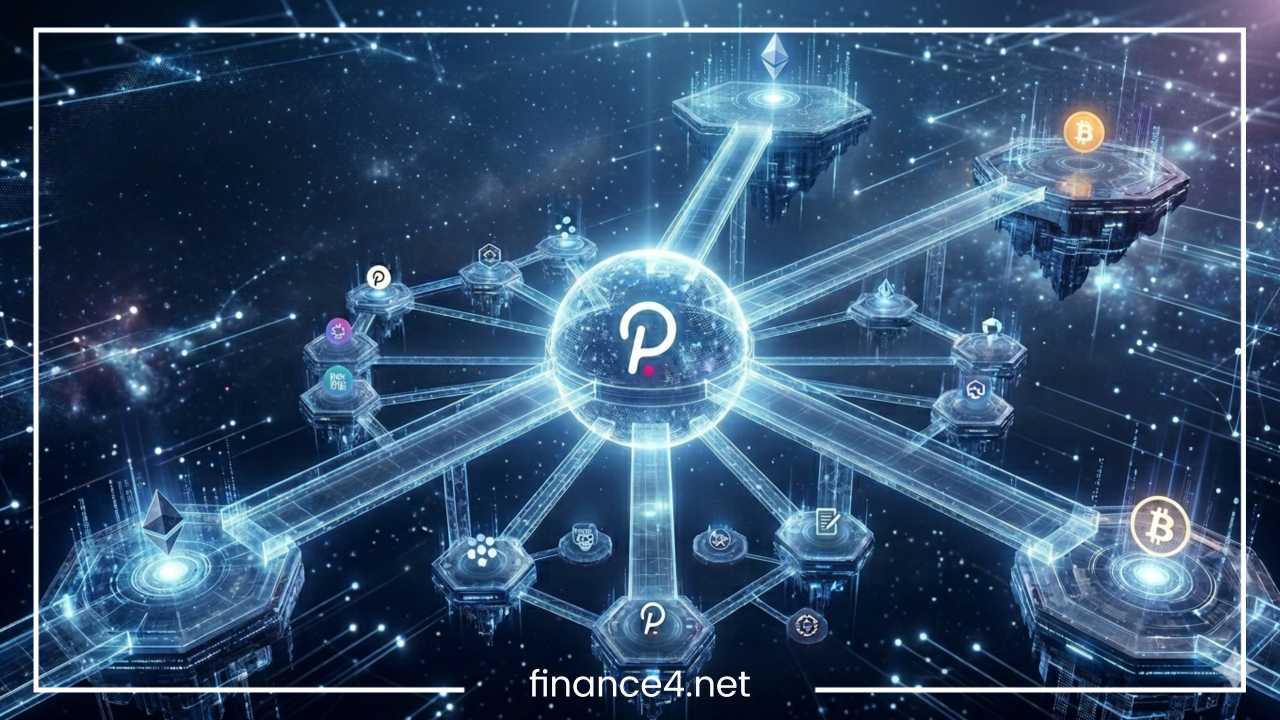
To grasp the mechanics of the Polkadot ecosystem, it is helpful to visualize a hub-and-spoke model. The hub is the Relay Chain, the heart of Polkadot. Its primary responsibility is to provide consensus and security for the entire network. However, the Relay Chain itself does not support smart contracts or complex applications. That is where the spokes, or parachains, come into play.
Parachains (parallel blockchains) are sovereign, independent blockchains that have their own tokens and optimize their functionality for specific use cases. They are connected to the Relay Chain, which allows them to benefit from Polkadot’s “pooled security.” In a traditional blockchain environment, every new chain must bootstrap its own set of validators and defend itself against attacks. On Polkadot, the Relay Chain’s validators provide security for all connected parachains, allowing developers to focus entirely on building their application logic rather than worrying about the underlying security layer.
The relationship between the Relay Chain and parachains is defined by several key features:
-
Shared Security: As mentioned, parachains do not need to provide their own security. By leasing a slot on the Relay Chain, they gain the protection of the entire Polkadot validator set.
-
Interoperability: Through the Cross-Chain Message Passing (XCMP) protocol, parachains can communicate with one another. This means a token or a piece of data from a privacy-focused chain can be used seamlessly on a decentralized finance (DeFi) chain.
-
Customization: Unlike general-purpose blockchains where every application must follow the same rules, parachains are built using Substrate, a modular framework that allows developers to customize the chain’s core logic to suit its specific purpose.
Securing a spot on the Relay Chain is done through a process known as slot auctions. Since the number of available slots is limited, projects compete for them by bidding with Polkadot’s native token, DOT. Often, these projects launch “crowdloans,” where community members lock up their DOT to support a project’s bid in exchange for rewards, typically in the form of the parachain’s native tokens. This mechanism ensures that only the most viable and community-backed projects gain a slot.
By leveraging Proof of Stake and a sharded architecture, Polkadot allows these parachains to process transactions in parallel rather than sequentially. This drastically increases throughput and eliminates the bottlenecks that plague older blockchain designs.
Criteria for Selection
The Polkadot ecosystem is vast, with dozens of parachains active and more joining through every auction cycle. Narrowing this list down to ten specific projects requires a rigorous set of criteria to ensure the selection reflects the most impactful and technically sound players in the space.
First and foremost is market relevance. A top-tier parachain must solve a pressing problem within the blockchain industry or provide a service that is in high demand. We look for projects that have achieved significant Total Value Locked (TVL), high transaction volumes, or a large, active user base.
Second, we consider use case diversity. To showcase the true power of Polkadot, it is important to highlight projects from various sectors. This includes decentralized finance, smart contract platforms, identity protocols, privacy solutions, and real-world asset tokenization.
Third, ecosystem adoption and partnerships are critical. The strength of a blockchain is often found in its network effect. Projects that have successfully integrated with other parachains or formed strategic alliances with traditional enterprises show a higher degree of long-term viability.
Finally, we evaluate innovation and technology. Since Polkadot is a hotbed for technical experimentation, the “top” projects are often those pushing the boundaries of what is possible with Substrate and cross-chain communication. These criteria combined help distinguish the foundational pillars of the ecosystem from more ephemeral projects.
Acala
Acala is widely recognized as the decentralized finance hub of Polkadot. It was built to provide the core financial infrastructure needed for the ecosystem to thrive. Acala functions as an all-in-one platform that hosts a variety of financial protocols, including a decentralized exchange (DEX), a liquid staking protocol, and a decentralized stablecoin system.
The centerpiece of Acala is its multi-collateralized stablecoin, aUSD. This stablecoin is designed to be the primary medium of exchange across all parachains, providing a stable unit of account for the entire ecosystem. By allowing users to mint aUSD using various crypto assets as collateral, Acala provides liquidity without requiring users to sell their underlying holdings.
In addition to its stablecoin, Acala offers Liquid Staking Derivatives (LSDs). This allows users to stake their DOT to help secure the network while receiving a liquid token (LDOT) in return. This LDOT can then be used in other DeFi protocols to earn additional yield, solving the capital inefficiency problem where staked assets are typically “locked” and unproductive. Acala stands out because it acts as the “central bank” of Polkadot, providing the liquidity and stability that other applications depend on.
Moonbeam
Moonbeam is an Ethereum-compatible smart contract parachain that serves as a bridge for developers moving from the Ethereum ecosystem to Polkadot. While Polkadot uses WebAssembly (WASM) for its core logic, many developers are already proficient in Solidity, the language of Ethereum. Moonbeam provides a full Ethereum Virtual Machine (EVM) implementation, making it incredibly easy for existing decentralized applications (dApps) to migrate or expand to Polkadot with minimal code changes.
The power of Moonbeam lies in its “beyond-EVM” features. It allows developers to utilize Polkadot’s cross-chain capabilities while maintaining the familiar development environment of Ethereum. This means a dApp on Moonbeam can interact with assets on other parachains as if they were native to its own chain.
Moonbeam has seen some of the highest levels of developer activity in the ecosystem. By offering familiar tools like MetaMask, Truffle, and Hardhat, it has successfully attracted a wide range of projects, from lending protocols to NFT marketplaces. It stands out as the primary entry point for the broader crypto developer community into the Polkadot world.
Astar
Astar Network is a multi-chain smart contract platform that supports both the EVM and WebAssembly (WASM). This dual-compatibility is a significant technical achievement, as it allows Astar to bridge the gap between current Ethereum-based developers and the future of high-performance WASM-based applications.
One of Astar’s most innovative features is its “dApp Staking” mechanism. In traditional blockchain models, users stake tokens to secure the network and receive rewards. Astar takes this a step further by allowing users to stake their tokens on specific dApps. The rewards generated are then split between the stakers and the developers of the dApp. This provides a sustainable income stream for developers, incentivizing them to build and maintain high-quality applications on the network.
Astar acts as a hub for innovation, particularly in the Japanese market and among enterprise partners. Its focus on supporting multiple virtual machines and providing financial incentives for builders makes it a critical piece of infrastructure for scaling the Polkadot ecosystem.
Parallel Finance
Parallel Finance is a decentralized money market protocol that focuses on lending, staking, and credit. Its goal is to bring more capital efficiency to the Polkadot and Kusama ecosystems. In a world of fragmented liquidity, Parallel provides a unified platform where users can lend their assets to earn interest or use them as collateral for loans.
A key feature of Parallel is its Auction Loan product. This service helps users participate in parachain crowdloans more effectively. By contributing DOT through Parallel, users can stay liquid—Parallel issues a derivative token representing their contributed assets, which can then be used within the Parallel DeFi suite.
Parallel Finance stands out for its user-centric design and its focus on institutional-grade lending features. By bridging the gap between traditional finance concepts and decentralized protocols, it provides the sophisticated financial tools necessary for large-scale capital to enter the Polkadot space.
Centrifuge
Centrifuge is one of the most ambitious projects on Polkadot, focusing on the tokenization of real-world assets (RWA). While most of DeFi deals with “crypto-native” assets like Bitcoin or Ethereum, Centrifuge brings real-world value—such as invoices, real estate, and royalties—onto the blockchain.
By turning these physical or financial assets into Non-Fungible Tokens (NFTs), Centrifuge allows businesses to access financing from the decentralized world. These NFTs are used as collateral in the Tinlake dApp, where investors can provide liquidity and earn yield backed by real-world economic activity.
Centrifuge stands out because it solves a massive problem for both sides of the market: it provides businesses with a cheaper, faster way to get capital without traditional banks, and it provides DeFi investors with a diversified source of yield that is not correlated with the volatile crypto markets. It represents a major step forward in the adoption of blockchain technology for global commerce.
Phala Network
Phala Network is a privacy-preserving cloud computing service built on Polkadot. In a standard blockchain, all data and transactions are public, which is a deal-breaker for many enterprise applications and sensitive personal use cases. Phala uses TEE (Trusted Execution Environment) hardware to execute computations in a secure, private enclave.
This “confidential computing” allows Phala to process data without revealing it to the public or even to the nodes running the computation. It combines the trustless nature of blockchain with the privacy required for modern data processing.
Phala stands out as a decentralized alternative to traditional cloud services like Amazon Web Services (AWS) or Google Cloud. By offering a privacy-first infrastructure, Phala enables developers to build dApps that handle sensitive information, such as medical records or private financial data, without compromising the core tenets of decentralization.
HydraDX
HydraDX is an “omnipool” multi-asset liquidity protocol. Traditional decentralized exchanges use isolated liquidity pools (e.g., a pool for DOT/USDC, another for ETH/USDC). This often leads to fragmented liquidity and high slippage for traders. HydraDX changes this by creating a single, massive pool where all assets are traded against each other.
In the HydraDX Omnipool, every asset is priced against a central liquidity asset (LRNA). This architecture makes the exchange significantly more efficient, as liquidity is not spread thin across hundreds of different pairs. It also simplifies the experience for liquidity providers, who only need to provide a single asset to the pool to start earning fees.
HydraDX stands out for its radical approach to liquidity management. As more parachains launch and the number of native tokens grows, an efficient, centralized-but-decentralized hub for trading becomes an absolute necessity for the health of the Polkadot economy.
Interlay
Interlay is the bridge that brings Bitcoin to Polkadot in a truly decentralized and trustless manner. While Bitcoin is the most valuable digital asset, it lacks the smart contract functionality needed for complex DeFi applications. Interlay solves this by creating kBTC (and interBTC), a 1:1 Bitcoin-backed asset on Polkadot.
Unlike centralized bridges where you have to trust a company to hold your Bitcoin, Interlay uses a system of collateralized vaults. Anyone can become a vault provider by locking up collateral, ensuring that the minted kBTC is always fully backed and redeemable.
Interlay stands out because it unlocks the massive liquidity of the Bitcoin network for the Polkadot ecosystem. With interBTC, Bitcoin holders can participate in lending, borrowing, and yield farming on various parachains without ever giving up the security and decentralization that makes Bitcoin valuable in the first place.
Kilt Protocol
Kilt Protocol focuses on decentralized identity and verifiable credentials. In the digital age, our identities are often managed by large corporations that store our data in centralized silos. Kilt returns ownership of this data to the individual.
Kilt allows users to claim various attributes about themselves—such as their age, nationality, or professional certifications—and have these claims verified by trusted attesters. These credentials can then be used across various services without the user having to reveal all their underlying personal information. It uses a “zero-knowledge” approach to privacy, where you can prove you are over 18 without revealing your actual birth date.
Kilt Protocol stands out because identity is a foundational requirement for almost every interaction on the internet. By providing a blockchain-based identity layer, Kilt enables a new wave of trust-based applications, from decentralized social media to regulated financial services that require KYC (Know Your Customer) compliance.
Zeitgeist
Zeitgeist is a decentralized prediction market and futarchy protocol. Prediction markets allow users to bet on the outcome of future events, ranging from political elections and sports to weather patterns and technological breakthroughs. These markets are often considered the most accurate way to aggregate information and forecast the future.
Zeitgeist takes this a step further by exploring the concept of “futarchy”—a form of governance where policies are decided based on the outcomes of prediction markets. This allows organizations to make data-driven decisions backed by skin-in-the-game incentives.
Zeitgeist stands out by bringing a unique application layer to Polkadot. While most parachains focus on infrastructure or finance, Zeitgeist provides a platform for collective intelligence. Its success demonstrates the versatility of the Substrate framework and the potential for Polkadot to host entirely new categories of social and economic interaction.
Key Trends in the Parachain Ecosystem
Observing these ten projects reveals several overarching trends within the Polkadot ecosystem. The first and most prominent trend is the maturation of DeFi. We are moving away from simple swaps and toward complex, interconnected financial systems. The interoperability between Acala’s stablecoin, Parallel’s lending, and HydraDX’s liquidity shows a level of synergy that is difficult to achieve in siloed networks.
The second trend is the focus on “Real World” utility. Projects like Centrifuge and Kilt Protocol prove that blockchain is moving beyond speculative trading. Whether it is financing real-world invoices or managing digital identities, these parachains are building solutions that have tangible value in the traditional economy. This trend is crucial for the long-term survival of the industry, as it anchors digital assets in physical and social reality.
The third trend is the rise of multi-virtual machine support. Platforms like Astar and Moonbeam are acknowledging that the future is not winner-take-all. By supporting both EVM and WASM, the ecosystem is positioning itself to be the ultimate developer playground, capable of hosting legacy code while fostering the next generation of high-performance dApps. This flexibility is a key competitive advantage for Polkadot against more rigid competitors.
Challenges and Risks
Despite the innovation, the parachain ecosystem faces significant hurdles. One of the primary challenges is complexity. The Polkadot architecture, while powerful, has a steep learning curve for both developers and users. Concepts like crowdloans, slot auctions, and cross-chain messaging can be intimidating for those used to the simplicity of single-chain networks. Reducing this friction through better user interfaces and abstracting away the technical details remains a priority.
Another risk is the interdependence of the parachains and the Relay Chain. While shared security is a benefit, any significant issue with the Relay Chain would theoretically affect all connected parachains. Furthermore, the limited number of slots creates a competitive environment that might price out smaller, innovative projects in favor of those with the deepest pockets or the largest marketing budgets.
Finally, regulatory uncertainty continues to loom over the entire crypto space. As parachains increasingly interact with real-world assets and identity, they become more likely to fall under the scrutiny of global financial regulators. How these decentralized protocols adapt to evolving compliance requirements will be a major factor in their long-term success.
Future Outlook
Looking ahead, the Polkadot parachain ecosystem is poised for substantial expansion. The number of slots is expected to increase, allowing hundreds of blockchains to operate in parallel. This will lead to even greater specialization, with chains dedicated to specific niches like gaming, supply chain management, or scientific research.
We are also likely to see interoperability become the standard rather than a feature. As cross-chain communication protocols mature, the boundaries between different parachains will become invisible to the end-user. You might interact with a gaming dApp that uses a privacy chain for your identity and a DeFi chain for your in-game purchases, all without realizing you are moving across multiple blockchains.
The role of Polkadot in the broader Web3 vision is to be the connective tissue of the decentralized internet. If successful, it will provide the scalable, secure, and flexible infrastructure that allows blockchain technology to move from a niche interest to a global standard. The parachains we see today are just the first wave of this revolution.
Final Thoughts
The ten parachains highlighted in this article represent the diverse and innovative spirit of the Polkadot ecosystem. From the financial hubs of Acala and Parallel to the privacy-preserving clouds of Phala and the real-world bridges of Centrifuge, these projects are building the essential components of a decentralized world.
By utilizing Polkadot’s unique architecture, these chains have solved the problems of scalability and security that hindered earlier blockchain generations. While challenges remain, the progress made in interoperability and specialized chain design is undeniable. As the ecosystem continues to grow, these parachains will serve as the foundation for a more open, efficient, and user-empowered internet. For anyone looking to understand the future of Web3, exploring these projects is not just recommended—it is essential.