How to Do a Liquidity Migration
 by
by 
How to Do a Liquidity Migration: Step-by-Step Guide
What Is a Liquidity Migration?
When a project moves liquidity from one exchange, blockchain, or liquidity pool to another, the process is known as a liquidity migration. In the decentralized finance (DeFi) ecosystem, liquidity is the lifeblood of any protocol. It ensures that tokens can be traded with minimal friction, stablecoins can maintain their pegs, and lending platforms can liquidate undercollateralized positions without causing market crashes. However, because the DeFi landscape is highly dynamic, the infrastructure supporting this liquidity must evolve.
Protocols frequently find it necessary to shift their Total Value Locked (TVL) from an older, less efficient environment to a modernized architecture. This structural realignment is fundamentally different from liquidity mining. While liquidity mining is an incentive mechanism designed to attract new capital through rewards, liquidity migration is an operational and technical process focused on relocating existing capital.
There are several common scenarios where a protocol must execute a liquidity migration:
-
DEX Migration: Shifting assets from one decentralized exchange to a competitor to capitalize on better strategic partnerships or lower platform fees.
-
AMM Version Upgrades: Moving funds from an outdated Automated Market Maker model to an optimized iteration, such as shifting from uniform liquidity distributions to concentrated liquidity models.
-
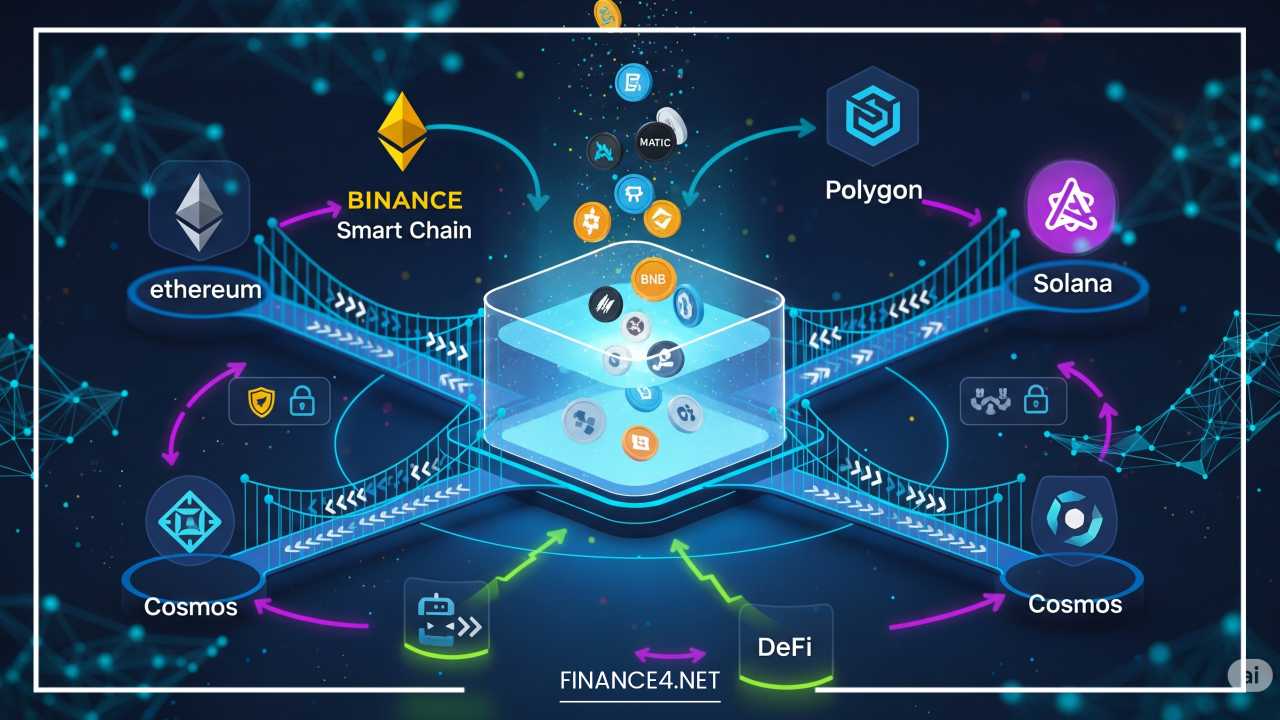
Cross-Chain Expansion: Porting liquidity from a congested layer-one blockchain to high-throughput layer-two networks or alternative layer-one ecosystems.
-
Protocol Mergers: Consolidating capital pools following the acquisition or merger of two decentralized applications.
-
Token Migrations: Rerouting liquidity infrastructure when a project upgrades its underlying smart contract or changes its native tokenomics model.
Why Liquidity Migrations Matter
Executing a liquidity migration is a complex undertaking that requires significant developer coordination and community alignment. Despite the operational hurdles, migrations are essential for maintaining a competitive edge in modern decentralized markets.
Maintaining Trading Efficiency
The primary driver behind capital relocation is market efficiency. Capital fragmentation occurs when liquidity is spread thinly across multiple venues, versions, or networks. This fragmentation severely degrades the trading experience by causing high slippage and poor price discovery. By consolidating capital into a single, optimized destination, a protocol minimizes slippage, lowers trading costs, and establishes deep order books that attract institutional volume and high-frequency traders.
Supporting Protocol Upgrades
DeFi innovation occurs at a rapid pace. Legacy architectures, such as early constant-product market makers ($x \times y = k$), are significantly less capital-efficient than modern models. When Uniswap transitioned from V2 to V3, it introduced concentrated liquidity, allowing liquidity providers (LPs) to allocate capital within specific price ranges. Supporting these structural upgrades requires shifting millions of dollars in TVL to the new contracts so users can benefit from enhanced capital efficiency, dynamic fee tiers, and sophisticated risk management tools.
Expanding to New Ecosystems
A protocol restricted to a single blockchain network faces scalability ceilings and high transaction fees. Migrating liquidity to scaling solutions like Arbitrum or Base, or to high-performance alternative networks like Solana, allows projects to capture new demographics, lower the barrier to entry for smaller retail participants, and tap into burgeoning ecosystem funds.
Security Considerations
The immutable nature of smart contracts means that if a vulnerability is discovered within an active liquidity pool, the code cannot simply be patched in place. If an exploit vector is identified or if a cryptographic standard becomes obsolete, the protocol must rapidly coordinate an emergency migration to audited, secure replacement contracts. Shifting liquidity proactively mitigates the systemic risk of capital theft and reinforces institutional confidence in the protocol’s security framework.
Common Types of Liquidity Migrations
Liquidity migrations are not uniform; they vary wildly based on the underlying architecture and the ultimate objectives of the development team. Understanding these distinctions helps operators choose the correct deployment frameworks.
DEX-to-DEX Migration
This type occurs when a protocol decides to transition its primary trading pools from one third-party decentralized exchange to another. This is often motivated by competitive incentive programs, superior developer tooling, or strategic alignments within a specific ecosystem.
Version Migration
Version upgrades represent an internal transition within the same protocol ecosystem. The migration from legacy smart contracts to an upgraded deployment codebase allows the protocol to roll out advanced features without fracturing its core user base.
Cross-Chain Liquidity Migration
Cross-chain migrations involve moving assets across cryptographic boundaries. This requires bridging underlying tokens, wrapping assets where native variants do not exist, and establishing deep pools on entirely new ledger architectures. This type carries unique architectural challenges regarding consensus validation and message-passing security.
Token Contract Migration
When a project updates its core token smart contract to implement new governance capabilities, fix bugs, or alter issuance schedules, the underlying liquidity pools must be re-established. The old tokens within the pools must be systematically redeemed for the new token variants.
Protocol Merger Migration
In a protocol merger, two independent decentralized communities vote to combine their operations. The liquidity pools of both projects are unified into a cohesive, singular framework to maximize market depth and eliminate redundant infrastructure costs.
| Type | Complexity | Risk | Typical Use Case |
| DEX Migration | Medium | Medium | Securing better ecosystem incentives and lowering trading fees |
| Version Upgrade | Medium | Low | Implementing advanced AMM features and concentrated liquidity |
| Cross-Chain | High | High | Executing ecosystem expansion and capturing new user bases |
| Token Migration | High | High | Upgrading contract logic, fixing bugs, or modifying tokenomics |
| Protocol Merger | High | Medium | Consolidating capital pools to eliminate ecosystem fragmentation |
Step 1: Define Migration Objectives
Every successful liquidity migration begins with a clearly defined strategic framework. Moving millions of dollars in capital without clear targets introduces operational drift and runs the risk of alienating core stakeholders.
The development team and governing DAO must explicitly identify the core motivations behind the migration. Are transaction fees on the host network paralyzing retail volume? Does the current contract logic lack the flexibility required to launch secondary financial products like derivatives or undercollateralized lending? Defining the exact problem prevents protocols from executing unnecessary migrations that drain development resources.
Equally important is establishing clear quantitative and qualitative targets. Operators must articulate what the post-migration ecosystem should look like. This includes projecting the percentage of capital that needs to transfer to keep the system viable, establishing acceptable timelines for the transition, and identifying which core trading pairs must take priority during the initial launch phase.
To accurately evaluate the success of the operation, specific Key Performance Indicators (KPIs) must be tracked continuously before, during, and after the migration:
-
TVL Retained: The percentage of the original total value locked that successfully transitions to the new destination, rather than fleeing to competing platforms.
-
Trading Volume: The daily volume routed through the new infrastructure, indicating whether aggregators and retail traders have adopted the new route.
-
Liquidity Depth: The measurement of price impact for large trades within the new pools, ensuring that capital efficiency targets are being achieved.
-
User Participation: The total number of unique wallet addresses that interact with the migration contracts, reflecting community alignment and onboarding success.
Step 2: Audit Existing Liquidity Infrastructure
Before writing a single line of migration code, an exhaustive audit of the existing liquidity footprint must be conducted. Attempting a migration without a granular understanding of the starting state can result in left-behind capital, broken integrations, and unexpected shortfalls.
The initial phase of this audit involves mapping out every single active liquidity pool associated with the protocol. Developers must catalog the precise smart contract addresses, the exact tokens involved (including underlying variations like rebasing or fee-on-transfer tokens), and the specific parameters governing those pools, such as fee tiers or withdrawal lock-ups.
Furthermore, analyzing the distribution of liquidity providers is critical. If a protocol’s TVL is highly concentrated among a handful of institutional whales, the migration strategy must lean heavily into direct, white-glove communication with those entities. Conversely, if the liquidity is highly distributed among thousands of retail users, the migration strategy will require public-facing front-end interfaces and broad educational campaigns.
This step requires compiling data on the following operational metrics:
-
Total Value Locked: The current dollar-denominated value of all assets sitting within the source pools.
-
Daily Volume and Fee Generation: A historical review of which pools generate the highest yield and volume, allowing developers to prioritize which pairs to migrate first.
-
Concentration Risk: The ratio of protocol-owned liquidity to user-provided liquidity, which dictates how much control the core team has over the speed of the migration.
Understanding this starting point is critical because it reveals dependencies. If external yield aggregators, money markets, or algorithmic stablecoins rely on the current liquidity pools for price feeds or asset backing, a sudden migration without proper auditing will break those external protocols, causing cascading liquidations or systemic failures across the broader DeFi ecosystem.
Step 3: Choose the Destination Platform
Selecting where the liquidity will live post-migration requires a strict evaluation of competing infrastructure options. The destination must align with both the immediate technical requirements and the long-term strategic vision of the protocol.
Technical Compatibility
The destination framework must seamlessly support the protocol’s smart contract logic and token standards. If a protocol built on an Ethereum Virtual Machine (EVM) environment decides to migrate to a non-EVM chain, the entire codebase must be rewritten from scratch in languages like Rust or Move. This introduces significant development overhead and potential security vulnerabilities during the translation process.
Liquidity Features
Operators must assess whether the destination platform offers advanced financial primitives that maximize capital efficiency. Features such as concentrated liquidity management, dynamic fee structures that adjust based on market volatility, and native oracle solutions can vastly improve the profitability of liquidity providers and the execution quality for traders.
Security
The underlying security architecture of the destination platform is paramount. A protocol should evaluate the historical uptime of the target chain or platform, the robustness of its validator set, the quality of its smart contract auditing history, and the presence of bug bounty programs. Migrating capital to an insecure, highly centralized network exposes the entire user base to catastrophic structural failure.
User Base
Deep liquidity requires consistent trading volume to remain sustainable. Therefore, the destination must possess an active community, an established ecosystem of decentralized applications, and healthy integration with major decentralized exchange aggregators.
Destination Evaluation Checklist
-
Confirm full compatibility with existing token standards (e.g., ERC-20, SPL).
-
Verify that the target environment has undergone at least two independent external security audits.
-
Ensure major DEX aggregators natively index and route trades through the destination venue.
-
Assess whether the network throughput can handle peak trading volumes without experiencing RPC degradation.
-
Analyze the cost-efficiency of transaction fees for retail participants on the target infrastructure.
Step 4: Design the Migration Strategy
Once the destination is secured, the protocol must design the actual mechanism used to move the assets. The chosen path dictates the balance between user autonomy, operational velocity, and technical risk.
Voluntary Migration
In a voluntary migration model, the protocol does not programmatically move any user funds. Instead, it deploys the new infrastructure and launches marketing campaigns, tutorials, and economic incentives to encourage users to manually withdraw their assets from the old platform and deposit them into the new one.
-
Pros: Highly decentralized, completely non-custodial, and virtually eliminates regulatory or legal risks associated with moving user assets without explicit per-transaction consent.
-
Cons: Extremely slow adoption rates. A significant portion of liquidity providers may be inactive (“lazy liquidity”), resulting in capital remaining trapped in legacy contracts for months, which worsens capital fragmentation.
Assisted Migration
Assisted migrations utilize custom-built smart contracts designed to simplify the transition for liquidity providers. The protocol provides a front-end interface featuring a single-click migration button. When a user interacts with this contract, the system automatically pulls their LP tokens from the old pool, unstakes them, redeems them for the underlying assets, routes those assets to the new pool, and mints new LP positions back to the user in a single transaction bundle.
-
Pros: Greatly reduces user friction, accelerates the speed of capital relocation, and lowers gas costs by batching operations together.
-
Cons: Requires users to grant token approvals to a brand-new migration contract, which introduces an additional layer of smart contract risk if the migration logic contains exploits.
Automatic Migration
Automatic migration occurs when the core protocol controls the underlying liquidity pools through admin keys, multi-signature wallets, or governance-enforced smart contract upgrades. In this scenario, when a migration proposal passes, the protocol programmatically shuts down the old pools, migrates the entire pool of assets to the new architecture, and updates the internal accounting ledgers to reflect users’ new positions without requiring any action from individual LPs.
-
Pros: Near-instantaneous migration of 100% of the TVL, completely eliminating liquidity fragmentation and ensuring an immediate transition to the optimized infrastructure.
-
Cons: Highly centralized. It requires the protocol to have structural custody over user assets, which can alienate users who value absolute non-custodial sovereignty. This model is generally only possible for protocols that utilize a unified vault architecture or hold protocol-owned liquidity.
Step 5: Build and Test Migration Contracts
If the protocol opts for an assisted or automatic migration strategy, the engineering team must design, write, and rigorously test the custom smart contracts that will handle the asset transition.
The development phase involves building migration scripts capable of interacting with both the legacy source pools and the new destination contracts simultaneously. The architecture must elegantly handle withdrawal mechanics, account for accrued rewards or uncollected trading fees, and manage the redemption of legacy liquidity provider tokens. Furthermore, the migration contracts must include robust slippage protection mechanisms to ensure that as assets are being moved from old pools to new ones, they are not exposed to predatory sandwich attacks or arbitrage extraction by MEV (Maximal Extractable Value) bots.
The testing lifecycle for migration contracts must follow a strict, non-negotiable pipeline:
-
Unit Testing: Writing comprehensive test suites that validate individual functions within the migration contract under every conceivable parameter modification.
-
Testnet Deployment: Mirroring the exact state of production mainnet liquidity pools on a public testnet (such as Sepolia or local mainnet forks) and simulating the entire migration process using simulated whale accounts and retail user wallets.
-
Security Reviews: internal peer-review sessions where senior protocol engineers intentionally attempt to break the migration logic, drain funds, or cause state deadlocks.
-
External Audits: Submitting the finalized codebase to reputable external smart contract auditing firms specializing in DeFi logic and economic attack vectors.
Critical Warning: Migration contracts are highly attractive targets for malicious actors because they handle massive amounts of capital over a very condensed timeframe. A single logic flaw or unhandled exception in an asset redemption function can lead to catastrophic capital lockups or instant protocol drainage. No migration contract should ever be deployed to production mainnet without a clean bill of health from multiple independent external audits.
Step 6: Communicate With the Community
A technically flawless migration can still fail if the protocol fails to properly communicate with its community. In DeFi, user trust is fragile, and sudden changes to infrastructure can trigger panic, leading to capital flight.
Announcement Plan
The protocol must design a coordinated disclosure plan that gives users ample notice before any actions take place. The primary announcement should be driven by a comprehensive blog post detailing the exact reasons for the migration, the structural benefits, and the direct impact on users. This must be backed up by official governance proposals where token holders can debate and vote on the migration parameters, followed by aggressive broadcast campaigns across verified social media channels, Discord servers, and Telegram groups.
Documentation
Educating the community requires clear, accessible documentation. The protocol must publish explicit step-by-step written tutorials, frequently asked questions (FAQs), and video walk-throughs demonstrating exactly how users can migrate their assets safely. This documentation must explicitly detail how to identify official protocol interfaces to prevent users from falling victim to phishing sites.
Timeline Disclosure
The communication strategy must present an unambiguous, concrete timeline. Users need to know exactly when the migration begins, how long incentive programs will remain active on the old pools, when trading functionality will be disabled on the legacy architecture, and when rewards will begin accruing on the new deployment.
Case Study: Communication Mistakes
A notable example of poor communication occurred when a prominent yield protocol rolled out an unannounced contract upgrade under the guise of an emergency patch, failing to explain that user LP tokens would need manual migration via a command-line interface. The lack of an accessible graphical front-end interface combined with cryptic social media announcements caused widespread panic, leading users to believe the protocol had suffered a rug-pull exploit. Within six hours, panicked users triggered a mass bank run, withdrawing over 40% of the protocol’s total TVL and permanently damaging the project’s reputation.
Step 7: Execute the Liquidity Migration
The execution phase is the operational climax of the process. It must be treated as a mission-critical deployment, where engineers, community managers, and security analysts are synchronized in real time.
Step 1: Remove Existing Liquidity
The migration begins by interacting with the source infrastructure to systematically withdraw the active liquidity positions. LPs or the automated migration contract submit transactions to unstake LP tokens from incentive gauges, trigger the withdrawal sequence within the legacy AMM pool, and redeem those LP tokens to claim the raw underlying asset pairs (e.g., reclaiming the underlying ETH and USDC from an ETH-USDC LP position).
Step 2: Transfer Assets
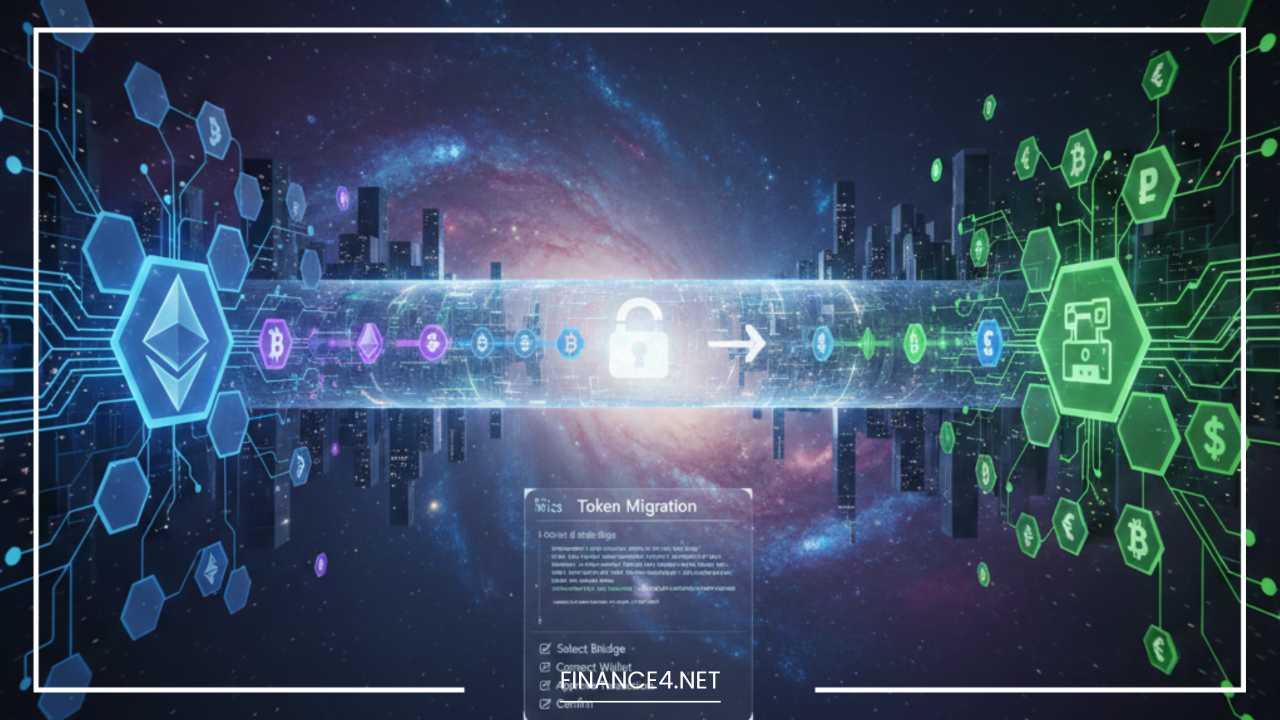
Once the raw assets are freed from the legacy pools, they must be safely routed to the staging area of the new infrastructure. If the migration is a cross-chain operation, this step involves passing the assets through secure bridging infrastructure, verifying that the cross-chain messages successfully execute, and confirming that the corresponding tokens are minted or unlocked on the target destination network.
Step 3: Add Liquidity to New Pools
With the assets cleared and available on the target architecture, the next step is to deposit them into the new liquidity pools. Operators or smart contracts must meticulously configure the specific pool parameters. For modern concentrated liquidity deployments, this requires setting the exact price boundaries, defining the specific fee tiers (e.g., 0.05% for stablecoins, 0.30% for standard pairs), and minting the new liquidity positions or non-fungible LP tokens back to the appropriate accounts.
Step 4: Verify Results
Immediately following the asset injection, a comprehensive verification protocol must be conducted. Engineers must query the block explorer and internal database indexing nodes to verify that the target pool balances match the expected values, that core trading functionality functions correctly with low slippage, that decentralized price oracles are accurately reading the new pools, and that asset prices across the new infrastructure maintain absolute consistency with external global markets.
Step 8: Incentivize Early Participation
Capital inherently seeks the highest risk-adjusted yield. To ensure that liquidity transitions rapidly to the new architecture and does not bleed away to competitors, the protocol must deploy targeted economic incentives that reduce migration friction.
Liquidity Mining Rewards
The most effective tool for bootstrapping early migration adoption is the strategic reallocation of native token emissions. The protocol should aggressively scale down governance token rewards on the legacy pools while simultaneously boosting token emissions on the new destination pools. This creates a yield differential that naturally compels profit-maximizing liquidity providers to migrate their capital immediately.
Bonus APR Programs
To reward early adopters who take on the technical risk of interacting with the new contracts during the initial launch week, protocols can offer time-bound bonus Annual Percentage Rate (APR) boosts. These temporary reward multipliers help offset transaction gas fees incurred during the migration process.
Governance Rewards
Protocols can integrate migration participation into their governance frameworks. For example, users who migrate their liquidity within the first 48 hours can be granted boosted governance voting weight or exclusive access to early-stage protocol fee-sharing pools.
Airdrops
For cross-chain migrations or major protocol overhauls, a dedicated retroactive airdrop allocation can be set aside. LPs who migrate early and maintain their liquidity positions within the new architecture for a specified vesting period (e.g., 30 days) become eligible for a lump-sum token distribution, which drastically improves long-term capital retention.
Step 9: Monitor Post-Migration Performance
The completion of the execution phase does not mean the migration is over. Continuous post-migration monitoring is required to ensure ecosystem stability, optimize trading routes, and resolve outstanding user issues.
Protocols must deploy dedicated analytics dashboards using indexing solutions like The Graph or Dune Analytics to monitor systemic health metrics in real time. These dashboards allow the core team and community members to track whether the new infrastructure is operating within safe financial parameters.
Key data points that demand continuous observation include:
-
TVL Retention: Tracking whether the total capital locked stabilizes or experiences post-migration degradation.
-
Volume Retention: Measuring the ratio of trading volume to TVL to ensure the new pools are highly capital efficient and actively utilized by market aggregators.
-
Slippage Metrics: Analyzing execution data for large trades to confirm that the new pool depth is performing as designed.
-
LP Participation: Monitoring whether unique retail addresses are successfully onboarding or if capital is becoming overly concentrated among institutional actors.
-
User Feedback: Maintaining dedicated support channels within community platforms to rapidly identify and resolve front-end bugs, stuck transactions, or wallet integration issues.
Risks and Challenges of Liquidity Migration
Liquidity migrations are high-stakes operations that expose protocols and users to a unique matrix of financial and technical hazards. Identifying these risks allows teams to architect appropriate mitigation strategies.
Smart Contract Risk
The deployment of new pool code, vault structures, or custom migration scripts introduces the risk of undiscovered software bugs.
-
Mitigation: Insist on multiple independent contract audits, implement formal verification of core logic, and run extensive public bug bounty programs with high payouts prior to launch.
Bridge Risk
Cross-chain liquidity migrations depend on external bridge infrastructure. Bridges are historically among the most targeted and exploited primitives in the entire crypto ecosystem due to their massive capital concentrations.
-
Mitigation: Utilize battle-tested decentralized message-passing protocols, avoid single-multisig bridge solutions, and implement strict transaction rate-limiting parameters on bridge outflows.
Liquidity Fragmentation
If the migration process drags on over an extended period, capital becomes split between the old and new venues. This reduces execution quality on both platforms, resulting in high slippage and frustrated traders.
-
Mitigation: Implement aggressive sunset clauses on legacy pool rewards and coordinate directly with major exchange aggregators to deprecate old routing pathways as soon as the new pools reach functional depth.
User Confusion
Ineffective documentation and confusing front-end design can lead to users sending funds directly to contract addresses or falling victim to verified phishing scams and fake migration links posted on social media.
-
Mitigation: Maintain absolute clarity in user interface prompts, use clear warnings on official web properties, and establish clear verification frameworks for all official communication channels.
Front-Running and MEV
When massive quantities of capital are programmatically withdrawn and redeposited, MEV bots can exploit public mempools to execute front-running or sandwich attacks, draining value from the liquidity pools during the transition.
-
Mitigation: Execute automated migrations using private transaction routing networks (such as Flashbots Protect) to bypass the public mempool entirely, and enforce strict slippage limits within the migration smart contracts.
Temporary Loss of Liquidity
The exact window of time between pulling capital out of the old system and deploying it into the new architecture represents a liquidity vacuum. During this interval, the protocol cannot facilitate trades, opening the door for volatile price swings.
-
Mitigation: Ensure that a portion of protocol-owned capital remains active to absorb trading volume, or utilize atomic batch transactions that combine withdrawal and deposit sequences into a single atomic block.
Liquidity Migration Best Practices
To ensure operational excellence and safeguard user capital, protocols should adhere to this definitive framework of actionable best practices throughout the lifecycle of the migration:
-
Start Planning Early: Initiate strategic, legal, and technical planning at least three to six months before the projected migration execution date to avoid rushing critical steps.
-
Audit All Contracts: Never route user capital through an un-audited contract wrapper or migration script; use top-tier security firms and publish all audit findings transparently.
-
Run Multiple Test Migrations: Conduct extensive mainnet-fork simulations under heavy load and adversarial conditions to identify economic or structural edge cases.
-
Communicate Continuously: Provide clear, repeated notifications across every available communication channel, maintaining an unambiguous timeline with prominent countdown markers.
-
Offer Tailored Incentives: Design compelling reward architectures that clearly favor the new destination platform, tipping the economic scales to accelerate voluntary capital transition.
-
Maintain Liquidity Overlap: Avoid abruptly killing legacy pools overnight; maintain a structured transition window where both pools exist simultaneously to allow external aggregators time to re-route their infrastructure.
-
Monitor Metrics in Real Time: Deploy comprehensive analytics tooling to catch tracking discrepancies, oracle malfunctions, or volume drop-offs the moment they occur.
-
Keep Emergency Rollback Plans: Design and test an explicit, governance-approved contingency plan that allows developers to safely halt the migration and return capital to the original source state if a critical vulnerability is discovered mid-execution.
Real-World Liquidity Migration Examples
Analyzing historical case studies provides invaluable insights into what works and what fails during complex capital relocations.
Uniswap V2 to V3 Migration
One of the largest liquidity migrations in DeFi history occurred during the rollout of Uniswap V3. The team introduced concentrated liquidity, which required a complete paradigm shift for LPs. Uniswap implemented an assisted migration strategy, providing a highly optimized front-end tool that allowed users to move their V2 liquidity into V3 price ranges in a single transaction.
By scaling up rewards and demonstrating that V3 offered up to 4000x greater capital efficiency, the protocol successfully transferred the vast majority of its multi-billion-dollar TVL within a matter of weeks, successfully fending off vampire attacks from competing forks and cementing its market dominance.
SushiSwap Vampire Attack
In its early history, SushiSwap executed a hostile DEX-to-DEX migration against Uniswap V2. SushiSwap incentivized users to deposit Uniswap LP tokens onto their platform by offering high returns via the SUSHI token. Once a critical mass of LP tokens was secured in SushiSwap’s contracts, the protocol executed an automated migration script that redeemed those tokens on Uniswap and instantly migrated over $1 billion in liquidity directly into SushiSwap’s newly launched AMM pools.
The core lesson from this migration was the power of economic incentives: capital in DeFi is highly mercenary, and well-structured token incentives can rapidly move liquidity from an incumbent to a challenger platform overnight.
Curve Finance Pool Upgrades
Curve Finance regularly executes version migrations to upgrade its stable and crypto-swap pools to more advanced invariant models. When a vulnerability was identified in an older version of the Vyper compiler affecting certain pools, Curve coordinated with ecosystem partners and DAOs to quickly deploy upgraded pools.
They shifted governance gauges to the new implementations within hours, demonstrating that maintaining an emergency protocol framework is critical for preserving ecosystem-wide capital stability when security flaws emerge.
Final Thoughts
Liquidity migration is a multi-disciplinary challenge that sits at the intersection of advanced smart contract engineering, rigorous financial modeling, and proactive community management. Whether a protocol is pursuing an AMM version upgrade, moving cross-chain to capture new user segments, or executing an emergency security migration, success ultimately depends on meticulous preparation, comprehensive security testing, transparent user communication, and well-calibrated economic incentives.
In the highly competitive and fluid world of decentralized finance, capital fragmentation and technological obsolescence are constant threats. Protocols that manage migrations with care, transparency, and technical precision can successfully preserve their user base, protect their total value locked, and maintain market trust. By carefully executing each step of the migration lifecycle, development teams can safely transition their protocols to modernized financial architectures, enabling long-term scalability, superior capital efficiency, and sustainable future growth.
Here are the high-search-volume, long-tail keyword FAQs optimized to boost your article’s organic reach. These are structured using standard Markdown headers, bold text, and bullet points to maximize your chances of capturing Google’s “People Also Ask” (PAA) boxes and featured snippets.
Frequently Asked Questions
What is the difference between liquidity migration and liquidity mining?
While both terms are common in DeFi, they serve entirely different operational purposes. Liquidity mining is an ongoing marketing and incentive mechanism where a protocol distributes its native tokens to users who deposit capital into its pools, effectively acting as an acquisition tool.
Conversely, liquidity migration is a specific technical event where existing capital (Total Value Locked) is moved from one smart contract framework, protocol, or blockchain network to another. Mining focuses on attracting new funds, while migration focuses on relocating and optimizing existing funds.
How do I migrate liquidity from Uniswap V2 to V3 safely?
To migrate your funds safely between versions, you should always use the official user interface provided by the platform. The standard process involves the following steps:
-
Connect your Web3 wallet to the official, verified decentralized exchange front-end.
-
Navigate to your active pools or dashboard to locate your legacy V2 liquidity positions.
-
Select the built-in migration tool, which allows you to approve the temporary migration smart contract.
-
Choose your desired V3 fee tier (such as 0.05% or 0.30%) and set your concentrated price boundaries.
-
Confirm the atomic transaction bundle in your wallet to automatically withdraw, swap, and re-deposit your assets.
What are the biggest smart contract risks during a DeFi liquidity migration?
The primary danger during a migration stems from the introduction of brand-new, un-tested code wrappers or routing scripts. Because these contracts hold massive volumes of capital over a very brief window, they are prime targets for hackers.
Common vulnerabilities include reentrancy bugs, incorrect asset accounting logic, and missing slippage checks. If a contract lacks strict slippage protection, malicious MEV bots can front-run the migration transactions, causing severe financial loss to the liquidity providers during the transition.
How does cross chain liquidity migration impact permanent token supplies?
When a protocol moves its liquidity infrastructure from a layer-one network (like Ethereum) to a layer-two network or alternative chain, it must utilize a bridge. In most architectures, the native tokens on the source chain are locked securely inside a bridge smart contract, and an equivalent “wrapped” representation is minted on the destination chain.
This process preserves the global circulating supply, as the assets on the target chain are strictly backed 1-to-1 by the locked assets on the originating network. However, if the bridge contract is compromised, the wrapped tokens on the new chain can lose their backing entirely.
Why do decentralized exchanges upgrade their automated market maker pools?
Decentralized exchanges upgrade their AMM frameworks to solve the problem of capital inefficiency. Legacy constant-product pools require liquidity to be distributed uniformly across an infinite price range from zero to infinity, meaning a large portion of the capital sits idle.
Upgrading to modern protocols allows for concentrated liquidity, where providers can deploy their capital within specific, highly active price ranges. This structural shift drastically lowers trading slippage for users, boosts daily trading volumes, and multiplies the fee-generation potential for liquidity providers.
How can a protocol prevent liquidity fragmentation during a version upgrade?
Protocols eliminate fragmentation by using aggressive economic and structural incentives to move the community to the new platform quickly. The most common strategy is to completely deprecate native token rewards on legacy pools while simultaneously launching high-yielding bonus reward programs on the new infrastructure.
Additionally, core teams work directly with decentralized exchange aggregators to update their routing backend, ensuring that new retail trading volume is immediately funneled into the updated pools.