What is Crypto?
 by
by 
What Is Crypto? A Comprehensive Guide to Cryptocurrency Basics
Cryptocurrency has evolved from an obscure internet experiment into a global financial phenomenon that commands the attention of economists, governments, software engineers, and everyday investors. Millions of people across the globe now actively buy, sell, invest, and spend digital currencies like Bitcoin and Ethereum. Yet, for many people standing on the sidelines, the entire ecosystem still feels shrouded in mystery, complex jargon, and intimidating technical concepts. But what exactly is cryptocurrency, and how does it work under the hood?
For anyone examining the modern financial landscape, hearing about digital assets is completely unavoidable. Daily news headlines, global financial markets, and mainstream corporate balance sheets constantly discuss the rise of digital money. Unlike traditional fiat currencies managed by central banks and commercial financial institutions, cryptocurrency operates on decentralized, transparent computer networks distributed across the globe. Its rapid, chaotic, and fascinating growth has transformed it from a niche hobby for cryptography enthusiasts into a trillion-dollar asset class that attracts individual retail investors and massive Wall Street institutions alike.
This comprehensive guide serves as an exhaustive entry point for beginners and a detailed reference for anyone looking to deeply understand the mechanics of digital finance. By the time you finish reading this article, you will understand the precise definition of crypto, the historical motivations that drove its creation, the complex inner workings of blockchain technology, the vast spectrum of coin categories available today, practical real-world use cases, inherent risks and market challenges, and step-by-step instructions on how to safely buy and store your first digital assets.
What Is Cryptocurrency?
At its core, cryptocurrency is a form of digital or virtual currency that utilizes advanced cryptography for absolute security, making it practically impossible to counterfeit or double-spend. Unlike traditional government-issued fiat money—such as the United States Dollar, the Euro, or the Japanese Yen—cryptocurrency typically possesses no central authority, government backing, or issuing central bank. Instead, it relies on decentralized, cryptographically secured systems to record transactions, verify balances, and issue new units of currency.
To truly understand digital currency, it is helpful to compare it directly to everyday digital banking. When you log into your traditional bank mobile application and review your checking account balance, you are simply viewing numbers on a private, centralized database controlled entirely by that specific banking institution. That bank holds the ultimate power to freeze your account, reverse transactions, apply unexpected fees, or restrict your access based on geographic location or policy changes. Cryptocurrency operates on an entirely different paradigm. It runs on a technology known as blockchain, which is a distributed ledger shared transparently across a massive network of independent computers. There are no physical coins, paper bills, or metal vaults; every balance, transaction history, and transfer exists purely as digital code recorded permanently on this public ledger.
Ownership of cryptocurrency is proven through cryptographic mathematics via public and private keys. Think of your public key as your email address or your bank account routing number—anyone can safely send funds to it without gaining access to your funds. Your private key, however, is equivalent to your master password or digital signature—it must remain strictly confidential and is mathematically required to authorize any transfer of funds out of your account. In the world of cryptocurrency, whoever holds the private key to a specific wallet truly controls the cryptocurrency residing within it.
Why Was Cryptocurrency Created?
The genesis of cryptocurrency was born out of deep skepticism toward traditional financial institutions, centralized monetary systems, and fractional-reserve banking. For generations, centralized banking systems have held absolute control over the global money supply, interest rate adjustments, lending standards, and transaction approvals. The global financial crisis exposed severe vulnerabilities in these traditional models, showcasing how centralized institutions could mismanage risk, require massive taxpayer bailouts, and arbitrarily restrict access to basic financial services for vulnerable populations.
Cryptocurrency was purposefully designed to solve these systemic problems by introducing peer-to-peer electronic cash. In a pure peer-to-peer system, individuals can send value directly to one another anywhere across the globe without needing a trusted intermediary like a commercial bank, credit card network, or third-party payment processor. This disintermediation eliminates exorbitant international wire transfer fees, reduces transaction processing times from days down to seconds, and opens up fundamental financial services to billions of unbanked people worldwide who lack access to traditional banking infrastructure.
Bitcoin, launched in January 2009 by an anonymous creator operating under the pseudonym Satoshi Nakamoto, was the real-world realization of this vision. The explicit goal was to establish a borderless, censorship-resistant currency with a mathematically capped supply, protecting users from government-induced inflation, capital controls, and systemic economic instability.
History of Cryptocurrency
Before Bitcoin
The conceptual foundation of digital cash did not emerge in a vacuum. Cryptographers, computer scientists, and cypherpunks spent decades attempting to build a secure, decentralized digital currency long before Bitcoin ever launched. Throughout the 1990s, a movement known as the cypherpunks worked tirelessly on privacy-focused cryptographic protocols and anonymous communication tools. Key theoretical precursors included Wei Dai’s b-money proposal and Nick Szabo’s bit gold concept, both of which introduced foundational ideas regarding decentralized ledger maintenance and proof-of-work security systems. Another major stepping stone was Adam Back’s Hashcash, an anti-spam computational puzzle system that was later directly utilized as part of Bitcoin’s mining architecture.
Bitcoin
In October 2008, an individual or collective operating under the pseudonym Satoshi Nakamoto published the seminal Bitcoin whitepaper titled “Bitcoin: A Peer-to-Peer Electronic Cash System” on an obscure cryptography mailing list. Shortly thereafter, on January 3, 2009, Nakamoto mined the very first block of the Bitcoin blockchain, widely known as the Genesis Block. Embedded permanently within the hexadecimal code of this block was a newspaper headline about bank bailouts, cementing Bitcoin’s ideological roots as a direct protest against traditional fractional-reserve finance. For the first several years of its existence, Bitcoin traded for fractions of a penny, circulated primarily among computer hobbyists and cryptography enthusiasts on early online forums.
Growth
As Bitcoin successfully proved its security, uptime, and resilience against attacks, software developers began exploring what else distributed ledger technology could accomplish beyond simple peer-to-peer payments. This wave of experimentation led to the launch of Ethereum, which introduced Turing-complete smart contracts and programmable blockchain applications. Ethereum opened the floodgates for an explosive wave of financial innovation, including initial coin offerings, decentralized finance protocols, automated market makers, and non-fungible tokens.
Over subsequent years, the broader market matured significantly. Institutional adoption surged as major Wall Street investment firms, corporate treasuries, and pension funds began allocating capital to digital asset classes. The regulatory approval of spot exchange-traded funds brought traditional investors into the fold, while stablecoins—tokens pegged directly to fiat currencies—became essential rails for global digital commerce and liquidity management.
How Cryptocurrency Works
Comprehending how cryptocurrency functions requires examining the underlying technologies that keep decentralized networks secure, transparent, and operational without human managers.
Blockchain
The structural backbone of nearly all cryptocurrencies is blockchain technology. A blockchain is a distributed, immutable database shared across a computer network consisting of independent participants known as nodes. Transactions initiated by users are grouped together into data structures called blocks. Once a block is filled with valid transactions, it is cryptographically linked to the previous block via a cryptographic hash, creating an unbroken chronological chain. Because data written to a blockchain cannot be altered retroactively without rewriting all subsequent blocks and gaining consensus from the majority of the network, it offers extreme security, transparency, and data integrity.
Mining
Many early and prominent blockchain networks rely on a consensus mechanism known as Proof of Work. In a Proof of Work system, participants known as miners use specialized, high-powered computer hardware to solve complex mathematical puzzles. The first miner to successfully solve the puzzle earns the right to add the next block of transactions to the blockchain and receives newly minted cryptocurrency as a block reward. This intensive energy process secures the network against fraudulent transactions and fairly distributes new currency tokens into circulation over time.
Proof of Stake
Due to the high energy consumption and hardware costs associated with Proof of Work, many modern blockchain networks utilize an alternative consensus mechanism called Proof of Stake. Instead of relying on heavy computational power and electricity, Proof of Stake relies on designated participants called validators. Validators lock up, or stake, a specified amount of native cryptocurrency as economic collateral to participate in network security and transaction validation. If a validator attempts to approve fraudulent or conflicting transactions, their staked coins can be partially confiscated by the network protocol. This method is vastly more energy-efficient and scalable than traditional mining.
Wallets
To interact with any blockchain network, users require a crypto wallet. A crypto wallet does not actually store physical coins or paper bills inside it; instead, it securely stores the cryptographic public and private keys required to access, sign, and manage your funds on the distributed ledger. Public keys generate your receiving addresses for others to send you funds, while private keys act as digital signatures required to authorize outgoing transfers. Wallets come in various form factors, ranging from mobile software applications to physical hardware devices resembling secure USB drives.
Transactions
When you initiate a cryptocurrency transfer, your wallet broadcasts the transaction details to the broader blockchain network. Network nodes review the transaction against strict protocol rules to verify that you possess sufficient funds and valid cryptographic signatures. Once verified, the transaction is bundled into a pending block, processed through mining or validation consensus, and officially recorded onto the distributed ledger, completing the transfer permanently.
Types of Cryptocurrencies
Thousands of digital assets exist in the modern landscape, each serving distinct purposes, utility models, and economic philosophies.
Bitcoin
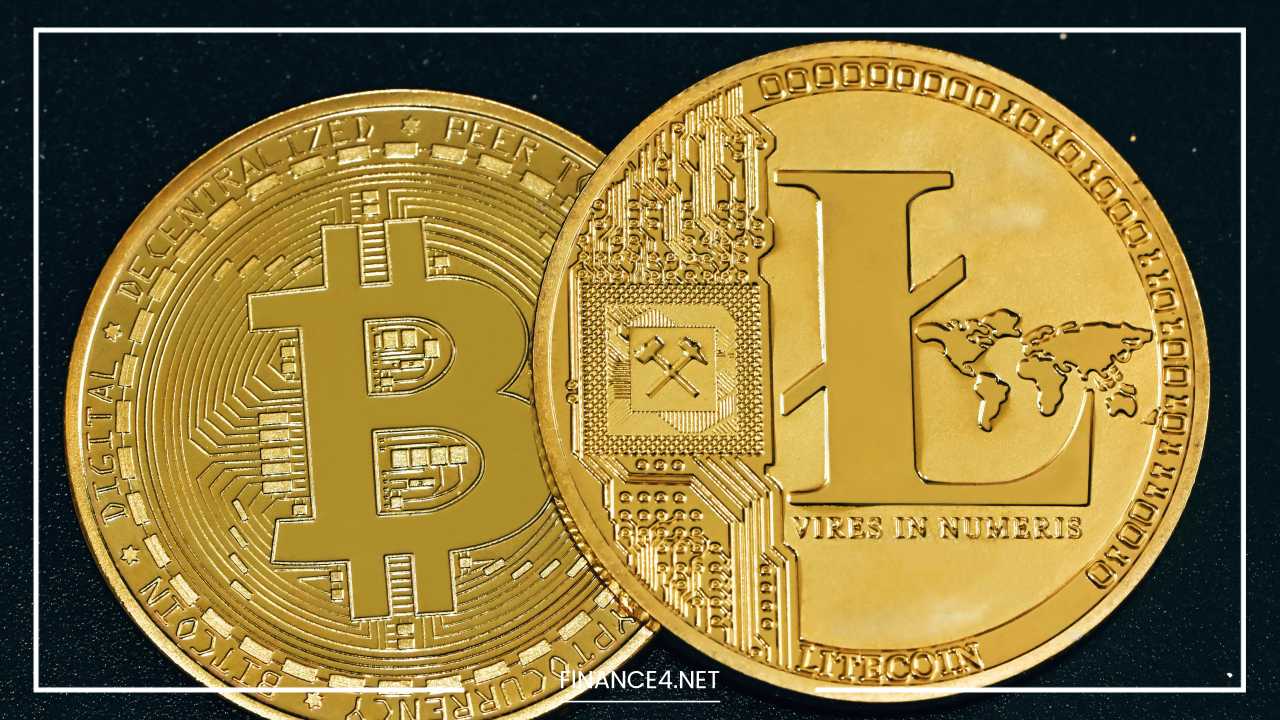
Bitcoin remains the undisputed market leader, pioneer, and largest cryptocurrency by market capitalization. Often viewed as digital gold, Bitcoin is primarily utilized as a decentralized store of value and a long-term hedge against fiat inflation. Its fixed supply cap of twenty-one million coins makes it structurally scarce and immune to political monetary expansion.
Altcoins
Any cryptocurrency other than Bitcoin is broadly categorized as an altcoin. Thousands of altcoins exist, powering different technical ecosystems and operational use cases. Prominent examples include Ethereum, which supports programmable smart contracts; Solana, known for high transaction throughput and low fees; XRP, focused on fast cross-border banking settlements; Cardano, built on rigorous academic research and formal verification; and Avalanche, designed for custom, interoperable subnets.
Stablecoins
Stablecoins are specialized cryptocurrencies designed to maintain a stable value by being pegged directly to a reserve asset, usually a fiat currency like the US Dollar. Prominent stablecoins include Tether, USD Coin, and DAI. They provide the speed, programmability, and borderless nature of crypto without the wild price volatility, making them exceptionally popular for trading, remittances, and digital commerce.
Meme Coins
Meme coins are cryptocurrencies inspired directly by internet jokes, viral memes, or popular social media trends. While they frequently start as lighthearted community experiments, some tokens, such as Dogecoin and Shiba Inu, have grown into multi-billion-dollar assets driven largely by community enthusiasm, viral marketing, and cultural relevance.
Utility Tokens
Utility tokens provide users with direct access to a specific product, service, or resource within a decentralized application or blockchain ecosystem. For example, a user might need a specific utility token to pay for decentralized cloud storage, computational power, or governance participation within a specific software platform.
Governance Tokens
Governance tokens grant holders direct voting rights regarding the future development, fee structures, treasury allocations, and parameter adjustments of decentralized protocols or autonomous organizations. Holding these tokens allows community members to democratically influence how a software protocol evolves over time.
How People Use Cryptocurrency
Cryptocurrency has transcended simple speculation, evolving into a multifaceted tool utilized across various industries, financial sectors, and daily applications.
-
Payments: Consumers use digital currencies to purchase goods and services online and in select physical retail stores through crypto-friendly merchant processors.
-
International Transfers: Individuals send value across international borders instantly without relying on legacy wire transfer systems that take days and charge high fees.
-
Investing: Investors hold digital assets within diversified portfolios as long-term wealth preservation vehicles or inflation hedges.
-
Trading: Active traders speculate on short-term price movements across global cryptocurrency exchanges operating around the clock.
-
Staking: Token holders lock their assets into Proof of Stake networks to earn passive yield rewards in exchange for helping secure the network infrastructure.
-
Yield Farming: Advanced users deposit funds into decentralized finance liquidity pools to earn trading fees, interest, and protocol incentive tokens.
-
Gaming: Players earn cryptocurrency rewards and trade unique digital items within blockchain-based video games and virtual worlds.
-
NFTs: Creators and collectors buy and sell unique digital ownership certificates representing fine art, music, virtual real estate, and digital credentials.
-
Smart Contracts: Businesses and developers deploy self-executing code that automatically enforces complex agreements when predetermined programmatic conditions are met.
-
Remittances: Migrant workers send money back to their home countries quickly and cheaply, completely bypassing traditional remittance monopolies.
-
Business Payments: Companies pay international suppliers and freelance workers instantly without worrying about multi-day currency conversion delays.
Advantages of Cryptocurrency
The rapid global adoption of digital currencies stems from several distinct structural advantages over legacy financial systems.
-
Decentralization: Without a central bank or single point of failure, no single government entity can unilaterally alter monetary policy, freeze accounts arbitrarily, or shut down the network.
-
Transparency: Every transaction executed on public blockchains is visible for anyone to audit independently, ensuring a high degree of accountability and reducing institutional fraud.
-
Security: Advanced cryptography and distributed consensus mechanisms make blockchain networks extraordinarily secure against hacking, tampering, and double-spending.
-
Fast Transactions: Settlements happen in minutes or even seconds, regardless of whether a transaction travels across town or across the globe.
-
Lower Fees: Peer-to-peer networks eliminate expensive middlemen, resulting in significantly lower transaction costs, particularly for international remittances.
-
Global Access: Anyone with an internet connection and a smartphone can access blockchain networks and global financial services, regardless of geography or credit history.
-
Ownership: Users maintain absolute custody of their funds via private keys, meaning no corporate entity or government can restrict access to your money.
-
Limited Supply: Many digital assets feature mathematically enforced scarcity, protecting holders from inflationary devaluation caused by excessive fiat money printing.
-
Innovation: The open-source nature of blockchain allows developers globally to build composable financial applications and experiment with novel economic models.
Risks and Challenges
Despite numerous technical advantages, cryptocurrency introduces unique risks and challenges that every participant must navigate carefully and consciously.
-
Price Volatility: Digital asset markets experience dramatic price swings within short timeframes, exposing investors to significant potential capital losses.
-
Scams: The pseudonymous and irreversible nature of blockchain transactions attracts malicious actors running fraudulent investment schemes, fake giveaways, and sophisticated phishing campaigns.
-
Rug Pulls: Unscrupulous developers can abandon newly launched projects and steal investor liquidity, highlighting the danger of unverified, speculative tokens.
-
Hacks: Poorly audited decentralized finance protocols and vulnerable centralized exchange platforms can suffer security breaches resulting in stolen funds.
-
Lost Private Keys: If you lose your private key or backup recovery phrase, nobody can reset your password or recover your funds, resulting in permanent loss of access.
-
Regulation: Evolving and uncertain regulatory frameworks across different global jurisdictions can create compliance hurdles, legal ambiguities, and market disruptions.
-
Tax Implications: Many tax authorities classify cryptocurrency as property rather than currency, making every trade, sale, or conversion a taxable event requiring meticulous record-keeping.
-
Environmental Concerns: Certain high-energy proof-of-work mining operations have drawn valid criticism for high electricity consumption and carbon footprints, though the industry is shifting toward greener alternatives.
-
Market Manipulation: Unregulated markets can occasionally experience coordinated manipulation, pump-and-dump schemes, and sudden liquidity crunches.
-
Complexity: Managing private keys, understanding network gas fees, and navigating wallet security can be intimidating for absolute beginners, leading to costly user errors.
How to Buy and Store Cryptocurrency
Getting started with digital assets requires following a structured, highly security-conscious process to ensure your funds remain safe.
Step 1: Choose an Exchange
Select a reputable cryptocurrency exchange that operates legally and securely in your jurisdiction. Look for platforms offering robust security measures, deep market liquidity, reasonable trading fees, and intuitive user interfaces.
Step 2: Verify Identity
Most compliant exchanges require identity verification, commonly known as Know Your Customer procedures. You will need to upload a government-issued identification document and proof of address to comply with international anti-money laundering regulations.
Step 3: Deposit Money
Fund your exchange account using traditional fiat currency via bank transfer, debit card, wire transfer, or supported local payment methods depending on the platform options available.
Step 4: Buy Crypto
Navigate to the trading interface, select the specific cryptocurrency you wish to purchase, enter your desired fiat or token amount, and execute the trade order. Your purchased assets will appear in your exchange account balance.
Step 5: Transfer to Wallet
Leaving large amounts of cryptocurrency on an exchange exposes you to counterparty risk if the platform experiences security breaches or insolvency. It is best practice to transfer your funds to a secure personal crypto wallet.
Wallet Types
-
Hot Wallets: Software wallets connected directly to the internet, such as mobile apps and browser extensions. They offer high convenience for active trading and daily interaction with decentralized applications.
-
Cold Wallets: Wallets that remain entirely offline, keeping your private keys strictly isolated from internet threats and remote hackers.
-
Hardware Wallets: Physical electronic devices, resembling secure USB drives, designed specifically to store private keys securely offline. They are widely considered the gold standard for long-term digital asset storage.
-
Paper Wallets: Physical printouts of public and private keys generated offline. While secure from online hackers, they can easily be lost, physically damaged, or stolen.
Security Tips
-
Enable Two-Factor Authentication: Always turn on authenticator-app-based two-factor authentication on all exchange accounts and associated email addresses.
-
Backup Recovery Phrase: When setting up a crypto wallet, you will receive a twelve-to-twenty-four-word backup recovery phrase. Write this phrase down physically on paper and store it in a secure location. Never store it digitally or share it with anyone.
-
Never Share Private Keys: Your private keys and recovery phrases grant total, unrestricted access to your funds. Legitimate support staff will never ask for your private key.
-
Beware Phishing: Always double-check website URLs and avoid clicking suspicious links in emails, social media direct messages, or text notifications purporting to be from crypto services.
Future of Cryptocurrency
The long-term trajectory of cryptocurrency points toward deeper integration into mainstream global finance, enterprise technology, and digital culture. As regulatory clarity continues to improve around the world, traditional financial institutions are steadily building institutional infrastructure for digital asset custody, asset tokenization, and instant settlement.
Central bank digital currencies are actively being researched, tested, or deployed by numerous sovereign governments, signaling a shift toward state-controlled digital money that will inevitably interact with decentralized public networks. Meanwhile, the convergence of blockchain technology with artificial intelligence is creating entirely new paradigms for automated machine-to-machine micro-payments, decentralized computing marketplaces, and verifiable digital identity verification.
The tokenization of real-world assets—such as physical real estate, fine art, corporate equity, and private debt—promises to bring unprecedented liquidity, fractional ownership, and transparency to traditional capital markets. While market volatility and complex regulatory hurdles will undoubtedly persist, cryptocurrency has permanently transformed how humanity thinks about value, trust, ownership, and the evolution of money itself.
Frequently Asked Questions
What is the difference between cryptocurrency and traditional fiat money?
Traditional fiat money is issued, regulated, and backed by central governments and commercial banks, operating on centralized databases where accounts can be frozen or reversed. Cryptocurrency is a digital currency that uses cryptography for security and operates on a decentralized blockchain network without any central authority, giving users absolute ownership and control via private keys.
How does blockchain technology keep cryptocurrency secure?
Blockchain technology secures cryptocurrency by distributing an immutable, chronological ledger across a vast network of independent computers called nodes. Every transaction is cryptographically linked to previous blocks, meaning data cannot be altered retroactively without network consensus, making fraud and double-spending mathematically impossible.
What is the difference between a hot wallet and a cold wallet?
A hot wallet is a software-based cryptocurrency wallet connected to the internet, offering high convenience for active trading and daily use. A cold wallet keeps private keys entirely offline, usually on a physical hardware device, making it the most secure storage option for protecting long-term digital asset investments from online hackers.
Why do some cryptocurrencies use Proof of Work while others use Proof of Stake?
Proof of Work is a consensus mechanism where miners use heavy computational power to solve mathematical puzzles and secure the network, which consumes significant electricity. Proof of Stake is a more energy-efficient alternative where validators lock up native tokens as collateral to verify transactions and earn staking rewards without heavy energy consumption.
Are cryptocurrency transactions completely anonymous?
Cryptocurrency transactions are pseudonymous rather than completely anonymous. While transactions are recorded on a public blockchain linked only to alphanumeric wallet addresses rather than personal names, advanced blockchain analysis and exchange identity verification can often trace activity back to real-world individuals.