Lowest Bridging Fees for Avalanche to NEAR
 by
by 
Lowest Bridging Fees for Avalanche to NEAR
Why Avalanche-to-NEAR Bridging Costs Matter
As the global multi-chain ecosystem continues to expand at an unprecedented pace, moving digital assets between high-performance decentralized networks like Avalanche and NEAR Protocol has become a routine, everyday task for active decentralized finance participants, yield farmers, cross-chain arbitrage traders, and decentralized application users. If you hold crypto capital on Avalanche and want to deploy it into the vibrant, high-utility NEAR ecosystem, finding the absolute lowest bridging fees for Avalanche to NEAR is essential to protecting your portfolio from unnecessary financial erosion.
However, many cryptocurrency users make the critical mistake of choosing a cross-chain transfer route based solely on the advertised bridge fee displayed on a landing page interface. In reality, the cheapest bridge is almost never the one with the lowest headline fee. Total transfer costs comprise a complex, multi-layered combination of network gas fees on Avalanche, transaction execution fees on NEAR Protocol, protocol service charges, liquidity routing overhead, and potential price slippage that occurs during execution.
When you bridge assets from Avalanche to NEAR, you are navigating two fundamentally different architectural environments with distinct consensus models, virtual machines, and state management systems. Understanding how these layers interact, where hidden costs accumulate, and how to accurately calculate the final amount received in your destination wallet will ensure you keep more of your hard-earned funds during every cross-chain transfer. Navigating this corridor effectively requires a comprehensive dive into how cross-chain liquidity and gas economics operate across disparate blockchain networks, ensuring that every dollar moved yields maximum purchasing power upon arrival.
Furthermore, market conditions dictate that bridging efficiency is not a static metric. Network congestion on the Avalanche C-Chain can spike unexpectedly due to high-demand mint events, NFT drops, or sudden volatility across decentralized exchanges, driving base gas costs upward. Simultaneously, liquidity depth within cross-chain routing pools shifts constantly based on trading volume and arbitrage activity.
To achieve true cost optimization, you must move beyond passive observation and adopt an analytical framework. This involves understanding the precise taxonomy of cross-chain expenditures, evaluating protocol fee structures relative to your transaction size, and implementing a rigorous verification checklist before signing any transaction in your wallet. By examining every variable—from base gas consumption to destination slippage—you transform your bridging strategy from a guessing game into a precise financial science.
Avalanche and NEAR: Understanding the Two Networks
To grasp how cross-chain economics work, it helps to examine the underlying technical and economic mechanics of both networks in detail. Avalanche is an Ethereum Virtual Machine-compatible platform centered around its primary execution layer, the C-Chain. Designed for high throughput, sub-second finality, and widespread decentralized finance utility, the Avalanche C-Chain hosts numerous liquidity pools, automated market makers, and lending protocols. Transaction costs on Avalanche are paid in AVAX, its native utility token. Network activity levels dictate gas pricing dynamically, meaning that during periods of intense network congestion, transaction costs on Avalanche can fluctuate significantly, impacting the initial setup cost of any bridging operation.
NEAR Protocol, on the other hand, utilizes a distinct, highly scalable sharded architecture known as Nightshade. This architecture provides near-instant transaction finality and exceptionally low transaction fees that are paid in NEAR. Because Avalanche and NEAR operate on entirely separate consensus mechanisms, virtual machines, and state machines, tokens cannot move natively between them without specialized, secure interoperability infrastructure.
This architectural barrier is precisely why cross-chain bridges are required. A bridge operates by locking assets on the source chain (Avalanche) and either mints equivalent wrapped tokens or releases pre-existing native liquidity on the destination chain (NEAR). Assets originating on Avalanche, such as native USD Coin, Tether, or AVAX, require careful handling when ported over to NEAR to avoid ending up with illiquid, fragmented, or heavily discounted wrapped variants. Knowing whether a bridge utilizes lock-and-mint models, burn-and-mint models, or decentralized liquidity pools helps clarify why certain routing paths perform significantly better than others in terms of overall cost and capital retention.
A deeper look at Avalanche reveals that its C-Chain relies on an EVM implementation that executes smart contracts written in Solidity. This compatibility makes it seamless for developers to deploy applications ported from Ethereum, but it also inherits certain gas overhead characteristics associated with EVM state reads and writes. When you initiate a bridge transfer from Avalanche, your wallet submits a transaction to a smart contract deployed on the C-Chain. This contract locks your tokens into a secure vault or initiates a burn sequence, triggering an event log that cross-chain relayers or validator networks listen for.
Conversely, NEAR Protocol utilizes a WebAssembly runtime environment where smart contracts are typically written in Rust or AssemblyScript. NEAR’s account model and storage staking mechanics mean that receiving assets on NEAR often requires the destination account to have a small storage balance allocated to hold the newly transferred token contract data. If your destination NEAR account has never interacted with a specific NEP-141 token standard before, the receiving contract may require a storage deposit. This structural nuance is a classic example of a hidden transfer cost that casual users frequently overlook when calculating their net bridging expenses.
What Are Avalanche-to-NEAR Bridging Fees?
When evaluating the true cost of moving funds across chains, you must break down the total transaction expenditure into several distinct, individual components. Focusing only on a single metric—such as the headline percentage fee—will almost always lead to unexpected financial leakage and sub-optimal execution.
-
Bridge and Service Fees: This represents the flat percentage or fixed fee charged directly by the cross-chain protocol, bridge operator, or routing layer for facilitating the transfer of value from one network to another.
-
Avalanche Gas Fees: Initiating the transaction on the Avalanche C-Chain requires you to pay network gas in native AVAX. Even if a cross-chain protocol advertises zero service fees, you still have to pay this origin network execution fee to trigger the smart contract.
-
NEAR Transaction and Gas Fees: Upon arrival at the destination, the NEAR network must process the incoming token delivery, contract interaction, or account initialization. While NEAR gas costs are exceptionally low, they must still be accounted for, especially if automated relayer services charge an extra fee to finalize the transaction on your behalf.
-
Liquidity and Routing Costs: If your chosen route requires multiple intermediate token swaps across various liquidity pools to match supply and demand, you may incur additional automated market maker protocol fees along the way.
-
Slippage: Price variations between the exact moment you initiate the transaction and the moment it executes on-chain can substantially alter your final output, particularly for larger transaction sizes or less liquid asset pairs.
-
Validator and Relayer Fees: Many cross-chain communication layers rely on external decentralized validators or specialized relayers to sign off on cryptographic state proofs. The cost of compensating these actors is typically baked into your overall transaction total or paid via gas surcharges.
-
Minimum Transaction Fees: Some cross-chain protocols enforce a strict floor price or minimum fee structure, meaning tiny transfers can end up losing a disproportionately large percentage of their total value to flat overhead costs.
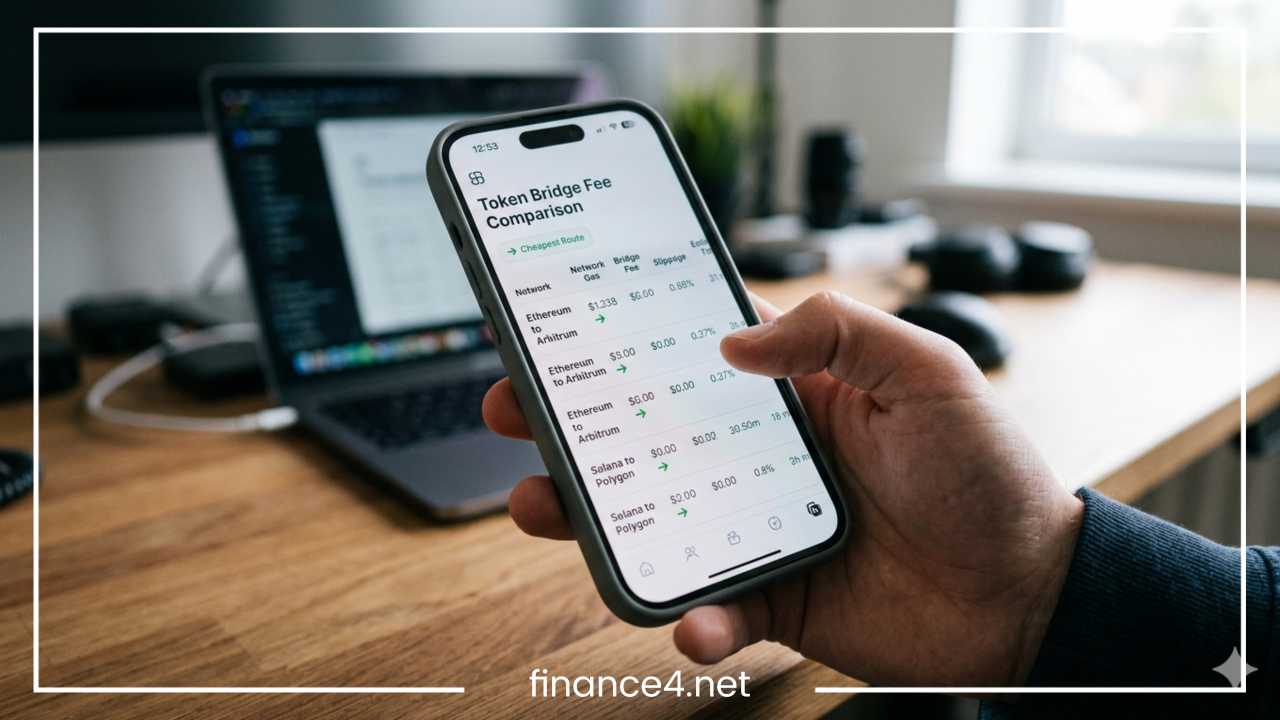
The displayed bridge fee is only one single component of your actual cost. True cost evaluation requires summing the origin network gas, destination network gas, protocol service fees, and potential slippage losses to find the real net total of your cross-chain transfer.
To illustrate this with practical numbers, consider a scenario where you bridge five hundred dollars worth of stablecoins from Avalanche to NEAR. If a bridge advertises a zero point one percent fee, you might expect to pay fifty cents. However, if the Avalanche C-Chain is experiencing heavy traffic, your origin gas fee might cost two dollars and fifty cents in AVAX. Furthermore, if the routing protocol utilizes an intermediate swap pool that incurs zero point two percent in pool fees, and relayer costs add another dollar, your total cost of transfer climbs to over four dollars. Suddenly, an advertised zero point one percent fee translates into an effective cost rate that significantly impacts a modest transfer. Recognizing these compounding factors is the hallmark of an advanced, cost-conscious multi-chain operator.
How to Find the Lowest Fees When Bridging Avalanche to NEAR
Finding the absolute lowest cost requires a rigorous, systematic approach to evaluating quotes across the entire decentralized market. Rather than blindly trusting marketing claims or prominent banner ads, savvy users follow a precise, analytical discovery process before committing capital.
First, always compare the total amount received at the destination NEAR wallet rather than just looking at the advertised percentage fee. A service that proudly advertises a zero percent bridge fee might quietly route your transaction through an inefficient liquidity pool with high price impact and slippage, leaving you with noticeably fewer tokens than a competitor charging a transparent, modest flat fee.
Second, check live quotes immediately before confirming your transaction in your wallet. Cross-chain pricing fluctuates dynamically based on real-time network congestion, validator loads, and liquidity pool depth. A routing path that was inexpensive an hour ago might experience sudden congestion spikes or liquidity depletion on either Avalanche or NEAR.
Third, evaluate multiple routing aggregators and direct bridges side by side. Consider your transaction size carefully; percentage-based fees scale linearly with capital, making them expensive for large transfers, whereas fixed-fee models penalize small transfers heavily. Checking whether a protocol utilizes deep, established liquidity pools or synthetic wrapping mechanisms will also tell you whether you are exposed to unnecessary market risk or unfavorable exchange rates.
When conducting this comparison, utilize dedicated multi-chain aggregators that aggregate quotes from various liquidity routers and messaging protocols simultaneously. These interfaces allow you to input your exact asset and quantity, instantly displaying the net output on NEAR after accounting for all estimated gas and protocol deductions. By making it a mandatory habit to refresh quotes right before execution, you protect yourself against sudden volatility and stale routing data, ensuring that your capital moves along the most mathematically efficient path available at that exact second.
Avalanche-to-NEAR Bridge Options
Because direct, native bridges between Avalanche and NEAR can sometimes be limited or rely on complex multi-hop routing, users frequently leverage cross-chain aggregators and interoperability layers to bridge assets efficiently.
| Bridge Option | Avalanche Source | NEAR Destination | Fee Structure | Estimated Transfer Time | Supported Assets |
| Cross-Chain Aggregators | Avalanche C-Chain | NEAR Protocol | Variable Percentage | 1 to 5 Minutes | USDC, USDT, AVAX, NEAR |
| Liquidity Routers | Avalanche C-Chain | NEAR Protocol | Flat + Percentage | Under 2 Minutes | Major Stablecoins |
| Wrapped Asset Portals | Avalanche C-Chain | NEAR Protocol | Dynamic Gas-Based | 5 to 20 Minutes | Custom NEP-141 / ERC-20 |
When reviewing these options, always verify the underlying security model behind the protocol. Multi-sig validation networks, decentralized relayer models, and decentralized liquidity pools each present different trade-offs between transfer speed, out-of-pocket cost, and smart-contract exploit risk. Always check the official interface directly to confirm live rates and liquidity depths before executing any cross-chain transfer.
Cross-chain aggregators function by querying multiple underlying bridges and liquidity networks under the hood, presenting the user with a unified interface that selects the cheapest path automatically. Liquidity routers, on the other hand, rely on pooled capital on both chains, allowing instant swaps where assets deposited on Avalanche are immediately matched by liquidity providers withdrawing equivalent assets on NEAR. Wrapped asset portals utilize traditional lock-and-mint mechanics, where your original tokens are locked in a secure smart contract on Avalanche while equivalent wrapped tokens are minted on NEAR. While wrapped asset portals often feature predictable fee structures, they introduce dependency on the security of the specific wrapper contract and can sometimes result in fragmented liquidity on the destination chain if the wrapped token lacks deep trading pairs against native assets.
Bridge Fees vs. Slippage: The Cost Most Users Miss
One of the most common and damaging pitfalls in cross-chain transfers is ignoring price slippage. Slippage refers to the difference between the expected price of a trade or transfer when you submit it and the actual price at which the transaction executes on the destination ledger.
Imagine you are bridging a substantial amount of value from Avalanche to NEAR using a routing option that boasts a remarkably low bridge fee of just zero point one percent. If that specific route lacks deep, robust liquidity on the receiving end, your large order will cause a major price impact within the destination liquidity pool. By the time the transaction settles, you might lose one point five percent of your capital to slippage alone, entirely wiping out any nominal savings gained from the low headline fee.
Liquidity depth directly dictates how cleanly a transfer executes. High-liquidity routing layers absorb large transactions smoothly without shifting the exchange rate, whereas thin pools create severe price degradation and unfavorable execution. Always inspect the estimated output value displayed in the confirmation window before signing to ensure your slippage parameters are tightly controlled.
To protect yourself against excessive slippage, always configure your slippage tolerance settings manually in the bridging interface when available. Setting a tight tolerance—such as zero point five percent—ensures that if market conditions shift rapidly or liquidity dries up before your transaction processes, the smart contract will automatically revert rather than executing at an unacceptable loss. However, setting slippage tolerances too tight during periods of high volatility can lead to frequent transaction failures, resulting in wasted gas fees on Avalanche. Balancing this tolerance window requires assessing the depth of the specific liquidity pool handling your transfer and adjusting your parameters accordingly.
How Transaction Size Changes the Cheapest Route
The ideal bridging path changes drastically depending on the exact amount of capital you are moving. Understanding underlying fee structures helps you avoid overpaying based on your specific transfer tier.
For small transfers (such as one hundred dollars), fixed fees are your worst enemy. A bridge that charges a flat five-dollar fee plus network gas will instantly destroy five percent or more of a small capital transfer. In this tier, percentage-based protocols with minimal or zero fixed overhead are significantly cheaper.
For large transfers (such as ten thousand dollars or more), the economic dynamic flips entirely. A zero point three percent percentage fee on a ten-thousand-dollar transfer amounts to thirty dollars, which can easily surpass a flat fee protocol charging a predictable, modest flat rate.
Furthermore, splitting large transactions into multiple smaller transfers to chase minor savings is generally discouraged. Repeatedly paying Avalanche gas fees and base protocol fees across multiple consecutive transactions almost always ends up costing significantly more than consolidating your transfer into a single, well-optimized batch.
Analyzing capital tiers allows you to categorize your transfers and select protocols tailored to your specific financial footprint. Retail users moving modest sums should prioritize protocols with minimal fixed base costs, whereas high-net-worth individuals and institutional treasuries moving substantial sums must prioritize percentage-cap optimization and deep liquidity routing to prevent catastrophic price impact. Recognizing these structural breakpoints ensures that your fee efficiency remains maximized regardless of whether you are deploying pocket capital or enterprise-grade liquidity.
Step-by-Step: How to Bridge From Avalanche to NEAR at the Lowest Possible Cost
Executing a low-cost cross-chain transfer requires a disciplined, step-by-step workflow. Follow this practical checklist every time you move assets across these networks:
-
Choose the Asset: Select a highly liquid asset like USDC or USDT to minimize spread and price slippage.
-
Confirm the Avalanche Network: Ensure your funds sit on the standard Avalanche C-Chain rather than an isolated subnet or secondary layer.
-
Connect Your Wallets: Link both your Avalanche-compatible wallet and your NEAR wallet to the chosen bridging interface securely.
-
Select NEAR Destination: Set NEAR Protocol as your target destination network and verify the receiving address.
-
Compare Available Routes: Check multiple aggregators and bridges to review live quotes and estimated output amounts.
-
Check Quoted Fees: Total up the service fee, origin gas, and destination fees to find the true net cost.
-
Verify Slippage Tolerances: Keep slippage settings tight, typically between zero point five and one percent, to prevent unfavorable execution.
-
Check Gas Requirements: Verify that you have enough native AVAX in your Avalanche wallet to pay for the transaction initiation.
-
Initiate the Transfer: Sign the transaction prompt in your wallet and monitor the real-time progress on-chain.
-
Verify Receipt on NEAR: Check your NEAR wallet explorer to confirm the funds have arrived safely and cleanly.
Following this structured methodology eliminates emotional decision-making and reduces the likelihood of costly user errors. Every step in this checklist serves as a checkpoint to safeguard your capital against hidden fees, incorrect network selection, and unoptimized routing paths. Make this workflow an immutable habit for all your multi-chain operations.
Ways to Reduce Avalanche-to-NEAR Bridging Costs
Minimizing your cross-chain expenditure is entirely achievable if you adopt proactive habits before hitting the transfer button.
First, execute your transfers during periods of lower network congestion. When network activity on Avalanche drops, gas prices decline, reducing the overhead cost of initiating your bridge transaction. Second, always compare multiple routing options rather than settling for the very first interface you encounter.
Avoid unnecessary token swaps along the way. If you want to hold a specific utility token on NEAR, bridge a primary stablecoin first and perform your token swap directly on a low-fee decentralized exchange native to NEAR rather than paying inflated cross-chain conversion rates.
Make sure you always keep enough native AVAX in your wallet to cover base gas fees; getting stuck with stranded funds because your wallet balance hit zero is an expensive and frustrating mistake. Finally, verify destination-token compatibility to ensure you do not receive an un-swapped wrapped token that incurs heavy secondary exit fees later.
Adopting these cost-saving strategies requires discipline and foresight. For instance, monitoring historical gas price patterns on Avalanche allows you to time your transfers during off-peak hours, such as weekends or late-night UTC windows, when base fee burn rates are minimized. Similarly, avoiding multi-hop conversions across cross-chain bridges keeps your exposure to protocol fees as low as possible. Every optimized habit compounds over time, preserving your capital for productive yield generation rather than unnecessary fee leakage.
Security Considerations When Choosing a Low-Fee Bridge
While keeping bridging costs low is a primary objective, security should never be compromised in pursuit of cheap transactions. The cheapest bridge can quickly become the most expensive one if it falls victim to a major security exploit.
Smart-contract risk is inherent to all cross-chain infrastructure. Bridges hold massive pools of locked capital, making them prime targets for malicious hackers. Always check whether a protocol has undergone rigorous third-party security audits by reputable auditing firms.
Evaluate the underlying validation architecture. Custodial bridges rely on centralized entities to hold funds, introducing counterparty risk, whereas non-custodial routing layers rely on decentralized multi-sig validators or cryptographic proofs.
Finally, beware of phishing scams and fake bridge websites. Malicious actors frequently buy sponsored search ads or deploy cloned domains designed to look like popular bridging interfaces. Always double-check the official domain name before connecting your wallet or signing any transaction prompts.
Security must always supersede cost efficiency. A bridge offering near-zero fees while lacking verifiable third-party audits or relying on centralized multi-sig key custodians represents an unacceptable risk profile for serious capital. Always verify protocol credentials, review community audit reports, and ensure that your chosen bridging layer maintains robust cryptographic security guarantees before committing funds.
Which Avalanche-to-NEAR Bridge Is Cheapest?
Determining the absolute cheapest route depends heavily on your specific operational parameters. There is no single universal winner for every scenario.
For small transfers, protocols utilizing low fixed minimums or pure percentage-based routing without hefty flat overheads offer the best value. For large transfers, flat-fee structures or optimized liquidity aggregators save you from paying massive percentage cuts on substantial sums of capital.
When it comes to minimizing slippage, routes backed by deep, robust liquidity pools on stablecoin pairs perform best. For asset variety, general interoperability aggregators provide access to a wider selection of tokens, though sometimes at a slightly higher routing cost. The optimal approach is always to balance cost efficiency against robust security standards rather than blindly chasing the lowest headline fee.
Ultimately, the cheapest bridge is the one that delivers the highest net output to your destination wallet after factoring in all gas expenditures, protocol service fees, and slippage losses. Maintaining flexibility and checking live aggregator quotes before every transfer ensures you consistently capture optimal pricing across changing market conditions.
Final Thoughts
Navigating the cross-chain landscape between Avalanche and NEAR requires a clear focus on total cost rather than superficial advertising. By accounting for Avalanche gas fees, NEAR transaction costs, protocol fees, and destination slippage, you gain a realistic picture of your actual expenditure.
Always compare the final amount received across multiple vetted routes before confirming a transfer. Keep your transaction sizes optimized, maintain enough native gas tokens to complete your workflows without interruption, and prioritize security alongside cost-efficiency. By following these principles, you will consistently secure the best rates and maximize your capital efficiency across every cross-chain transfer.
Frequently Asked Questions (FAQ)
What is the cheapest way to bridge crypto from Avalanche to NEAR Protocol?
The cheapest way to bridge assets from Avalanche to NEAR is by using cross-chain liquidity aggregators that route stablecoins (such as USDC or USDT) through deep liquidity pools, minimizing both protocol service fees and price impact. Always compare live net-received quotes rather than relying solely on advertised headline percentage fees.
How much do Avalanche to NEAR cross-chain bridge fees cost?
Total bridging costs consist of multiple variables: origin gas fees on the Avalanche C-Chain paid in AVAX, destination processing costs on NEAR Protocol, protocol service charges, and potential slippage. Depending on network congestion and transaction size, total costs typically range from a few cents to a few dollars.
Do I need native NEAR tokens in my wallet to receive bridged assets?
Yes, because NEAR Protocol utilizes an account model with storage staking requirements, receiving new token contracts or executing incoming transfers may require your destination account to hold a minimal amount of native NEAR to cover storage deposits and transaction execution fees.
Why did my Avalanche to NEAR transfer lose value to slippage?
Slippage occurs when a cross-chain transfer or intermediate token swap executes through a thin liquidity pool where large orders shift the exchange rate. To prevent unexpected losses, always inspect the estimated destination output in the UI and set tight slippage tolerances before signing your transaction.
Can I bridge native USDC from Avalanche to NEAR without wrapped token risks?
Yes, utilizing bridges and routing aggregators that support canonical or natively issued stablecoin transfers helps you avoid holding fragmented or heavily discounted wrapped token variants on the destination NEAR network.