Bridging Solana to BNB Chain
 by
by 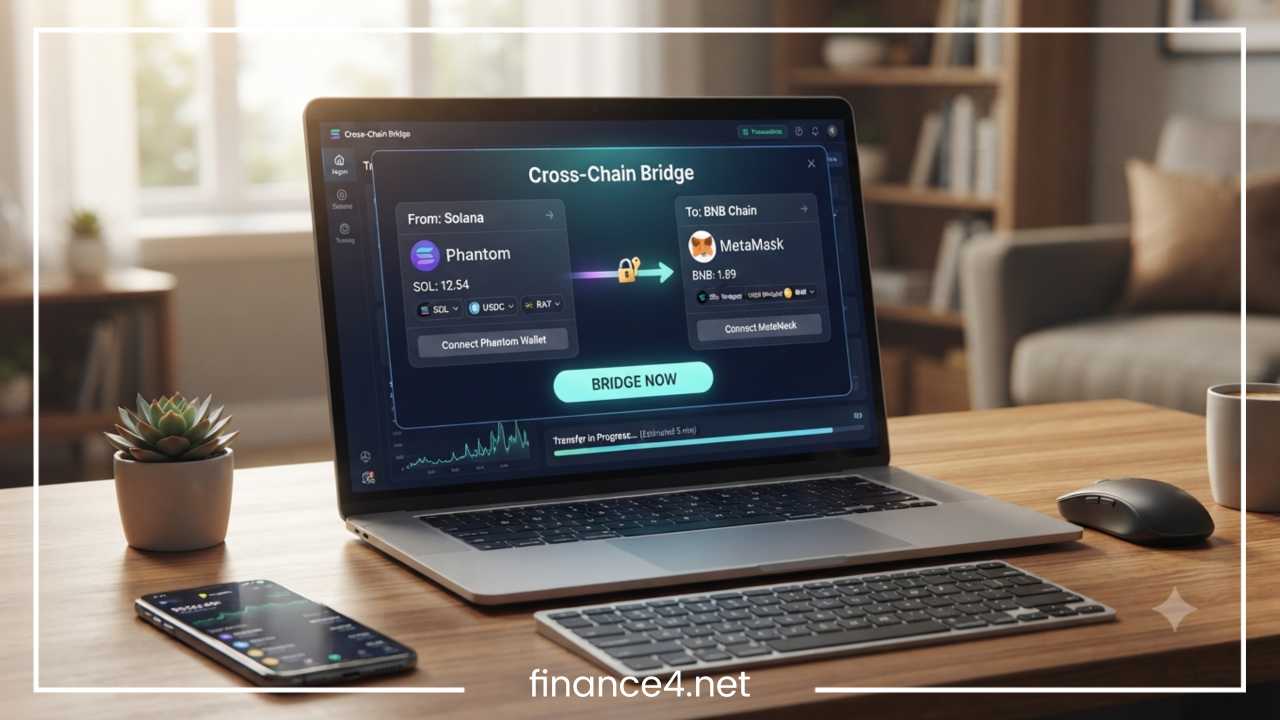
Bridging Solana to BNB Chain: Fast & Secure Transfer Guide
Moving assets between distinct blockchain networks used to be a daunting task reserved for advanced crypto developers. Today, cross-chain communication has evolved significantly, making it possible to move tokens smoothly across ecosystems. If you are holding assets on the high-speed Solana network and want to participate in decentralized finance, trade tokens, or interact with decentralized applications on BNB Chain, you need to use a specialized cross-chain infrastructure.
Moving assets across chains sounds complicated, but the right bridge and process can make it straightforward. This comprehensive guide will walk you through the fundamentals of what bridging entails, how to choose a reliable protocol, how to prepare your wallets, a detailed step-by-step transfer process, safety considerations, and effective troubleshooting methods.
Why Bridge Solana to BNB Chain
Why do users move assets between Solana and BNB Chain? Both networks occupy prominent positions in the Web3 space, but they serve different purposes and host unique ecosystems. Solana is widely celebrated for its high throughput and lightning-fast transaction finality, powered by its unique Proof of History consensus. BNB Chain, on the other hand, is built around the Ethereum Virtual Machine and is home to a massive suite of decentralized finance applications, yield farms, and token pairs.
Common reasons for bridging assets between these two ecosystems include:
-
Accessing specific decentralized finance protocols and yield opportunities exclusive to BNB Chain.
-
Swapping tokens that might have deeper liquidity pools on BNB Chain decentralized exchanges.
-
Utilizing specialized decentralized applications that do not currently have a native Solana integration.
-
Optimizing portfolio management by diversifying holding locations across different layer-one networks.
-
Taking advantage of specific token utilities or participating in governance votes on alternate networks.
A blockchain bridge acts as the connective tissue between these isolated networks. Because Solana and BNB Chain operate on entirely different consensus mechanisms and virtual machines, they cannot communicate directly. A bridge facilitates the transfer by locking or burning assets on the source chain and issuing equivalent representations on the destination chain.
When setting out to bridge SOL to BNB Chain, it is important to set realistic expectations around speed, fees, security, and compatibility. While transactions can often complete within a few minutes, network congestion, liquidity availability, and security verification steps all play a role in the overall transfer duration.
Solana versus BNB Chain What is the Difference
Before initiating any cross-chain transfer, it helps to understand the foundational differences between Solana and BNB Chain. Expecting them to work the same way can lead to lost funds or failed transactions.
Solana utilizes a custom architecture designed for extreme speed and low transaction costs. Its native asset is SOL, which is used to pay for transaction fees and execute smart contracts known as Solana programs. To interact with Solana, users rely on non-custodial wallets like Phantom or Solflare, which manage accounts using the SPL token standard.
BNB Chain is an EVM-compatible network, meaning it shares architectural similarities with Ethereum. Its native asset is BNB, which powers gas fees and smart-contract execution. BNB Chain utilizes EVM-compatible wallets such as MetaMask or Trust Wallet, and tokens adhere to the BEP-20 standard.
An asset cannot simply be sent directly from a Solana address to a BNB Chain address. Because the underlying codebases, address formats, and token standards are entirely different, a direct deposit would result in permanent loss. The bridge infrastructure is required to translate the asset from one environment to the other.
| Feature | Solana | BNB Chain |
| Native Asset | SOL | BNB |
| Ecosystem | Solana dApps | EVM-compatible dApps |
| Wallet Examples | Phantom, Solflare | MetaMask, Trust Wallet |
| Smart-Contract Environment | Solana programs | EVM |
| Transaction Fees | Paid in SOL | Paid in BNB |
| Token Standards | SPL | BEP-20 |
What Does Bridging Solana to BNB Chain Mean
To master cross-chain transfers, you must understand what bridging actually means beneath the hood. A bridge is fundamentally different from an ordinary wallet transfer.
When you execute a standard wallet transfer, you are simply moving native tokens from one address to another on the exact same blockchain. The ledger updates instantly, and the asset remains within the same network environment.
A bridge transfer, however, is a cross-system operation. It involves moving assets across three distinct layers:
-
Source blockchain where the original asset resides.
-
Bridge infrastructure that coordinates the locking, burning, or minting processes.
-
Destination blockchain where the bridged asset is released or minted.
Bridges typically use one of two primary mechanisms:
Lock and Mint
The bridge locks your original token in a smart contract on Solana and mints a representative wrapper token on BNB Chain. When you want to bridge back, the wrapped token is burned on BNB Chain, and your original token is unlocked on Solana.
Burn and Mint
The bridge burns the original token on Solana and mints an equivalent native or wrapped asset on BNB Chain.
Because of this architecture, the asset you receive on BNB Chain may not be the exact native version of the original token. It is often a wrapped or bridged representation backed by the collateral held on the source chain.
It is also helpful to distinguish between different transfer methods:
-
Wallet Transfer: Moving assets from a wallet to another wallet on the same blockchain.
-
Bridge Transfer: Moving assets across different blockchains using specialized cross-chain infrastructure.
-
Exchange Transfer: Depositing assets from a blockchain into a centralized exchange account, and then withdrawing them onto a different blockchain.
What You Need Before Bridging
Preparation is the key to a smooth and stress-free cross-chain transfer. Before you interact with any bridge interface, ensure you have gathered all necessary components on your checklist.
-
A compatible Solana wallet such as Phantom or Solflare containing the tokens you wish to move.
-
A BNB Chain-compatible EVM wallet such as MetaMask or Trust Wallet set to the correct network.
-
Sufficient SOL in your Solana wallet to cover the source-chain transaction and network fees.
-
Sufficient BNB in your destination BNB Chain wallet to cover future gas fees after the funds arrive.
-
The exact token you want to bridge, verified for compatibility with the chosen bridge protocol.
-
A reputable bridge platform that explicitly supports Solana to BNB Chain transfers.
Having funds for destination-chain gas is the single most common oversight for beginners. If you bridge your assets to BNB Chain but have zero BNB in that destination wallet, your tokens will be stranded because you will lack the gas required to swap, stake, or send them onward. Always secure a small amount of BNB on the destination network beforehand.
How to Choose a Solana to BNB Chain Bridge
Choosing the right bridge is critical for protecting your funds and ensuring a smooth user experience. Rather than relying on a single name, evaluate any cross-chain platform against a rigorous set of criteria.
Supported Assets and Networks
Confirm that the bridge explicitly supports both Solana and BNB Chain. Check whether it supports native SOL, specific Solana SPL tokens, and what exact form the asset will take once it arrives on BNB Chain. Some bridges only support major assets like USDC or SOL.
Fee Structure
Understand the complete financial breakdown before initiating a transfer. Evaluate network fees on Solana, bridge service fees, relayer or provider fees, potential liquidity provider fees, and expected slippage. Total costs can vary significantly depending on network congestion.
Transfer Speed
Examine estimated transaction times and confirmation requirements. While some bridges optimize for speed using optimistic verification or decentralized relayer networks, others require deeper block confirmations to ensure security. Remember that quoted times are estimates, not guarantees.
Security Architecture
Investigate the security model of the bridge. Look for public audit reports from reputable smart-contract auditing firms, evaluate the decentralized validator or relayer model, check for historical bug bounty programs, and review whether the protocol has suffered past exploits or downtime incidents.
Liquidity Availability
A bridge can technically support an asset but still suffer from low liquidity pools. Low liquidity can lead to high slippage, unfavorable exchange rates, or failed transactions during periods of high volume.
Transparency
Look for platforms that offer clear transaction tracking tools, transparent fee disclosures, easily verifiable smart-contract addresses, and comprehensive documentation or status pages.
Never frame any bridge as completely secure. Cross-chain bridges introduce complex smart-contract interactions and external validator dependencies, carrying inherent risks that do not exist on single-chain transfers.
Step-by-Step How to Bridge Solana to BNB Chain
This core walkthrough guides you through executing a cross-chain transfer from start to finish. Follow these sequential steps carefully.
Step 1 Connect Your Solana Wallet
Open your chosen bridge application and click the connect wallet button. Select your Solana wallet provider, such as Phantom or Solflare. Approve the connection request in your wallet extension and verify that the correct account address is displayed on the interface.
Step 2 Select Solana as the Source Network
Locate the source network selection menu on the bridge dashboard. Ensure that Solana is explicitly set as the sending chain from which your assets will originate.
Step 3 Select BNB Chain as the Destination
Locate the destination network menu and choose BNB Chain. Double-check this setting before proceeding to ensure your assets are directed to the EVM-compatible network.
Step 4 Choose the Asset and Amount
Select the token you want to transfer from your Solana wallet balance. Review the minimum and maximum transfer limits imposed by the bridge, enter your desired amount, and check the estimated amount you will receive after fees.
Step 5 Enter the Destination Wallet
Input your BNB Chain EVM wallet address. If the bridge allows you to connect your EVM wallet simultaneously, ensure the destination address auto-populates correctly. Verify every single character of the address.
Step 6 Review the Transaction Details
Take a moment to carefully examine the summary screen. Check the source network, destination network, token type, transfer amount, destination wallet address, estimated fees, and expected output amount.
Step 7 Approve the Solana Transaction
Click the confirm or bridge button. Your Solana wallet extension will pop up, requesting transaction approval. Review the gas fee in SOL and authorize the transaction to broadcast it to the Solana network.
Step 8 Wait for Processing
Allow the bridge protocol to process your transfer. This phase involves waiting for Solana network confirmations, bridge validation checks, and the subsequent minting or release of tokens on BNB Chain.
Step 9 Verify Funds on BNB Chain
Once the bridge indicates completion, open your BNB Chain-compatible wallet. Check your token balances. If the bridged asset does not appear immediately, use a BNB Chain block explorer like BscScan to verify the transaction hash, and manually import the token contract address into your wallet if necessary.
How Long Does Solana to BNB Bridging Take
Transferring assets across distinct blockchains does not happen instantly, and transfer times can fluctuate based on several technical factors.
Primary factors influencing transfer duration include:
-
Solana network confirmation speed and finality.
-
The verification mechanism and security threshold required by the bridge protocol.
-
Available liquidity pools on the destination side of the bridge.
-
Current network congestion on BNB Chain affecting transaction processing.
-
Bridge relayer activity and queue lengths during peak trading hours.
It is important to remember that blockchain confirmation time is not equal to total bridge completion time. Even if Solana confirms your initial transaction in less than a second, the bridge validators still need time to attest to the state change and trigger the transaction on BNB Chain. Patience is essential, and users should avoid panicking if a transfer takes several minutes to finalize.
How Much Does It Cost to Bridge Solana to BNB Chain
Understanding the complete cost structure helps you avoid unexpected surprises and ensures your transfer remains financially efficient.
Cross-chain transfers involve multiple potential cost components:
-
Solana transaction fee paid in SOL to execute the lock or burn function.
-
Bridge service fee charged by the protocol for facilitating the transfer.
-
Relayer or provider fee covering the cost of submitting the transaction on the destination chain.
-
Liquidity or swap fees if the bridge converts your asset during transit.
-
Slippage costs resulting from price movements or pool imbalances.
-
BNB Chain gas fee required to finalize the receipt of tokens on the destination network.
Instead of looking solely at the advertised bridge fee, always calculate the net amount received relative to the total value sent. Sometimes a bridge with zero explicit protocol fees will charge higher slippage or unfavorable exchange rates, making it more expensive overall than a protocol with a transparent flat fee.
Security How to Bridge Safely
Because the term secure is central to cross-chain operations, taking proactive security measures is non-negotiable. Bridge protocols are prime targets for malicious actors due to the high volume of locked capital they hold.
Follow these core safety practices every time you bridge:
-
Always use official bridge URLs and bookmark verified domains to avoid phishing scams.
-
Beware of fake bridge websites promoted through search engine ads or social media links.
-
Double-check destination network configurations and verify token contract addresses before interacting.
-
Start with a small test transaction when using a new or unfamiliar bridge for the first time.
-
Never share your seed phrase, private keys, or recovery passwords with any website or support agent.
-
Reject unexpected wallet signature requests or unusual transaction approval prompts.
-
Review token permissions and revoke unnecessary smart-contract approvals after your transfer completes.
-
Keep a small balance of BNB in your destination wallet for future interactions.
-
Check official bridge status pages or community channels if a transaction appears stuck.
Be aware of bridge-specific risks, including smart-contract vulnerabilities, validator or relayer collusion, oracle failures, liquidity crunches, and front-end domain hijacking. Remaining vigilant protects your capital from unforeseen protocol failures.
Common Problems When Bridging Solana to BNB Chain
Even with careful planning, users occasionally run into roadblocks. Knowing how to diagnose and handle common issues saves time and reduces stress.
My transaction is pending
This usually occurs due to heavy network congestion or a backlog in the bridge relayer queue. Check the transaction hash on a block explorer to see if it successfully cleared the source chain. If it cleared Solana, the delay is happening on the bridge or destination side.
The tokens arrived but I can not see them
If the block explorer confirms the transaction reached your destination address, the issue is simply wallet visibility. You need to manually import the token contract address into your EVM wallet using the correct decimals and token symbol.
I do not have BNB for gas
If your funds arrived on BNB Chain but you cannot move them, you lack native gas. You will need to use a fiat on-ramp, a centralized exchange withdrawal, or a gas-refueling service to send a small amount of BNB to your wallet address.
The bridge says unsupported token
Having a token on Solana does not guarantee an equivalent representation exists on BNB Chain. Bridges only support a curated list of assets that have established liquidity pools or official wrapped variants.
I entered the wrong address
Blockchain transactions are immutable. If you entered an incorrect destination address that you do not control, the funds cannot be recovered or reversed. Always double-check addresses before confirming.
The received amount is lower than expected
This is usually caused by combined bridge fees, liquidity swap costs, or price slippage during the cross-chain routing process. Always review the final quote breakdown before authorizing funds.
The bridge failed
If a transaction fails midway, check the bridge documentation and status page. Reputable bridges feature automated refund mechanisms or support ticket systems to resolve stuck state transfers safely.
Alternative Ways to Move Assets From Solana to BNB Chain
Bridging is not the only way to move value across ecosystems. Depending on your preferences and technical comfort level, alternative methods may suit your needs better.
Centralized Exchanges
You can deposit Solana assets into a centralized exchange that supports both Solana and BNB Chain deposits and withdrawals. You deposit SOL or a supported token via Solana, sell or hold it, and withdraw it out using the BNB Chain network.
Pros include high familiarity for beginners and straightforward interfaces. Cons include custody risks, mandatory account verification, and variable withdrawal availability.
Cross-chain Aggregators and Swappers
Cross-chain routers and swap aggregators allow you to exchange tokens directly from Solana to BNB Chain by routing liquidity across multiple decentralized liquidity providers and bridge protocols in a single user action.
| Method | Speed | Convenience | Custody | Best For |
| Bridge | High | High | Usually self-custody | Direct cross-chain transfer |
| CEX | Medium | High | Custodial | Beginners |
| Cross-Chain Aggregator | High | High | Usually self-custody | Route optimization |
Best Practices for Fast and Efficient Transfers
To ensure your cross-chain transfers are as fast and efficient as possible, incorporate these expert operational habits into your workflow:
-
Compare bridge quotes and estimated gas costs across multiple platforms before confirming your transfer.
-
Avoid initiating large transfers during periods of severe network congestion or high volatility.
-
Verify that the bridge has sufficient liquidity for the specific token volume you intend to move.
-
Avoid transferring tiny amounts where fixed network and bridge fees consume a disproportionate percentage of your funds.
-
Maintain adequate native gas balances on both the source and destination chains.
-
Always execute a small test transaction first when interacting with a bridge protocol for the first time.
-
Track your transaction hash using block explorers rather than repeatedly submitting duplicate transfer requests.
-
Confirm the destination token contract and network compatibility beforehand to prevent visibility issues.
Final Checklist Before You Click Confirm
Run through this quick verification list right before authorizing your cross-chain transfer:
-
Correct source network selected
-
Correct destination network selected
-
Correct token chosen for transfer
-
Correct destination wallet address verified
-
Bridge platform is legitimate and verified
-
Fee structure is acceptable
-
Slippage parameters are within reason
-
Enough SOL available for source transaction fees
-
Enough BNB available for destination gas fees
-
Transaction details match your exact intention
Conclusion Bridge Solana to BNB Chain With Confidence
Bridging assets from Solana to BNB Chain unlocks vast opportunities across different decentralized ecosystems, but it requires an understanding of how cross-chain infrastructure operates. Recognizing that bridging is distinct from standard wallet transfers helps you navigate network differences, address formats, and token standards safely.
By evaluating bridges based on security, fees, liquidity, and speed, preparing your wallets with adequate gas on both networks, and following rigorous security habits, you can execute transfers smoothly and with confidence. Always verify your network details, double-check destination addresses, and start small when trying out a new protocol. With the right knowledge and precautions, navigating the multi-chain landscape becomes a seamless part of your Web3 experience.
Frequently Asked Questions
What is the fastest bridge to transfer funds from Solana to BNB Chain?
The fastest bridge depends on current network congestion and liquidity provider availability, but decentralized cross-chain routers and direct lock-and-mint bridges typically complete transfers within five to fifteen minutes. Users should always check real-time bridge status pages and compare estimated execution times before initiating a transfer.
Can I send SPL tokens directly from my Phantom wallet to MetaMask on BNB Chain?
No, you cannot send tokens directly between Solana and BNB Chain wallets without a bridge because they operate on different network architectures and token standards. Attempting a direct wallet transfer across these incompatible chains will result in permanent loss of funds. You must use a reputable cross-chain bridge to convert SPL tokens into compatible BEP-20 assets.
Why do I need BNB in my destination wallet when bridging from Solana?
Destination gas fees on BNB Chain cannot be paid using Solana tokens or the bridged assets themselves. You must have native BNB in your EVM-compatible destination wallet to cover the transaction fees required to swap, send, or interact with your newly arrived tokens.
How do I fix a pending cross-chain transfer from Solana to BNB Chain?
If your transfer is stuck, first check the transaction hash on a Solana block explorer to confirm it successfully cleared the source chain. If the source transaction succeeded, the delay is usually caused by bridge relayer queues or destination-chain congestion. Track the transfer using the official bridge interface and avoid submitting duplicate transactions.
What are the risks of using third-party crypto bridges?
Cross-chain bridges introduce security risks such as smart-contract vulnerabilities, validator compromise, and front-end phishing attacks because they hold pooled liquidity across multiple networks. To minimize risk, always verify official bridge domains, review smart-contract audit histories, and start with a small test transaction.