Bridging Fantom to BNB Chain
 by
by 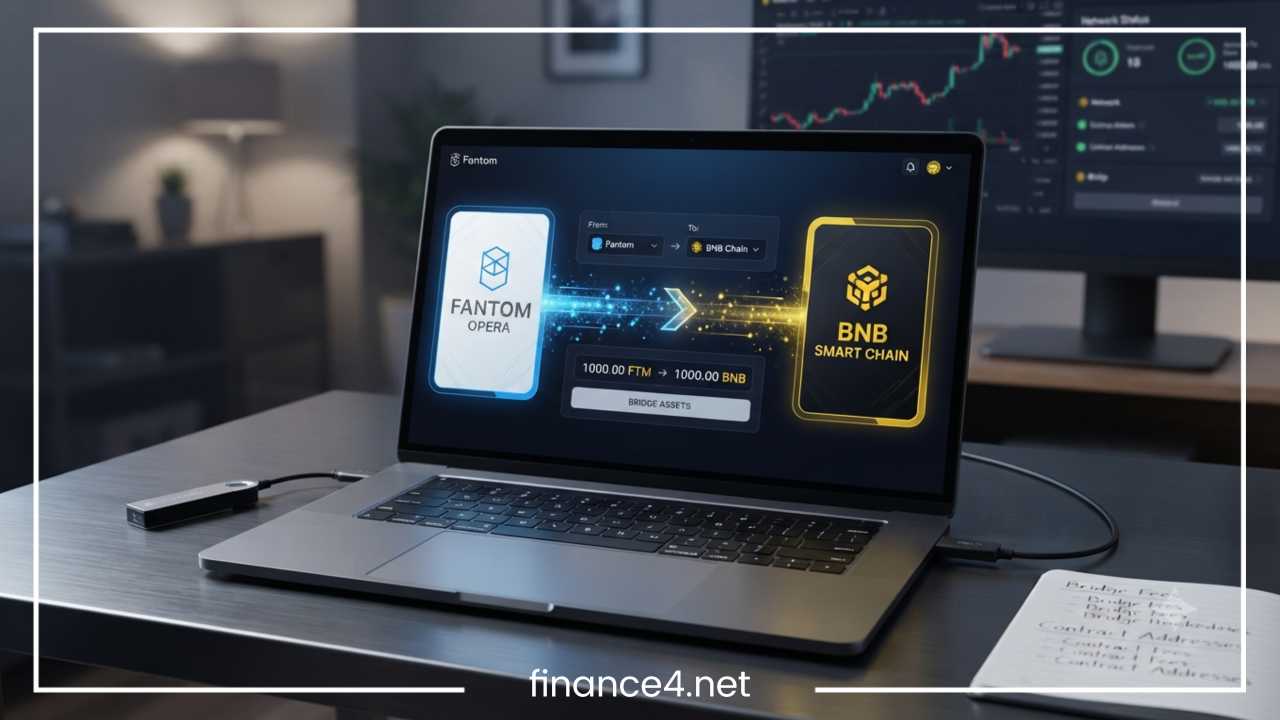
Bridging Fantom to BNB Chain: Complete Step-by-Step Guide
Cross-chain bridging is a foundational mechanism within the modern decentralized finance landscape, allowing digital assets to move freely between isolated blockchain ecosystems. Historically, blockchains operated as independent silos, meaning that an asset native to one network could not interact with decentralized applications residing on another. Cross-chain bridging solves this fundamental limitation by establishing secure cryptographic pathways or liquidity mechanisms that map value across distinct distributed ledgers.
Users frequently need to move assets from Fantom to BNB Chain to capitalize on differing ecosystem strengths. While Fantom offers lightning-fast finality and an innovative DeFi landscape, BNB Chain hosts a massive volume of liquidity, diverse gaming applications, expansive NFT marketplaces, and specialized yield opportunities. Moving funds between these networks enables users to optimize their capital efficiency, access unique financial instruments, and diversify their portfolios across multiple chains.
The growing importance of blockchain interoperability cannot be overstated. As the Web3 space expands into a multi-chain reality, users demand seamless mobility without sacrificing security or incurring prohibitive costs. Understanding how to navigate this environment safely is essential for anyone participating in decentralized finance.
This comprehensive guide covers everything required to execute a secure, efficient cross-chain transfer. Readers will learn how to prepare their wallets, evaluate different bridge options, understand the underlying mechanics of cross-chain transfers, execute a transaction step-by-step, minimize fees, troubleshoot common errors, and adhere to essential security best practices.
Understanding Fantom and BNB Chain
What Is Fantom?
Fantom is a high-performance, scalable, and secure smart contract platform designed to overcome the limitations of older blockchain generations. At its core, Fantom utilizes a unique consensus mechanism known as Lachesis, an asynchronous Byzantine Fault Tolerant (aBFT) proof-of-stake protocol. Unlike traditional blockchain architectures that queue transactions into sequential blocks before validation, Lachesis allows nodes to process transactions independently and reach consensus asynchronously.
This architectural design results in sub-second transaction finality and remarkably low transaction fees, typically costing a fraction of a cent. Because of these performance metrics, Fantom developed a thriving decentralized finance ecosystem featuring prominent lending protocols, automated market makers, yield aggregators, and synthetic asset platforms. Developers and traders alike migrated to Fantom to escape the high gas fees plaguing older layer-one networks, establishing a vibrant economy centered around its native asset.
What Is BNB Chain?
BNB Chain is a dual-chain architecture consisting of the BNB Beacon Chain (for staking and governance) and BNB Smart Chain (BSC), which is fully compatible with the Ethereum Virtual Machine. BNB Smart Chain leverages a Proof of Staked Authority consensus mechanism, combining elements of proof-of-authority and proof-of-stake, which allows for rapid block times and economical transaction costs.
BNB Chain hosts one of the largest and most active user bases in the entire cryptocurrency industry. Its EVM compatibility makes it exceptionally easy for developers to deploy smart contracts originally written for Ethereum. Consequently, BNB Chain has evolved into a powerhouse for decentralized finance, GameFi, non-fungible tokens, and decentralized applications. Its deep liquidity pools and high daily transaction volume attract retail and institutional participants alike.
Key Differences Between Fantom and BNB Chain
Comparing Fantom and BNB Chain reveals distinct engineering trade-offs and ecosystem characteristics. While both networks prioritize speed and low transaction fees, they approach consensus and ecosystem distribution differently.
| Feature | Fantom | BNB Chain |
| Consensus Mechanism | Lachesis aBFT Proof-of-Stake | Proof of Staked Authority (PoSA) |
| Average Transaction Speed | Sub-second finality | Approximately 3 seconds |
| Transaction Fees | Extremely low (fractions of a cent) | Low (fractions of a dollar) |
| Security Model | Asynchronous BFT validator set | Limited validator set managed by Binance ecosystem standards |
| Ecosystem Focus | Advanced DeFi protocols, high-speed automated market makers | Broad ecosystem including massive GameFi, DeFi, and NFT markets |
| Liquidity & Volume | Moderate to high within niche DeFi sectors | Extremely high global liquidity and daily trading volume |
Why Bridge Assets from Fantom to BNB Chain?
Navigating the multi-chain ecosystem requires capital flexibility. Users frequently bridge crypto from Fantom to BNB Chain to unlock a broader spectrum of financial opportunities. One primary motivator is accessing deeper liquidity. BNB Chain hosts some of the largest liquidity pools in the crypto industry, enabling traders to execute high-volume swaps with minimal slippage.
Furthermore, BNB Chain is a dominant hub for GameFi and interactive decentralized applications. Users looking to participate in blockchain gaming often find that the most active communities and reward structures reside on BNB Chain. Similarly, the network boasts vibrant NFT marketplaces where digital collectibles trade at high volumes.
Yield farming and staking opportunities also drive cross-chain transfers. Certain protocols on BNB Chain offer attractive annual percentage yields for stablecoins, wrapped assets, and native tokens, prompting investors to migrate capital from Fantom to capture these returns. By shifting assets across chains, investors achieve greater portfolio diversification, insulating themselves against localized market downturns on a single network and positioning their assets where utility is highest.
What Can You Bridge?
When executing a cross-chain transfer, the types of assets available depend heavily on the specific bridge protocol selected. However, most modern interoperability solutions support a wide range of standard digital currencies. Commonly bridged assets include:
-
USDT (Tether)
-
USDC (USD Coin)
-
ETH (Wrapped or bridge-native representations)
-
WBTC (Wrapped Bitcoin)
-
DAI
-
BNB (Wrapped versions compatible with Fantom)
-
FTM
-
Various stablecoins and ERC-20 compatible tokens
It is vital to recognize that supported assets vary across different bridge platforms. Some bridges rely on liquidity pools that hold native or stable tokens on both networks, while others utilize burn-and-mint architectures. Always check the specific asset compatibility list of your chosen bridge before initiating a transfer to ensure your tokens are supported.
How Cross-Chain Bridges Work
Cross-chain bridges are sophisticated pieces of software infrastructure that facilitate value transfer between independent blockchains. Because blockchains cannot natively communicate with one another, bridges utilize several architectural models to achieve interoperability:
-
Lock-and-Mint Model: When a user deposits tokens into a smart contract on Fantom, those tokens are locked in a secure vault. The bridge then instructs a smart contract on BNB Chain to mint an equivalent amount of wrapped tokens. When bridging back, the wrapped tokens on BNB Chain are burned, unlocking the original assets on Fantom.
-
Burn-and-Release Model: Similar to lock-and-mint, this model burns native tokens on the source chain and releases an equivalent amount of pre-existing native or pooled tokens on the destination chain.
-
Liquidity Pool Bridges: These platforms maintain pools of native assets on both chains. When a user deposits tokens into the pool on Fantom, the bridge releases an equivalent amount of tokens from the liquidity pool on BNB Chain. This model eliminates the need for wrapped assets and often provides faster execution.
-
Message Passing: Advanced protocols send cryptographic proofs and data packets between networks, allowing smart contracts on BNB Chain to verify that a deposit occurred on Fantom without needing to mirror tokens directly.
Underpinning these models are networks of decentralized validators, relayers, and audited smart contracts that monitor transactions, verify cryptographic proofs, and ensure that cross-chain transfers execute securely and accurately.
Things to Prepare Before Bridging
Proper preparation prevents common errors, stuck transactions, and unnecessary losses of funds. Before initiating any cross-chain transfer from Fantom to BNB Chain, ensure you have completed the following checklist:
Wallet Setup
Ensure you are using a reputable, Web3-compatible self-custody wallet such as MetaMask, Rabby, or Trust Wallet. Verify that your wallet is fully updated and functioning correctly.
Add Both Networks
Your wallet must be configured to interact with both the Fantom Opera network and BNB Smart Chain. Manually check your network settings or use a network configuration tool to add the correct Remote Procedure Call (RPC) endpoints, chain IDs, and block explorers for both chains.
Native Gas Tokens
This is the most critical preparation step. You must hold native FTM in your Fantom wallet to pay for the gas fees required to initiate the bridge transaction. Simultaneously, you must have a small amount of native BNB in your destination wallet on BNB Chain to pay for gas when interacting with or moving your bridged assets on the new network. Many users fail to account for destination gas, leaving their funds stranded.
Secure Internet Connection
Ensure you are operating on a stable, secure internet connection. Public Wi-Fi networks should be avoided when handling cryptocurrency transactions to prevent man-in-the-middle attacks.
Verify Token Contract Addresses
Always cross-reference the contract addresses of the tokens you intend to bridge. Ensure you are interacting with legitimate assets and not copycat tokens.
Back Up Recovery Phrase
Verify that your wallet recovery phrase or private keys are securely backed up offline in a physical location. Never store digital copies of your seed phrase on cloud drives or communication apps.
Choosing the Right Bridge
Selecting an appropriate bridge is the most important decision in the cross-chain transfer process. Users should evaluate bridge options based on several rigorous criteria:
-
Security Audits: Review whether the bridge smart contracts have been thoroughly audited by reputable cybersecurity firms.
-
Total Value Locked (TVL): Higher TVL generally indicates greater market trust and deeper liquidity pools.
-
Reputation and Track History: Research the operational history of the bridge protocol and check for past exploits or vulnerabilities.
-
Supported Assets: Confirm that the bridge supports the exact token you wish to transfer.
-
Fees: Analyze both the protocol service fees and the underlying network gas costs.
-
Transfer Speed: Evaluate how quickly the bridge typically settles transactions from Fantom to BNB Chain.
-
User Interface: A clean, intuitive interface reduces the likelihood of user error during setup.
Prominent cross-chain platforms commonly used for moving assets across these networks include Squid Router, LI.FI, Rhino.fi, Synapse, Portal Bridge, and deBridge. Bridge support dynamically changes over time as liquidity fluctuates and protocols upgrade their infrastructure. Always verify current compatibility directly on official platforms before transferring funds.
Step-by-Step Guide to Bridge Fantom to BNB Chain
Executing a cross-chain transfer requires careful attention to detail at each phase of the process. Follow these systematic steps to move your assets safely:
Step 1: Connect Wallet
Navigate to the official website of your chosen, audited cross-chain bridge. Click the connect wallet button, select your preferred Web3 wallet provider, and approve the connection request.
Step 2: Choose Fantom as Source Network
Locate the network selection interface on the bridge platform. Set Fantom as your origin or source network, ensuring your wallet prompts you to switch networks if necessary.
Step 3: Choose BNB Chain as Destination
Select BNB Smart Chain as the destination or target network for your cross-chain transfer.
Step 4: Select Token
Choose the specific token you wish to bridge from the drop-down asset menu, such as USDC, USDT, or FTM.
Step 5: Enter Amount
Input the exact quantity of tokens you wish to transfer. Pay attention to minimum and maximum transfer limits displayed by the bridge interface.
Step 6: Review Fees
Carefully review the transaction breakdown, including network gas fees on Fantom, destination gas fees, protocol fees, and estimated slippage. Ensure you are satisfied with the total cost before proceeding.
Step 7: Approve Token Spending
If this is your first time using the bridge contract with this specific token, you will need to grant token approval. Confirm the approval transaction in your wallet and wait for it to process.
Step 8: Confirm Bridge Transaction
Click the transfer, bridge, or swap button. Your wallet will prompt you to sign the final outbound transaction on Fantom. Review the transaction parameters and confirm.
Step 9: Wait for Confirmations
Allow the bridge protocol and network validators sufficient time to process your transaction, verify the deposit, and release or mint the corresponding assets on BNB Chain.
Step 10: Verify Assets on BNB Chain
Switch your wallet network to BNB Smart Chain. Add the token contract address if the asset does not appear automatically, and verify that your funds have successfully arrived in your wallet balance.
Understanding Bridge Fees
Navigating cross-chain fees requires a clear understanding of the various cost components involved in a transfer. When bridging from Fantom to BNB Chain, users typically encounter several distinct fee categories:
-
Network Gas Fee on Fantom: Paid in native FTM to execute the initial smart contract interaction that locks or burns your tokens on the source chain.
-
Destination Chain Fee: Some advanced bridges deduct a small amount of BNB on the destination chain to cover the gas required to deliver your assets, or they require you to pay destination gas upfront.
-
Bridge Service Fee: A percentage or flat fee charged by the bridge protocol operators to maintain the cross-chain infrastructure and validator network.
-
Liquidity Fee: Fees associated with utilizing automated market maker liquidity pools across chains.
-
Slippage: Price movement tolerance during the transfer, particularly relevant when bridges execute underlying token swaps to fulfill your request.
Practical Tips to Reduce Costs
To minimize bridging expenses, execute your transfers during periods of low network congestion when gas prices are depressed. Additionally, evaluate whether using a bridge aggregator—which compares multiple routes for the lowest fee—can optimize your transfer costs. Avoid bridging excessively small amounts, as fixed service fees can consume a disproportionate percentage of minor transfers.
How Long Does Bridging Take?
The duration of a cross-chain transfer varies based on several technical factors. While Fantom transactions settle almost instantaneously, cross-chain bridges must account for security confirmations across both networks. Key factors affecting speed include:
-
Network Congestion: High traffic on either Fantom or BNB Chain can delay transaction inclusion in blocks.
-
Finality Requirements: Different bridges require a varying number of block confirmations to ensure a deposit is irreversible before releasing funds on the destination chain.
-
Bridge Architecture: Liquidity pool bridges that use decentralized messaging protocols often complete transfers within minutes, while lock-and-mint bridges requiring complex validator consensus may take slightly longer.
-
Token Type and Liquidity Availability: Standard stablecoins with deep bridge liquidity move faster than niche altcoins that require multi-hop routing.
Manage your expectations by monitoring the live status tracker provided by your bridge interface rather than relying on strict time guarantees.
Common Problems and How to Fix Them
Even experienced users occasionally encounter issues during cross-chain transfers. Understanding how to diagnose and resolve these problems ensures a calm and effective response:
-
Transaction Pending: If a transaction remains stuck, check the transaction hash on the Fantom block explorer. High network congestion may simply require patience, or you may need to speed up the transaction by adjusting gas settings if supported.
-
Wrong Destination Network: If you accidentally bridge to an incorrect network address or unsupported chain, pause and consult the bridge support documentation. Never attempt unverified recovery methods.
-
Wallet Not Connecting: Clear your browser cache, disconnect and reconnect your wallet extension, or switch to a different supported browser.
-
Insufficient Gas: If your transaction fails due to lack of gas, acquire a small amount of native FTM or BNB through a secondary source or exchange and fund your wallet before trying again.
-
Token Not Appearing on BNB Chain: This is rarely a lost funds issue; rather, your wallet simply needs to import the custom token contract address for the bridged asset on BNB Smart Chain.
-
Incorrect Token Contract: Always double-check contract addresses against official documentation to avoid interacting with counterfeit tokens.
-
Bridge Maintenance: Occasionally, bridges pause operations for security upgrades. Check official communication channels such as community forums or social media to verify bridge status.
-
RPC Issues: If your wallet fails to load balances or broadcast transactions, switch to a reliable public or private RPC endpoint for the respective network.
Security Best Practices
Security is paramount when handling cross-chain transfers. Because bridges handle significant amounts of locked capital, they are frequent targets for malicious actors. Protect your digital assets by adhering strictly to these security best practices:
-
Use established, heavily audited bridges with strong track records.
-
Always double-check wallet addresses and destination fields before signing transactions.
-
Verify website URLs meticulously to avoid sophisticated phishing campaigns and lookalike domains.
-
Avoid unknown or newly launched bridge aggregators that lack community vetting.
-
Always execute a test transfer with a small amount of funds before moving large sums.
-
Keep your wallet software, browser extensions, and operating system fully updated.
-
Never share your seed phrase or private keys with anyone under any circumstances.
-
Confirm token contracts using official block explorers and trusted token registries.
-
Utilize a hardware wallet for storing large cryptocurrency balances and signing high-value cross-chain transactions.
Alternative Ways to Move Assets Between Fantom and BNB Chain
If traditional cross-chain bridges do not suit your specific transfer requirements, several alternative methods exist for moving assets between Fantom and BNB Chain:
-
Centralized Exchanges: You can deposit your assets from Fantom into a centralized exchange that supports deposits and withdrawals on both Fantom and BNB Chain. Once deposited, withdraw the assets out to your BNB Chain wallet. While convenient, this method requires KYC verification and custody surrender during the exchange process.
-
Cross-Chain DEX Aggregators: Platforms that combine decentralized exchange liquidity with routing protocols allow users to swap tokens across chains in a single transaction flow.
-
Multi-Chain Wallets: Advanced self-custody wallet applications feature built-in cross-chain swapping services, streamlining the user experience by handling bridge routing behind the scenes.
-
Asset Routing Platforms: Dedicated routing tools analyze the most efficient path across multiple liquidity sources to move value between disparate networks.
Comparing these alternatives reveals clear trade-offs between convenience, cost, privacy, and user control. Centralized exchanges offer simplicity at the cost of privacy and custody, while decentralized bridges maximize self-sovereignty but require careful technical management.
Comparing Popular Fantom-to-BNB Bridge Options
Evaluating popular bridging solutions helps users select the platform that aligns best with their specific asset transfer requirements. The following comparison outlines key attributes of prominent cross-chain options:
| Bridge | Supported Assets | Speed | Fees | Security Features | Best For |
| Squid Router | Broad range of stablecoins and major tokens | Fast (minutes) | Variable based on route | Audited smart contracts, cross-chain messaging security | Users seeking optimized routing and multi-step swaps |
| LI.FI | Extensive token selection across multiple chains | Fast | Competitive aggregator rates | Multi-audited infrastructure, reliable partner protocols | Comprehensive cross-chain aggregation and token discovery |
| Synapse | Stablecoins, native assets, wrapped tokens | Moderate to Fast | Standard network and liquidity fees | Cryptographic validator verification, established TVL | Stablecoin and major asset transfers with deep liquidity |
| Portal Bridge | Wide array of cross-chain assets | Moderate | Standard bridge fees | Wormhole protocol security framework, decentralized guardian network | Moving wrapped assets securely via messaging protocols |
Best Practices for Efficient Cross-Chain Transfers
Maximizing the efficiency of your cross-chain operations requires disciplined habits and strategic timing. Incorporating these professional guidelines into your routine ensures seamless transfers:
-
Transfer During Low Network Activity: Monitor global gas trackers to identify periods when network traffic is minimal, reducing overall transaction expenditure.
-
Monitor Gas Prices: Keep a close eye on real-time gas fluctuations on both Fantom and BNB Chain before broadcasting transactions.
-
Bridge Larger Amounts When Appropriate: Consolidating multiple small transfers into a single larger transfer helps mitigate the impact of fixed protocol and gas fees.
-
Keep Gas Tokens on Both Chains: Always maintain a healthy reserve of native gas tokens on both origin and destination networks to prevent stranded funds.
-
Save Verified Token Contracts: Maintain a personal ledger or bookmark verified token contract addresses to streamline future multi-chain interactions.
-
Maintain Transaction Records: Keep a log of your transaction hashes and bridge receipts for accounting and tracking purposes.
-
Use Reputable Wallets: Stick to industry-standard Web3 wallets with robust security architectures and active developer support.
-
Check Bridge Status Before Sending: Review live status dashboards to ensure the bridge is fully operational and experiencing no technical delays.
Future of Cross-Chain Bridging Between Fantom and BNB Chain
The technological landscape of blockchain interoperability is evolving rapidly. Future developments promise to transform how users move assets between Fantom and BNB Chain, shifting away from clunky wrapped-asset models toward frictionless, native multi-chain environments.
Key trends shaping the future include intent-based bridging, where users specify an outcome and specialized solvers compete to fulfill the cross-chain transfer in the most efficient manner possible. Bridge aggregators will become increasingly sophisticated, automatically routing transactions across the most secure and cost-effective liquidity channels in real time.
Security is also seeing major advancements through zero-knowledge proofs, which allow cryptographic verification of cross-chain state without trusting centralized validator sets. Furthermore, native cross-chain messaging protocols are enabling smart contracts on Fantom to directly trigger actions on BNB Chain, opening the door for unified multi-chain applications. As institutional adoption grows, user experience will continue to improve, resulting in reduced fees, near-instantaneous finality, and abstract complexity that makes cross-chain transfers as simple as traditional web applications.
Final Thoughts
Bridging assets from Fantom to BNB Chain is a powerful way to unlock new financial opportunities, access deeper liquidity, and engage with diverse decentralized ecosystems. Throughout this guide, we have explored the foundational characteristics of both Fantom and BNB Chain, examined the mechanics of cross-chain bridges, and outlined the essential steps required to execute a transfer safely.
Successful bridging relies on thorough preparation, including setting up compatible wallets, securing native gas tokens on both networks, and meticulously verifying token contract addresses. Selecting an audited, reputable bridge protocol ensures that your funds remain secure throughout the transfer process. By adhering to best practices, monitoring fee structures, and practicing patience during network confirmations, users can navigate the multi-chain environment with confidence. Stay informed about bridge support updates, maintain strict security discipline, and always verify your transactions before final confirmation to ensure a seamless cross-chain experience.
Frequently Asked Questions
Is it safe to bridge crypto from Fantom to BNB Chain?
Bridging crypto from Fantom to BNB Chain is generally safe when using established, audited cross-chain platforms. However, security depends on the bridge architecture and the specific protocols used. To minimize risk, always verify that the bridge has undergone multiple security audits, check the total value locked (TVL), and avoid using new or unverified bridge aggregators. Using a hardware wallet for your transfers provides an extra layer of protection against unauthorized access.
How can I bridge tokens from Fantom to BNB Chain with the lowest fees?
To achieve the lowest fees when moving assets between Fantom and BNB Chain, compare multiple bridge aggregators that calculate the most efficient path. Fees are often composed of network gas, liquidity costs, and protocol service fees. To reduce costs, aim to execute your transactions during periods of low network congestion and avoid bridging very small amounts, as fixed costs can represent a high percentage of your transaction total.
Why is my transaction from Fantom to BNB Chain still pending?
A pending transaction is often caused by network congestion or high traffic on either the Fantom or BNB Chain network. It can also be due to the bridge protocol requiring a specific number of validator confirmations before it releases funds on the destination chain. Check your transaction status using a block explorer. If the transaction has been pending for an unusually long time, verify if the bridge is currently undergoing maintenance or if there are known RPC issues with your wallet.
What should I do if my tokens do not appear on BNB Chain after bridging?
If your transaction shows as successful on the bridge but your balance does not update in your wallet, you likely need to import the token contract address manually on the BNB Chain network. Every token has a unique contract address per chain. Locate the official contract address for your asset on the BNB Chain block explorer, go to your wallet’s token import section, and paste the address to view your balance.
Can I bridge native FTM to BNB Chain directly?
Most bridges support wrapped versions of FTM or convert it into a bridge-compatible asset during the transfer. Because Fantom (Opera) and BNB Smart Chain are distinct blockchains, you cannot move native FTM tokens directly without a bridge facilitating the swap or the creation of a wrapped asset. Always check the bridge interface to confirm whether your specific version of FTM is supported for direct transfer.
What is the fastest way to move assets between Fantom and BNB Chain?
The fastest way to move assets is typically through liquidity pool bridges, which utilize pre-funded reserves on both networks to facilitate near-instant transfers. While these are usually the fastest, speeds can still be impacted by network finality and congestion. Always monitor the bridge’s live status tracker, as individual network performance on Fantom or BNB Chain can dictate the actual time required to complete the transfer.