Best NFT Research Tools for Finding New Collections
 by
Best NFT Research Tools for Finding New Collections
The non-fungible token landscape has evolved far beyond simple profile-picture drops and speculative minting frenzies. Today, digital collectibles span gaming assets, generative art, real-world asset tokenization, music rights, and membership passes across dozens of independent blockchains. While this expansion creates massive opportunities for collectors and builders, it also introduces severe information overload. Thousands of new collections launch every week, making it nearly impossible to separate genuine innovation from short-lived hype or outright scams through casual browsing alone.
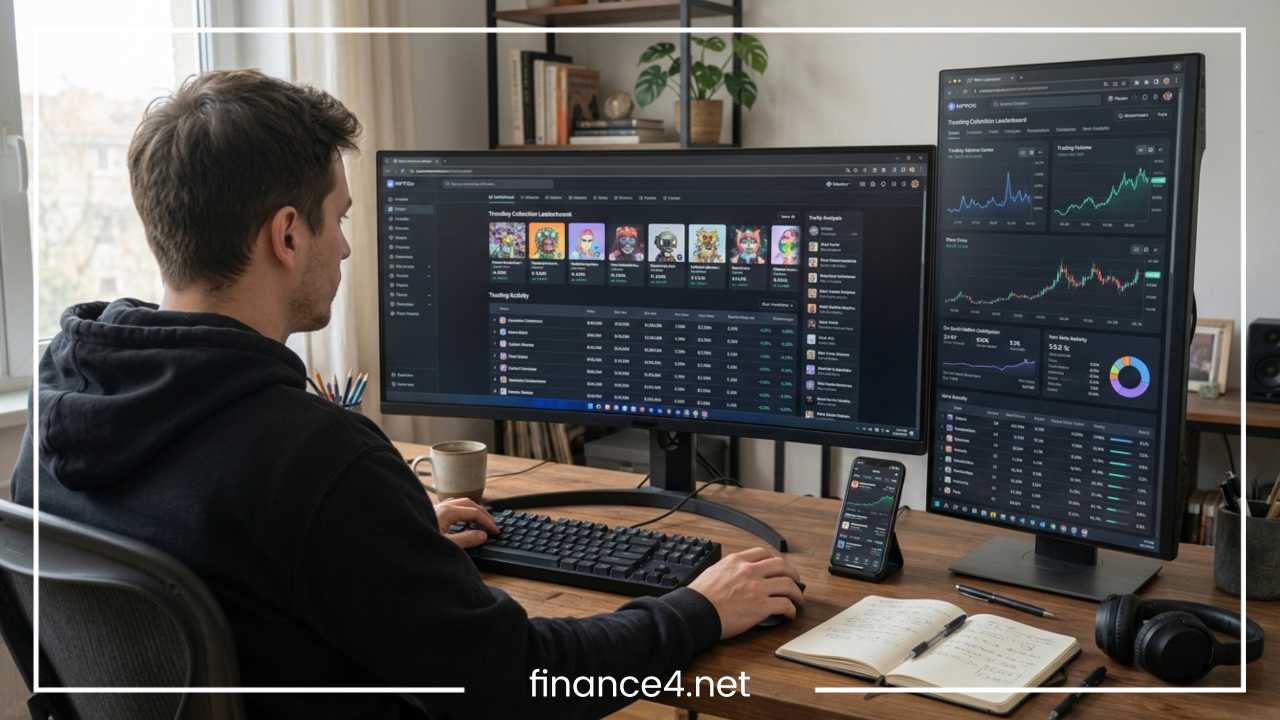
Finding promising projects early requires looking past social media buzz and examining verifiable market behavior. Jumping into a mint or secondary purchase without due diligence exposes participants to illiquid markets, manipulated floor prices, and unverified smart contracts. Dedicated NFT research tools solve this problem by aggregating blockchain transactions, marketplace listings, wallet movements, and rarity metrics into readable dashboards.
This guide explores how to navigate the modern digital collectible ecosystem using data rather than guesswork. You will learn what separates dedicated analytics platforms from standard marketplaces, explore twelve leading platforms for discovery and verification, master a step-by-step evaluation workflow, and identify critical warning signs before committing capital.
What Are NFT Research Tools?
NFT research tools are specialized data aggregation and analytics platforms designed to index, organize, and visualize blockchain activity related to non-fungible tokens. Rather than requiring users to read raw hexadecimal transaction logs on a block explorer, these platforms translate on-chain events—such as mints, transfers, bids, and secondary sales—into structured charts, leaderboards, and wallet profiles.
To understand their value, it helps to separate NFT marketplaces from NFT research platforms. Marketplaces are venues built primarily for executing transactions: listing assets, placing bids, and facilitating peer-to-peer swaps. While many marketplaces now display basic volume charts and floor prices, their main goal is transaction facilitation. Research platforms, by contrast, operate as intelligence layers. They pull data across multiple marketplaces and blockchains simultaneously to provide an unbiased, macro-to-micro view of market health.
Different market participants rely on these platforms for distinct workflows:
-
Collectors use rarity rankings and trait filters to find aesthetically unique or culturally significant pieces at fair valuations.
-
Active traders monitor real-time sales velocity, order-book depth, and liquidity metrics to spot short-term momentum.
-
Long-term investors analyze holder distribution, smart-money accumulation, and multi-month retention trends.
Across the ecosystem, effective research platforms deliver five core capabilities: early collection discovery through mint trackers, real-time market analytics, algorithmic rarity scoring, wallet and whale monitoring, and historical trend visualization.
Best NFT Research Tools for Finding New Collections
Not every platform serves the same purpose in a researcher’s toolkit. Some excel at surfacing brand-new mints the moment they gain traction, while others specialize in deep post-launch verification, wallet tracking, or smart contract auditing. Below are twelve essential platforms covering the full spectrum of discovery and analysis.
NFTGo
NFTGo is a comprehensive multi-chain data intelligence platform that blends macro market analytics with granular collection discovery. Designed to serve as a gateway to the broader ecosystem, it tracks market capitalization, trading volume, holder counts, and overall market sentiment across major networks.
Its standout research features include a dedicated whale-tracking module that monitors the buying, selling, and minting actions of high-value wallets, alongside built-in wash-trade filters that strip artificial volume from collection leaderboards. For discovering new projects, NFTGo offers real-time mint leaderboards and a browser extension that overlays collection statistics and upcoming drop alerts directly onto social media profiles and project websites. Compared with narrower price trackers, NFTGo provides a holistic educational and analytical environment. Most core analytics, rankings, and whale-tracking tools are accessible for free, while enterprise developers can access paid API tiers.
Website: nftgo.io
DappRadar
DappRadar operates as a broad decentralized application discovery hub with a dedicated, deeply indexed NFT analytics suite. Rather than focusing exclusively on isolated collectibles, it tracks how NFT collections interact with the wider Web3 ecosystem, including blockchain games, metaverse worlds, and decentralized finance protocols.
Its primary strengths lie in cross-chain rankings, active wallet metrics, and ecosystem-level discovery. Users can filter thousands of collections by blockchain, trading volume, average price, and unique active wallets over customizable timeframes. This makes DappRadar particularly effective for spotting emerging gaming or utility-driven collections where user engagement matters as much as secondary floor price. Unlike Ethereum-centric trading terminals, DappRadar covers dozens of Layer 1 and Layer 2 networks equally. Core rankings, portfolio tracking, and collection explorers are completely free to browse, with optional token-based memberships unlocking advanced data exports and alerts.
Website: dappradar.com
CryptoSlam
CryptoSlam is an industry-standard NFT data aggregator renowned for transparent, cross-blockchain sales rankings and historical performance tracking. Indexing millions of assets across more than a dozen networks—including Ethereum, Solana, Polygon, Bitcoin Ordinals, and Flow—it acts as a benchmark scoreboard for global digital collectible activity.
Standout capabilities include granular blockchain-by-blockchain volume comparisons, wash-trade filtering, live global sales tickers, and dedicated upcoming drop calendars. Researchers use CryptoSlam to identify when capital rotates from one blockchain ecosystem to another and to spot new collections climbing the 24-hour buyer and transaction leaderboards. Its focus on unique buyer counts alongside raw dollar volume helps users distinguish genuine grassroots adoption from isolated high-value trades. All web-based rankings, collection profiles, and historical charts are free to access without creating an account, while businesses can license its commercial API.
Website: cryptoslam.io
OpenSea
OpenSea remains one of the largest multi-chain NFT marketplaces globally, and its built-in discovery and analytics interfaces make it a primary starting point for browsing new collections. Beyond facilitating secondary peer-to-peer sales, it serves as a launchpad and primary minting venue for creators across Ethereum, Polygon, Base, Arbitrum, Solana, and other networks.
From a research standpoint, OpenSea provides real-time trending leaderboards, category filters (such as art, gaming, memberships, and photography), verified creator badges, and an active drops calendar highlighting upcoming primary mints. Users can inspect trait-level floor prices, historical activity feeds, and offer depth directly on collection pages. While professional day traders often prefer faster execution terminals, OpenSea’s massive retail user base makes it indispensable for gauging mainstream visibility and organic collector demand. Browsing all marketplace data, launch calendars, and collection metrics is completely free.
Website: opensea.io
Magic Eden
Magic Eden began as the dominant marketplace on Solana before expanding into a powerhouse multi-chain discovery and trading hub spanning Bitcoin Ordinals, Ethereum, Polygon, Base, and emerging gaming networks. It plays a dual role as both a high-volume secondary marketplace and a curated primary launchpad.
Its standout discovery features revolve around its Launchpad vetting process, live mint tracking, and cross-chain trending dashboards. By browsing Magic Eden’s upcoming and live mint tabs, researchers can observe real-time mint velocity—seeing how quickly a new supply is absorbed and how many unique wallets are participating. Compared with platforms heavily weighted toward Ethereum profile-picture projects, Magic Eden excels at surfacing fast-moving communities in the Solana, Bitcoin, and Web3 gaming ecosystems. All discovery tools, launchpad calendars, and collection analytics are free to use, with standard marketplace fees applying only when executing trades.
Website: magiceden.io
Rarity Sniper
Rarity Sniper is a specialized trait-analysis and collection-ranking platform built to calculate the statistical scarcity of individual NFTs within larger generative sets. Supporting thousands of collections across more than twenty blockchains, it helps buyers understand why two tokens in the same collection carry vastly different market values.
The platform evaluates every attribute within a collection, assigns rarity scores based on trait frequency, and generates an overall numerical rank for each token. Researchers use Rarity Sniper to browse newly indexed collections, filter listings by specific rare traits, and identify undervalued tokens listed near the collection floor price. While it does not provide deep wallet profiling or macro market sentiment, its clean trait-breakdown cards and rapid indexing of new drops make it essential for evaluating generative art and collectible projects. Browsing all rarity rankings and trait filters on the website is free.
Website: raritysniper.com
Icy Tools
Icy Tools earned widespread recognition among active NFT traders as a real-time market monitoring and mint-tracking terminal focused on sub-minute blockchain activity. Originally built to help collectors spot live mints as blocks were confirmed, its core indexing technology later integrated into QuickNode’s Web3 infrastructure suite to power real-time NFT data streams and developer APIs.
Its signature research workflow centered on live trending feeds over ultra-short intervals—such as 15-minute, 30-minute, and 1-hour windows—alongside real-time mint leaderboards and custom wallet alerts. Watching live mint velocity allows researchers to spot organic demand spikes before a project hits mainstream marketplace front pages. For builders and quantitative researchers using the underlying infrastructure, real-time GraphQL APIs and webhook alerts replicate these live tracking capabilities. Basic market views historically offered free access, while real-time developer streams operate on tiered usage plans.
Website: icy.tools
Blur
Blur is a high-speed NFT marketplace and aggregator engineered specifically for active Ethereum traders who prioritize execution speed, order-book transparency, and deep liquidity. By aggregating listings across major Ethereum marketplaces into a single interface, it provides a real-time lens into supply and demand dynamics.
For researchers, Blur’s greatest asset is its order-book depth visualization and real-time floor-price feeds, which update within seconds. Users can inspect exact bid walls—seeing how much ETH is sitting in collection-wide bids just below the floor price—as well as listing density at higher price tiers. This reveals whether a new collection’s price is supported by genuine buyer liquidity or thin, fragile listings. Unlike consumer-focused marketplaces, Blur strips away visual clutter in favor of dense, trader-grade charts. Accessing all market data, charts, and order books is free, and the platform charges zero marketplace fees on trades.
Website: blur.io
Nansen
Nansen is an institutional-grade on-chain intelligence platform that enriches raw blockchain addresses with millions of behavioral labels. Rather than simply showing that a wallet bought an NFT, Nansen identifies whether that address belongs to a historically profitable collector, a venture fund, an early project contributor, or a prominent protocol deployer.
Its standout NFT capabilities include Smart Money tracking, token-god-mode holder breakdowns, and real-time mint leaderboards filtered by wallet reputation. Researchers use Nansen to see which new collections experienced investors are accumulating quietly before public hype builds, as well as to check whether top holders are holding or dumping immediately after mint. Compared with free retail dashboards, Nansen offers unmatched depth in behavioral attribution and cross-token portfolio tracking. The platform operates on a paid subscription model tailored to serious analysts, funds, and active traders, with limited free preview dashboards available.
Website: nansen.ai
Etherscan
Etherscan is the foundational block explorer and analytics platform for the Ethereum network. While it is not a visual NFT gallery, it serves as the ultimate source of truth for verifying smart contracts, auditing token distributions, and inspecting raw on-chain transactions without third-party filtering.
When evaluating a new Ethereum collection, researchers use Etherscan to verify whether the smart contract source code is publicly published and audited, inspect the exact minting functions, and check for dangerous administrative permissions (such as hidden minting capabilities or transfer locks). Its Token Tracker tab also displays true holder counts, top wallet concentrations, and live transfer logs. Unlike marketplaces that can suffer from indexing delays or metadata glitches, Etherscan reflects the exact state of the blockchain in real time. All block exploration, contract verification tools, and CSV data exports are completely free.
Website: etherscan.io
Dune
Dune is a community-powered blockchain analytics platform that allows analysts to query raw on-chain data using SQL and publish interactive visual dashboards. Thousands of public dashboards built by independent Web3 researchers cover every facet of the NFT ecosystem, from marketplace market share to granular collection health metrics.
Its standout advantage is complete analytical customization. Instead of relying on pre-packaged metrics, researchers can search Dune for community dashboards tracking newly launched collections, mint retention rates, diamond-hand holder percentages, royalty revenue, and cross-collection overlap. If a standard metric does not exist, analysts can write custom queries to inspect specific smart contract events. Compared with rigid consumer apps, Dune offers institutional-level flexibility for investigating complex trends. Browsing and interacting with existing community dashboards is completely free, while paid tiers provide faster query execution, private dashboards, and API exports.
Website: dune.com
NFT Price Floor
NFT Price Floor is a dedicated market-tracking and valuation index built to monitor floor-price movements, market capitalization, and historical price charts across leading and emerging NFT collections. Inspired by traditional financial market trackers, it filters out market noise to present clean, reliable pricing benchmarks.
Its primary research features include multi-timeframe floor-price charts (measured in both native cryptocurrency and fiat), market-cap dominance rankings, sales-to-listing ratios, and curated category breakdowns across art, gaming, brands, and digital collectibles. Researchers use NFT Price Floor to compare how a newly trending collection stacks up against established category leaders and to check whether a rising floor price is backed by consistent sales volume or merely delisted supply. All rankings, price charts, and collection statistics are free to access on the web.
Website: nftpricefloor.com
Key Features to Look for in an NFT Research Tool
Because no single platform covers every blockchain or analytical angle equally, choosing the right tools depends on knowing which features actually drive sound decisions. When evaluating any NFT research tool, prioritize seven core capabilities:
-
Real-time market data: Digital collectible markets move rapidly during mints and reveal events. Look for platforms that index live sales, listing changes, and floor-price updates within seconds rather than relying on delayed hourly snapshots.
-
New collection discovery: Effective discovery tools surface projects early through upcoming drop calendars, live mint velocity trackers, and newly indexed collection feeds before mainstream social channels become saturated.
-
Rarity analysis: For generative collections, transparent trait-frequency calculators and statistical rarity rankings help you distinguish common floor pieces from genuinely scarce assets.
-
Wallet tracking: The ability to inspect top holders, follow experienced collectors, and receive alerts when notable wallets mint or accumulate provides high-signal context that raw volume numbers cannot match.
-
On-chain analytics: Strong tools look beneath surface prices to reveal unique holder counts, listing-to-supply ratios, and direct smart contract interactions.
-
Multi-chain support: Innovation occurs simultaneously across Ethereum, Solana, Bitcoin, Base, Polygon, and gaming-specific networks. Multi-chain coverage prevents blind spots when liquidity rotates across ecosystems.
-
Historical data: Multi-week and multi-month price, volume, and holder charts help separate sustainable community growth from brief, artificial hype cycles.
How to Use NFT Research Tools to Find Promising New Collections
The most effective researchers treat NFT analysis as a multi-stage funnel—moving from broad discovery to strict on-chain verification—rather than relying on a single platform. Following a structured workflow prevents emotional decisions and filters out low-quality launches early.
-
Start with trending and newly listed collections. Begin on broad aggregators like NFTGo, CryptoSlam, or DappRadar to scan 24-hour and 7-day volume leaderboards. Look for newly launched collections showing steady growth in unique buyers rather than sudden, unexplained single-day spikes.
-
Monitor upcoming NFT launches and mint calendars. Check launchpads and drop calendars on OpenSea, Magic Eden, and CryptoSlam to identify scheduled mints. Note mint supply, pricing structure, and whether the team is launching via an established, vetted launchpad.
-
Analyze trading volume and floor-price movements. Open the collection on Blur or NFT Price Floor to inspect order-book depth and historical price action. Check the ratio of listed items to total supply; healthy collections typically have fewer than 10 to 15 percent of tokens listed for sale, alongside active collection-wide bids supporting the floor.
-
Research collection holders and wallet activity. Use Nansen or NFTGo’s holder analytics to examine who owns the tokens. Look for a healthy distribution across many unique wallets and check whether experienced, profitable collectors are accumulating or exiting.
-
Evaluate NFT rarity and trait distribution. Once a collection passes initial health checks, use Rarity Sniper to inspect trait mechanics and identify specific pieces that offer strong aesthetic or statistical value relative to the floor price.
-
Verify the project’s smart contract. Navigate directly to the collection’s contract address on Etherscan (or the equivalent block explorer for its network). Confirm that the contract code is verified, check when it was deployed, and verify that token metadata is properly decentralized rather than hosted on an easily altered private server.
-
Investigate the team, roadmap, community, and social presence. Cross-reference on-chain findings with off-chain credibility. Review the founders’ track records, assess whether community discussions focus on genuine art or utility rather than purely price speculation, and verify official links directly through trusted aggregators to avoid phishing sites.
-
Compare findings across multiple research platforms. Never trust a single metric in isolation. Cross-checking marketplace volume against wash-trade-filtered data on NFTGo or CryptoSlam ensures you are acting on verified market demand.
NFT Research Tools Comparison: Which Platform Is Best for What?
Different stages of the research process call for specialized tools. The comparison table below summarizes the primary strengths and core focus areas of all twelve platforms so you can quickly match the right tool to your immediate goal.
| Tool | Best for | Main research focus |
| NFTGo | Market discovery | Analytics and whale tracking |
| DappRadar | Ecosystem research | Rankings and blockchain activity |
| CryptoSlam | Sales analysis | Volume and historical data |
| OpenSea | Collection discovery | Marketplace listings |
| Magic Eden | NFT launches | Multi-chain discovery |
| Rarity Sniper | Rarity research | NFT traits |
| Icy Tools | Market monitoring | Real-time activity |
| Blur | Trading analysis | Liquidity and floor prices |
| Nansen | Wallet research | Smart-money activity |
| Etherscan | Contract research | On-chain verification |
| Dune | Custom analytics | Blockchain dashboards |
| NFT Price Floor | Price tracking | Floor-price comparisons |
Red Flags to Watch for When Researching New NFT Collections
Data tools are only as useful as your ability to interpret anomalies. Even promising-looking leaderboards can hide structural risks, so always watch for these eight warning signs before participating in a project:
-
Artificial trading volume and wash trading: Bad actors frequently trade NFTs back and forth between their own wallets to fake momentum and climb trending charts. If a collection shows massive volume from a tiny handful of wallets, treat the activity as fabricated.
-
Fake collections and impersonation projects: Scammers routinely copy the artwork and names of trending drops. Always verify contract addresses through official project channels or reputable aggregators rather than searching blindly on marketplaces.
-
Unverified or suspicious smart contracts: If a contract’s source code is hidden on Etherscan or contains functions allowing creators to freeze transfers, drain funds, or arbitrarily mint unlimited supply, walk away immediately.
-
Concentrated NFT ownership: When a small group of wallets controls a disproportionate share of the total supply, those holders can crash the floor price at any moment by dumping tokens into thin liquidity.
-
Sudden floor-price manipulation: Rapid floor spikes caused by a single buyer sweeping cheap listings—without corresponding bid depth or unique buyer growth—often collapse just as quickly.
-
Unrealistic roadmaps and promises: Be skeptical of anonymous teams promising complex AAA games, guaranteed passive yields, or massive real-world integrations within implausible timelines.
-
Fake community engagement and bot followers: Large follower counts mean nothing if social posts receive repetitive, generic replies from newly created accounts while organic community channels remain quiet.
-
Projects with little transparency about their creators: While pseudonymous builders can be legitimate in Web3, a complete lack of verifiable past work, community accountability, or clear communication increases execution risk.
High trading volume, top rarity scores, or viral social media posts never guarantee long-term quality or value retention. Quantitative metrics must always be paired with critical judgment.
Free vs. Paid NFT Research Tools
One of the biggest advantages of blockchain transparency is that nearly all foundational NFT data is publicly accessible at zero cost. Free platforms—including NFTGo, CryptoSlam, DappRadar, Rarity Sniper, NFT Price Floor, Etherscan, and Dune’s community dashboards—provide more than enough data for beginners and intermediate collectors to discover new drops, inspect historical volume, check rarity ranks, and verify smart contracts.
Paid analytics subscriptions, such as Nansen’s institutional tiers or high-throughput developer APIs, become worthwhile primarily for high-frequency traders, funds, and Web3 builders. Premium plans typically unlock granular wallet attribution labels, sub-second custom webhook alerts, automated portfolio tracking across dozens of addresses, and bulk historical data exports.
Newcomers do not need expensive subscriptions to perform thorough due diligence. By combining a free macro aggregator (like NFTGo or CryptoSlam), a rarity checker (Rarity Sniper), a marketplace order book (Blur or OpenSea), and a block explorer (Etherscan), anyone can build a professional-grade research workflow without spending a cent.
Final Thoughts
Navigating the digital collectible space successfully requires shifting from passive browsing to disciplined, data-backed investigation. NFT research tools bridge the gap between raw blockchain activity and actionable insight—empowering collectors, traders, and investors to spot emerging collections early while filtering out manipulated or unsafe projects.
Because every platform captures a different slice of the ecosystem, the strongest results come from combining complementary tools. Use marketplaces and aggregators to discover what is gaining attention, analytics dashboards and rarity trackers to evaluate market structure, wallet intelligence to see how experienced participants behave, and block explorers to verify smart contract integrity. No single chart or leaderboard tells the entire story. By cross-referencing multiple data sources and conducting independent due diligence before every mint or purchase, you put yourself in a far stronger position to discover projects with genuine staying power.
Frequently Asked Questions About NFT Research Tools
What are the best free NFT research tools for beginners?
For newcomers looking to explore the market without paying for expensive subscriptions, NFTGo, CryptoSlam, DappRadar, Rarity Sniper, and Etherscan offer the strongest free feature sets. Together, these platforms allow you to track trending collections, check cross-chain sales volume, calculate trait rarity, and verify smart contracts at zero cost. You can also browse community-built dashboards on Dune to access institutional-grade data visualizations for free.
How do I find new NFT projects before they mint?
To spot promising drops before public minting begins, monitor upcoming drop calendars and vetted launchpads on platforms like Magic Eden, OpenSea, and CryptoSlam. In addition, use real-time on-chain tracking tools like Nansen or NFTGo to see which unreleased contracts experienced wallets and early collectors are interacting with. Always cross-reference calendar listings with official project channels to confirm mint dates, supply limits, and verified contract addresses.
Which NFT analytics platform is best for tracking whale wallets and smart money?
Nansen is widely considered the premier platform for tracking smart money, as it labels millions of blockchain addresses belonging to profitable traders, venture funds, and early adopters. If you prefer a free alternative, NFTGo provides an accessible whale-tracking module that highlights real-time mints, buys, and sales made by high-value wallets across major networks.
How can I check if an NFT collection has fake volume or wash trading?
You can detect artificial volume by using analytics aggregators with built-in wash-trade filters, such as CryptoSlam and NFTGo, which automatically strip suspicious back-and-forth wallet transactions from their leaderboards. You can also inspect the collection on Etherscan or Blur to compare total trading volume against unique buyer counts—if massive dollar volume comes from only a handful of repeating wallet addresses, the activity is likely manipulated.
What is the best tool to check NFT rarity and trait rankings?
Rarity Sniper is one of the most reliable and widely used platforms for checking NFT rarity scores and trait distributions across more than twenty blockchains. Once a collection’s metadata is revealed, the platform ranks every token from rarest to most common, helping collectors identify undervalued assets listed near the floor price.
How do I verify if a new NFT smart contract is safe before minting?
Before connecting your wallet to any new minting site, look up the project’s contract address on Etherscan (or the corresponding block explorer for its blockchain). Check that the contract source code has a green verification checkmark, confirm that the deployment history matches the team’s announcements, and review the read/write functions to ensure there are no malicious permissions—such as hidden transfer locks or unauthorized minting controls.
Which NFT research tools support Solana, Bitcoin Ordinals, and multi-chain collections?
If you research collections beyond Ethereum, Magic Eden, CryptoSlam, DappRadar, and Rarity Sniper offer broad multi-chain coverage. Magic Eden is particularly strong for discovering new launches across Solana and Bitcoin Ordinals, while CryptoSlam and DappRadar provide comprehensive cross-chain volume rankings spanning Ethereum, Polygon, Base, Flow, and gaming-focused networks.
What is the difference between an NFT marketplace and an NFT research tool?
An NFT marketplace (such as OpenSea or Blur) is built primarily to facilitate buying, selling, and bidding on digital assets. An NFT research tool (such as Nansen, Dune, or NFT Price Floor) acts as an intelligence layer that aggregates data across multiple marketplaces and blockchains to help you analyze holder behavior, historical price trends, rarity metrics, and smart contract health before making a transaction.
Are paid NFT analytics subscriptions worth it for average collectors?
For most casual collectors and swing traders, paid subscriptions are unnecessary because free tools cover core discovery, rarity checking, floor-price tracking, and contract verification. Paid platforms like Nansen are generally only worth the cost for high-volume traders, funds, and analysts who rely on sub-second custom alerts, granular wallet attribution, and bulk historical data exports to execute frequent trades.