NFT Wash Trading: How to Identify Fake Trading Volume
 by

NFT Wash Trading: How to Identify Fake Trading Volume
The Problem of Fake NFT Trading Volume
Non-fungible token marketplaces rely heavily on trading volume as a primary indicator of collection health, collector interest, and overall market momentum. When investors, collectors, and analysts browse decentralized marketplaces or NFT data aggregators, total sales volume is often the very first metric they examine to gauge whether a digital asset collection has genuine traction. High trading volume typically signals strong liquidity, active price discovery, and broad community participation, making a project appear attractive to prospective buyers who want confidence that they can eventually resell their assets.
However, headline trading volume in digital asset markets is remarkably easy to distort. Because blockchain networks allow anyone to generate an unlimited number of pseudonymous wallet addresses within seconds, bad actors can artificially inflate transaction figures without transferring real economic ownership. This deceptive practice—known as NFT wash trading—creates a misleading illusion of intense market demand, tricking unwary observers into believing a stagnant or speculative collection is experiencing organic growth.
Understanding how to separate authentic collector activity from manufactured market noise is essential for anyone participating in the digital collectibles ecosystem. In this guide, you will learn what NFT wash trading is, the economic incentives driving it, the mechanics behind circular transactions, and practical on-chain methods to detect fake trading volume before committing capital.
What Is NFT Wash Trading?
NFT wash trading is a form of market manipulation in which a trader or coordinated group repeatedly buys and sells the same non-fungible token among wallets they own or control. While these transactions are recorded on a public blockchain and counted toward a collection’s official sales volume, no actual change in beneficial ownership takes place. The assets simply circulate within a closed loop of related addresses to manufacture the appearance of active market demand.
In legitimate NFT trading, independent buyers and sellers interact on open marketplaces based on genuine valuation assessments, aesthetic appeal, utility, or collector sentiment. Each completed sale reflects real capital moving from one distinct market participant to another, establishing authentic liquidity and organic price discovery. Artificial trading activity reverses this dynamic: the buyer and seller are effectively the same entity, and the funds used to purchase the token are immediately recovered by the seller—minus minor blockchain gas fees or marketplace commissions.
To visualize how a basic NFT wash trading cycle operates, consider a trader who owns a digital collectible currently valued at 0.5 ETH. The trader creates a second wallet, transfers 2 ETH into it, and lists the NFT from the first wallet for 2 ETH. The second wallet immediately purchases the NFT. Moments later, the second wallet relists the exact same token for 2.2 ETH, and a third wallet controlled by the same individual buys it. Within minutes, the collection’s public dashboard displays 4.2 ETH in newly generated trading volume and an apparent upward price trend, even though the same person still owns the NFT and holds the original funds.
Why Do People Engage in NFT Wash Trading?
Market participants engage in NFT wash trading for a variety of financial, promotional, and strategic reasons, all of which center on exploiting how buyers and platforms interpret trading metrics.
-
Artificially inflating trading volume: Project founders, early holders, or syndicate groups often generate fake sales to make an NFT collection appear far more popular and liquid than it actually is. High volume attracts attention from retail traders who use volume-based filters to discover emerging projects.
-
Manipulating floor prices: By executing successive sales at progressively higher price points between controlled wallets, manipulators create misleading upward price signals. Prospective buyers observing a rising floor price may rush to purchase remaining listings out of fear of missing out on perceived appreciation.
-
Attracting investors and buyers: Social proof plays a major role in digital collectible markets. When a collection displays continuous sales activity on marketplace feeds, outside observers are more likely to assume that knowledgeable collectors are accumulating the assets, lowering their skepticism toward the project.
-
Marketplace incentives and rewards: Several NFT platforms distribute native governance tokens, fee rebates, or loyalty points proportional to a user’s historical trading volume. When the monetary value of these platform rewards exceeds the cost of gas fees and marketplace royalties, traders can profitably farm incentives by wash trading back and forth.
-
Improving collection rankings: Most NFT marketplaces and analytics portals feature prominent leaderboards showcasing top collections over 1-hour, 24-hour, and 7-day windows. Pushing a collection onto these trending lists provides free front-page exposure to thousands of active traders.
-
Creating false market confidence: During broader market downturns or post-mint lulls, creators or large holders may simulate steady secondary market activity to reassure existing community members that liquidity remains intact and prevent panic selling.
How NFT Wash Trading Works: Common Techniques
While every wash trading scheme shares the goal of simulating authentic demand, manipulators employ several distinct operational patterns to execute fake trades and evade basic detection filters.
The simplest technique is direct self-trading between two wallets controlled by the same individual. Wallet A lists an NFT at a chosen price, and Wallet B immediately executes the purchase. Because direct back-and-forth transfers between two addresses are relatively easy for modern analytics tools to flag, more sophisticated actors rely on circular trading across multiple connected wallets. In a circular setup, Wallet A sells the token to Wallet B, Wallet B sells it to Wallet C, Wallet C sells it to Wallet D, and Wallet D eventually returns the asset to Wallet A. By lengthening the chain of intermediaries, the manipulator obscures the closed-loop nature of the transactions.
Another widespread method involves the repeated buying and selling of the same NFT within short timeframes, often paired with incremental price increases. By executing rapid trades at slightly higher valuations each cycle, manipulators manufacture both high volume and an artificial upward price trajectory. In other cases, coordinated trading occurs among a small syndicate of related accounts—such as project insiders, marketing partners, or private trading groups—who agree in advance to buy one another’s tokens at predetermined prices and reimburse each other off-chain or via separate token transfers.
To further disguise transaction relationships, wash traders frequently fund participating wallets through separate intermediary addresses, privacy mixers, or centralized exchange withdrawals rather than sending funds directly from one trading wallet to another.
| Characteristic | Genuine NFT Trading | Suspicious Wash Trading |
| Unique Buyers | Broad, growing base of independent wallets participating in sales | Small, concentrated cluster of wallets generating the majority of trades |
| Wallet Behavior | Diverse transaction histories, varied token holdings, independent funding | Newly created wallets, shared funding sources, minimal outside activity |
| Transaction Frequency | Natural intervals reflecting human browsing, bidding, and evaluation | Rapid, repetitive transfers of the same token within minutes or hours |
| Pricing Patterns | Organic price discovery with varied bids, offers, and gradual shifts | Identical sale amounts or unnatural step-by-step price escalations |
| Organic Demand | Aligned with active community discussion, holder growth, and social reach | Disconnected from community engagement, collector growth, or project news |
How to Identify NFT Wash Trading: 8 Warning Signs
Detecting fake NFT trading volume requires looking past surface-level dashboard summaries and examining underlying blockchain behavior. While a single anomaly does not automatically confirm manipulation, the presence of multiple warning signs strongly indicates artificial trading activity.
Unusually High Trading Volume
Sudden, dramatic spikes in daily or hourly trading volume that occur without any corresponding catalyst—such as a major product release, partnership announcement, or viral community event—warrant immediate skepticism. When an obscure or previously dormant collection suddenly rivals established blue-chip projects in 24-hour volume, the surge is frequently driven by automated or coordinated self-trading rather than sudden organic collector interest.
Repeated Transactions Between the Same Wallets
One of the clearest indicators of NFT wash trading is observing the exact same tokens repeatedly changing hands among a small, closed group of wallet addresses. Reviewing an individual token’s transfer history often reveals a telling pattern: Wallet X sells to Wallet Y, Wallet Y sells to Wallet Z, and Wallet Z sells back to Wallet X. Genuine collectors rarely buy and sell the exact same digital collectible back and forth among the same acquaintances multiple times.
Suspiciously Similar Transaction Amounts
Organic NFT markets exhibit natural price variation because buyers negotiate offers, sweep varying floor listings, and value distinct trait combinations differently. Conversely, wash traders frequently execute repeated sales at identical prices—such as dozens of consecutive transactions occurring at exactly 1.50 ETH—or follow rigid, mechanical price increments. This uniformity typically occurs when traders use automated scripts or calculate exact figures needed to maximize marketplace reward thresholds.
NFTs Being Resold Within Short Periods
In healthy collector ecosystems, buyers generally hold acquired NFTs for days, weeks, or months, or at least wait for meaningful market movement before relisting. When a single token is bought and resold five or ten times within a single hour, the velocity defies normal human decision-making. Rapid ownership turnover on the same asset is a hallmark of volume inflation or token-reward farming.
High Volume but Low Unique Buyer Activity
Comparing total transaction count and total volume against the number of unique buyers and sellers exposes artificial concentration. If a collection reports 400 sales and $800,000 in daily volume, yet blockchain data reveals that only 14 unique wallets participated in those transactions, the volume is heavily concentrated. Healthy markets demonstrate a strong correlation between rising sales volume and an expanding pool of distinct, independent buyers.
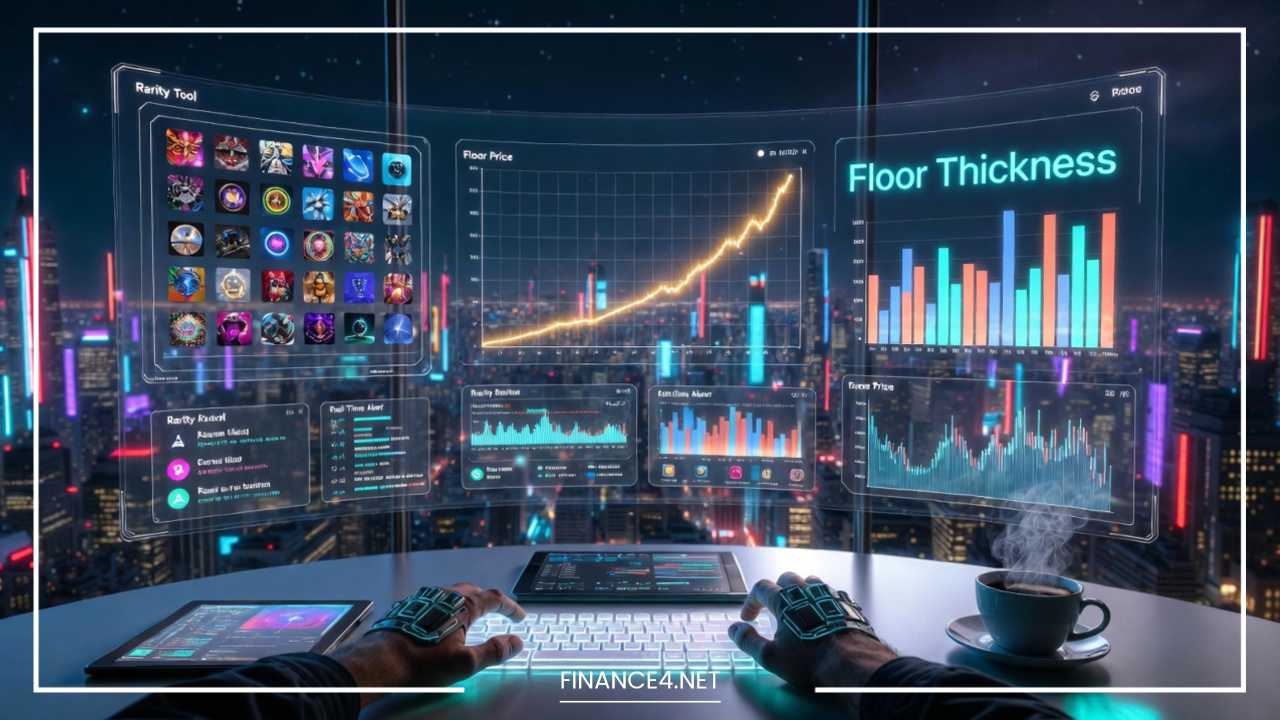
Artificial Floor Price Movements
Floor price manipulation occurs when a small number of isolated transactions push a collection’s lowest listed price sharply upward without supporting bid depth. If someone buys a single token at three times the previous floor price from a connected wallet while dozens of other listings sit untouched just above the original floor, the resulting price spike is artificial. True floor appreciation is backed by sustained buying pressure across multiple independent sellers and rising collection-wide offer liquidity.
Unusual Wallet Behavior
Inspecting the participating wallets often uncovers structural red flags. Wash trading networks frequently rely on freshly generated addresses with no prior transaction history, no other NFT holdings, and zero interaction with decentralized finance protocols. Furthermore, tracing the initial funding of these wallets often reveals that they all received their starting gas and purchase capital from the exact same parent wallet or within minutes of one another.
Volume Spikes Without Community Engagement
Authentic demand leaves a visible footprint across social channels, community forums, and collector discussions. When a collection generates millions of dollars in reported marketplace volume, yet its official social channels have minimal active engagement, sparse holder discussions, and stagnant follower growth, the financial metrics are disconnected from real human participation. Genuine collector enthusiasm rarely happens in complete silence.
Tools and Platforms to Detect NFT Wash Trading
Because public blockchains record every mint, transfer, listing, and sale permanently, anyone can verify marketplace claims using specialized on-chain analytics tools. Combining multiple platforms provides a complete picture of collection health.
-
Dune Analytics: Dune allows analysts and everyday users to query raw blockchain data using SQL and explore thousands of free, community-built dashboards. Many dedicated Dune dashboards specifically track NFT wash trading by filtering out circular wallet transfers, flagging zero-profit rapid flips, and displaying adjusted organic volume alongside raw marketplace volume.
-
Nansen: Nansen enriches raw wallet addresses with behavioral labels, identifying known smart money collectors, project deployers, exchange wallets, and interconnected wallet clusters. Using Nansen’s collection profiler and wallet profiler tools, investigators can quickly see whether top buyers in a collection are established, independent collectors or newly funded, interrelated addresses.
-
Etherscan: As a foundational block explorer for Ethereum, Etherscan enables direct inspection of individual smart contracts, token transfer histories, and wallet funding trails. By clicking into a specific NFT token ID or examining the “Internal Transactions” and “NFT Transfers” tabs of active buyer wallets, users can manually verify whether two trading partners share a common funding source.
-
CryptoSlam: CryptoSlam aggregates multi-chain NFT sales data and explicitly tracks wash trading metrics across major collections. Its platform applies algorithmic filters to identify and separate suspicious circular transactions from legitimate sales, allowing users to compare raw reported volume against filtered organic volume at a glance.
-
NFTGo: NFTGo provides granular collection analytics, including whale tracking, holder distribution, blue-chip holder ratios, and profit-and-loss leaderboards. By examining holder concentration and tracking whether distinct high-net-worth wallets are accumulating or exiting a project, users can validate whether reported volume reflects true collector conviction.
Practical Example: Analyzing a Suspicious NFT Collection
To see how these detection methods work together in practice, consider a hypothetical collection called Cybernetic Relics, which suddenly appears near the top of a marketplace leaderboard with $500,000 in 24-hour trading volume across 250 recorded sales. On the surface, the project looks like a breakout success. However, a structured on-chain investigation quickly reveals troubling anomalies.
-
Examine the collection’s trading history: Opening the collection’s recent activity feed shows that individual token IDs are appearing repeatedly. For instance, Token #412 was sold seven times over a four-hour span, each time for approximately $2,000.
-
Identify the most active wallets: Sorting the collection’s 24-hour participants by volume shows that out of 250 total transactions, 215 trades were executed by just 12 wallet addresses. The remaining 35 trades represent a tiny fraction of the total dollar figure.
-
Check repeated transactions between addresses: Tracing Token #412 and several other frequently traded pieces reveals a closed loop. Wallet 1 sells to Wallet 2, Wallet 2 sells to Wallet 3, Wallet 3 sells to Wallet 4, and Wallet 4 eventually sells back to Wallet 1. No tokens ever leave this 12-wallet circle.
-
Compare unique buyers with total sales: Dividing the 250 total sales by the 12 dominant wallets shows an average of nearly 21 transactions per participant in a single day—a ratio far outside normal collector behavior, where buyers typically acquire one or two items.
-
Investigate funding relationships between wallets: Checking the 12 addresses on a block explorer reveals that all 12 wallets were created within 48 hours of each other. Tracing their initial deposits shows that every address received its starting cryptocurrency from the exact same intermediary wallet two days before the volume spike began.
-
Evaluate whether trading activity reflects genuine demand: Cross-referencing the collection’s social channels confirms almost no organic discussion, zero independent collector reviews, and minimal bidding activity from established NFT wallets.
While blockchain data alone cannot confirm the legal identity behind pseudonymous addresses—and certain legitimate activities like automated market-making protocols or high-frequency arbitrage bots can occasionally produce rapid trades—the convergence of circular loops, shared wallet funding, identical pricing, and absent community engagement strongly indicates that Cybernetic Relics is experiencing wash trading rather than genuine market demand.
The Impact of NFT Wash Trading on Investors and the NFT Market
Unchecked NFT wash trading inflicts significant harm on individual participants and undermines the structural integrity of the broader digital asset ecosystem.
For retail investors and collectors, the most immediate consequence is being misled about actual market demand. Buyers who rely on inflated volume rankings or artificial floor price movements frequently purchase overvalued tokens at the top of a manufactured hype cycle, only to discover afterward that no genuine secondary buyers exist at those price levels. When the manipulators stop circulating funds, reported volume collapses to zero, leaving unsuspecting buyers holding illiquid assets they cannot sell without taking steep losses.
At the ecosystem level, widespread wash trading distorts marketplace rankings and corrupts data aggregators. When manipulated collections dominate trending charts, legitimate artists, builders, and communities struggle to gain organic visibility. Over time, persistent fake volume erodes trust in NFT marketplaces, discourages institutional participation, and makes it vastly more difficult for serious analysts to assess the true liquidity and valuation of digital assets.
How to Protect Yourself from NFT Wash Trading
Protecting your capital from manipulated NFT markets requires adopting a disciplined, verification-first research routine before purchasing any digital collectible.
-
Never rely solely on reported trading volume: Treat headline 24-hour and 7-day volume numbers as a starting point for investigation rather than proof of project quality or liquidity.
-
Check unique buyers and sellers: Always inspect the ratio of unique participants to total sales. Healthy collections exhibit steady growth in distinct wallet holders rather than high transaction counts concentrated among a handful of addresses.
-
Analyze wallet transaction histories: Click into the wallets responsible for recent high-value sales. Look for established histories, diverse NFT collections, and authentic interactions across the broader blockchain ecosystem.
-
Look for repeated NFT transfers between connected addresses: Review the item-level price and transfer history of several tokens in the collection to ensure the same pieces are not cycling repeatedly among related wallets.
-
Compare volume with floor-price movements: Verify whether rising volume is accompanied by deep, multi-bid order books and gradual, sustained floor growth rather than isolated outlier sales.
-
Examine collection activity over longer periods: Zoom out to 30-day and 90-day charts to distinguish between durable, long-term collector retention and brief, artificial volume spikes.
-
Verify marketplace data using independent analytics tools: Cross-check marketplace leaderboards against platforms that offer wash-trading filters, wallet clustering, and adjusted volume metrics.
-
Evaluate community engagement and genuine collector interest: Confirm that on-chain activity aligns with authentic, sustained participation across community channels, creator updates, and independent collector discussions.
-
Avoid making investment decisions based on short-term volume spikes: Resist the urgency created by sudden leaderboard appearances, giving yourself time to audit the underlying wallet behavior before placing a bid.
Final Thoughts: Look Beyond NFT Trading Volume
As digital collectible markets evolve, headline trading volume remains one of the easiest metrics to manipulate and one of the most dangerous indicators to trust in isolation. Because pseudonymous blockchain architectures allow a single entity to operate dozens of wallets simultaneously, artificial circular trading can make an illiquid, speculative collection appear vibrant and highly sought after within hours.
Evaluating an NFT project accurately requires looking beneath surface-level sales figures to examine the quality, independence, and behavior of the participants behind each transaction. Unique buyer growth, organic holder distribution, transparent wallet funding trails, and genuine community engagement provide far more reliable signals of long-term value than raw volume totals ever can. By pairing marketplace browsing with basic on-chain verification and independent analytics tools, collectors and investors can filter out artificial market noise and make informed decisions grounded in real demand.
Frequently Asked Questions About NFT Wash Trading
How do you check if an NFT collection has fake trading volume?
You can check for fake trading volume by comparing a collection’s total sales count against its number of unique buyers on blockchain analytics platforms like CryptoSlam, Dune Analytics, or NFTGo. If a collection generates massive daily volume from only a handful of wallets, or if you inspect the token transfer history on Etherscan and see the exact same wallets repeatedly buying and selling the same NFTs back and forth, the trading volume is likely artificially inflated.
Is NFT wash trading illegal?
In traditional financial markets such as stocks and commodities, wash trading is strictly illegal under securities and commodities fraud laws. In the NFT and cryptocurrency space, regulatory enforcement varies by jurisdiction, though financial regulators and law enforcement agencies increasingly prosecute coordinated NFT wash trading schemes when they involve wire fraud, market manipulation, tax evasion, or intentional deception of retail investors.
Why do people wash trade NFTs if they have to pay gas fees and royalties?
Wash traders willingly absorb blockchain gas fees and marketplace royalties when the expected financial payoff exceeds those transaction costs. Common incentives include earning native platform reward tokens or airdrop points tied to trading volume, pushing a collection onto marketplace trending leaderboards to attract genuine retail buyers, or artificially inflating an NFT’s price history so they can later sell it to an unsuspecting buyer at a steep markup.
What is the difference between NFT wash trading and normal NFT flipping?
Normal NFT flipping occurs when an independent buyer purchases an undervalued collectible from an unrelated seller and later resells it to a different, independent collector for a genuine profit based on real market demand. NFT wash trading involves zero actual change in ownership—the buyer and seller are either the same person using multiple wallets or a coordinated group passing assets in a closed loop simply to manufacture fake sales records.
What are the best free tools to detect NFT wash trading?
Several free tools help collectors spot suspicious on-chain behavior before buying:
-
Etherscan: Lets you trace individual token sale histories and check whether buyer and seller wallets were funded by the same parent address.
-
CryptoSlam: Automatically filters out suspected wash trades so you can compare a collection’s raw volume against its adjusted organic volume.
-
Dune Analytics: Provides free, community-built SQL dashboards designed specifically to flag circular wallet loops and zero-profit rapid flips.
Can wash trading artificially increase an NFT collection’s floor price?
Yes, wash traders frequently manipulate floor prices by listing and buying their own tokens at progressively higher prices across connected wallets. Because marketplaces update a collection’s recent sale history and lowest available listing metrics in real time, a few staged high-value purchases can create the illusion of a breakout rally, tricking outside buyers into sweeping legitimate floor listings before the manipulators exit.
How can you trace connected wallets in an NFT wash trading scheme?
To trace connected wallets, open the transaction history of a suspicious NFT sale on a block explorer like Etherscan and inspect both the buyer and seller wallet addresses. Navigate to the earliest incoming transactions for each wallet to find their initial funding source. If multiple active trading wallets were created around the same time and received their starting cryptocurrency from the exact same intermediary wallet, they are very likely controlled by the same entity.
What is the most famous example of NFT wash trading?
One of the most widely cited examples of NFT wash trading involved CryptoPunk #9998, which appeared to sell on the Ethereum blockchain for 124,457 ETH (worth roughly $532 million at the time). Blockchain analysts quickly discovered that the trader used a flash loan to borrow the cryptocurrency, bought the NFT from another wallet they controlled, and immediately transferred the funds back to repay the loan—generating a record-breaking headline sale without spending any actual capital.