Best Bridging Aggregator for Multi-Network Tokens
 by
by 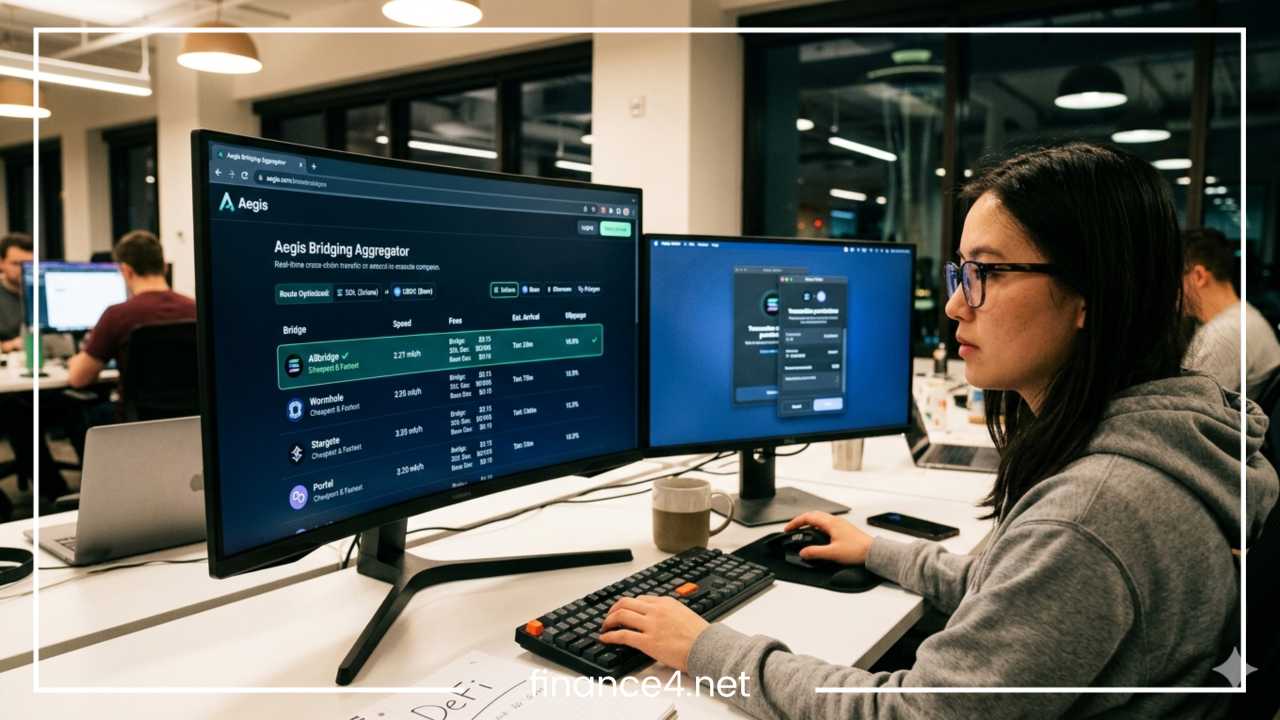
Best Bridging Aggregator: The Ultimate Guide to Cross-Chain Transfers
As decentralized finance continues to expand, the blockchain landscape has transformed from a single-chain environment into a complex, fragmented web of interconnected ecosystems. Today, users routinely navigate across Ethereum, Arbitrum, Base, Solana, BNB Chain, Avalanche, and Polygon, seeking the best yields, the most innovative applications, and the most efficient trading environments. With this growth, the movement of capital—often referred to as token bridging—has become the lifeblood of the industry. However, the sheer variety of available bridges, each with its own security models, fee structures, and liquidity constraints, has made manual bridging an inefficient and often risky endeavor.
This is where the bridge aggregator enters the picture. Acting as an intelligent middleware, a bridge aggregator serves as a one-stop portal that automatically scours the cross-chain landscape to find the most cost-effective and fastest routes for moving assets. By abstracting away the technical complexities of underlying protocols, these platforms have become indispensable tools for both retail users and institutional traders. Whether you are looking for the cheapest crypto bridge to save on transaction costs or the fastest cross-chain bridge to capitalize on a fleeting market opportunity, understanding the role of an aggregator is essential for optimizing your multi-network strategy.
What Is a Bridge Aggregator
At its core, a bridge aggregator is a specialized routing protocol designed to consolidate the fragmented cross-chain market into a single, cohesive user experience. To understand why these tools are so effective, one must first understand the limitations of traditional bridges.
A traditional bridge is a single protocol that facilitates the movement of tokens from Chain A to Chain B. When you use one, you are tethered to that specific bridge’s liquidity, security guarantees, and fee structure. If that bridge is undergoing maintenance, experiencing high congestion, or lacks the necessary liquidity to process your transaction without high slippage, you are out of luck.
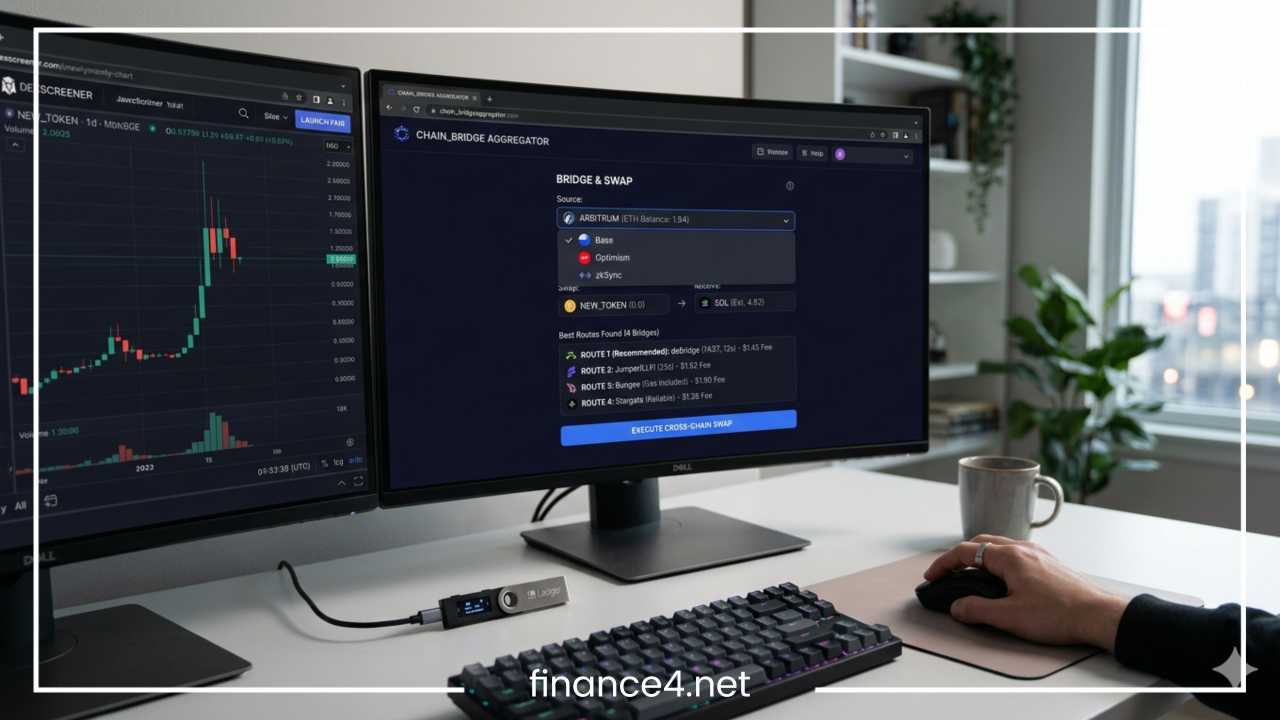
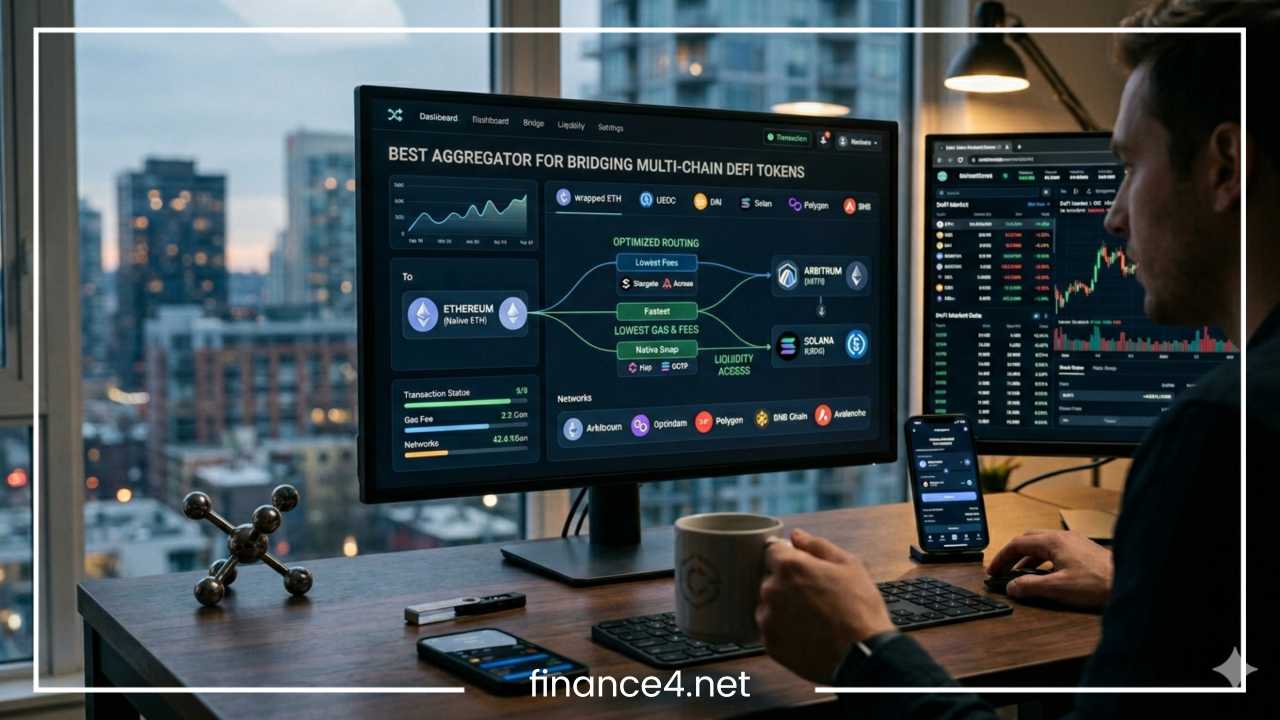
Bridge aggregators solve this by acting as a meta-layer. They do not necessarily build every bridge from scratch; instead, they integrate with a wide variety of existing bridges, liquidity networks, and decentralized exchange (DEX) aggregators. When a user enters their requirements—such as moving USDC from Arbitrum to Solana—the aggregator performs a rapid, automated audit of all possible routes. It compares gas fees on the source and destination chains, the bridge’s service fee, the time required for finality, and the current liquidity depth.
Key players in this space, such as LI.FI, Socket, Rango Exchange, Relay, and Bungee, have revolutionized the user experience. They provide a unified interface that feels like using a simple exchange. Behind the scenes, they orchestrate complex interactions—often performing a swap on the source chain, bridging the token, and performing another swap on the destination chain—all within a single transaction prompt.
Why Multi-Network Token Bridging Matters
Growing Blockchain Fragmentation
The growth of Layer 2 solutions and high-performance Layer 1 networks has been a double-edged sword. While these networks offer lower fees and faster transaction times compared to the Ethereum mainnet, they also isolate capital. A dollar bridged to Polygon cannot automatically be used on Base without another bridge transfer. This creates a state of liquidity fragmentation where users are forced to manage assets across multiple browser tabs and wallet configurations.
User Pain Points
The friction associated with moving tokens across chains remains a significant hurdle for mass adoption. When bridging manually, a user must navigate several daunting challenges:
-
Fee Variability: Gas fees on Ethereum are vastly different from those on Solana or BNB Chain. Calculating the total cost of a transfer—including the bridge fee and the network gas—is often difficult without a tool that does the math for you.
-
Time Delays: Some bridges utilize optimistic verification, which can result in waiting periods ranging from twenty minutes to several days. Aggregators help identify routes that offer “instant” transfers by utilizing liquidity providers that front the assets on the destination chain.
-
Bridge Selection Anxiety: With dozens of bridges available, users often worry about which ones are “safe.” An aggregator acts as a filter, prioritizing routes that have undergone rigorous security audits.
-
Liquidity and Slippage: If you are moving a large volume of tokens, a bridge with shallow liquidity can cause massive slippage, meaning you receive far fewer tokens on the other side than you expected. Aggregators analyze pool depth to ensure you get the best possible execution price.
By centralizing these functions, aggregators remove the cognitive load from the user, allowing them to focus on their actual objective: accessing an application or market on another network.
How Bridge Aggregators Work
The architecture of a bridge aggregator is designed to perform a complex multi-step process in a matter of seconds. When you initiate a transfer, the system triggers several automated workflows.
Route Discovery
The aggregator first maps out all possible paths from the source to the destination. It doesn’t just look for a direct bridge; it considers “composite” routes. For example, if a direct bridge from Chain A to Chain B is expensive, the aggregator might find a cheaper path: swapping the source token for a stablecoin, bridging the stablecoin to a third chain, and then swapping it for the target asset.
Cost Optimization
This is the “killer feature” for most users. The aggregator pulls real-time data from various providers to estimate total costs. It calculates:
-
Source Chain Gas: The cost to execute the initial transaction.
-
Bridge Fee: The protocol-specific cost for using the bridging service.
-
Destination Chain Gas: The cost to finalize the transaction or swap on the target network.
-
Slippage: The expected price impact based on current order book or pool depth.
Liquidity Analysis
Aggregators maintain deep integrations with decentralized exchanges and liquidity protocols. If a bridge lacks liquidity, the aggregator will automatically seek a route that includes an intermediary swap to ensure the transaction completes without excessive loss of value.
Security Filtering
This is perhaps the most critical, yet invisible, aspect of an aggregator. The software is designed to avoid “risky” routes. It may limit the choice of bridges to only those that have passed extensive code audits, have a long track record without exploits, or utilize decentralized validation mechanisms. By defaulting to the safest options, aggregators protect the average user from the dangers of the “wild west” of bridging.
Key Features to Look for in a Bridging Aggregator
Not all aggregators are created equal. When evaluating which service to use for your multi-network token transfers, consider the following checklist:
Network Coverage
The most important feature is the breadth of supported chains. Does the aggregator support the specific EVM-compatible chains (like Arbitrum or Optimism) as well as non-EVM chains (like Solana, Aptos, or Sei)? A truly powerful aggregator should feel like a universal gateway to the entire crypto ecosystem.
Speed and Execution Time
Consider your specific needs. Are you a high-frequency trader who needs near-instant execution, or are you a long-term investor who doesn’t mind waiting thirty minutes for a highly secure, albeit slower, bridge? Look for aggregators that allow you to toggle between “fastest” and “cheapest” routing options.
Fee Transparency
Avoid platforms that hide their fees in the “spread.” A reputable aggregator provides a clear breakdown of costs, showing you exactly how much is going to gas, how much to the bridge, and how much to any necessary swaps. If you cannot see a breakdown, be wary.
Security and Audits
Check if the aggregator publishes information about the bridges it integrates. Are these bridges audited by reputable firms? Does the aggregator have its own security audits publically available? A commitment to transparency is a strong indicator of a trustworthy platform.
User Experience and Accessibility
The interface should be clean and responsive. Can you connect your wallet (MetaMask, Phantom, Rabby) effortlessly? Is the transaction status easy to track? The best aggregators provide a real-time tracking link so you are never left wondering if your funds are stuck in the ether.
API Availability
For power users and developers, the availability of a public API is a major bonus. This allows for the creation of custom dashboards, automated trading bots, and integration into other DeFi applications, ensuring that the technology is robust and battle-tested by professional developers.
Best Bridging Aggregators Compared
To help you decide which tool fits your needs, we have compared the leading aggregators currently dominating the market.
| Aggregator | Primary Strength | Best For |
| LI.FI | Unmatched ecosystem depth | Developers and institutional users |
| Socket | Ultra-fast routing tech | High-frequency, volume-heavy users |
| Rango Exchange | Best non-EVM compatibility | Traders across diverse ecosystems |
| Relay | Optimized, simple retail UX | Retail users valuing time |
| Bungee | Intuitive and beginner-friendly | Newcomers to multi-chain DeFi |
LI.FI: The Infrastructure King
LI.FI is widely recognized as the backbone of the cross-chain industry. It doesn’t just provide an interface; it provides the API that many other platforms use to power their own bridging features. If you need a tool that supports almost every conceivable chain and liquidity source, this is your go-to. Its documentation and robust developer tools make it the gold standard for those who require precision and control.
Socket: The Speed Specialist
Socket is a powerhouse when it comes to speed. Its technology is designed to minimize the time tokens spend in transit, often leveraging cross-chain messaging to initiate destination-side actions before the funds have fully settled. This makes it an ideal choice for traders who need to move capital quickly to capitalize on arbitrage opportunities or time-sensitive yield farming openings.
Rango Exchange: The Cross-Ecosystem Explorer
Many bridges struggle to bridge the gap between EVM chains and specialized chains like Solana. Rango Exchange excels here. It has arguably the best support for non-EVM chains, making it the most versatile tool for users who maintain a diverse, cross-ecosystem portfolio. If your assets are scattered across disparate chains that don’t traditionally communicate, Rango is the best choice to unify them.
Relay: The Retail Favorite
Relay is designed for the everyday user who wants to move assets with the least amount of friction. It prioritizes a simple, clean interface that hides the complexity of its routing. By focusing on intent-based architectures, it provides a “set it and forget it” experience, ensuring your tokens arrive at the destination chain in as few clicks as possible.
Bungee: The Beginner’s Gateway
Built by the team behind Socket, Bungee offers a high-performance experience wrapped in an approachable UI. It is excellent for those who are just starting their multi-chain journey. Its “Refuel” feature, which allows you to bridge tokens and get native gas for the destination chain in a single transaction, is a game-changer for avoiding “stuck” funds on a new network.
Security Considerations When Bridging Tokens
Bridging is a double-edged sword. While it enables the fluid movement of capital, it also introduces significant security risks. Because a bridge essentially creates a “wrapper” or a synthetic version of your token on the destination chain, the integrity of the bridge is paramount.
Understanding the Risks
-
Smart Contract Vulnerabilities: The primary risk is a flaw in the bridge’s code. If the smart contract managing the locked assets is exploited, the synthetic tokens on the destination chain may lose their backing.
-
Validator and Oracle Risks: Many bridges rely on external validators or price oracles to confirm that a transaction has occurred on the source chain. If these validators are compromised, the bridge can be manipulated.
-
Liquidity Pool Draining: In some cases, a bridge may not have enough liquidity on the destination chain to process your withdrawal. While this rarely results in a total loss, it can lead to frustrating delays.
-
Phishing and Fake Interfaces: This is perhaps the most common way users lose funds. Attackers create mirror-image websites that look exactly like popular bridge aggregators. Always ensure you are on the correct, verified URL before connecting your wallet.
Best Practices for Safe Bridging
-
The “Small Transfer” Rule: Always bridge a tiny amount of funds first. Once you see the tokens arrive safely in your destination wallet, perform the larger transaction.
-
Check the URL: Phishing is rampant. Use bookmarks or verify the URL through official social media or community channels.
-
Review the Route: Take a moment to look at the “Route Details” provided by your aggregator. If it suggests a bridge you have never heard of, a quick search on its reputation is time well spent.
-
Avoid Excessive Permissions: Only connect your wallet to reputable, well-known aggregators. If an interface asks for unnecessary permissions, disconnect immediately.
Bridge Aggregator vs Direct Bridge
When you know exactly where you are going, you might wonder if you should use an aggregator or a direct bridge.
| Factor | Aggregator | Direct Bridge |
| Convenience | High – Unified interface | Medium – Requires multiple tabs |
| Route Choice | Automatic – Scans for best value | Manual – User selects bridge |
| Cost Optimization | Automatic – Real-time calculations | Limited – Requires manual research |
| Speed | Optimized – Finds fastest route | Variable – Depends on your manual pick |
When to Use a Direct Bridge
If you are a professional liquidity provider or a developer, you might already have a deep understanding of which specific bridge offers the best security-to-cost ratio for your specific liquidity needs. In such cases, bypassing the aggregator to interact directly with the smart contract can save on overhead fees.
When to Use an Aggregator
For everyone else—retail traders, yield farmers, and casual users—the aggregator is superior. The convenience of seeing every option in one place, combined with the automatic cost and liquidity optimization, ensures that you are rarely overpaying. The peace of mind provided by the aggregator’s security filtering is, in itself, worth the small cost of the service.
Future of Cross-Chain Interoperability
The future of token bridging is trending toward “chain abstraction.” The industry is moving away from the era where users need to manually navigate networks and bridges. Instead, we are entering an era of intent-based protocols.
In an intent-based future, you don’t tell the software how to bridge your tokens; you tell it what you want to achieve. For example, you might simply indicate that you want to buy an NFT on a specific chain using tokens you currently hold on a different network. The aggregator of the future will handle the entire lifecycle of that request: swapping, bridging, and interacting with the NFT marketplace, all behind the scenes.
We are also seeing a shift toward unified liquidity pools that span across multiple chains, potentially rendering the concept of “bridging” obsolete in the long term. Until that day, however, bridge aggregators will remain the vital glue holding the fragmented crypto ecosystem together. They are not just tools; they are the facilitators of a truly open and interoperable digital economy.
Final Thoughts
The multi-chain future is no longer a distant possibility; it is our current reality. Whether you are seeking higher yields on an emerging L2 or exploring the unique DApps on a high-performance L1, you will inevitably need to move your tokens. Bridge aggregators have emerged as the most essential tools in the user’s toolkit for navigating this complex landscape.
By consolidating liquidity, optimizing for cost and speed, and providing a layer of security through automated filtering, these platforms transform the nightmare of cross-chain manual labor into a smooth, efficient process. When selecting your preferred aggregator, prioritize those that offer transparency, wide network coverage, and a proven track record. As the technology continues to evolve, these aggregators will become even more seamless, effectively erasing the boundaries between chains and allowing users to interact with the entire decentralized world as if it were a single, unified network. Always remember to stay vigilant, start with small tests, and leverage the power of automation to make your cross-chain journey as safe and cost-effective as possible. The power to move your assets anywhere, anytime, is yours—provided you use the right tools to do it.
Frequently Asked Questions
What is the primary difference between a crypto bridge and a bridge aggregator?
A standard crypto bridge is a single protocol that allows you to move assets between two specific networks. A bridge aggregator, however, acts as a meta-layer that connects to multiple bridges simultaneously. It automatically scans all available routes to find the best combination of speed, cost, and liquidity, saving you the effort of manual comparison.
Are bridge aggregators safe to use for moving large amounts of crypto?
While aggregators are designed to improve efficiency, they do not eliminate the underlying risks of bridging, such as smart contract vulnerabilities or liquidity issues. However, most reputable aggregators implement security filtering to prioritize well-audited and battle-tested protocols. For very large transfers, it is recommended to perform a “test run” with a smaller amount first and always verify you are on the official website.
Which is the cheapest way to bridge tokens between chains?
The cheapest route varies depending on current network congestion and bridge-specific fees. A bridge aggregator is generally the most cost-effective method because it performs real-time calculations of gas fees and bridge costs across dozens of providers, ensuring you are not overpaying for your transfer.
How long do cross-chain transfers typically take?
Transfer times vary significantly based on the underlying bridge technology and network load. Some aggregators utilize “fast” routes—often involving liquidity providers that front the assets—which can complete in seconds or a few minutes. Others may rely on slower, more secure verification processes that can take twenty minutes or longer.
Can I bridge assets to non-EVM chains like Solana using an aggregator?
Yes, many top-tier bridge aggregators support both EVM-compatible chains (such as Ethereum, Arbitrum, and Base) and non-EVM ecosystems like Solana. It is best to check the specific aggregator’s supported network list, as some are more specialized in cross-ecosystem connectivity than others.
Why did my cross-chain transaction take longer than expected?
Delays in bridging are usually caused by high network traffic on either the source or destination chain, or by the specific finality requirements of the bridge you selected. If a route requires many confirmations to ensure security, it will naturally take longer to process. Always check the status of your transaction on a block explorer to confirm it is still in progress.
How can I avoid phishing sites when using bridge aggregators?
Phishing is a significant risk in the bridge space. Always bookmark the official URLs of your preferred aggregators and avoid clicking on links from unverified social media accounts or direct messages. Before connecting your wallet, ensure the website URL matches the official domain exactly.